
Of course all rainforest trees bear flowers. Many of them are too large for the home garden but some are just the right size and will reward you with beautiful flowers in season. It may take some years – up to seven – for the trees to bear their first flowers and fruit – but they are worth waiting for!
(NOTE: The trees on this page are well suited to growing in the warmer parts of the United States and other parts of the world where there is no ice, snow or heavy frost. If you need further advice, just email me or use the comments section below).
Beach Acronychia, Logan Apple (Acronychia imperforata)
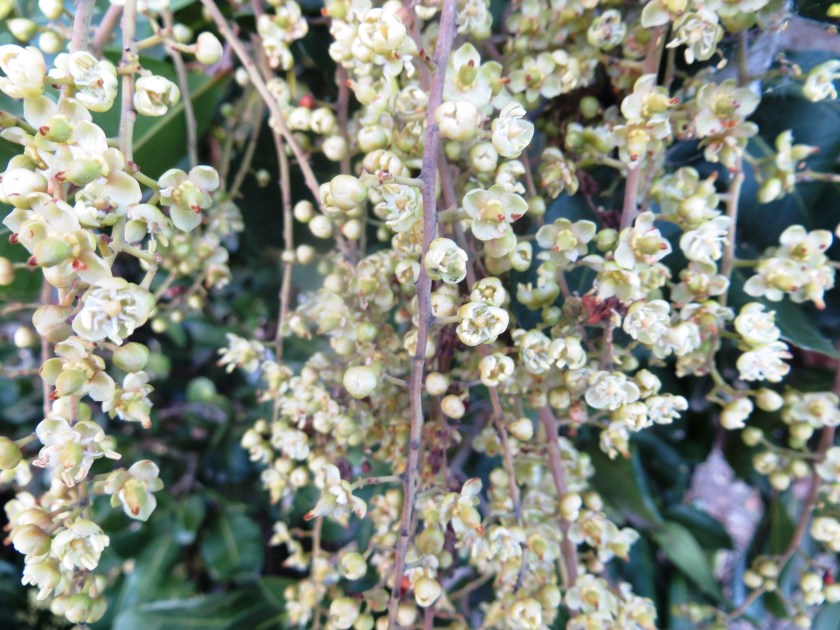
This is a nice little bush tucker tree, growing to about 15 metres, very common in coastal areas north from Port Stephens in New South Wales.
Vital statistics
Flowers are a bit like apple blossom, born in creamy-white clusters throughout summer to the end of April, four-petalled and very attractive to bees and butterflies.
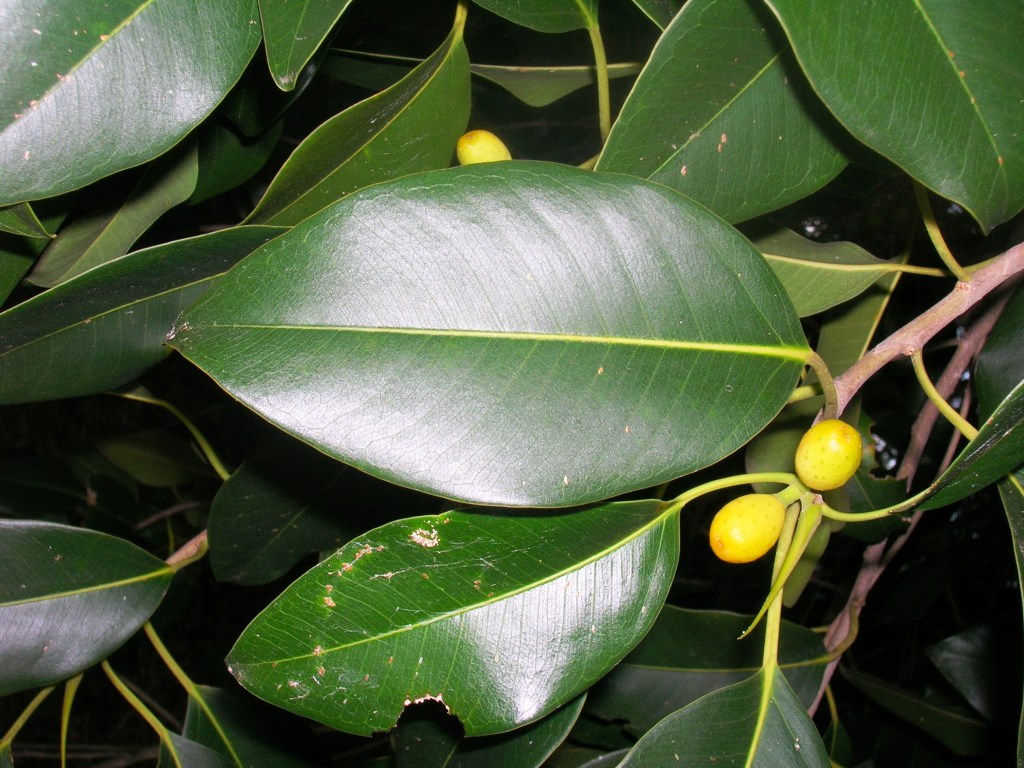
Leaves are simple, opposite and 1-foliate (bump/joint at the bottom where leaf joins petiole); stiff, very bright green, elliptic to ovate, up to about 12 cm long with a notch at the end.
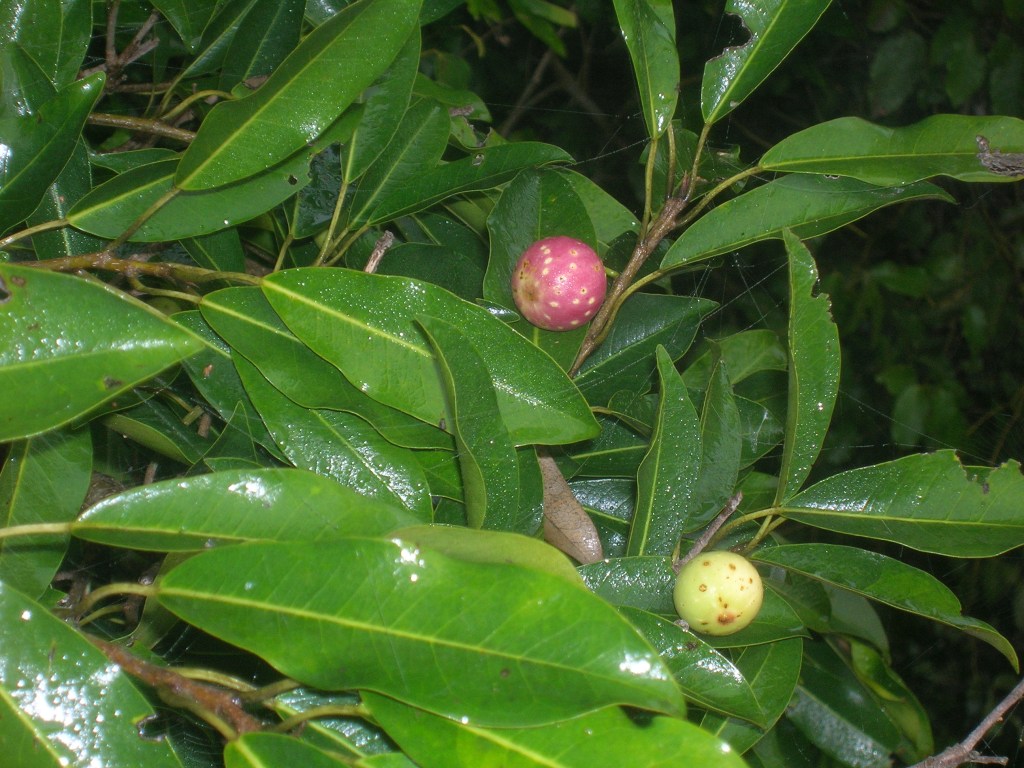
Fruit is a pale yellow drupe, rounded to slightly pear-shaped. Tart but edible and very good for making jam and chutney, or cooked with sugar into a syrupy dressing over ice cream.
Bark is distinctive; smooth but with fine vertical cracks.
In the garden
This is a tough customer! It will grow almost anywhere but does best near the coast with sandy soils, tolerating long, dry periods as well as sea winds and salt spray. An excellent screening plant.
No need to fertilise, nor water once established. Prune lightly for good shape and desired height.
The similar North Queensland tree/shrub Acronychia acidula (Lemon Aspen) has creamy white, round, usually slightly ribbed fruit which is even tastier than A. imperforata.
Blueberry Ash – (Eleocarpus reticulatus)
Vital statistics
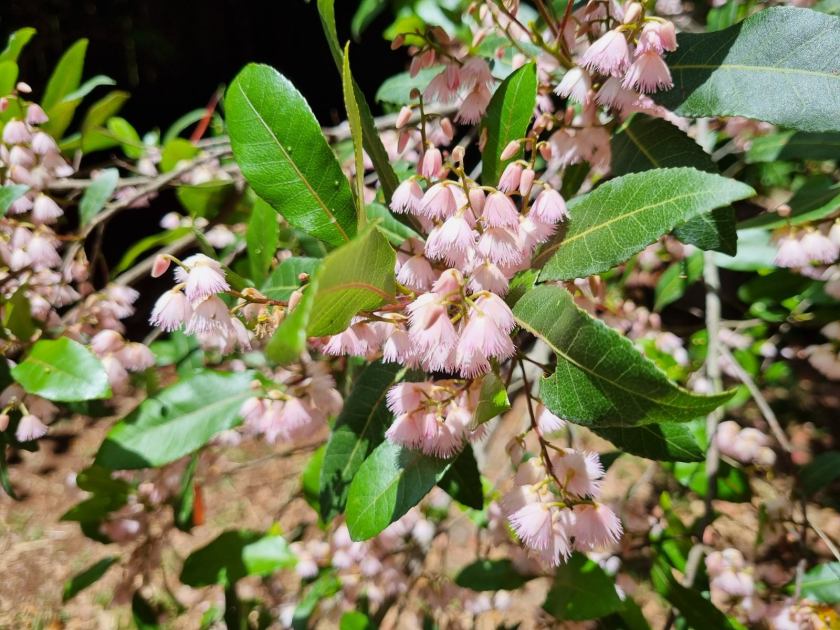
Flowers: Small, pink or white and fringed, like delicate little lampshades or ballerina skirts. The variety sold as “Prima Donna” in garden centres has pink flowers.
Leaves: Oblong or obovate, elliptical, up to about 12 cm long with strongly marked lateral veins. Domatia form small, reddish pockets in the vein angles, tough. 1-foliate, though the swollen joint where it joins the stem may not be prominent. As with all Eleocarpus the leaves turn an attractive red when they fall.
Fruit: An oval drupe, small, a bright blue that attracts birds.
In the garden
This plant occurs naturally in most types of rainforest and also adjoining wet sclerophyll (eucalypt) forest so will tolerate most conditions including light frost when established. Quite easy to propagate from seed.
Give it plenty of space from other trees/shrubs and once it gets to a couple of metres high start pruning the tips so it develops a good growth habit. This tree or large shrub grows very tall and straggly, like most rainforest species, if it is allowed to grow untrimmed or is planted too close to other trees. This may inhibit flowering when young but once it has reached maturity it will reward you with a spectacular burst of colour every spring.
FLAME TREE (Brachychiton acerifolius)

A familiar tree to Australians everywhere because it is one of the few of our rainforest trees to really make it big in the cultivated landscape. The name “Flame Tree” is also used for the African Tulip Tree (now a week in Queensland) but the only thing the two species have in common is red flowers. In winter to early spring this gorgeous tree warms and brightens our streets and gardens wherever it’s planted, while in the tropical and subtropical forest it stands out like…well…a flame among all the greenness of the canopy.
Vital statistics:
The large, simple, alternate leaves, margins lobed or entire are borne on long stems (petioles). They are shed in winter. Flowers can vary from vivid scarlet to a deeper red and are very showy,each one a little five-petalled bell borne in clusters. The seed pods are shaped like boats and can be used in floral decoraion. The yelowish seeds are edible. The bark is distinctive; smooth and lightish green with fawn-coloured roughish horizontal lesions and blotches.
In the garden
This tree is too large for most home gardens though it takes a long time to reach maturity and tends not to grow taller than about 20 metres when in full sun. Pruning when young will keep it under control and promote denser branch growth. It grows almost everywhere except snowy and very arid areas. Propagation is easy from seed or cutting and in warmer areas young plants often seed themselves and pop up in the landscape.
Lacebark is another rainforest species of Brachychiton and though not common in cultivation it is a better size for the home garden. The flowers are a velvety pink and very pretty. This tree needs plenty of careful pruning when young to stop it becoming straggly; if managed in this way it makes a delicious garden specimen. It tolerates up to three months without water, once established.
NATIVE FRANGIPANNI (Hymenosporum flavum)
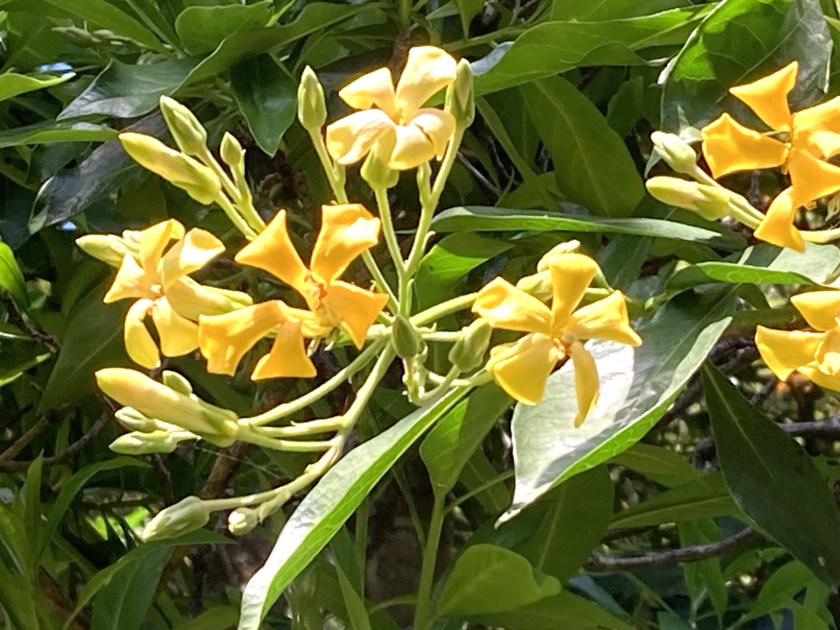
Oh what a delight this tree is when it reaches the age of full flowering, usually at about six years old. And every year after that it gets bigger and better – a shower of gold and creamy white cascading down from the top every spring.
Vital statistics
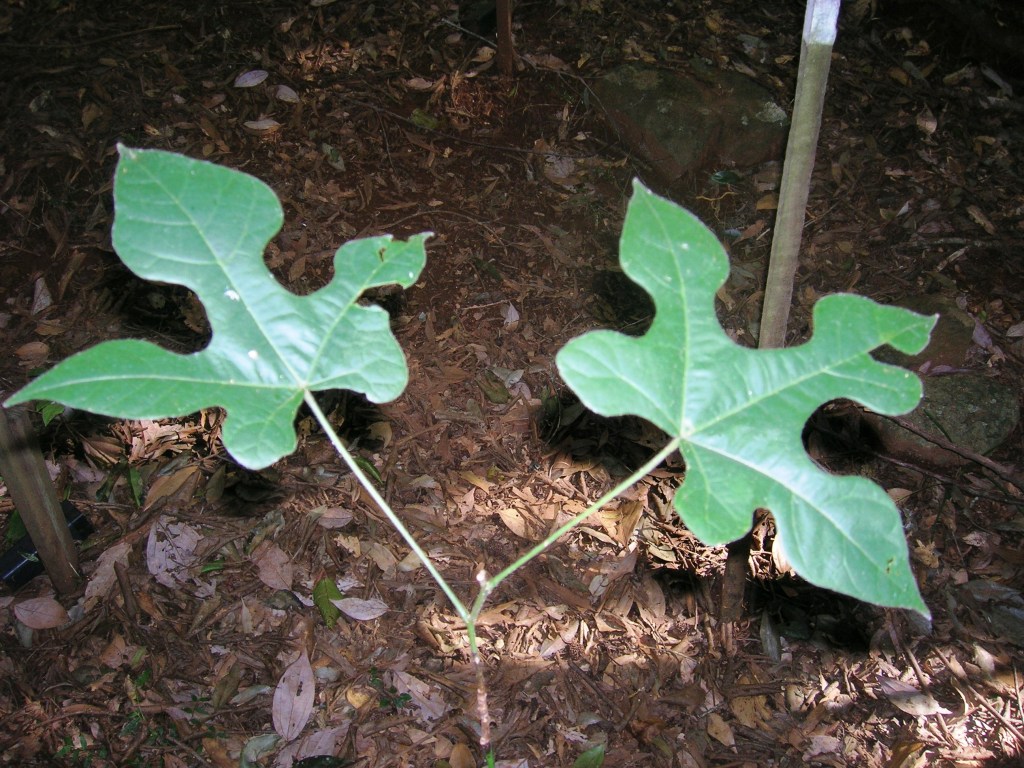
Small tree or large shrub that grows northwards from the Blue Mountain forests, in rainforest and close by open forest. Leaves are bright green, growing in whorls around the branchlet, obovate to a sharpish point, veins strongly marked, to about 16 cm in length. Fruit is a capsule containing brown two-winged seeds.
In the garden:
Very easy to propagate from seed. Tolerates all soils. Likes plenty of water when young. Does best in areas with good rainfall but can survive short droughts, up to 3 – 4 months. Young plants susceptible to frost.
This is a good tree for all but the smallest gardens but if space is limited keep to about three metres with trimming. Regular pinching out of new growth when young will form a neat, rounded shape.
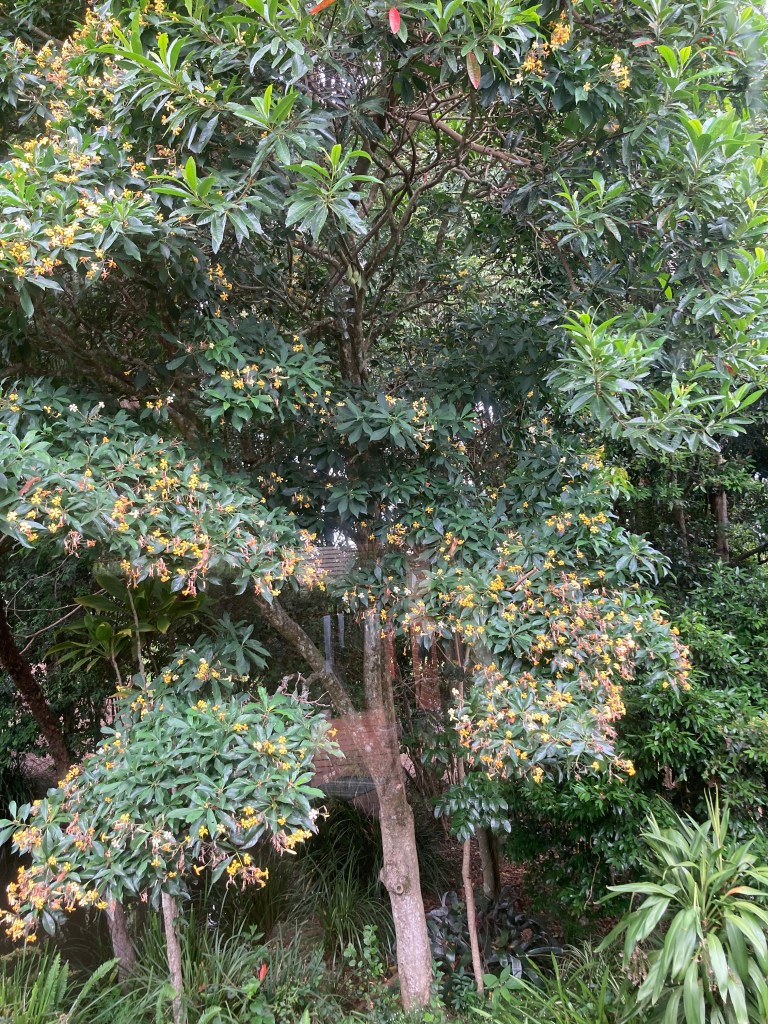
This tree was pruned when young to make it bushy.
GOLDEN PENDA (Xanthostemon chrysanthus)
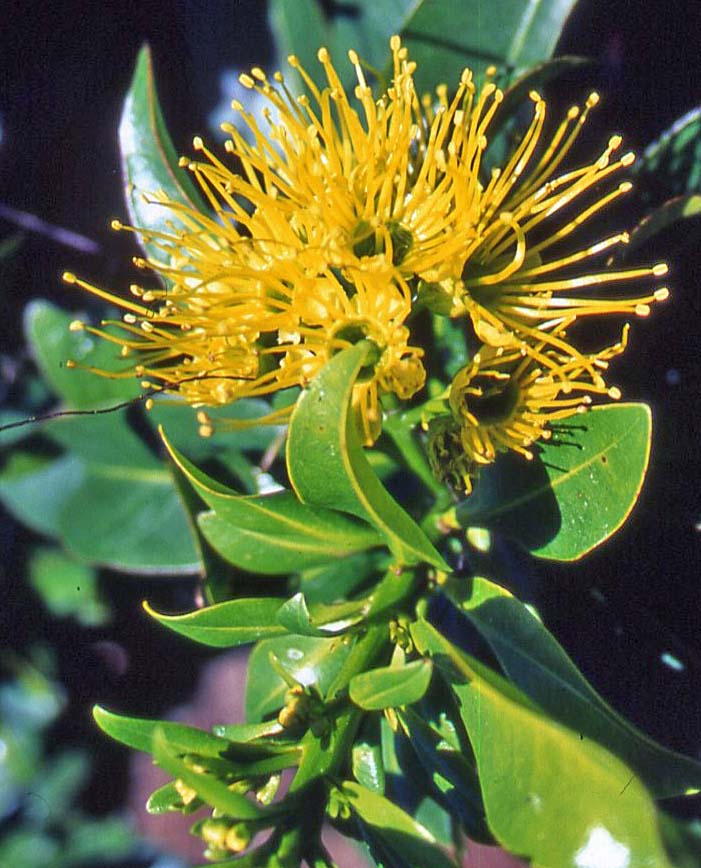
This golden treasure of a garden tree is well named – gold in colour, gold in overall size and appearance, gold in trouble-free growing. What’s not to like about this lovely North Queensland tree that grows anywhere that’s frost free and has good rainfall – or at least plenty of available water in dry seasons.
Vital statistics
Leaves are simple, alternate or whorled, long (to about 20 cm), thick and leathery, usually eliptic with a blunt point and yellowish mid-vein. Flowers are born prolifically in panicles of golden petals containing many long bright yellow stamens. Flowers may appear at any time but are most spectacular in summer to autumn. When the tree is not in flower it still looks good, with a naturally tidy habit and bright green leaves
In the garden
Very easy to grow in most conditions but does best with a reasonably loamy soil. It doesn’t need fertilising, just regular mulching with leaf litter or sugar cane. It makes a spectacular single specimen in full sun or light shade but like most rainforest plants it grows faster when it has a few companions around such as low growing shrubs. If you border it with annuals or other plants that require fertilising, be careful, because this is another plant in the Proteaceae family that can’t take too much high-phosphorus fertiliser. It’s best to give your flowering annuals light sprays of liquid formulation that doesn’t seep to deep into the surrounding soil.
IVORY CURL (Buckinghamia celsissima)
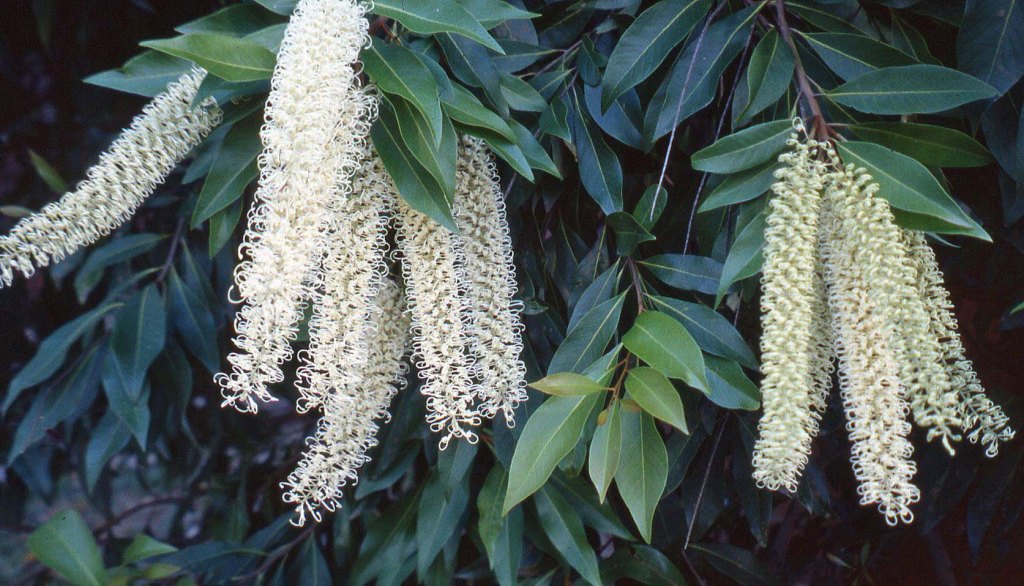
This north Queensland rainforest beauty can be grown as either a tree or a shrub. In the forest it stretch to 30 metres but when it is grown as a single specimen out in the open where it doesn’t have to compete with other trees the Ivory Curl will multi-stem and grow to the height of a tall shrub or tree to about eight metres. It’s a very popular street tree in Queensland and northern New South Wales but is also comfortable in Melbourne gardens.
Vital statisics
Leaves are long (to 20 cm), simple, young plants with lobes but margins entire in mature plants with a strongly marked mid-vein. Flowers are typical of the Proteaceae; creamy white, in pendant clusters, each long raceme made up of tiny flowers. These appear for a long time during autumn-winter and the tree can be so thickly covered that from a distance it looks like snow! Seed pods are green and clustered along the stem after the flowers have gone, turning first a greyish-buff colour and then a dull black. They have a little tendril-like appendage at the tip and are very attractive when dried.
In the garden
Ivory Curl will tolerate the worst clay and rocky soils though growth is faster in richer, loamier ground. There is no need to feed when young but if you wish to give your seedling a boost, make sure to use a native plant formula because plants in the family Proteaceae are sensitive to phosphorus overdose, having evolved on soils deficient in this nutrient. Water regularly when young; as the plant matures it can tolerate long periods without rain. Prune for a neat, rounded shape.
This really is one of the best and toughest and prettiest small trees for the home garden. Plant them in a row and you’ve got a spectacular hedge.
Lemon Myrtle (Backhousia citriodora)
This is a MUST for any home garden. It’s a small tree that can be encouraged to multi-stem and remain at shrub height, the flowers are pretty and bright green leaves are lemon-scented and flavoured – in my opinion it’s the best source of lemon flavour to use in cooking apart from lemons themselves. A lot more palatable than, for example, lemon grass.
If I could choose only one rainforest tree/shrub for my garden, this would be it!
Vital statsitics
Leaves are simple, opposite, light green, narrowly elliptic to a drawn-out point, margins can be lightly toothed, oil dots typical of rainforest plant leaves in the Myrtaceae family (myrtles) and give out a strong lemony smell when crushed. Flowers are creamy white and fluffy. The fruit has a flower-like appearance because of the five sepals arranged around the central capsule.
In the garden
Lemon myrtle is a tough performer in all climates except the coldest and driest. It tolerates any soil but grows faster and with brighter, lusher foliage in moderately deep, loamy soils. Water regularly when young, mulch with sugar cane or any vegetative matter at least once a year in spring, feed with any general tree/shrub fertiliser. Prune early and regularly to limit height and encourage bushiness.
This is a hard plant to propagate from seed; cuttings will take but very slowly. Leaves can be harvested for cooking when needed, or dried and kept bagged. Both fresh and dry leaves make a fragrant tea.
In the home
Lemon myrtle leaves can be used in the kitchen whenever you want a lemon flavour. The leaves are especially useful in infusing dishes made with either milk or cream as they don’t cause curdling. They can also be used in pickles and chutneys.
And there is one more thing about this marvellous plant – the essential oils in the leaves have disinfectant and biocidal properties. When distilled they are used a great deal in homeopathic medicine and also in mainstream products for treatment of minor skin problems and household cleaning. Using the leaves as an infusion in hot water MAY help with intestinal parasites and maintain good health in the digestive and urinary tract. There is no hard scientific evidence of this but it won’t do you any harm! I have a friend who for years has drunk infusions of leaves (fresh and dried) three times a day for years and claims she owes her excellent health and digestion to this. I often drink lemon myrtle “tea”, from my own tree, and chill infusions to make a lightly-flavoured, slightly astringent lemonade, with whole leaves and lemon slices floating in it. This infusion can also be frozen into ice blocks.
Grey myrtle, Carroll (Backhousia myrtifolia)
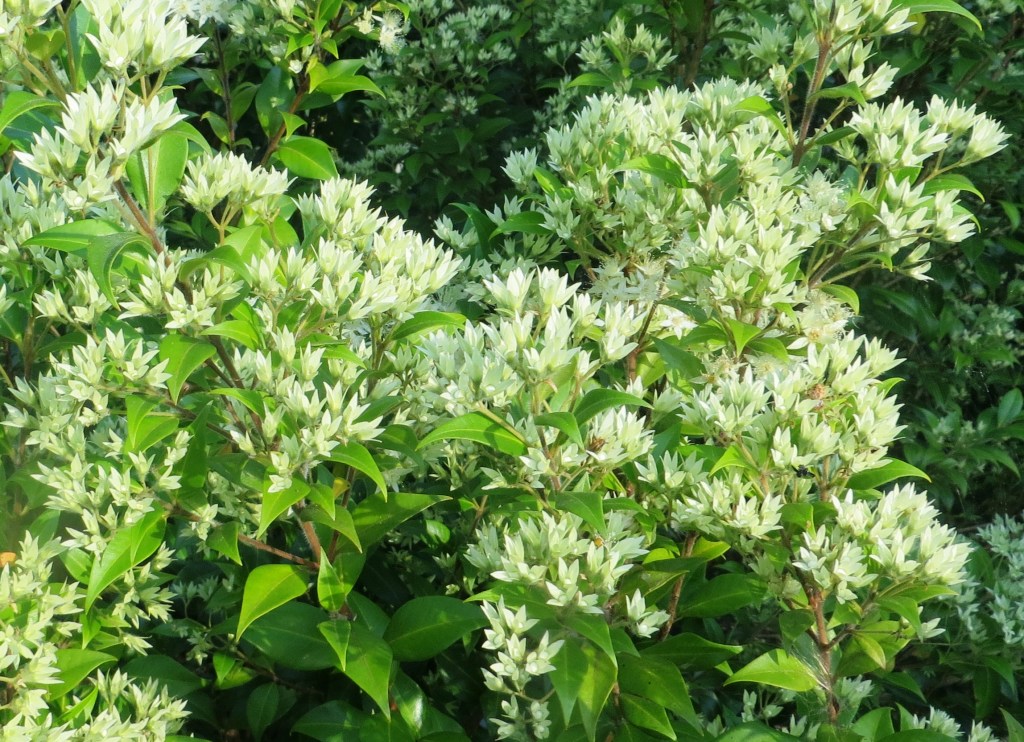
The Grey Myrtle doesn’t possess the lovely lemony qualities of its better known Lemon Myrtle cousin but it is still an attractive shrub with a light, spicy-sweet aroma. It looks very similar, though the leaves tend to be shorter and more ovate with more tapered tips. It’s a small enough tree for any garden if trimmed to an appropriate height. The leaves can be used in cooking, in the same way that you would use nutmeg or cinnamon.
Tree Waratah (Alloxylon flammeum)
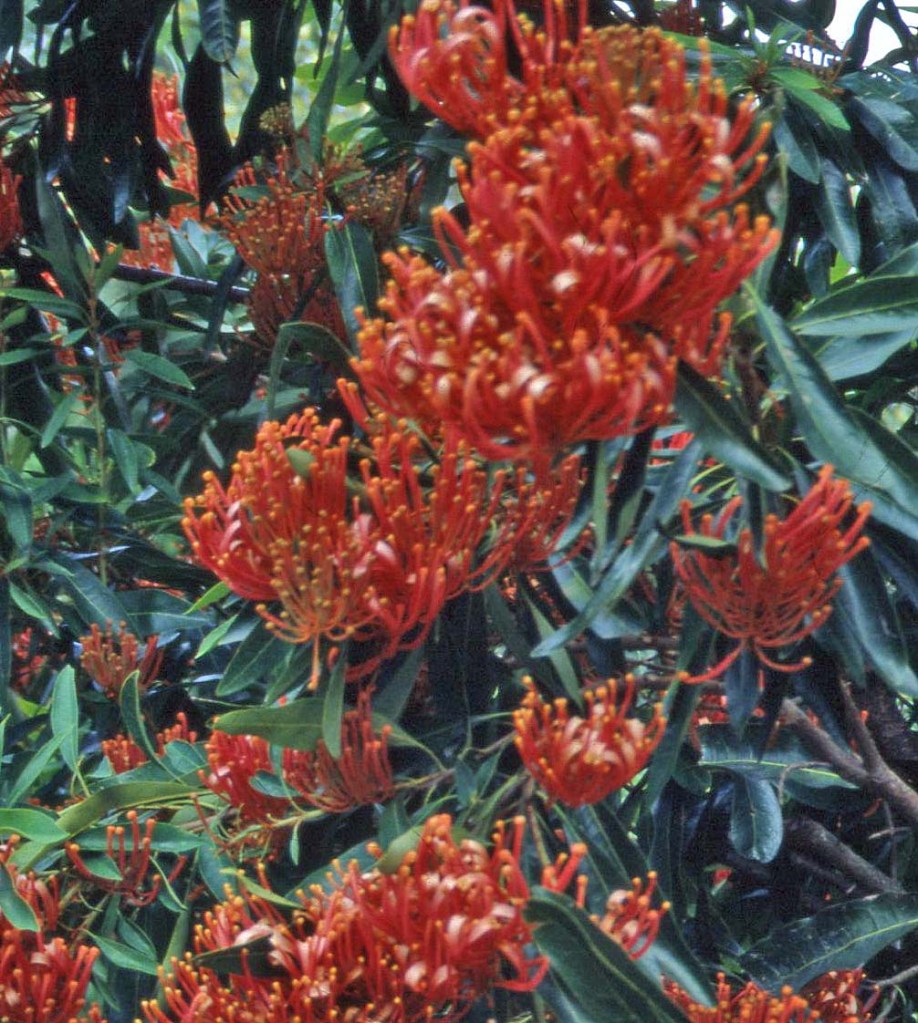
Now here’s a showy spring-flowering tree for the larger home garden, which is quite easy to grow in warmer, wetter areas. It doesn’t usually flower until it’s about ten years old but when it does the big, red blooms are worth the weight.
Vital statistics
The leaves are handsome: large, shiny, simple, alternate and often lobed when mature. Flowers are rather like those of grevillea species, large and clustered, bright orange-red with long, tubular perianths arranged in a corymb. The seed pods are interesting too, long and rectangular containing flattish, winged seeds. These pods can be dried and used in floral arrangements.
In the garden
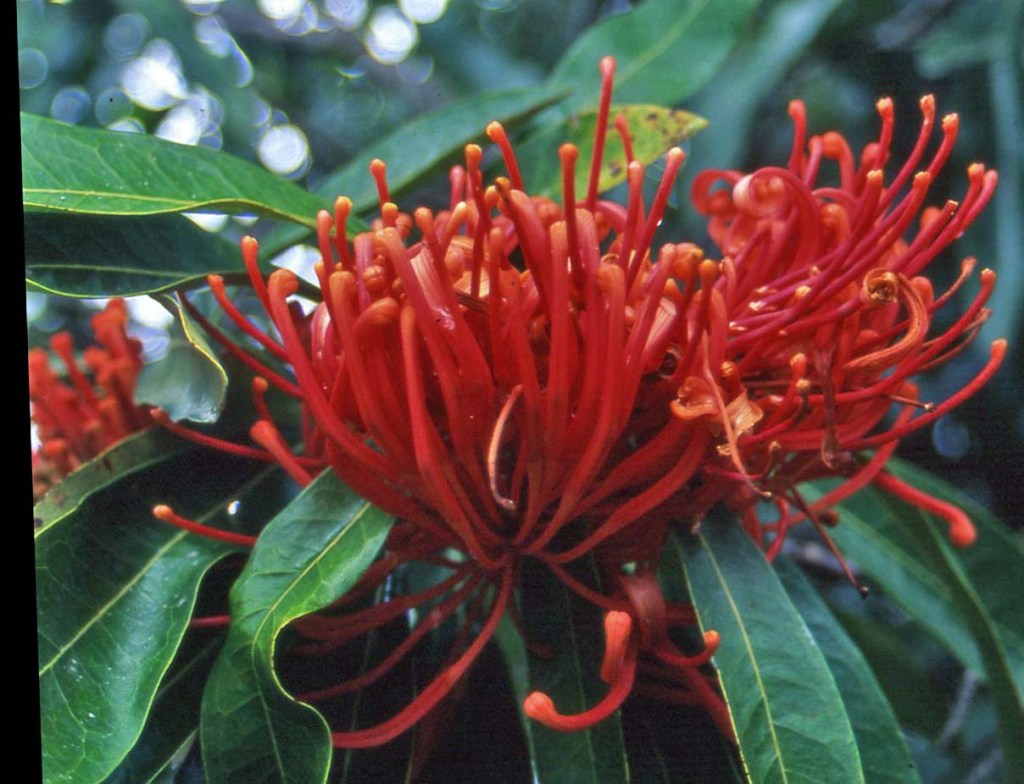
Not a tree for small gardens but a lovely as a specimen tree or in a cluster of other trees and shrubs. It’s frost-tender when young and needs plenty of water at this early stage. Some light feeding with a low phosphorous native plant fertiliser for strong growth will help too though is not essential except in very poor soils. Trim new growth regularly to stop the young tree becoming straggly.
Propagate from seed or hard wood cuttings (slow!).
The Dorrigo Waratah (Alloxylon pinnatum) has proved difficult to propagate past the seedling stage but if you can find one in a native plant nursery it’s worth growing. For one thing, it’s not as tall as its more flamboyant cousin. The flowers tend to be less prolific but are an attractive pinkish red and look great in a vase.
Golden myrtle (Thaleropia, formerly Metrosideros queenslandica)
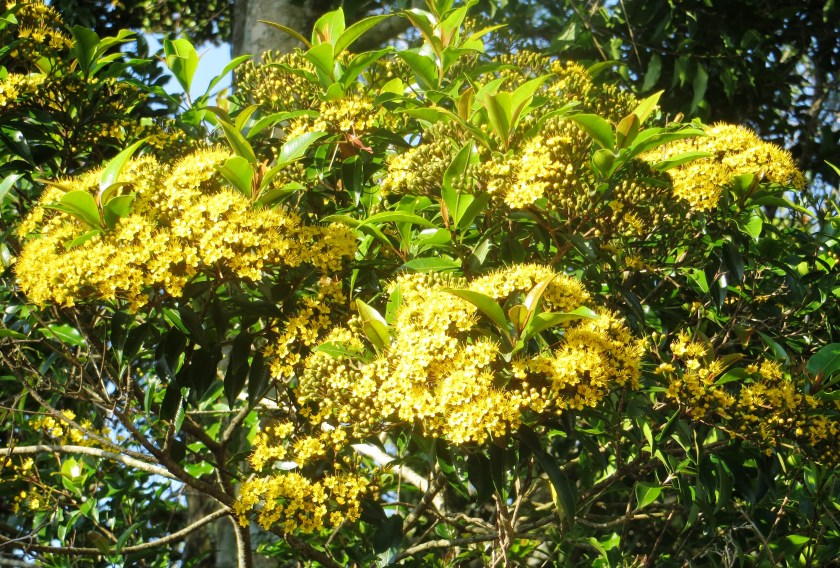
Thaleropia is a lovely tree from the mountain forests of far north Queensland and it doesn’t grow very large, 10 metres at most, making it suitable for the home garden.
Vital statistics: The glossy green simple leaves are slightly serrated with a prominent mid vein. They are born close to the stem and have typically pointed rainforest species “drip tips” at the apex. The bright golden flowers are five-petalled and slightly cupped from the centre, with long and prominent stamens.
In the garden: Thaleropia will do well in any warm climate garden and, once established, needs very little care. It can be pruned every autumn to control height and promote bushiness, if desired. Regular watering is required in dry periods – just a good soaking with the hose once a week will do.
















 Lyrebird Mountain
Leave a comment