Yes indeed, spring IS in the air though it’s a month too early. And yet there is that slight tingle you get when you feel that things are changing, that life is bursting forth in many small, almost imperceptible ways. Birds are more active, plants are sprouting buds, grass is growing again, the air feels fizzy.
It helps that we have had a bit of rain, with more promised. And that the the temperatures, though cool, are not as cold as usual at this time of year.
I walked in my favourite place, the Landcare site and adjacent cliff-edge forest at the end of Hartley Road. A road that, at its eastern end, goes nowhere except the edge of the escarpment. Below is some of the best unspoiled, unlogged subtropical rainforest to be found anywhere in Queensland and you can sit on a rock at the edge and examine the canopy for birds and plants. Here you have a rare opportunity to study trees and climbing plants from the top down, noting the flowers that are rarely seen except as spent blossoms at ground level. Birds, too, such as fruit doves can be better seen from this vantage point as they nest in the canopy and find fruits there.
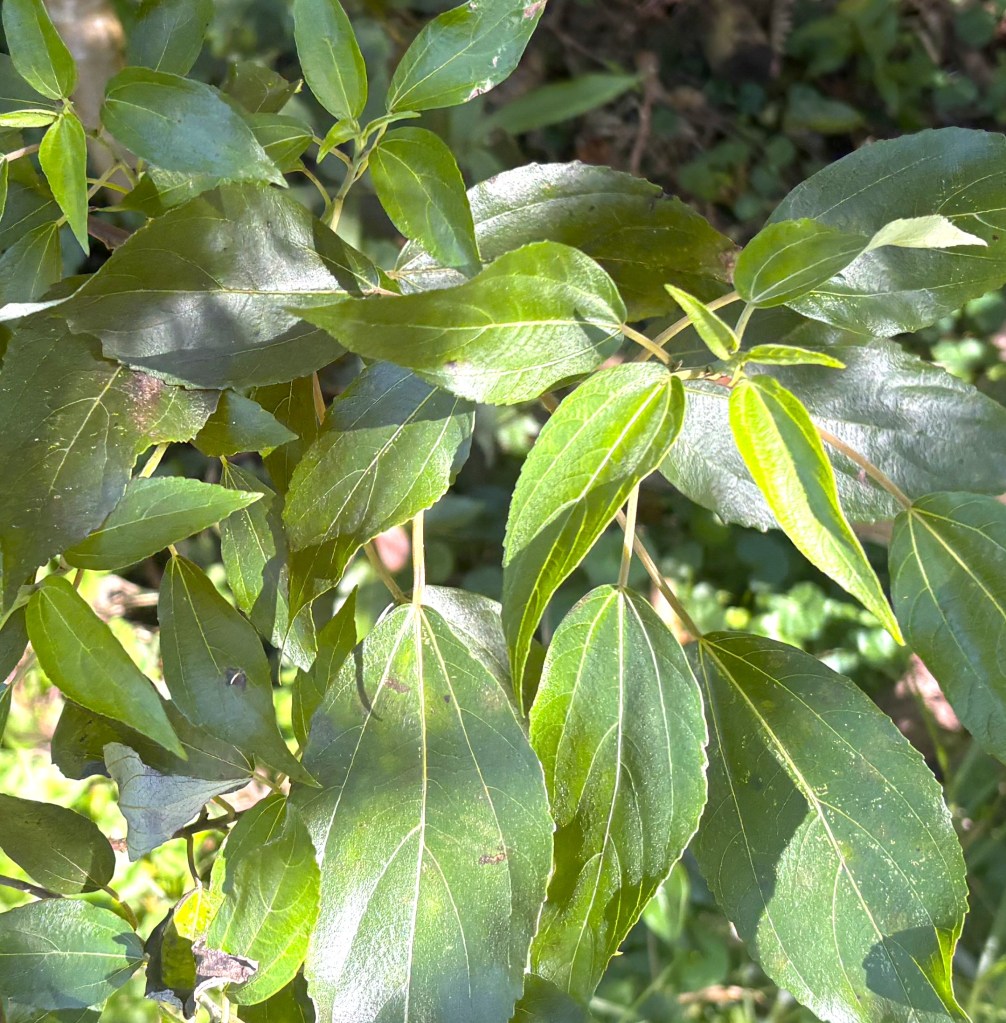
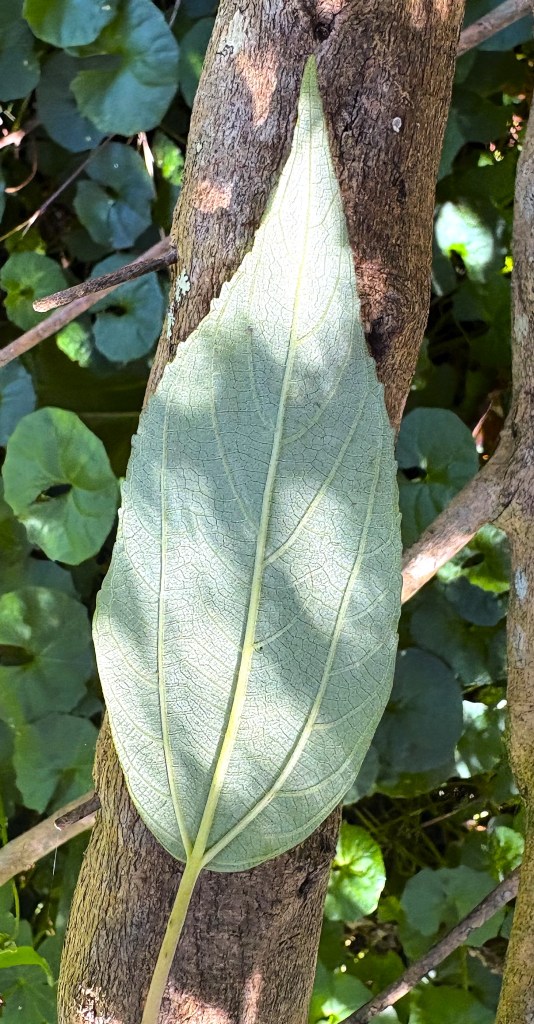
The leaves of the Native Mulberry (Pipturus argenteus), showing details of the silvery-green underleaf which gives this plant its species name. Tiny white flowers are inconspicuous but the small, white round fruits are edible. Unfortunately I couldn’t find any on this plant so shall try again next week!
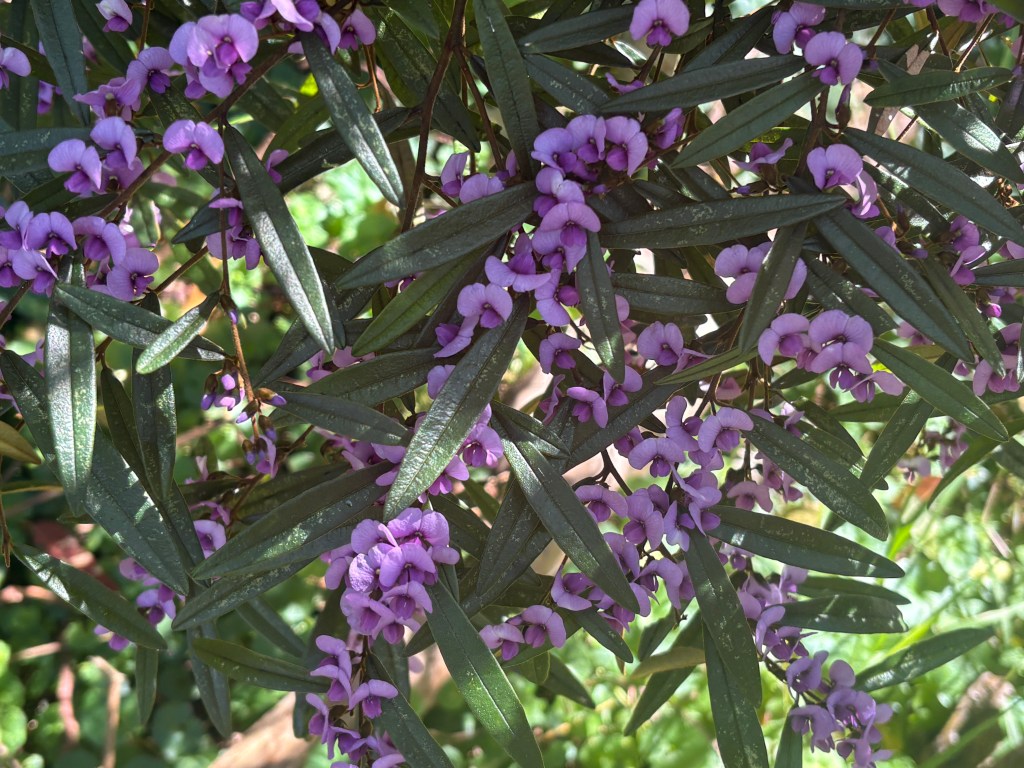
The most colourful floral show at the beginning of my walk was the Hovea (Hovea acutiflora) which has blooming for a couple of months now and seems to be putting forth a burst of blossom before retiring into obscurity for the next nine months or so. It’s like the garment of an emperor of old, thrown carelessly over a bush!This is a plant of rainforest margins and the adjacent eucalypt forest; a typically pea-flowered legume that brings the bush alive during cooler season. From a distance it attracts the eye, close up there is glory in the massed flowers in their shades of purple and mauve. These are a favourite with the tiny native bees and also with other pollinator insects.
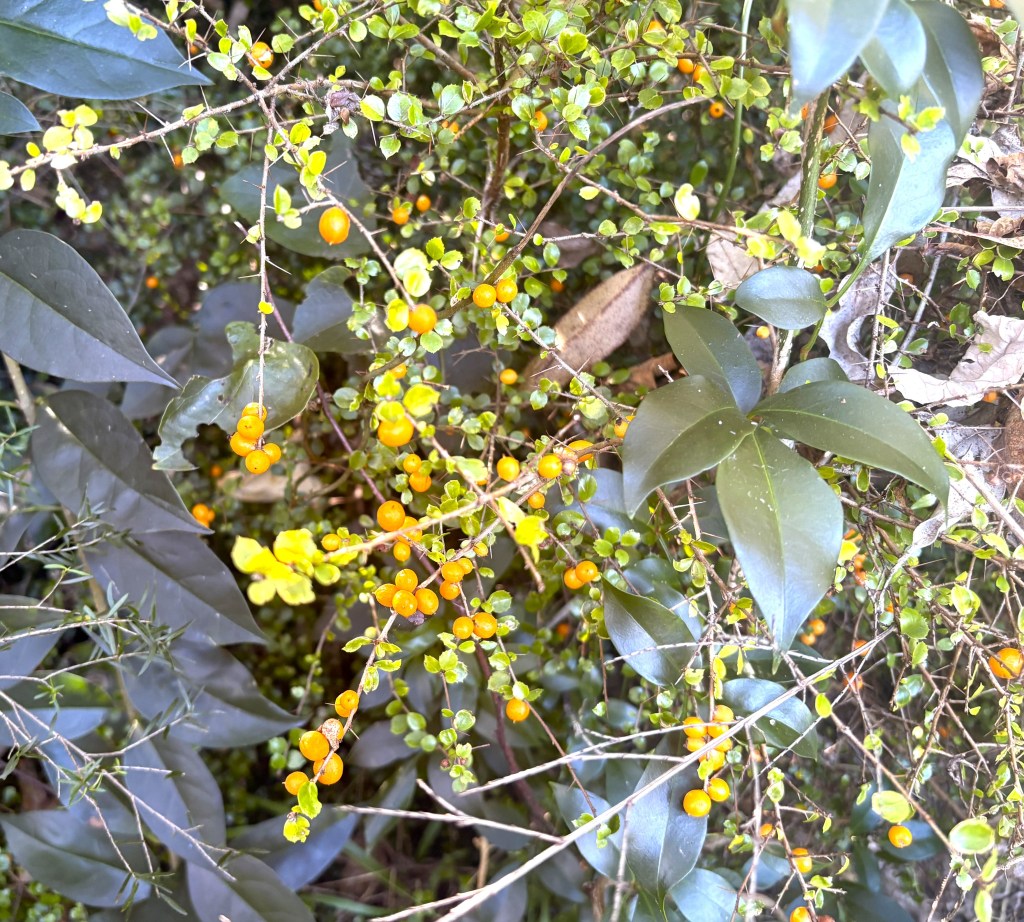
I’m surprised to see the small, round, edible fruits of Orange Thorn (Pittosporum multiflorum) still on the bush and pick a few to take home and add to my larder. They have a piquancy that makes a lot of dishes more interesting and are very good in marmalade, pickles, chutneys and other relishes. You have to try and avoid the thorns which are not easily visible unless you look close – though stick your hand in the bush and you’ll know they’re there!
Orange Thorn (Pittosporum multiflorum) – fruit colour can range from orange to yellow.
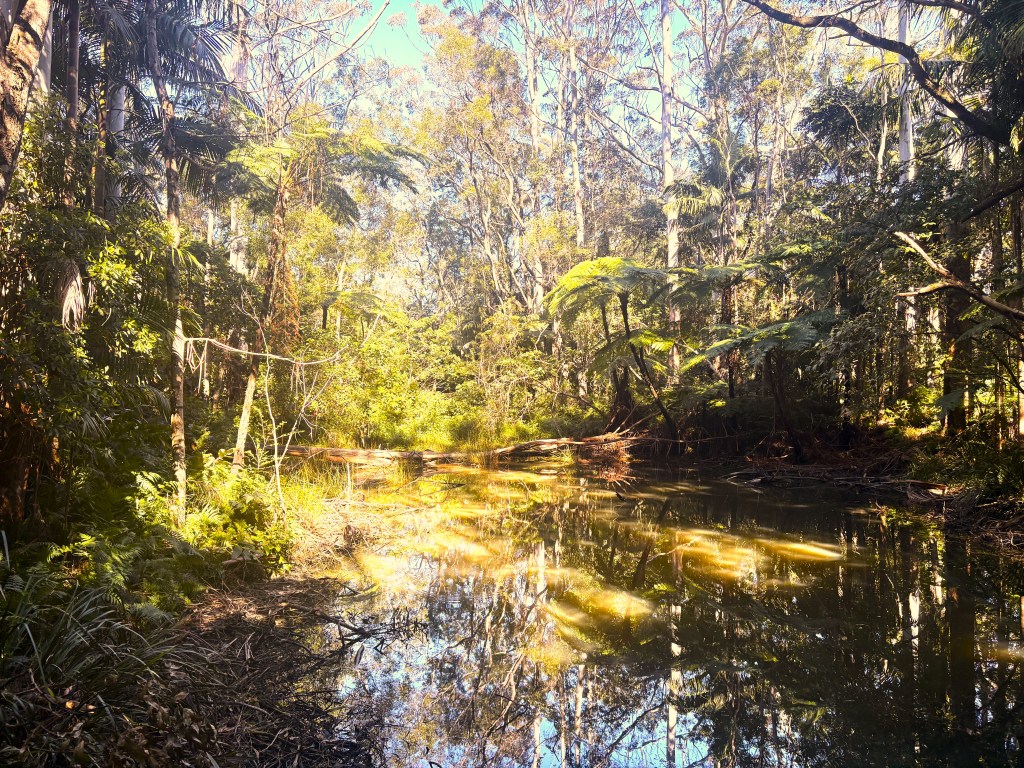
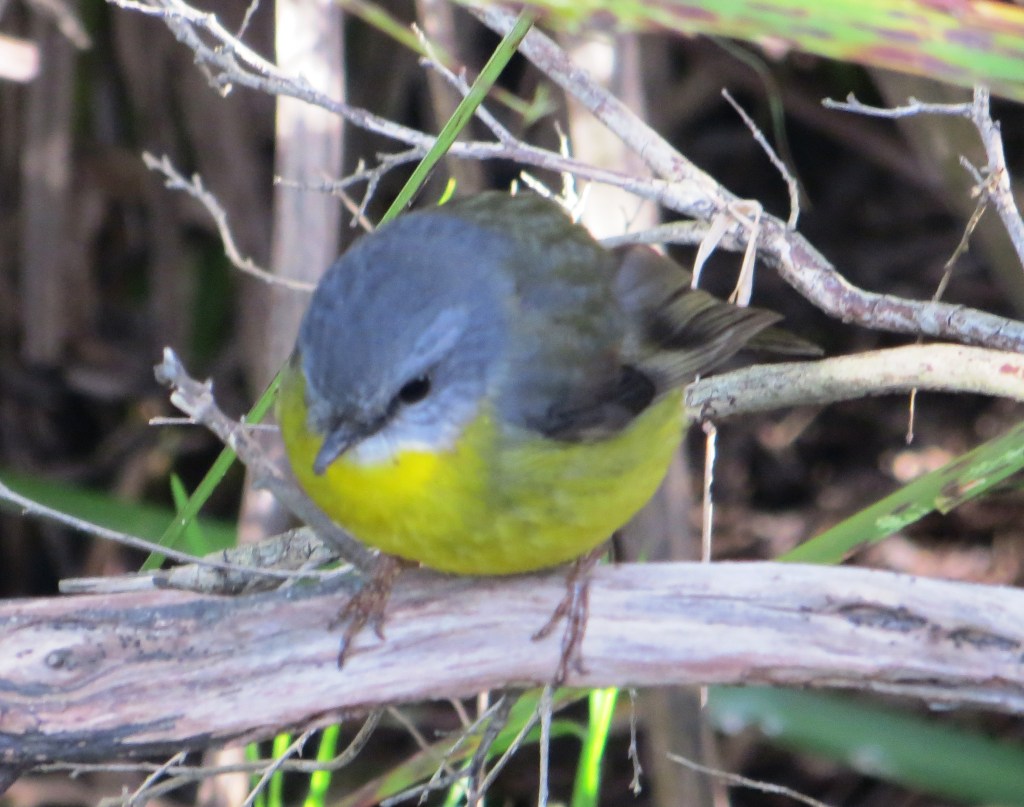
It’s a beautiful day, crisp and cloudless. I visit my favourite little forest pool to see what’s doing there…not much! I check the surrounding shrubs for a Rose Robin, one of our winter visitors, which someone had seen nearby but, alas, it didn’t show. Instead, a Yellow Robin dropped to the ground in pursuit of an insect; this cheeky little birds sit quietly in ambush and don’t miss much.
Yellow robin (Eopsaltria australis)
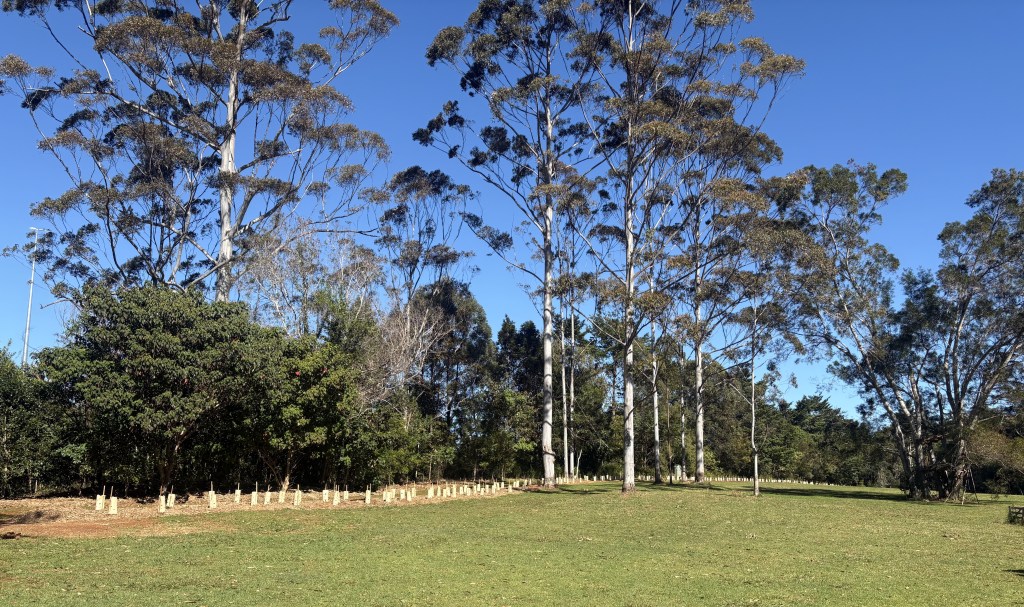
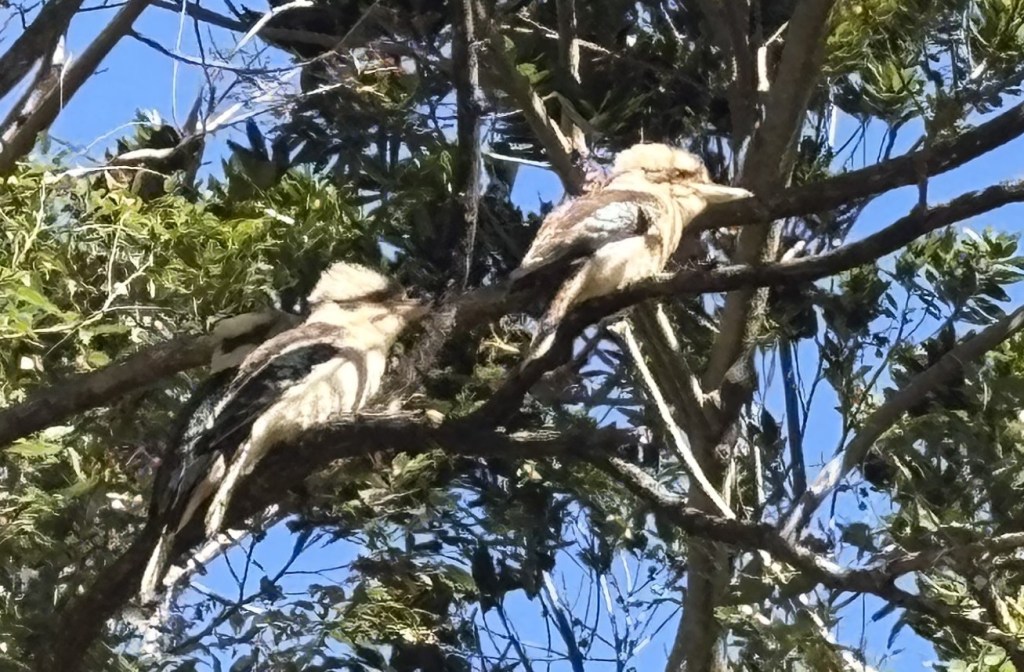
Out in the open meadow belonging to the local Boy Scout troupe three kookaburras chase each other from tree to tree, laughing all the while. Close to this line of fine Flooded Gums (Eucalyptus grandis) the local Landcare group has planted a long line of endemic species which, when grown will form a walking corridor with the eucalypt hedgerow between this meadow and the sports ground beyond. I think this was the outcome of this year’s National Tree Day which Landcare organised and supervised – a fine addition to the mountain’s revegetation program.
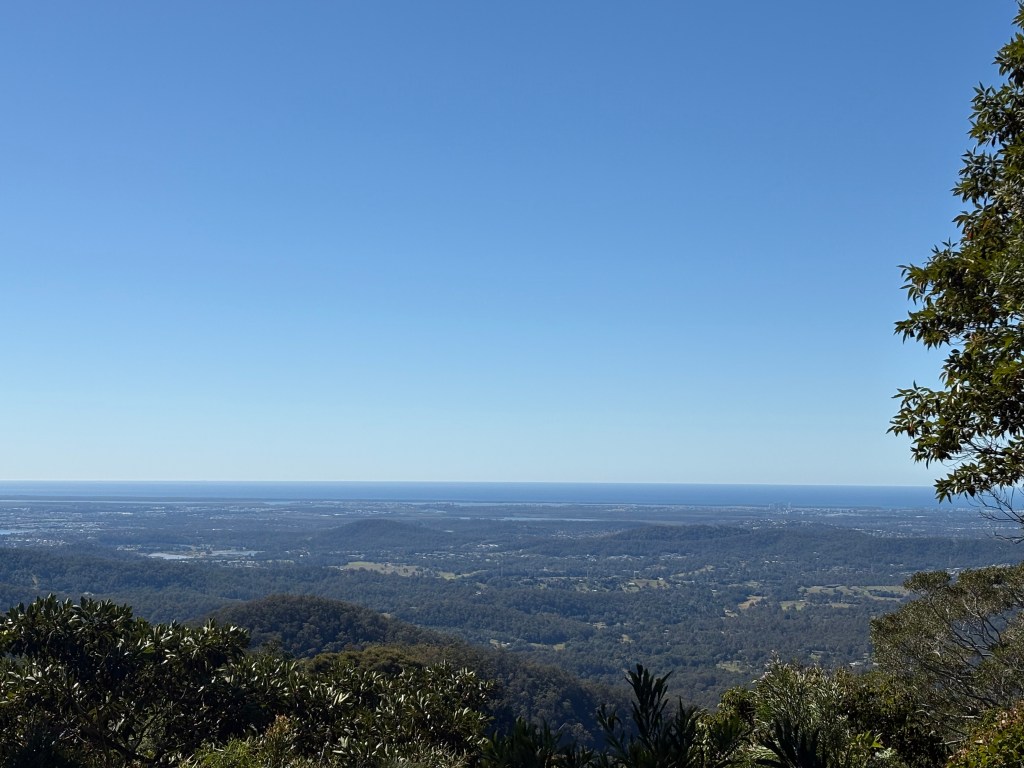
At the end of the cliff path I stopped to look over the valleys below to the sea. In the tree beside me a young Golden Whistler, one of this winter’s brook and still in its drab juvenile feathers, tried out his song with a few uncertain notes and then a loud, confident whistle. I knew how he felt – a beautiful sunny morning in the bush is well worth celebrating.
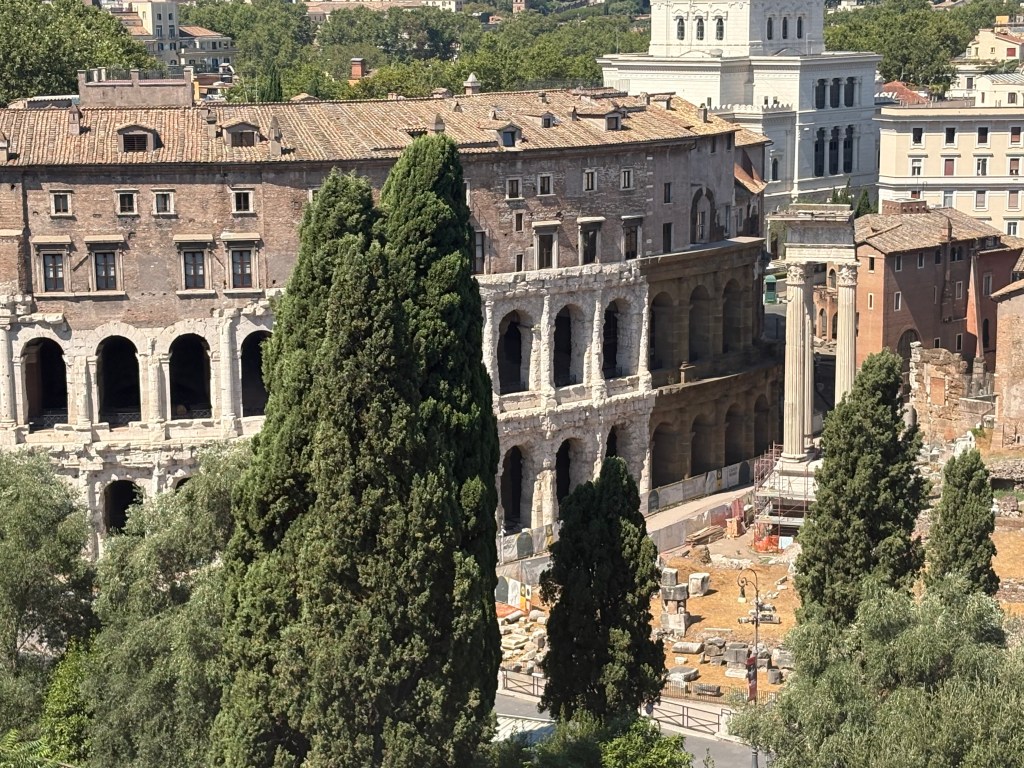
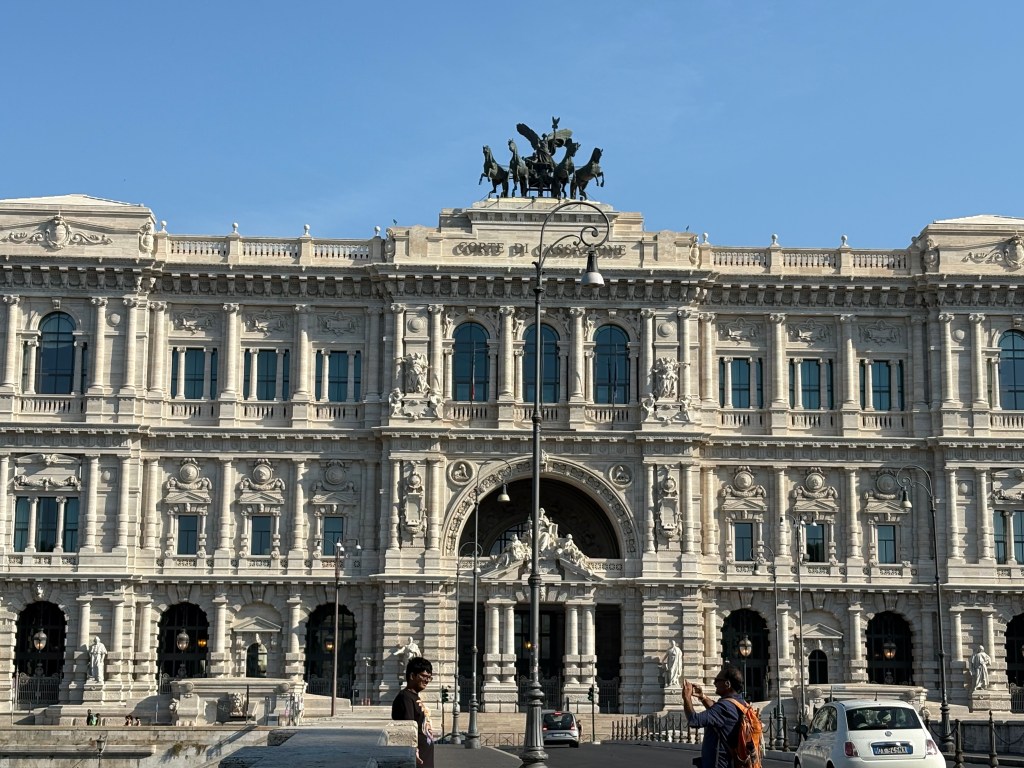
There are many grand photos of Rome to be found all over the internet, such as the iconic St Peter’s dome and the Colosseum. But to me it’s these small backside glimpses of ancient ruins or Renaissance splendour that make the city such a joy to explore.
It’s long been the custom when visiting Rome to throw a coin in the Trevi fountain, to ensure that you’ll return. I didn’t bother to do that on my recent visit because I knew – sadly – that I would not be going back.
This is not because I don’t want to but because age, distance, cost and other practicalities mean I have paid my last visit, much as I love this city of ancient beauty with its cultural depth and breadth that no other city in the world possesses.
In fact, I didn’t visit the Trevi fountain at all this time, just spared it a passing glance as I walked from my nearby hotel towards the river. And a passing glance is all you are likely to get in summer, when the tourist crowd is thick as brambles, hundreds of mobile phones held aloft in the vain hope of getting a decent picture. They even charge you now to go to the poolside lower level (tourist tip: go very early in the morning when they are cleaning the streets and you have a chance of a decent look).
The Trevi is a sculptural marvel but then Rome is full of marvels – and fountains. Not far from the Piazza Navone, with its three splendid fountains now also surrounded by tourists, I found a tiny square with a single pretty little fountain in it and no people at all apart from a couple of men playing cards outside an empty café.
And that’s the wonderful thing about Rome. If you’ve already seen all the Big Important Stuff there are always interesting little corners to explore, where the past – republic, empire, renaissance – is saved in stone.
Splendid architecture everywhere you look
This is a robust city that handles its visitors well and of course it’s had a lot of practice because people from far flung parts of the world have been attracted to it for more than two thousand years. Some came for conquest and stayed, adding to the gene pool even as they knocked down walls and buildings and then built others. It’s hard to say whether today’s tourist horde (of which I, of course, was one, albeit there to visit someone, not just to gawk) do as much harm as the Visigoths in 410 or the Bourbon bullies in 1527 or the Nazis in 1943 but they certainly make it unpleasant if you want to meander around the museums, clamber around the Colosseum, saunter down the Spanish Steps or ponder the Pantheon. As for the splendid Sistine ceiling, it’s just one long neck-aching shuffle. No chance to linger and take it in, which surely was why it was painted in the first place. As for the forum, this interesting area of rubble is a heat-trap in summer and smells of cat piss. I’d rather be thrown to lions!
Better to go at some less populous time of year, though unfortunately many others have also taken this on board and make their visits in spring (beautiful), autumn (melancholy but pleasantly cool) or even winter.
Or else do as I just did and gaze at all the architectural wonders from the outside, without joining the crowds indoors. After all, you can see all the art and history stuff close up on YouTube!
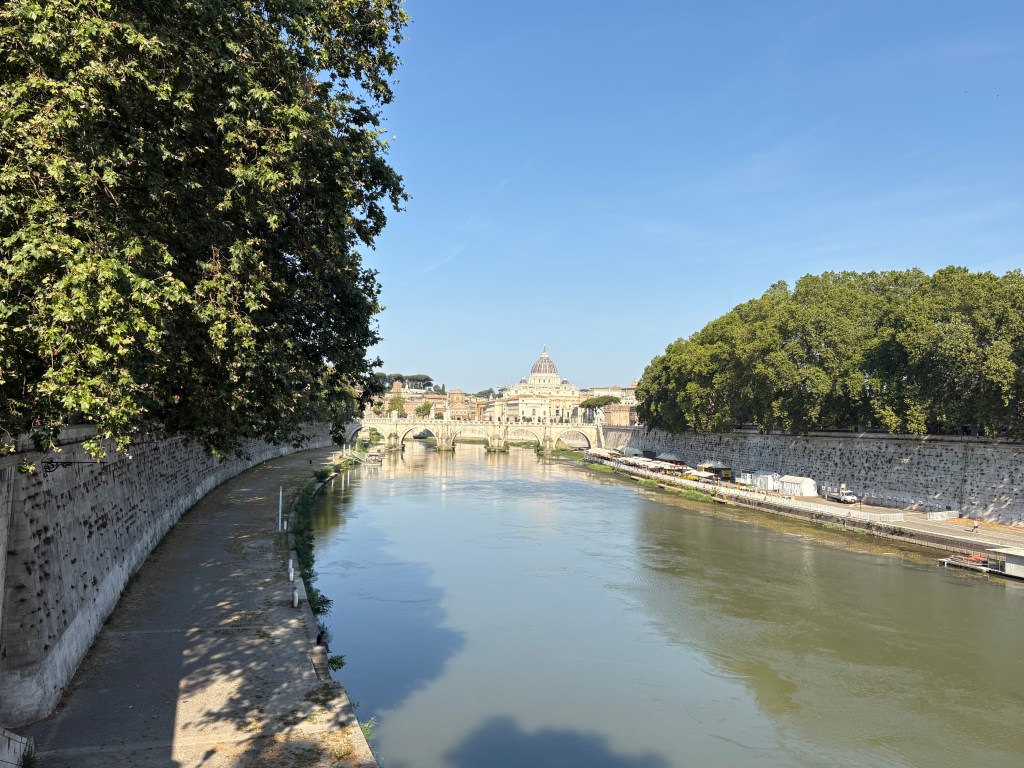
On a Sunday morning in mid-July with the temperature predicted to hit 35C I went out early and walked – quite a long walk – to the river. The Tavere or, as we foreigners call it, the Tiber. Such a small and modest river to carry the burden of so long and bloody a history. In the past it has carried the city’s sewage and a fair number of dead bodies towards the sea and must have stunk something awful. Malarial mozzies lurked there too, blown in from the marshes. Today, however, it is a pleasant if turgid and unexciting waterway making its urban way through high-built banks, lined with restaurants and, on the high part, tacky stalls of tourist tat in the busiest part but shaded by old chestnut trees and crossed by bridges that are themselves repositories of history.
I leant on a parapet and stared at the bulk of the Castello d’Angelo, thinking about Floria Tosca leaping from the top of it. Not a true story but one of my favourite operas. How typical of Puccini, I thought, to give his best heroine so defiantly melodramatic an ending, with thrilling chords to take her over the edge.
I hadn’t intended to go near St Peter’s but the streets were so quiet that I wandered towards the great dome, drawn as by a magnet, thrilled by a sudden burst of organ music. Not coming from the famed basilica but from a smaller church on the right hand side as you approach the square, the Chiesa di Santa Maria in Transpontina. This is an exquisite church: highly decorated, glittering masterpiece of an altar, golden columns supporting vaulted archways and a ceiling covered in frescoes. The floor blessedly cooled by marble in a plain geometric patter, offering relief from the outside heat and the early baroque splendour above.
Mass was just beginning and I took a pew, an atheist who was once a devout little chorister, thrilled by the first lilting phrases of a sung mass and the procession of priests walking in line down the side aisle and through the transept to the central aisle, all gilded and embroidered and swinging censers.
A snippet of the sung mass
It was one of those marvellous moments that one is sometimes lucky enough to experience while travelling, unexpected and exhilarating. Rather a shame, I thought, that the congregation was so small and consisting mainly of drab nuns.
Something you don’t often see – St Peter’s on a sunny summer Sunday morning, with only a small crowd to share its glories with me!
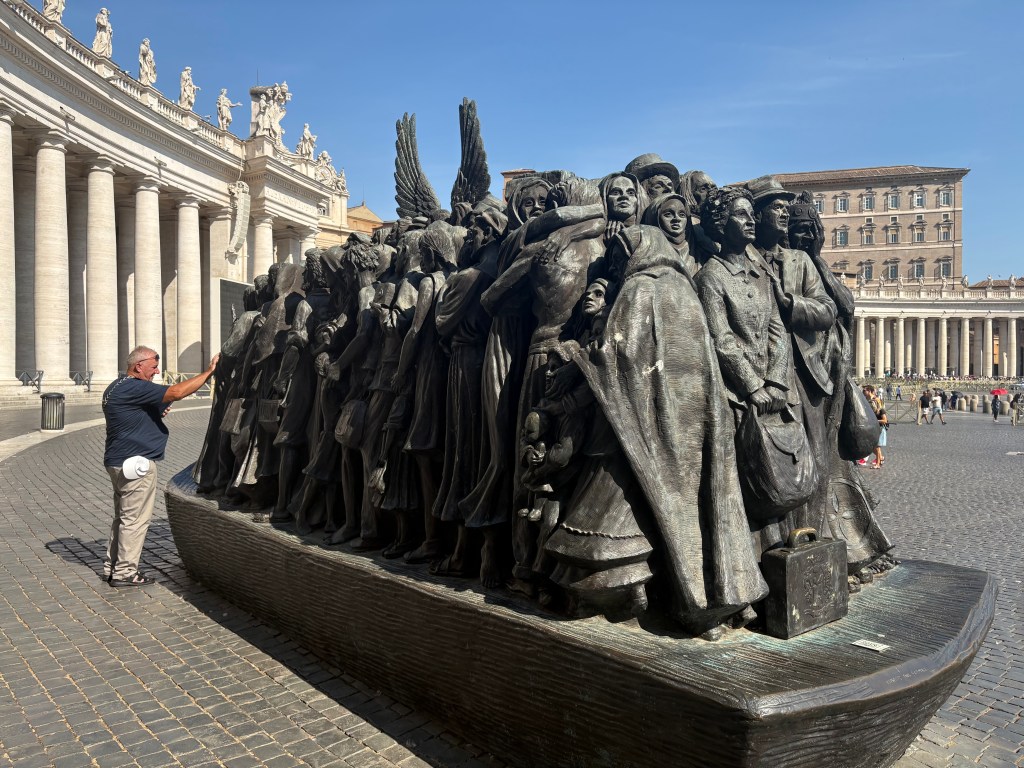
Feeling suitably sanctified I ventured somewhat nervously towards the square, for I am easily overcome by crowds – and also by heat. In proof that miracles do still happen, the whole area was surprisingly empty of people. I sat in the shade on the base of a pillar, admiring the sheer architectural artistry of it all – the two arching colonnades embracing the vast, paved space and, at the apex, the basilica of St Peter’s and its mighty dome, so familiar even to those who have never been there. Postcard stuff. I had no intention of going inside when everything opened – been there, done that, got the holy relic. Instead I braved the rising heat and wandered over to the other side to admire something I hadn’t seen before – the life-sized sculpture that honours refugees and migrants.
It’s called Angels Unawares; beautifully executed by a Canadian artist and of course created to tug at the conscience. All very well, I thought, but refugees have been on the run since the days when the Jews fled Pharoah, back when promised lands were easier to come by. Today it seems to me more lastingly humane to use our resources to fix the problems at home rather than reluctantly give refuge to those forced to flee and become strangers in a strange land. You only have to see the sad Africans trying to sell bottles of water and tat to tourists by the Colosseum to understand that.
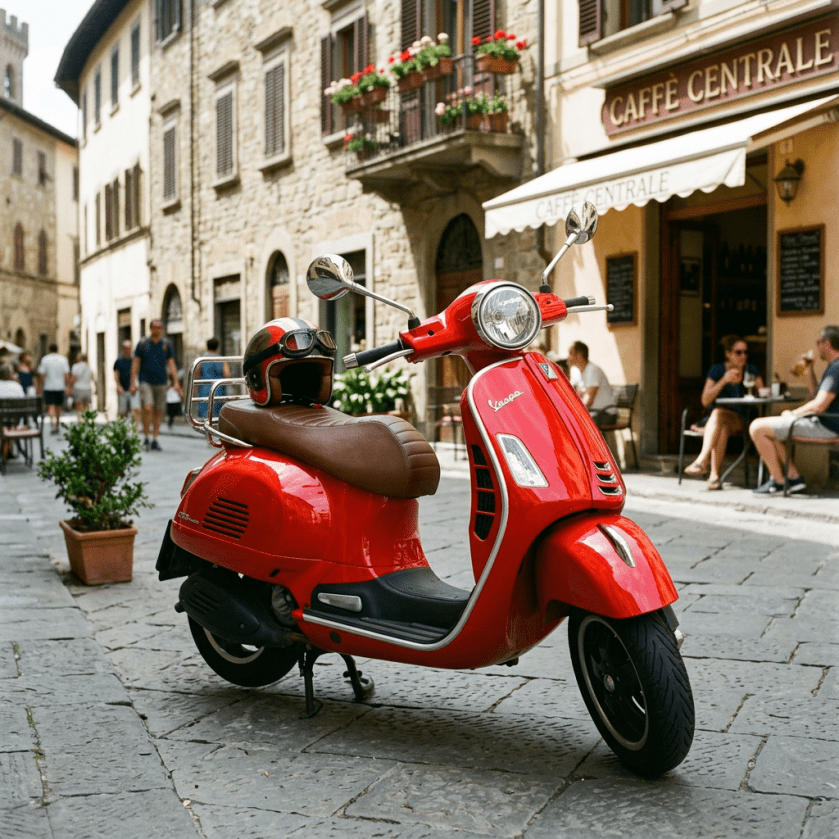
The crowd was building, along with the temperature, and so I walked back to the river, where there was a breeze, then south west away from the historical centre through Trastevere on the right, then crossing through the old Jewish quarter and walking back the other way. The higgledy-piggledy narrow, cobbled streets behind the busy river drive are full of little architectural wonders but I was most intrigued by the glimpse of ordinary lives – a woman walking her corgi, kids on bikes, a man washing his motor scooter. The Vespa is as powerful a symbol of Rome as any ancient statue and I idly wondered whether one day somebody would sculpt one in gisnt size and paint it bright red or yellow and mount it atop a building, like the horses on the Vittiorio Emmanuele statue that dominates the skyline. Something to make visitors hundreds of years hence marvel at the artefacts of the past.
The Tavere or Tiber – hard to think that this placid little river has witnessed so much horror in its bloody past. But that’s the thing about rivers, they carry their horrors away.
In the meantime the Vespa, one year younger than I am and a triumph of affordable transport for the masses, is, like the wasp for which it was named, a bloody nuisance to pedestrians but a boon those who rely on it – slick, quick and so much easier to park than even the smallest car.
A pest to pedestrians but oh, so elegantly Italian!
I skirted the Piazza Navone and its fringe of tourist trattorias, peeked at the Pantheon which, all but deserted when I’d walked by earlier, was now filled with folk, then caught a taxi and went to lunch with friends near the Piazza del Esquilino and Santa Maria Maggiore. (L’Angolo di Napoli, not on the main tourist route, authentic Roman cuisine, highly recommended).
When it comes to passing a Sunday morning in Rome, in high summer, this is the way to do it. Then grab a gelato somewhere and go back to your air-conditioned room for a rest before venturing out again into the hot streets. There’s a vibe to Rome after dark, when most of the populace, local and tourist, seems to idle away the evening at the thousands of restaurants that line the back streets. Most, thankfully, are air conditioned indoors but I like the pavement experience where you can watch the people on parade.
The good thing about visiting Rome at this time of year is that the sun is out and the sky is blue – a good way to see any city. Still, I decided to spend my next – and last – day in Rome by doing something I hadn’t done before and going to the Capitoline Museums.
These are, no surprise, on the Capitoline Hill – being a Roman history buff for most of my life I still get a buzz from ascending the seven hills on which the city was built and thinking about Julius and Anthony and Brutus and Octavius-Augustus and Cicero and Tacitus and all the other famous old blokes who once did the same. The two museums, built across a piazza designed by Michelangelo,are surprisingly little known to the average tourist and also have the attraction of being air conditioned.
So I headed out early, making a detour to the Tarpeian Rock from which all sorts of offenders used to thrown from earliest Roman times to at least the first years CE. It’s not that high, about 25 metres, so it’s possible some suffered for a while with horrible injuries before being finished off. Nowadays you’re more in danger of getting struck by a Vespa while crossing the road to the base. Did I imagine it or are the plants a bit greener there around the base than in other parts of this largely treeless city? Nurtured by all that blood and bone? It’s not far from the forum so I suppose people used to go along to watch this novel form of execution and then wander to the city’s main happening place for a cup of something and a chat. Something to do when you weren’t going the other way to the Colosseum and watching gladiators slaughtering tigers, or each other. Public entertainment is not what it was.
Because I was still too early for the museum opening at 10 am I sat in the middle of the Piazza Venezia watching the morning rush hour and wondering how cyclists found the courage to negotiate it as the cars, buses, trucks, motor cyclists and scooter riders jockeyed for positions in streets with no lanes marked. I gazed up at the grandiose monument to united Italy’s first king, famous for his large moustache, and thought how much better off those horses were than being down below in the morning muddle.
This is what I most enjoy about travelling at my age now. Just sitting there sipping something and observing the life that is, while pondering the life that was. Rome, my favourite city, is perfect for that.
The museums proved to be a cool, quiet haven. A mere handful of visitors including a couple of earnest Asian tour groups, all easily avoided in this museum of so many lofty rooms. To me, this place is the very essence of Rome, from the artifacts of early Etruria to the galleries of paintings and – above all – the splendid sculptures. Including the Dying Gaul and the bronze wolf suckling Romulus and Remus, mythical founders of Rome.
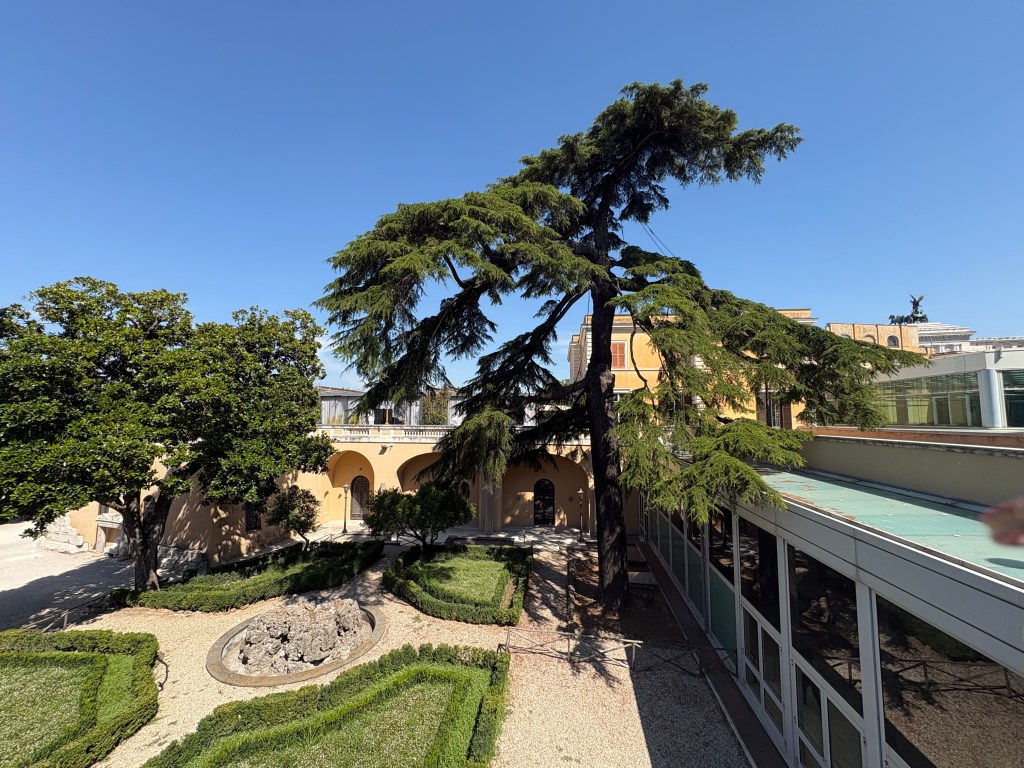
There is a small, secluded garden and a roof terrace which offers views right across the city. If you want a great vantage point from which to view the ancient rooftops and many domes of Rome, this is the spot. I spent most of the day there, enjoying the permanent collection and a couple of temporary art exhibitions – all marvellous.
The rooftops of Rome – from the Capitolineand, below, the very Roman courtyard garden in one of the Capitoline museums.
Then I went forth to brave the hot and crowded streets to grab a calzone on the way back to the hotel, where I did my packing and rested before delighting in a final meal at the charming little trattoria across the way, Mas, with its charming proprietor and friendly waiters and unpretentiously authentic cuisine. I ate here several times because they made an elderly woman, travelling alone, feel so welcome.
I do find Rome to be a warm-hearted city, displaying its historical treasures con brio but without undue pomp (though I do wish there wasn’t so much rubbish lying around!). I feel sad to think that I shall never see it again yet also happy because, knowing this, I made the most of my final visit. My final homage to the dual splendours of antiquity and renaissance which are still found there is such abundance.
Addio, bella Roma, brava cittå.
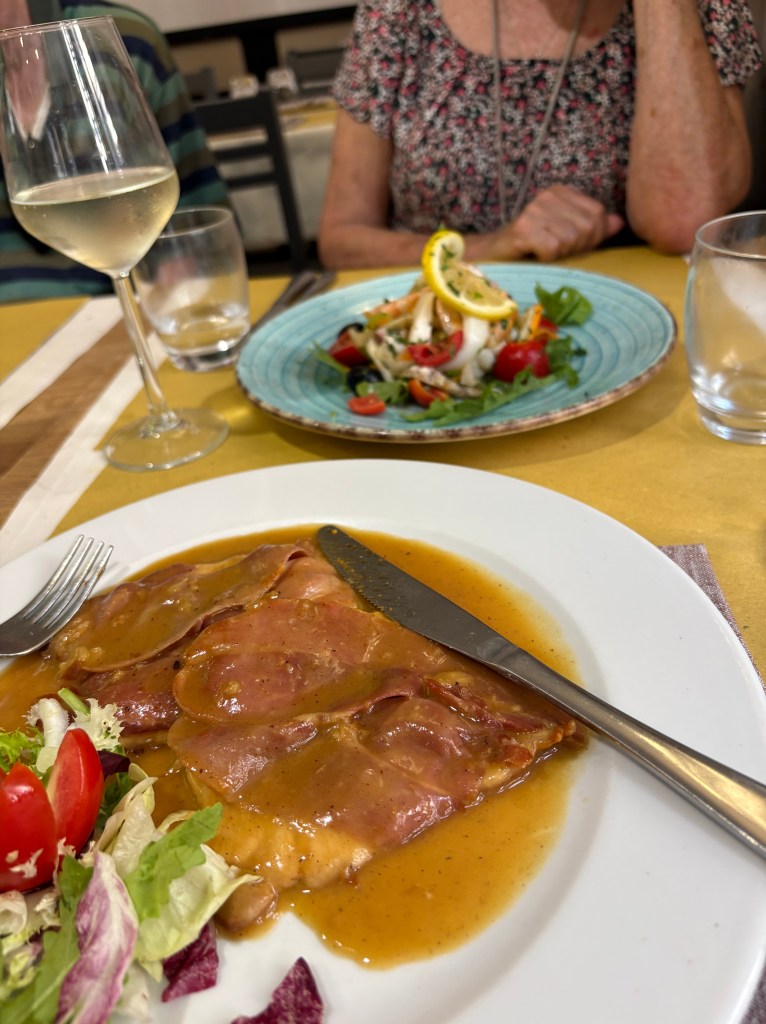
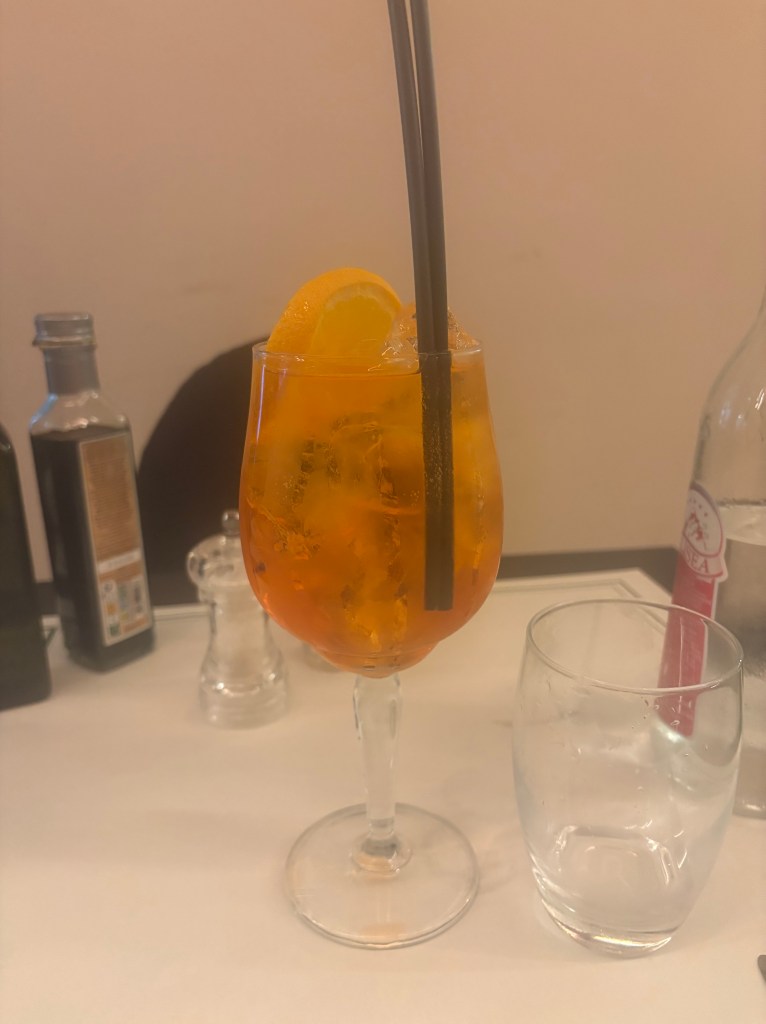
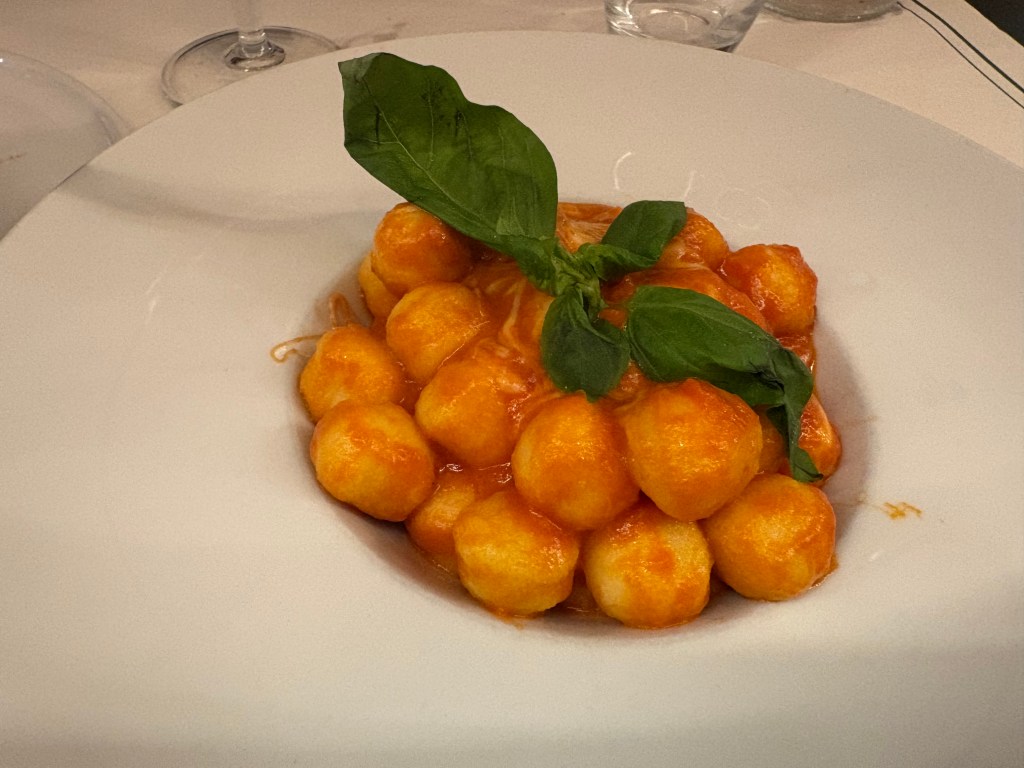
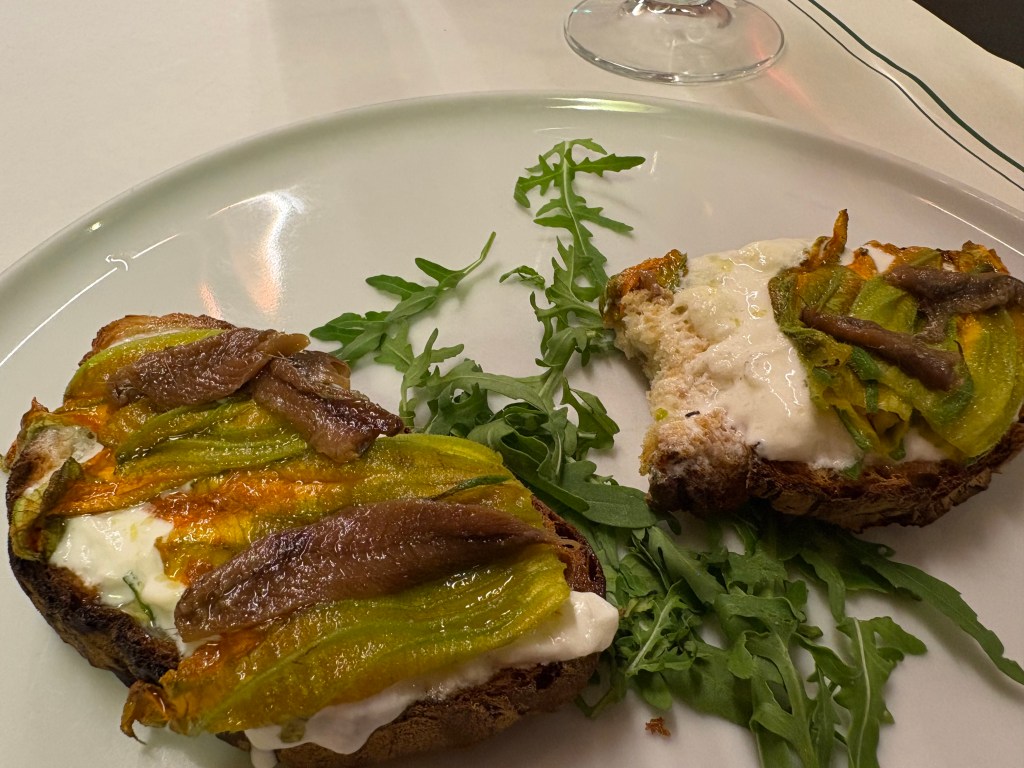
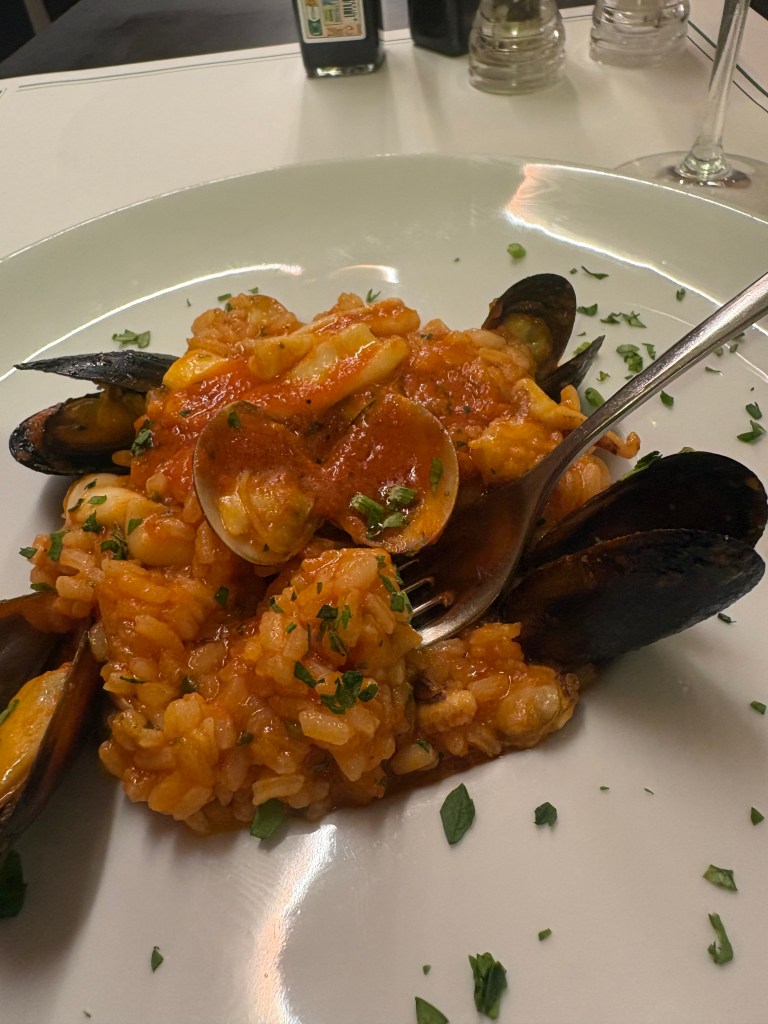
I love eating in Rome and here are some of my favourites – saltimbocca, gnocchi fresh made, fiori di zucca (zuccini flowers stuffed with anchovies and mozzarella and lightly battered and fried), seafood risotto and a glass of Aperol spritz beforehand to sharpen your appetite.
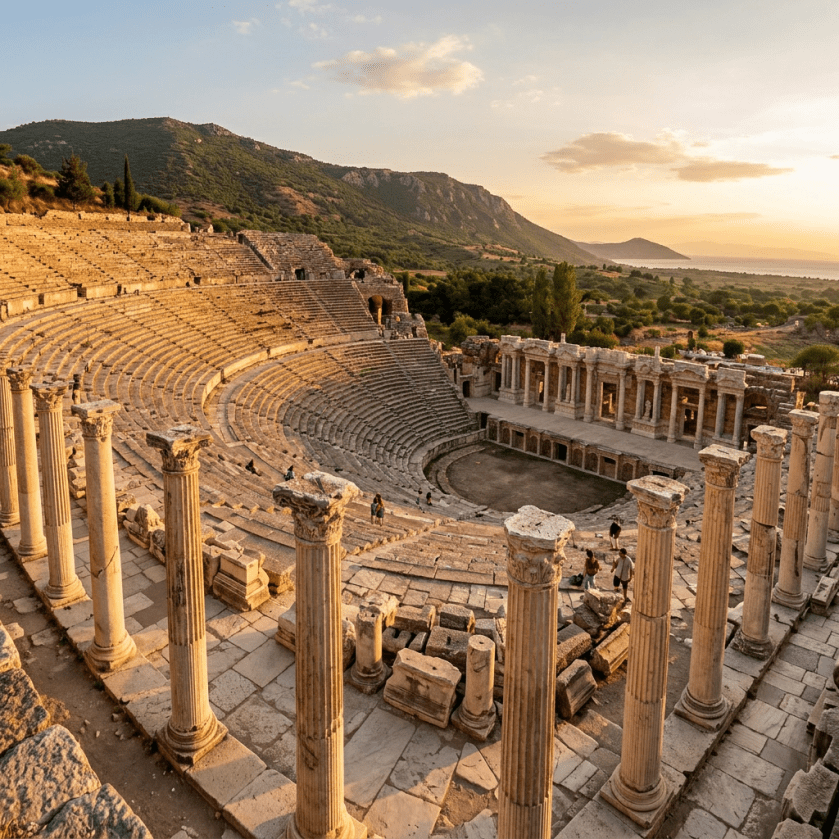
The ancient Roman theatre at Ephesus bathed in warm sunset light
Paul the killjoy – epileptic or schizophrenic?
One of the reasons I wanted to go to Ephesus was because it’s where, according to Christian writings, the apostle Paul – Saint Paul to Christians – was unceremoniously chucked out after lambasting the locals for worshipping the goddess Diana. Or Artemis, if you favour the Greek.
Of course, what VERY little we think know of Paul means that we can’t even be sure that he existed at all. Though believed to have been born more than half a century after the birth of Christianity’s foundation figure, Jesus of Nazareth, there is no mention of a Paul or Saul in any early Christian or non-Christian sources, even by the best-known historians of the time. And when his name does pop up, it’s as the writer of letters to various Christian communities (the term itself only just coming into use; it’s origin still a matter of scholastic debate). In fact according to the New Testament, Paul wrote to just about everyone: Romans, Colossians, Corinthians, Thessalonians, Hebrews, the Jewish community at Ephesus and his best buddy Timothy.
The authorship of all the writings attributed to Paul are themselves subject to ongoing scholastic debate. As a journalist, trained in the days when truth in journalism mattered, I would be sceptical of a bunch of old letters, attributed to one man only, being any kind of truth. Given what I know about how the Chinese-whispers effect of the spoken word is distorted through time (see Monty Python’s Life of Bryan, Sermon on the Mount), given how the written word is filtered and retranslated and too often edited or rewritten to serve a cause or individual interest, given what I know about the established codices of the early Christian church and indeed about Ephesus itself (more of this below) – I remain deeply sceptical about Saul of Tarsus.and his all-too-convenient conversion along the road to Damascus. As do many eminent historians today.
I also bear in mind that writing paper as we know it was not around until centuries after Paul’s time and it seems unlikely to impossible that he could have written so many “letters” to any people a distance away on parchment scrolls. Leading to the conclusion that these useful missives were written by churchmen long afterwards, when the New Testament as we know it was being put together from scraps of early tales and ecclesiastical construction.*
After all, somebody somehow managed to collate all these scrolls, scattered as they were through so many countries and communities. Who did that? Who thought, “Blimey, here’s another of Paul’s long, long scrolls. Should we keep it for posterity? Where do we keep anything this damned big?” It’s not as if Paul was an important, famous figure whose works, like those of Plato, might have been deemed worthy of keeping in the city library. Itself prone to earthquake, war damage, rising damp and the abandonment that comes to all our buildings over the centuries.
It’s rather like the man’s death and subsequent martyrdom, which Christians claim to be about 62-64 CE. You can’t find anything about it in the New Testament. And, if as has been claimed, the Emperor Nero in one of his hissy fits chopped off the apostle’s head, it certainly wasn’t recorded by any Roman historian or writer of epistles. Like everything else, it was a legend propounded by later Christians and passed down as fact. My little copy of the King James bible version printed in 1944 has a handy note to this effect at the end of Timothy 2. He’s called a “saint” because he claimed to have performed miracles but was never formally canonised.
But for the sake of argument let’s assume that the Christian historians, most of them clergymen and women, have a point, and that there really was such a man, Certainly, according to them, he was the real founder of Christianity which, until he took it up as a cause was just a lot of disparate small groups of Jesusites. Really, the religion should be called Paulianity!
Though he doesn’t strike me as a very nice person on whom to found a religion; being, judging from”his” letters, dictatorial, opinionated, self-righteous, pushy, uncompromising and over-zealous – a term of which he himself would probably have approved. He suffered “visions” that realists would call hallucinations and this might have been caused by epilepsy, schizophrenia, wine, drugs or were just plain made up to bolster his connection with the divine – Mohammed claimed these sorts of otherworldly visions too.
Saul of Tarsus, according to Christian scholars, was a Jew and a Roman citizen and a Pharisee dedicated to Judaisman (like Christianity, a term not used back then), the Torah and the One God of Israel. In most respects that’s what he remained – the difference being that he viewed this Jesus of whom his persecuted followers spoke as the long-awaited Messiah. “Christians” to him, were just the Jews who had got it right, and the larger number of non-Jews who liked the idea of a God-made-man who stood up for the poor and downtrodden.
Saul-then-Paul was not silly or vain enough to claim messiahship for himself. He knew nobody would believe him, being so obviously of flesh and blood and apparently unattractive to boot. Rather like today’s tele-evangelists who evoke a superior Being to command our attention – and our money because their own earthly flaws are all-too-evident.
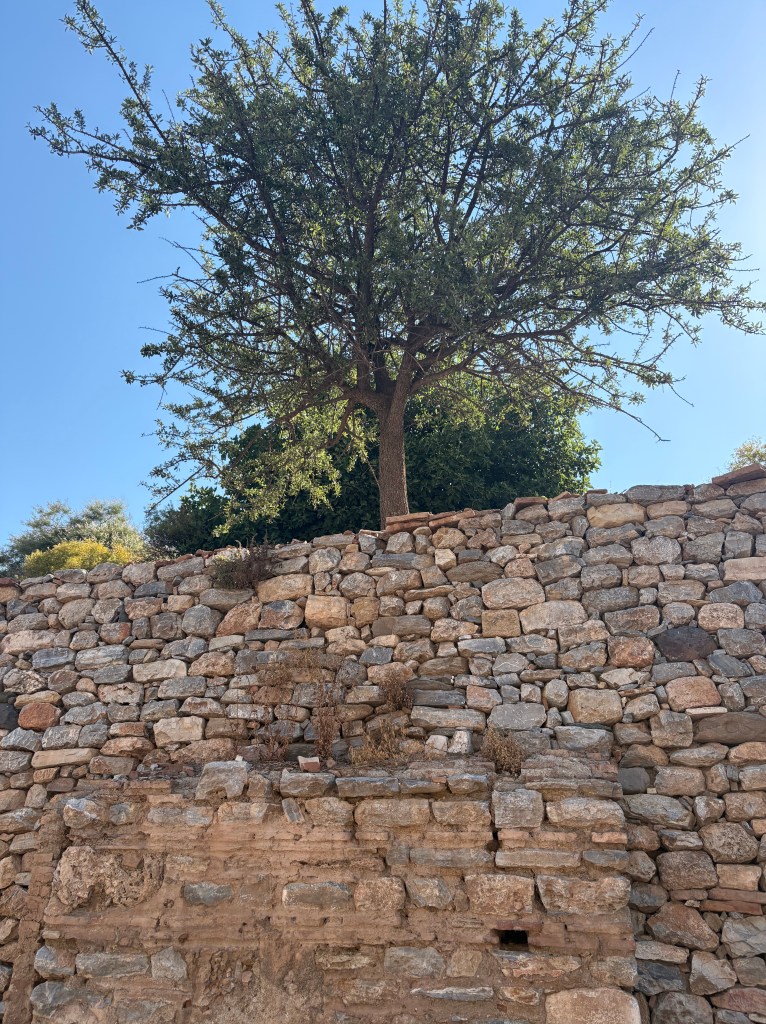
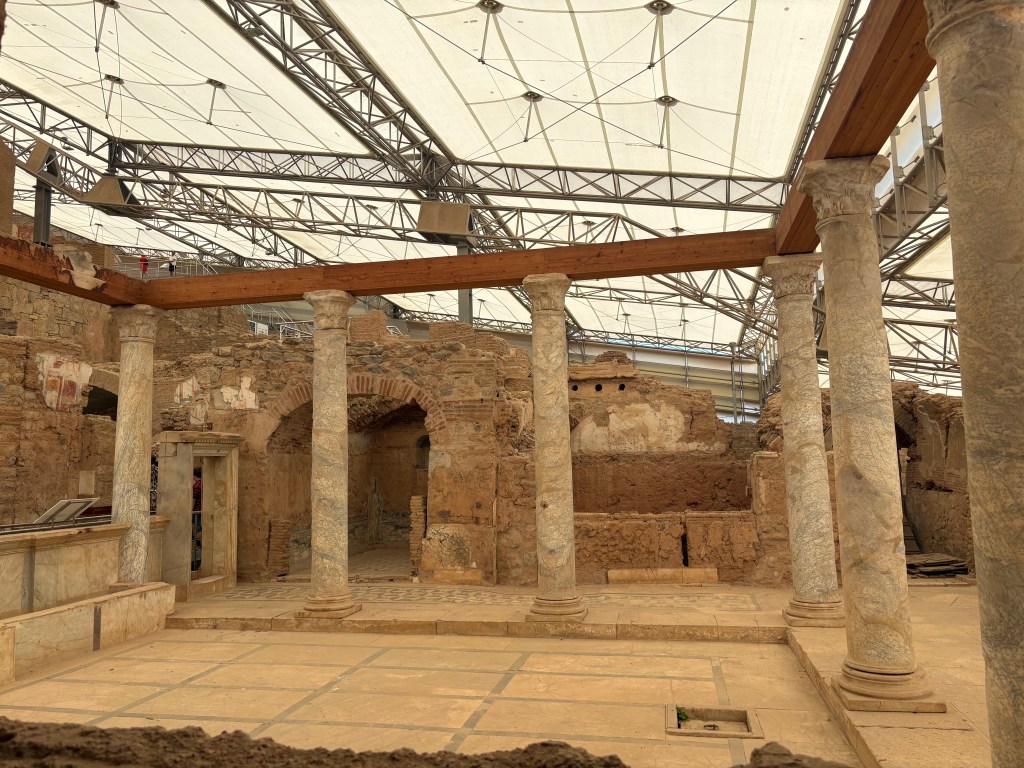
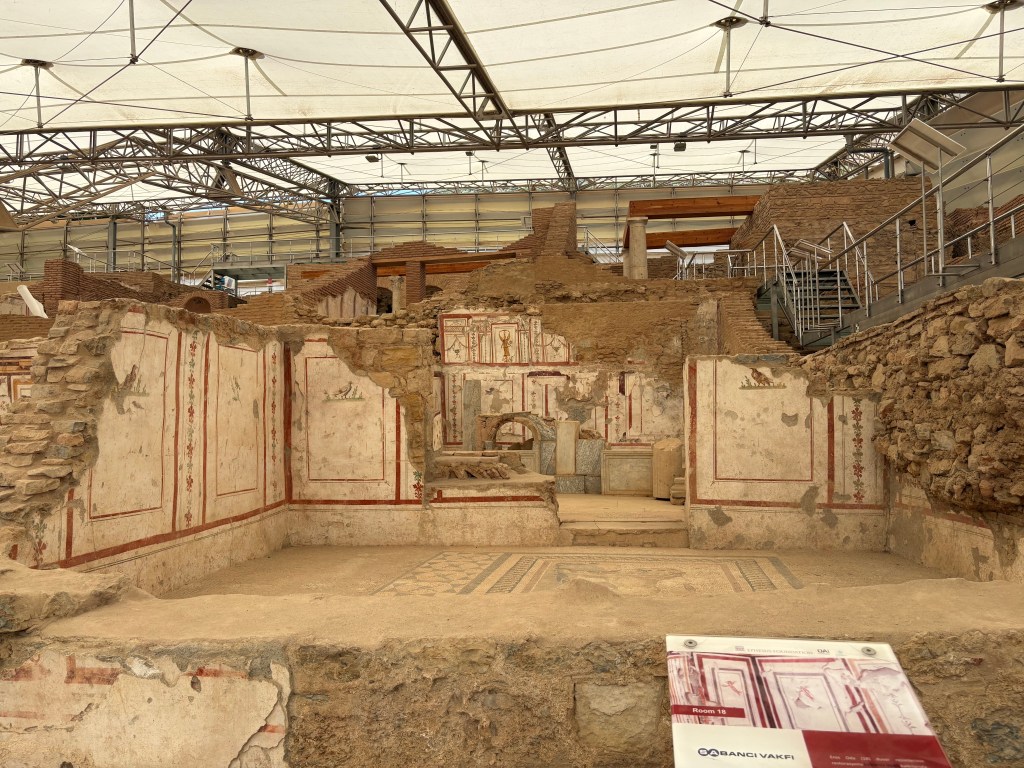
Archaeology – at a price (and don’t go in summer!)
An old olive tree atop an ancient wall dating back to at least Roman times. Olives can live to 3,000 years in this part of the world. Also, two shots of the Roman villas which have been painstakingly excavated so that we can get a good idea of how they lived.At least if they were rich!
Anyway, back to Ephesus, which I visited this year, in his (so it is writ) footsteps. He went there a time or two and lived there for a few months; preaching to mostly unconvinced Jews (who had already established a synagogue there) and Greeks. On one occasion his two companions were threatened by the crowd, instigated by artisans who made their living crafting artifacts that honoured the Goddess Diana whose temple there was one of the Seven Wonders of the World. Paul himself was advised by his fellow proto-Christians not to hang about and risk the wrath of the crowd.
Today, you can see the amphitheatre where much of this story supposedly took place. It has all been dug up and bared to our eyes in one of the most spectacular and important architectural endeavours on the planet. Ephesus dates back at least 10,000 BCE and this city, once pivotal to the histories of first Greece and then Rome, now offers tantalising remnants of both. There are the remains of Artemis/Diana’s temple, there the great library in surprisingly good nick, there the remains of Roman villas with their mosaics and frescoes and excellent plumbing. And much more. You walk the ancient marble stairway, slippery as ice from the many feet that have trodden it (and still do), touch the walls of hewn rock and man-made stone, marvel at both the sheer oldness of it and the modern skills and dedication that have uncovered all this evidence of history for our contemporary eyes.
Rather a lot of eyes, unfortunately. Millions flock to Ephesus each year, most of them with very little true appreciation of what it reveals about our past. Groups of earnest Asians behind their be-flagged guides, admiring but lacking my advantage of cultural relevance (rather like the way I once went around Angkor Wat). Groups of bored schoolchildren. Women off cruise ships flaunting too much overweight flesh in skimpy tops and shorts and sandaled feet that bring them to grief in the rubble. Fat, elderly, red-faced men in Hawaiian shirts panting in the heat and thinking only of cold beer.
Because, for much of the year, Ephesus is HOT. South-western Turkey has brutal summers and the city today is in a bowl of low, dry, mountains and a long way back from the sea, thanks to the silting up of the once-busy harbour. Today’s harbour is at Kusadasi, nearly an hour’s drive away. If you visit there – and I recommend it if you love history and archaeology – go in the early northern hemisphere spring or late autumn. Possibly winter.
Old olive tree above an ancient wall. Olive trees can live to 3,000 years in this part of the world so I wonder what this one has seen.Roman villas, excavated meticulously to show us how they lived back then – if they were rich.
Of course, Ephesus attracts serious scholars both amateur and professional, including Christians. In New Testament terms the city is associated more with the apostle John than with Paul and nearby is a house which, it is claimed, was where Mary the mother of Jesus spent her last years. A claim so breathtakingly ridiculous that it’s a true wonder of the modern world that anyone would believe it or bother to visit the place. And yet they do, the faithful and the curious.
And that’s the thing about Ephesus as it appears in the bible, and about “saint” Paul himself. What we think of him today comes down to a matter of faith – if you are a Christian then you will disregard all evidence to the contrary and accept that he was what the early (and, I think, not-so-early) Christian writers want and believe him to be, and that all the letters were written by him. If you are not, then you will either dismiss them outright or subject these to the forensic examination of historical expertise.
Ephesus was very important to the formation of Christianity; indeed it is at least as important, if not more so, than Jerusalem or Antioch or Alexandria or Constantinople – even Rome. So many councils were held here that it’s not unreasonable to claim that it was this city, not just Nicaea, which effectively created Christianity and made it into a religious belief system powerful enough to take on the world. There were many stakeholders in such a power; not just churchmen (themselves hungry for a power that they abrogated to themselves through claiming Divine backing) but also rulers and the courtiers, politicians and military men who supported them. And thus, feeding upon itself down the ages and growing fat in the minds of the ignorant and cowed masses Christianity, like Islam that later sprung from it, Christian doctrine and practice dominated life and thought pretty well everywhere west of India.
These early councils were not by any means peaceful. Bishops, the newly-minted church leaders, fought bitterly over the tiniest nuances of doctrine. Schisms arose, some of which endure. Blood was shed – at least one bishop was murdered. The seeds of Christianity were indeed nurtured by the blood of its martyrs – most of it shed by fellow Christians who thought that Christ was god made man, and not the other way round. Or that a certain number of angels could dance on the head of a pin. It was like an early form of football rivalry and even more violent.
But there is so much, much more than early Christianity to be found at the archaeological treasure that is Ephesus. Diana/Artemis was a bigger deal here than Jesus ever was, and other deities as well. It was an important centre of government and trade for thousands of years. Rulers came and went, emperors visited, arts and crafts flourished. Until the Visigoths came and wrecked it and an earthquake finished the job and the sea became impossibly far away. It’s harsh country; goats thrive here and olives are grown and, where water can be accessed, stone fruits and figs.
In the nearby town is a delightful small museum which nicely completes your visit and there is no Christian reference here. There are restaurants nearby and a tourist vibe. The closest large town is Kusadasi where the cruise ships dock and ruthless men will sell you carpets of silk and wool, made (we are told) by village maidens subsidised by the government to keep the art of carpet-making alive. Seaside apartments here are owned by wealthy Turks and also by foreigners, lured by concessions that make property-owning easier than in other European seaside places. The beaches are quite good.
Paul would not recognise the place, nor would he approve. There are women flaunting flesh in skimpy clothing, with loose hair. Much has been made of his misogynism but that is unfair because we see it through the eyes of twenty-first century society. Back in the beginning of the common era, women were expected to be quiet, modest in dress and behaviour, sticking to hearth and home and doing what their menfolk told them. Even empresses, though they might exercise power behind the scenes, could never reign and ruled (when they did) through the means of their male advisers.
At the same time, modern Christian reformists and in particular Christian feminists have tried to cherry pick the New Testament and interpret it to suit their notions – with a sad lack of historical understanding. Yes, women played a role in the early church, albeit a small and supportive one. No women bishops and to this day no woman pope or metropolitan. Certainly they were forbidden from preaching – which makes you wonder what Paul would have made of today’s Church of England female vicars! The sayings attributed to Paul are unambiguous – women were to remain submissive and keep their heads down – and covered. Don’t take my word for it, it’s there in the scriptures!
To whit:
“But I do not allow a woman to teach or exercise authority over a man, but to remain quiet! For it was Adam who first created, and then Eve. And it was not Adam who was deceived, but the woman being deceived, fell into transgression. But women will be preserved through the bearing of children if they continue in faith and love and sanctity with self-restraint.”
Take that, sisters!
Some of Paul’s modern apologists have claimed he must have been misunderstood and mistranslated down the years, with later writers putting words into his mouth to suit their own ends. That strikes me as a dangerous road for any scriptural reformist to travel because it just confirms what people like myself believe – that nothing in the testaments old and new can be taken as truth. It’s just religious fiction, as reliable as today’s journalism and AI-generated fake news, serving the beliefs of the writers who know that some, if not most, will take their reportage as – well – gospel!
Anyway, whatever you choose to believe, Ephesus possesses its unique archaeological truth and I’m glad I went there to see it for myself, despite the midsummer heat, appalling crowds and lack of decent lavatories.
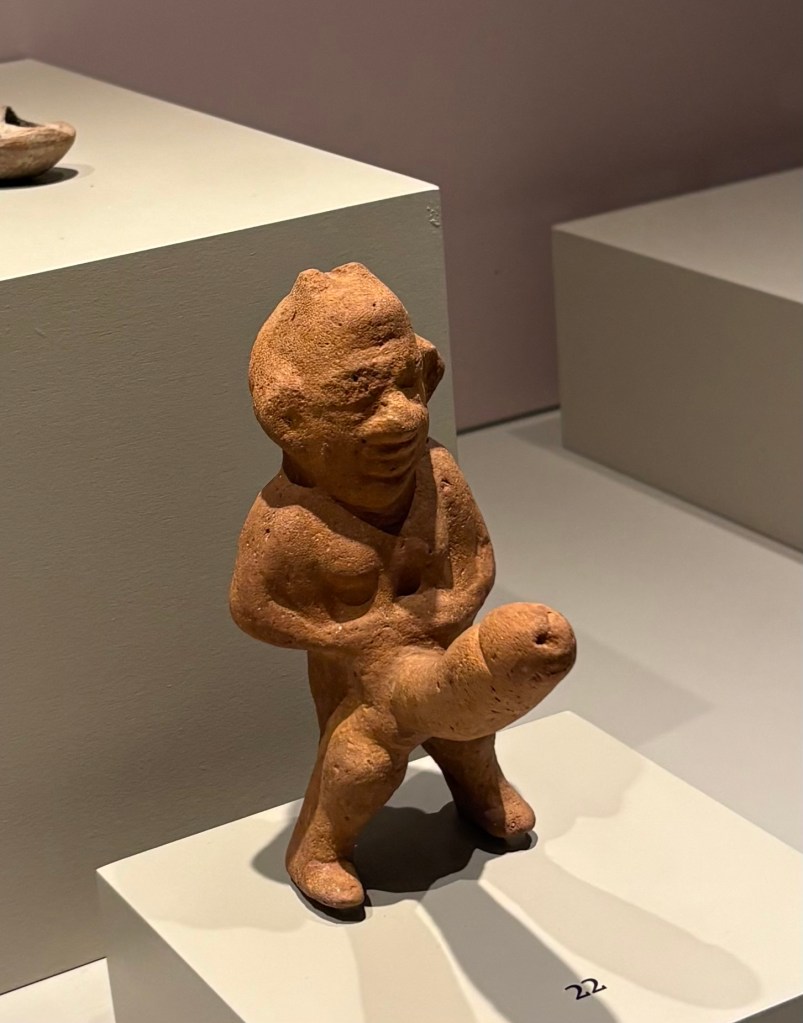
I bet the prudish Saul/Paul wouldn’t have approved of this pagan chap, dating from long before the Roman republic.
*The golden age for letter writing during the first millennium CE is reckoned by scholars of the era to be between 200 – 600 and this is quite a long time after Saul-become-Paul is supposed to have written his long missives. Another reason for doubting their authenticity and believing that they were probably made up by later Christians to suit the narrative.
…sang The Four Lads, back in 1953, thus earning themselves a hit with this silly but harmless song which referenced the official name change of that city in 1930.
That song came out exactly half a century after Constantinople was conquered and invaded by the Ottoman Turks, the city having been a pivotal centre of Christianity for more than a thousand years before that and much more important in the formation of that religion than Rome was in those early years AD.
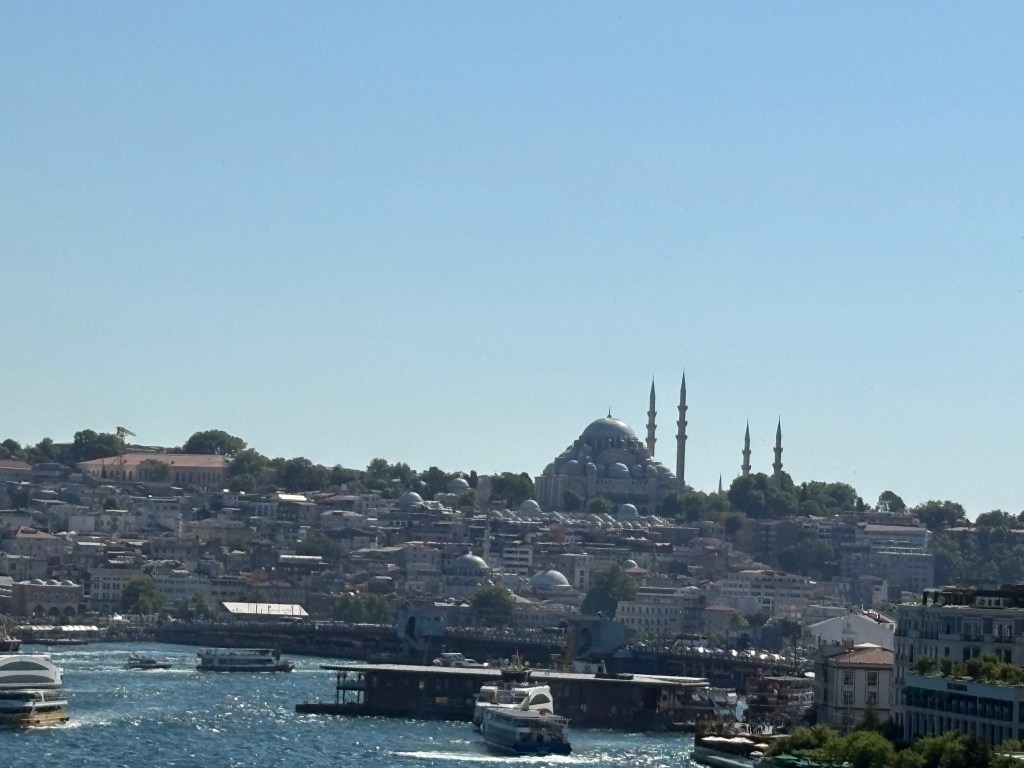
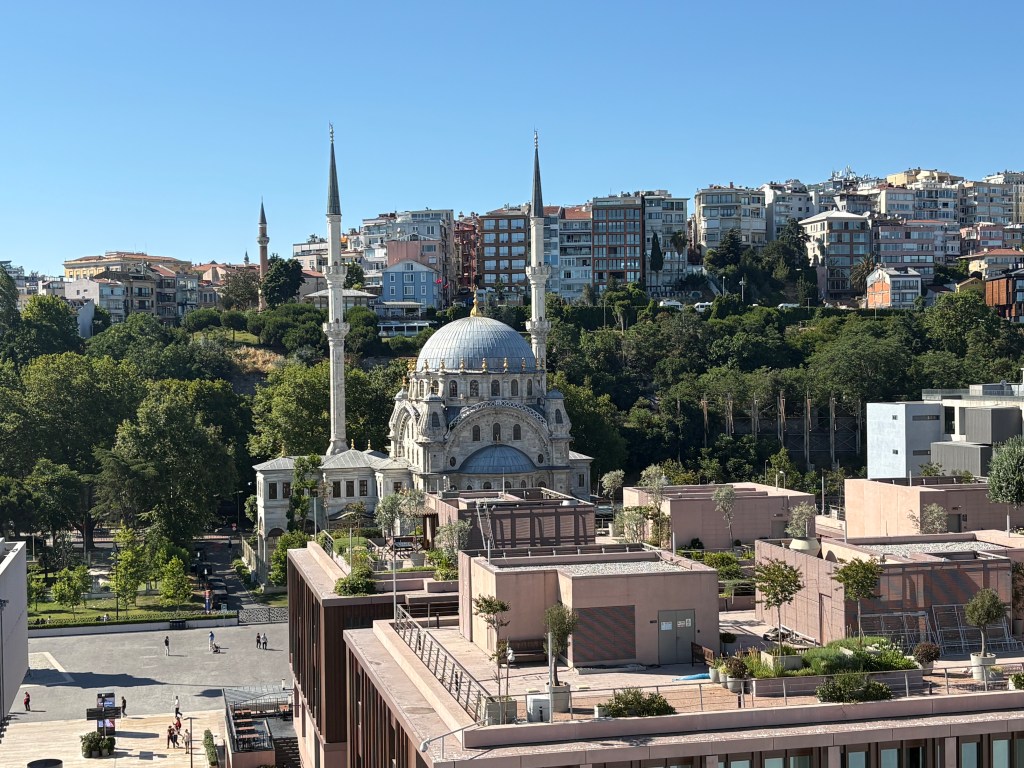
Today, it is very much a city of mosques and very beautiful mosques at that. Their graceful minarets are the city’s defining characteristic, along with the great seaway of the Bosporus and Golden Horn. Mosques are everywhere, not just the postcard famous buildings but pretty little ones in backstreets around the city. I am no fan of Islam (or any religion for that matter, but Islam I find particularly distasteful) but I do love its architecture. The one great thing it has given the world (yeah, okay, algebra, but I hated that at school so am not going to big it up here!).
The old world boasts magnificent cathedrals built to honour the Christian god but while they inspire awe and contain wondrous art they don’t have the grace of a domed and minareted (is that even a word?) mosque. The famed Blue Mosque sits close to the equally famed Hagia Sofia but to my mind the latter looks squat and rather dowdy besides the splendour of the former.
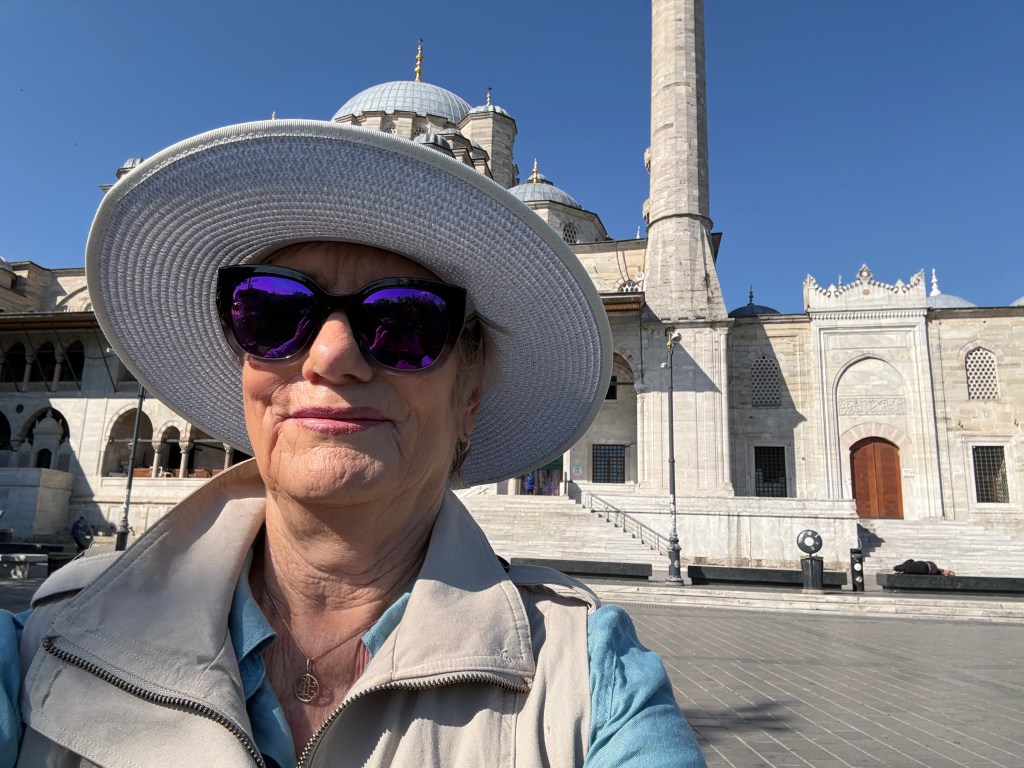
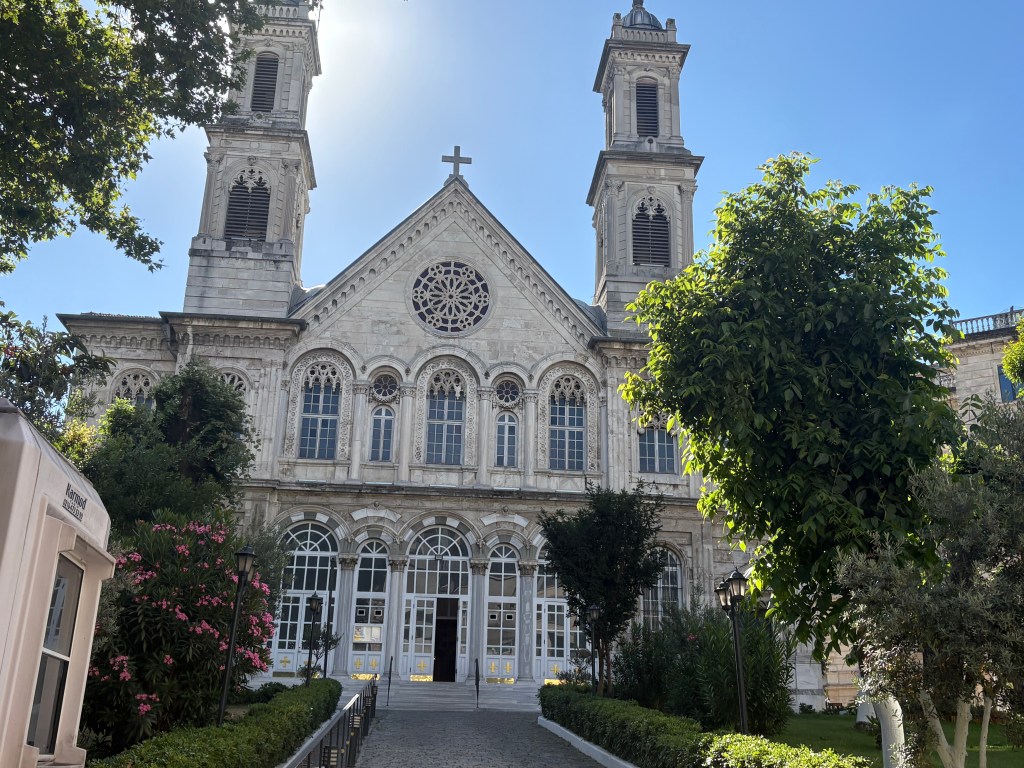
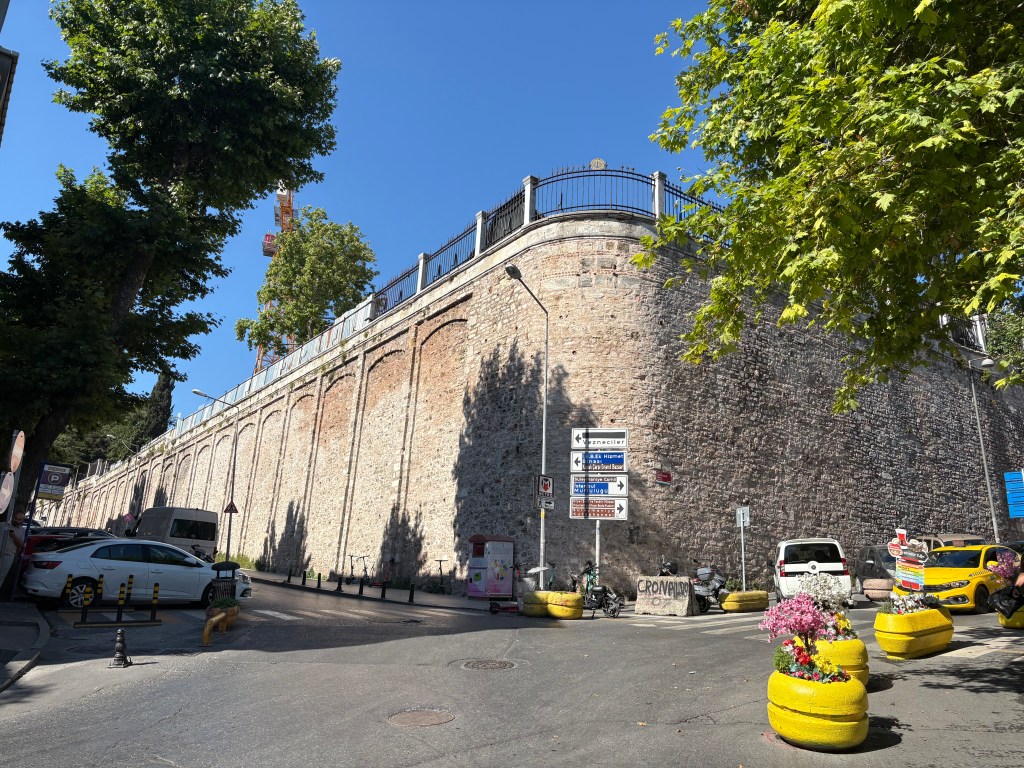
Around the city you can still find sly reminders of Christianity in churches here and there (see picture below, old Orthodox Christian church near Taksim Square). They look a big neglected but still operate, though Hagia Sofia itself has long since been turned into a place of Islamic worship. And Constantinople remains visible in the mighty walls that once protected the city, in the occasional sight of an orthodox priest in rusty black cassock, in Byzantine flourishes that distinguish pre-Ottoman buildings and in the food which offers the same dates, figs, olives, melons, peaches, unleavened breads and roasted kid that you find on menus from Justinian’s day. Foods that predate both Christianity and Islam. And Judaism, for that matter, because this part of the world was inhabited by the wandering sons and daughters of Yahweh long before the two latecomer monotheisms were invented. Pagan polytheists too.
In the city of mosques the muezzins, electronically amplified, call from the towers five times a day, summoning the faithful to prayer. It’s hard for an outsider to figure out the Turks, religion wise. The main religion is Islam, obviously, though other religions are tolerated and the government, while conservative and claiming adherence to Islamic values, remains secular. When the muezzins call, the people on the street carry on as usual, either shopping or glued to their mobile phones. They don’t drop to their knees as happens in the stridently Muslim cities of the Arabic Middle East. Yet the mosques are well-attended on the holy days.
The Turks are not Arabs, of course, and come in many types. You do see women in full black, faces covered. They come mostly from the country, I was told by the Turkish manager of my hotel (an urbane and very handsome man). Quite a lot of the women wear the Abaya style long dress for modesty; young women pair this with a matching headdress and look very smart, stylish and feminine. Older women tend to wear rather shapeless versions in dull colours. Then again, a lot of women wear the headscarf with jeans, which makes me wonder about the hijab and other head coverings – is it really about modesty today and not tempting men with your flowing locks? Or is it just an excuse to cover up a bad hair day?
And then there are Turkish women walking about the streets wearing crop tops and shorts or mini skirts with high heels and animal prints and showing a lot of flesh that makes them look just like the women from other European countries – you’d mistake them for tourists if you didn’t hear them speak. Again, while I don’t care for Islam and hate the burquah and face-covering, I’d be all in favour of the modesty police enforcing a stricter dress code for locals AND tourists. All that fat and flesh thrust before your eyes! Bosoms and unlovely bums and flabby thighs! If you ain’t got the goods, don’t display ‘em! And PERLEASE don’t message me and rabbit on about how we shouldn’t body shame people because we absolutely should if they insist on flaunting what is better concealed – it’s a matter of aesthetics!
Turkish men dress like anyone and don’t have all that irritating “I’m a proud Muslim man” face fungus. Of course there are gorgeous costumes for both sexes in many shop windows, for the ceremonial occasions of the many different ethnic groups. But you don’t see them on the street. Pity, really.
Istanbul is a splendid city in every way – the setting, the architecture and archaeology, the history, the fine harbour, the food. Yes…the food! Again, it reflects the many cultures that have gone to make up modern Turkish cuisine. Here you find the traditional dishes of the Levant, based on eggplant and yoghurt, honey and nuts, lamb and fish. Pistachio and pomegranate add flavour and colour to many meals. Clay pot cooking is perhaps the best thing I tasted, along with the koftehs. Doner kebab is everywhere, sesame studded tsimit sells well on the streets, other breads come with every meal. Soup is popular, especially lentil. The baklava is better than in Greece or anywhere else, in so many honey-sweet varieties. The tomato and the potato have long since been assimilated into many family recipes, along with the ancient grains. It’s hearty fare, no fancy French flourishes, there’s nothing nouvelle about THIS cuisine! Istanbul takes food very seriously indeed; restaurants are numerous and in every price range, some very cheap indeed, dedicated to nourishing both body and soul.
Of course, there is Macca’s even here, and Asian restaurants, and French and Italian. But, really, why would you!
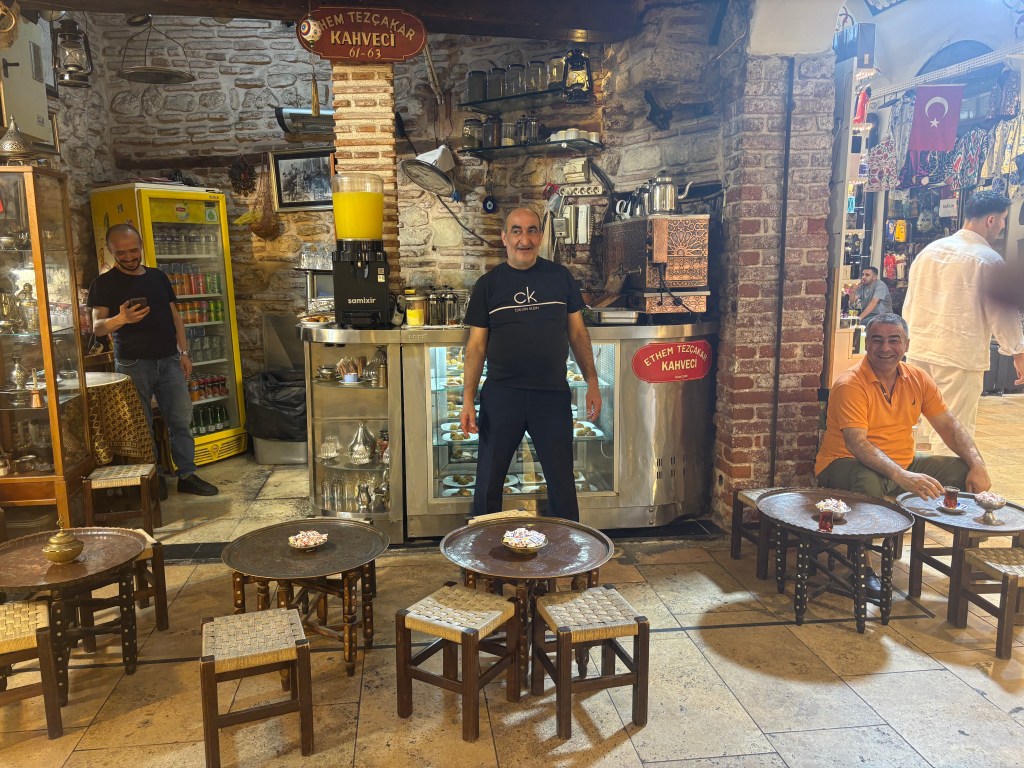
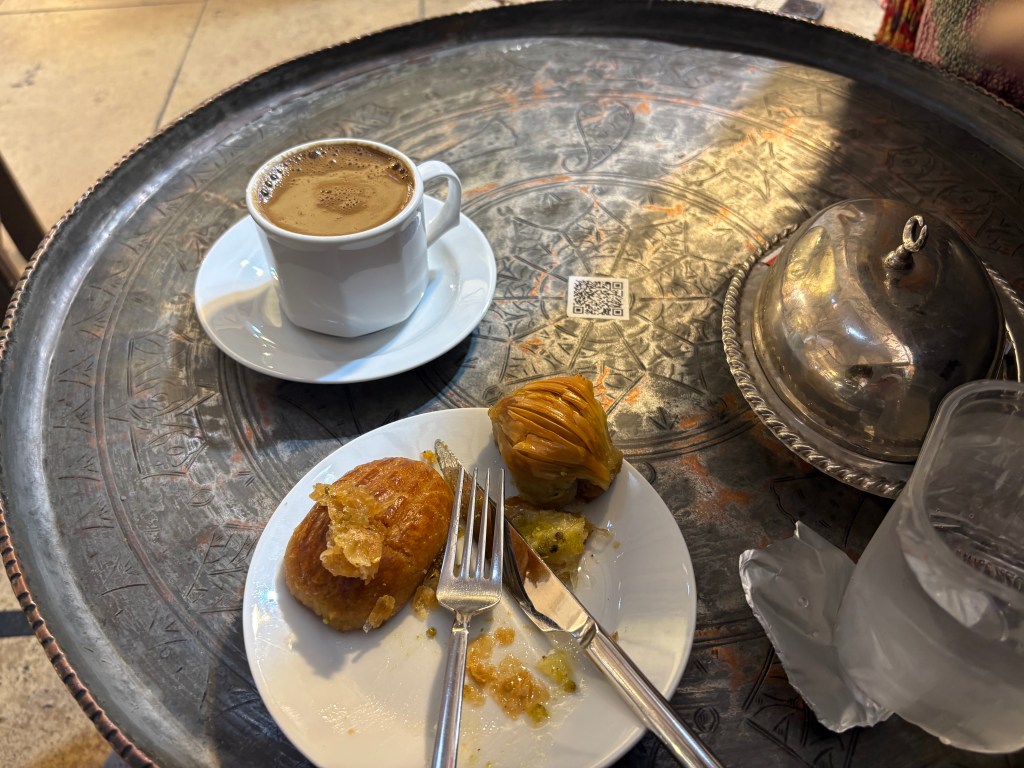
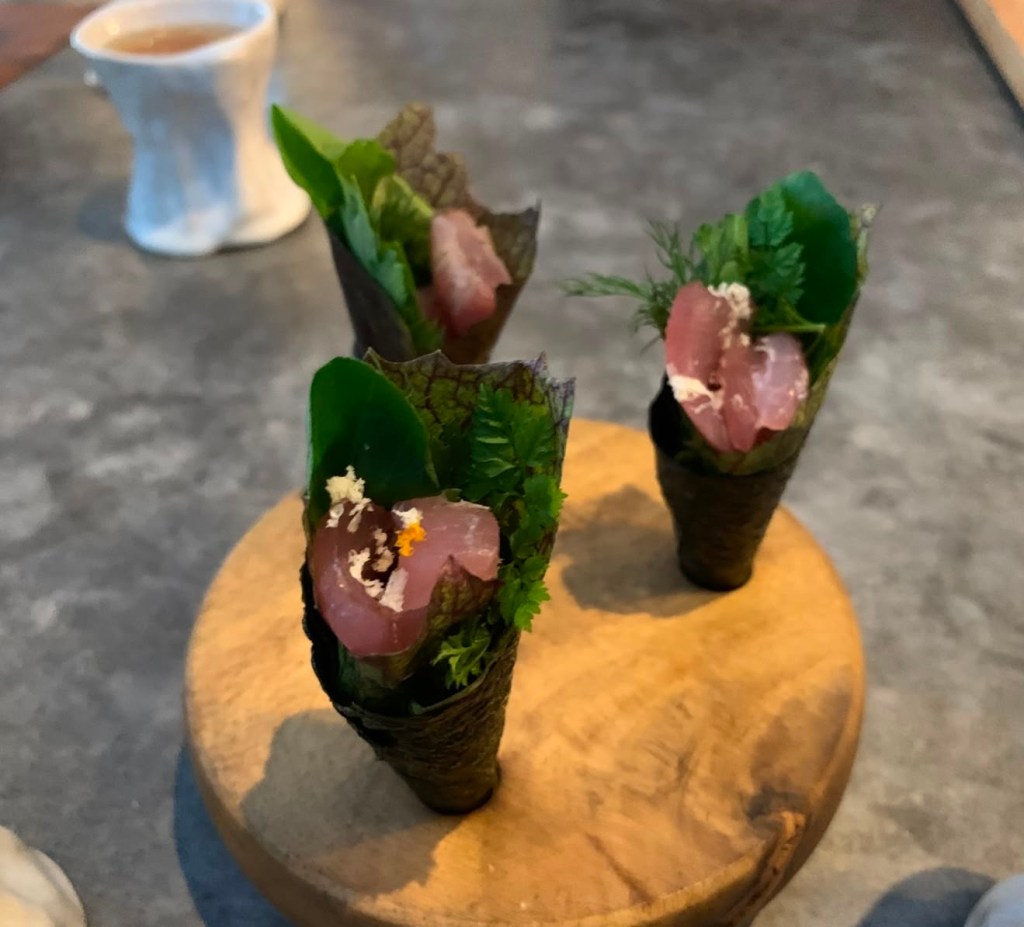
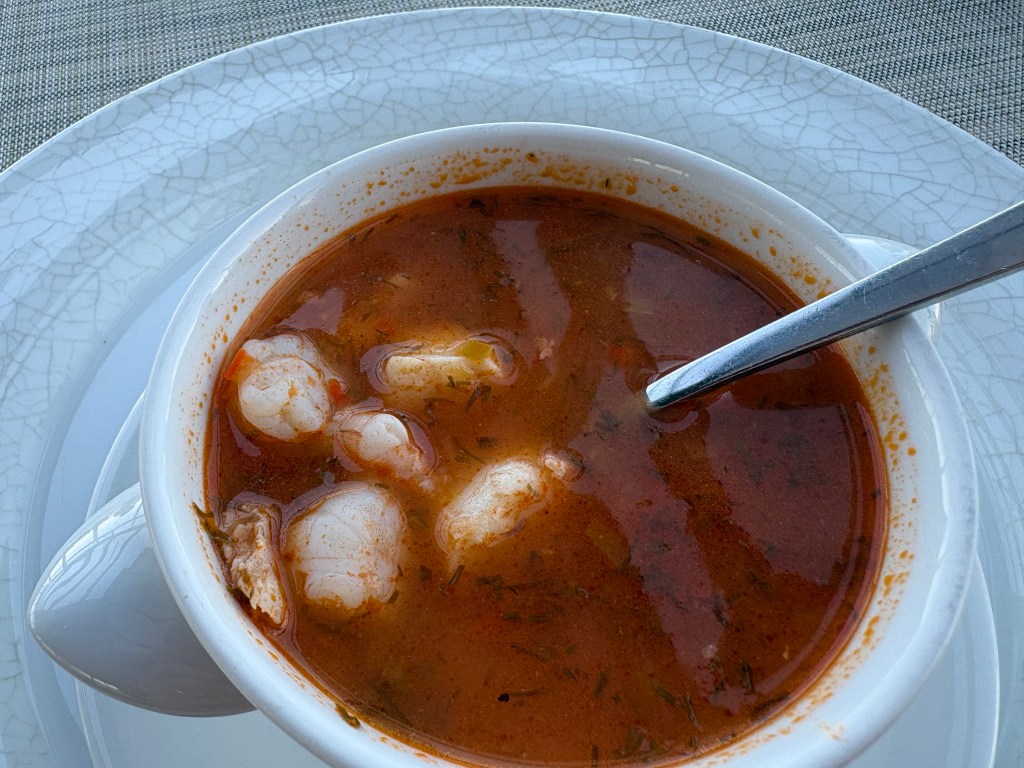
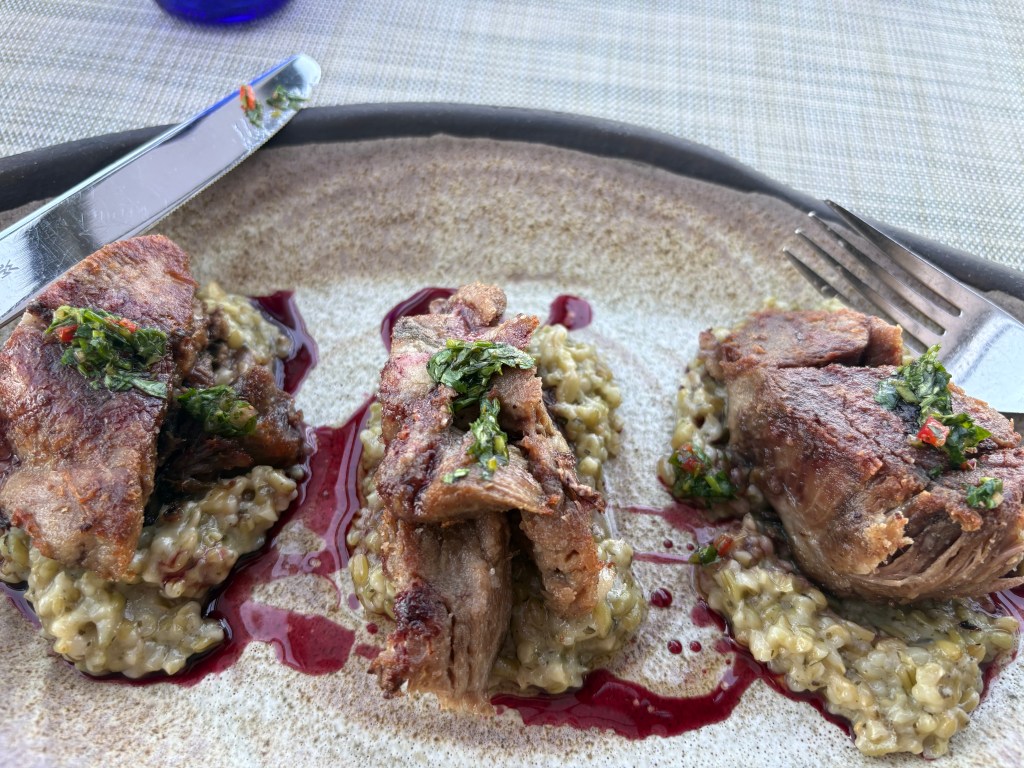
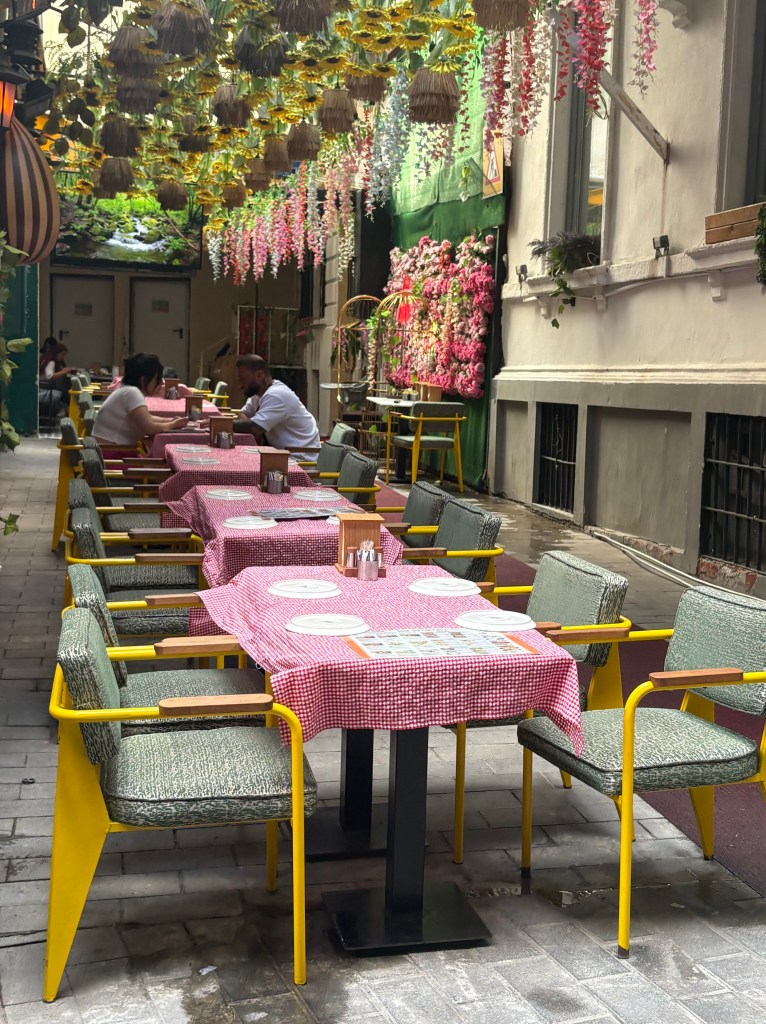
Food in Istanbul can be as simple as a couple of pieces of baklava with Turkish coffee to fine cuisine using typical ingredients such as the exquisite lamb dish above. Also the delicately crafted seafood cocktail. But most dishes are more basic and robust, as found in the typical little backstreet family restaurantss pictured here, where dishes from different regions are found. Soup, such as the fish soup above, is available everywhere.
Getting about this hilly metropolis is easier than it looks at first. The traffic is chaotic as you’d expect in a city which consists mainly of twisted, steep, paved or cobbly streets with a couple of broad, modern avenues lined with modern hotels and offices. Only a masochist would drive there. I, who normally avoids public transport at home, found the excellent bus, rail and tram service surprisingly easy to negotiate once I’d got the necessary card. Easy and cheap.
True, the first bus I took was going the wrong way but that was because I’d forgotten to adjust for them driving on the right! A kindly bus driver soon put me right – and put me off at the next stop so I could cross the road and find one going the right way!
Crossing the arterial avenues of Istanbul is no easy task; it’s a bit like that old song Running Bear, where everything you long for is on the other side and getting there is likely to end in tragedy. It takes boldness. It takes courage. But I managed it, though I thought it might cause atrial fibrillation. (It didn’t, that came next, when I had to climb the steep little alleys around the Blue Mosque in 30 degree heat).
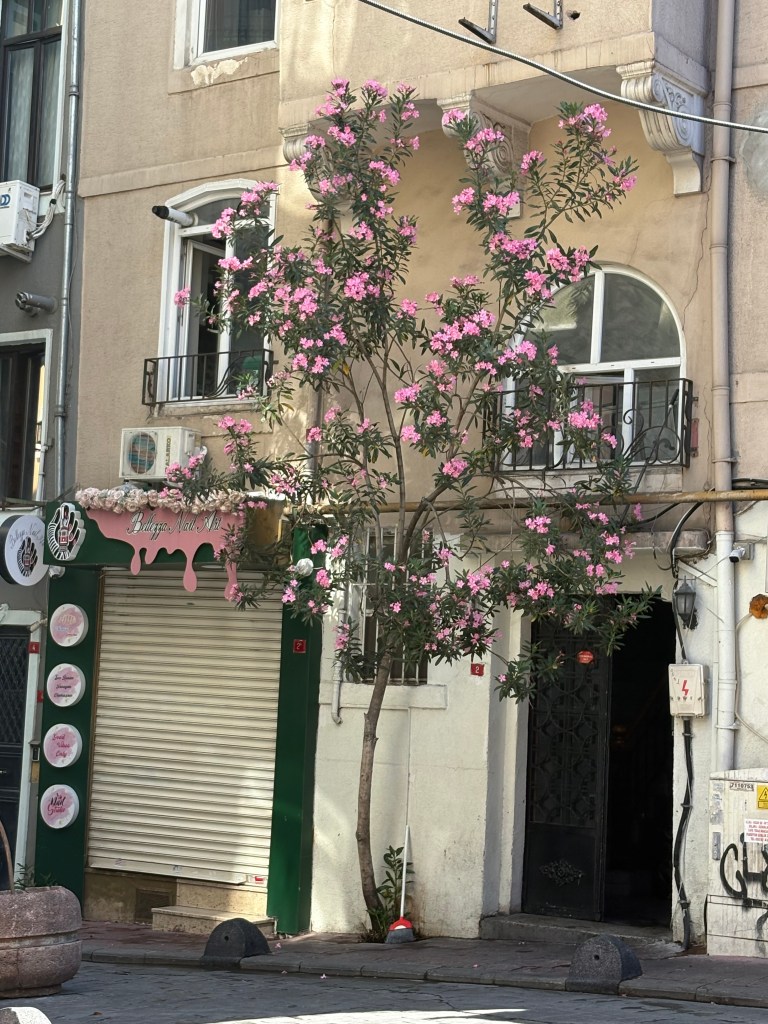
Actually negotiating ANY street in Istanbul takes constant watchfulness because the only significant change since it was known as Constantinople, apart perhaps from sewerage, is the advent of the internal combustion engine. These are streets made for donkeys. Here and there a meagre strip, perhaps slightly raised, has been set aside for pedestrians but the locals still drive and park all over it. Even the famed, fashionable and comparatively wide Istikal Street has to be shared with cars, motorbikes, bicycles and a tram. Electric cars are particularly sneaky because you can’t hear them coming; it’s only when you feel something gently nudging your hip do you realise that this is not a pedestrian mall – as it looks to be in the travel brochures.
Locals are of course cheerfully accustomed to this and you can spot the tourists by the sudden look of panic on their faces as they skip out of the way. Hard luck if you are too old to skip!
Apart from the wearisome vehicle-dodging, Istanbul is a very safe city for travellers. A LOT safer than when it was Constantinople, from what I’ve read. For one thing, the police are everywhere. Dressed in either usual police-type gear or combat camo. They look tough and ready but are surprisingly polite to tourists who ask for directions.
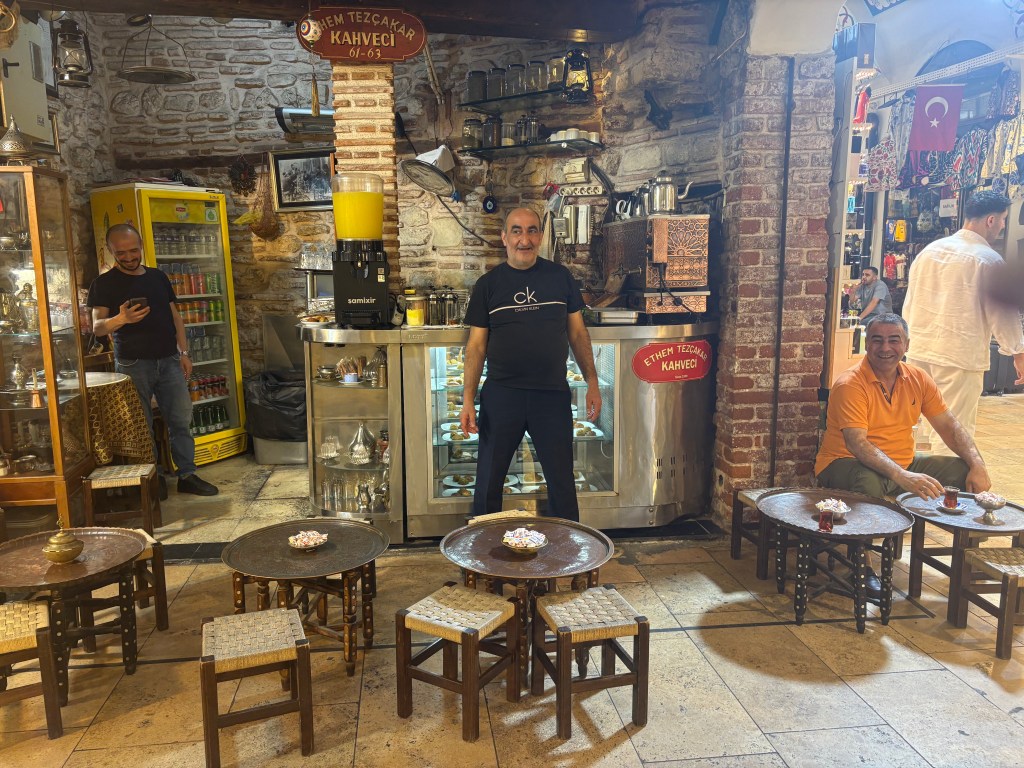
I found everyone in Istanbul to be polite and even kind to visitors. The men can seem a bit indifferent at first, they stare through women, especially elderly western women. But when this elderly western woman asked for help in negotiating the transport card machine one of these apparently indifferent middle-aged men suddenly turned all smiles and helpfulness even though he spoke no English. Ditto the tiny coffee shop proprietor in the Grand Bazaar (below)who slipped me an extra bit of baklava when I ordered some and said how much I liked it.
The biggest hazard in Istanbul for pedestrians is the amount of rubble and rough, broken paving everywhere except in the major squares. You do need strong, protective footwear with non-slip soles. I had bought a pair of new and expensive walking shoes especially for the trip and I was glad of them. How the glamorous young Turkish women manage in stiletto heels is one of this ancient city’s modern mysteries!
I avoided the major tourist attractions; that is, I sat outside and admired them over a cup of coffee but didn’t venture in. I’d already seen the interiors on YouTube and felt no desire to share their wonders with the madding crowd. Even if you go on a small, curated tour with skip-the-line tickets the pleasure in looking at the marvellous mosaics is severely prejudiced – for me, anyway – by being pushed and prodded and deafened by din. There is no space to stand and take it in peacefully – not in summer, anyway.
Moreover, there are so many interesting and relatively unknown (to foreigners) places to explore, so many exquisite little architectural wonders, so much archaeology and history to be found all around the back streets. Here you can wander at leisure, with no sense of pressure or bustle. And you can meander along the shoreline, so shiny with sunlit water and busy with boats and cheery little ferries luring you over to the Asian side.
To my mind, everyone should grab the opportunity to see Istanbul from the water, the way travellers have seen it for centuries. I was lucky to sail out of there on a small cruise ship on a glorious sunlit evening, saying goodbye with regret.
Taken all round, Istanbul is one of the world’s most splendid cities – particularly so at sunset when the lights come on and the whole place glows like a chest of fine jewells. And you can hear the muezzin calling out the isha, the fifth obligatory prayer that marks the end of day.
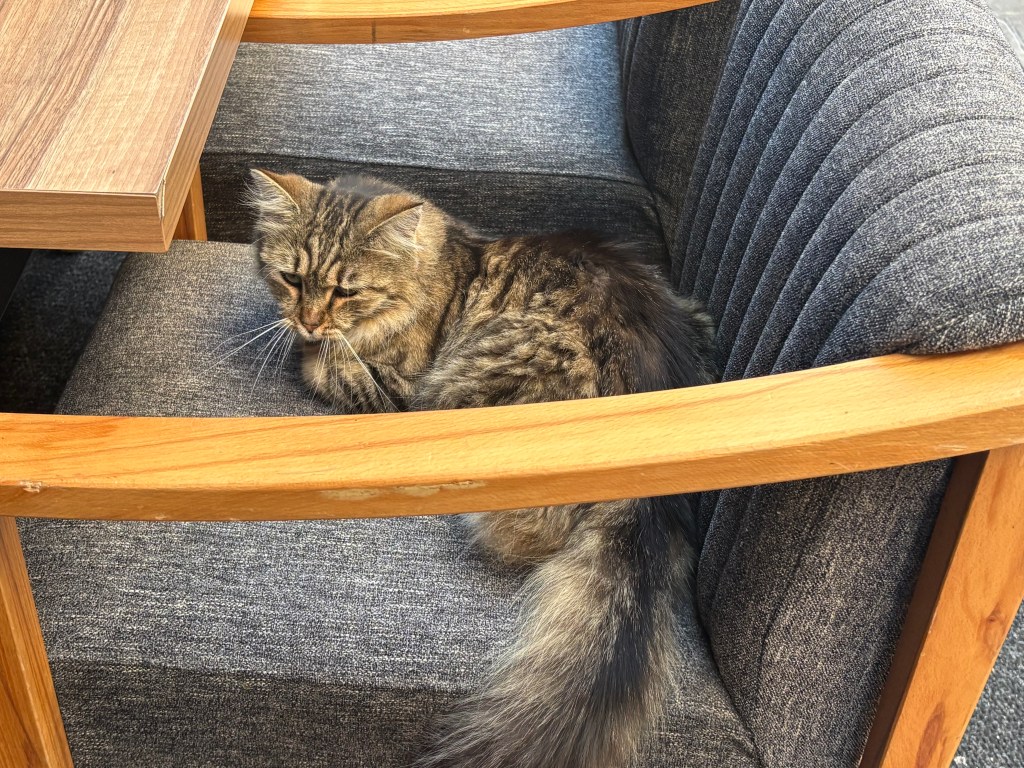
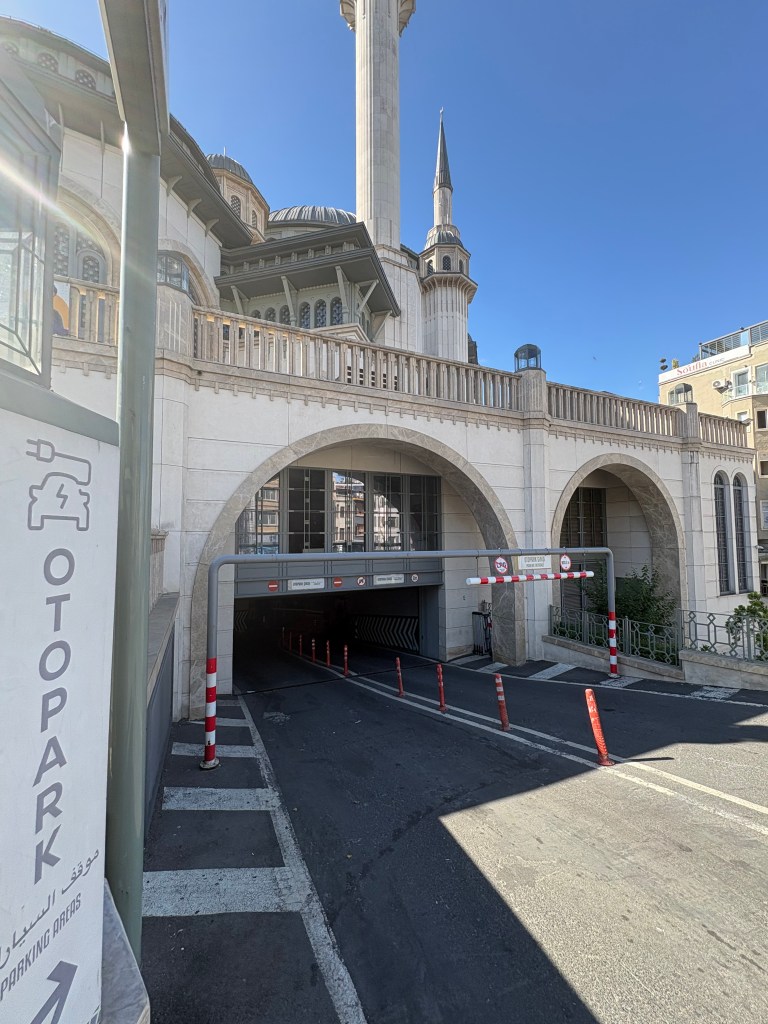
Below: Cats are everywhere in Istanbul. Top right: Traditional Islam yields to modern necessity – car parking under the old mosque.Bottom: Beautiful mosques are everywhere in this venerable city whose history is both brilliant and bloody as it spans two continents and continues to dazzle us today.
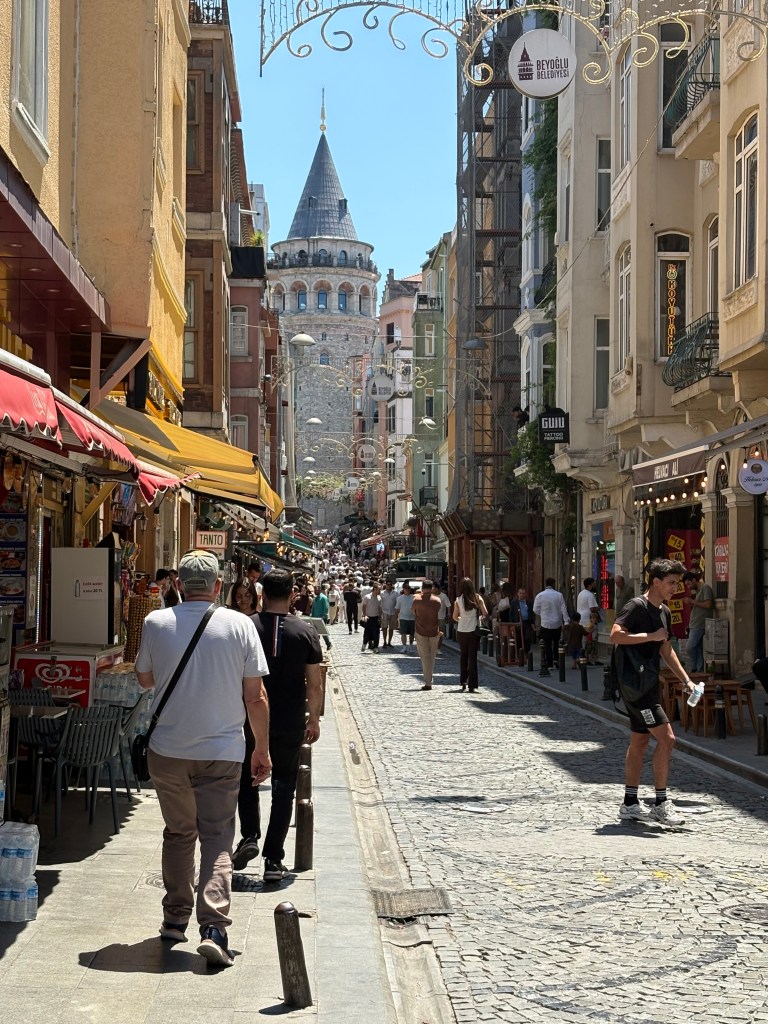
The Galata Tower – go early or you’ll face a crowd like this one!
FOOTNOTE: Changing the name of cities is nothing new though today we’re more likely to change them back to some older indigenous name; perish the thought that we should retain the name given to any city by its conquerors or colonisers! Most of whom actually gave names to places that didn’t have cities before being invaded by the technologically more advanced. Personally, writing as an Australian, I’m in favour of renaming almost all our towns and cities with Indigenous names, not because I care about rejecting colonial and post-colonial history, which have earned their place, but because the present names are so ugly! The Americans got Arizona and Amarillo, Minnesota and Milwaukee and what do we get? Melbourne, Brisbane, Perth and Sydney! I forgive Darwin and Adelaide, the first because it has everlasting historical relevance and the second because it’s pretty. Of course we do have Toowoomba and Tocumwal, Goondiwindi and Gunedah. But nobody can be really proud of their city when it’s name for some long-gone English prime minister.
I digress…
Istanbul has always struck me as a rather unnecessary name change. Constantinople was Greek, though named by a Roman emperor (for himself – there’s hubris for you!). Istanbul is also basically Greek, meaning “to the city”. It’s commonly believed to be a statement of Turkish nationalism though why that should have been thought necessary in 1930 rather than 1453 is not clear (to me, at least). Perhaps they preferred Istanbul because it was shorter. Or perhaps, as the song quoted above goes on to say, “People just liked it better that way.”
Some readers of Lyrebird Mountain have criticized Jack – the main male character and love interest of the heroine, Anna (I abhor the term “hero”, for women!). They find him weak and despise his stated reason for not returning immediately after the war to the woman he said was the love of his life.
Some have compared him to Heathcliff, possibly because thanks to yet another film of Wuthering Heights that quintessential anti-hero is on everyone’s mind right now. But of course he is not, any more than Anna is like the neurotic Catherine Earnshaw. He is, rather, the kind of man only too common to every age, and one whom women do best to avoid if they are looking for long-term bliss!
Lyrebird Mountain is not the kind of book that states the bleedingly, blindingly obvious. That’s not the kind of writer I am. I like my readers to look at the evidence – in this case letters, diaries, recollections – and make their own deductions about character and motive.
We, the readers, don’t go with Jack to the First World War so we can’t know exactly what he saw, did and suffered. But we do know enough of that terrible conflict to understand its equally terrible psychological effects on the survivors. Men not only lost their lives and limbs, they also lost their minds.
Wilfred Owen, most powerful and uncompromising of the WW1 poets, put it this way:
Happy the soldier home, with not a notion
How somewhere, every dawn, some men attack,
And many sighs are drained.
Happy the lad whose mind was never trained…
But most were trained – and then broken. Well over a century later and with all the benefit of psychology at our command, we, we, too, have been trained to associate shell shock only with those who fought in the trenches. But sailors were sent to the bottom on fiery ships and airmen in their novice planes were shot down and when they were not being shot at they were shooting at other boys.
And Jack, a person of over-tender sensibilities as all artists are, was one of the broken. We don’t know why. Jack didn’t know why and the doctors who treated him, and those like him, didn’t really understand the why of it either. Today we’d be diagnosing PTSD of the most severe kind. Back then, men were told that real men would – and should – just get over it. For Jack, this took a long time and the need to recover all his. By his own admission he started a new life, tried to find a new love. But remained haunted by the old.
And yes, he is selfish, as most artists of true talent are. A brilliant mind is rarely in synch with the sensibilities of others. In order to turn the brilliance into an output that can be shared with the world it’s necessary to focus inward. Early in their love affair it’s obvious to everyone except Anna that Jack has little sympathy for her needs. When she tries to put her strong sense of family and community before his expectation that she attend his exhibition, he is furious with her.
And when they are finally reunited, their senses overwhelmed by passion which seems to be even stronger for having been so long delayed, his self-focus is still evident. He has no understanding of the social and emotional chains that bind Anna to mountain and family, nor does he appear to take any real interest in her art, her work.
So…Jack’s essential sense of self-interest is neither created not modified by his war experience. Yet perhaps we should hesitate to judge him for this for he lives at a time when the needs, demands and expectations of men take precedent over those of women and even those who saw themselves as warriors for social change, and paid lip service to the “liberation” of woman-kind in general continued to treat their own women heedlessly, when viewed with the eye of today.
Think Karl Marx. Think Norman Mailer. Think Pablo Picasso.
The unsolved mystery of Jack’s death is really the heart of the novel and whatever its cause the reader can well assume that, as with so much else in his tragic life, it’s due to his self-willed impetuosity. An arrangement has been made. When it is changed, due probably to Walter’s malice, instead of waiting for Anna to resolve the issue, as only she can really do, he decides to go and fetch her. This might be seen as heroic if we hadn’t come to realise that Jack is a man who acts without thought of the consequences to others. His decision is also one of deliberate provocation to the husband he is cuckolding.
Troubled Jack certainly is, but also devastatingly attractive as such men often are to susceptible women. Otherwise prudent and sensible women. I myself have felt the tug of such attraction and if you are a woman reader so, I bet, have you. There is a part of us that responds, with heart and hormones, to the wild, the wayward, the misfit, the scorner of social norms, even the downright dangerous.
Think James Dean. Think Heathcliff. And, of course, Byron.
Love does not necessarily favour logic. So Anna falls hard and all her strength of character and will cannot defend her against so great a passion for a man who, though he shares it, can never give her anything more. It does, however, help her to endure the agonising loss of him. She does not die of love, nor spend the rest of her life in mourning, though she never allows herself to love so extravagantly again.
I, like so many of my friends, have also endured the loss of the love of my life. And, like so many of my friends – and Anna (who became a friend once I’d created her), I just got on with things. It’s what women do – most of us. And that’s the main theme of Lyrebird Mountain!
Once upon a time I had a mongoose and, like, most other pet mongooses of my acquaintance, he was called Rikki, after (in case you didn’t have a British childhood) the character in Rudyard Kipling’s story.
He was a chittering, chattering little fellow and very mischievous, as mongooses are, and also spiteful, cantankerous and hard to train into the ways of polite society.
Rikki:
had a habit of appearing suddenly and biting our guests.
was a positive Houdini who could escape from pretty well any sort of enclosure. He was also an adept burglar who could break into pretty well any sort of enclosure.
was afraid of nothing and nobody, terrorised the servants, bossed our large dogs around, bullied the cat, aggressively tackled any wild thing, especially snakes.
Rikki came to us, as is usually the case, through injury and stayed because his mongoose family disowned him. But Rikki belongs in another story; in this one I want to talk about a very different mongoose experience.
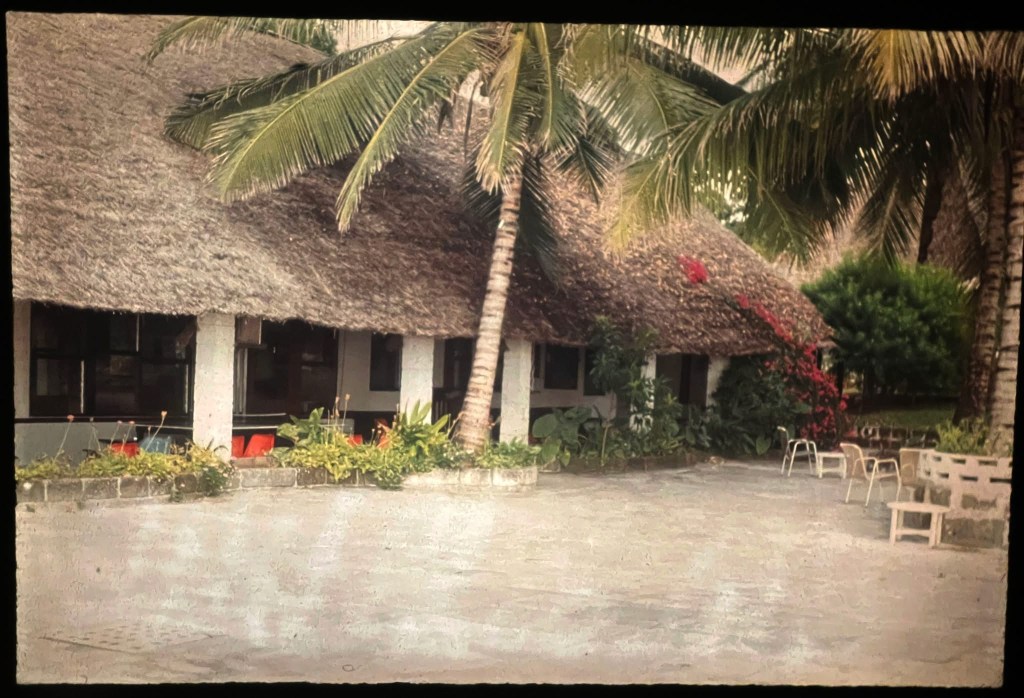
Between our house in Mombasa and the next, some distance away and separated by a dilapidated fence, ran a sort of ditch that led from the road downhill to the creek. This wide, shallow drainage area was thick with low brush and home to lizards, snakes, various rodents and a family of Banded Mongoose.
I used to spend hours watching these creatures because they were always up to something. From memory, there was about a dozen in the den though numbers fluctuated according to the number of young – of which there were always a few. Mongoose are prolific breeders and very protective of their young and on Mombasa Island, where they were pretty much the apex predator, the survival rate was high.
Back then, in the 1950s and ‘60s, the island had plenty of open space and many nooks and crannies and places where small creatures could run free. And as mongoose were so efficient at keeping down vermin they were left to get on with their lives, unmolested by humans.
Most of my mongoose watching was done in the late afternoon and on weekends. Or in the early morning for they, like me, were up and about at dawn. At first they all looked alike to me, differentiated only by size, but after a while I could recognise individuals – and gave them names. There was the obvious Alpha male, whom I called BM, short for Bwana Mkubwa. There were a couple of grizzled old females, tough and bossy, whom I named Joan and Olive for two prominent members of the Mombasa branch of the EAWL (women with double barrelled surnames and self-conscious social status who were much mocked by my father behind their backs!) There was, inevitably, Scarface and Short-tail. And, my favourite, Kali. I can no longer remember the names or personalities of the other mongoose in that bunch, but I shall never forget Kali.
He was a young male and when I first knew him he was emerging from babyhood and already standing out from the rest for his sheer aggressiveness and constant trouble-making. Kali seemed to be never still; even when the others were dozing among the rocks and weeks, he’d be up and doing; searching for food, harassing his elders, fighting with his siblings, pursuing birds and other small creatures. Kali by name, kali by nature!
His favourite targets, though, were our dogs. We had at that time a large and fierce Alsatian, Rory, and a small dachshund-cum-terrier-cum goodness knows what, Toddles, and these two were the best of mates. They spent much of the day lying on the stoep or patrolling the long driveway, ever ready to tear up to the gate to welcome us home, and those visitors known to them, or repel any stranger foolish enough to cross our boundary.
Rory had a reputation in the neighbourhood, especially among the watu, but his cowardly heart was shamefully exposed when Kali and the Gang went after him. Which they did, every time Rory and Toddles went down the drive, which ran parallel to the drainage ditch and was clearly visible from mongoose territory.
Kali, even when sub-adult, took a great dislike to the dogs whom he clearly considered as interlopers. This was his land and that of the tribe and while humans might be tolerated their four-footed lackeys were not! So he was ever ready to attack, in guerrilla style, lurking in the underbrush and waiting for his canine enemies to appear. Even when he was occupied further afield, wandering in search of food or mischief, he had an uncanny sense of when the dogs were off the stoep and would summon his gang for an all-out assault.
In fact, I observed, the mongoose had their own alarm system, both defensive and offensive, with posted sentries ready to rally the rest. Then they would rush out, leaving a couple of sentries behind – usually the old ladies and BM.
I never saw them actually touch the dogs but they would go in close, chittering and showing their sharp little teeth. Rory would put down his tail and scarper for the stoep. Toddles, not much bigger than the larger mongoose, would sometimes try and stand his ground, his terrier side kicking in, snapping and barking. Once he tried to seize Kali and almost succeeded but there were a dozen or so other mongoose to contend with and so he, too, trotted away. With a few backward glances and growls as he tried to maintain some dignity.
When members of the family were on the driveway, the mongoose would not venture out but instead sat in a group along the edge, taunting the dogs. Who then behaved very haughtily, sneering at their enemies, growling a little to assure us that they were really on top of the situation and that these small, swift, irritating little savages were not worth their time or energy.
As long as the mongoose stayed in the driveway, they remained, if you’ll pardon the expression, top dog. But venture on to the stoep, or beyond, and it was a different matter. Rory remembered that he was a guard dog and would turn and drive the pesky fiends away, though it was Toddles who actually caught one, and killed it before we could intervene. He was, I remember, extremely proud of himself. “Look”, he seemed to say, shaking the poor little thing from side to side in his small jaws, before I could extract it. “When you get one on its own, it’s just another kind of rat!”.
But the house began to exert a fascination over the mongoose gang because somehow, perhaps thanks to their sharp little noses, they came to recognise the kitchen as a source of food. And one day, Kali (of course it was Kali!) made a sneaky reconnaissance through the doorway. Not long before that he and the others had discovered the dustbins and tried, without success, to push off the heavy metal lids. No luck. Our cook and house servant rushed out with sticks to frighten the marauders away.
Not that a human with a stick was going to deter Kali and the gang for long! They knew there were good things in the dustbins and could often be seen sitting on top of them, ramrod straight, paws out front, sharp little noses sniffing hopefully.
And then, one glorious day for mongoose kind, the kitchen was – for once – empty. The servants elsewhere in the house, the family out. Half-a-dozen mongoose, ever vigilant around the back door, crossed the threshold and leapt on to the table where there were some bananas in a bowl After demolishing these they clambered up on to cupboards. Not much there of interest. Then one of them – I always thought it must be Kali – discovered the bread bin, which for some reason was kept on the floor.
Unlike the dustbins, this was easily knocked over and the treasure discovered. These mongoose had already developed a taste for bread and that was down to me because, unable to resist their charms and the desire to be a benefactor in their eyes, to tame them, even, I had sometimes thrown scraps of bread to them, where they lurked in the ditch.
I knew it was the wrong thing to do. But in the Kenya of those days there seemed always to be, in those of European origin, a desire to tame the abundant animal life. To take some wild and even dangerous thing and make it your very own! I was certainly of this mind and always had some creature – a chameleon, a snake, a hedgehog, a bush baby, a monkey – in my keeping.
I felt an empathy with the mongoose, so cute and ever-entertaining. A connection, as we would say today. I had encouraged them with regular food gifts though they needed no help from me to get a good feed for the ditch provided all their needs in abundance. And much better for them than white bread from the Anglo-Swiss Bakery, full of salt and sugar. Now I would regret my “generosity”.
Because once the mongoose gang learned that there was food to be got in the kitchen they never let up their banditry. They didn’t worry about the dogs, who stayed pretty much in the front garden or on the stoep. They seemed to know that family members rarely ventured into the kitchen, which was slightly separated from the house by a short, covered walkway. As for the servants, they were to be feared when roused but they also valued the mongoose ability to rid the area of snakes and thus dealt mildly with all but the more outrageous intrusions. Once a cobra took up residence in some rocks at the base of the Neem tree – and paid dearly for its temerity because the mongoose made short work of it. They also scared away the Green Mamba that used to swing around in the branches, menacingly close to the kitchen window (in those days most houses had Neem trees outside the kitchen, thanks to the belief, originating in India, that the leaves had medicinal qualities and would keep away flies and mosquitoes).
The mongoose’s natural enemy – the spitting cobra.
So, Kali, the smartest and boldest of the gang, soon learned that his presence would be tolerated provided he didn’t actually go indoors. And even then, when he did, all he’d have to face was a bit of shooing and perhaps a flapping apron to send him out again.
And soon enough the bread bin had to be put up on a bench top but Kali found it there and learned to knock it to the floor. We bought another type of container, with a door that slid up and down. Kali soon learned to push up the metal handle with his sharp nose and little paws.
Our kitchens were not the posh kind that we all have today. They were simple affairs: a red-painted concrete floor, a larder that could be locked, a central wooden table, a bench top along the wall with shelves underneath, more shelves above. An electric stove. A frig. A water purifier. A meat safe with mesh front, its legs in tin-lids full of DDT or kerosene to deter ants. Once refrigerators became common in urban areas the meat safes were used mostly to store fruit and root vegetables.
That meat safe was the mongoose Mecca, more attractive than even the bread bin which, finally, was removed from temptation because we took to keeping the bread in the frig, a novel idea back then. As the mongoose became even bolder, obviously realising that the worst any human within their territory would do was shout at them, they ventured into the kitchen more often. So it was not uncommon to find them sitting by the meat safe, turning their heads this way and that, planning a break-in. The indents of sharp little teeth could be seen all over the wooden frame and their paws would be busy at the lock.
This mechanism was a simple wooden peg, on a wire, which was pushed down into a slot, serving to keep the door closed. It would only have been a matter of time until those busy little paws and cunning little brains had figured out how to open this – anyone who has kept chickens in mongoose country knows just how hard it is to keep them out of even the most heavily secured enclosure. They are far more cunning than leopard, jackal or other predator when it comes to burglary; only the honey badger runs them close. So a proper bolt was affixed, plus a heavy metal padlock. A nuisance for the household but it did the trick.
You might, of course, ask why we didn’t just shut the door. We did, at night. But during the day it was left open for coolness and the window likewise. Mombasa is, after all, a tropical island on the equator. The heat and humidity can be unbearable, especially for a cook slaving over a hot stove. And if we closed the door, as was sometimes done, then the home-invading members of the mongoose horde would just climb through the window. Amazing to think that we had no insect screens back then. Metal burglar bars, yes, but no mesh. And burglar bars only served to keep out humans; mongoose can do amazing things with their lithe little bodies and easily squeezed through them.
The best solution was to encourage the dogs to patrol the back garden but apart from taking their food on the back veranda they preferred to be at the front, where they could watch for the family coming and going and do their job, which was to keep an eye out for unwanted strangers trying to come through the front gate from the road. The back garden ran down to the creek in a series of steep, stone-edged terraces and where our boundary ended was a thicket of mangroves extending for a long way in each direction – a natural barrier against casual crims.
And so life went on and: the mongoose mob continued to harass the dogs several times a day when they wandered down the driveway, the dogs still fled from them in a funk, Kali never gave up his raids on the kitchen, occasionally scoring a meal when a servant left something lying on the table. Once, it was a whole chicken, just ready for the oven. Another time a bag of groceries was left on the floor and later found shredded to pieces and the contents taken, except for a few tins of pilchards and sardines!
There were mutterings about “doing something” but I always vigorously defended my mongoose friends, citing their usefulness in keeping vermin at bay as well as their entertainment value. Which was significant, not only for the family but for our visitors who enjoyed coming round for drinks on the stoep and a bit of wildlife watching as the ever-active mob went through its evening antics. Kali, BM and co. had by this time become quite familiar with humans and when they were not grooming each other or hunting or chasing each other about would sit in a bunch and watch us watching them, beady little eyes alert for opportunity, such as a dropped biscuit or piece of cheese.
Disaster struck the mongoose mob very suddenly one hot June day in the form of a gang of workmen and a large yellow bulldozer. There had been some warning; notification from the council that sewerage was coming to Mombasa and pipes would be laid in due course. We didn’t think to ask where the pipes would go and we failed to see the implications. And when the fatal day came the family was out, at school or at work. Only the servants were home and it was they who greeted us dolefully when we returned, pointing to the ditch.
Where there had been a narrow wilderness of thick bush and tangled weeds was now a wasteland of bare earth and rock, from the road almost down to the creek. Where there had been abundant life – birds, insects, reptiles, small furry animals, nothing stirred. Sadly, our kitchen toto, Kaola, led us over to the fence where we found a female mongoose and two babies, not a mark on them but all dead. The day before I had been watching those kits taking their first amazed steps into the world as their eyes opened upon it for the first time. How endearing they were, full of the charm shared by all new-born things! So cute I just wanted to hug one, though knew better than to try. They had tumbled over each other and their mother, clumsy but already showing signs of the sinuous agility to come. I cried to see them lying there, all that innocent energy snuffed out.
Of the rest of the mob there was no sign. At least they all appeared to have got away, for we found no mangled remains, but where could they have gone? The whole area had become a noisy chaos of men and machinery as progress enveloped us. We no longer had a cesspit in the garden, which had to be regularly pumped out. The whole island was becoming a more sanitary place altogether and who would not rejoice in that?
But our family was black with bereavement. We had lost the mob and the old drainage ditch was now a strip of concrete with an inspection hole up near the road. In time, weeds and grasses took over again but the mongoose mob never returned.
Even the dogs seemed dispirited for a while. They could walk down the drive unmolested but when they did so they constantly glanced to their left, expecting an attack that never came. Sometimes they’d go with me to the fence and, it seemed to me, cock their heads and sniff and look about in puzzlement – maybe even hope, or so I liked to believe.
In time, we moved house. Moved country. But in all the years since I have not forgotten feisty little Kali and the rest of the mongoose gang, and hope that when they fled that day in terror that they did manage to find a new home somewhere, and a new family to adopt.
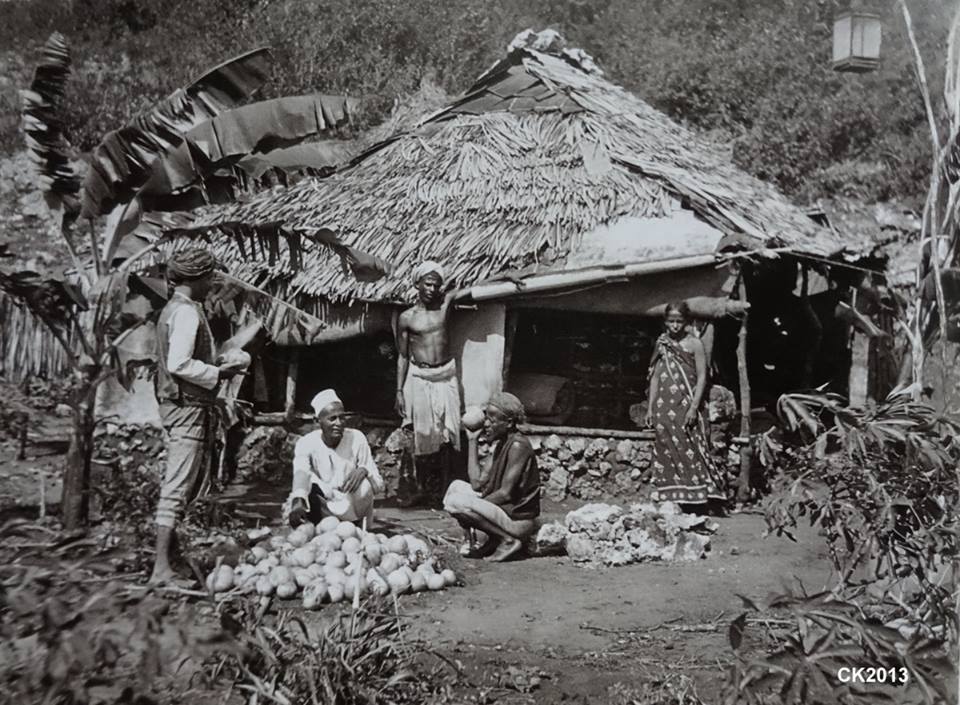
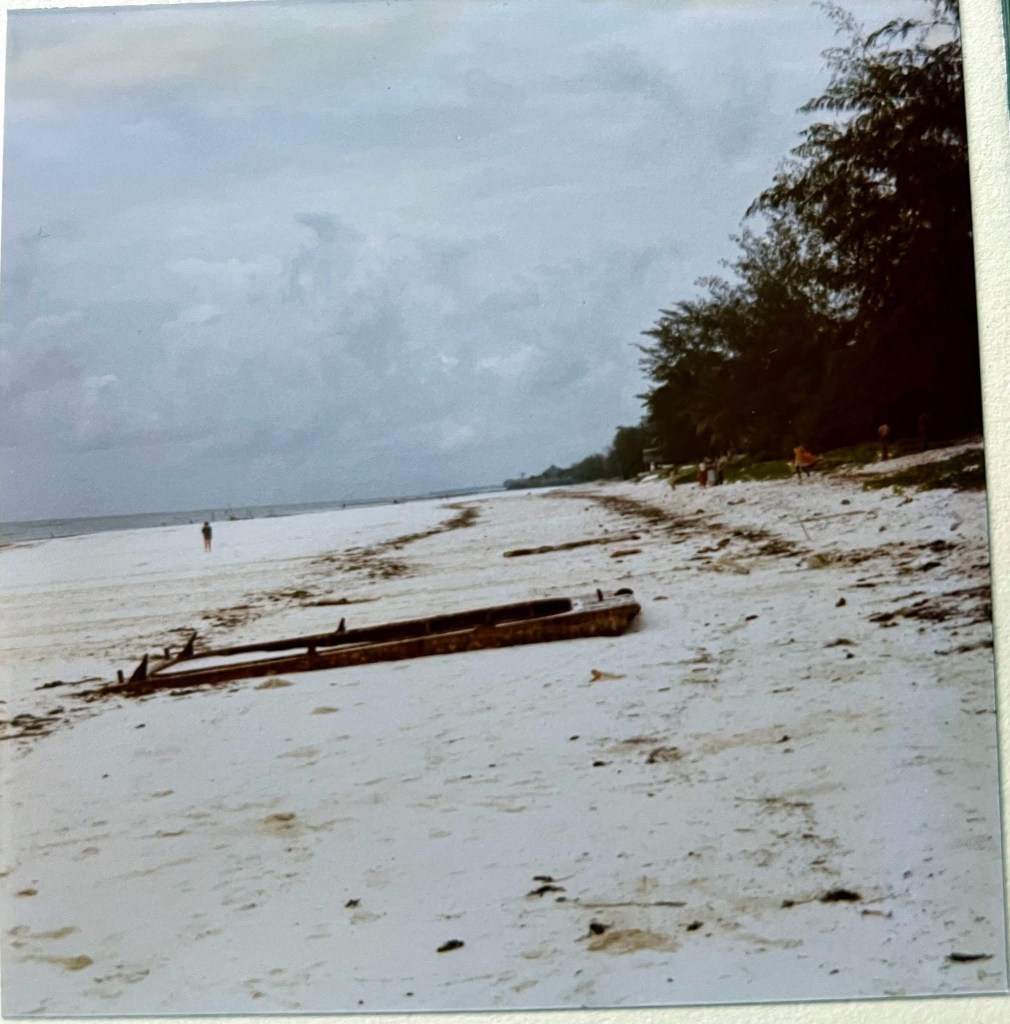
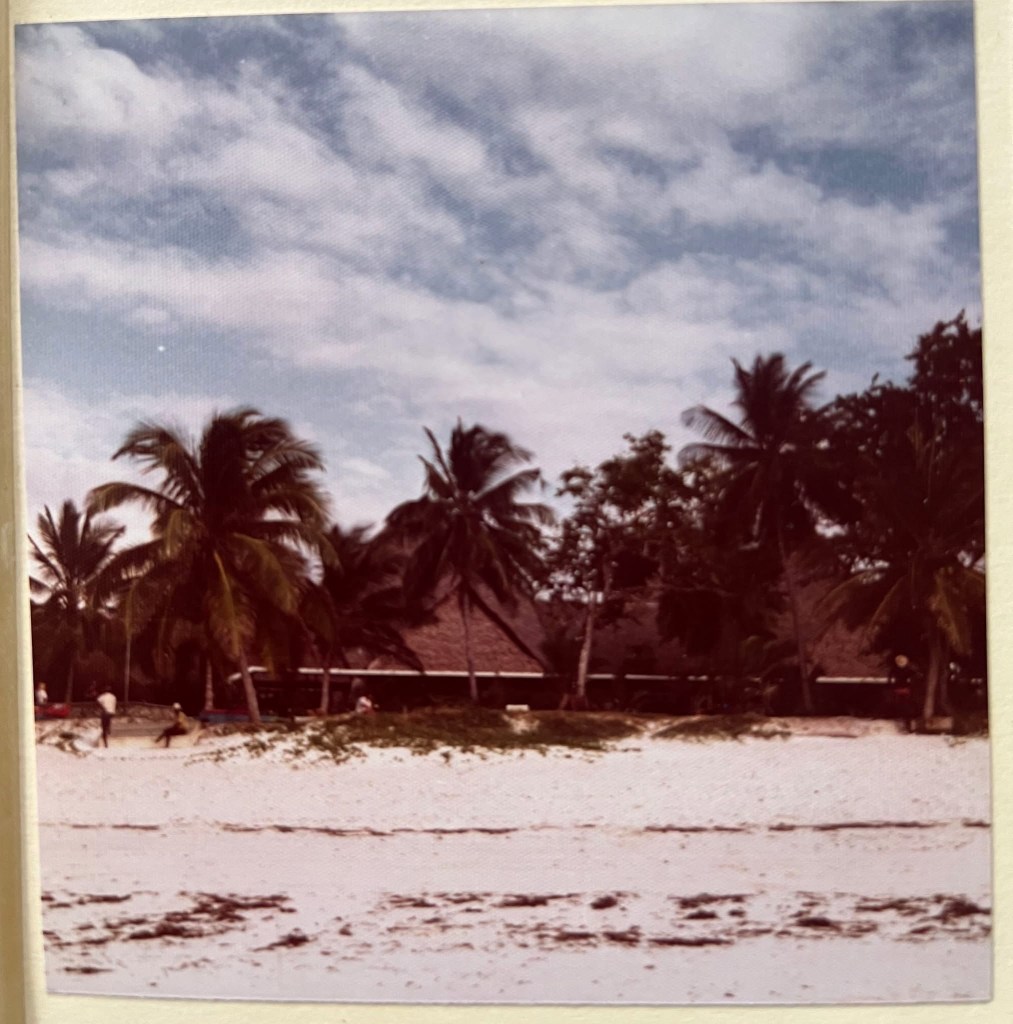
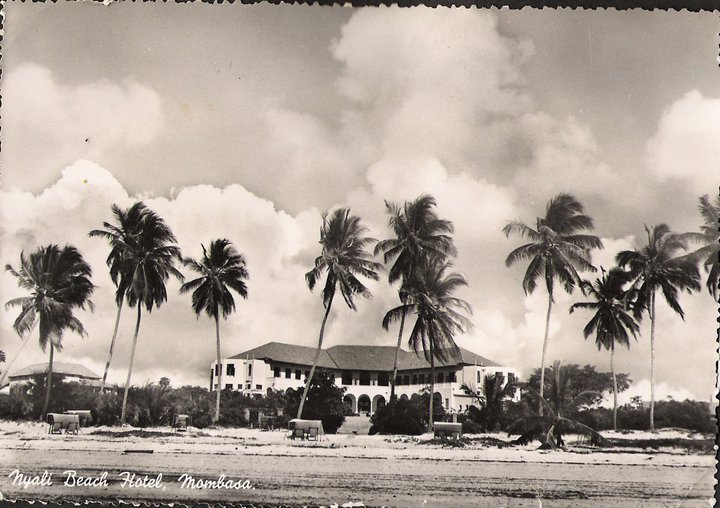
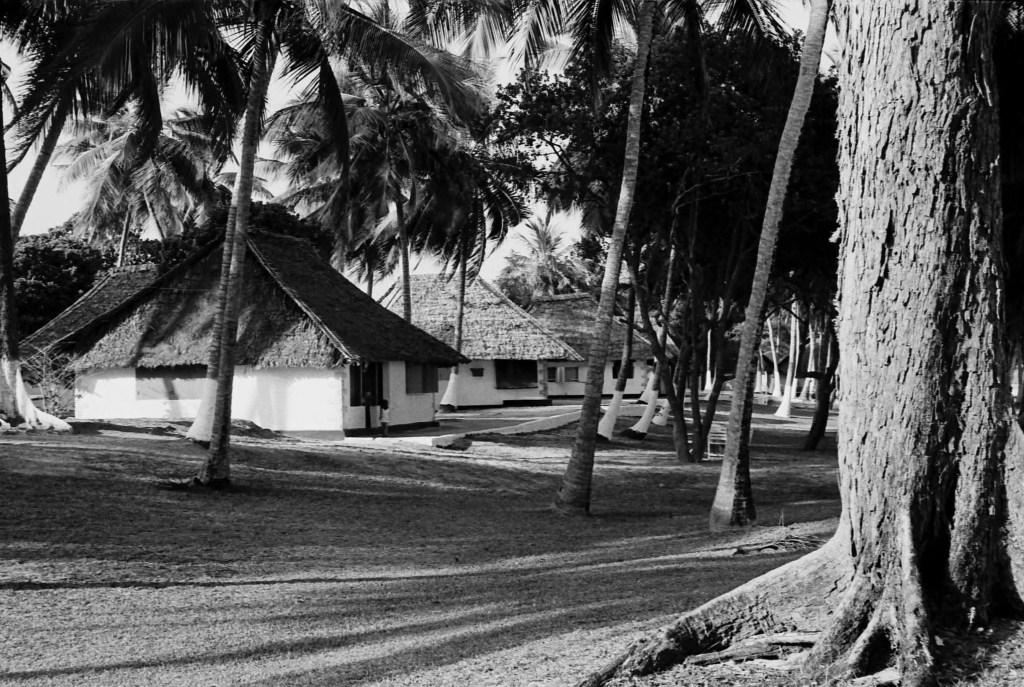
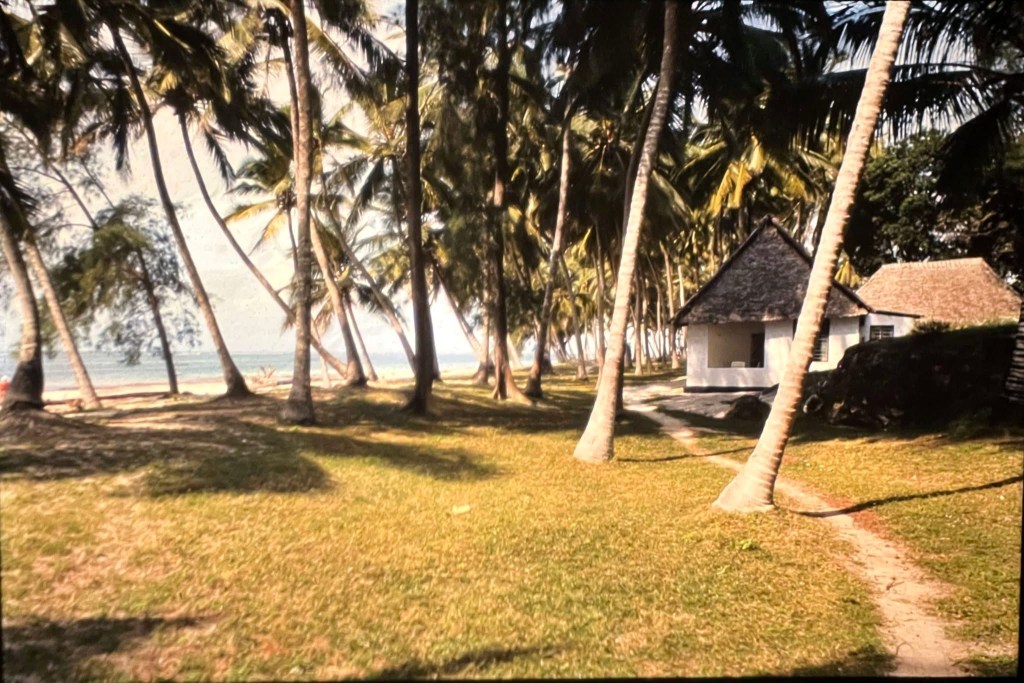
The island of Mombasa today is a busy metropolis and the places where we children used to play are no more. The village huts and bandas covered in thatch or mbati have been replaced by tarmac roads and shops. High rise apartment blocks have taken over the big gardens of the wazungu with their baobab trees and coconut palms and shrubberies. The town of my day has stretched outwards to swallow the island whole.
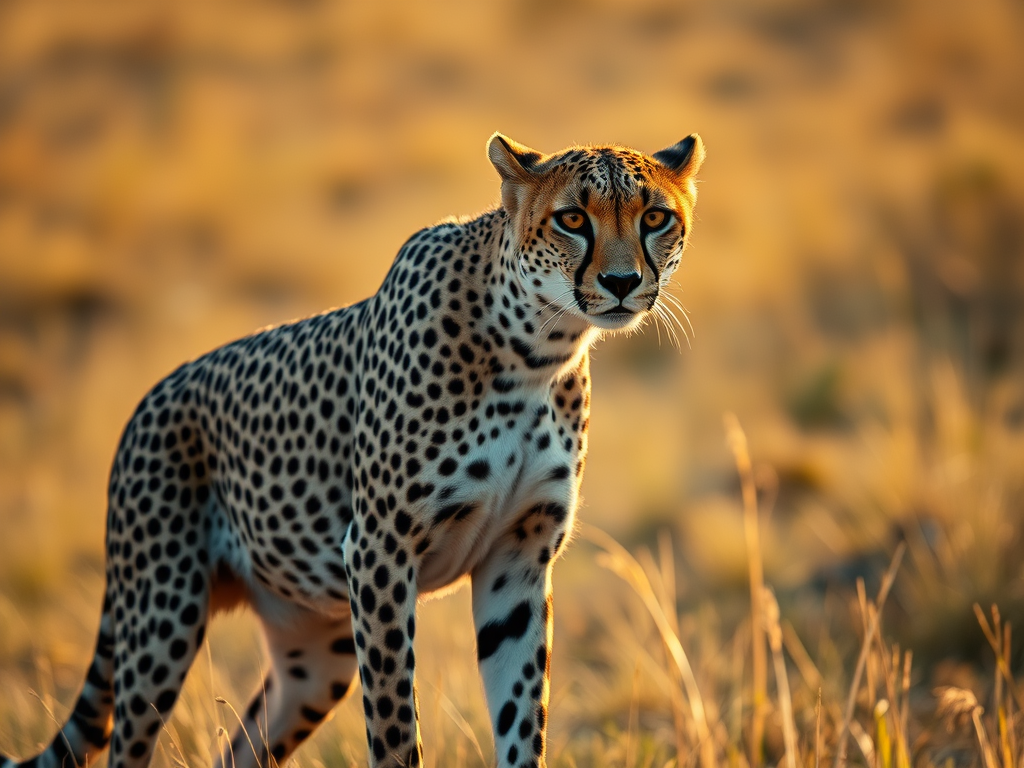
This is of course an AI generated image because all photos of Michaela are still protected by copyright. It is, however, not so different from the woman I remember, and true to my admiring childhood vision of her. She was, when not in bush clothes, very glamorous.
I walked down Delamere Avenue (as it was then known) one day, with my grandmother, and towards me came a woman trailing two cheetahs on a leash.
She was striking to look at, with glimmering red-gold hair and wearing a suit smarter than one normally saw on the streets of Nairobi, capital of colonial Kenya. But of course it was not her looks that impressed me, it was her two pets.
I knew who she was, of course, because I had already met her. As had my grandmother. This was probably the best-known woman in East Africa in the 1950s – the fabulous, glamorous Michaela Denis: adventurer, writer and, with her equally famous husband Armand, a television star. Kenya was more than a decade then from getting television but we all knew of Armand and Michaela Denis.
A few months earlier the Denis’ had visited our school and brought the cheetahs with them as well as a mongoose. The mongoose didn’t interest us much because they were common in Kenya and many of us had one as a pet at one time or another but the big cats were a thrill because unless our parents took us on safari, these animals were rarely seen.
Though it is more than seventy years ago I still remember how much I loved Armand Denis’ talk; he was a big man, bulky around the middle, untidy hair, eyes kind behind his glasses. He showed us what was then called a “ciné film” on a cloth screen and in his soft Belgian voice explained the images ofwild animals and pigmies and other strange West African tribespeople, similar and yet different to the tribes of our own Kenya.
He was one of the first – and for a time – most famous of the world’s wildlife photographers, ahead, even, of the revered David Attenborough – and he lived in our backyard! He and Michaela had built a rather unusual house in the suburb of Langata which bordered the Nairobi Game Park. Here this ever-wandering couple maintained a menagerie of birds and animals because, like me, Michaela had been a little girl who adored wild things and collected everything from hedgehogs to beetles. Just as I did.
My grandmother knew Michaela because she had a friend who lived next door to the Denis’ home and while they chatted I kept my adoring eyes on the cheetahs. How I longed for a big cat of my own! A lion cub, a leopard, even a Serval cat as one of my friends had, but, most of all, a cheetah. They were said to be easier to tame than most wild creatures, good with children and domestic pets, able to be house-trained, better than dogs for hunting. My father used to laugh at the very notion of keeping such an animal in an urban environment. “They eat ten pounds of meat a day”, he told me. “Their claws are not retractable, like those of other cats, and they will scratch you. And just look at their teeth!”
I gazed at the cheetahs and they gazed at the horizon, perhaps seeking the great Athi plains which were only a short distance from that city street. Their indifference was total, quelling to the spirit.
“Can I touch them?” I whispered, shy in the presence of my goddess and her Olympian companions. “No,” said my grandmother. But Michaela, may her name be forever blessed, took my hand and placed it on the head of one of the cheetahs. I moved my fingers, scratching the scalp as I did to our dog. The fur, I remember, was very bristly and not as soft as it looked. My hand, still covered by Michaela’s, moved tentatively down the neck. The cheetah continued to stand there, perfectly still, unresponsive. The other one sat down with a grunt, as if resignedly making the best of things while these humans communicated with each other in ways mystifying to cheetah-kind and rather boring. People passed us on the pavement, some stopping to stare or say hello. Cars and bicycles went by only inches away. The cheetahs remained unruffled and apparently unseeing, like carvings on an Egyptian tomb.
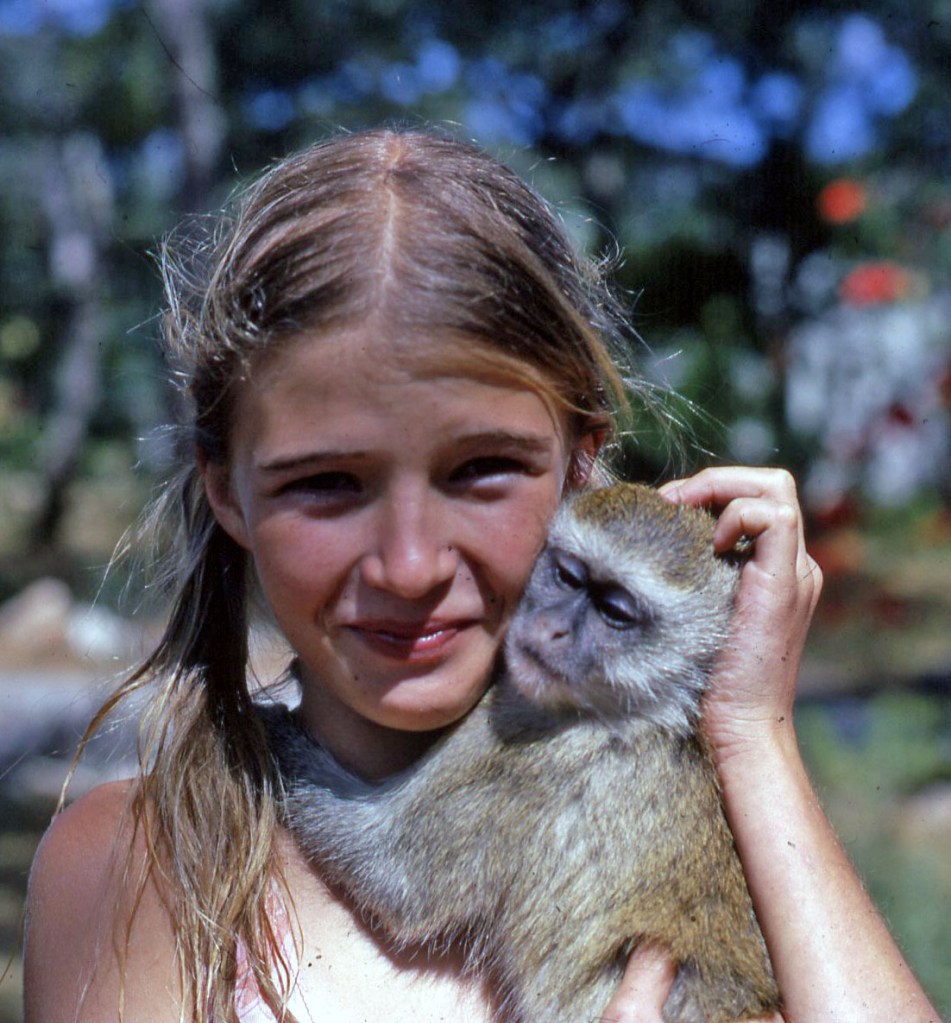
I never got to keep a leopard. Or a cheetah. But I did have a monkey – a coup0le of them, in fact, at different times. Here is our monkey Peppy with my daughter Amanda – circa 1971.
After that day I went several times to the Denis’ house, with friends, to “play” with their wild things. Armand and Denis were very good with children, though they had none of their own. Besides the cheetahs, of which at one time they kept about half a dozen, they also had a young leopard called, from memory, Chui. Not very original as this is its Swahili name. The leopard was playful and firmly imprinted on Michaela who would hug and kiss it and let it lick her face. Those great canines, so close to her nose; those savage claws so close to her eyes! It was tame, didn’t seem to mind our presence, walked happily around the house and garden but we were not permitted to touch it. Leopards, we were told, were unpredictable around people, even when brought up as pets.
Nonetheless, Michaela preferred her leopard to the cheetahs. She told us it was warmer, more affectionate, bonded better with humans. Even though capable of doing much more harm. “Look into the eyes of a leopard,” she would say, “You’ll see feeling. A connection. Look into a cheetah’s eyes and you see nothing.”
Though I admired and even adored her in that pre-pubescent way of girls I didn’t agree with her. I looked into the eyes of Chui and I saw a creature that, even though well-fed and, it seemed to me, lazy because of it, would just as soon reach out one of those large paws and pull me within reach of its jaws. Just to see what I tasted like! I saw, I believed, a glimmer of hostility. Or avidity.
Whereas, to me, the cheetahs seemed to be always dreaming of somewhere far away; of running free on the savannah. Non-threatening but disinterested. Unlike with the leopard, we were allowed to play with them once they got used to us and never did I know them to be even the slightest bit spiteful. They tolerated our petting and would obligingly chase and pounce on objects towed on a string. They would even, sometimes, nuzzle our hands and rub against our legs, just like any cat. They were always happy to be fed by us.
But always they retained that aloofness. We just didn’t matter to them and they wouldn’t miss us when we left.
Michaela’s big cats were never caged, to my knowledge, merely contained at night so they wouldn’t wander while their humans were sleeping. Cheetahs are daytime hunters while leopards hunt mostly at night but well-fed cats of any kind don’t usually stray too far. Looking back, now, with the wisdom of years, I wonder whether, being hand-raised, they knew they would not fare well if they wandered over the fence to the national park beyond, where they would have to fend for themselves and their totally wild and free kind might not welcome them.
The leopard did sometimes go exploring. A friend’s father, who lived nearby, came home late on night to find a leopard sprawled across his stoep. He did all the usual things…shouted, threw things, sounded his horn. The leopard didn’t stir and nobody in the house, or in the servant’s quarters round the back, heard his shouts and horn-blowing so he had to stay there the rest of the night, sleeping in his car. When he woke, the leopard had gone.
It could, of course, have been a wild leopard because leopards were plentiful around the Nairobi suburbs back then – snatching dogs, frightening (though never to my knowledge actually harming) Africans on bicycles, always there in the darkness, swift and silent, rarely seen.
But, so the story went, a wild leopard would have run away if confronted by an angry and noisy human. Or even, if frightened, attack. The man swore it was Chui and many believed him. Complaints were made. The Denis’ denied it was their leopard but other neighbours had similar encounters and, so my grandmother told me, Michaela did take more care to keep her wandering pet confined because she was afraid that somebody might get trigger-happy. Many people had guns back then, because of the Emergency.
My family moved to the coast and I never saw Armand and Michaela again though their wildlife documentaries were sometimes shown in a Mombasa cinema and we saw the TV show when on holiday in England. “I know them”, I used to say proudly to my English cousins.
I never did get to own a cheetah. Or even a Serval cat. I am not in favour of keeping wild animals as pets and hate those American TV shows where people show off their tigers. There are, I read, more tigers in captivity today in the USA than wild tigers in India and, sadly, they may well be better off there. But it still doesn’t seem right.
A natural successor to Michaela, of course, was Joy Adamson and Elsa. But the Adamsons, living in a game reserve, always intended to return their lion to her wild condition. Which shows how times – and attitudes – can change, even within just a decade.
I re-read one of Michaela Denis’ books recently (thus inspiring this article) and now realise she was a silly woman in some ways and often wildly incorrect…some people would even find her descriptions offensive. But that is to judge the actions and opinions of the past through the filter of today and so, for her courage and kindness and glamour and passion for conserving wild places long before it became commonplace, she is still my hero!
Oh, and by the way, she couldn’t stand David Attenborough! Described him as a fool and a thief – apparently for pinching one of Armand’s ideas for a wildlife television program.
Acuminate: When referring to a leaf, narrowing to a point, often forming a “drip tip” which channels water off the leaf and down to the ground below.
Acute: Sharply pointed
Alternate: Leaves arranged alternately along the stem or branch (as opposied to opposite)
Apex: the tip of the leaf
Attenuate: gradually narrowin
Axil: the angle between the leaf stem and the branch
B
Berry: Fleshy, often edible fruit that contains one or more seeds.
Bifoliate: Compound leaf made up of two leaflets
Bipinnate: Compound leaf which divides into separate leaflets which bear a second arrangement (variable) of leaflets up the stem.
Bole: Area of tree trunk below the lowest branches, sometimes thickened, rounded or swollen.
Bract: a form of leaf often found enclosing flower. Some plants, such as poinsettias, have large and colourful bracts which are often mistaken for flowers. This is rarely the case with Australian rainforest plants.
Buttress: Large sections of the lower trunk which jut out from it and act as stabilisers (rainforest trees have very shallow, albeit spreading, root systems). They also help prevent soil erosion and gather nutrients and moisture in the leaf letter that piles up in their crevices.
C
Calyx: The sepals of a flower grouped together
Cauliflory: Flowers and fruits growing “cauliforously” on the branches or trunk of a tree.
Canopy: Top forest layer of trees.
Capsule: Dry seed case of some plants
Carpel: Ovary, stigma and style inside a flower
Chlorophyll: Green colouring in plants that absorbs sun’s energy
Compound leaf: Leaves that are divided into two or more leaflets
Coppice: Shoots that develop on some tree trunks (usually at the base but sometimes on branches), developing from a dormant bud
Cordate: Heart-shaped, as in some leaves
Cotyledon: The first leaves that appear as shoots from a planted seed
Crenate: Leaves with blunted, rounded teeth around the margin. (Crenulate is the same only teeth are smaller, finer and usually more numerous)
Crown: All the branches and foliage above the lowest branches of tree or shrub
D.
Deciduous: Sheds leaves in certain seasons, usually winter
Dioecious: Male and female flowers borne separately on different plants (as opposed to monoecious where a plant bears both male and female flowers)
Dentate: Leaves with sharpish teeth around the margin
Domatia: Pits or tufts in the vein angles on the underside of a leaf
Drip-tip: Leaf with long, narrow tip that “drips” water on to the soil – and thus the roots – below.
E
Elliptic: An oval-shaped leaf which is widest in the middle.
Endemic: Plants originating from and restricted to a specified region.
Entire: Leaf margin that is neither toothed nor lobed.
Epidermis: The outer cell layer or “skin” of a leaf or stem.
Epiphyte: A plant supported by another plant and dependent on it but not nurtured by it; unlike a parasitic plant which feeds off the host. One example is a Staghorn Fern (Platycerium bifurcatum)
Evergreen: Has leaves throughout the year, i.e. is not deciduous. Like a pine tree.
F
Falcate: Leaf that is sickle-shaped.
Flora: From the Latin, collective name for plants. As with fauna, the collective name for animals.
Floristic: The adjective for “Flora”
1-Foliate: Leaf with swollen joint at the base, where it meets the petiole
Frond: Compound leaves of ferns and palms
Fused: Joined parts of stem, leaf or flower that are growing together
G
Genus: Taxonomical term for group of species that are closely related
Glabrous: Smooth, without hairs or fuzz
Gland: A secreting swelling on leaf surface, leaf base or petiole
Glaucous: dull bloom either white, grey or bluish, either waxy or powdery, found on the undersurface of leaves and, rarely, on the surface.
Globose: round and solid like a globe
Gymnosperm: Ancient plant group with uncovered seeds and ovules not encased in an ovary. Seeds usually born in cones as with conifers and cycads. Often loosely categorised as “non flowering” plants
Inflorescence: Cluster of flowers on one stem
Pinnate: Compound leaf composed of small leaflets either opposite or alternately arranged along the stem (rachis).
Raceme: A single long inflorescence with a non-flowering bud on the end and lots of tiny florets along the stem. Often pendant, as in Buckinghamiacelsissima and Macadamia species.
Sepal: Small leafy growths that surround the petals, constituting the calyx
Stigma: receptacle of the pistil; part of flower’s reproduction “organs”
Style: Slender stalk that connects the stigma to the ovary in a female flower
A witchdoctor (centre) and his two apprentices, circa 1958
A fine yet all but impenetrable veil separated Mombasa’s sunny exterior from its darker dimension. Impenetrable, that is, to club-going commonsensical colonials like my parents whose spiritual needs, such as they were, found satisfaction in the churches they had built at either end of Fort Jesus Road; the catholic church almost in the centre of the town as befitted its greater age, the protestant church more discreetly tucked beneath trees and closer to the British enclave of banks and government.
These churches made it quite clear to everyone – Hindus, Muslims, Sikhs, those animist Africans who remained as yet unconvinced about Jesus – that clean and godly Christianity was one of the benefits that came from European rule, along with law, order, good government and decent drains. Furthermore, it meant an end to witchcraft and superstition and all that mumbo-jumbo associated with primitive cultures that knew no better. So there were to be no more were spirits inhabiting the bodies of wild beasts; no more jinni in charge of special places, and witchdoctors were either ridiculed or sent to jail. Of course, it was okay to believe in angels and that Satan was still a force for evil in the world and that a man invested with sacred power could change water into wine. But the only ghost sanctioned by the ruling civilization was the Holy Ghost.
Yet beyond the veil Africans and small white children knew differently. We understood that ghosts and unquiet spirits haunted old buildings and certain places around the island. We shuddered at the thought of leopard and hyena lurking in the forests that were no true animals but men, undead, in animal form. We believed firmly that Fort Jesus was haunted by the ghosts of Portuguese who had died there and that under every baobab tree was the body of a slain Arab.
The people of the coast, though mostly Muslim by profession, were deeply superstitious and believed in many things not found in the Koran. In coral caves along the coast you would often find little bundles of sticks with coloured strips of cotton tied to them, like miniature flags. These might or might not be accompanied by carefully laid out oddments – feathers, small stones, shells, driftwood. We children knew that these were placed there by witchdoctors; knew also to leave them alone or we might find ourselves laid under a dark and probably fatal spell. Eagerly we exchanged rumours about children who HAD interfered with these strange artefacts, and who had died awful deaths or simply disappeared. Africans had great dread of these caves and would never go in there; it was marufuku – forbidden – they warned us, and also ahatari – dangerous.
The coral caves found in headlands north of Mombasa Island were a great playground for we children who made our own sort of magic in their dark depths. At low water there were tiny rock pools full of sealife and we would clamber or crawl over the rough coral to sandy-floored chambers where we would play pirates or castaways, always with an eye for the incoming tide. But if we came upon one which showed evidence of uchawi we retreated at once – the broom-riding witches of our own folklore didn’t worry us much but every Kenya child, black or white, feared African witchcraft.
I knew a boy who once came across one of those little collections of flags and, as ten year old boys will, gleefully broke and scattered them, and brought a few out of the cave with him to show his parents. They were a family newly arrived from England and thus ignorant of such things; however when some African fishermen saw him flourishing his booty they became angry and shouted at him. The parents, of course, were completely bewildered by this reaction but thought little of it until, a few days later, a very smooth young man in a cast-off European suit came to the door and told them in passable English that their son had committed a grave offense and compensation would have to be paid to the local witchdoctor. Otherwise, he said politely, very bad things would happen.
The boy’s father, who had been fighting Germans not long before, was not easily intimidated. He laughed and told the young African to go away or he would call the police. Shortly after this small, strange, sinister artefacts appeared in places around the house and garden. Sinister, that is, to those who recognized the signs of witchery. It didn’t worry the boy’s father but it frightened the memsaab and it terrified the servants, who both left. Nor could any others be found to replace them – nobody would work for a household that had been so obviously cursed.
The story went round our small community like wildfire and we children waited hopefully to see whether the boy, our playmate, died a gruesome death or was turned into some demonic creature. We teased him unmercifully but also kept a strategic distance – we feared contamination by association.
Finally, after a couple of uncomfortable weeks, the boy’s father sought advice from the head of his department, who happened to be MY father. Should he call the police? Was his family in any danger? My father, who believed in nothing beyond the realities of this world, nonetheless counseled him to make compensation. Some might have viewed this as giving in to blackmail but my father, wise in the ways of Africans, knew that a serious offence against local cultural and spiritual sensibilities HAD been committed and that while there was little likelihood of any major revenge the witchdoctor would continue to make trouble and subject the family concerned to an ongoing series of petty annoyances. Certainly they would never be able to employ another servant until the curse was lifted. This advice was taken; a small (in European terms) amount of money was handed over, apologies were made and there the matter ended.
I realize that this story would be more exciting if it had a suitably dramatic ending. What it shows, however, is the indirect but still potent power of African witchcraft which could still affect the lives of Europeans through its effects on the people who worked for us.
The people who lived on the coast north of Mombasa blended Islam with their animistic beliefs and and witchcraft – and its practitioners – flourished in those dark forests. According to recent newspaper accounts, it still does.
When I returned briefly to Kenya in 1971 I stayed with some friends who had bought land at Kisauni, just north of the island. This was always one of the coast’s “dark” places, teeming with jinni and troublesome spirits according to local lore. Few Europeans lived there in those days and those who did were the type to be dismissed by my mother as “peculiar” – her favourite word for anyone who didn’t quite fit her notions of middle class social norms. My friends were planning to build a house on their couple of waterfront acres and everything was ready to go when they suddenly ran into a snag – the local witchdoctor had put a curse on the land and would not remove it unless promptly paid. This was not something that could be laughed off because no workmen would set foot on the place as long as it was accursed. In the end, payment was made. It all ended well enough because they lived there for more than 50 years.
Witchdoctors, both male and female, involved themselves in every aspect of life in the villages and shanty towns on and around Mombasa. They were not all bad – some waganga practiced herbalism and spiritual healing and the blessing of family endeavours. Others, however, known in those days as wachawi – a word uttered always with dread – practiced the black arts and were very much feared indeed – shape changers, demon-raisers, death dealers – their auto-suggestive powers were very strong.
My grandmother was known as a witch to the Kamba people among whom she lived. They called her Memsaab Susu – a word that meant grandmother but could also be synonymous for a witch of the benevolent kind. What we’d call a white witch. She earned this for her knowledge of basic medicines and fondness for herbal remedies. Unlike her family, the Africans whom she dosed with her disgusting nostrums were impressed and grateful and obligingly inclined to recover from whatever was ailing them. They often begged for Milk of Magnesia which they regarded as a cure-all more efficacious than any remedy from one of their own witchdoctors but the medicine which impressed them most – and which they feared most – was Andrews Liver Salts.
My grandmother, a “witch” whose most powerful potion came from a tin of fizzy stomach salts!
My grandmother was in the habit of taking a glass of this stuff every morning and attributed her own excellent health to its properties. To the Wakamba of earlier and less sophisticated years, this foaming drink looked like boiling water and once my grandmother realised this she used it to advantage. If there was trouble in the household or theft among the farm workers my grandmother would subject them to what we called “Trial by Andrews”. All suspects would be given a cup of water into which she would pour a couple of teaspoons of the magical liver salts. Those who were telling the truth could drink safely. Those who were lying, however, would have their mouths badly burned – no liar could evade the curse of Memsaab Susu. Those who were trying to lie did not dare to drink the fizzing water, so strong was their conviction that it would, indeed, burn. “The day will come”, my father used to warn her, “when you’ll try this on one of these chaps who’ve had a bit of education and he’ll drink the water. And then where will you be?” As far as I know, that never happened. My grandmother retained her reputation to the end. I have heard this story of European “smoking water” from others and whether it originated with my grandmother or others coincidentally tried the same scam I don’t know; I only know it worked for her.
I was staying with her during my school holidays when, one evening, there was a ruckus in the kitchen. We rushed out there to find one of the servants cowering in front of a large, very dark-skinned man wielding a knife. Without hesitation my grandmother (who was only just over five feet tall) marched up to him, seized his arm, made him drop the knife and then demanded to know who he was and what was going on. It turned out that the cowering servant had recently purchased a wife who had been promised to the tall stranger, who was determined to claim his own, by force if necessary. My grandmother ordered him off the farm but he hung around the labour lines for a few days, trying to foment trouble and making threats against both the servant and my grandmother.
He was, we learned, a well-known m’kora – spiv – greatly feared by the locals and said to be under the protection of a powerful witchdoctor – a mchawi. “We’ll soon see about that”, snorted my grandmother or words to that effect, and promptly put a spell on him. Her spells consisted of waving a riding crop in the air and reciting English poetry, usually that one that begins ” Sunset and Evening star, and one clear call for me…” which she chose, as she said, for no reason other than she’d always liked it. The watu were enthralled, for Memsaab Susu’s spells were considered more fearful than any local thug. Sure enough, a few days later, my grandmother was told that the stranger had gone to a hut in a nearby village, lain down on the ground, and since refused to move or talk or eat. This went on for a while – I can’t now remember how long but it was during the Easter school holidays so can’t have been more than another week.
I returned to boarding school and learned later that the villagers had come to my grandmother and informed her the man was certainly dying. Sceptical, but a bit worried by now, my grandmother went to see for herself and, sure enough, the big, very dark stranger whom I remembered as being well-muscled and quite frightening in his obvious strength was now lying there shrunken, grey of skin, comatose. My grandmother hastily produced another of her spells and ordered the man to recover. Within a few days he did so and, terrified by this small white woman with her tin of Andrews Liver Salts and riding crop, left the district.
This all occurred up-country but those tribespeople who went to the coast to work, as our Kamba servants did, took their superstitions with them and then had to confront a whole new lot of what my father and his friends called “mumbo jumbo” but we children believed in as firmly as did the servants who helped raise us.
We knew of the devilish spirits that inhabited certain baobab trees and were afraid to go out after dark, even into the garden, for fear of the big, black nyangau – a flesh-eater with certain similarities to the hyena, only scarier. I’ve already mentioned the were creatures that also lurked after dark; leopard and hyena were the most popular choices for those men and women who transformed themselves into animals but just about any creature could be thus inhabited – any creature with teeth and claws that is. I’ve heard of were jackals and even were serval cats but never of a were elephant! These and other horrors had much in common with vampires because their aim was to suck your blood or your entire essence and then inhabit your body.
In the late 1950s there was a sudden fad for “hugabug dolls”. These hideous inflatable black plastic dolls with staring eyes became an object of desire for every little white girl in Mombasa – and probably in Nairobi too. The fact that they were quite unlovely to look at mattered nothing to us, if one girl was seen at school or in town with a hugabug clinging around her arm then the rest of us wanted it too.
When I eventually got mine, from the local toy shop, I went and showed it to the children next door. Their ayah promptly threw up her plump arms and gave a startled hiss. She would not be in the same room as the doll, nor allow it near “her” children. Our own servants were similarly uneasy and the houseboy avoided looking at it when cleaning my bedroom , asking my mother if it could be kept in the wardrobe. This story was repeated in households all over Mombasa, with some servants threatening to leave if the dolls were not removed from the premises. When pushed, they would not say exactly what it was they feared and disliked, but would just mutter that it was “mbaya” and “uovu” and look down at their feet in that way that Africans of that time used to do when the Europeans upon whom they depended were being particularly obtuse.
To be honest, I never really liked my hugabug doll very much. One night, perhaps influenced by our servants’ unease, I woke up and saw it staring at me from its habitual place on the top of a bookcase. Its round eyes with their white outer edge, its red mouth and fat little ever-reaching arms suddenly struck me as sinister. I turned on the light and huddled under my mosquito net, hardly daring to sleep in case it came for me. In the morning, of course, it looked perfectly harmless but I pricked it with a pin, nevertheless, and threw away the deflated carcass. When I unwisely confided this to a boy down the road he told me to watch out at night because the hugabug would return, reinflated, to take its vengeance on me. So I slept with the light on again, that night and many nights thereafter, despite my parents’ exasperated assurances that it was all a lot of nonsense.
As with all such things the hugabug craze died as swiftly as it had arisen but the fear stayed with me for quite a while – and that was many years before Chucky!
Africans could create terror out of almost anything. One of the strangest stories involved the truck that went around pumping out septic cisterns in the villages along the south coast. This “honey wagon” was introduced as part of a move by the local government to improve village sanitation. Somehow, a story was put about that this wagon was in fact a kind of vampire that would suck out the souls of villagers. Witchdoctors were brought in to curse it and to protect the villagers. Attempts were made to block the tracks so that the septic truck couldn’t get into some villages. Stones were thrown at it. People would hide their children and retreat among the coconut palms when the wagon came to do its work and the crew could count on no assistance from local men in playing out the pipe and setting up the pump.
I can’t remember the name they gave this creature but it was something like “tamiami”. Nor can I remember how the matter was resolved, though it obviously was.
Africans, whatever their tribe, did not readily surrender their belief in witchcraft to European influence but under Colonial rule they had learned to keep it to themselves; a dark and sometimes dangerous secret which only came to the attention of White settlers when something overtly dramatic occurred. In which event, the matter would be discussed around the dinner table or in the club; scornfully, perhaps, or with amused condescension, but often with an uneasy sense that “maybe the watu knew a thing or two” that we sophisticated White people had forgotten. One such case – a tragic one – comes to mind, dating from the early 1960s.
It concerned the cook, in the household of one of Mombasa’s wealthier European merchants. The cook was a Taita, as was our own mpishi, and this is why I remember the story so well. It was much discussed in Mombasa at the time, in all the usual places where such things were discussed by the white population, but as our cook Mboji was a friend of the man in the centre of the story, our household was given an unique perspective.
The Taita cook, who lived in the spacious servants quarters behind a grand house in Kizingo Road, had a wife with a very bad temper. Fortunately for him, she lived in their tribal village somewhere around Taveta. Alone at the coast, he did what so many other men in his position did, and took a girlfriend. This girlfriend was said to be a malaya – prostitute – or at least a woman of easy virtue – but this may just have been a malicious rumour. In any case she became pregnant and the cook moved her into his quarters (unbeknown to the Bwana!). Somehow, the wife got to hear of this and came down to the coast in a jealous rage. She found the girlfriend in situ and (according to witnesses) a spectacular cat fight took place. The girlfriend fled – but not before the wife had cursed her unborn child. The baby was, indeed, born dead or else died soon after birth. The (presumably) distraught and vengeful girlfriend then employed a witchdoctor of legendary powers to put a curse on the wife. Now it was the wife’s turn to die. The cook came into his quarters one night and there she was, on the kitanda, eyes open and staring, not a mark on her, no signs of illness and dead as the proverbial doornail.
Our family got all this information from Mboji, who had time off to attend the funeral. Of course, there was an inquest and the whole affair even made the papers. The examining medical officer could find no satisfactory cause of death so it couldn’t be certified as accident, murder or natural causes. Nonetheless the police hauled both the girlfriend and the witchdoctor in for questioning and it turned out that the latter had been in their sights for some time – apparently the cook’s wife was not his first “victim”. They charged him with various nuisance violations but had no chance of getting him on a murder rap – witchcraft, if proved, WAS a banned practice but it didn’t rate as a capital crime. And these were sensitive times – with Independence just around the corner. So the whole matter just fizzled away.
The cook’s employer decided to get rid of all his servants and start afresh for the affair had seriously embarrassed him and caused a lot of nuisance The cook was a very good cook – said to be one of the best in Mombasa in fact – but his philandering ways had proved fatal for some and indeed, as the police’s first suspect, he had spent a fair bit of time in gaol. The rich merchant was unmarried and his household was presided over by his spinster sister – a gentle, deeply religious woman who ran a small Christian youth group in their large house, and used to take me to church on Sundays when I was at primary school. She urged her brother to employ only avowed Christians from then on, so that there would be no more immoral and ungodly fitina. Poor innocent, she had lived many years in Africa but still didn’t understand that even those Africans who embraced Christianity tended regard it as a comfortable addition to, rather than a replacement for, their own centuries-old beliefs.
Uchawi would continue to exert its powers over the people of the coast, even though the new government claimed to be just as keen as the Colonial Government had been to stamp it out. Why, just the other day I read of a couple of cases in Kenya which had come to the attention of the authorities – and the media. These took place in the highly-superstitious, overtly Muslim region north of Mombasa where poverty is endemic and village life has not greatly changed since Independence more than sixty years ago. Though it could have been just about anywhere in outwardly-sophisticated modern Africa where old ways may have been forced underground but don’t easily die.
I have travelled the world’s coastlines and now live in a country of many fine beaches but I have never yet seen beaches more perfect than the Kenya beaches of my childhood.
Of course, as with all my African reminiscences, my mind is harking back to a time as well as a place. A time when I, a child of privilege, had as my backyard a couple of hundred kilometres of exquisite white sand and turquoise sea and sighing coconut palms.
The varied faces of a typical Kenya beach. Photos by Thomas Ackenhausen.
And these beaches were all but deserted, except for a few local fishermen who earned their meagre living there. And, on weekends, the “white” community for whom going to the beach on Sunday – or even Saturday – and any day during the school holidays – was a type of holy ritual. It was our main form of recreation, our temple of pleasure. And we knew we had something special that could be found in few other places on earth.
Of course there are plenty of beaches around the world with sand white as snow, fringed with palms and overlooking an ocean sparkling in more shades of blue than you ever see in a painter’s palette. But what made the Kenya coastline so special was the reef, located a mile or so offshore and stretching from near Malindi in the north to about Shimoni in the south, which protected the beaches from rough seas, big waves and sharks. When the tide was full, we could swim in safety and enjoy a bit of body surfing or just jumping up and down in the modest waves. And when the tide was out….
…Aaahhhh…when the tide was OUT! Then indeed we had a playground full of fascination. For the seascape from shore to reef was a mosaic of coral outcrops and gleaming pools, some shallow, some deep enough to lie in or even swim around a bit. The white sand at the bottom of these pools was pristine apart from a small scattering of shells and little, darting, bright-hued fish. And the occasional crab scuttling from one outcrop to another. There was so much of interest in these pools and in the coral. And a few dangers, too. Moray eels lurked in crevices, sharp of tooth and aggressive to small, inquisitive hands. Sea urchins clung to the hard surface, spines dark and painful if you stepped on them. Which we did, and suffered the consequences when the punctures became infected, as they often did. But apart from these minor irritations, a child – or an adult – could spend the long hours of low tide mucking about in the pools or walking out to the reef or looking for shells which – back in the fifties and early sixties – could still be found there.
The fishermen in their frail-looking outrigger canoes would seek out the biggest and most commercially-valuable shells – the conches and cowries – and sell them to traders or to white folk on the beach, particularly those on holiday from up-country who would take them home as souvenirs. We locals were more blasé, though there were few European homes in Mombasa back then without a giant conch shell lamp! By the time I was in my teens these large shells had become over-harvested and rarely seen but we could still find leopard cowries and take them home and leave them to stink in the garage or on a veranda ledge until the sea-starved dead “dudus” inside had disintegrated or been eaten by ants.
Few of us children were lucky enough to live right by the beach and of course there were no real beaches on the island, except for Tudor Creek, and we didn’t think much of them! Murky, muddy, full of sharks and – it was rumoured – crocodiles. So we were dependent on our parents to take us there, and for most of us this was a Sunday outing. A picnic would be packed and a groundsheet or blanket to sit upon. Sandwiches and perhaps quiche, which we called egg and bacon pie, and fruit. Possibly cake. Never chocolate because it melted in the tropical heat. We kids didn’t care – all we wanted was to get there and stay there for as long as parental tolerance and comfort would allow.
Top: Whitesands Hotel in the 1950s and Bottom: Nyali Beach Hotel about the same time. These were two of the popular beach destinations on the northern beaches, both for up-country holidaymakers and locals looking for a day out.
We were never bored. If the tide was out, we had a thousand pools to play in. If it was in, we swam and played water games. We also built sandcastles. Or drew hopscotch lines. If the grown-ups could be persuaded to play with us there was cricket and rounders, with improvised wickets and bases gathered from the debris beneath the palm trees and casuarinas. The endless imagination of children meant we were never tired of the beach – in the days when reading books, the weekly radio shows and an occasional visit to the cinema were the only forms of entertainment. We were pirates, we were shell seekers, we were castaways building our own palm-thatched shelters. Skinny, sunbrowned, always on the go. And we went for walks, too, both with our parents and alone. It was so safe, back then, on those beaches. You could walk, alone, for miles and in the long distances between the handful of beach entry roads and modest hotels and see only a friendly fisherman, checking his traps.
Fish trap under construction. Photo courtesy of Robin Swift.
Those traps were another source of adventure. Made of sticks and poles and jutting from the tidal zone out into the water they cunningly trapped fish that came in on the tide, leaving them to be picked out at will when the tide went out. We would sometimes help the fishermen catch the worthwhile fish and crustaceans and that was fun too. Sometimes, however, on a particularly high tide, dolphin got trapped there and small shark. Small but still sufficiently toothed to bite off the arm of a fisherman one day, who bled to death before he could be given medical aid. Once this story got around, we kids found the traps even more fascinating!
The Sunday beach expedition was usually a multi-family affair. On longer journeys we would go in convoy. Our favoured beaches were Jadini, in the south, which we believed had the best beach (from there to Diani) and where instead of a picnic we would have lunch in the dining room banda and my parents and friends would have a drink in the bar with Dan and Madeleine who were something of a legend for hospitality. But it was a long haul to Jadini and so our most visited beach was Nyali where the big hotel offered excellent hospitality, the great terrace overlooked the sea and the lido down on the beach provided drinks, snacks and changing rooms for day visitors. As well as an outdoor dance floor. And a raft just offshore. At other times we would go north to Shanzu, owned by my friend Margaret’s parents who were also famed for their hospitality. Or Whitesands, then owned by the Durwood-Browns. These were all casual sort of places with thatched bandas for the guests and a big, open-sided thatched dining room and recreation centre with bar. So simple, so unpretentious, so created for a perfect beach experience. At various times these places offered dancing and Whitesands had a radio that played the Hit Parade on Sunday evenings. It was there I first heard Elvis sing It’s Now and Never and we teenagers were shocked and disappointed that our badboy hearthrrob, fresh from army service, was now singing music of which even our parents approved!
My mother and I on the beach at Jadini, about 1957. Jadini was a long drive from Mombasa Island but the beach strip along Jadini and Diani was one of our favourite destinations on Sundays.
How clearly I recall going home in the car, all passion spent, our skins roughened by sand and salt water, hair stiff with both. Home to hot baths and the modest Sunday night supper of salad with ham or tinned salmon, left ready by the cook before taking his day off. The slight sting of sunburn and the smell of calamine lotion as we crawled under our mosquito nets and fell instantly into the deepest and most satisfying of sleeps.
During school holidays, our greatest desire was to spend all day, every day in the water. At Nyali, or the Swimming Club just over Nyali Bridge, or, more rarely, the south coast beaches close to the Likoni ferry, Twiga or maybe Tiwi. What joy it was when we were old enough to have bikes that could carry us across bridge and ferry to be where we most longed to be. Independent, free, sunbrowned and skinny, needing only a soft drink and a cheese sandwich to get us through the day.
These simple whitewashed and thatched bandas were the typical accommodation of the day, simply furnished but comfortable enough to suit our modest holiday needs back then. And the sea was right at our door. (Photos courtesy of Beaver Shaw).
And then we put away our buckets and spades and our contented innocence and became teenagers for whom the beach had a very different interest. It was the popular place for birthday parties and teenage barbecue dances, scuffing the sand with our bear feet to Buddy Holly and Carl Perkins and, later, The Beatles, as rock and roll gave way to The Twist. We walked along the sand into our first love affairs, shyly holding hands, sneaking away from our parents and sullen when they insisted on knowing where we went. We still swam and frolicked but we were more self-conscious now, aware of our developing bodies, plagued by pimples and periods and embarrassing erections. Soon enough we had steady boyfriends and girlfriends and the boys had cars and it was down by the beach, or on the beach, that we lost our virginity, some of us.
Top: Myself on the beach at the Mombasa Swimming Club when I was fifteen. This was on the seaward side when you crossed over Nyali Bridge; a tiny, simple little building and a rather indifferent beach facing across the harbour to the Old Town. Its main attraction was that we could reach it easily on our bikes! Bottom: A year later and I’m on Nyali Beach with my BF Val Wheeler. We’d go to the beach with our boyfriends on Saturdays, change our clothes and shower at the beachfront Lido and then dance to a live band on the terrace of the Nyali Beach Hotel on the cliff above.
And then we were young adults and still the beach was our main weekend playground. We ventured further afield, north to Malindi and lovely Watamu, south to Shimoni which was all-but deserted in those days, always looking for a new and perfect and empty stretch of pristine sand. We took our picnic rugs and our simple food and often stopped in the little villages for cool madafu, watching while an obliging local cut the top off the coconut with a panga. We took along gear for spearfishing now, and hauled tanks for scuba diving, no longer satisfied just to stay within the protection of the reef but going into the blue deep beyond, where the bombies were.
There were only a dozen or so beachside hotels on the north and south coast in those days and they offered reasonable access off the main road but everywhere else you could only get to the water over rough sand tracks, the sand itself red or white depending on where you were, often so deep that we had to get out and help push each other’s cars through it. Old cars were all we young folk could afford – Morris Minors and Ford Prefects and battered Peugeots and Beetles with their engines at the back. No café SUVs for us! Our tyres were worn, our radiators prone to overheating and yet we got through. Lured by the siren song of turquoise water and the white waves breaking on the distant reef and a perfect day in the paradise that was soon to be lost to us.
For by the time we were taking our own children down to the sea on a Sunday, things were changing. The beaches, once so safe, were no longer places where we could wander alone. In the post-Independence boom more and more hotels were built, of much greater sophistication, and new people from around the world came to stay in them and new people from up-country came to work in them and today there are highways and bridges and buildings and shops and a degree of commercialisation that we could never have imagined, when we were young. There are camels on the beach, now. And vendors of tourist tat. And posh lounge chairs under the palms.
Yet the sand and the sea and the reef remain the same and children still play there, thrilled by what once thrilled the children of my generation. They have so much more than we ever had, in a material sense, and many virtual worlds at their command, so perhaps to them the beach is just one of many pleasurable experiences. Whereas for us, it was everything.
(I wish to acknowledge the photos used here of Thomas Ackenhausen, Robin Swift, Kevin Costa and Beaver Shaw, all contributors to the Kenya Friends Reunited Facebook site – without their photos this story would not be nearly so appealing. Thank you all).