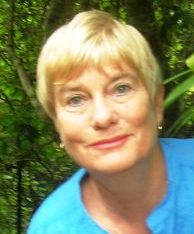
Is Jack like Heathcliff?

Some readers of Lyrebird Mountain have criticized Jack – the main male character and love interest of the heroine, Anna (I abhor the term “hero”, for women!). They find him weak and despise his stated reason for not returning immediately after the war to the woman he said was the love of his life.

Some have compared him to Heathcliff, possibly because thanks to yet another film of Wuthering Heights that quintessential anti-hero is on everyone’s mind right now. But of course he is not, any more than Anna is like the neurotic Catherine Earnshaw. He is, rather, the kind of man only too common to every age, and one whom women do best to avoid if they are looking for long-term bliss!

Lyrebird Mountain is not the kind of book that states the bleedingly, blindingly obvious.  That’s not the kind of writer I am.  I like my readers to look at the evidence – in this case letters, diaries, recollections – and make their own deductions about character and motive.

We, the readers, don’t go with Jack to the First World War so we can’t know exactly what he saw, did and suffered.  But we do know enough of that terrible conflict to understand its equally terrible psychological effects on the survivors.  Men not only lost their lives and limbs, they also lost their minds.

Wilfred Owen, most powerful and uncompromising of the WW1 poets, put it this way:

Happy the soldier home, with not a notion

How somewhere, every dawn, some men attack,

And many sighs are drained.

Happy the lad whose mind was never trained…

But most were trained – and then broken.  Well over a century later and with all the benefit of psychology at our command, we, we, too, have been trained to associate shell shock only with those who fought in the trenches.  But sailors were sent to the bottom on fiery ships and airmen in their novice planes were shot down and when they were not being shot at they were shooting at other boys. 

And Jack, a person of over-tender sensibilities as all artists are, was one of the broken.  We don’t know why.  Jack didn’t know why and the doctors who treated him, and those like him, didn’t really understand the why of it either.  Today we’d be diagnosing PTSD of the most severe kind.  Back then, men were told that real men would – and should – just get over it. For Jack, this took a long time and the need to recover all his.  By his own admission he started a new life, tried to find a new love.  But remained haunted by the old.

And yes, he is selfish, as most artists of true talent are. A brilliant mind is rarely in synch with the sensibilities of others.  In order to turn the brilliance into an output that can be shared with the world it’s necessary to focus inward.  Early in their love affair it’s obvious to everyone except Anna that Jack has little sympathy for her needs.  When she tries to put her strong sense of family and community before his expectation that she attend his exhibition, he is furious with her.

And when they are finally reunited, their senses overwhelmed by passion which seems to be even stronger for having been so long delayed, his self-focus is still evident.  He has no understanding of the social and emotional chains that bind Anna to mountain and family, nor does he appear to take any real interest in her art, her work. 

So…Jack’s essential sense of self-interest is neither created not modified by his war experience.  Yet perhaps we should hesitate to judge him for this for he lives at a time when the needs, demands and expectations of men take precedent over those of women and even those who saw themselves as warriors for social change, and paid lip service to the “liberation” of woman-kind in general continued to treat their own women heedlessly, when viewed with the eye of today. 

Think Karl Marx. Think Norman Mailer. Think Pablo Picasso. 

The unsolved mystery of Jack’s death is really the heart of the novel and whatever its cause the reader can well assume that, as with so much else in his tragic life, it’s due to his self-willed impetuosity.  An arrangement has been made. When it is changed, due probably to Walter’s malice, instead of waiting for Anna to resolve the issue, as only she can really do, he decides to go and fetch her.  This might be seen as heroic if we hadn’t come to realise that Jack is a man who acts without thought of the consequences to others.  His decision is also one of deliberate provocation to the husband he is cuckolding. 

Troubled Jack certainly is, but also devastatingly attractive as such men often are to susceptible women.  Otherwise prudent and sensible women.  I myself have felt the tug of such attraction and if you are a woman reader so, I bet, have you.  There is a part of us that responds, with heart and hormones, to the wild, the wayward, the misfit, the scorner of social norms, even the downright dangerous. 

Think James Dean. Think Heathcliff. And, of course, Byron. 

Love does not necessarily favour logic.  So Anna falls hard and all her strength of character and will cannot defend her against so great a passion for a man who, though he shares it, can never give her anything more. It does, however, help her to endure the agonising loss of him. She does not die of love, nor spend the rest of her life in mourning, though she never allows herself to love so extravagantly again.

I, like so many of my friends, have also endured the loss of the love of my life.  And, like so many of my friends – and Anna (who became a friend once I’d created her), I just got on with things.  It’s what women do – most of us. And that’s the main theme of Lyrebird Mountain!
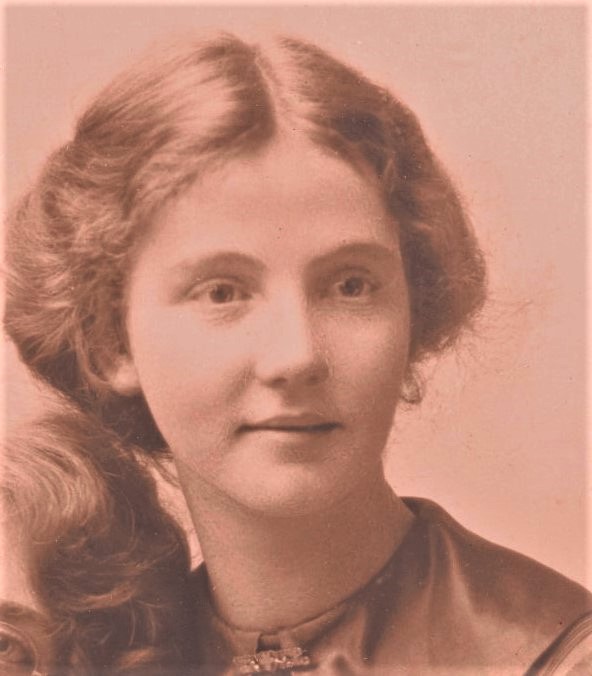
The real Anna?

I based the early part of Lyrebird Mountain, and the character of Anna, on the lives of Australian naturalist-photographer Hilda Geissmann and her family.

The Geissmanns did indeed come to Tamborine Mountain, south of Brisbane, in the 1890s and established a famous guesthouse there, Capo di Monte, the name of which is perpetuated today in a building, a retirement community and two streets.

I wrote a short biography of Hilda, published in 2023, and put the research material gathered during the creation of that book to good use in the early chapters of Lyrebird Mountain

Capo di Monte, like The Excelsior, was an instant success that lasted several years and did indeed attract visitors from all over Australia and the wider world – artists, writers, naturalists, scientists, theatre folk, politicians, graziers and wealthy merchants, minor royalty and the governors who represented the British Crown.

The Geissmann children served these luminaries, learned from them and, in the case of Hilda and her brother Barney, acted as guides through the rainforest that they knew so well. 

Hilda, like Anna, loved the forest and always felt at home there.  She learned to be an excellent ornithologist, orchidist and all-round naturalist, her photographs and articles appearing in many newspapers, magazines and learned journals. 

The character of Berthe almost exactly corresponds with what we know of Elfriede Geissmann, whose second name was Berthe, and her physical description matches the photos of Elfriede I have in my possession.  Her husband, William Felix, did indeed run off unexpectedly to Paraguay, never to be seen again or heard of by his family. The scene that takes place in the Brisbane Botanical Gardens, during World War 1, when his effects are handed over to his abandoned wife by a mysterious German woman, is exactly what happened in real life.  And though “Madame Kurcher” is a character of my creation, the Geissmanns did become very involved in Theosophy and Hilda herself, as well as her siblings, was influenced by it all her life.

Once I have got Anna through her childhood, so like Hilda’s, my book takes flight and the Geissmanns are relegated to true history.  Anna’s story and that of her brothers and sisters bears little resemblance to that of Hilda and her family, though facts do intrude here and there.  For example, the guesthouse did burn down (though two years after the date in Lyrebird Mountain) and though one of the Geissmann brothers went to the 1914-18 war he returned only slightly wounded.  Hilda and her sister Elsie married local farmers but they were cousins, not brothers, and though Hilda’s husband, Herbert Curtis, was wounded and did indeed convalesce in the English Lake District, and their house was named Windermere, he was a kind and good husband (or so I’ve been told by those who remember him) and Elsie’s husband, Willie, was certainly not a money-hungry philanderer. 

I doubt very much Hilda ever had a love affair like Anna’s but her long friendship with the naturalist/journalist Alec Chisholm, very much her mentor, was reimagined by me into the friendship between Anna and Arnold Clemens.  Chisholm, however, did not end his days on the mountain.  His death was terrible to Hilda and she paid a moving tribute to him in a speech she gave to the Queensland Naturalists’ Club in 1976.

Again, Hilda’s lifelong closeness to her sister Elsie is mirrored in Anna’s with her sister Liza who lives close by to her on Lyrebird Mountain. Elsie was very musical – taught music in fact – just like Liza and there is some hint in my research material that she gave up a potential concert career to come home and help her mother run the guesthouse.  I doubt, though, that Elsie was a lesbian or even knew what one was!  She and Hilda grew cut flowers commercially, just like my Anna and her sister and were each other’s confidantes in all matters. 

The character of Freddy does draw somewhat on that of Hilda’s best-known brother, Barney.  Barney’s memoirs show him to be a charmer with a fine turn of phrase and a great sense of humour – and indeed, when the family first went to the mountain, he was for some poorly-explained reason left at the bottom overnight and had to find his own way up the next day.  Imagine that, for a twelve year old town boy!  And there was no part-aboriginal guide, either.  Barney Geissmann was always a resourceful man who could turn his hand to most things.  He is still remembered on the mountain today though, like his briefly famous sister Hilda, there are very few left who actually knew him. And they themselves are now old.   

The character of Deirdre Bell is very loosely modelled on a sort of composite of the artists Daphne Mayo and Vida Lahey, both good friends of Hilda’s (especially Daphne) and both connected with Tamborine Mountain.  In her, I have tried to convey some of the New Woman, often deliberately naughty and outrageous of prevailing morals, that appeared in Brisbane’s tiny, self-consciously kultured art community of pre-World War 1 Brisbane.  A stuffy little city in a huge, barely populated state dominated by the competing values of graziers and blue-singlet unionised labour.  Neither of them particularly sympathetic to the arts.   Daphne and Vida were not really like Deirdre in character but their independence was unusual for the time and research shows there are some similarities

Arnold Clemens, in Lyrebird Mountain, is very obviously based on the writer/journalist/naturalist Alec Chisholm who is now almost forgotten in Australia, except by dedicated older naturalists.  He was a self-educated prodigy with a childhood love of nature that became his life’s passion.  He befriended and mentored Hilda early in the twentieth century and their friendship lasted until his death, despite the fact that both could be sharp-tongued and outspoken.  Chisholm, in fact, could be downright cranky!  And you see a touch of that in Arnold!

After I had published Hilligei, Hilda’s biography, I realised that aspects of her life would make the basis of a novel; in Anna I found the Hilda that my imagination had wanted her to be – more successful, more interesting, more desirable to men.  I have set a mystery in the heart of Lyrebird Mountain – the death of Jack Resnik – and there was a mystery at the heart of Hilda’s life, too.  Which was that, having achieved modest fame and recognition from the natural science world over a decade or so, she just packed it in.  Her name no longer appeared in journals and she stopped taking photographs.  Her correspondence with leading naturalists of the day dwindled.  She remained a lifelong member of the Queensland Naturalists Club and continued to host and help organise club expeditions to Tamborine Mountain but the Hilda whose knowledge of birds and plants was so respected, who could find the elusive Albert’s Lyrebird nest and photograph it when nobody else could, who wrote articles about her interests that were full of charm and refreshingly non-stuffy, took early retirement.  She lived to be almost one hundred, as a farmer’s wife, flower grower and pillar of her community.  But by the time she was in her forties, these mundane activities had become her lot.

And as far as I know, she was quite happy with it.  When I started my research for Hilligei I interviewed several people who had known her, both family and friends.  They all remembered her as a nice old lady. But none of them had more than a vague awareness of her youthful fame and contribution to Australia’s natural science.  Sic transit gloria and all that. The captains and the kings depart. 

And I like to think that a little of Hilda Geissmann lives on in the Anna of Lyrebird Mountain.

What Lyrebird Mountain is – and is not

Well, it’s not a murder mystery.  Though there is a mystery at the heart of the book and that mystery may – or may not – be the result of a murder. 

It’s not a romance novel. Though there is romance woven through the story, not just of the kind between humans but the romance of natural things; the romance that’s around us everywhere, every day, if we only learn to look for it.

It’s not a crime novel.  Most of us go through our lives, thank the Powers, without being directly affected by crime, though we know it is out there and that we must try to avoid it. A crime may have been committed in Lyrebird Mountain – a terrible crime.  And if it was, who dunnit? 

It’s not a historical novel although the history of Queensland, Australia and the wider world is recorded through events that affect the characters in the book – over more than a century.

It’s not a family saga – in the usual sense of the word.  It is essentially the story of one woman’s life but her story carries the reader through six generations of women with whom her life is linked, from mother to daughter.

It’s not women’s fiction even though the main character is a woman and the story looks at life through a woman’s eyes.  I don’t pretend to know the hearts of men; I can only experience them from the outside. But there is other stuff in Lyrebird Mountain besides the affairs of women…war gets a mention and politics and historical events and…yes…even cricket.

An author is by trade and inclination an observer of life and my observation is that novels rarely tell about life as it is.  Of course they don’t; the job of the novelist is to shock, excite, thrill, entrance, intrigue, move you to laughter or tears.  It’s entertainment, baby, not real life.

And yet, I have learned more in my life from novels than I ever learned from a non-fiction book. 

So Lyrebird Mountain is not a genre novel.  I did not want my characters to be larger than life, I wanted them to be the kind of people we encounter in our own lives.  Life is not well-organised like fiction and people do not always have clear motives.  Nor behave logically. Situations go unresolved, mysteries remain unsolved.  It’s not neat, it’s not tidy, it’s LIFE.

So when people ask me what Lyrebird Mountain is about, I find it hard to answer.  I say it is about love and loss, strength and resilience in the face of misfortune, the power of passion and the even greater power of place.  It’s about the relationship between grandmothers and granddaughters and the cruel impact of war.  And it’s all set against the historical evolution of a still-young nation finding its place in a sometimes terrifying world.  (Yes, yes, I knew it’s an old continent with an older set of inhabitants but I’m talking about nationhood.)

I have often relied on allusion to tell my tale, rather than spelling it all out.  As much as possible I have tried to treat cliches like potholes in the road – to be avoided. I don’t insult my readers by telling them the bleedingly bloody obvious!  I prefer to let them work it out for themselves.  Those who can’t are welcome to discuss it here on my blog.

There is, for example, a constant allusion to the mystery of the rainforest, especially higher-altitude forest like that of Lyrebird  Mountain, where mist throws a gauze over the trees and clouds of vapour float up the gullies.  I have always found rainforests of any kind – from the mighty Tongass of Alaska to the jungles of Africa – to be mysterious places.  Spirits lurk there, ancient as the trees, though spirits of what I am never sure.  Like Anna, I sense them, I feel them around me. Whispering.  The life of the rainforest, whether in the canopy or on the littered floor, is secretive.  If you listen, there is always a scuffling or a rustling or the cries of birds that often have a wailing eeriness to them.  As if song or cackle belongs only to sunlight. 

Such mystery, such hints of a magic powerful but unseen, can affect people in strange ways.  Men have gone mad in rainforests; especially those who have gone there to cut timber and found themselves alone among the tree shadows, their axes suddenly falling from their hands.  Women, in my experience, have a better understanding that keeps them safer; visiting as they do mostly to seek and examine plants and birds, doing no harm. 

In many ways Lyrebird Mountain is an old-fashioned book.  Deliberately so. I’ve gone against the contemporary trend to recast history through modern eyes and ears, in film, in television in books. Where characters speak and act as they do today and not as they did then. For I have lived  through much of the timespan of Lyrebird Mountain and know, too, how my parents and grandparents spoke and behaved.  And those of earlier generations.  And there are, quite simply, things they didn’t do or say because of the prevailing standards of behaviour.  Some bold few might have said and done things that broke the code.  But most people didn’t.  And those are the people I’m writing about. People who set a high price on reticence, restraint, fortitude, good manners and self-control.  And who understood the difference between compassion and sentimentality. This is how they coped with the tough stuff.  Looking back, it seems amazing to me that they could be happy in a world where even the rich did not have the comforts, conveniences, services, safety measures, medical treatments, social support and readily-accessible entertainment that we take for granted.

But, by and large, they were.  Like Anna and her family, they bore it all and carried on.

This is not, I know, the stuff of great drama.  But I wanted to write something real. For the kind of readers who like it that way. 

I hope I succeeded.