I am a horticulturist, writer and photographer who lives on Tamborine Mountain, one of the world's beautiful places to live with plenty of sunshine, good rainfall, moderate temperatures, lush rainforest, splendid views of both the ocean to the east and the mountains to the west. I love writing about the place in which I live, in all its moods and seasons. Besides gardening I love good literature and poetry, bushwalking, birdwatching, history, Japanese language and culture, and music of several kinds.
This is of course an AI generated image because all photos of Michaela are still protected by copyright. It is, however, not so different from the woman I remember, and true to my admiring childhood vision of her. She was, when not in bush clothes, very glamorous.
I walked down Delamere Avenue (as it was then known) one day, with my grandmother, and towards me came a woman trailing two cheetahs on a leash.
She was striking to look at, with glimmering red-gold hair and wearing a suit smarter than one normally saw on the streets of Nairobi, capital of colonial Kenya. But of course it was not her looks that impressed me, it was her two pets.
I knew who she was, of course, because I had already met her. As had my grandmother. This was probably the best-known woman in East Africa in the 1950s – the fabulous, glamorous Michaela Denis: adventurer, writer and, with her equally famous husband Armand, a television star. Kenya was more than a decade then from getting television but we all knew of Armand and Michaela Denis.
A few months earlier the Denis’ had visited our school and brought the cheetahs with them as well as a mongoose. The mongoose didn’t interest us much because they were common in Kenya and many of us had one as a pet at one time or another but the big cats were a thrill because unless our parents took us on safari, these animals were rarely seen.
Though it is more than seventy years ago I still remember how much I loved Armand Denis’ talk; he was a big man, bulky around the middle, untidy hair, eyes kind behind his glasses. He showed us what was then called a “ciné film” on a cloth screen and in his soft Belgian voice explained the images ofwild animals and pigmies and other strange West African tribespeople, similar and yet different to the tribes of our own Kenya.
He was one of the first – and for a time – most famous of the world’s wildlife photographers, ahead, even, of the revered David Attenborough – and he lived in our backyard! He and Michaela had built a rather unusual house in the suburb of Langata which bordered the Nairobi Game Park. Here this ever-wandering couple maintained a menagerie of birds and animals because, like me, Michaela had been a little girl who adored wild things and collected everything from hedgehogs to beetles. Just as I did.
My grandmother knew Michaela because she had a friend who lived next door to the Denis’ home and while they chatted I kept my adoring eyes on the cheetahs. How I longed for a big cat of my own! A lion cub, a leopard, even a Serval cat as one of my friends had, but, most of all, a cheetah. They were said to be easier to tame than most wild creatures, good with children and domestic pets, able to be house-trained, better than dogs for hunting. My father used to laugh at the very notion of keeping such an animal in an urban environment. “They eat ten pounds of meat a day”, he told me. “Their claws are not retractable, like those of other cats, and they will scratch you. And just look at their teeth!”
I gazed at the cheetahs and they gazed at the horizon, perhaps seeking the great Athi plains which were only a short distance from that city street. Their indifference was total, quelling to the spirit.
“Can I touch them?” I whispered, shy in the presence of my goddess and her Olympian companions. “No,” said my grandmother. But Michaela, may her name be forever blessed, took my hand and placed it on the head of one of the cheetahs. I moved my fingers, scratching the scalp as I did to our dog. The fur, I remember, was very bristly and not as soft as it looked. My hand, still covered by Michaela’s, moved tentatively down the neck. The cheetah continued to stand there, perfectly still, unresponsive. The other one sat down with a grunt, as if resignedly making the best of things while these humans communicated with each other in ways mystifying to cheetah-kind and rather boring. People passed us on the pavement, some stopping to stare or say hello. Cars and bicycles went by only inches away. The cheetahs remained unruffled and apparently unseeing, like carvings on an Egyptian tomb.
I never got to keep a leopard. Or a cheetah. But I did have a monkey – a coup0le of them, in fact, at different times. Here is our monkey Peppy with my daughter Amanda – circa 1971.
After that day I went several times to the Denis’ house, with friends, to “play” with their wild things. Armand and Denis were very good with children, though they had none of their own. Besides the cheetahs, of which at one time they kept about half a dozen, they also had a young leopard called, from memory, Chui. Not very original as this is its Swahili name. The leopard was playful and firmly imprinted on Michaela who would hug and kiss it and let it lick her face. Those great canines, so close to her nose; those savage claws so close to her eyes! It was tame, didn’t seem to mind our presence, walked happily around the house and garden but we were not permitted to touch it. Leopards, we were told, were unpredictable around people, even when brought up as pets.
Nonetheless, Michaela preferred her leopard to the cheetahs. She told us it was warmer, more affectionate, bonded better with humans. Even though capable of doing much more harm. “Look into the eyes of a leopard,” she would say, “You’ll see feeling. A connection. Look into a cheetah’s eyes and you see nothing.”
Though I admired and even adored her in that pre-pubescent way of girls I didn’t agree with her. I looked into the eyes of Chui and I saw a creature that, even though well-fed and, it seemed to me, lazy because of it, would just as soon reach out one of those large paws and pull me within reach of its jaws. Just to see what I tasted like! I saw, I believed, a glimmer of hostility. Or avidity.
Whereas, to me, the cheetahs seemed to be always dreaming of somewhere far away; of running free on the savannah. Non-threatening but disinterested. Unlike with the leopard, we were allowed to play with them once they got used to us and never did I know them to be even the slightest bit spiteful. They tolerated our petting and would obligingly chase and pounce on objects towed on a string. They would even, sometimes, nuzzle our hands and rub against our legs, just like any cat. They were always happy to be fed by us.
But always they retained that aloofness. We just didn’t matter to them and they wouldn’t miss us when we left.
Michaela’s big cats were never caged, to my knowledge, merely contained at night so they wouldn’t wander while their humans were sleeping. Cheetahs are daytime hunters while leopards hunt mostly at night but well-fed cats of any kind don’t usually stray too far. Looking back, now, with the wisdom of years, I wonder whether, being hand-raised, they knew they would not fare well if they wandered over the fence to the national park beyond, where they would have to fend for themselves and their totally wild and free kind might not welcome them.
The leopard did sometimes go exploring. A friend’s father, who lived nearby, came home late on night to find a leopard sprawled across his stoep. He did all the usual things…shouted, threw things, sounded his horn. The leopard didn’t stir and nobody in the house, or in the servant’s quarters round the back, heard his shouts and horn-blowing so he had to stay there the rest of the night, sleeping in his car. When he woke, the leopard had gone.
It could, of course, have been a wild leopard because leopards were plentiful around the Nairobi suburbs back then – snatching dogs, frightening (though never to my knowledge actually harming) Africans on bicycles, always there in the darkness, swift and silent, rarely seen.
But, so the story went, a wild leopard would have run away if confronted by an angry and noisy human. Or even, if frightened, attack. The man swore it was Chui and many believed him. Complaints were made. The Denis’ denied it was their leopard but other neighbours had similar encounters and, so my grandmother told me, Michaela did take more care to keep her wandering pet confined because she was afraid that somebody might get trigger-happy. Many people had guns back then, because of the Emergency.
My family moved to the coast and I never saw Armand and Michaela again though their wildlife documentaries were sometimes shown in a Mombasa cinema and we saw the TV show when on holiday in England. “I know them”, I used to say proudly to my English cousins.
I never did get to own a cheetah. Or even a Serval cat. I am not in favour of keeping wild animals as pets and hate those American TV shows where people show off their tigers. There are, I read, more tigers in captivity today in the USA than wild tigers in India and, sadly, they may well be better off there. But it still doesn’t seem right.
A natural successor to Michaela, of course, was Joy Adamson and Elsa. But the Adamsons, living in a game reserve, always intended to return their lion to her wild condition. Which shows how times – and attitudes – can change, even within just a decade.
I re-read one of Michaela Denis’ books recently (thus inspiring this article) and now realise she was a silly woman in some ways and often wildly incorrect…some people would even find her descriptions offensive. But that is to judge the actions and opinions of the past through the filter of today and so, for her courage and kindness and glamour and passion for conserving wild places long before it became commonplace, she is still my hero!
Oh, and by the way, she couldn’t stand David Attenborough! Described him as a fool and a thief – apparently for pinching one of Armand’s ideas for a wildlife television program.
A reader of Lyrebird Mountain wrote to me recently and asked about the strange, “waking dreams” experienced throughout her life by Anna, the book’s main protagonist.
Was she psychic? Was she epileptic? Did she suffer from some psychotic disorder such as dissociative states?
The truth is, I don’t really know!
The narrator of this book is Anna’s unnamed granddaughter who suffers from the same strange episodes and is never able to name them. Her evidence for her grandmother’s experience is mostly from family memories and diary entries and from these it seems that the wachtraum, as this German-descended family called it, was believed by her parents to be spiritual. Given, as they were, to a belief in Theosophy and the existence of a spirit world beyond this one. And so they took their daughter’s occasional fugue states in their stride. No big deal here. Let’s not make too much of it.
By her own admission, the child Anna, on coming out of her waking dream, sometimes embroidered the experience. What she could recall was muddled and vague and so she attempted to give it coherence. Thus distinguishing herself from the rest of her siblings. Not just one of the “middle” siblings but a child with special powers.
When she was older, Anna identified these experiences very strongly with her powerful connection to the rainforest. Here, she said, she found her true spiritual home. Her church, if you like. Among the great trees and in the misty gullies where the only sounds were the birds and the trickling – seasonally rushing – streams there was enduring mystery. More ancient things existed here just beyond perception, which was granted only to those humans who were spiritually and emotionally attuned.
Here, too, Anna believed she encountered the spirits…or trace memories…of the indigenous people who had hunted on the mountain for millennia.
Airy -fairy stuff you might say, unless you, too, have an affinity for such beliefs. But I based Anna’s mystical experiences on those of a friend who sometimes found herself strangely “coming to” after unexplained periods of absent consciousness. She had no concrete memories of these episodes except vague ideas of voices and shadows and a general sense of otherworldliness. She was tentatively diagnosed with, and briefly treated for, epilepsy and when this did not stop the waking dreams she sought psychiatric help. Also with no useful result. And as the incidents caused her no harm, she learned to live with them, even to hope for them!
I do have to say, though, that she was the kind of person who did believe in some sort of alternative reality and afterlife and was very keen on angels, spirits and natural remedies!
Novels, to some extent, create themselves. The characters take over the author and develop lives of their own. Somehow this happened with Anna and it seemed to me right and natural that she should be infused with the mystery of the mountain rainforest, which we all feel to some extent, and that this in turn should inspire and inform her work as a writer and illustrator. The work that makes her famous because its characters and setting, unique to her particular genius, enthral generations of readers.
I wanted my book to have this small spiritual dimension because that is the way in which I myself feel about the place I live – a mountain whose rainforests still retain, in the face of increased urbanisation, a mysterious power that thrills me every time I enter those green portals to that other world of rock and water, trunk and buttress, moss and fern, frond and thorn.
I believe that everyone needs the forest – any forest – to keep us connected to our wildside. Why? Because civilisation is a marvel of cultural interconnectedness and its embodiment is the modern city – the buildings, the road and rail networks, the invisible map of air routes above, the sewers below, the art, the music, the cultivated gardens, the monuments to human endeavour. And in all of that amazing human creation it is all too easy to forget that underpinning it is an even more amazing interconnection of natural processes, beautifully evolved over aeons.
Vital to life on earth.
In her only significant journey away from the mountain Anna travels to one of the most famous and beautiful cities on earth – Vienna. Yet she does not record her reactions to this triumph of architectural and cultural achievement. No doubt the buildings impressed her, even in her terrible grief and urgent seeking. And she does note the loveliness of the countryside, even in the aftermath of war.
But Anna knows that we are, deep in our blood, not so far from our wild nature that long pre-existed recorded history – and she feels the tug of her mountain home. Her story, like all our stories if we live long enough, is one of increasing loss. Only the natural world endures.
Acuminate: When referring to a leaf, narrowing to a point, often forming a “drip tip” which channels water off the leaf and down to the ground below.
Acute: Sharply pointed
Alternate: Leaves arranged alternately along the stem or branch (as opposied to opposite)
Apex: the tip of the leaf
Attenuate: gradually narrowin
Axil: the angle between the leaf stem and the branch
B
Berry: Fleshy, often edible fruit that contains one or more seeds.
Bifoliate: Compound leaf made up of two leaflets
Bipinnate: Compound leaf which divides into separate leaflets which bear a second arrangement (variable) of leaflets up the stem.
Bole: Area of tree trunk below the lowest branches, sometimes thickened, rounded or swollen.
Bract: a form of leaf often found enclosing flower. Some plants, such as poinsettias, have large and colourful bracts which are often mistaken for flowers. This is rarely the case with Australian rainforest plants.
Buttress: Large sections of the lower trunk which jut out from it and act as stabilisers (rainforest trees have very shallow, albeit spreading, root systems). They also help prevent soil erosion and gather nutrients and moisture in the leaf letter that piles up in their crevices.
C
Calyx: The sepals of a flower grouped together
Cauliflory: Flowers and fruits growing “cauliforously” on the branches or trunk of a tree.
Canopy: Top forest layer of trees.
Capsule: Dry seed case of some plants
Carpel: Ovary, stigma and style inside a flower
Chlorophyll: Green colouring in plants that absorbs sun’s energy
Compound leaf: Leaves that are divided into two or more leaflets
Coppice: Shoots that develop on some tree trunks (usually at the base but sometimes on branches), developing from a dormant bud
Cordate: Heart-shaped, as in some leaves
Cotyledon: The first leaves that appear as shoots from a planted seed
Crenate: Leaves with blunted, rounded teeth around the margin. (Crenulate is the same only teeth are smaller, finer and usually more numerous)
Crown: All the branches and foliage above the lowest branches of tree or shrub
D.
Deciduous: Sheds leaves in certain seasons, usually winter
Dioecious: Male and female flowers borne separately on different plants (as opposed to monoecious where a plant bears both male and female flowers)
Dentate: Leaves with sharpish teeth around the margin
Domatia: Pits or tufts in the vein angles on the underside of a leaf
Drip-tip: Leaf with long, narrow tip that “drips” water on to the soil – and thus the roots – below.
E
Elliptic: An oval-shaped leaf which is widest in the middle.
Endemic: Plants originating from and restricted to a specified region.
Entire: Leaf margin that is neither toothed nor lobed.
Epidermis: The outer cell layer or “skin” of a leaf or stem.
Epiphyte: A plant supported by another plant and dependent on it but not nurtured by it; unlike a parasitic plant which feeds off the host. One example is a Staghorn Fern (Platycerium bifurcatum)
Evergreen: Has leaves throughout the year, i.e. is not deciduous. Like a pine tree.
F
Falcate: Leaf that is sickle-shaped.
Flora: From the Latin, collective name for plants. As with fauna, the collective name for animals.
Floristic: The adjective for “Flora”
1-Foliate: Leaf with swollen joint at the base, where it meets the petiole
Frond: Compound leaves of ferns and palms
Fused: Joined parts of stem, leaf or flower that are growing together
G
Genus: Taxonomical term for group of species that are closely related
Glabrous: Smooth, without hairs or fuzz
Gland: A secreting swelling on leaf surface, leaf base or petiole
Glaucous: dull bloom either white, grey or bluish, either waxy or powdery, found on the undersurface of leaves and, rarely, on the surface.
Globose: round and solid like a globe
Gymnosperm: Ancient plant group with uncovered seeds and ovules not encased in an ovary. Seeds usually born in cones as with conifers and cycads. Often loosely categorised as “non flowering” plants
Inflorescence: Cluster of flowers on one stem
Pinnate: Compound leaf composed of small leaflets either opposite or alternately arranged along the stem (rachis).
Raceme: A single long inflorescence with a non-flowering bud on the end and lots of tiny florets along the stem. Often pendant, as in Buckinghamiacelsissima and Macadamia species.
Sepal: Small leafy growths that surround the petals, constituting the calyx
Stigma: receptacle of the pistil; part of flower’s reproduction “organs”
Style: Slender stalk that connects the stigma to the ovary in a female flower
Dingoes and tourists are not a good mix – but if we are to avoid tragedies such as the death of a young Canadian girl on K’gari Island recently then maybe we need to change tourist behaviour. Because it’s a lot easier to “train” humans than it is animals.
Wildlife has become a major factor in tourism; the ONLY factor with some countries. We flock to the safari lodges of Africa and India for the chance to see – sometimes just glimpse – something big and fierce and dangerous. When I was a child growing up in Kenya and “safaris” were limited to the wealthy few from overseas, we locals lived comfortably but cautiously with the wildlife which was always present and often seen back then.
We didn’t make a big deal of it – and we didn’t get too close if we could avoid it.
Today, lion and buffalo and elephant have to carry on their lives under the constant stare of humankind, either eagerly taking phone photos from an open vehicle or on foot. And always too close. For many – too many – it’s all about the thrill and the guides know it. So attacks do occur and when they do it’s the humans that come off worst. Such attacks are rare because obviously precautions are taken but it’s inevitable, in a situation where proximity leads to dangerous familiarity, that here and there a tourist will get chomped by an angry hippo or mauled by a bear.
It’s the risk you take when you venture into any wilderness.
Australia is one of the world’s safest countries when it comes to wilderness tourism. True, sharks lurk in our oceans and crocodiles make the rivers of the far north unsafe for swimming. But the rest of the country boasts no large predators of the kind to threaten humans.
Dingoes are medium-sized dogs. The suburbs boast far more formidable canines today – the pit bull, the great shaggy shepherd dogs from various mountain countries, the Pakistani fighting dogs, the dread Carne Corso. Even the Doberman and the Staffordshire Bull Terrier. I’d face a whole pack dingoes any day than one of those on the loose!
Truly wild dingoes are afraid of humans and avoid them, though they are easily attracted to campsites where there are opportunities to scavenge. Like all dogs, though, they easily lose that fear in a shared environment and are certainly capable of killing or badly mauling a small child. There have been several such well-documented and witnessed incidents and then, of course, the Chamberlain case where it was finally (though not conclusively) ruled that a dingo had taken and presumably eaten a human baby.
But fatally savage a fully-grown woman?
It’s not impossible. But neither is it very likely.
I have spent a lot of the past five decades camping all around Australia, with my husband, and often at night we heard dingoes calling. Sometimes we saw them, mostly singles but sometimes a small group, trotting across the open plain or slinking quickly into the underbrush at sight of us.
On occasions I have found myself being followed by a dingo and this has always occurred in lightly inhabited areas close to the beach. It’s creepy because they are so silent and persistent – but when I’ve turned round and yelled or even run at them they have run away. I have put such behaviour down to the curiosity common to all wild dogs and their association of humans with readily-scavenged food.
Certainly I do not pretend or presume to be an expert on dingoes but I HAVE, years ago, camped a lot on Fraser Island and would like to share two experiences which might shed some light on what happened to the poor young woman whose body bore bite marks made either before or after she died.
Many years ago we had sailed our small, keeled yacht, moored at Tin Can Bay, over to the inland side of K’Gari. Here in a sheltered bay, with a good beach a few metres away, we anchored for the night. In the early hours the wind got up suddenly, our anchor dragged, we floated into the shallows on an outgoing tide and ended up on our side. Knowing we would have to wait until the next high tide to refloat her, I huddled into the dinghy with a book, a torch and our small dog while my husband Bob, with nowhere else to go, started to walk up and down the beach.
It was a bright moonlit night and after a while I heard Bob call to me; looking up, I saw he was being followed, at a respectful distance, by a single dingo.
“Oh how sweet,” I called back, then returned to my book. But soon the dingo had been joined by another, then another, appearing stealthily from the forest and forming a pack of twelve. All of them following Bob as he paced the length of the beach.
Now Bob was a big man who had hunted dangerous animals in Africa (always out of necessity, not as trophies I hasten to add) and not easily scared. But these silent followers were spooking him, no question. And I was a bit worried too, not for myself but for my little poodle Mitzi because a couple of years before that we had been camping on Fraser Island (as we called K’gari then) with friends whose Pekinese, sleeping under their camper van, was taken by dingoes and ripped to pieces. The tiny dinghy was not much of a refuge, there in the shallows, and I could see some of this pack were throwing occasional curious glances our way.
“Oh for goodness sake, they’re just bloody dogs!” I cried to Bob, thinking he was making too much of a fuss. “Just turn round and run at them and wave your arms and they’ll go away!”
He did so, all 193 cms (6’ 4”) of him and the dogs did indeed scatter, heading back to the bush – but then he tripped, and sprawled flat and in seconds they were rushing back towards him, much closer now, surrounding him, one or two larger males in the lead. He scrambled up quickly and I, just as quickly, tied Mitzi’s lead to the thwart and leapt ashore with an oar, yelling my head off – and believe me, I am a good screamer!
So between us we scared the dingo pack into the scrub along the edge of the beach but we had the uneasy sense that they were there, lurking, watching us, until dawn came and we lit a breakfast fire and then managed to shove the boat into deeper water.
About a year we were back on K’gari and this time we were on the ocean side with a four-wheel drive vehicle. Early – just at sunrise – I took my rod and went to fish the gutters along the beach. In those days you could camp anywhere and there was nobody else around. I got a feeling that I was being watched and, sure enough, when I turned around, there were a couple of dingoes coming down the dune towards me. They stopped, when I turned, but then came on. I actually enjoyed the sight and called out to them in that silly way we humans often talk to animals. They stopped and stared. And then I noticed a couple more heading my way – and I started to get a little worried!
My rational brain told me that they were hoping for food, probably fish scraps, because fisher folk sometimes filleted their catch on the spot and tossed away the scraps. But there was, I thought, something malevolent in the way they came on so purposefully, so silent and intent. I began to panic – and my instinct was to run into the sea! Out to the surf break where I didn’t think they would follow. I’ve always been a good swimmer but I could see a rip running close by and I had my rod and my fishing gear to think of and so I controlled my fear – with great difficulty – and waded a little further out, but not so far I couldn’t stand. And I pretended to ignore them and carry on fishing, while all the time sneaking peaks at them. They wandered up and down the beach for a while and then a vehicle came along the sand and I saw Bob walking down from our campsite and the dingoes trotted back into the scrub. We didn’t see them again but you can bet we tucked up tight in our tent that night and kept alert, especially when we heard them calling not far away.
And the questions I have often asked myself since are these – if Bob had been alone on that night time beach and had injured himself when he fell, would the dingoes have attacked? And if I had panicked during my early morning encounter, which I so nearly did, and tried to run from them would they have been bold enough to bring me down? And if I had run into the sea to get away from them, might I have drowned? My body washed into the shore where the dingoes were waiting?
This is all speculation, of course. A body washed on to a beach where dingoes are roaming will undoubtedly look like a meal to them. But an alive, active, fit young girl ought to be able to scare them off, especially given that even in the early morning one is rarely out of sight of other people on popular K’gari today, during the peak holiday season.
Perhaps we shall know the full truth, when all the forensics are in, because the implications of her death are important to humans and dingoes alike.
Already, in the sacred name of tourism, the dingo “pack”, so-called, has been destroyed by the authorities in a knee-jerk reaction typical of an age in which we have come to think of safety as a right. It isn’t! And while a prudent, caring society endeavours to protect us from preventable accident and human carelessness or criminal intent, it cannot remove all risk – and nor should we want it to. People must exercise their well-evolved self-protection instincts and understand that when we venture into the natural world, where wild things roam, we do so knowing the possible dangers. Something of which I reminded myself last year in Canada when, out walking in the forest alone and without gun or bear spray, I encountered a very large grizzly bear. Had it attacked me I would obviously not be writing this article! Nor would I be looking for someone to blame because that particular national park is full of bears and that’s one of the main reasons why I, and others, go there.
If a pack of dingoes wandered on to the beach at Surfers Paradise and attacked people I’d expect the government to do something about it. But on K’gari – absolutely not! Instead I’d be looking at altering the ma
A witchdoctor (centre) and his two apprentices, circa 1958
A fine yet all but impenetrable veil separated Mombasa’s sunny exterior from its darker dimension. Impenetrable, that is, to club-going commonsensical colonials like my parents whose spiritual needs, such as they were, found satisfaction in the churches they had built at either end of Fort Jesus Road; the catholic church almost in the centre of the town as befitted its greater age, the protestant church more discreetly tucked beneath trees and closer to the British enclave of banks and government.
These churches made it quite clear to everyone – Hindus, Muslims, Sikhs, those animist Africans who remained as yet unconvinced about Jesus – that clean and godly Christianity was one of the benefits that came from European rule, along with law, order, good government and decent drains. Furthermore, it meant an end to witchcraft and superstition and all that mumbo-jumbo associated with primitive cultures that knew no better. So there were to be no more were spirits inhabiting the bodies of wild beasts; no more jinni in charge of special places, and witchdoctors were either ridiculed or sent to jail. Of course, it was okay to believe in angels and that Satan was still a force for evil in the world and that a man invested with sacred power could change water into wine. But the only ghost sanctioned by the ruling civilization was the Holy Ghost.
Yet beyond the veil Africans and small white children knew differently. We understood that ghosts and unquiet spirits haunted old buildings and certain places around the island. We shuddered at the thought of leopard and hyena lurking in the forests that were no true animals but men, undead, in animal form. We believed firmly that Fort Jesus was haunted by the ghosts of Portuguese who had died there and that under every baobab tree was the body of a slain Arab.
The people of the coast, though mostly Muslim by profession, were deeply superstitious and believed in many things not found in the Koran. In coral caves along the coast you would often find little bundles of sticks with coloured strips of cotton tied to them, like miniature flags. These might or might not be accompanied by carefully laid out oddments – feathers, small stones, shells, driftwood. We children knew that these were placed there by witchdoctors; knew also to leave them alone or we might find ourselves laid under a dark and probably fatal spell. Eagerly we exchanged rumours about children who HAD interfered with these strange artefacts, and who had died awful deaths or simply disappeared. Africans had great dread of these caves and would never go in there; it was marufuku – forbidden – they warned us, and also ahatari – dangerous.
The coral caves found in headlands north of Mombasa Island were a great playground for we children who made our own sort of magic in their dark depths. At low water there were tiny rock pools full of sealife and we would clamber or crawl over the rough coral to sandy-floored chambers where we would play pirates or castaways, always with an eye for the incoming tide. But if we came upon one which showed evidence of uchawi we retreated at once – the broom-riding witches of our own folklore didn’t worry us much but every Kenya child, black or white, feared African witchcraft.
I knew a boy who once came across one of those little collections of flags and, as ten year old boys will, gleefully broke and scattered them, and brought a few out of the cave with him to show his parents. They were a family newly arrived from England and thus ignorant of such things; however when some African fishermen saw him flourishing his booty they became angry and shouted at him. The parents, of course, were completely bewildered by this reaction but thought little of it until, a few days later, a very smooth young man in a cast-off European suit came to the door and told them in passable English that their son had committed a grave offense and compensation would have to be paid to the local witchdoctor. Otherwise, he said politely, very bad things would happen.
The boy’s father, who had been fighting Germans not long before, was not easily intimidated. He laughed and told the young African to go away or he would call the police. Shortly after this small, strange, sinister artefacts appeared in places around the house and garden. Sinister, that is, to those who recognized the signs of witchery. It didn’t worry the boy’s father but it frightened the memsaab and it terrified the servants, who both left. Nor could any others be found to replace them – nobody would work for a household that had been so obviously cursed.
The story went round our small community like wildfire and we children waited hopefully to see whether the boy, our playmate, died a gruesome death or was turned into some demonic creature. We teased him unmercifully but also kept a strategic distance – we feared contamination by association.
Finally, after a couple of uncomfortable weeks, the boy’s father sought advice from the head of his department, who happened to be MY father. Should he call the police? Was his family in any danger? My father, who believed in nothing beyond the realities of this world, nonetheless counseled him to make compensation. Some might have viewed this as giving in to blackmail but my father, wise in the ways of Africans, knew that a serious offence against local cultural and spiritual sensibilities HAD been committed and that while there was little likelihood of any major revenge the witchdoctor would continue to make trouble and subject the family concerned to an ongoing series of petty annoyances. Certainly they would never be able to employ another servant until the curse was lifted. This advice was taken; a small (in European terms) amount of money was handed over, apologies were made and there the matter ended.
I realize that this story would be more exciting if it had a suitably dramatic ending. What it shows, however, is the indirect but still potent power of African witchcraft which could still affect the lives of Europeans through its effects on the people who worked for us.
The people who lived on the coast north of Mombasa blended Islam with their animistic beliefs and and witchcraft – and its practitioners – flourished in those dark forests. According to recent newspaper accounts, it still does.
When I returned briefly to Kenya in 1971 I stayed with some friends who had bought land at Kisauni, just north of the island. This was always one of the coast’s “dark” places, teeming with jinni and troublesome spirits according to local lore. Few Europeans lived there in those days and those who did were the type to be dismissed by my mother as “peculiar” – her favourite word for anyone who didn’t quite fit her notions of middle class social norms. My friends were planning to build a house on their couple of waterfront acres and everything was ready to go when they suddenly ran into a snag – the local witchdoctor had put a curse on the land and would not remove it unless promptly paid. This was not something that could be laughed off because no workmen would set foot on the place as long as it was accursed. In the end, payment was made. It all ended well enough because they lived there for more than 50 years.
Witchdoctors, both male and female, involved themselves in every aspect of life in the villages and shanty towns on and around Mombasa. They were not all bad – some waganga practiced herbalism and spiritual healing and the blessing of family endeavours. Others, however, known in those days as wachawi – a word uttered always with dread – practiced the black arts and were very much feared indeed – shape changers, demon-raisers, death dealers – their auto-suggestive powers were very strong.
My grandmother was known as a witch to the Kamba people among whom she lived. They called her Memsaab Susu – a word that meant grandmother but could also be synonymous for a witch of the benevolent kind. What we’d call a white witch. She earned this for her knowledge of basic medicines and fondness for herbal remedies. Unlike her family, the Africans whom she dosed with her disgusting nostrums were impressed and grateful and obligingly inclined to recover from whatever was ailing them. They often begged for Milk of Magnesia which they regarded as a cure-all more efficacious than any remedy from one of their own witchdoctors but the medicine which impressed them most – and which they feared most – was Andrews Liver Salts.
My grandmother, a “witch” whose most powerful potion came from a tin of fizzy stomach salts!
My grandmother was in the habit of taking a glass of this stuff every morning and attributed her own excellent health to its properties. To the Wakamba of earlier and less sophisticated years, this foaming drink looked like boiling water and once my grandmother realised this she used it to advantage. If there was trouble in the household or theft among the farm workers my grandmother would subject them to what we called “Trial by Andrews”. All suspects would be given a cup of water into which she would pour a couple of teaspoons of the magical liver salts. Those who were telling the truth could drink safely. Those who were lying, however, would have their mouths badly burned – no liar could evade the curse of Memsaab Susu. Those who were trying to lie did not dare to drink the fizzing water, so strong was their conviction that it would, indeed, burn. “The day will come”, my father used to warn her, “when you’ll try this on one of these chaps who’ve had a bit of education and he’ll drink the water. And then where will you be?” As far as I know, that never happened. My grandmother retained her reputation to the end. I have heard this story of European “smoking water” from others and whether it originated with my grandmother or others coincidentally tried the same scam I don’t know; I only know it worked for her.
I was staying with her during my school holidays when, one evening, there was a ruckus in the kitchen. We rushed out there to find one of the servants cowering in front of a large, very dark-skinned man wielding a knife. Without hesitation my grandmother (who was only just over five feet tall) marched up to him, seized his arm, made him drop the knife and then demanded to know who he was and what was going on. It turned out that the cowering servant had recently purchased a wife who had been promised to the tall stranger, who was determined to claim his own, by force if necessary. My grandmother ordered him off the farm but he hung around the labour lines for a few days, trying to foment trouble and making threats against both the servant and my grandmother.
He was, we learned, a well-known m’kora – spiv – greatly feared by the locals and said to be under the protection of a powerful witchdoctor – a mchawi. “We’ll soon see about that”, snorted my grandmother or words to that effect, and promptly put a spell on him. Her spells consisted of waving a riding crop in the air and reciting English poetry, usually that one that begins ” Sunset and Evening star, and one clear call for me…” which she chose, as she said, for no reason other than she’d always liked it. The watu were enthralled, for Memsaab Susu’s spells were considered more fearful than any local thug. Sure enough, a few days later, my grandmother was told that the stranger had gone to a hut in a nearby village, lain down on the ground, and since refused to move or talk or eat. This went on for a while – I can’t now remember how long but it was during the Easter school holidays so can’t have been more than another week.
I returned to boarding school and learned later that the villagers had come to my grandmother and informed her the man was certainly dying. Sceptical, but a bit worried by now, my grandmother went to see for herself and, sure enough, the big, very dark stranger whom I remembered as being well-muscled and quite frightening in his obvious strength was now lying there shrunken, grey of skin, comatose. My grandmother hastily produced another of her spells and ordered the man to recover. Within a few days he did so and, terrified by this small white woman with her tin of Andrews Liver Salts and riding crop, left the district.
This all occurred up-country but those tribespeople who went to the coast to work, as our Kamba servants did, took their superstitions with them and then had to confront a whole new lot of what my father and his friends called “mumbo jumbo” but we children believed in as firmly as did the servants who helped raise us.
We knew of the devilish spirits that inhabited certain baobab trees and were afraid to go out after dark, even into the garden, for fear of the big, black nyangau – a flesh-eater with certain similarities to the hyena, only scarier. I’ve already mentioned the were creatures that also lurked after dark; leopard and hyena were the most popular choices for those men and women who transformed themselves into animals but just about any creature could be thus inhabited – any creature with teeth and claws that is. I’ve heard of were jackals and even were serval cats but never of a were elephant! These and other horrors had much in common with vampires because their aim was to suck your blood or your entire essence and then inhabit your body.
In the late 1950s there was a sudden fad for “hugabug dolls”. These hideous inflatable black plastic dolls with staring eyes became an object of desire for every little white girl in Mombasa – and probably in Nairobi too. The fact that they were quite unlovely to look at mattered nothing to us, if one girl was seen at school or in town with a hugabug clinging around her arm then the rest of us wanted it too.
When I eventually got mine, from the local toy shop, I went and showed it to the children next door. Their ayah promptly threw up her plump arms and gave a startled hiss. She would not be in the same room as the doll, nor allow it near “her” children. Our own servants were similarly uneasy and the houseboy avoided looking at it when cleaning my bedroom , asking my mother if it could be kept in the wardrobe. This story was repeated in households all over Mombasa, with some servants threatening to leave if the dolls were not removed from the premises. When pushed, they would not say exactly what it was they feared and disliked, but would just mutter that it was “mbaya” and “uovu” and look down at their feet in that way that Africans of that time used to do when the Europeans upon whom they depended were being particularly obtuse.
To be honest, I never really liked my hugabug doll very much. One night, perhaps influenced by our servants’ unease, I woke up and saw it staring at me from its habitual place on the top of a bookcase. Its round eyes with their white outer edge, its red mouth and fat little ever-reaching arms suddenly struck me as sinister. I turned on the light and huddled under my mosquito net, hardly daring to sleep in case it came for me. In the morning, of course, it looked perfectly harmless but I pricked it with a pin, nevertheless, and threw away the deflated carcass. When I unwisely confided this to a boy down the road he told me to watch out at night because the hugabug would return, reinflated, to take its vengeance on me. So I slept with the light on again, that night and many nights thereafter, despite my parents’ exasperated assurances that it was all a lot of nonsense.
As with all such things the hugabug craze died as swiftly as it had arisen but the fear stayed with me for quite a while – and that was many years before Chucky!
Africans could create terror out of almost anything. One of the strangest stories involved the truck that went around pumping out septic cisterns in the villages along the south coast. This “honey wagon” was introduced as part of a move by the local government to improve village sanitation. Somehow, a story was put about that this wagon was in fact a kind of vampire that would suck out the souls of villagers. Witchdoctors were brought in to curse it and to protect the villagers. Attempts were made to block the tracks so that the septic truck couldn’t get into some villages. Stones were thrown at it. People would hide their children and retreat among the coconut palms when the wagon came to do its work and the crew could count on no assistance from local men in playing out the pipe and setting up the pump.
I can’t remember the name they gave this creature but it was something like “tamiami”. Nor can I remember how the matter was resolved, though it obviously was.
Africans, whatever their tribe, did not readily surrender their belief in witchcraft to European influence but under Colonial rule they had learned to keep it to themselves; a dark and sometimes dangerous secret which only came to the attention of White settlers when something overtly dramatic occurred. In which event, the matter would be discussed around the dinner table or in the club; scornfully, perhaps, or with amused condescension, but often with an uneasy sense that “maybe the watu knew a thing or two” that we sophisticated White people had forgotten. One such case – a tragic one – comes to mind, dating from the early 1960s.
It concerned the cook, in the household of one of Mombasa’s wealthier European merchants. The cook was a Taita, as was our own mpishi, and this is why I remember the story so well. It was much discussed in Mombasa at the time, in all the usual places where such things were discussed by the white population, but as our cook Mboji was a friend of the man in the centre of the story, our household was given an unique perspective.
The Taita cook, who lived in the spacious servants quarters behind a grand house in Kizingo Road, had a wife with a very bad temper. Fortunately for him, she lived in their tribal village somewhere around Taveta. Alone at the coast, he did what so many other men in his position did, and took a girlfriend. This girlfriend was said to be a malaya – prostitute – or at least a woman of easy virtue – but this may just have been a malicious rumour. In any case she became pregnant and the cook moved her into his quarters (unbeknown to the Bwana!). Somehow, the wife got to hear of this and came down to the coast in a jealous rage. She found the girlfriend in situ and (according to witnesses) a spectacular cat fight took place. The girlfriend fled – but not before the wife had cursed her unborn child. The baby was, indeed, born dead or else died soon after birth. The (presumably) distraught and vengeful girlfriend then employed a witchdoctor of legendary powers to put a curse on the wife. Now it was the wife’s turn to die. The cook came into his quarters one night and there she was, on the kitanda, eyes open and staring, not a mark on her, no signs of illness and dead as the proverbial doornail.
Our family got all this information from Mboji, who had time off to attend the funeral. Of course, there was an inquest and the whole affair even made the papers. The examining medical officer could find no satisfactory cause of death so it couldn’t be certified as accident, murder or natural causes. Nonetheless the police hauled both the girlfriend and the witchdoctor in for questioning and it turned out that the latter had been in their sights for some time – apparently the cook’s wife was not his first “victim”. They charged him with various nuisance violations but had no chance of getting him on a murder rap – witchcraft, if proved, WAS a banned practice but it didn’t rate as a capital crime. And these were sensitive times – with Independence just around the corner. So the whole matter just fizzled away.
The cook’s employer decided to get rid of all his servants and start afresh for the affair had seriously embarrassed him and caused a lot of nuisance The cook was a very good cook – said to be one of the best in Mombasa in fact – but his philandering ways had proved fatal for some and indeed, as the police’s first suspect, he had spent a fair bit of time in gaol. The rich merchant was unmarried and his household was presided over by his spinster sister – a gentle, deeply religious woman who ran a small Christian youth group in their large house, and used to take me to church on Sundays when I was at primary school. She urged her brother to employ only avowed Christians from then on, so that there would be no more immoral and ungodly fitina. Poor innocent, she had lived many years in Africa but still didn’t understand that even those Africans who embraced Christianity tended regard it as a comfortable addition to, rather than a replacement for, their own centuries-old beliefs.
Uchawi would continue to exert its powers over the people of the coast, even though the new government claimed to be just as keen as the Colonial Government had been to stamp it out. Why, just the other day I read of a couple of cases in Kenya which had come to the attention of the authorities – and the media. These took place in the highly-superstitious, overtly Muslim region north of Mombasa where poverty is endemic and village life has not greatly changed since Independence more than sixty years ago. Though it could have been just about anywhere in outwardly-sophisticated modern Africa where old ways may have been forced underground but don’t easily die.
Palms are the graceful dancers of the rainforest, slender stemmed, green fronds swaying to the slightest breeze.
They are found in all types of rainforest except the temperate and the niche they occupy in the biosphere is important. Those great fronds act as fans to cool the temperature around them, the berries nurture birds and small creatures, the balls of hard-packed roots take up little space in the ground, the long stems are efficient conductors of water and nutrients.
This is done through vascular bundles because palms have no bark and no inner rings to mark age in the trunk. These bundles strengthen the stem against strong wind, while the round shape deflects it.
In fact palms are not trees at all but monocots, like lilies, lacking the features of dicots such as trees. When wounded, the outer “bark” does not regrow; when beheaded, new fronds do not form.
In the subtropical rainforests that surround my home, the dominant palm is Archntophoenix cunninghamiana, a very customer than can tolerate quite cold conditions providing there is no hard frost or heavy snow. Heat, it tolerates very well; particularly when coupled with high humidity.
Top: The fruit of the Piccabeen Palm.
Top right: Aerial roots above ground on the stem of the palm improve absorption of water and sunlight while also providing extra stability.
These palms, which we call Piccabeen, the name by which they were known to the indigenous people, grow in all parts of the forest and will do well as solitary specimens in the open, but are seen at their best in deep gullies along water courses and clustered in groves on the flattish bottoms of groves where the water table is high. Here they flourish to the exclusion of most other species, growing high and slender as they reach for the sky.
Lyrebirds and some other species roost in those lofty perches where the fronds cluster at the apex and some birds nest there. Rain washes the bird poo, rich in nutrients, down to the forest floor. Insects are attracted to the summer spikes of tiny, nectar-rich flowers and they, in turn, insects and flowers both, fall to the ground.
Thus enriched, the leaf litter is a rich nursery for the palm seeds that drop there, bright red in the case of the Archontophoenix palms and very ready to germinate. This is how the palm groves form and also why these plants are so readily available in nurseries. The flesh around the single seed is tempting to certain birds and animals but not palatable to humans, and thus the palm is part of the wild banquet that is an essential feature of this particular ecosystem. Other parts of the palm, including the heart for consumption and the fronds for basket-making, were a resource for the indigenous peoples who foraged and hunted among the thickets.
To me, palms make an elegant contrast to the great buttressed rainforest trees and I love to sit on a hillside and look down upon them wherePalms
Palms are the graceful dancers of the rainforest, slender stemmed, green fronds swaying to the slightest breeze.
They are found in all types of rainforest except the temperate and the niche they occupy in the biosphere is important. Those great fronds act as fans to cool the temperature around them, the berries nurture birds and small creatures, the balls of hard-packed roots take up little space in the ground, the long stems are efficient conductors of water and nutrients.
This is done through vascular bundles because palms have no bark and no inner rings to mark age in the trunk. These bundles strengthen the stem against strong wind, while the round shape deflects it.
In fact palms are not trees at all but monocots, like lilies, lacking the features of dicots such as trees. When wounded, the outer “bark” does not regrow; when beheaded, new fronds do not form.
In the subtropical rainforests that surround my home, the dominant palm is Archntophoenix cunninghamiana, a very customer than can tolerate quite cold conditions providing there is no hard frost or heavy snow. Heat, it tolerates very well; particularly when coupled with high humidity.
These palms, which we call Piccabeen, the name by which they were known to the indigenous people, grow in all parts of the forest and will do well as solitary specimens in the open, but are seen at their best in deep gullies along water courses and clustered in groves on the flattish bottoms of groves where the water table is high. Here they flourish to the exclusion of most other species, growing high and slender as they reach for the sky.
Lyrebirds and some other species roost in those lofty perches where the fronds cluster at the apex and some birds nest there. Rain washes the bird poo, rich in nutrients, down to the forest floor. Insects are attracted to the summer spikes of tiny, nectar-rich flowers and they, in turn, insects and flowers both, fall to the ground.
Thus enriched, the leaf litter is a rich nursery for the palm seeds that drop there, bright red in the case of the Archontophoenix palms and very ready to germinate. This is how the palm groves form and also why these plants are so readily available in nurseries. The flesh around the single seed is tempting to certain birds and animals but not palatable to humans, and thus the palm is part of the wild banquet that is an essential feature of this particular ecosystem. Other parts of the palm, including the heart for consumption and the fronds for basket-making, were a resource for the indigenous peoples who foraged and hunted among the thickets.
To me, palms make an elegant contrast to the great buttressed rainforest trees and I love to sit on a hillside and look down upon them where they emerge from the canopy, raising their fronds to the sun, rustling mysteriously, lush with tropical allure. they emerge from the canopy, raising their fronds to the sun, rustling mysteriously, lush with tropical allure.
I have travelled the world’s coastlines and now live in a country of many fine beaches but I have never yet seen beaches more perfect than the Kenya beaches of my childhood.
Of course, as with all my African reminiscences, my mind is harking back to a time as well as a place. A time when I, a child of privilege, had as my backyard a couple of hundred kilometres of exquisite white sand and turquoise sea and sighing coconut palms.
The varied faces of a typical Kenya beach. Photos by Thomas Ackenhausen.
And these beaches were all but deserted, except for a few local fishermen who earned their meagre living there. And, on weekends, the “white” community for whom going to the beach on Sunday – or even Saturday – and any day during the school holidays – was a type of holy ritual. It was our main form of recreation, our temple of pleasure. And we knew we had something special that could be found in few other places on earth.
Of course there are plenty of beaches around the world with sand white as snow, fringed with palms and overlooking an ocean sparkling in more shades of blue than you ever see in a painter’s palette. But what made the Kenya coastline so special was the reef, located a mile or so offshore and stretching from near Malindi in the north to about Shimoni in the south, which protected the beaches from rough seas, big waves and sharks. When the tide was full, we could swim in safety and enjoy a bit of body surfing or just jumping up and down in the modest waves. And when the tide was out….
…Aaahhhh…when the tide was OUT! Then indeed we had a playground full of fascination. For the seascape from shore to reef was a mosaic of coral outcrops and gleaming pools, some shallow, some deep enough to lie in or even swim around a bit. The white sand at the bottom of these pools was pristine apart from a small scattering of shells and little, darting, bright-hued fish. And the occasional crab scuttling from one outcrop to another. There was so much of interest in these pools and in the coral. And a few dangers, too. Moray eels lurked in crevices, sharp of tooth and aggressive to small, inquisitive hands. Sea urchins clung to the hard surface, spines dark and painful if you stepped on them. Which we did, and suffered the consequences when the punctures became infected, as they often did. But apart from these minor irritations, a child – or an adult – could spend the long hours of low tide mucking about in the pools or walking out to the reef or looking for shells which – back in the fifties and early sixties – could still be found there.
The fishermen in their frail-looking outrigger canoes would seek out the biggest and most commercially-valuable shells – the conches and cowries – and sell them to traders or to white folk on the beach, particularly those on holiday from up-country who would take them home as souvenirs. We locals were more blasé, though there were few European homes in Mombasa back then without a giant conch shell lamp! By the time I was in my teens these large shells had become over-harvested and rarely seen but we could still find leopard cowries and take them home and leave them to stink in the garage or on a veranda ledge until the sea-starved dead “dudus” inside had disintegrated or been eaten by ants.
Few of us children were lucky enough to live right by the beach and of course there were no real beaches on the island, except for Tudor Creek, and we didn’t think much of them! Murky, muddy, full of sharks and – it was rumoured – crocodiles. So we were dependent on our parents to take us there, and for most of us this was a Sunday outing. A picnic would be packed and a groundsheet or blanket to sit upon. Sandwiches and perhaps quiche, which we called egg and bacon pie, and fruit. Possibly cake. Never chocolate because it melted in the tropical heat. We kids didn’t care – all we wanted was to get there and stay there for as long as parental tolerance and comfort would allow.
Top: Whitesands Hotel in the 1950s and Bottom: Nyali Beach Hotel about the same time. These were two of the popular beach destinations on the northern beaches, both for up-country holidaymakers and locals looking for a day out.
We were never bored. If the tide was out, we had a thousand pools to play in. If it was in, we swam and played water games. We also built sandcastles. Or drew hopscotch lines. If the grown-ups could be persuaded to play with us there was cricket and rounders, with improvised wickets and bases gathered from the debris beneath the palm trees and casuarinas. The endless imagination of children meant we were never tired of the beach – in the days when reading books, the weekly radio shows and an occasional visit to the cinema were the only forms of entertainment. We were pirates, we were shell seekers, we were castaways building our own palm-thatched shelters. Skinny, sunbrowned, always on the go. And we went for walks, too, both with our parents and alone. It was so safe, back then, on those beaches. You could walk, alone, for miles and in the long distances between the handful of beach entry roads and modest hotels and see only a friendly fisherman, checking his traps.
Fish trap under construction. Photo courtesy of Robin Swift.
Those traps were another source of adventure. Made of sticks and poles and jutting from the tidal zone out into the water they cunningly trapped fish that came in on the tide, leaving them to be picked out at will when the tide went out. We would sometimes help the fishermen catch the worthwhile fish and crustaceans and that was fun too. Sometimes, however, on a particularly high tide, dolphin got trapped there and small shark. Small but still sufficiently toothed to bite off the arm of a fisherman one day, who bled to death before he could be given medical aid. Once this story got around, we kids found the traps even more fascinating!
The Sunday beach expedition was usually a multi-family affair. On longer journeys we would go in convoy. Our favoured beaches were Jadini, in the south, which we believed had the best beach (from there to Diani) and where instead of a picnic we would have lunch in the dining room banda and my parents and friends would have a drink in the bar with Dan and Madeleine who were something of a legend for hospitality. But it was a long haul to Jadini and so our most visited beach was Nyali where the big hotel offered excellent hospitality, the great terrace overlooked the sea and the lido down on the beach provided drinks, snacks and changing rooms for day visitors. As well as an outdoor dance floor. And a raft just offshore. At other times we would go north to Shanzu, owned by my friend Margaret’s parents who were also famed for their hospitality. Or Whitesands, then owned by the Durwood-Browns. These were all casual sort of places with thatched bandas for the guests and a big, open-sided thatched dining room and recreation centre with bar. So simple, so unpretentious, so created for a perfect beach experience. At various times these places offered dancing and Whitesands had a radio that played the Hit Parade on Sunday evenings. It was there I first heard Elvis sing It’s Now and Never and we teenagers were shocked and disappointed that our badboy hearthrrob, fresh from army service, was now singing music of which even our parents approved!
My mother and I on the beach at Jadini, about 1957. Jadini was a long drive from Mombasa Island but the beach strip along Jadini and Diani was one of our favourite destinations on Sundays.
How clearly I recall going home in the car, all passion spent, our skins roughened by sand and salt water, hair stiff with both. Home to hot baths and the modest Sunday night supper of salad with ham or tinned salmon, left ready by the cook before taking his day off. The slight sting of sunburn and the smell of calamine lotion as we crawled under our mosquito nets and fell instantly into the deepest and most satisfying of sleeps.
During school holidays, our greatest desire was to spend all day, every day in the water. At Nyali, or the Swimming Club just over Nyali Bridge, or, more rarely, the south coast beaches close to the Likoni ferry, Twiga or maybe Tiwi. What joy it was when we were old enough to have bikes that could carry us across bridge and ferry to be where we most longed to be. Independent, free, sunbrowned and skinny, needing only a soft drink and a cheese sandwich to get us through the day.
These simple whitewashed and thatched bandas were the typical accommodation of the day, simply furnished but comfortable enough to suit our modest holiday needs back then. And the sea was right at our door. (Photos courtesy of Beaver Shaw).
And then we put away our buckets and spades and our contented innocence and became teenagers for whom the beach had a very different interest. It was the popular place for birthday parties and teenage barbecue dances, scuffing the sand with our bear feet to Buddy Holly and Carl Perkins and, later, The Beatles, as rock and roll gave way to The Twist. We walked along the sand into our first love affairs, shyly holding hands, sneaking away from our parents and sullen when they insisted on knowing where we went. We still swam and frolicked but we were more self-conscious now, aware of our developing bodies, plagued by pimples and periods and embarrassing erections. Soon enough we had steady boyfriends and girlfriends and the boys had cars and it was down by the beach, or on the beach, that we lost our virginity, some of us.
Top: Myself on the beach at the Mombasa Swimming Club when I was fifteen. This was on the seaward side when you crossed over Nyali Bridge; a tiny, simple little building and a rather indifferent beach facing across the harbour to the Old Town. Its main attraction was that we could reach it easily on our bikes! Bottom: A year later and I’m on Nyali Beach with my BF Val Wheeler. We’d go to the beach with our boyfriends on Saturdays, change our clothes and shower at the beachfront Lido and then dance to a live band on the terrace of the Nyali Beach Hotel on the cliff above.
And then we were young adults and still the beach was our main weekend playground. We ventured further afield, north to Malindi and lovely Watamu, south to Shimoni which was all-but deserted in those days, always looking for a new and perfect and empty stretch of pristine sand. We took our picnic rugs and our simple food and often stopped in the little villages for cool madafu, watching while an obliging local cut the top off the coconut with a panga. We took along gear for spearfishing now, and hauled tanks for scuba diving, no longer satisfied just to stay within the protection of the reef but going into the blue deep beyond, where the bombies were.
There were only a dozen or so beachside hotels on the north and south coast in those days and they offered reasonable access off the main road but everywhere else you could only get to the water over rough sand tracks, the sand itself red or white depending on where you were, often so deep that we had to get out and help push each other’s cars through it. Old cars were all we young folk could afford – Morris Minors and Ford Prefects and battered Peugeots and Beetles with their engines at the back. No café SUVs for us! Our tyres were worn, our radiators prone to overheating and yet we got through. Lured by the siren song of turquoise water and the white waves breaking on the distant reef and a perfect day in the paradise that was soon to be lost to us.
For by the time we were taking our own children down to the sea on a Sunday, things were changing. The beaches, once so safe, were no longer places where we could wander alone. In the post-Independence boom more and more hotels were built, of much greater sophistication, and new people from around the world came to stay in them and new people from up-country came to work in them and today there are highways and bridges and buildings and shops and a degree of commercialisation that we could never have imagined, when we were young. There are camels on the beach, now. And vendors of tourist tat. And posh lounge chairs under the palms.
Yet the sand and the sea and the reef remain the same and children still play there, thrilled by what once thrilled the children of my generation. They have so much more than we ever had, in a material sense, and many virtual worlds at their command, so perhaps to them the beach is just one of many pleasurable experiences. Whereas for us, it was everything.
(I wish to acknowledge the photos used here of Thomas Ackenhausen, Robin Swift, Kevin Costa and Beaver Shaw, all contributors to the Kenya Friends Reunited Facebook site – without their photos this story would not be nearly so appealing. Thank you all).
The Oceanic Hotel, built on the cliff ovedrlookiing the Mombasa seafront, with a Union Castle ship coming through the malango and into Kilindini Harbour. The hotel, long gone now, was built in the late 1950s and I used to play in the scaffolding. My home was nearby.
I was very young when I first went to live in Mombasa but I still remember my first impression of the seafront.
We had moved down from Nairobi which to my child’s mind seemed a dark place in those days, shadowed by Mau Mau and that dreariness that often seemed to imbue this city built on swamp and plain with the dark bulk of the Ngong Hills looming nearby.
Mombasa, by contrast, was all sunlight and sparkle and nowhere did it shine more brightly than on the narrow strip that stretched from the Golf Club to the Likoni Ferry; a mere shelf between cliff and ocean. Most of it covered with the smooth green of the golf course, coconut palms streaming their fronds in the sea breeze and, at the Kilindini end, the solidly reassuring bulk of baobab trees.
My home was not far away and thus the seafront was a ready playground for myself and friends. Something was always going on there. Ships came into Kilindini Harbour from all parts of the world, bringing a whiff of faraway places. Or else they went out again, the little white pilot boar bobbing behind, ready to take off the pilot once the malango had been safely passaged. The malango was the gap in the reef and through it came not only ships but also sharks, to make the harbour a dangerous place to swim, though it didn’t stop those of us who sailed small boats out from the Mombasa Yacht Club venturing upon its narrow waters. So narrow that when a large ship came down the creek it appeared to be steaming through the landscape when you glimpsed the funnels from a distance. I remember seeing the Ark Royal and, later, an even larger American aircraft carrier come into harbour and it was a fine sight – breathtaking because you wondered – hoped even! – if it would get stuck in the shallow beds of coral that lay either side of the creek entrance or, even worse, hit the high cliff bank at Likoni.
Most things of worth or interest entered Mombasa that way, in those days and if there was nothing else to do it was always worth going down to Ras Serani Drive to wave at the ships. On a couple of memorable occasions we waited excitedly down by the water, or up on the high cliffs where the Oceanic was built, to watch the Royal Yacht Britannia sail in bringing her royal cargo. We loyal little white children of Empire, Union Jacks in sticky hands, greeted the visitors with enthusiasm but then so did our parents and others of Her Majesty’s subjects whether white, brown or black. Innocent days! During Princess Margaret’s 1956 visit a splendid fireworks display was organised on the southern side of the creek. Alas, something went wrong and after a few preliminary rockets and Catherine wheels the whole lot went up in one big whizzbang, including the set-piece of Her Royal Highness’ head over which the firework makers had laboured lovingly and long. It was a big disappointment to the authorities but we kids thought it was great fun, especially as the event nearly turned into an even worse disaster when grass along the Likoni clifftop caught on fire and had to be put out by the fire brigade.
Besides the ships, there was the sea itself. While the coasts north and south of the island were protected by the long, white reef that prevented large waves from breaking on the beaches, the rough, brown coral cliffs on Mombasa’s ocean side were constantly battered by an unfettered ocean that, at times, could become very rough indeed. This was a matter of great excitement to children and we would spend hours watching the bigger waves as they surged over the ragged coral and sent their wild white spray high into the air. Or, the more daring among us would descend the flesh-tearing rocks into Glassy Cove, so named for the thousands of brightly coloured pebbles that surged in and out with the tide. These were the sea-smoothed remains of a long-lost cargo of bottles, precious to us as jewells, and I have written about this cove elsewhere, in the story “C.J..” Here we would play in the cave and wait for the incoming tide, running out to touch the edge of the water when it surged backwards, then racing the waves back to higher and still higher ground, knowing we dared not slip and either slash ourselves on the jagged coral or be sucked out into the ocean.
What freedom children had then! The seafront, when one thinks back, offered its share of hazards but no parent forbade us to play there and we would be gone for hours without supervision. And none of us came to any harm, that I can recall. Those of us who lived locally in the area bounded by Cliff Avenue, Kizingo Road and the smaller streets roundabout had a secret path down to the front which in itself was a source of pleasure for it was bounded by Lucky Bean trees and there was a house to one side, believed by us to be haunted and with a very large and romantically overgrown garden. We strung the hard little red seeds into necklaces and played in the garden, when its fierce caretaker wasn’t about. In the late ‘50s my friends and I formed a small gang and we would waylay other children found using “our” path and take them prisoner and tie them to trees until anguished ayahs or mothers came looking for them.
Glassy Cove and other clefts in the cliff face offered another opportunity at low tide – golf balls. On the seaward side of the golf links (as we called them then) and not far from the clubhouse, golfers had to go close to the water’s edge and drive across an indentation in the cliffs. Very often their balls didn’t make it safely across and dropped short instead, to roll down the decline into Glassy Cove. We kids would race the young African caddies to retrieve these balls and then sell them back to the golfers. Some of whom were our parents. My father, for one, strongly objected to this and when I brought a couple home one day, refused to pay me. He was greatly chagrined when I promptly went down to the Golf Club and found another client! It was rather mean of us, really, because the caddies probably needed the money more than we did; our meagre pocket money may not have gone far in buying toys and sweets and comics but at least we were well housed and fed!
Here and there along the font were the remains of fortifications and gun emplacements, reminders of the two world wars in which Mombasa had been vulnerable to German attack. At the time of which I am writing the second of those wars was not long behind us and the concrete platforms and bunkers made good places to play, or just sit and watch the sea. They were subject to a bit of graffiti even in those days, and the first time I ever saw the word “fuck” it was scrawled on one of those pocked grey walls. I didn’t know what it meant but knew, by some instinct, that it was not a word I could go round repeating. Little did we guess that it would one day become a common word in the vocabulary of primary school children and just about everyone else!
A strange African took possession of one of these old gun emplacements for a while and made it into a home. He was hideous, toothless and quite mad and we children were very frightened of him because when we approached what we considered, after all, was OUR territory he would chase us away, shouting incomprehensible things. Children can be cruel little beasts and it became our great delight for a while to tease this poor creature, whom we inevitably nicknamed Majinga. He used to feed himself by going down among the rock pools at low tide and picking things out of the pools – tiny shellfish and sea slugs and such. Seaweed, too. Madness made him incontinent and he turned the gun emplacement into a latrine, filthy and stinking, until at last some authority came and took him away. “To Mathari”, we children whispered in awe, knowing that this was the name of the asylum in Nairobi where lunatics were housed.
Another seafront character was the man who used to sell peanuts from his hamali cart, mostly to those waiting for the ferry to Likoni. He was an Afro-Arab – what we wazungu used to call a “Shirazi” or “Shirry” for short – dressed usually in a red-and-white check kikoi and a white embroidered cap. He always had a kind word for children as he dished out his peanuts into cones made from newspaper pages. The taste of those “nuts” – which we called njugu but are now, I believe, called kajanga, rich in salt and oil, remains in my tongue’s memory and all the more tasty for being forbidden – parents considered this cheery entrepreneur dirty and his peanuts unhygienic – but we bought them surreptitiously and ate them with relish!
By far the biggest attraction on the seafront during the 1950s, for children anyway, was the Florida Swimming Pool. For those of us who lived on the island this provided the only safe swimming and during the school holidays, when we couldn’t get out to the north and south coast beaches, we would spend long hours here. Free, mostly, from adult supervision. The long seawater pool was filled through the simple expedient of opening two sluice gates set low in the thick wall that divided the pull from the ocean. So it was rather like swimming in the sea, complete with the odd small fish or bits of seaweed. I saw my first seahorse here, floating serenely in the deep end and there were always stories about sharks being washed over the seawall on very high tides, though of course even if this had been possible any such creature would have been instantly visible from the pool surrounds! We would spend hours in that pool, as only children can. In between swims we would lie around the edge or clamber on to the seawall where we could watch the waves break. A game evolved by which we older kids – and I’m talking eleven and twelve-year-olds here – would dare each other to jump into the ocean and wait for a wave to carry us back near enough to grab the wall and pull ourselves up and over. Only the bolder among us did this, and the best swimmers. It was said that a couple of boys bolder than all the rest had actually gone out through the sluice gates when they were opened (which happened once a day) and then swum back in again but, like the shark story, the wisdom of age has taught me that this oft-repeated tale is probably not true. Most of us were pretty handy little swimmers, though, equally at home in pool or ocean.
The Florida had two spring boards at the deep end of the pool which provided us with endless fun and those of us who went on to become notable divers at our up-country boarding schools learned our skills here. They were excellent boards with good length and plenty of bounce, covered in a rough sort of coir matting. Even greater thrills were provided by the diving platform which had, from memory, four levels (though it could have been five – not sure, now). This served as a rite of passage for young pool-goers: we would start on the lowest platform and work our way up to the high board as fast as our ability – and our courage – would allow. Some never made it but those of us who did were as triumphant as Olympians, grinning down at the lesser mortals before plunging, bodies stretched and arms extended, to the green depths below. The top board seemed very high to me then though it was probably not as high as my child’s eyes perceived it; certainly not as high as the top board of the diving platform at the high school swimming pool to which I graduated at the age of twelve. High enough, though, to permit jack knifing and swallow diving and a double (but not triple) somersault. How I – and others – worked on our diving once we’d got the hang of it. For two years, every holiday, my friends and I would do little else. We brought to diving that single-minded concentration which only children can bring to any new activity until – like jacks and hopscotch and other passions the diving craze gave way to some other and equally impassioned interest.
A boy was killed one day, diving from that top board. A slight boy with sun-streaked blond hair who would have grown into a handsome man had he lived. During the times when the pool was being emptied and filled a sign would be placed on the diving platform steps, forbidding us to dive. Of course, we ignored it and it became another rite of passage that when the caretaker’s back was turned we would sneak up on to the boards and practice our skills in shallow water. The trick was to flick your body upwards immediately it touched the surface, arms extended and fingers flexed ready to bend upwards too. Surprisingly, when one looks back, we managed to do this successfully time after time though I remember the dry-mouthed fear of it and the relief when each dangerous dive was safely completed.
On that terrible day I was in the changing rooms when it happened and remember being furious that others had seen the accident and I had not. I soon learned the details, though, for children are gory little beasts. I heard about the neck that snapped with a sound audible to those already in the half-filled pool, and the blood and brains that floated to the surface. None of it true, of course. In this age of ever-ready counselling it’s hard for those raised in a different time and place and social code to understand how little this affected us emotionally, except as a subject of gossip. The only “counselling” we got was a sharp warning from parents and teachers as to what happens when you disobey rules set in place for your own good. Needless to say, the diving board steps were more closely guarded after that and as far as I know nobody ever dived into the half-filled pool again – but then this may have coincided with my being sent away to boarding school, an improved ability to get to the beaches in the school holidays and, not so long after, the closing of the pool.
The Florida pool, in the late 1950s or possibly early ’60s. You can see my parents’ house a couple of streets back from the top of the cliff top. Also part of the golf course, across from the pool. A great playground for children of that era who lived and went to school nearby.
The era of “going down to the Florida” passed, as all such childhood phases pass, to morph into a very different Florida experience when the place was turned into a nightclub. This set out to be a stylish place and for a while, when I was in my late teens, it seemed to have taken on all the glamour of those nightclubs I’d seen in films of the ‘30s and ‘40s: smoky dimness lit only by red-shaded table lamps, a small and crowded dancefloor, women in cocktail dresses, palms in pots, live jazz and torch songs, an atmosphere imbued with the musky perfume of forbidden delight. Here, in the sinful hours after midnight, when respectable people were abed, you might see men dancing with other men’s wives and women holding hands under the table with other women’s husbands. Here you could rub shoulders with shady characters whom you would not acknowledge in daylight. Here you might say things that could only be whispered anywhere else.
“I know…a dark…secluded place
A place…where no-one…knows you face
A glass…of wine…a swift embrace
It’s called…Hernando’s Hideaway. (Ole!)
So they had sung, to a tango beat, not so many years before my own time on the dance floor of youth. And, to me, it described the Florida Night Club quite perfectly. Alas, it became steadily sleazier in the years following Independence as the European patrons took flight and newer, smarter places took its place. But the dear old Florida did not fade away and, after several new beginnings, is today a fashionable restaurant as befits its splendid position on the seafront.
Ahhhh, the seafront. How its soft sea breezes sing forever in my memory. In that magic period just before and after Independence when I and my friends were in full hormonal bloom at a time when doing “it” was nominally forbidden outside marriage, the seafront became our main trysting place. We could sit and neck in the gun emplacements, or fondle each other in the steamy backseats of our Volkswagens and old Peugeots. Many a woman of my age lost her virginity beneath the baobab trees or on the grassy parking areas facing the sea. Sex then was softened and sweetened by romance –we knew all the love songs by heart and they underscored the lovely clichés of our environment – the sound of the waves, the moonlit pathway over the water, the swaying palm trees, the humid air so conducive to passion. Few young people have ever been quite so blessed.
Yet this idyll, too, did not last. As the stringencies of British rule were relaxed crime became more prevalent – and more dangerous. Petty pilfering and house breaking gave way to serious assault and even murder. A girl I knew was raped on the seafront by five men, one of them a taxi driver, and her boyfriend savagely beaten. No longer would the seafront offer a safe and romantic haven for lovers.
Yet in daylight hours the dear old seafront remained a place for promenade and pleasure as well as one of the world’s most delightfully-located golf courses. In those far off days it was a quiet place during the week with little traffic, but on weekends it drew the people of the island from their hot houses; not just the comparatively small European population but Indians, also, and on Sundays it resembled the marine parade at Bombay-sorry-Mumbai. Africans back then, unless in domestic service, lived mostly on the further and landward side of the island and couldn’t afford cars. Nor were they enthralled by the ocean. Indians, however, could drive there – and did. In fact it was a standard joke among Europeans as to how many Indians could fit into a Morris Minor!
Rather a cruel joke, really, reflective of the attitude felt by some Europeans towards those with browner skins and different customs. Never mind that they provided the community with its groceries and most other commodities, and were the major philanthropists, too. I can see, looking back, what a relief it must have been for most of those Indians – Muslims, Hindus, Sikhs, Parsees, Catholic Goans – to escape from their small, crowded, stiflingly hot flats for just a few hours each week to enjoy the cool breezes that came from “their” ocean. In any case, the bright saris and salwar kameez of the women added a touch of colour to the generally sportive and cheerful atmosphere that was the Mombasa seafront when everyone was out and about. It reminded us that we were all living in an exotic and generally happy place even though it lay on the edge of a huge, dark and often frightening continent. So much more exciting and spicy than life in Surbiton or Wolverhampton – or even Delhi – on a Sunday afternoon!
When I think of the Mombasa seafront I’m reminded of how simple were our pleasures back then. To have a car to take us for a Sunday drive and a bit of a promenade along a lovely seashore where we might meet friends and stop for a chat; where there was space for children to run around and dogs to frolic; where we might buy a cone of peanuts or an ice cream, looking forward to an evening of music and perhaps a play on the radio, or a curry from the Elias Hotel or fish and chips from the Rocco because it was the cook’s night off. Would people today be content with such modest pleasures, I wonder? In this age of non-stop digital self-gratification? Probably not, yet the Mombasa seafront endures as a place to walk and talk and admire the view.
It’s even livelier today, and much more crowded. A multi-cultural horde gathers there on weekends – and even weekday evenings – to enjoy what we used to enjoy yet with many additions. Music blares from car speakers, today’s pleasure seekers can buy a wide assortment of things to eat and drink, tourist “attractions” abound. There is a certain tattiness replacing the pristine expanse of grass that used to be. Gone forever are the silent sunsets of my memory, but for a new generation in a new age the dear old seafront is still a wonderful place to be.
The siafu came, like all true horrors, at midnight.
They came stealthily as they always do, determined of purpose. The leaders made their choice and the long columns followed, obedient as automatons, the scouts ahead and to the side, the stalwart marshals vigilant along the side of each column, keeping the foot soldiers in line. There would have been several columns. I didn’t see this for myself but knew it to be so because I had witnessed these sudden, forced marches before and, though well aware of their deadliness, had teased and provoked and dropped obstacles in their path, gleefully and fearfully watching the seething mass that soon sorted itself into order and marched on, over the bodies of comrades. . Overcoming everything. Leaving me awed at such sacrificial resolve.
I was the giant, so immensely huge by comparison that they would barely have been aware of my existence. I could destroy them, like a god, but while I had the size, they had the numbers and should I for any reason fall they would swiftly discover me to be no deity but mere flesh, and devour me.
On that night the siafu came I was asleep in my bed, in our solid-walled house of cream palnted coral block and terra cotta tiled roof in Kizingo Road, on the seaward side of Mombasa. Across from us was a grassy vlei and beyond that a collection of small cottages separated by narrow laneways. These were known collectively as the bandas and they housed lower-ranking white employees of the City Council, many of them of South African origin. These bungalows were tiny, two-bedroomed and hot, with kitchens out the back to be fire-safe, joined to the main house by narrow covered walkways. There were no ceilings below the thatched roofs and geckos hunted along the beams while snakes and rodents made homes in the straw. Those today who think all the colonial white bwanas and memsaabs lived in luxury should be taken back in time to live for a few nights in one of the bandas.
I had playmates living there and so spent some after school hours chalking out hopscotch squares on the melting black tarmac and throwing balls against the mud-and-wattle walls. One of my favourite activities was to visit a couple known as Aunty Bertha and Oupa and in the strange way that some children attach themselves to adult oddities, so I became enamoured of this couple, so very different from my parents and their friends. Aunty Bertha was a large, fat, jolly woman and Oupa was her father, an immensely old (to me) man who rarely seemed to stir from his armchair. They spoke mostly Afrikaans, at least to each other, and his English was poor or else, as was the way then of elderly Afrikaners, spoken grudgingly.
Aunty Bertha loved children and always had sweeties for us. They kept no servant – unheard of! – and she did her own baking so that we could be sure of gingerbread and sugary biscuits. She kept bottles of Vimto for us in the old, noisy frig and had a forlorn monkey on a chain in the tiny baked-earth yard whose main amusement was to leap out at passing children, teeth bared. We could not play with him but could instead fondle and throw balls for the sweet-natured golden cocker spaniel who was Bertha’s darling. She had never been married and this dog, Meisie, was the object of all her maternal affection. She had a heart as big as her body, did Aunty Bertha and all the time in the world for the neighbourhood children whose own, more affluent parents were usually either at work or at the club.
The old man would watch us play and listen to us prattle without saying much but we always assumed his presence was benign and, as he did not engage with us, we ignored him. He, too, was very fond of the dog and would take it on his lap and feed it little treats – and as a result the dog was, like its mistress, very fat.
It was to this modest household, on one dark night in, I think, 1957, that the siafu, in the inscrutable way of marching ants, directed their attack.
It was all too well known in the Kenya of those days that once the safari ants went on the march, and your house was in their way, then all you could do was get out. Africans, in their village huts, had long known this but a traditional hut only takes minutes to clean out and you can flee to a safe distance and wait while they trail relentlessly through and go on their way. For the white folk and Indians, however, there was rarely enough time to remove everything except all foodstuff not in tins and as much clothing as possible.
Because the ants would consume everything except metal, stone and hard timber. Soft fabric on furniture, clothing, bed linen, paper, carpeting, shoe leather and every kind of foodstuff could be chewed to pieces or totally gobbled up by those savage mandibles.
Siafu invasions of urban areas were rare. We did not live in daily fear of them. But we knew they could happen, had seen them happen to others and had heard the stories – no doubt wildly exaggerated and the stuff of myth but – as I was to learn that night – sometimes true.
These ants of the Dorylus genus were indomitable. They marched in their millions and nothing except wide water or fire would stop them. Usually when they were spotted nearing houses or shops there would be a concerted community effort to deflect them – chemicals would be sprayed on them, water would be blasted at them through hoses and though millions would die, millions more marched over them towards their mysteriously-determined goal. Mysterious to humans, that is.
In the bush, one often came upon these columns which seemed to go on forever, consuming anything in their path such as vegetation, baby birds and young creatures too weak to run. All things that could run, from bush mice to elephants, got out of their way. But in this environment the siafu played their part in the natural way of things and no doubt it was a useful one. It was only in the urban environment that they became a menace.
Houses like my own were better able to stand up to ant attacks but the Bandas, only a step up from African huts, were very vulnerable. Full of nooks and crannies and entryways and the walls that ended just short of the thatched roof so that the air could move through and keep the place cool.
When the ants marched during the day they would usually be spotted well in advance and evasive action taken. Or a line of fire lit to deter them, though it had to be continuous and wide or else the siafu would just march through across the bodies of their frizzled comrades. But when they came at night the chances of detection were minimal.
As was the case that night, of which I write after nearly seventy years, when the siafu came to the Bandas and, of all the little houses there, chose to invade the home of Aunty Bertha and her father.
We heard the shrieks and shouts. Even from our house, on the other side of the vlei , we heard them and woke. Closer neighbours crowded the little laneways and some rushed in to help the stricken couple while others checked the lines of ants to see if their own houses were in danger. The fire brigade was called. And in this white residential area, the live-in servants emerged from their quarters and gathered in small groups, speculating and sending runners to find out what was going on. Soon the dread word siafu was whispered around and my father, deciding this was not his affair, ordered us all back to bed.
But I didn’t go. I was twelve and curious. So was one of my friends who lived across the road. Together we sneaked out of our homes and across the grassy open space to where the action was. There were so many people milling around that we could not get very close, but close enough that we could see Aunty Bertha and Oupa, wrapped in sheets, being ushed into a car, and that big, kindly woman dishevelled and in tears, arguing with those assisting her. She was, I learned the next day, desperately trying to tell them something, and to get back into the house. And they were just as desperately trying to urge her away.
I could see a wide pathway that had been left between the roadway and the house and along it flowed a relentless river of ants which was, in the next minute, sprayed by the fire hose. Other hoses were being sprayed on the house. Here and there firemen and a mixed crowd of Africans and Europeans were beating – rather uselessly – at other ant columns, using brooms and sticks and even hippo-hide whips. The lights of the fire engine whirled and made everything glow eerily. Torches bobbed. I heard men discussing the possibility of lighting a fire line and deciding it was too dangerous in that close environment of thatched homes. It was the kind of chaotic drama that kids love.
By this time we knew the bones of it. The siafu had come and invaded the little house of Aunty Bertha and her father. They had woken only when the ants were upon them, biting them, covering everything. A horror too terrible to think about. Overweight, aged and slow, it had taken them a while to yell for neighbours and get out of the house – but they had done so and, though shocked and badly bitten, would survive.
“The ants were all in her hair,” I heard a woman say, and I shuddered. “All over and…you know…up in every part of her”. I envisaged this and shuddered again – fascinated as well as appalled.
Nobody knew quite what to do in such a situation and it was decided that the stricken couple, beating at their bodies and in great distress and pain, should be taken to hospital. But, good neighbours that they were, nobody wanted to use their own car for fear of filling it with ants, for the bite of one siafu is very painful, as I had long since learned to my cost, along with other overly-curious children. The bit of many is true agony.
Later, my mother told me, a solution of a kind was found and the poor old couple was liberally sprayed with DDT, using the little barrelled flit guns that were found in every home, our only defence against the mosquitoes and other annoying insects which bedevilled the African night. The chief of the fire brigade sent a departmental vehicle to take Bertha and Oupa to the hospital – but still she protested and struggled back towards the house.
And then I could hear…we could all hear…what she had been hearing. The long, dreadful howl of a dog. A dog in agony. A dog in terror. A dog abandoned. Poor Meisie was in the house. People do strange things in time of panic. Aunty Bertha, from sheer force of habit, had locked the door when she left the house! And in all the beating and the fumbling of clothing and the frenzied attempts to rid herself of the biting ants, she could not find the key!
When this was conveyed to those standing by, there was talk of breaking down the door, or smashing a window. But the ants were everywhere around the house as well as inside it, thick on the ground and up the walls, wreaking havoc on the thatch, a seething and malignant dark mass. Nobody would be foolish enough to try and rescue a dog.
The firemen were urged to spray the door and try to break it down so that Meisie might be able to rush out but they would not do it – their remit was to kill ants but not damage property, even if the owner was begging for it. And really, what good could it do? Already the dreadful shrieking – so appallingly different from any dog howl that we had ever heard – was muting to faint whimpers. And then silence.
My friend and I sneaked back home and I lay in bed, deeply distressed and sleepless. I longed to tell my parents, next morning, what I’d seen and heard but didn’t dare. However they soon learned about Meisie and it was a great relief that I could now share my misery with them. We hugged our own dogs closer and wondered aloud what we would do if such an awful fate had befallen them.
My mother and other members of the East African Women’s League visited the hospital with food and other comforts.
“Bertha is very brave,” she told me. “But she blames herself terribly for leaving her dog behind.” The two women had never spoken before and my mother was gratified – and very surprised – to learn that in one household, at least, I was considered a “lovely little girl.” Dear Bertha and her kind heart, no other adult had ever described me thus!
It was a week before Aunty Bertha and Oupa were released from hospital. In that time their house had been thoroughly cleaned and replacements found for soft furnishings that had eaten by the ants. They had not owned much and most of what they had was consumed or damaged so badly it had to be thrown away. Pots and pans and china remained, as did the frig and the stove and the water filter. The old man’s pipe was intact along with the tobacco tin. Somebody had taken away the little skeleton which was all that had been left of pretty Meisie, with her soft floppy ears and lively eyes.
The ants had disappeared as silently and mysteriously as they had arrived.
Charlie, the Vervet monkey, had survived. His shrieks were one of the first things to attract attention to the unfolding threat and a neighbour had rushed into the yard and freed him. For which act of mercy he was rewarded by a severe bite, requiring several painful rabies injections!
Somebody gave Aunty Bertha another dog; another golden cocker spaniel. I don’t know how she really felt about that, but she accepted it.
I, along with the other neighbourhood kids, grew up and moved away. But for years I had nightmares about swarming ants and, as you can see, the sound of that little dog’s dying haunts me to this day.
My parents in our house in Kizingo Road, getting ready for their usual Christmas morning Pimms party. This was taken not long after the night of the siafu invasion, which took place only a short distance away. And no, that’s not the family bath in the left hand corner, it’s the ice tub!
Teenagers, as those of my generation know, were invented sometime around the mid –to-late 1950s. There weren’t any before then – just children who became adolescents who then made the sudden leap into official adulthood at twenty-one. No matter if you had been out to work since the age of fourteen and had a driver’s licence– you weren’t taken seriously as a fully-fledged member of human society until you were given the key of the parental door. Unless, of course, you were silly enough to have got married – as many of us did for the very reason that it gave us adult status.
Teenagers were invented in America, like just about anything else back then, and the idea soon crossed the Atlantic to hybridise into sub-cults like Teddy Boys and, a bit later, Mods and Rockers. Young men slicked back their hair into duck tails and grew sideburns. They dressed in drainpipe trousers and draped jackets. Girls bound their hair into pony tails or combed it up into “beehives. THEY went forth either in a frou-frou of full skirt and starched petticoat, or else pencil-tight skirts or pedal-pushers, feet shod in bobby socks and flats or stiletto heels. Rock and roll ruled the airwaves, prime time TV programs were dedicated to “pop” music, records went vinyl and society suddenly discovered that the youth market was a goldmine because – hey! – for the first time in history kids had money to spend!
All this reached Kenya rather late. When Elvis was warning people to keep off his blue suede shoes most white Kenyans between the ages of, say, 13 and 18, were still schoolchildren following the same pursuits that their parents had followed before them. Even if we’d left school our leisure time was still influenced by the activities of the previous generation and we inhabited that uncomfortable no-man’s land between childhood and adulthood, where little account was taken of our adolescent desires.
Not so bad if you lived in the country because there you had horses and could shoot things or go camping or tear around the bush tracks, unlicensed, in a Landrover. For townies, however, the school holidays and weekends could be dreadfully dull. You couldn’t be forever playing tennis or Monopoly. Those lucky enough to live at the coast had, at least, the beach for amusement. But even that offered little amusement when evening fell and you were too old to go to bed early but too young to go dancing at the Sports Club, or to the cinema without a chaperone.
However, by the time Elvis had changed his tune and was out of the army singing It’s Now or Never things in Kenya had changed too and the cult of teenagehood was well and truly established. Suddenly those of us born during or at the end of World War 11 found ourselves with a collective identity and parents with the time, money (comparatively speaking) and social awareness to indulge us. In Mombasa this new recognition manifested itself mainly in the introduction of special “teenage dances” every Wednesday evening during the school holidays.
These were run by the East African Women’s League which was very brave of that ultra-respectable organisation because supervising a bunch of youngsters with their hormones running wild and hell-bent on making whoopee is not for the faint-hearted. As we all know, the EAWL was formed of doughty gels up to anything from scaring off a rampaging lion to executing the most exquisite of embroidery stitches so those who volunteered to supervise the teenage dances were obviously made of stern stuff. They had to be youthful enough, or at least youthfully aware enough, to let us have plenty of fun while at the same time able to command sufficient respect to prevent excessive behaviour such as drinking, fighting or having sex behind the cricket screen. As far as the first two were concerned, they were generally successful.
The dances were held in the Railway Club. This was centrally located at Mbaraki and its membership was tolerant enough to allow we rock and rolling youngsters to take over the joint for one night a week, eight weeks a year. Such a thing would have been inconceivable at the Mombasa Club and even the popular Sports Club was obviously not prepared to yield up its wonderful sprung dance floor to the juvenile brigade. From memory we paid a small fee though this could hardly have covered the cost of the excellent and youthful live band that could play everything from early jive to the latest pop tunes to foxtrots and sambas. In truth we were a lucky lot – we Mombasa kids of the late fifties and sixties, to have had all this laid on for our delight.
Yet to this day I still shudder at the memory of my first teenage dance. I was only thirteen at the time and still something of a tomboy. My only experience of dancing, apart from ballet, was the obligatory ballroom lessons given weekly at our Nairobi school and some clumsy attempts to practice my steps at the Saturday night hops held in our boarding house. There, of course, girls danced with girls and we younger oiks were barely tolerated on the common-room dance floor by our seniors.
Timid is hardly the word to describe my feelings at my first public dance. Terrified would be more like it. I’d only gone there at the command of my mother, who was one of the regular chaperones at the teenage dances and, indeed, one of the most enthusiastic proponents of the whole idea. She was also among the most popular with the kids, being herself quite young, pretty, fashionably-dressed and easy-going of temperament. This latter quality meant that she was inclined to spend more time sipping cocktails and gossiping with the other chaperones, or any stray member of The Railway Club foolish enough to risk the bar on teenage dance nights, than keeping an eye on her charges.
In general, my mother was not a natural habituee of the Railway Club and was usually to be found at the Mombasa Club or, in younger days, at The Sports Club. But she was an affable soul who could chat as easily with engine drivers’ wives as she could with the old codgers at the “Chini” Club across town. “Oh good, your Mum’s on duty”, the other kids used to say to me, knowing that our activities would not be overlooked too scrupulously and the smoochy “lights-out” period that ended every dance could be extended.
Not all the EAWL women were so sympathetic. On one occasion a certain prominent committee member with a spurious double-barrelled name and an even more spurious posh accent (cruelly mimicked by my mamma to amuse friends and family!) opened the night’s events by pleading with us to “why not enjoy yourselves gels and boys with some naice quicksteps and waltzes instead of all that horrible rock and roll” and instructing the band to play her kind of music. Some of the older boys – men, really – objected strenuously and threatened to go home. The whole future of the teenage dances hung in the balance and Mrs Double-Barrel reluctantly yielded – but spent the whole night patrolling the dance floor like a sergeant-major and forcibly separating any couples who got too close during “lights out”. “Silly bitch”, said my mother to my father, in my hearing, voicing a sentiment which no teenager of my day would have dared say aloud. And so, thanks to my mother and the other younger and more “with-it” supervisors, the dances continued – a highlight of every school holiday.
Still, at that first dance, I was far from considering it a highlight and was furious with my mother for making me go. In truth, I was still too young. Only one or two of my friends were there, under similar duress, and similarly dressed in childish clothes. I wore, I remember with embarrassment, a white broderie-anglaise blouse buttoned to the throat and a flared yellow skirt with white ricrac round the hem. No starched petticoat to fill it out; it just hung in dull, chaste folds from the waistband without even a belt to make it look a bit more grown-up. Worse still, I wore white socks! True, this was the age of the bobby soxer, but that particular dress code had never really caught on in Kenya and all the older girls wore stiletto heels. I don’t remember the shoes I wore and only hope they weren’t those Bata sandals with little bits cut out of the toes! Or were they Clarkes?
When you walked into the Railway Club there were the lavatories on the right and then the bar area and the main club room on the left, which was where we danced. Outside was a patio overlooking the sports field. Around the room, wooden chairs were arranged. Here, on these wooden chairs, sat the novice boys and girls. The shy, the plain, the fat, the skinny, the spotty, the non-dancers. The in-crowd; those Godlike beings who were older and better dressed and more popular than the rest sat in groups at the clubhouse chairs and tables. When each dance started I, and the other little girls of my acquaintance (and there were painfully few of us) sat stiffly on our chairs, eyes cast mainly upon our shoes but straying occasionally upwards to watch, with envy, those older teenagers flinging themselves so confidently around the dance floor.
We took an occasional peep, too, at the boys of our own age or slightly older who sat with equal stiffness across the rooms. They, too, had been parentally coerced into attending the dances, usually with the well-meaning idea that this would improve all our social skills. Which, eventually, it did. Though perhaps not always in the way that was intended! The European community of Mombasa being small, and the community of the young smaller still, we knew most of those boys. Like us, they were finding their feet for the first time in the often brutal world of boarding school, or else the difficult transition from boarding prep school to high school, and were gawky and awkward with neatly parted brylcreamed hair and less adept than we were at hiding their spots. And, despite the fact that they had been playmates just a short time before, racing around with us on bikes and exploring the caves on the seafront and daring each other to dive off the higher boards at The Florida pool, in this newly slicked-out guise and in this strange venue they had become strangers to us.
Yet it was only from this disappointing pool that we younger girls could draw our dancing partners. None of the desirable older boys would be caught dead jitterbugging with an adolescent wearing white socks! Occasionally one of the EAWL chaperones would go up to one of the young, chairbound boys and cajole them into inviting one of the young, chairbound girls to dance. Across the floor he would come, shuffle-footed, tied of tongue, eyes darting everywhere but at the target. And we girls would sit there, smiling and chatting frantically to each other to show we were having a good time, pretending the boys didn’t exist and at the same time whispering inside ourselves “Pick me! Pick me!” I remember, still with some pain, seeing some spotty youth whom I remembered from Mombasa Primary heading my way and feeling both disgusted and grateful at the same time, and nervously readying myself to accept even though I couldn’t really dance and knew I would make dreadful fools of us both – and then he asked the girl next to me! Oh, the mortification! This was my first dance and nobody asked me at all and when I got home my mother – who had not been on duty that night, wanted to know if I’d had a good time!
This painful experience was repeated a few times though I was, when at home with my girlfriends and the record player, and back at the Saturday night boarding school hops, gradually learning to dance. And, too, boys sometimes asked me on to the floor, though only when prompted by the well-meaning chaperones. Mostly, though, myself and other plain little girls, and all the plain little boys who would so much rather have been at home reading Beano and Dan Dare, sat there admiring the older dancers – and learned with our eyes. Oh I can see them now as clearly as ever, those beautiful girls and boys of sixteen and seventeen. Mombasa had, I now realise, a surprising number of good-looking girls in my day who would have held their own in any beauty contest anywhere and during the fifties and sixties many of them strutted their stuff at the teenage dances. Most beautiful of them all were the Italian girls and their faces are before me as I write – vivacious Gloria who danced so splendidly, elegant Marilva, and Marialena who was as lushly gorgeous as any movie star. How I envied their flowing hair, their stylish clothes, their earrings. And the boys who partnered them were all magnificent dancers and handsome in the dark Italian way. They were the stars of the teenage dances and seemed impossibly up there beyond the reach of we ordinary mortals.
Top: Winning a rock and roll fancy dress prize, age 14, with my friends Marilyn and Lesley. (Not at the Railway Club). Bottom left: An afternoon on the beach was often the precursor to a night of rock and roll at the Railway Club; at left, myself aged 15 on the Mombasa Swimming Club beach and, bottom right, on Nyali Beach, at 16, with my best friend Valerie, another enthusiastic participant in the Wednesday night holiday teenage dances. Valerie and I still live just an hour apart.
And then, suddenly, the longed-for transformation took place and within a year or so – so swiftly do things change for teenagers and yet how long does that time of transition seem to last – I was one of the “in-crowd”. A cinderella, magicked from the ashes of pubity who no longer slunk into the dance hall wretched with shyness but instead flew in blithely with the rest of the flock, greeting friends, giggling and squealing, tossing hair, eyeing the boys with a sharp look out for the boy, rushing to the Ladies to put on forbidden make-up and earrings nicked from my mother’s jewellery box. I used to “borrow” her high heeled shoes, too.
And dance! All of a sudden I was the dancing queen – out on that floor with partners competing for my hand and winning competitions. Even some of those desirable older boys were no longer too proud to give me a whirl now and again, even if they returned to their steady partners when the lights were turned down for the last dance. This last dance was a ritual – when the band stopped playing rock and roll and turned to the slow, romantic ballads of our parents’ era and darkness descended on the dance floor then couples would move in to a clinch. For steady daters this was a chance to indulge in some officially sanctified necking. For unattached boys bold or lucky enough to have grabbed the girl of their dreams before the lights went out it was a chance to declare their interest with a bit of cheek-to-cheek and perhaps a daring kiss and, if not discouraged, a bit of frottage. For girls lucky enough to have been chosen by the boy it was the very acme of teenage romance – a kiss and a hug to boast about to your friends the next day. Many romances did, indeed, begin on that dance floor. Some were consummated down behind the cricket screen or in the car on the way home. Others led, in time, to marriage. For all of us back then it was an important right of passage; the only opportunity we had to make acquaintance with the opposite sex and embark on that best of all games, the Mating Game.
It never occurred to us that we were extraordinarily fortunate to be doing what young people all over the world were doing – but in a far, far more special place than most. Mombasa, when you think of it, was so perfectly made for romance. The palm trees, the white beaches and turquoise sea, the constant warmth that meant we could dress lightly and prettily all year round, our bodies bared to the gilding sun. We were all of us the children of privilege, free of responsibility, cossetted by servants, well-nourished on post-war abundance. Not as privileged, perhaps, as those Bright Young Things who emerged from the previous war and were glamourised by novelists. But privileged, nonetheless, compared to those living in a Europe still throwing off the last shadows of war or a United States where youth rebellion was beginning to take on a darker cast and rising crime was ever ready to prey on teenage vulnerability Whereas there in our small and lovely town on a small and lovely island in a country also poised for drastic social and political change we kids rocked innocently on, as far around the clock as we could get.
When the lights went on again my friends and I would open our blissfully-closed eyes, withdraw reluctantly from our partners and make another mad dash for the Ladies where we would strip off our make-up and flashy Woolworths jewellery before our fathers (or mothers) arrived to pick us up. Until I was sixteen and had a steady boyfriend with a car (and was allowed to wear make-up, though not to pierce my ears) I was always collected by my father. Or the parent of an approved friend. In vain I pleaded that this would blight my social life forever; my father was adamant. I considered this a form of child abuse – it never occurred to me that my father, tired from a day at the office and perhaps a difficult meeting or two, and a post-work game of tennis or golf, was making a considerable sacrifice in taking out the car and going to pick up his sullen, ungrateful daughter at 11 o’clock at night. That his strictness was, in fact, an act of love. The Railway Club carpark would be full of such parents, smoking and gossiping until their offspring emerged, hot and sweating and dazed with frustrated lust, or else still full of high spirits. It occurs to me now how very tactful most of them were, not to intrude on our teenage world by arriving early and hanging around watching us from the edge of the dance floor. Perhaps they were afraid of what they might see!
Today’s young – my grandchildren for example – would consider those long ago dances and adolescent grope-fests tame affairs indeed. They would laugh at our long drawn-out mating rituals where dancing was such an integral a part. And at our notions of “going steady” as a natural precursor to marriage, which at least, for some of us, made sex permissible. After an awful lot of heavy breathing and groping in the back seat of cars or on beach blankets. Yet I remember them with great affection and I’m sure others do also. They were, too, remarkably free of trouble considering the amount of testosterone on display. In fact in my time I remember only one unpleasant incident and when I recall it now it tells me a lot about our social attitudes back then.
The teenage dances at the Railway Club in my day were organised on behalf of those young people still at school and though teenagers who had already left school were not excluded they tended to regard the dances as rather too juvenile. They, after all, were free to join the adults on the dance floor at Nyali Beach Hotel or other such places and, being in the workforce, had money to spend.
In any case, the EAWL, with the support of the Railway Club, did vet the dances carefully to ensure that “undesirables” were excluded. I have written elsewhere in this collection about the subtleties of social discrimination in Kenya society; suffice it to say here that “undesirables” meant, for the most part, those boys and young men who did not go to one of the definitively “good” and “white” schools: The Prince of Wales, Duke of York and St Mary’s. Or perhaps an English public/grammar school and home to Kenya for the hols.
There were, in the Mombasa of that time, young men who did not quite fit this profile. They tended to wear leather jackets, ride motorbikes or hotted-up cars and be of mixed race or else identifiably working-class. One such lot had even formed themselves into a gang – the nearest thing we had in Kenya to bikies. They had a certain lure for we girls – some of us at least – who tended to identify them with Marlon Brando or James Dean. OUR boyfriends were cricketers or rugger buggers; decent, predictable and a bit unexciting. We knew we’d probably end up marrying one of them but still our adolescent dreams yearned secretly for The Leader of the Pack – deliciously dangerous, possibly doomed and definitely forbidden! It was this type of youth that the good ladies of the EAWL, acting in loco parentis, scrupulously attempted to ban from the innocently middle-class teenage dances. Of course, the ban didn’t always work. The young men sneaked in – or sometimes boldly strode – through the back way and dared each other to take to the dance floor, with one of “us” as partners. They were invariably very good dancers.
A friend of mine was being pursued by one of the “undesirables”, known to us as Mike. He was shortish, wiry, dark-hair slicked back into a DA and yes – despite the cloying heat of the coast would wear a leather jacket when riding his motor scooter. He had been to no school that we recognised, his parentage was obscure (i.e. not known to OUR parents) as was his nationality – some said he was Maltese, others Slavic but I now realise his surname was Armenian in origin. Mike had a cocky manner that would have irritated any protective father but went down well with young girls. And one night he walked nonchalantly into the Railway Club and asked my friend to dance. Worse, he kept hold of her hand when the dance was over and then led her outside where they sat with his arm possessively round her shoulders.
Going outside with a boy was generally a declaration of sorts – an indication of romantic interest and, often, a prelude to sneaking off behind the cricket screen! Mike danced – rather flamboyantly for he was lithe and very good and could throw a similarly skilful partner over his shoulder – with others of us that night, though mainly with my friend, and very closely, too. I don’t know exactly what happened – whether he was asked by one of the chaperones to leave or whether one of “our” boys took objection to him – but a fight broke out. I remember thinking it was rather thrilling – like West Side Story! A rumble! Mike wasn’t alone, he had a couple of mates with him and though they had not danced but hung around the edge of the dance floor looking ill-at-ease they weren’t the sort of boys to back off from a friend in trouble.
The EAWL ladies clucked like hens and, as far as I remember, somebody in authority from the Railway Club waded in and separated the fighters and threatened to call the police. Mike and his mates left. I got a stern lecture afterwards from my father about not encouraging the attentions of such youths and what he would do to me if I was ever seen in their company! Mike’s brief fling with my friend ended when she left school shortly afterwards and went to study in UK. I met him again, some years later, in Zambia. We were both married by then, with children, and he had some sort of dull, respectable job. The DA and the leather jacket had gone, along with the Vespa, but the cockiness was still there. I asked him what exactly had happened at that long ago dance and it was obvious the memory still irked. “Those dances were kids’ stuff,” he said, with something of the old, carefully cultivated sneer. “I only went there for a dare and because I knew it would upset those snobby old biddies”.
Kids’ stuff perhaps, but how quickly kids grow up. Soon enough – though we are only talking a matter of three or so years here – the lovely Italian girls and their beaux had danced themselves into maturity, even matrimony, and their places were taken by myself and the friends of my age, and our boyfriends. Now we were the much-envied older crowd, confident in our dancing and sexual allure, and another lot of scared young girls and boys were inhabiting the chairs around the dance floor, being cajoled into getting up to dance or fearfully hoping – and dreading – to be asked.
The last time I went to one of the Railway Club Teenage Dances I went there not to rock and roll but to show off my engagement ring, and my fiancée. Absurdly young, I had nonetheless achieved a social triumph in the eyes of my peers (if not my parents!) by managing to snare a man six years older than my still-teenaged self, who had a respectable job and a car. No more teenage dances for me! Nor for anyone, because not long after that, when Independence came, the dances were discontinued. The young white bwanas and memsaabs – most of them – left for new lives in new places and graduated to nightclub dance floors around the world; to Twisting the night away and, in time, Disco.
I am an old woman now and as I write this my mind goes back to those hot, sticky nights on that tropical island with the starched skirts whirling and the high heels deftly tapping and the pretty girls and the slim young men and all that energy that would have rocked us around the clock if we’d been allowed – and I hope, oh I hope, that the young folk of Mombasa are still dancing today.



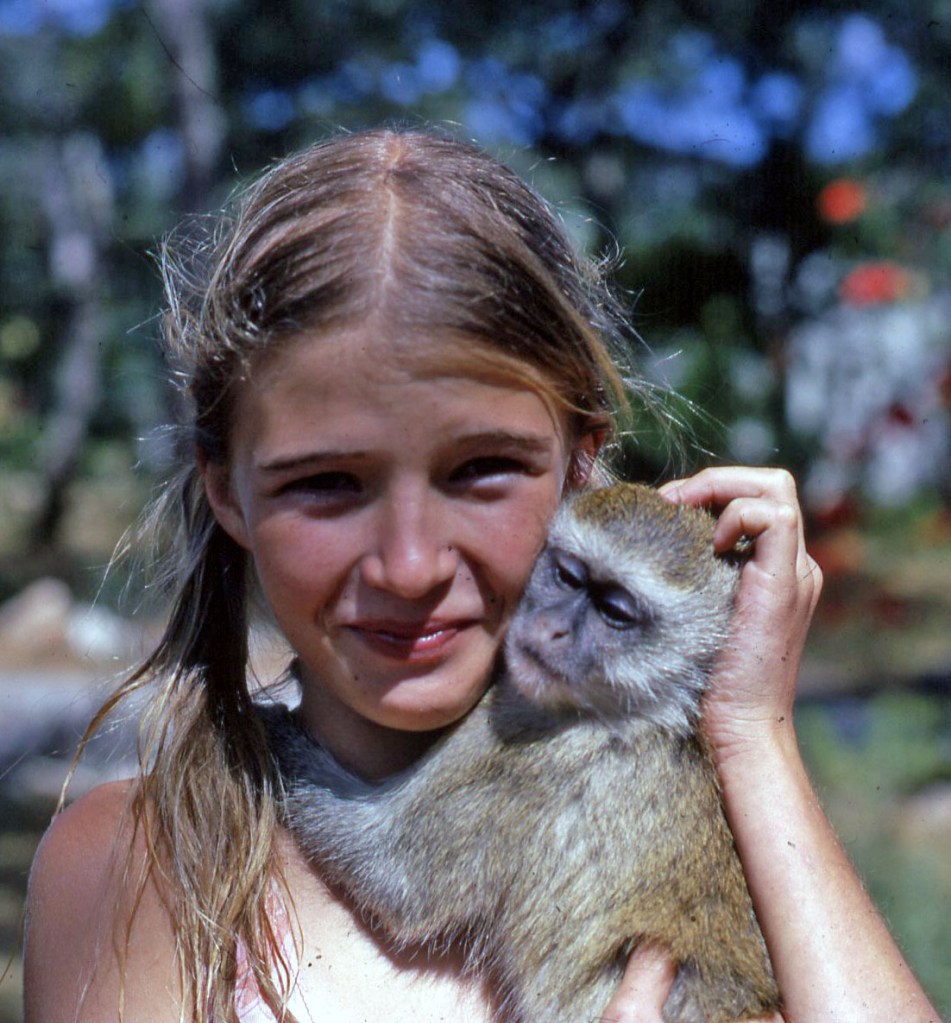



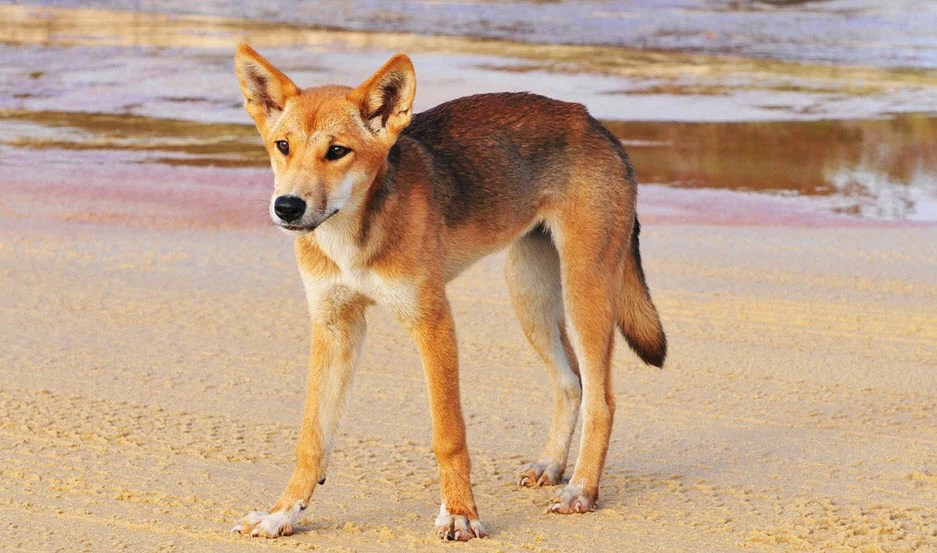
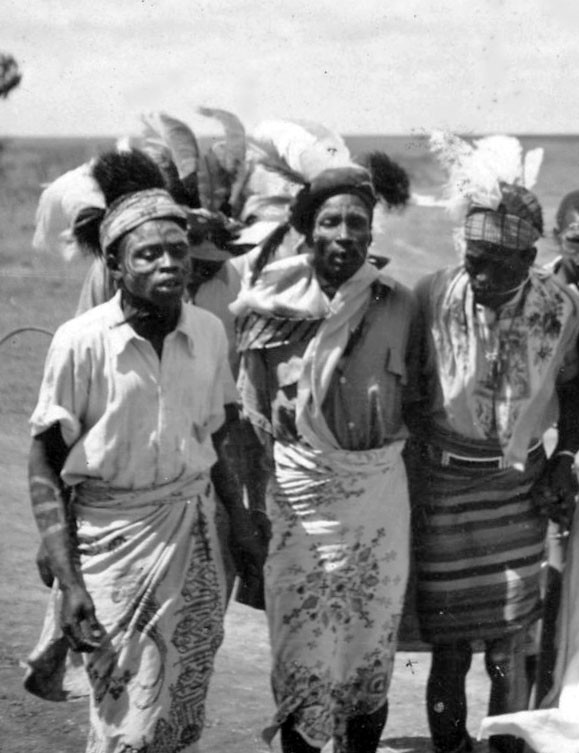
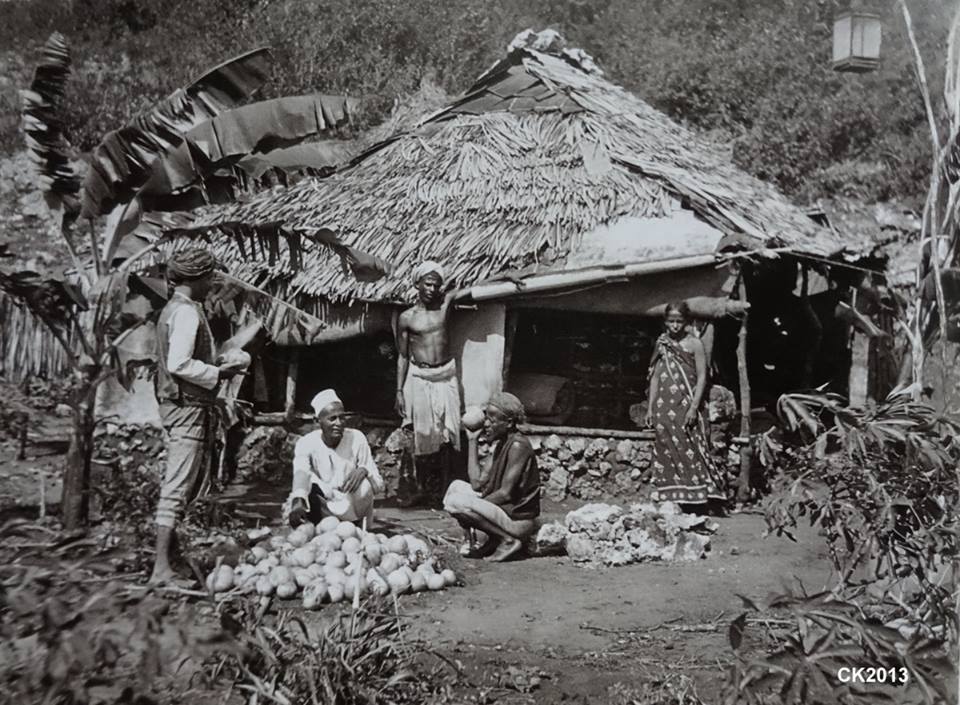
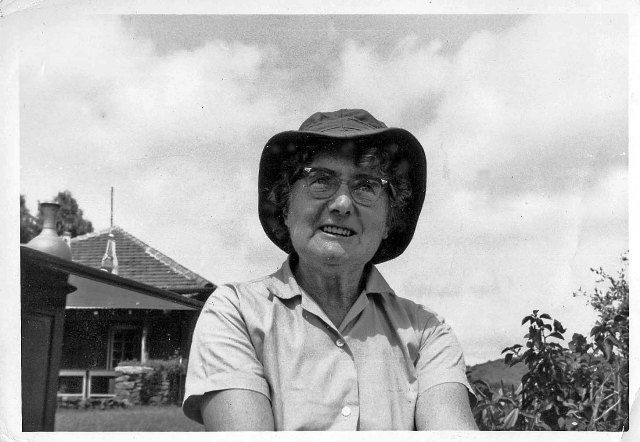
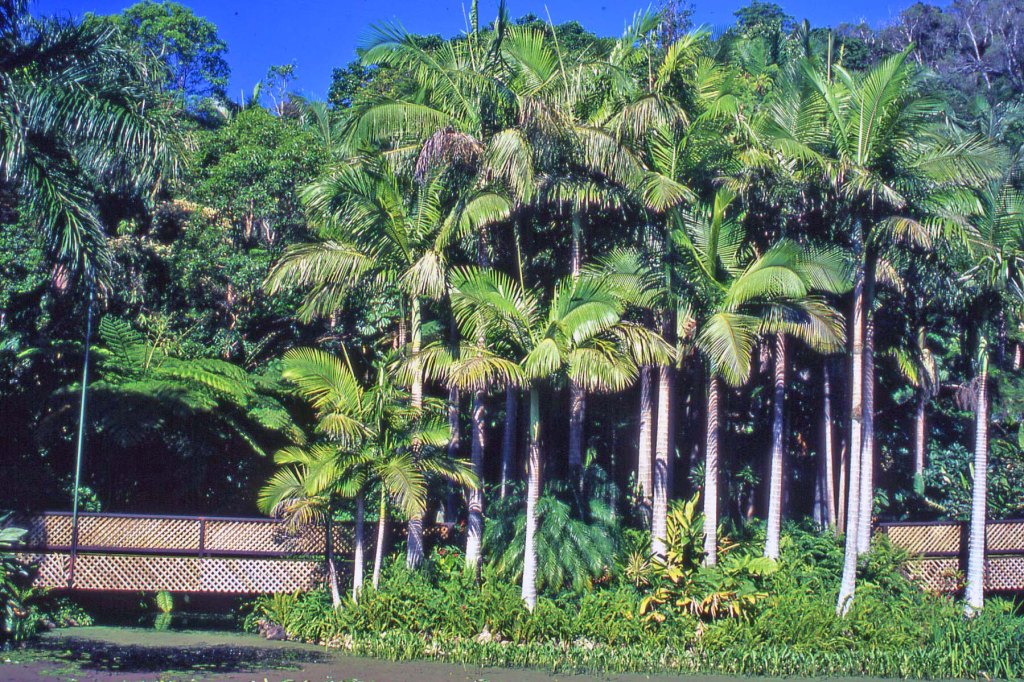
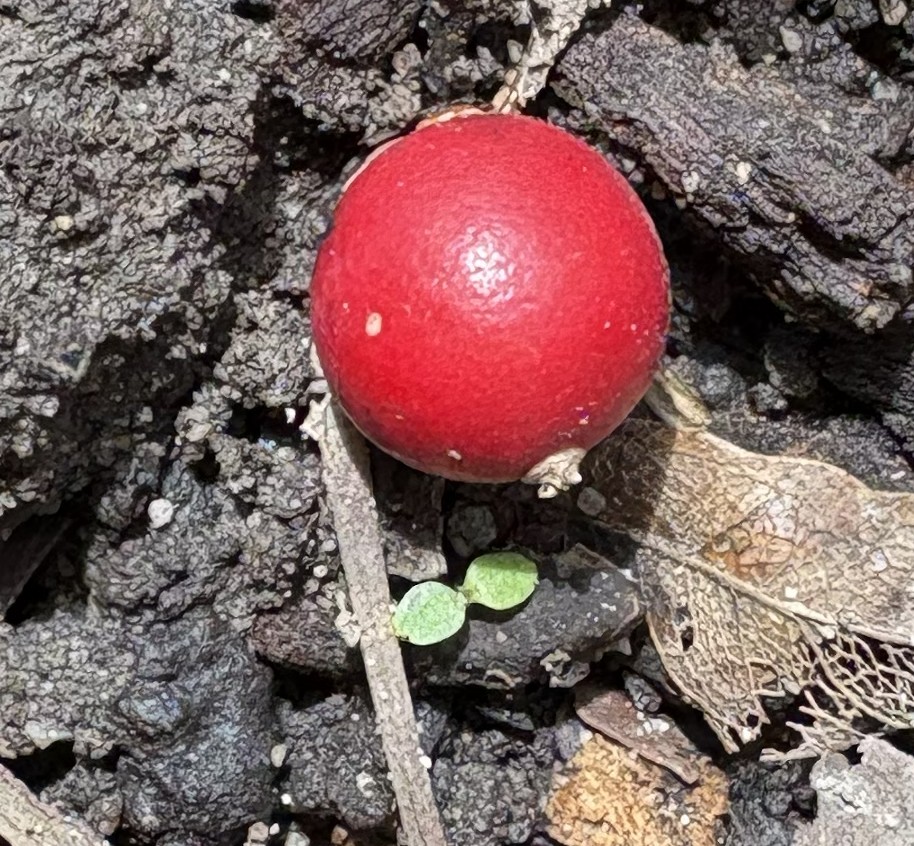
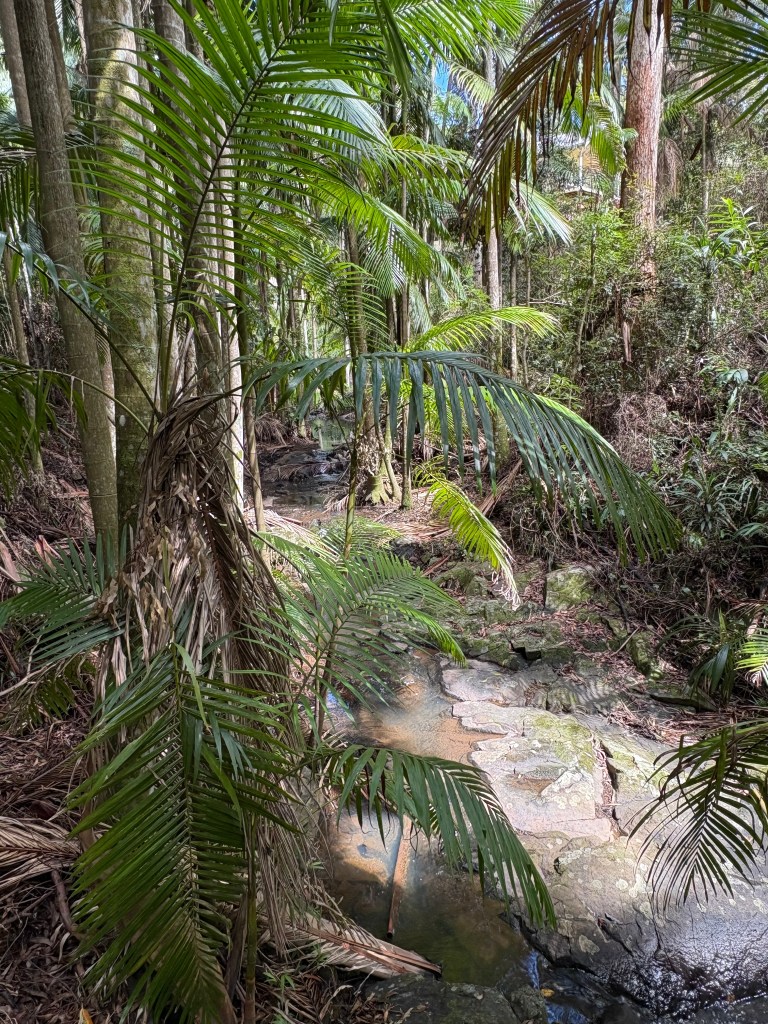
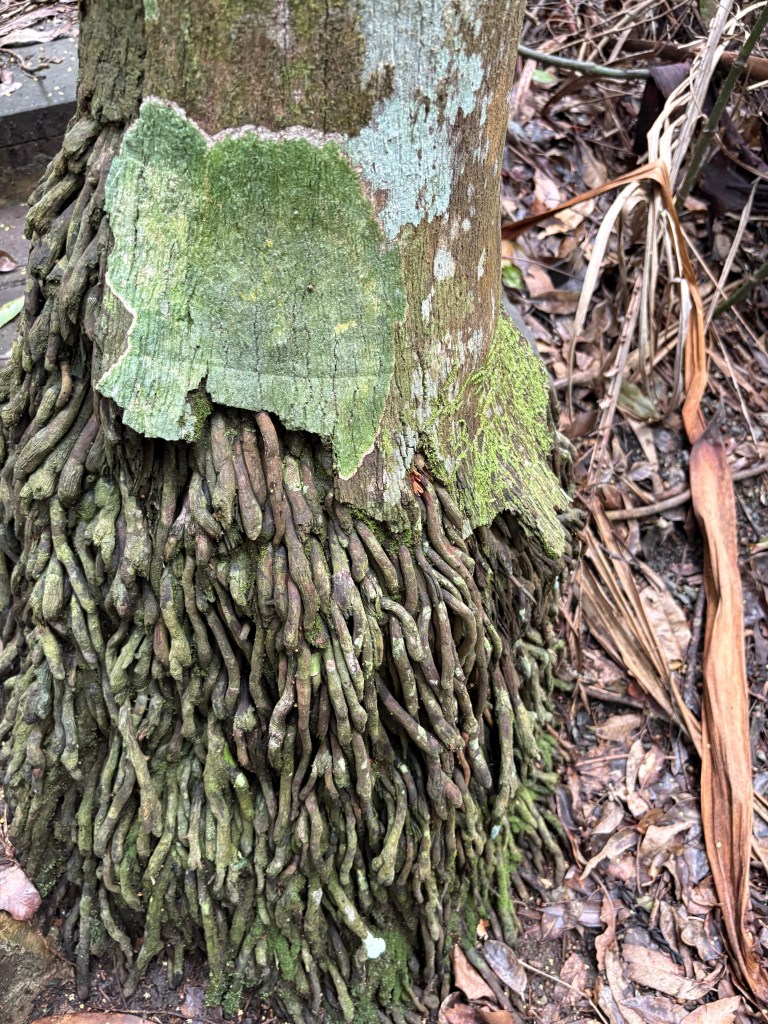
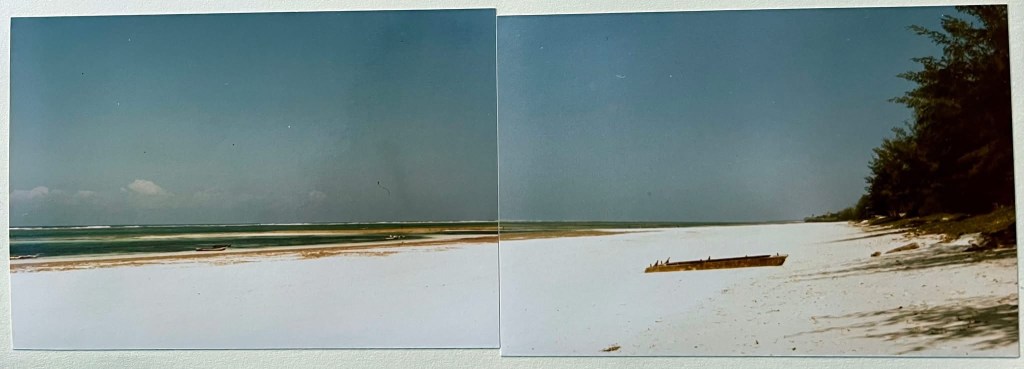

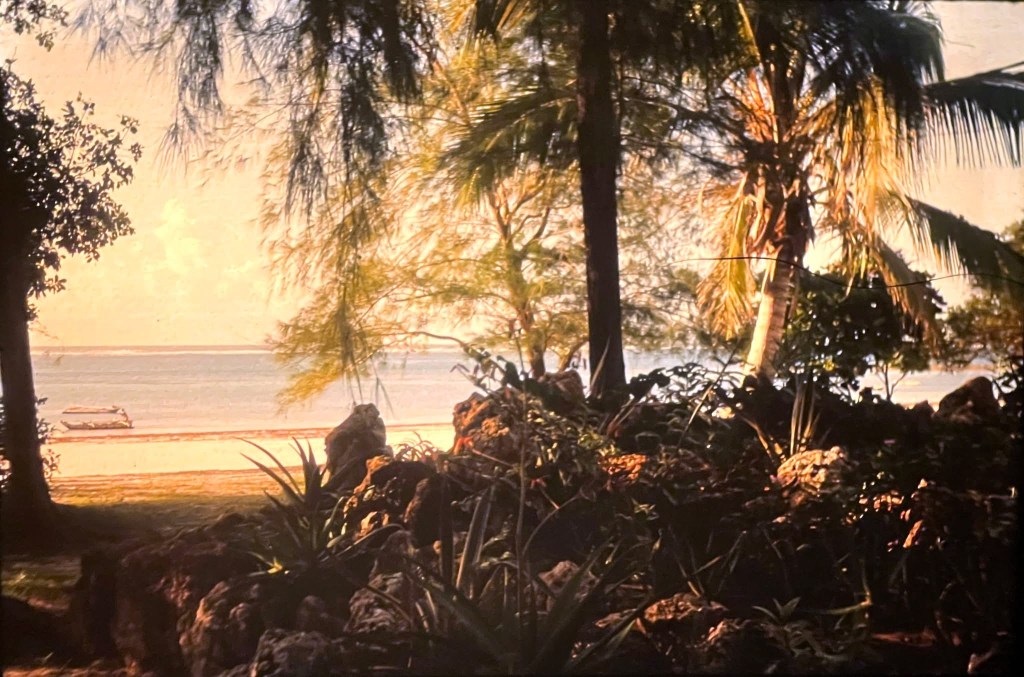
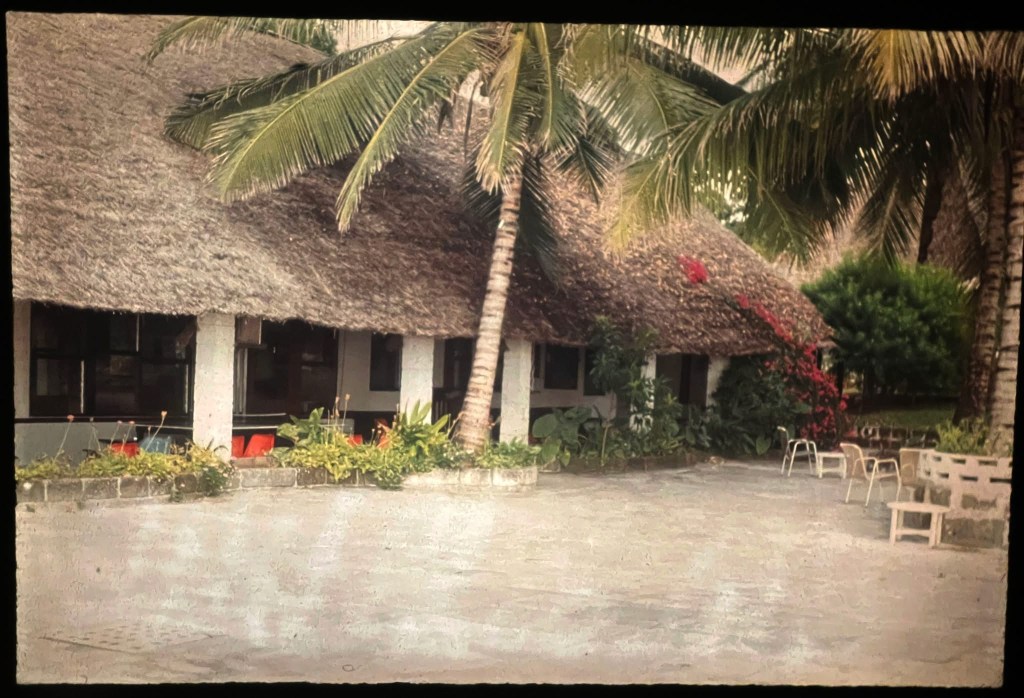
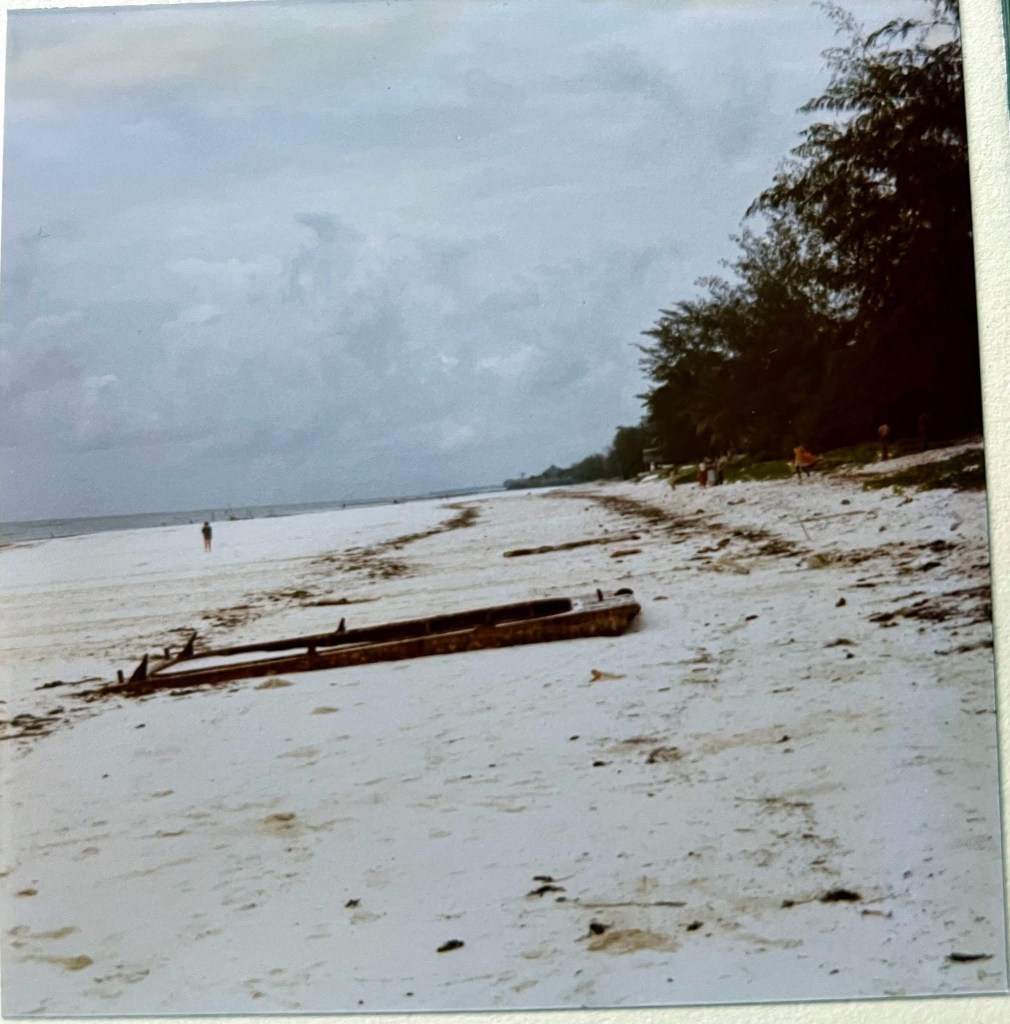
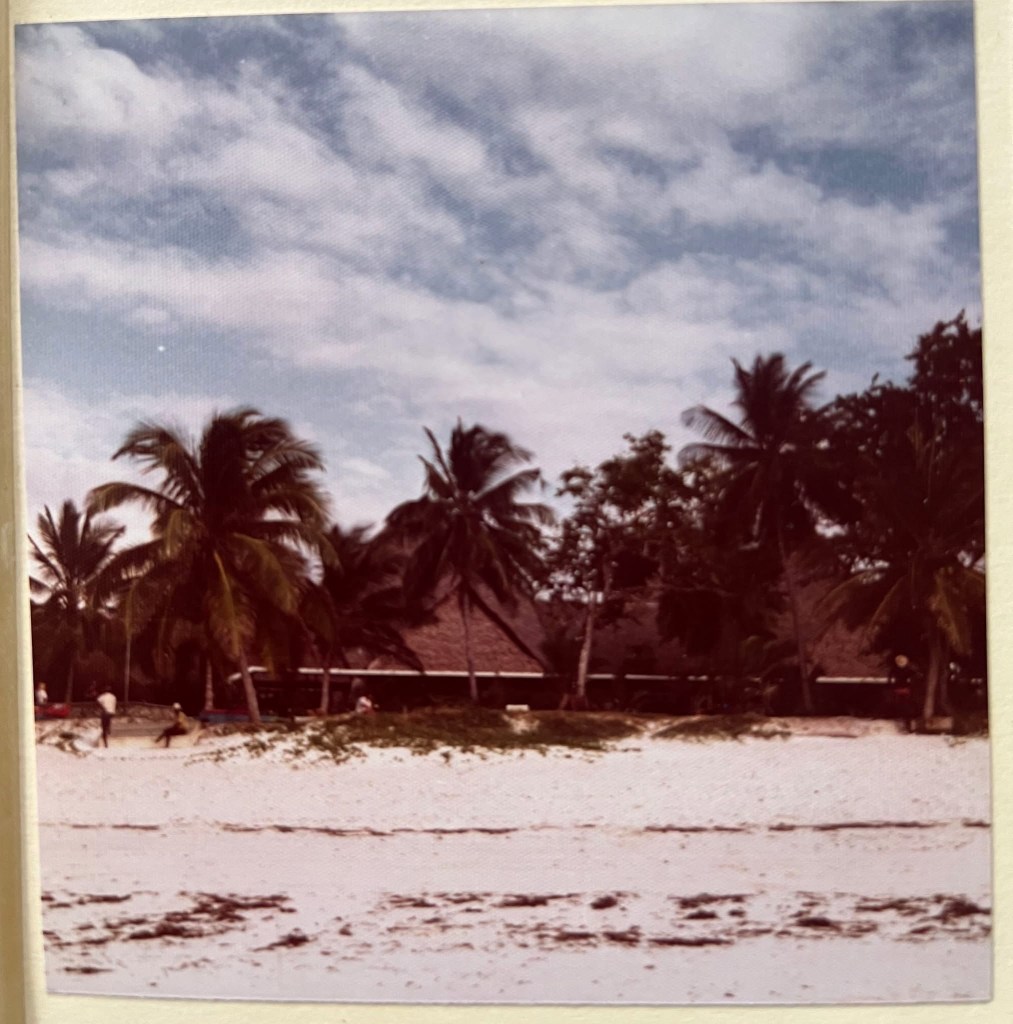

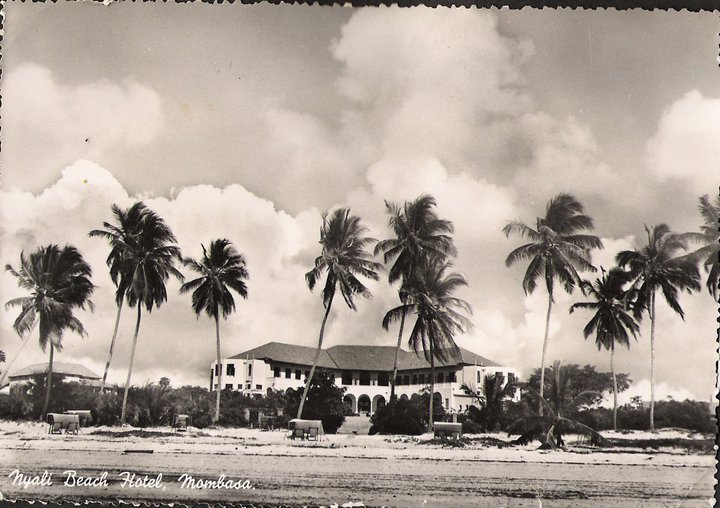


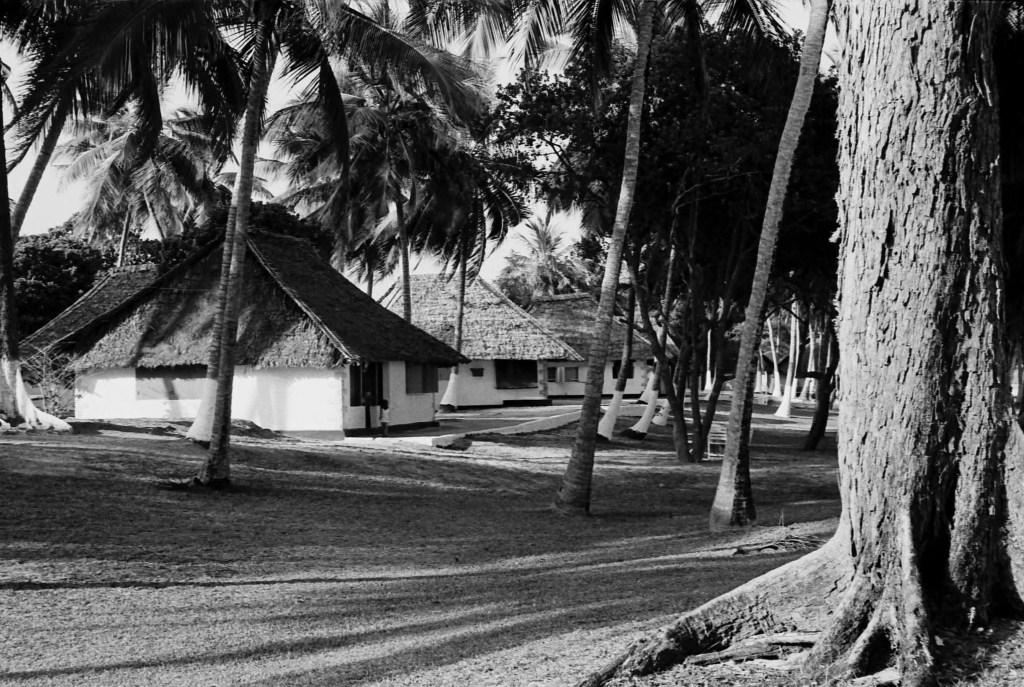
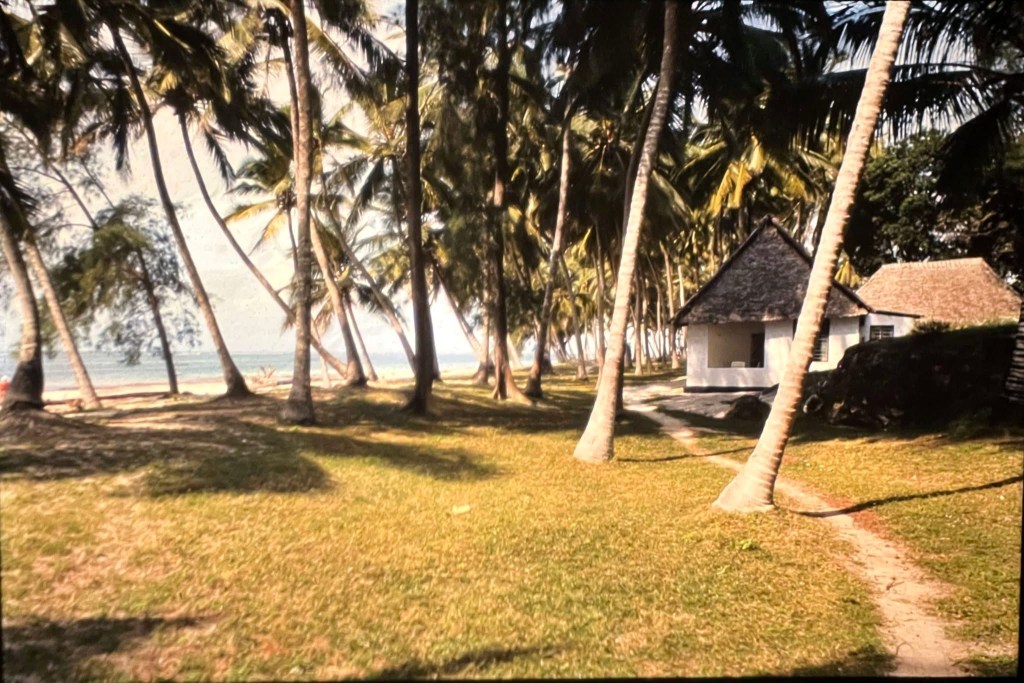
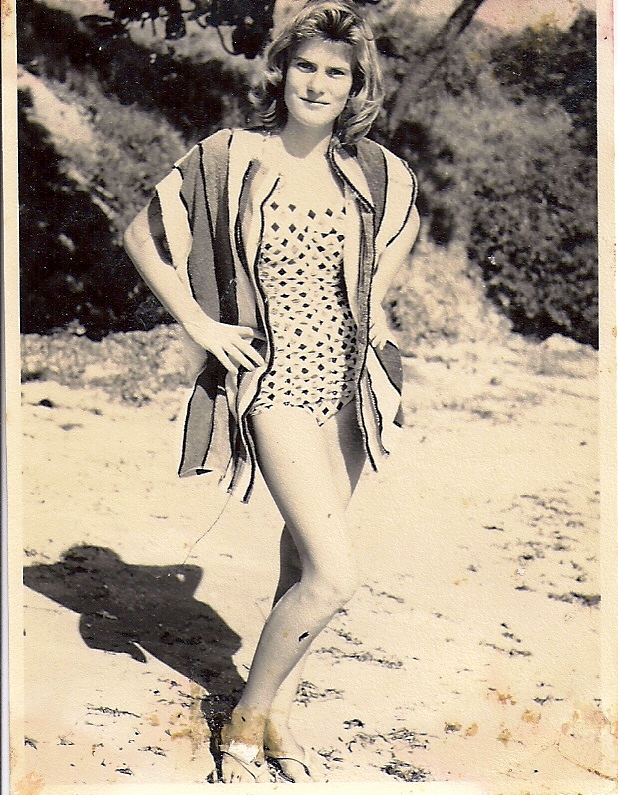

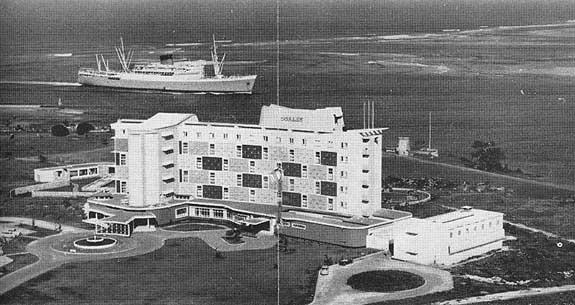


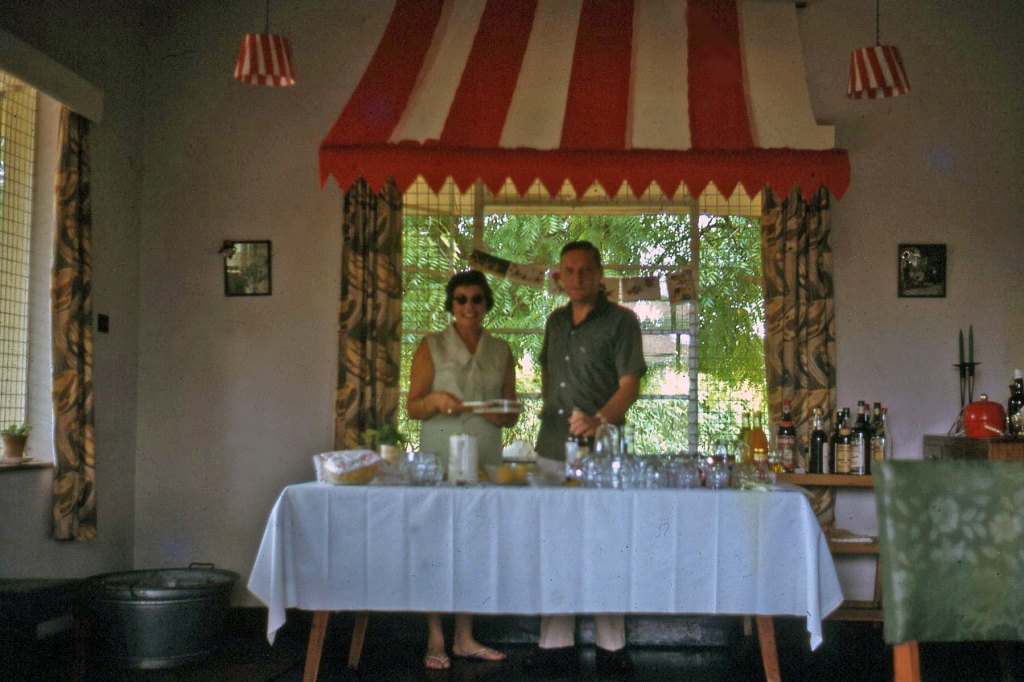


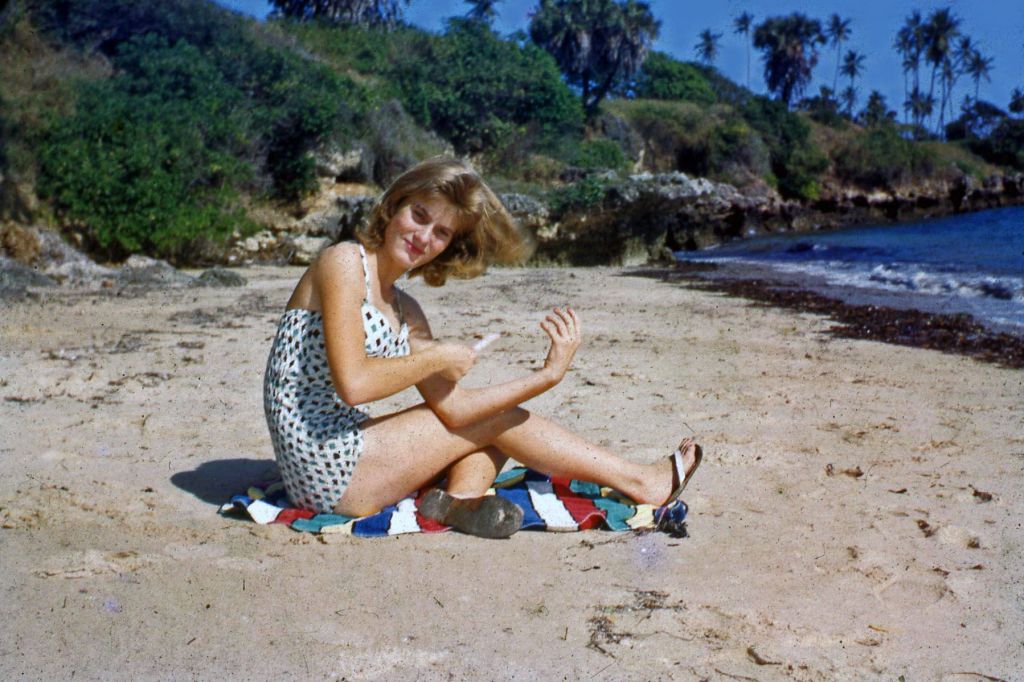
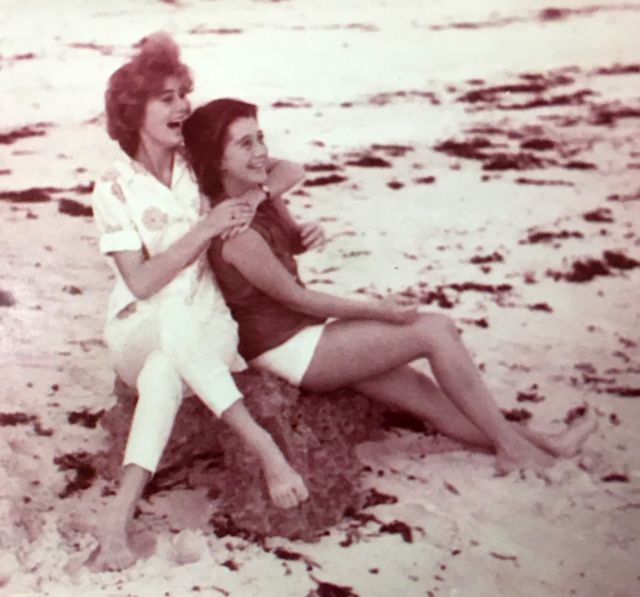
 Lyrebird Mountain