August 16 – Spring is in the air
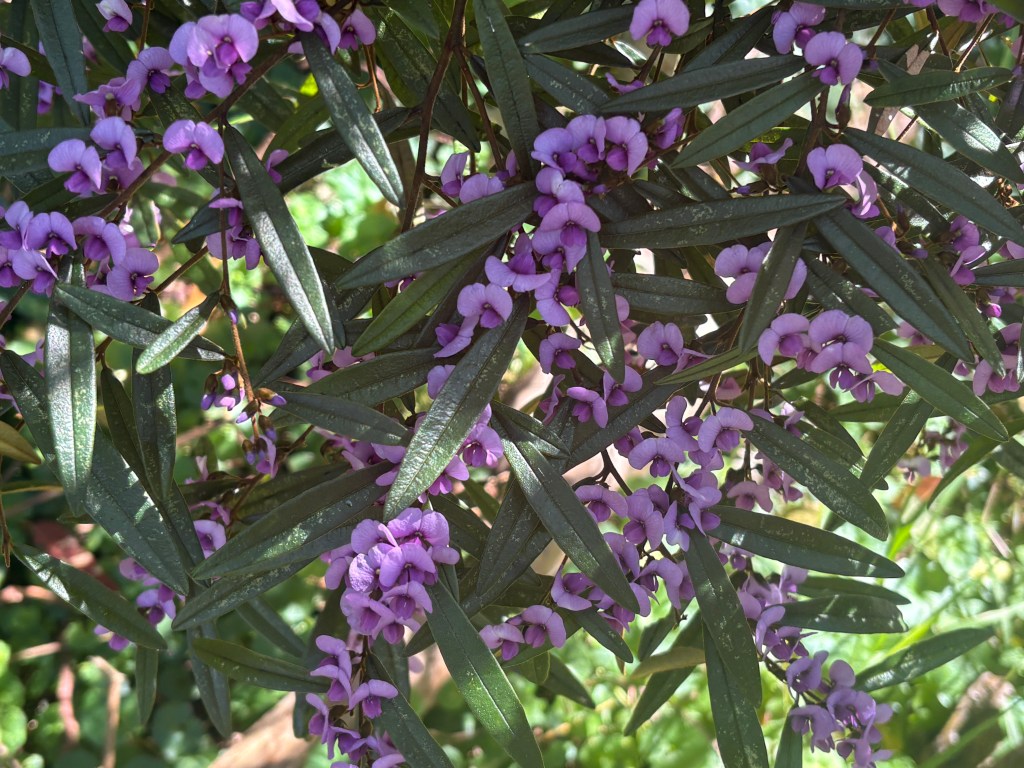
Hovea acutifolia
Yes indeed, spring IS in the air though it’s a month too early. And yet there is that slight tingle you get when you feel that things are changing, that life is bursting forth in many small, almost imperceptible ways. Birds are more active, plants are sprouting buds, grass is growing again, the air feels fizzy.
It helps that we have had a bit of rain, with more promised. And that the the temperatures, though cool, are not as cold as usual at this time of year.
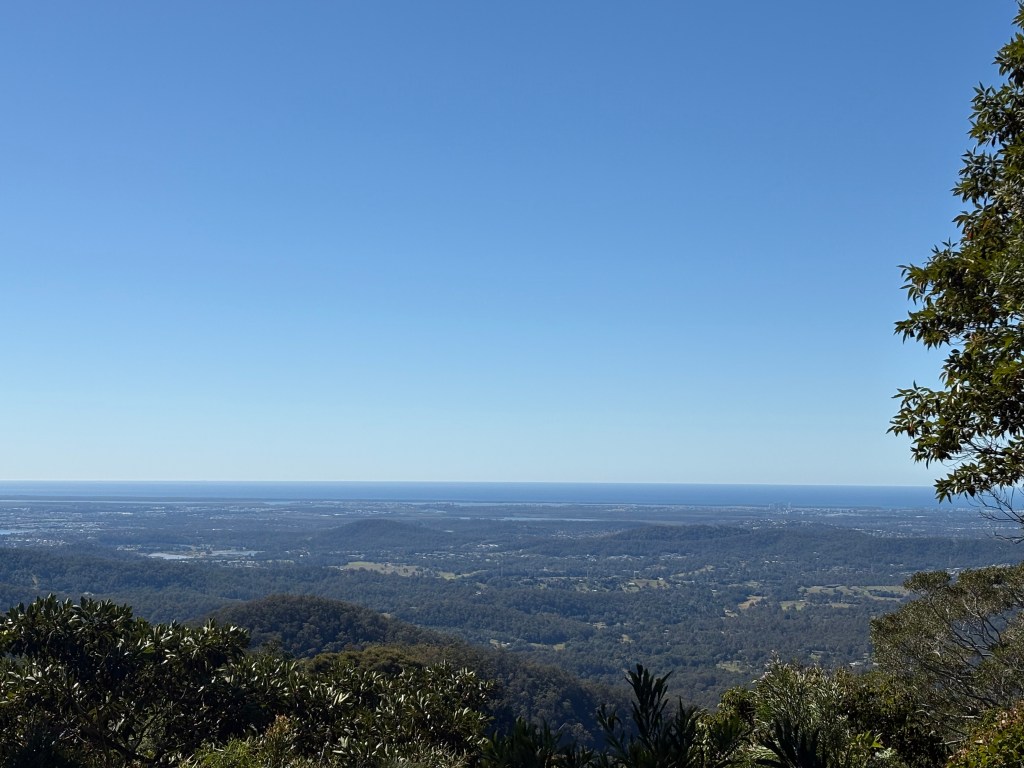
I walked in my favourite place, the Landcare site and adjacent cliff-edge forest at the end of Hartley Road. A road that, at its eastern end, goes nowhere except the edge of the escarpment. Below is some of the best unspoiled, unlogged subtropical rainforest to be found anywhere in Queensland and you can sit on a rock at the edge and examine the canopy for birds and plants. Here you have a rare opportunity to study trees and climbing plants from the top down, noting the flowers that are rarely seen except as spent blossoms at ground level. Birds, too, such as fruit doves can be better seen from this vantage point as they nest in the canopy and find fruits there.
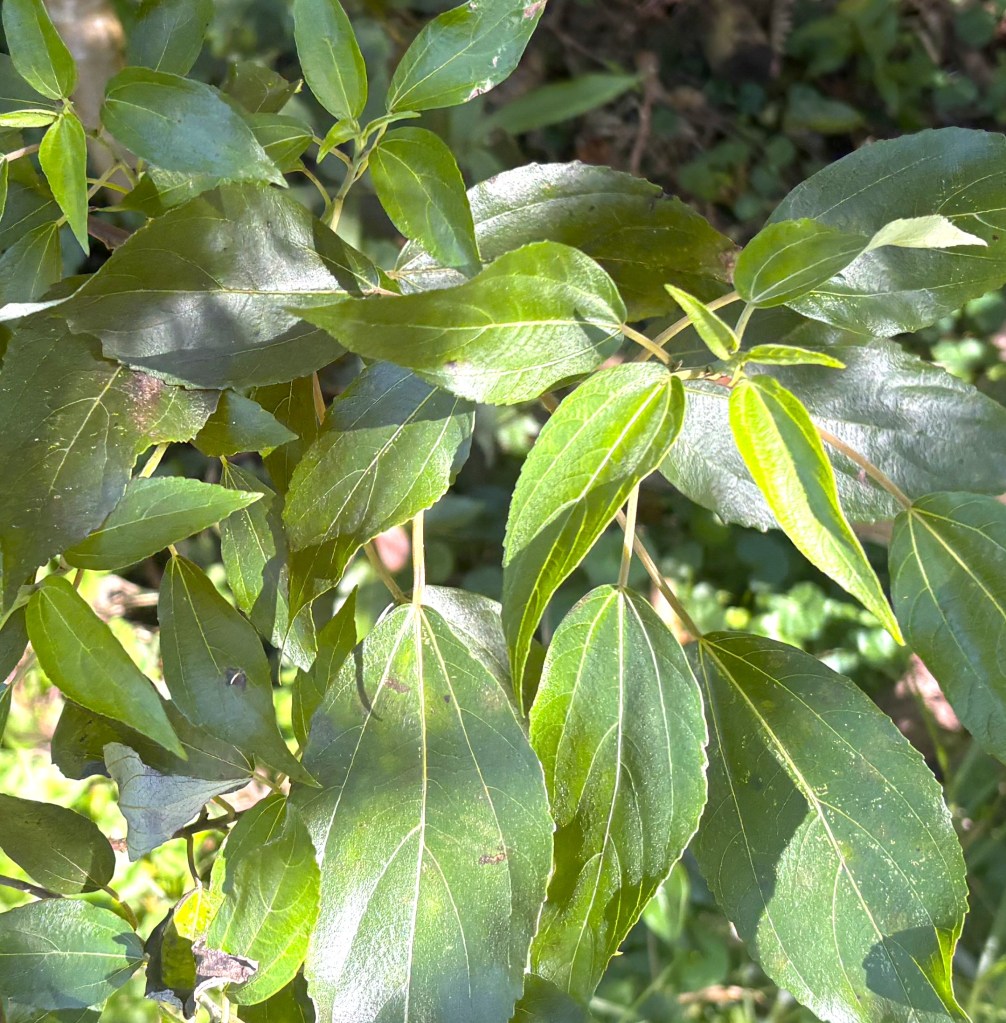
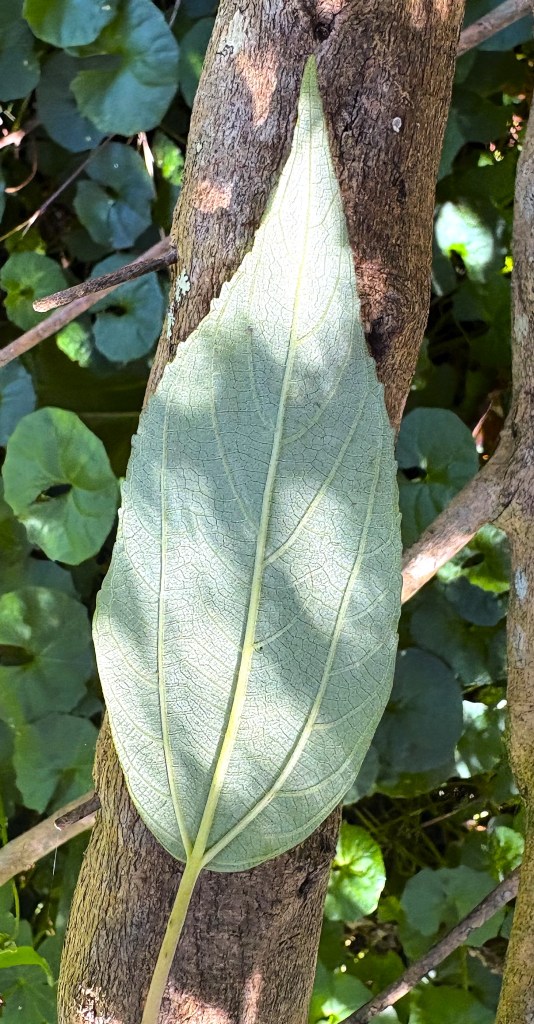
The leaves of the Native Mulberry (Pipturus argenteus), showing details of the silvery-green underleaf which gives this plant its species name. Tiny white flowers are inconspicuous but the small, white round fruits are edible. Unfortunately I couldn’t find any on this plant so shall try again next week!
The most colourful floral show at the beginning of my walk was the Hovea (Hovea acutiflora) which has blooming for a couple of months now and seems to be putting forth a burst of blossom before retiring into obscurity for the next nine months or so. It’s like the garment of an emperor of old, thrown carelessly over a bush!This is a plant of rainforest margins and the adjacent eucalypt forest; a typically pea-flowered legume that brings the bush alive during cooler season. From a distance it attracts the eye, close up there is glory in the massed flowers in their shades of purple and mauve. These are a favourite with the tiny native bees and also with other pollinator insects.
I’m surprised to see the small, round, edible fruits of Orange Thorn (Pittosporum multiflorum) still on the bush and pick a few to take home and add to my larder. They have a piquancy that makes a lot of dishes more interesting and are very good in marmalade, pickles, chutneys and other relishes. You have to try and avoid the thorns which are not easily visible unless you look close – though stick your hand in the bush and you’ll know they’re there!
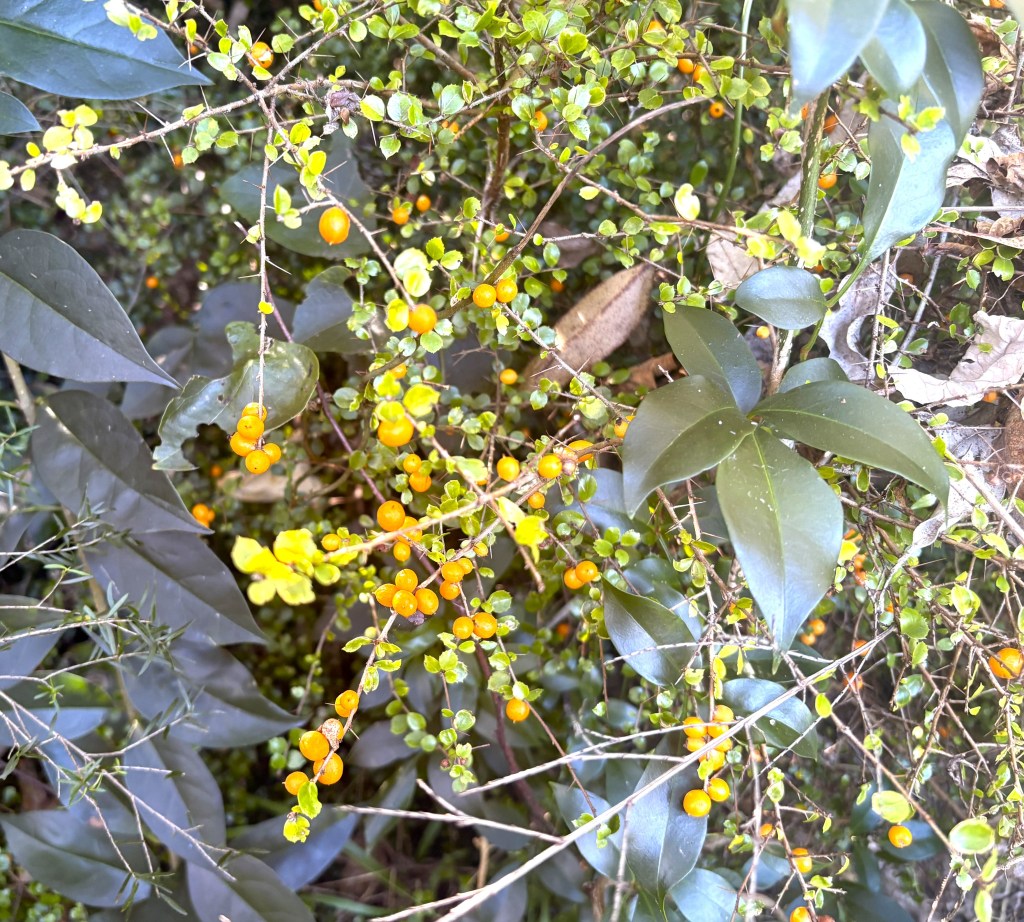
Orange Thorn (Pittosporum multiflorum) – fruit colour can range from orange to yellow.
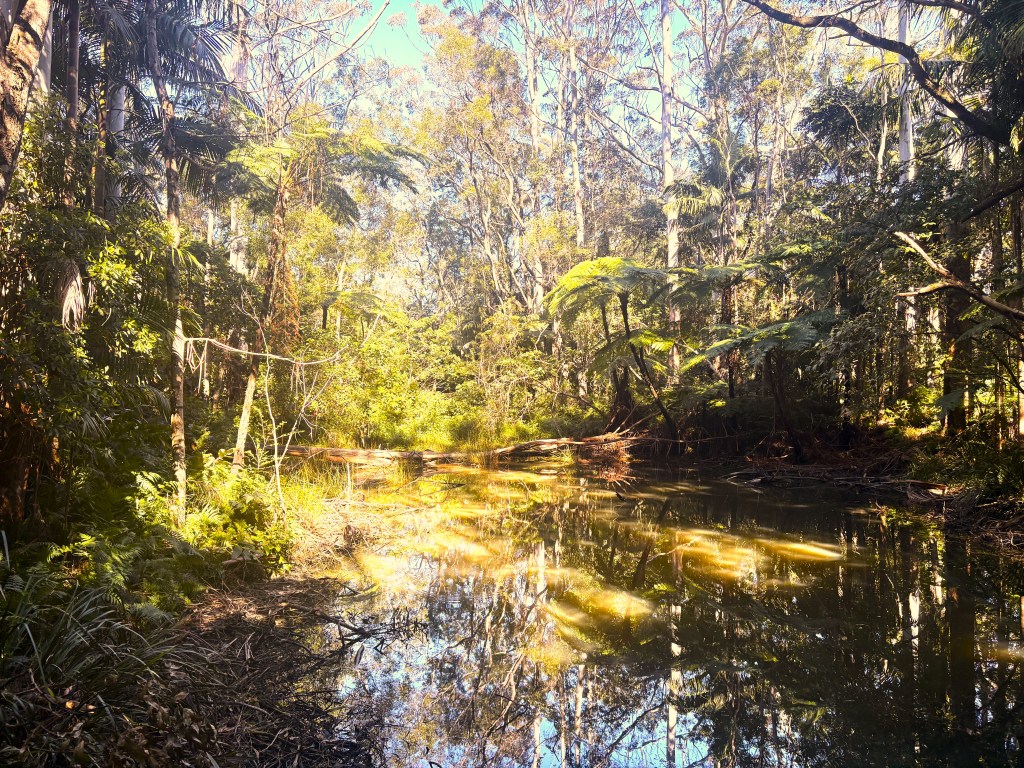
It’s a beautiful day, crisp and cloudless. I visit my favourite little forest pool to see what’s doing there…not much! I check the surrounding shrubs for a Rose Robin, one of our winter visitors, which someone had seen nearby but, alas, it didn’t show. Instead, a Yellow Robin dropped to the ground in pursuit of an insect; this cheeky little birds sit quietly in ambush and don’t miss much.
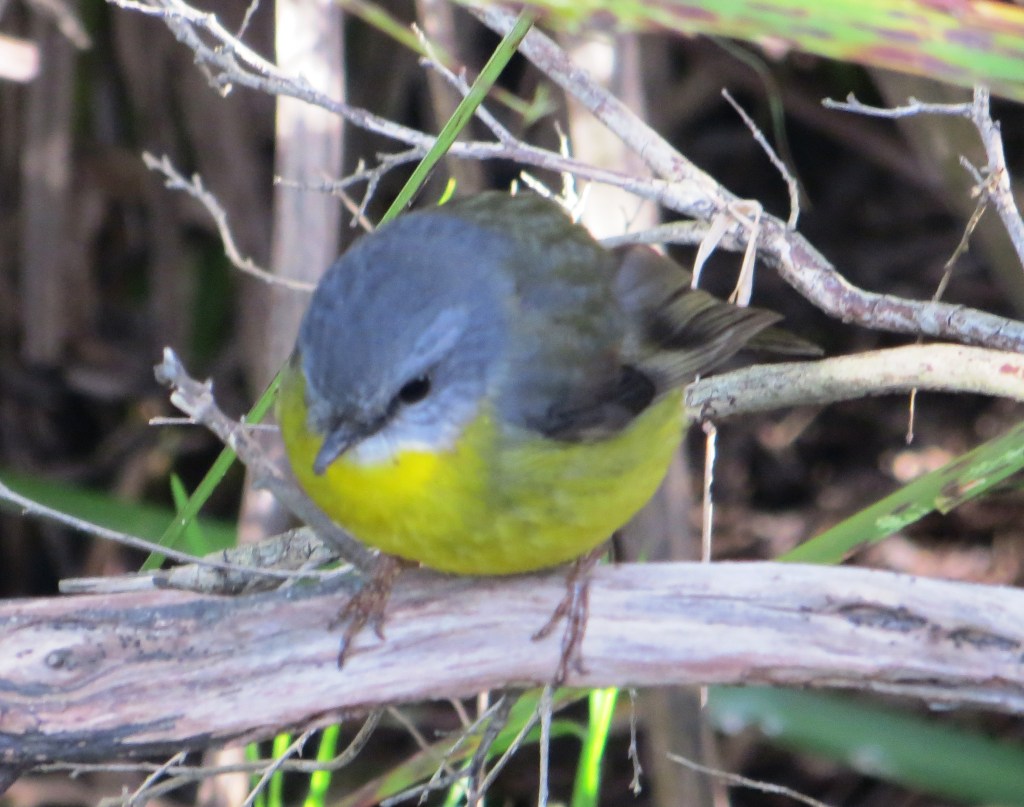
Yellow robin (Eopsaltria australis)
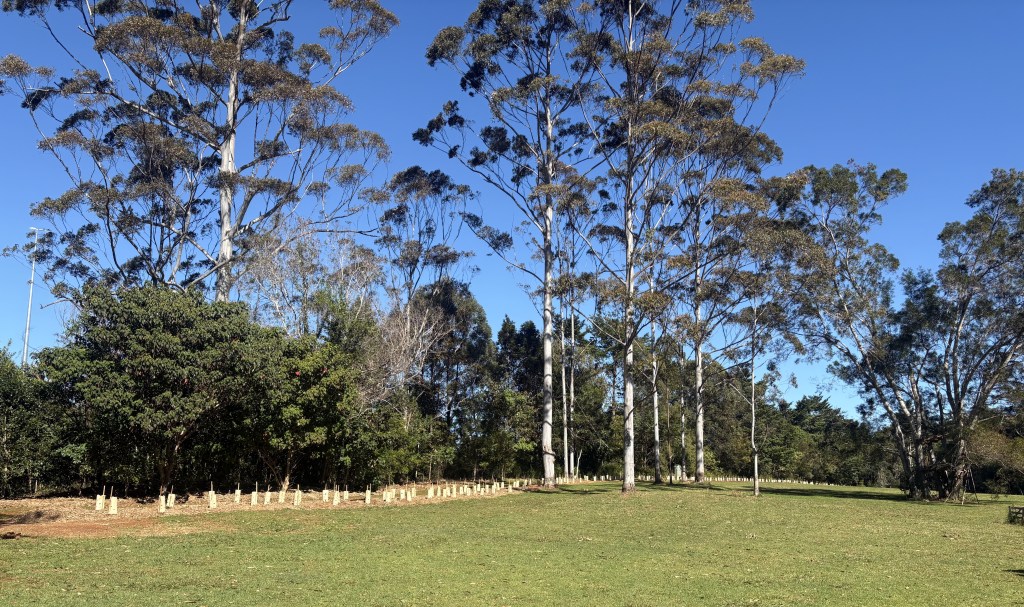
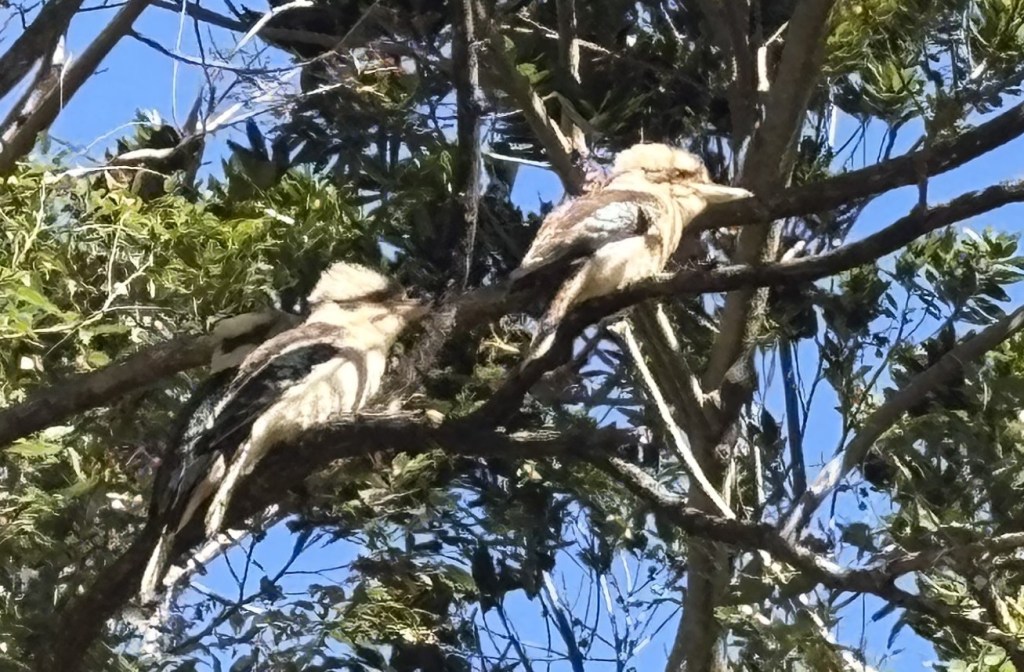
Out in the open meadow belonging to the local Boy Scout troupe three kookaburras chase each other from tree to tree, laughing all the while. Close to this line of fine Flooded Gums (Eucalyptus grandis) the local Landcare group has planted a long line of endemic species which, when grown will form a walking corridor with the eucalypt hedgerow between this meadow and the sports ground beyond. I think this was the outcome of this year’s National Tree Day which Landcare organised and supervised – a fine addition to the mountain’s revegetation program.
At the end of the cliff path I stopped to look over the valleys below to the sea. In the tree beside me a young Golden Whistler, one of this winter’s brook and still in its drab juvenile feathers, tried out his song with a few uncertain notes and then a loud, confident whistle. I knew how he felt – a beautiful sunny morning in the bush is well worth celebrating.