This week in the rainforest

I’m back in the forest after more than two weeks of rain.  The sudden sunshine has brought out the colours, the insects and the birds! Everything is glistening and fresh-washed.  I love it!

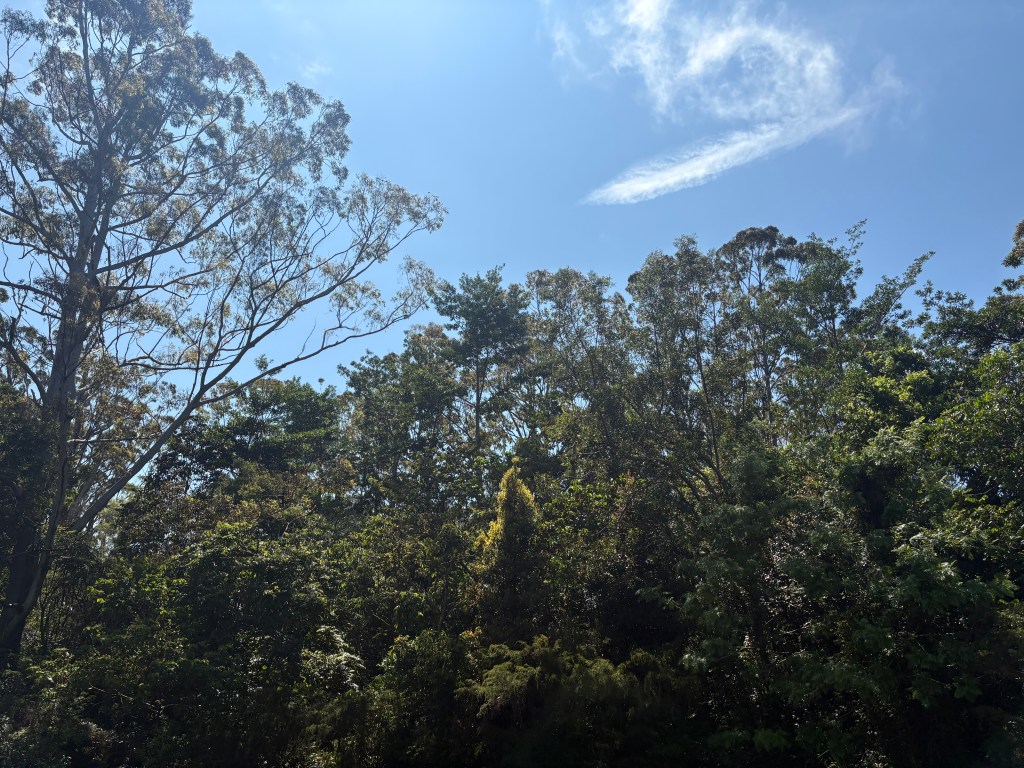
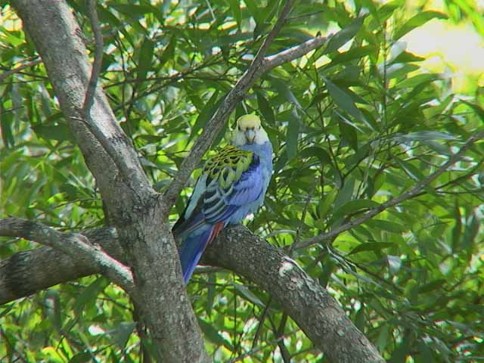
A pair of pale-headed rosellas (above) landed in a eucalypt at the edge of the rainforest.  I wondered whether they were checking out the hollows for a nesting site.  I could spot the usual suspects around here – pairs of Lewin’s Honeyeaters chasing each other around, Whipbirds cracking away, Rainbow Lorikeets ripping across the sky to check out the nectar.  And of course the mountain’s gang of Sulphur-crested Cockatoos circling and drowning the rest of the avian voices with their harsh cries.  Such self-proclaiming, self-satisfied birds!

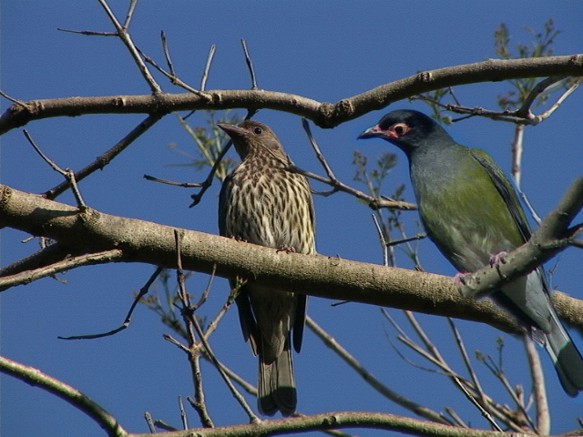
And there were Figbirds too (pictured below, male on right); hardly surprising when the ground  everywhere is littered with the blue fruits of the Blue Quandong (Eleocarpus grandis). In the days when I was very much into bush tucker I tried stewing and eating these fruits – horrible!  But the large fruit-eating pigeons love them and so do the Figbirds, which are very evident this spring because there are fruiting Quandongs all over the mountain.
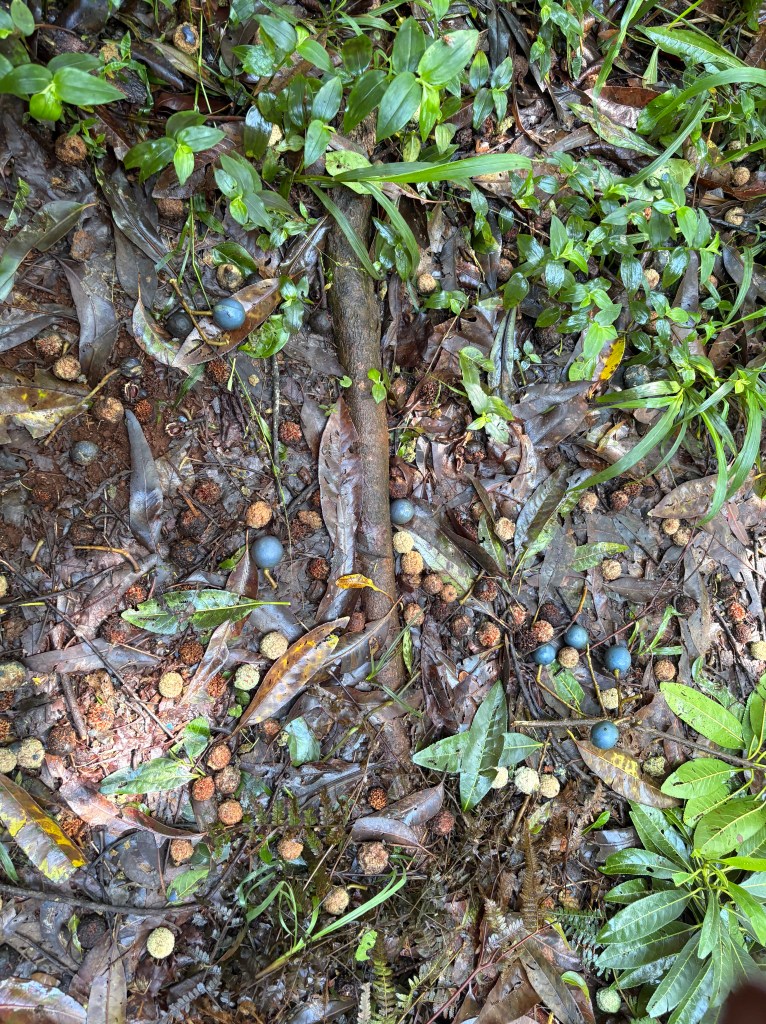
My favourite tree in this area, the fine specimen of Foambark (Jagera pseudorhus) on the edge of the escarpment is also having a fruitful year.  It’s my favourite tree for miles around because it has such character – tall and twisting, its branches arranged like writhing limbs, in fact I’m sure it is really an Ent (if you are one of those sad people who don’t know what is an Ent, go read your Tolkein.  Or at least see the films!).  I also like the long, fernlike, compound leaves.

This week, around the base the ground is scattered with grooved, rusty fruits. These are the food of Satin and Regent Bowerbirds and also the Koel, which, having arrived for the summer about three weeks ago can be heard calling for long periods every day.  It drives some people mad, but I like it!  One of the sounds of the subtropical summer.  It’s called the Rainbird by some because they think it’s call forecasts rain – whereas in reality it is only here during the rainy summer season and calls on dry days too! 
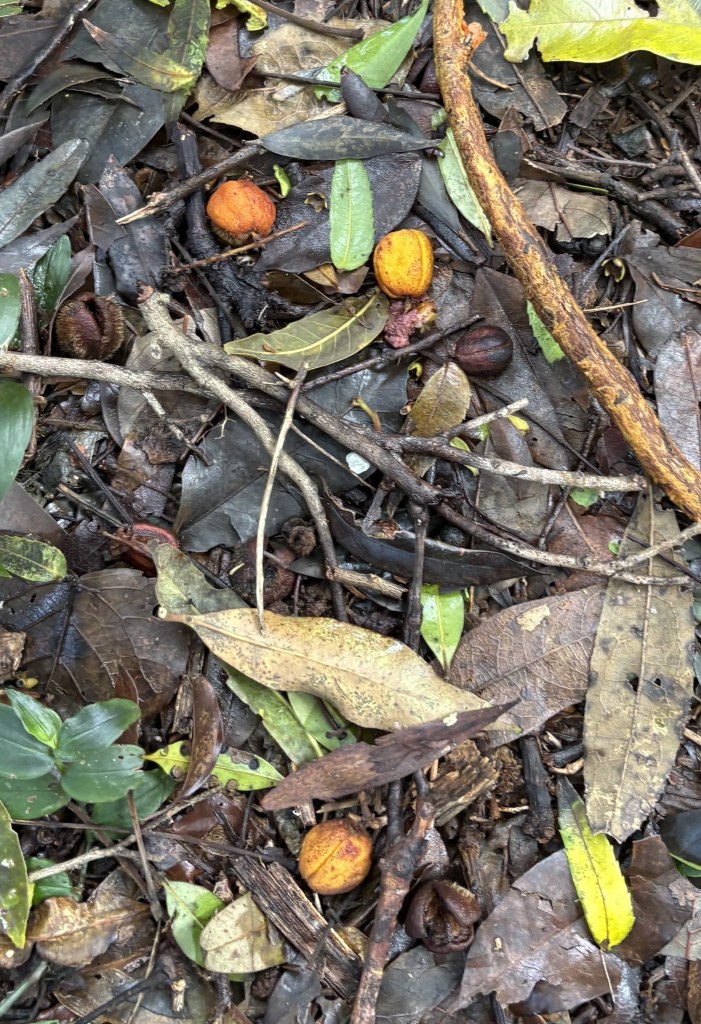
I’ve read that Lewin’s Honeyeaters also eat the seeds of the Foambark but find this unlikely – for a start, they don’t forage on the ground and if they were to try extracting the seeds from fruit still on the tree I doubt their narrow, slender, curved, nectar-extracting bills would bills would be able to do that.

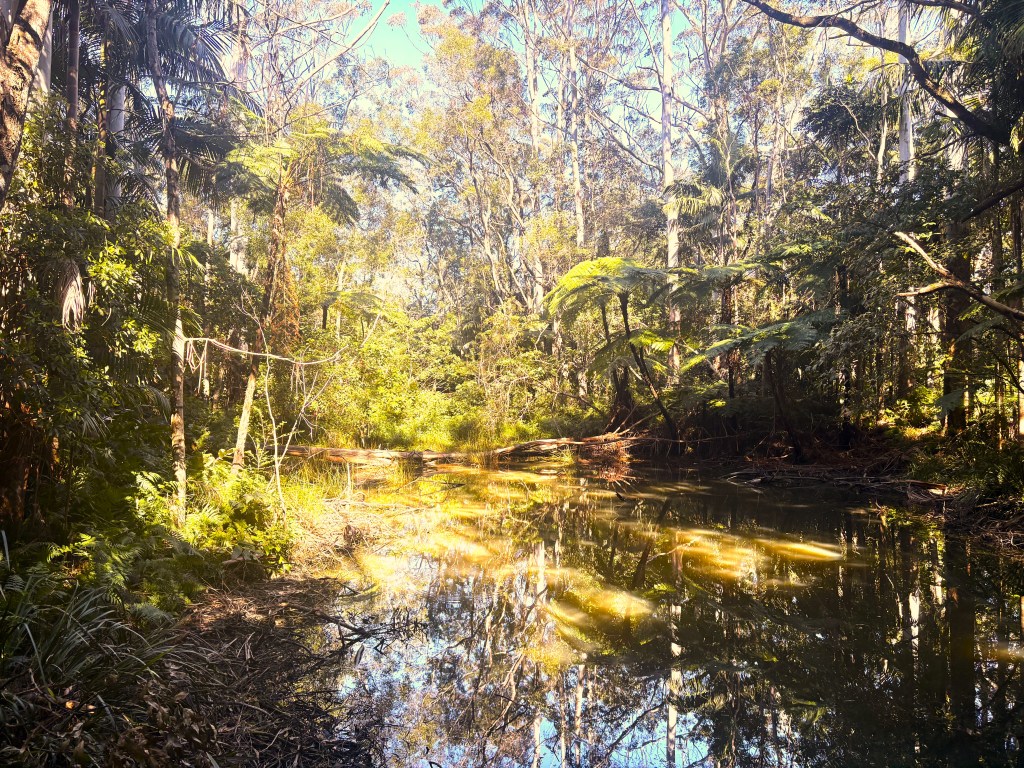
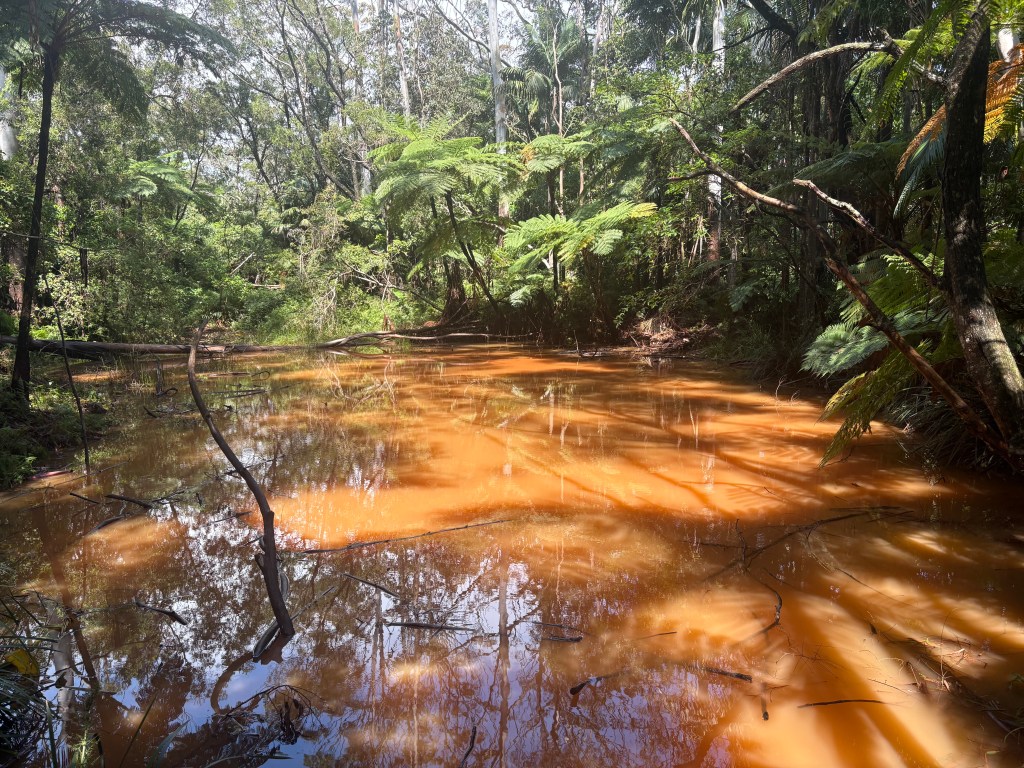
Perhaps the biggest thrill of the morning was seeing the waterhole, usually so modest in size and depth, full to overflowing and the colour changed from muddy grey-brown to that of a well-made cup of tea.  I could hear Great Barred Frogs calling and no doubt if I went back at night I’d hear several other species of frog too. 

At either end the small creek was flowing too, through banks of fern, no doubt happy to be on the run again instead of languishing in stagnating pools, as it was for the past few months. 

Spring rain is so rare a blessing in this part of the world.
THIS WEEK IN THE RAINFOREST

August 16 – Spring is in the air

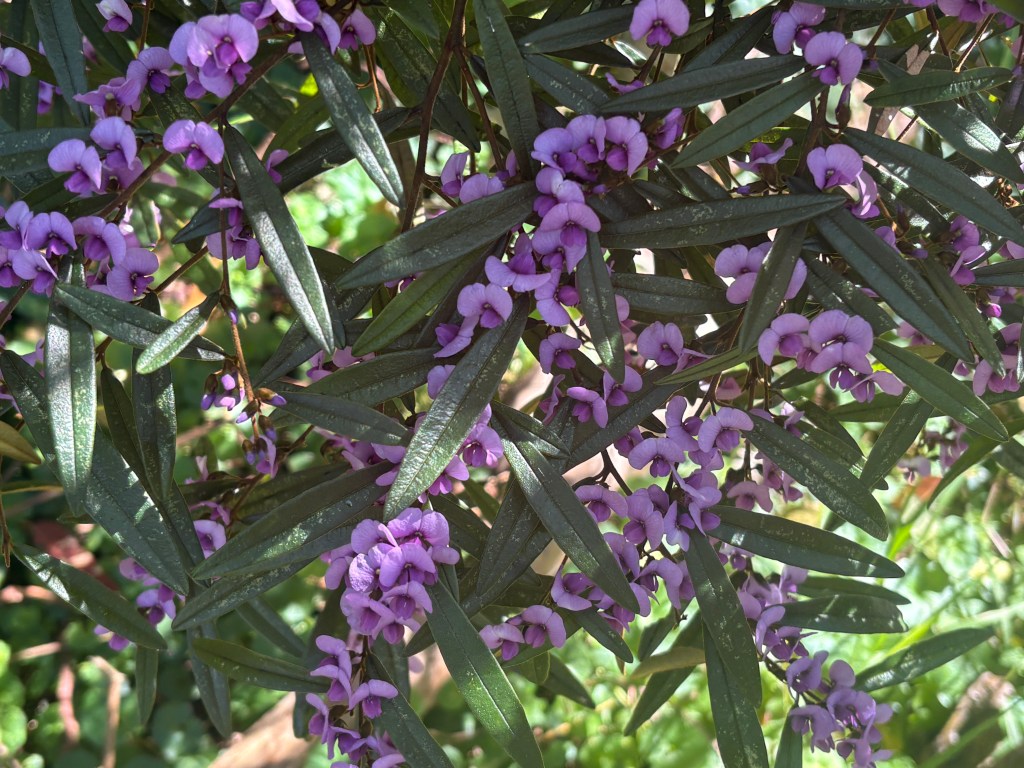
Hovea acutifolia

Yes indeed, spring IS in the air though it’s a month too early. And yet there is that slight tingle you get when you feel that things are changing, that life is bursting forth in many small, almost imperceptible ways. Birds are more active, plants are sprouting buds, grass is growing again, the air feels fizzy.

It helps that we have had a bit of rain, with more promised. And that the the temperatures, though cool, are not as cold as usual at this time of year.

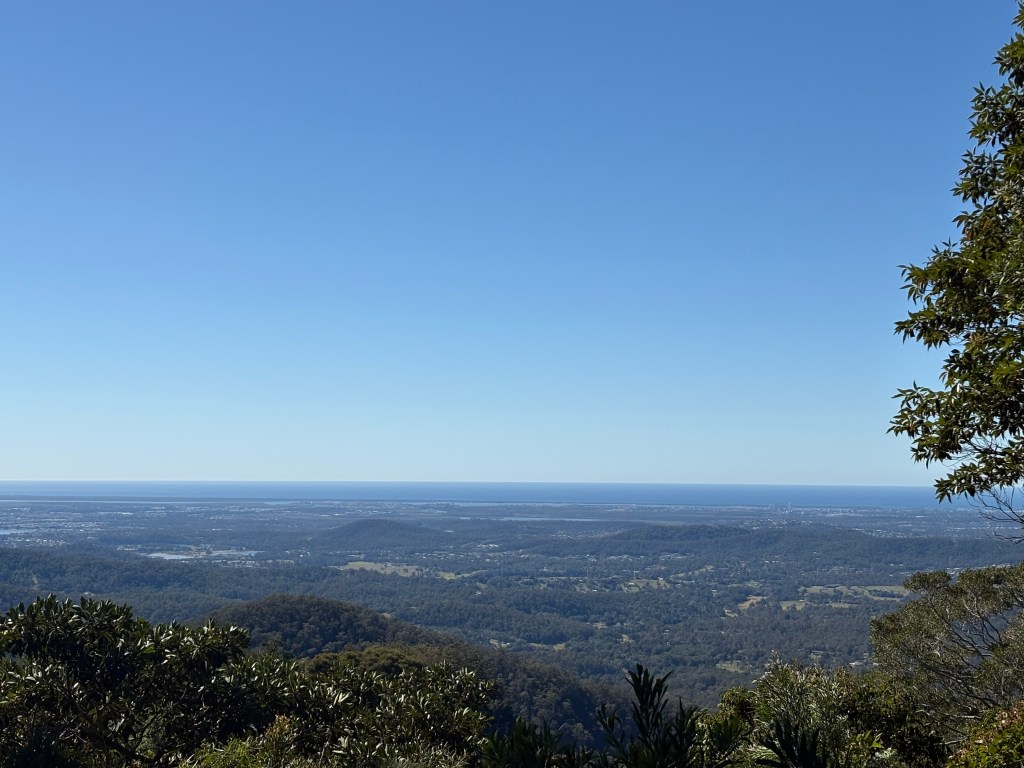
I walked in my favourite place, the Landcare site and adjacent cliff-edge forest at the end of Hartley Road. A road that, at its eastern end, goes nowhere except the edge of the escarpment. Below is some of the best unspoiled, unlogged subtropical rainforest to be found anywhere in Queensland and you can sit on a rock at the edge and examine the canopy for birds and plants. Here you have a rare opportunity to study trees and climbing plants from the top down, noting the flowers that are rarely seen except as spent blossoms at ground level. Birds, too, such as fruit doves can be better seen from this vantage point as they nest in the canopy and find fruits there.

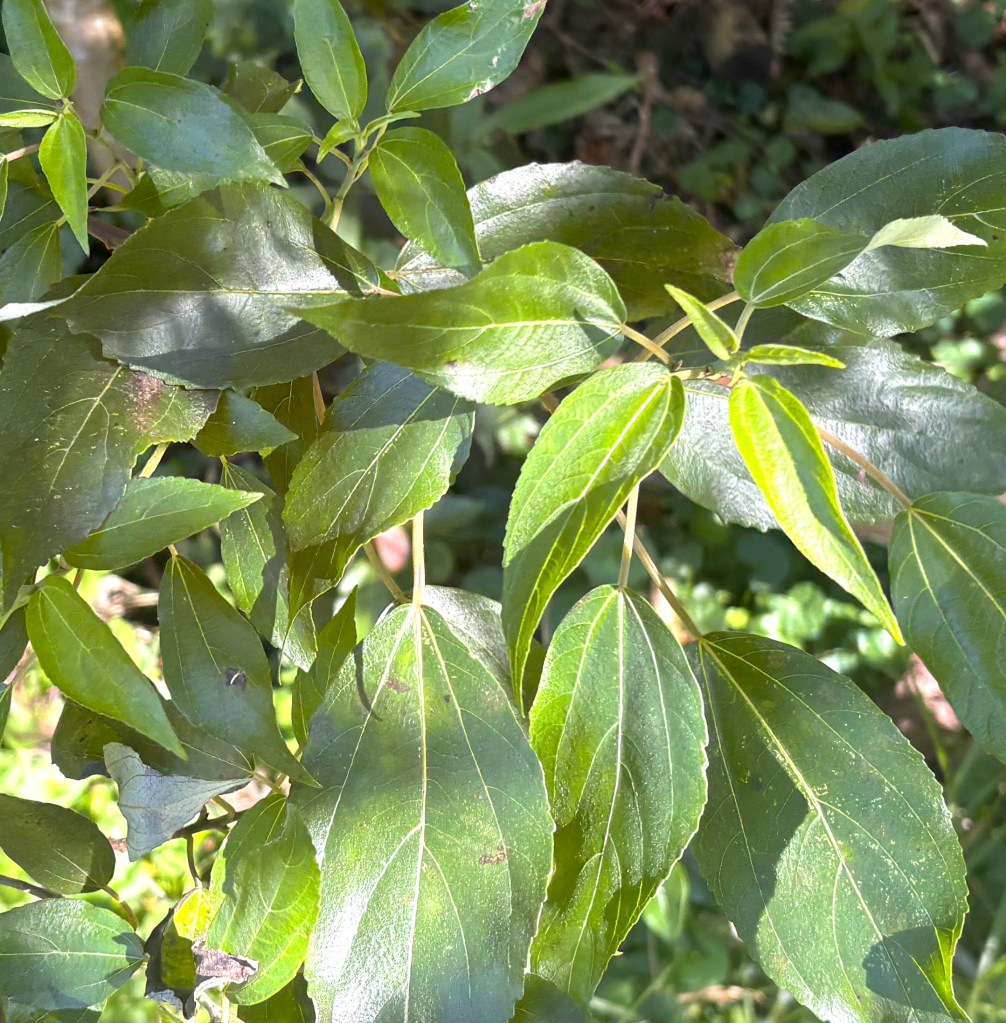
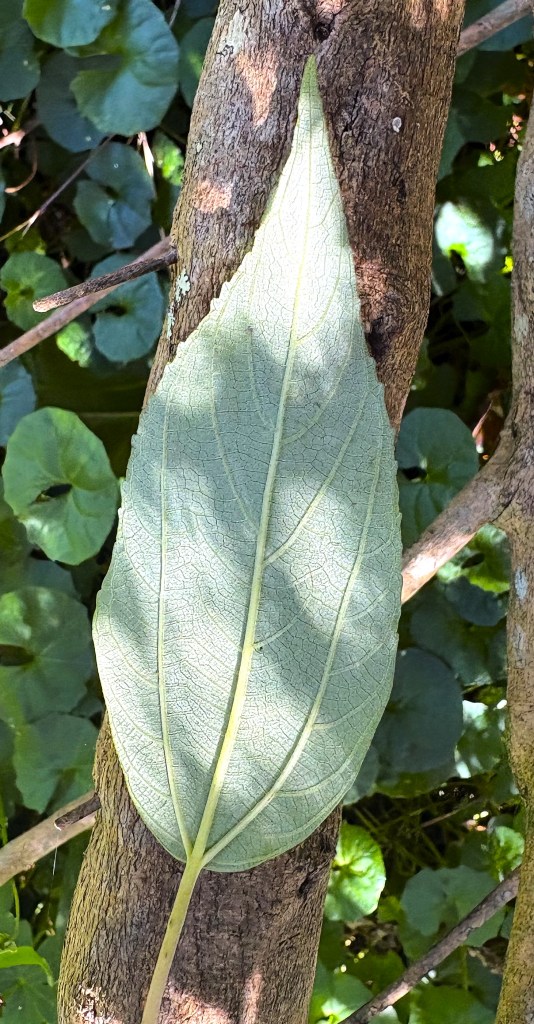
The leaves of the Native Mulberry (Pipturus argenteus), showing details of the silvery-green underleaf which gives this plant its species name. Tiny white flowers are inconspicuous but the small, white round fruits are edible. Unfortunately I couldn’t find any on this plant so shall try again next week!

The most colourful floral show at the beginning of my walk was the Hovea (Hovea acutiflora) which has blooming for a couple of months now and seems to be putting forth a burst of blossom before retiring into obscurity for the next nine months or so. It’s like the garment of an emperor of old, thrown carelessly over a bush!This is a plant of rainforest margins and the adjacent eucalypt forest; a typically pea-flowered legume that brings the bush alive during cooler season. From a distance it attracts the eye, close up there is glory in the massed flowers in their shades of purple and mauve. These are a favourite with the tiny native bees and also with other pollinator insects.

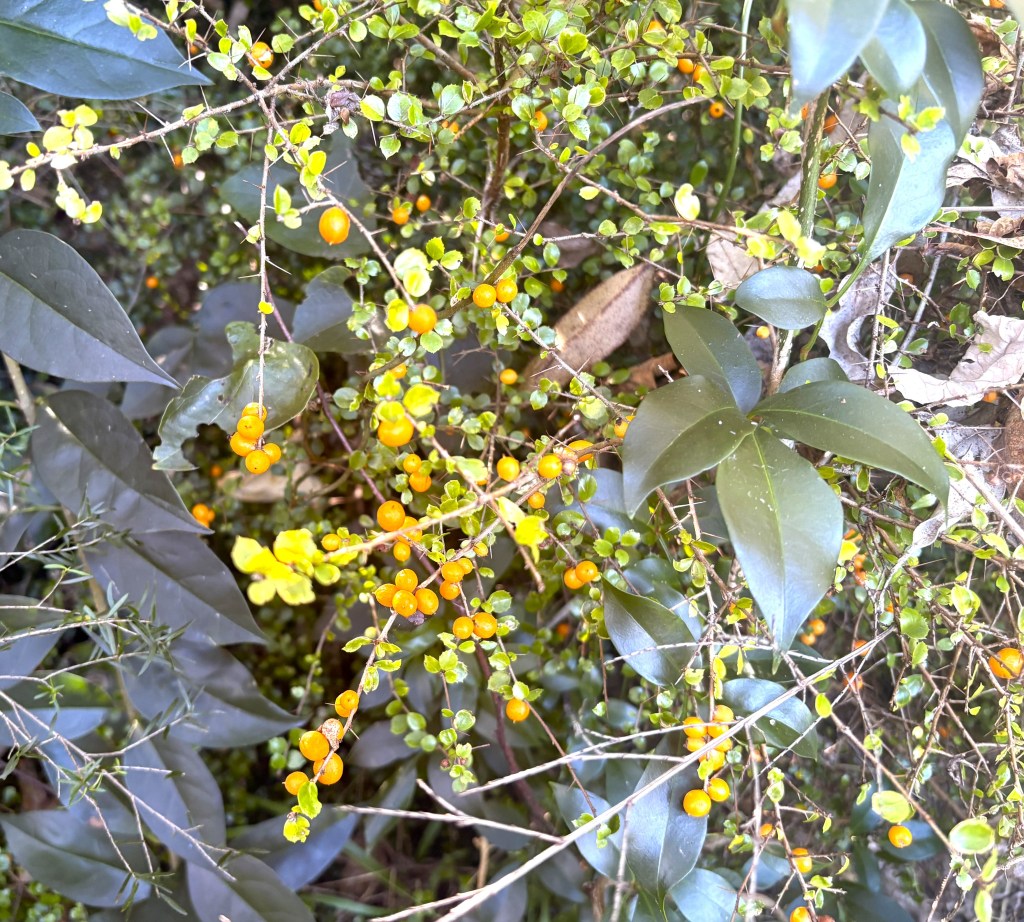
I’m surprised to see the small, round, edible fruits of Orange Thorn (Pittosporum multiflorum) still on the bush and pick a few to take home and add to my larder. They have a piquancy that makes a lot of dishes more interesting and are very good in marmalade, pickles, chutneys and other relishes. You have to try and avoid the thorns which are not easily visible unless you look close – though stick your hand in the bush and you’ll know they’re there!

Orange Thorn (Pittosporum multiflorum) – fruit colour can range from orange to yellow.

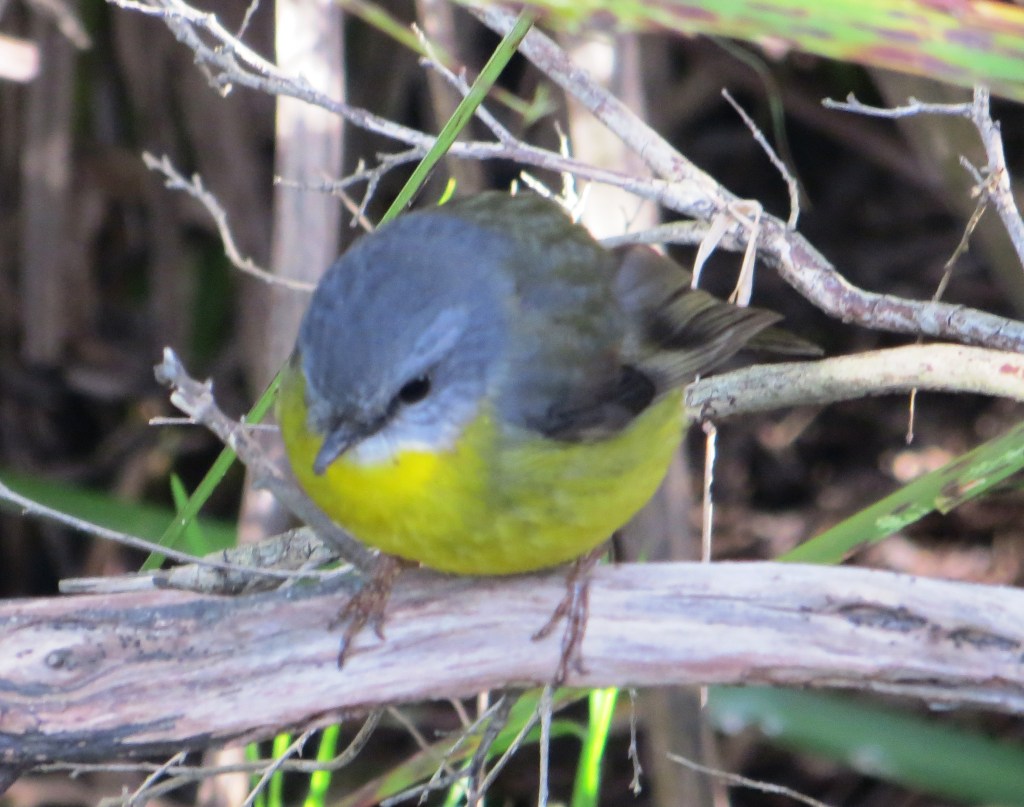
It’s a beautiful day, crisp and cloudless. I visit my favourite little forest pool to see what’s doing there…not much! I check the surrounding shrubs for a Rose Robin, one of our winter visitors, which someone had seen nearby but, alas, it didn’t show. Instead, a Yellow Robin dropped to the ground in pursuit of an insect; this cheeky little birds sit quietly in ambush and don’t miss much.

Yellow robin (Eopsaltria australis)

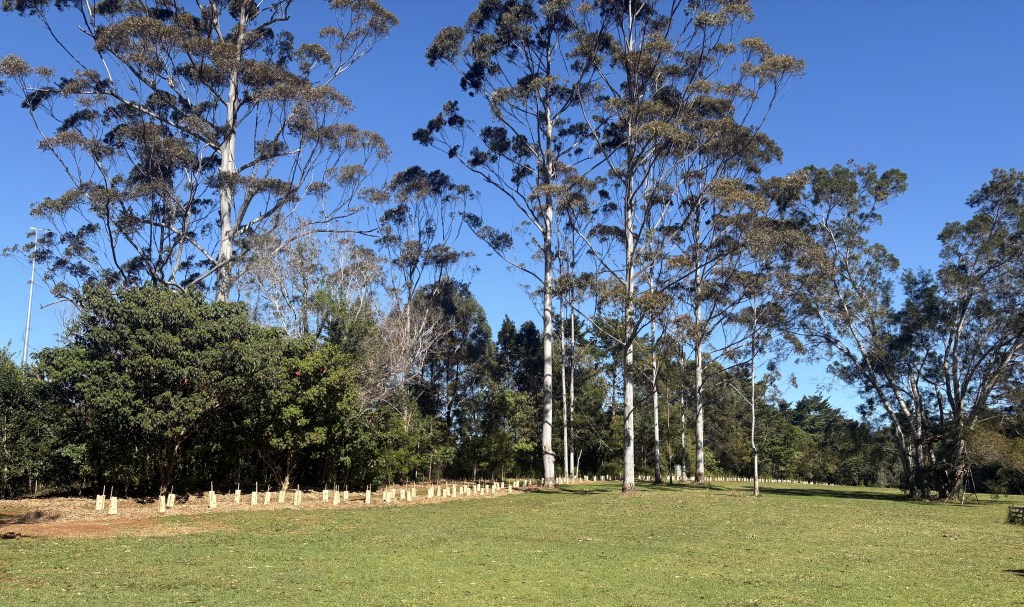
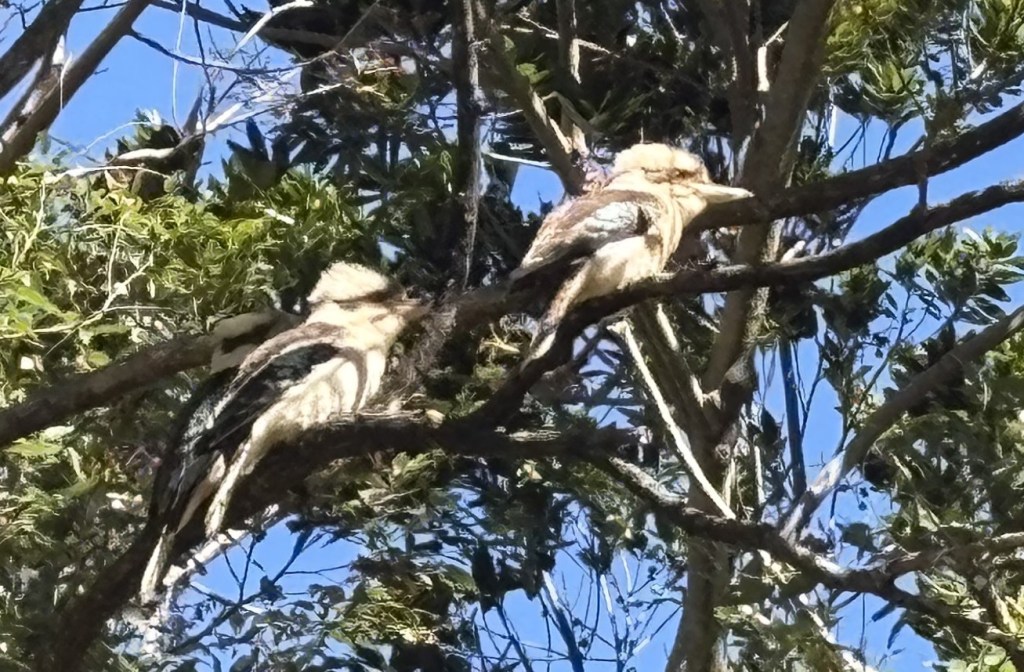
Out in the open meadow belonging to the local Boy Scout troupe three kookaburras chase each other from tree to tree, laughing all the while. Close to this line of fine Flooded Gums (Eucalyptus grandis) the local Landcare group has planted a long line of endemic species which, when grown will form a walking corridor with the eucalypt hedgerow between this meadow and the sports ground beyond. I think this was the outcome of this year’s National Tree Day which Landcare organised and supervised – a fine addition to the mountain’s revegetation program.

At the end of the cliff path I stopped to look over the valleys below to the sea. In the tree beside me a young Golden Whistler, one of this winter’s brook and still in its drab juvenile feathers, tried out his song with a few uncertain notes and then a loud, confident whistle. I knew how he felt – a beautiful sunny morning in the bush is well worth celebrating.