
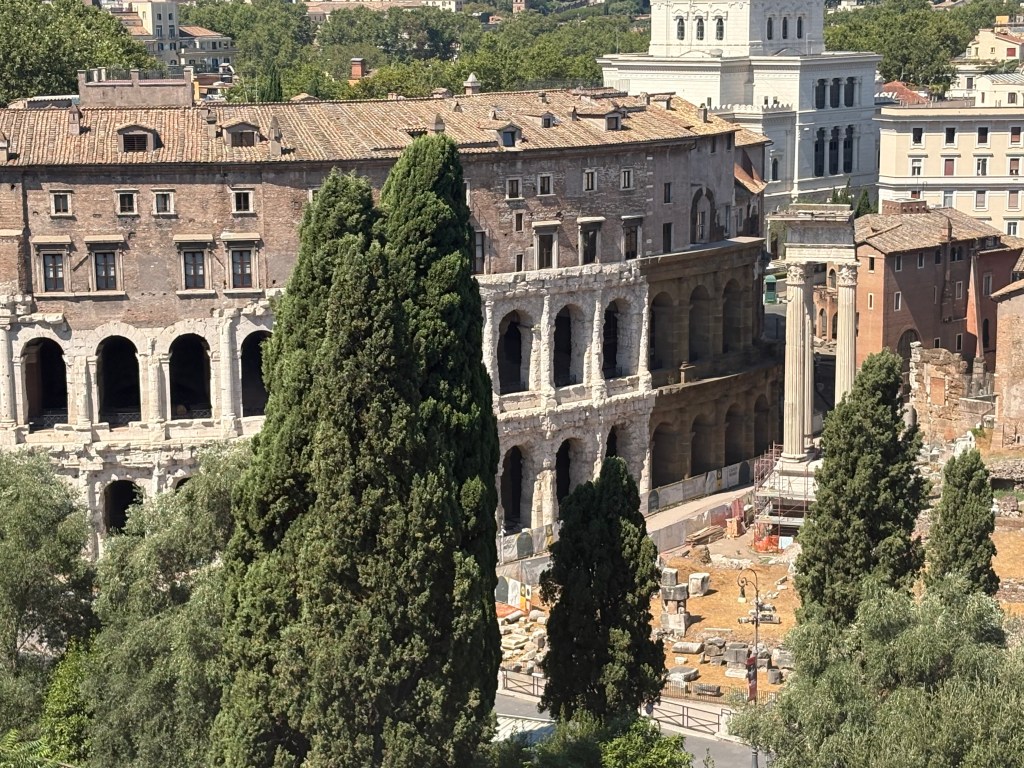
There are many grand photos of Rome to be found all over the internet, such as the iconic St Peter’s dome and the Colosseum. But to me it’s these small backside glimpses of ancient ruins or Renaissance splendour that make the city such a joy to explore.
It’s long been the custom when visiting Rome to throw a coin in the Trevi fountain, to ensure that you’ll return. I didn’t bother to do that on my recent visit because I knew – sadly – that I would not be going back.
This is not because I don’t want to but because age, distance, cost and other practicalities mean I have paid my last visit, much as I love this city of ancient beauty with its cultural depth and breadth that no other city in the world possesses.
In fact, I didn’t visit the Trevi fountain at all this time, just spared it a passing glance as I walked from my nearby hotel towards the river. And a passing glance is all you are likely to get in summer, when the tourist crowd is thick as brambles, hundreds of mobile phones held aloft in the vain hope of getting a decent picture. They even charge you now to go to the poolside lower level (tourist tip: go very early in the morning when they are cleaning the streets and you have a chance of a decent look).
The Trevi is a sculptural marvel but then Rome is full of marvels – and fountains. Not far from the Piazza Navone, with its three splendid fountains now also surrounded by tourists, I found a tiny square with a single pretty little fountain in it and no people at all apart from a couple of men playing cards outside an empty café.
And that’s the wonderful thing about Rome. If you’ve already seen all the Big Important Stuff there are always interesting little corners to explore, where the past – republic, empire, renaissance – is saved in stone.
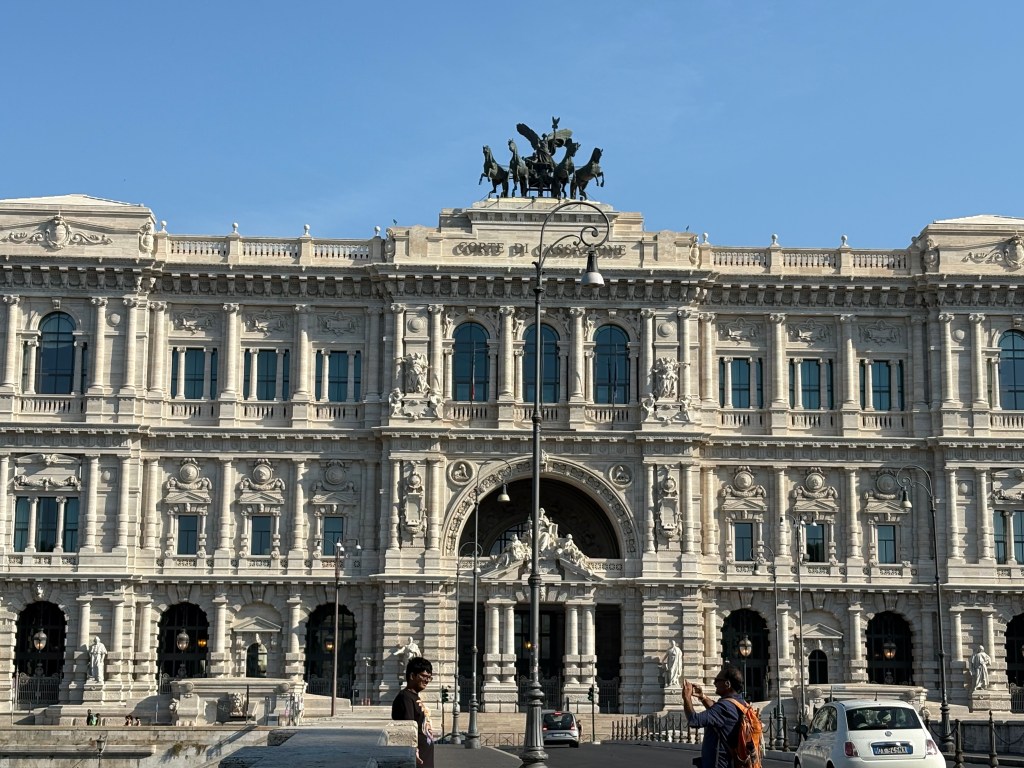
Splendid architecture everywhere you look
This is a robust city that handles its visitors well and of course it’s had a lot of practice because people from far flung parts of the world have been attracted to it for more than two thousand years. Some came for conquest and stayed, adding to the gene pool even as they knocked down walls and buildings and then built others. It’s hard to say whether today’s tourist horde (of which I, of course, was one, albeit there to visit someone, not just to gawk) do as much harm as the Visigoths in 410 or the Bourbon bullies in 1527 or the Nazis in 1943 but they certainly make it unpleasant if you want to meander around the museums, clamber around the Colosseum, saunter down the Spanish Steps or ponder the Pantheon. As for the splendid Sistine ceiling, it’s just one long neck-aching shuffle. No chance to linger and take it in, which surely was why it was painted in the first place. As for the forum, this interesting area of rubble is a heat-trap in summer and smells of cat piss. I’d rather be thrown to lions!
Better to go at some less populous time of year, though unfortunately many others have also taken this on board and make their visits in spring (beautiful), autumn (melancholy but pleasantly cool) or even winter.
Or else do as I just did and gaze at all the architectural wonders from the outside, without joining the crowds indoors. After all, you can see all the art and history stuff close up on YouTube!
On a Sunday morning in mid-July with the temperature predicted to hit 35C I went out early and walked – quite a long walk – to the river. The Tavere or, as we foreigners call it, the Tiber. Such a small and modest river to carry the burden of so long and bloody a history. In the past it has carried the city’s sewage and a fair number of dead bodies towards the sea and must have stunk something awful. Malarial mozzies lurked there too, blown in from the marshes. Today, however, it is a pleasant if turgid and unexciting waterway making its urban way through high-built banks, lined with restaurants and, on the high part, tacky stalls of tourist tat in the busiest part but shaded by old chestnut trees and crossed by bridges that are themselves repositories of history.
I leant on a parapet and stared at the bulk of the Castello d’Angelo, thinking about Floria Tosca leaping from the top of it. Not a true story but one of my favourite operas. How typical of Puccini, I thought, to give his best heroine so defiantly melodramatic an ending, with thrilling chords to take her over the edge.
I hadn’t intended to go near St Peter’s but the streets were so quiet that I wandered towards the great dome, drawn as by a magnet, thrilled by a sudden burst of organ music. Not coming from the famed basilica but from a smaller church on the right hand side as you approach the square, the Chiesa di Santa Maria in Transpontina. This is an exquisite church: highly decorated, glittering masterpiece of an altar, golden columns supporting vaulted archways and a ceiling covered in frescoes. The floor blessedly cooled by marble in a plain geometric patter, offering relief from the outside heat and the early baroque splendour above.
Mass was just beginning and I took a pew, an atheist who was once a devout little chorister, thrilled by the first lilting phrases of a sung mass and the procession of priests walking in line down the side aisle and through the transept to the central aisle, all gilded and embroidered and swinging censers.
It was one of those marvellous moments that one is sometimes lucky enough to experience while travelling, unexpected and exhilarating. Rather a shame, I thought, that the congregation was so small and consisting mainly of drab nuns.
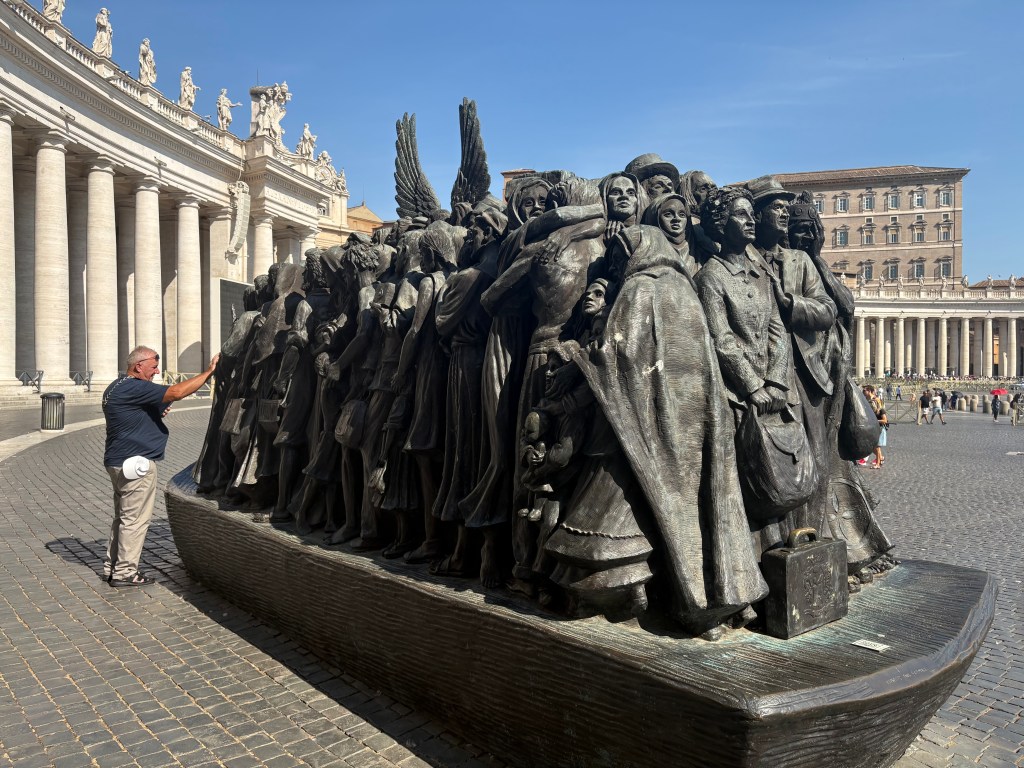
Feeling suitably sanctified I ventured somewhat nervously towards the square, for I am easily overcome by crowds – and also by heat. In proof that miracles do still happen, the whole area was surprisingly empty of people. I sat in the shade on the base of a pillar, admiring the sheer architectural artistry of it all – the two arching colonnades embracing the vast, paved space and, at the apex, the basilica of St Peter’s and its mighty dome, so familiar even to those who have never been there. Postcard stuff. I had no intention of going inside when everything opened – been there, done that, got the holy relic. Instead I braved the rising heat and wandered over to the other side to admire something I hadn’t seen before – the life-sized sculpture that honours refugees and migrants.
It’s called Angels Unawares; beautifully executed by a Canadian artist and of course created to tug at the conscience. All very well, I thought, but refugees have been on the run since the days when the Jews fled Pharoah, back when promised lands were easier to come by. Today it seems to me more lastingly humane to use our resources to fix the problems at home rather than reluctantly give refuge to those forced to flee and become strangers in a strange land. You only have to see the sad Africans trying to sell bottles of water and tat to tourists by the Colosseum to understand that.
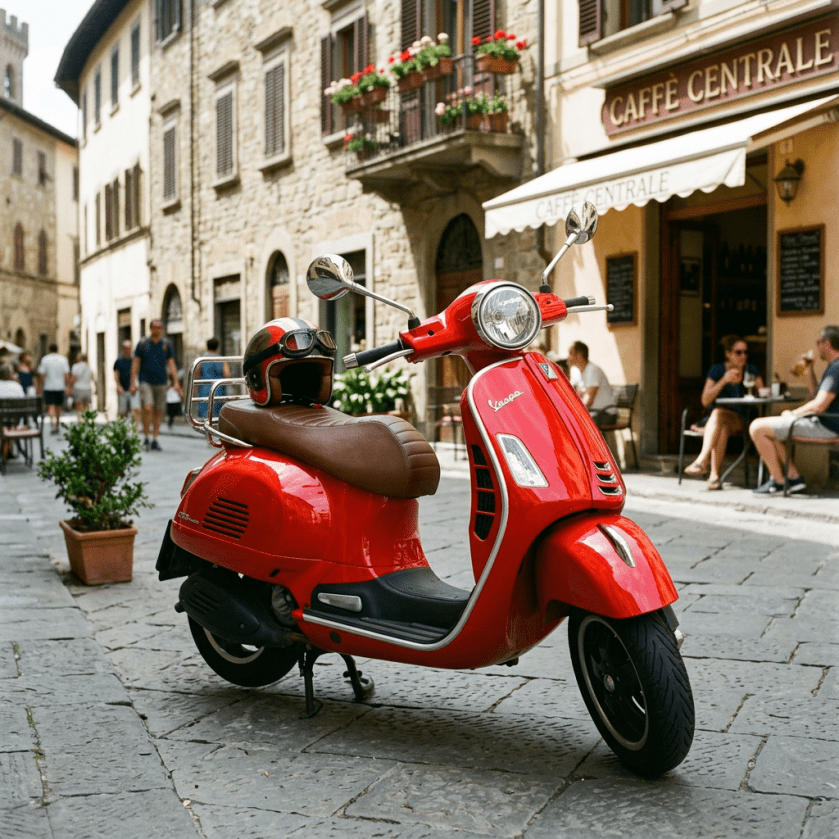
The crowd was building, along with the temperature, and so I walked back to the river, where there was a breeze, then south west away from the historical centre through Trastevere on the right, then crossing through the old Jewish quarter and walking back the other way. The higgledy-piggledy narrow, cobbled streets behind the busy river drive are full of little architectural wonders but I was most intrigued by the glimpse of ordinary lives – a woman walking her corgi, kids on bikes, a man washing his motor scooter. The Vespa is as powerful a symbol of Rome as any ancient statue and I idly wondered whether one day somebody would sculpt one in gisnt size and paint it bright red or yellow and mount it atop a building, like the horses on the Vittiorio Emmanuele statue that dominates the skyline. Something to make visitors hundreds of years hence marvel at the artefacts of the past.
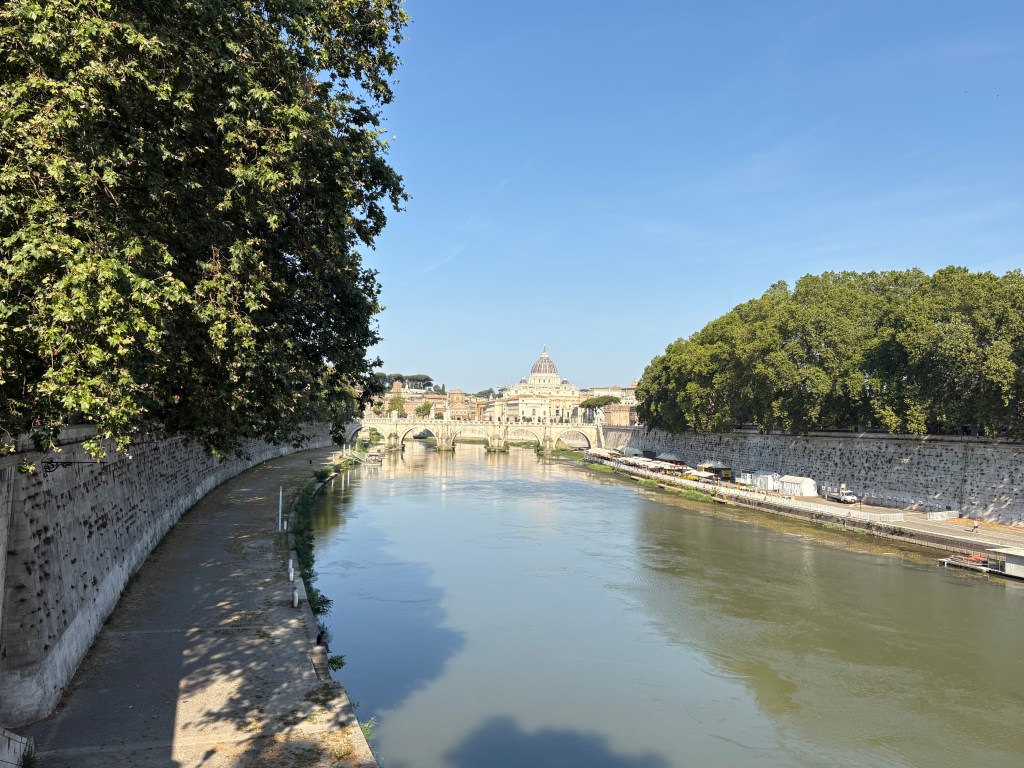
The Tavere or Tiber – hard to think that this placid little river has witnessed so much horror in its bloody past. But that’s the thing about rivers, they carry their horrors away.
In the meantime the Vespa, one year younger than I am and a triumph of affordable transport for the masses, is, like the wasp for which it was named, a bloody nuisance to pedestrians but a boon those who rely on it – slick, quick and so much easier to park than even the smallest car.
I skirted the Piazza Navone and its fringe of tourist trattorias, peeked at the Pantheon which, all but deserted when I’d walked by earlier, was now filled with folk, then caught a taxi and went to lunch with friends near the Piazza del Esquilino and Santa Maria Maggiore. (L’Angolo di Napoli, not on the main tourist route, authentic Roman cuisine, highly recommended).
When it comes to passing a Sunday morning in Rome, in high summer, this is the way to do it. Then grab a gelato somewhere and go back to your air-conditioned room for a rest before venturing out again into the hot streets. There’s a vibe to Rome after dark, when most of the populace, local and tourist, seems to idle away the evening at the thousands of restaurants that line the back streets. Most, thankfully, are air conditioned indoors but I like the pavement experience where you can watch the people on parade.
The good thing about visiting Rome at this time of year is that the sun is out and the sky is blue – a good way to see any city. Still, I decided to spend my next – and last – day in Rome by doing something I hadn’t done before and going to the Capitoline Museums.
These are, no surprise, on the Capitoline Hill – being a Roman history buff for most of my life I still get a buzz from ascending the seven hills on which the city was built and thinking about Julius and Anthony and Brutus and Octavius-Augustus and Cicero and Tacitus and all the other famous old blokes who once did the same. The two museums, built across a piazza designed by Michelangelo,are surprisingly little known to the average tourist and also have the attraction of being air conditioned.
So I headed out early, making a detour to the Tarpeian Rock from which all sorts of offenders used to thrown from earliest Roman times to at least the first years CE. It’s not that high, about 25 metres, so it’s possible some suffered for a while with horrible injuries before being finished off. Nowadays you’re more in danger of getting struck by a Vespa while crossing the road to the base. Did I imagine it or are the plants a bit greener there around the base than in other parts of this largely treeless city? Nurtured by all that blood and bone? It’s not far from the forum so I suppose people used to go along to watch this novel form of execution and then wander to the city’s main happening place for a cup of something and a chat. Something to do when you weren’t going the other way to the Colosseum and watching gladiators slaughtering tigers, or each other. Public entertainment is not what it was.
Because I was still too early for the museum opening at 10 am I sat in the middle of the Piazza Venezia watching the morning rush hour and wondering how cyclists found the courage to negotiate it as the cars, buses, trucks, motor cyclists and scooter riders jockeyed for positions in streets with no lanes marked. I gazed up at the grandiose monument to united Italy’s first king, famous for his large moustache, and thought how much better off those horses were than being down below in the morning muddle.
This is what I most enjoy about travelling at my age now. Just sitting there sipping something and observing the life that is, while pondering the life that was. Rome, my favourite city, is perfect for that.
The museums proved to be a cool, quiet haven. A mere handful of visitors including a couple of earnest Asian tour groups, all easily avoided in this museum of so many lofty rooms. To me, this place is the very essence of Rome, from the artifacts of early Etruria to the galleries of paintings and – above all – the splendid sculptures. Including the Dying Gaul and the bronze wolf suckling Romulus and Remus, mythical founders of Rome.
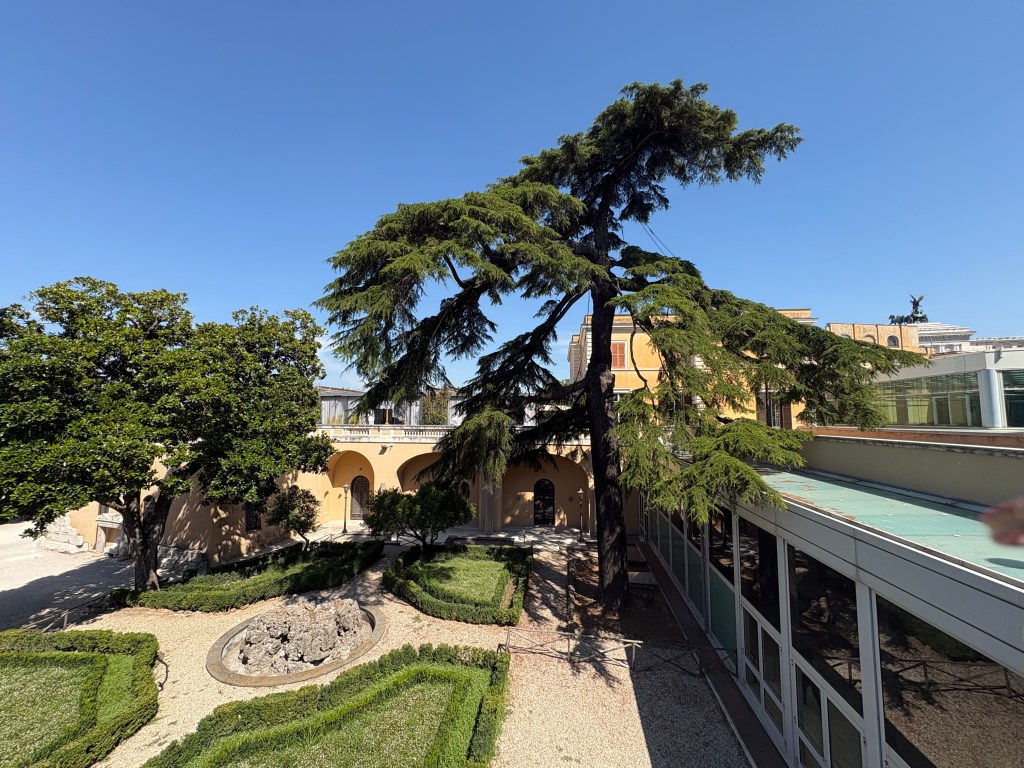
There is a small, secluded garden and a roof terrace which offers views right across the city. If you want a great vantage point from which to view the ancient rooftops and many domes of Rome, this is the spot. I spent most of the day there, enjoying the permanent collection and a couple of temporary art exhibitions – all marvellous.
The rooftops of Rome – from the Capitoline and, below, the very Roman courtyard garden in one of the Capitoline museums.
Then I went forth to brave the hot and crowded streets to grab a calzone on the way back to the hotel, where I did my packing and rested before delighting in a final meal at the charming little trattoria across the way, Mas, with its charming proprietor and friendly waiters and unpretentiously authentic cuisine. I ate here several times because they made an elderly woman, travelling alone, feel so welcome.
I do find Rome to be a warm-hearted city, displaying its historical treasures con brio but without undue pomp (though I do wish there wasn’t so much rubbish lying around!). I feel sad to think that I shall never see it again yet also happy because, knowing this, I made the most of my final visit. My final homage to the dual splendours of antiquity and renaissance which are still found there is such abundance.
Addio, bella Roma, brava cittå.
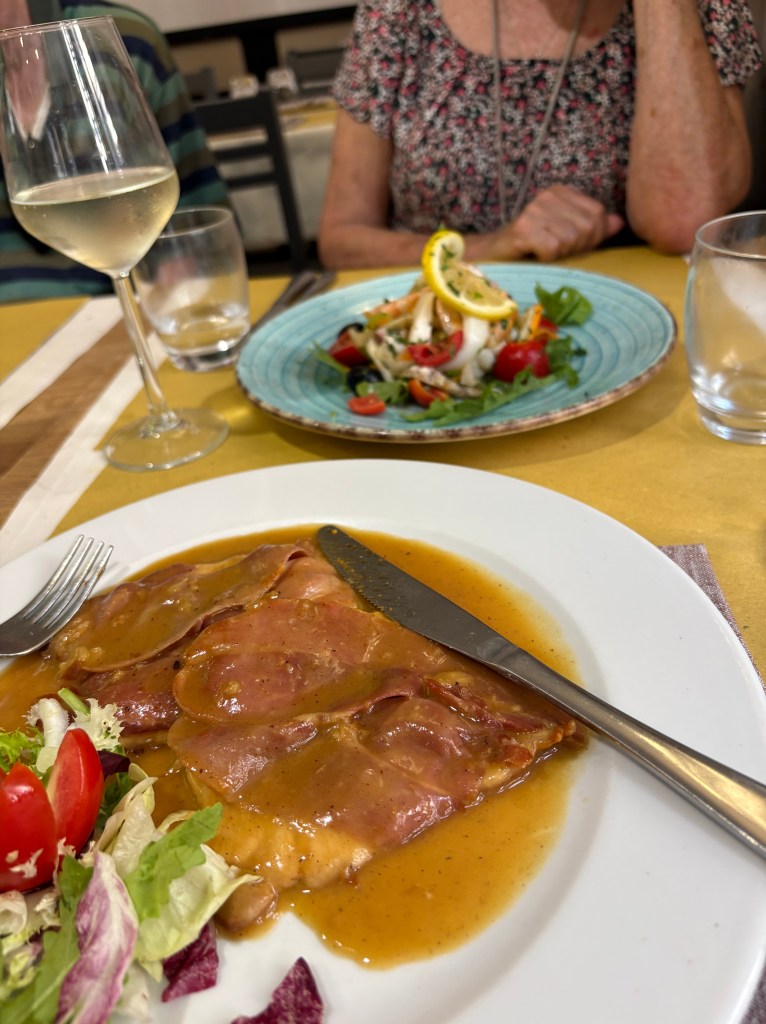
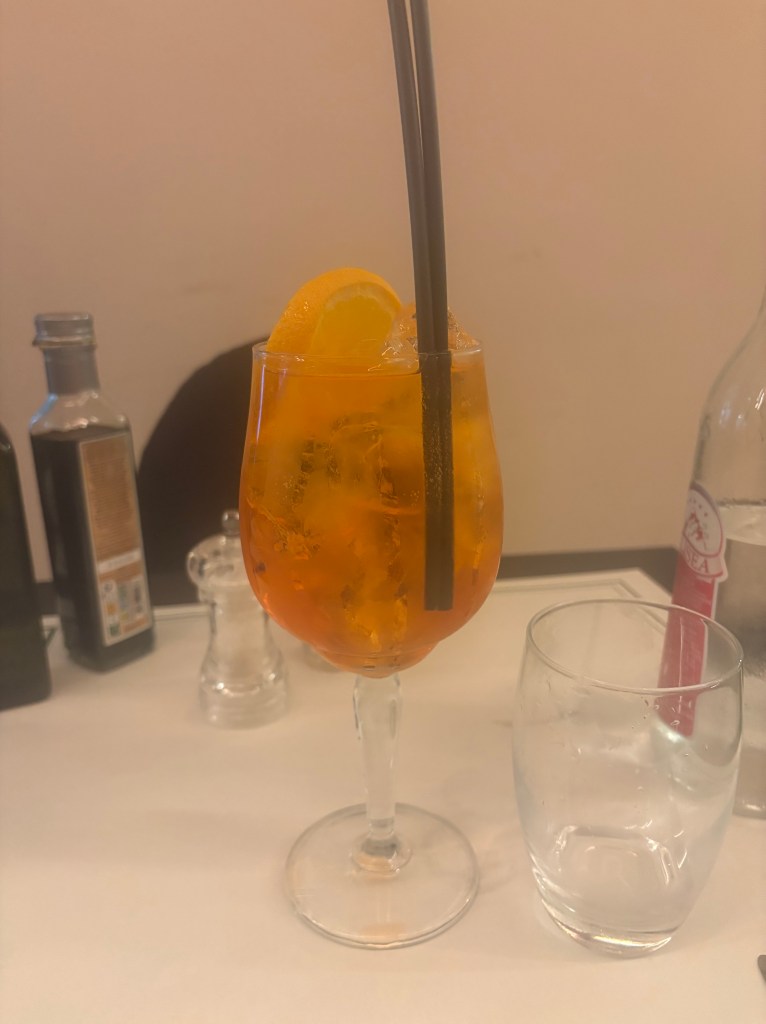
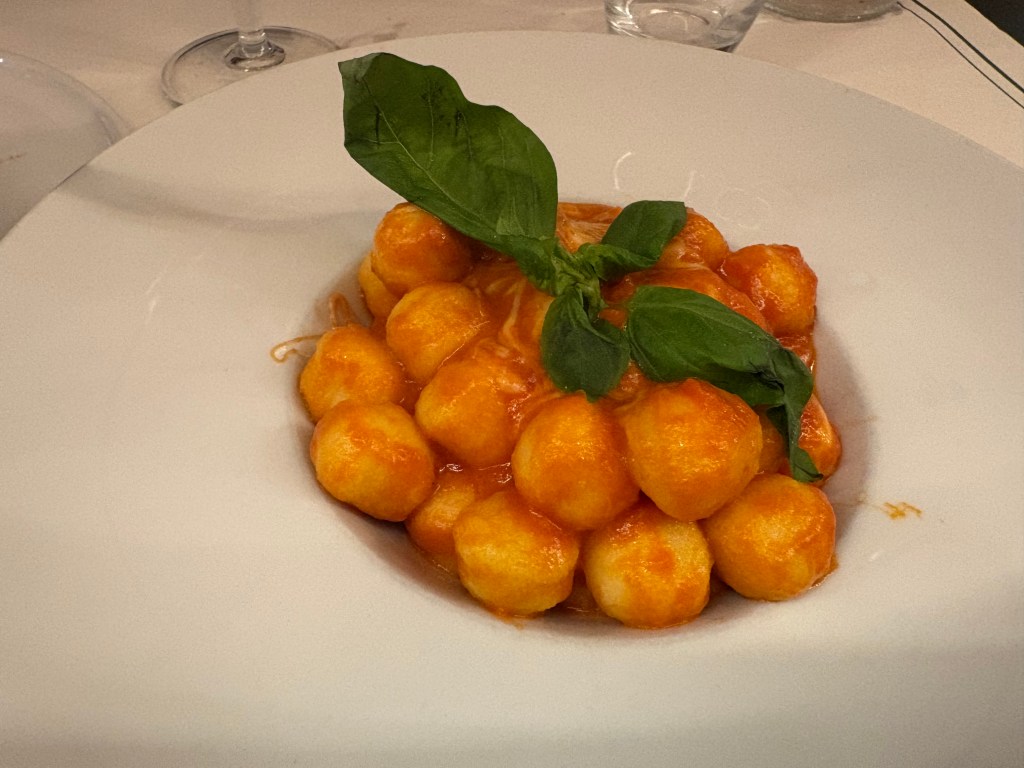
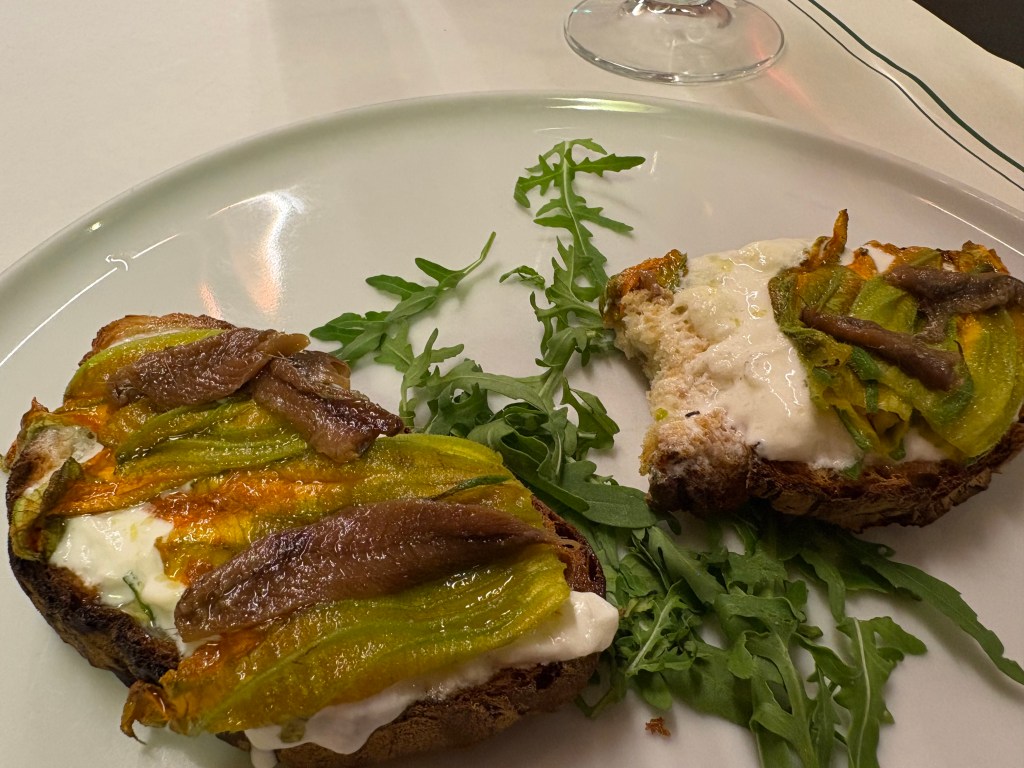
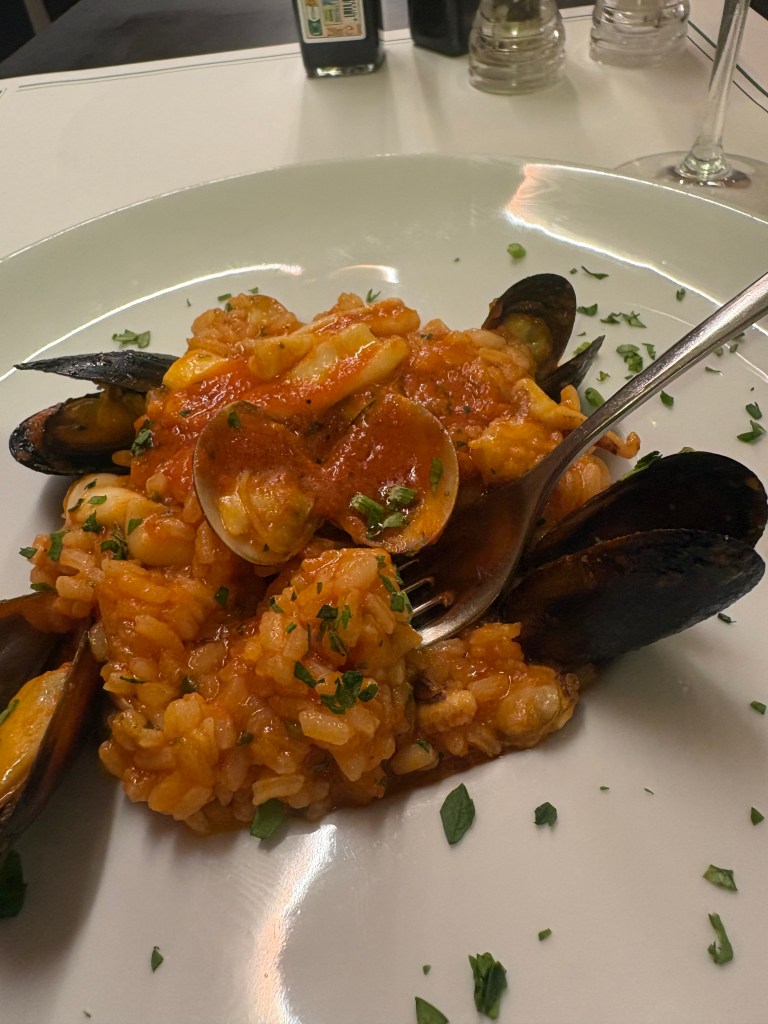
I love eating in Rome and here are some of my favourites – saltimbocca, gnocchi fresh made, fiori di zucca (zuccini flowers stuffed with anchovies and mozzarella and lightly battered and fried), seafood risotto and a glass of Aperol spritz beforehand to sharpen your appetite.


