
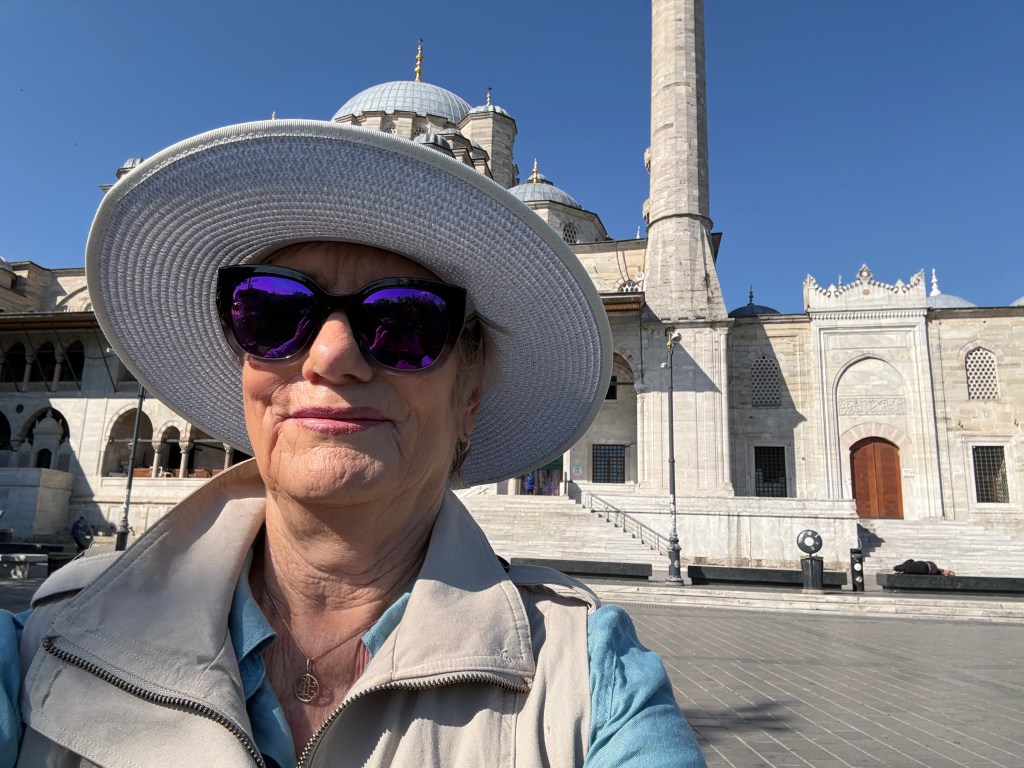
“Istanbul was Constantinople
Now it’s Istanbul not Constantinople…“
…sang The Four Lads, back in 1953, thus earning themselves a hit with this silly but harmless song which referenced the official name change of that city in 1930.
That song came out exactly half a century after Constantinople was conquered and invaded by the Ottoman Turks, the city having been a pivotal centre of Christianity for more than a thousand years before that and much more important in the formation of that religion than Rome was in those early years AD.
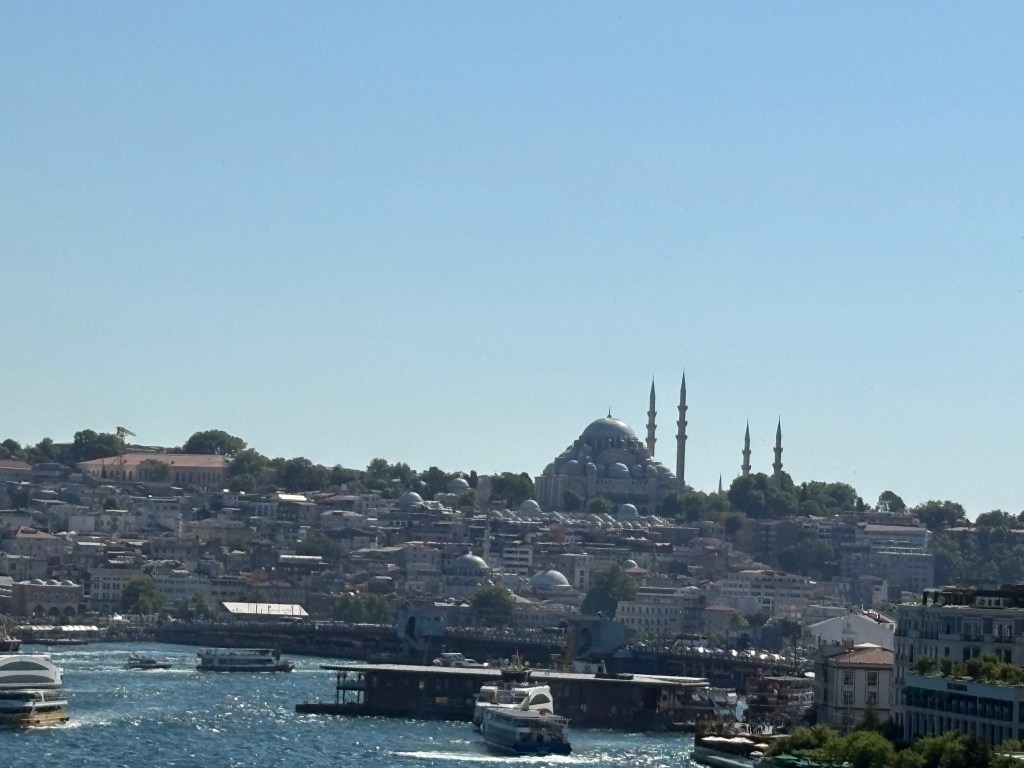
Today, it is very much a city of mosques and very beautiful mosques at that. Their graceful minarets are the city’s defining characteristic, along with the great seaway of the Bosporus and Golden Horn. Mosques are everywhere, not just the postcard famous buildings but pretty little ones in backstreets around the city. I am no fan of Islam (or any religion for that matter, but Islam I find particularly distasteful) but I do love its architecture. The one great thing it has given the world (yeah, okay, algebra, but I hated that at school so am not going to big it up here!).
The old world boasts magnificent cathedrals built to honour the Christian god but while they inspire awe and contain wondrous art they don’t have the grace of a domed and minareted (is that even a word?) mosque. The famed Blue Mosque sits close to the equally famed Hagia Sofia but to my mind the latter looks squat and rather dowdy besides the splendour of the former.
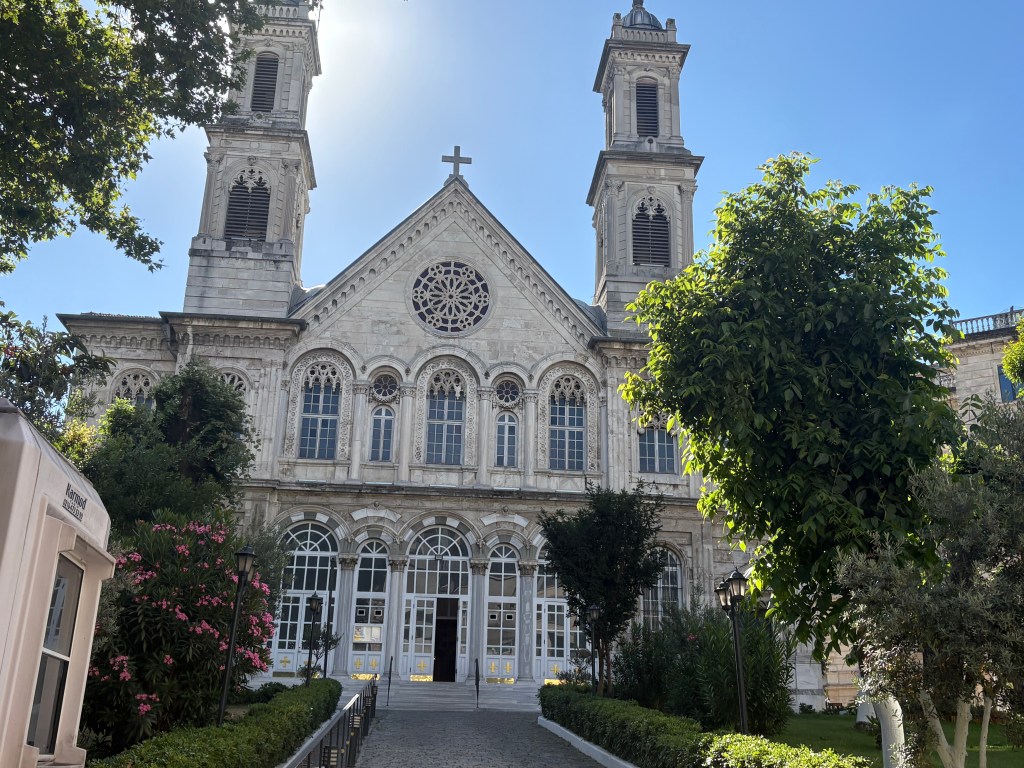
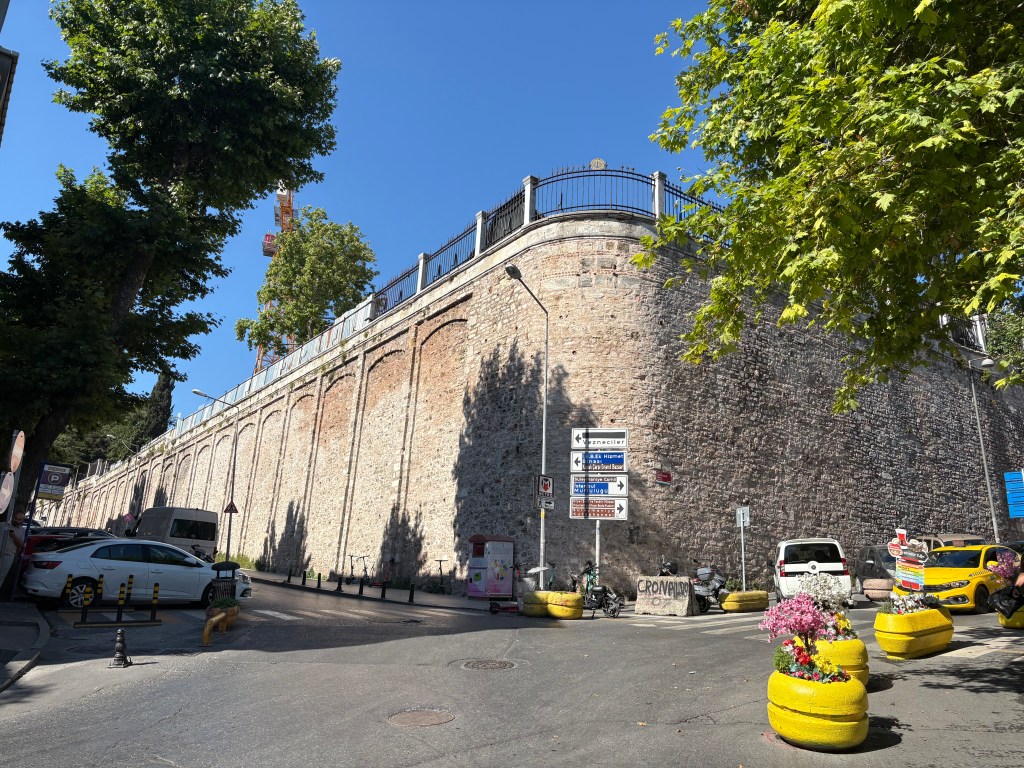
Around the city you can still find sly reminders of Christianity in churches here and there (see picture below, old Orthodox Christian church near Taksim Square). They look a big neglected but still operate, though Hagia Sofia itself has long since been turned into a place of Islamic worship. And Constantinople remains visible in the mighty walls that once protected the city, in the occasional sight of an orthodox priest in rusty black cassock, in Byzantine flourishes that distinguish pre-Ottoman buildings and in the food which offers the same dates, figs, olives, melons, peaches, unleavened breads and roasted kid that you find on menus from Justinian’s day. Foods that predate both Christianity and Islam. And Judaism, for that matter, because this part of the world was inhabited by the wandering sons and daughters of Yahweh long before the two latecomer monotheisms were invented. Pagan polytheists too.
In the city of mosques the muezzins, electronically amplified, call from the towers five times a day, summoning the faithful to prayer. It’s hard for an outsider to figure out the Turks, religion wise. The main religion is Islam, obviously, though other religions are tolerated and the government, while conservative and claiming adherence to Islamic values, remains secular. When the muezzins call, the people on the street carry on as usual, either shopping or glued to their mobile phones. They don’t drop to their knees as happens in the stridently Muslim cities of the Arabic Middle East. Yet the mosques are well-attended on the holy days.
The Turks are not Arabs, of course, and come in many types. You do see women in full black, faces covered. They come mostly from the country, I was told by the Turkish manager of my hotel (an urbane and very handsome man). Quite a lot of the women wear the Abaya style long dress for modesty; young women pair this with a matching headdress and look very smart, stylish and feminine. Older women tend to wear rather shapeless versions in dull colours. Then again, a lot of women wear the headscarf with jeans, which makes me wonder about the hijab and other head coverings – is it really about modesty today and not tempting men with your flowing locks? Or is it just an excuse to cover up a bad hair day?
And then there are Turkish women walking about the streets wearing crop tops and shorts or mini skirts with high heels and animal prints and showing a lot of flesh that makes them look just like the women from other European countries – you’d mistake them for tourists if you didn’t hear them speak. Again, while I don’t care for Islam and hate the burquah and face-covering, I’d be all in favour of the modesty police enforcing a stricter dress code for locals AND tourists. All that fat and flesh thrust before your eyes! Bosoms and unlovely bums and flabby thighs! If you ain’t got the goods, don’t display ‘em! And PERLEASE don’t message me and rabbit on about how we shouldn’t body shame people because we absolutely should if they insist on flaunting what is better concealed – it’s a matter of aesthetics!
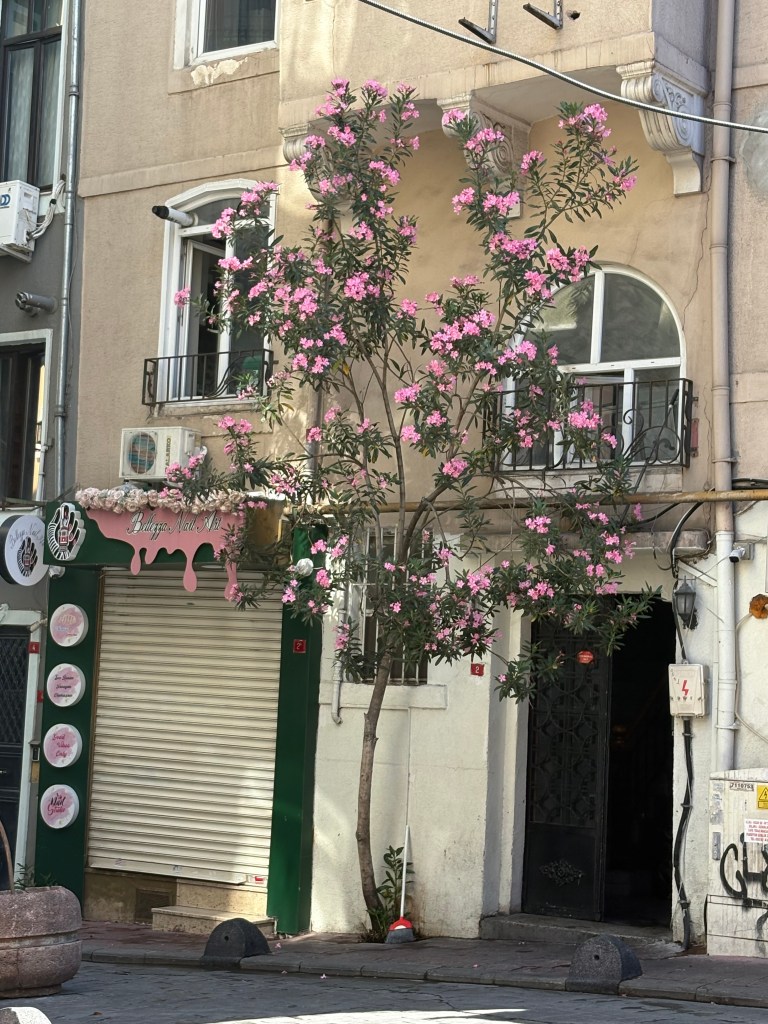
Turkish men dress like anyone and don’t have all that irritating “I’m a proud Muslim man” face fungus. Of course there are gorgeous costumes for both sexes in many shop windows, for the ceremonial occasions of the many different ethnic groups. But you don’t see them on the street. Pity, really.
Istanbul is a splendid city in every way – the setting, the architecture and archaeology, the history, the fine harbour, the food. Yes…the food! Again, it reflects the many cultures that have gone to make up modern Turkish cuisine. Here you find the traditional dishes of the Levant, based on eggplant and yoghurt, honey and nuts, lamb and fish. Pistachio and pomegranate add flavour and colour to many meals. Clay pot cooking is perhaps the best thing I tasted, along with the koftehs. Doner kebab is everywhere, sesame studded tsimit sells well on the streets, other breads come with every meal. Soup is popular, especially lentil. The baklava is better than in Greece or anywhere else, in so many honey-sweet varieties. The tomato and the potato have long since been assimilated into many family recipes, along with the ancient grains. It’s hearty fare, no fancy French flourishes, there’s nothing nouvelle about THIS cuisine! Istanbul takes food very seriously indeed; restaurants are numerous and in every price range, some very cheap indeed, dedicated to nourishing both body and soul.
Of course, there is Macca’s even here, and Asian restaurants, and French and Italian. But, really, why would you!
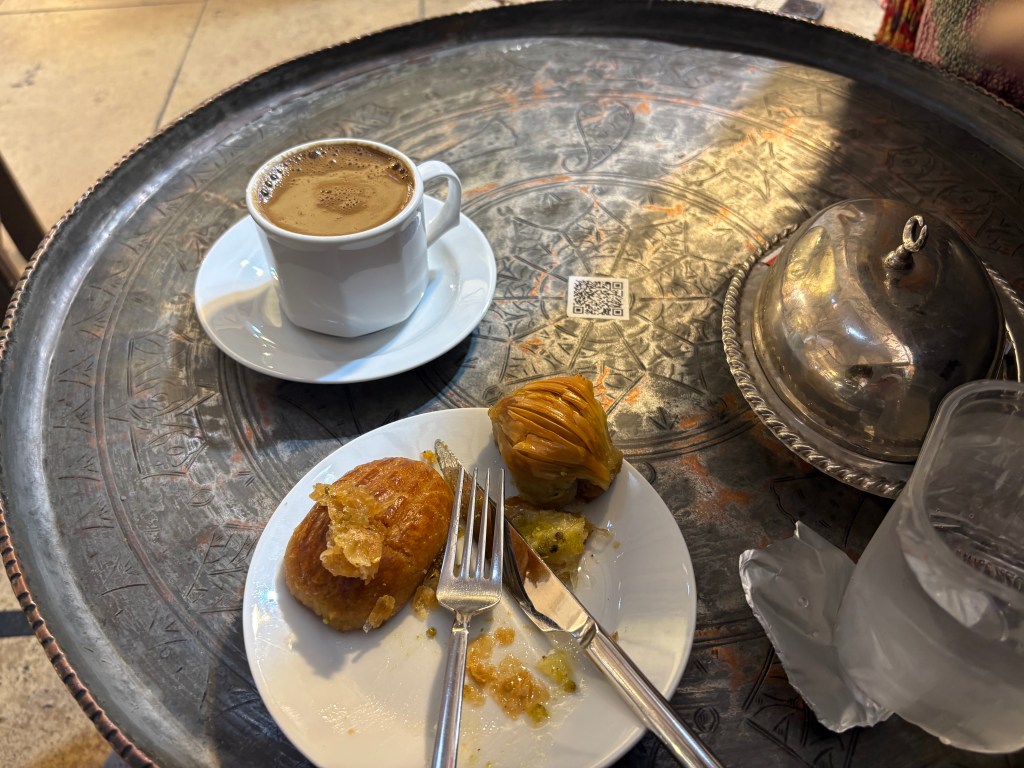
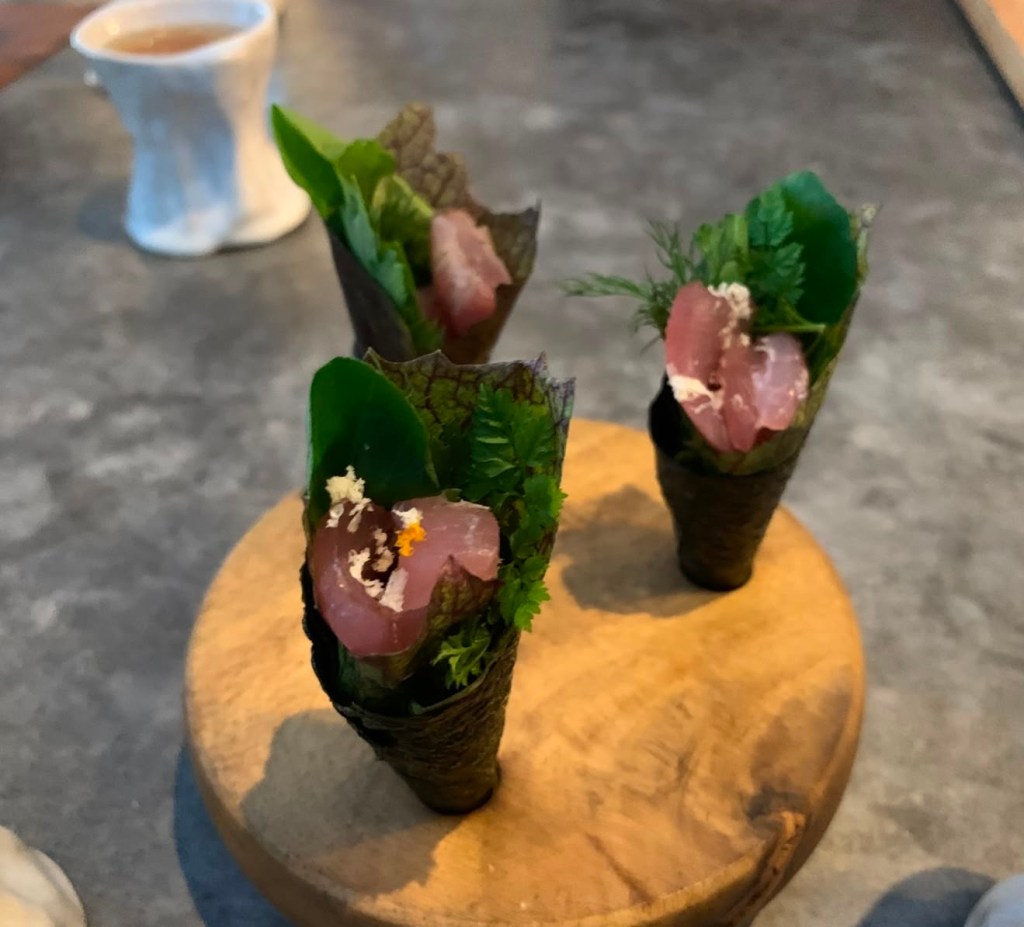
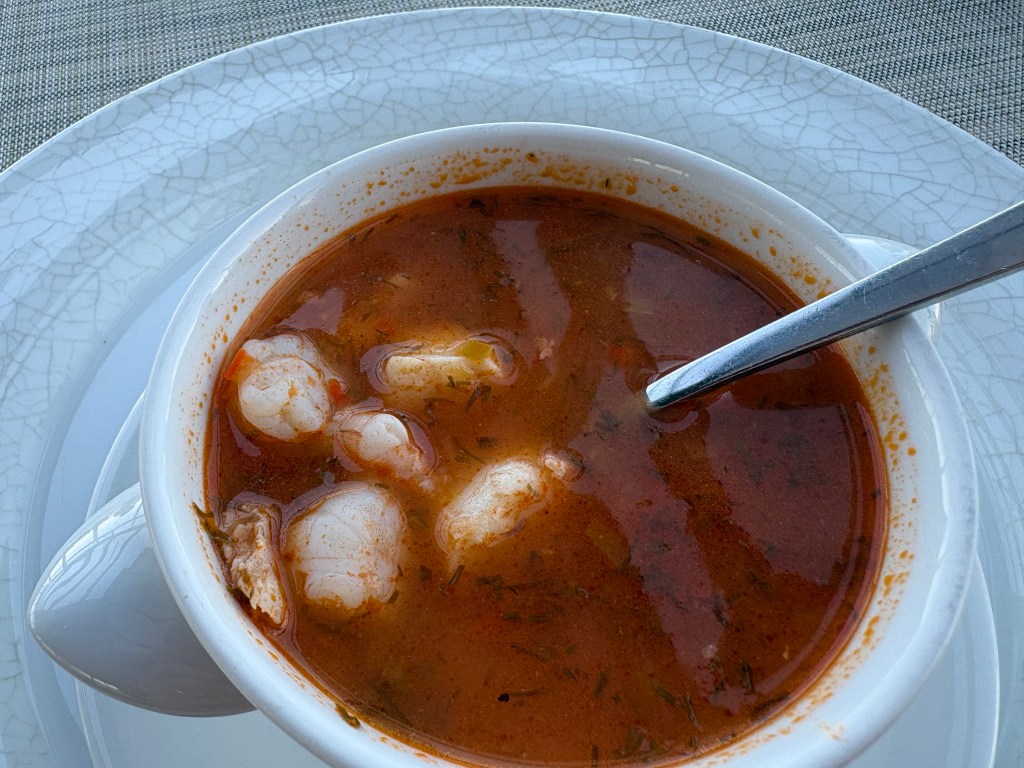
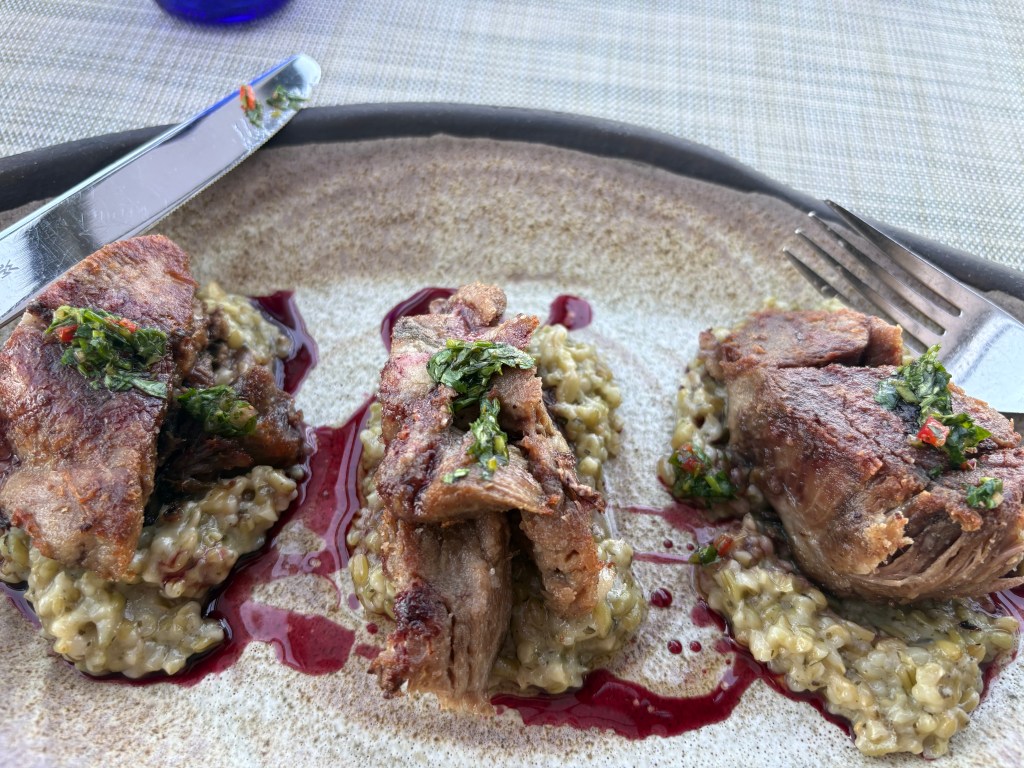
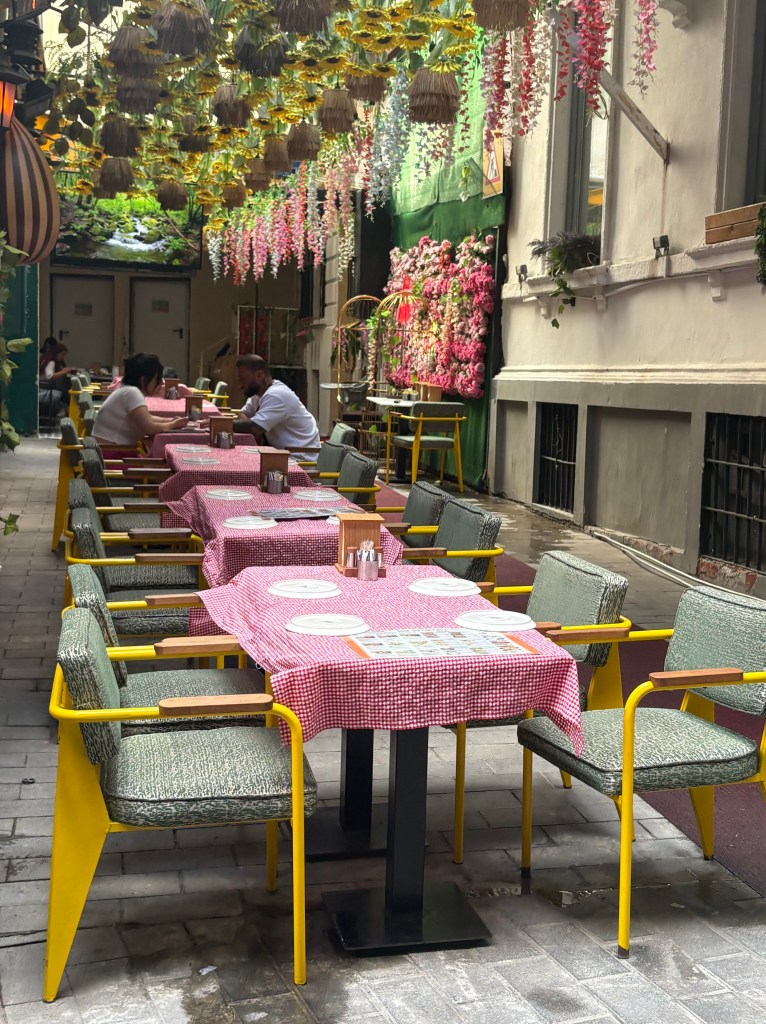
Food in Istanbul can be as simple as a couple of pieces of baklava with Turkish coffee to fine cuisine using typical ingredients such as the exquisite lamb dish above. Also the delicately crafted seafood cocktail. But most dishes are more basic and robust, as found in the typical little backstreet family restaurantss pictured here, where dishes from different regions are found. Soup, such as the fish soup above, is available everywhere.
Getting about this hilly metropolis is easier than it looks at first. The traffic is chaotic as you’d expect in a city which consists mainly of twisted, steep, paved or cobbly streets with a couple of broad, modern avenues lined with modern hotels and offices. Only a masochist would drive there. I, who normally avoids public transport at home, found the excellent bus, rail and tram service surprisingly easy to negotiate once I’d got the necessary card. Easy and cheap.
True, the first bus I took was going the wrong way but that was because I’d forgotten to adjust for them driving on the right! A kindly bus driver soon put me right – and put me off at the next stop so I could cross the road and find one going the right way!
Crossing the arterial avenues of Istanbul is no easy task; it’s a bit like that old song Running Bear, where everything you long for is on the other side and getting there is likely to end in tragedy. It takes boldness. It takes courage. But I managed it, though I thought it might cause atrial fibrillation. (It didn’t, that came next, when I had to climb the steep little alleys around the Blue Mosque in 30 degree heat).
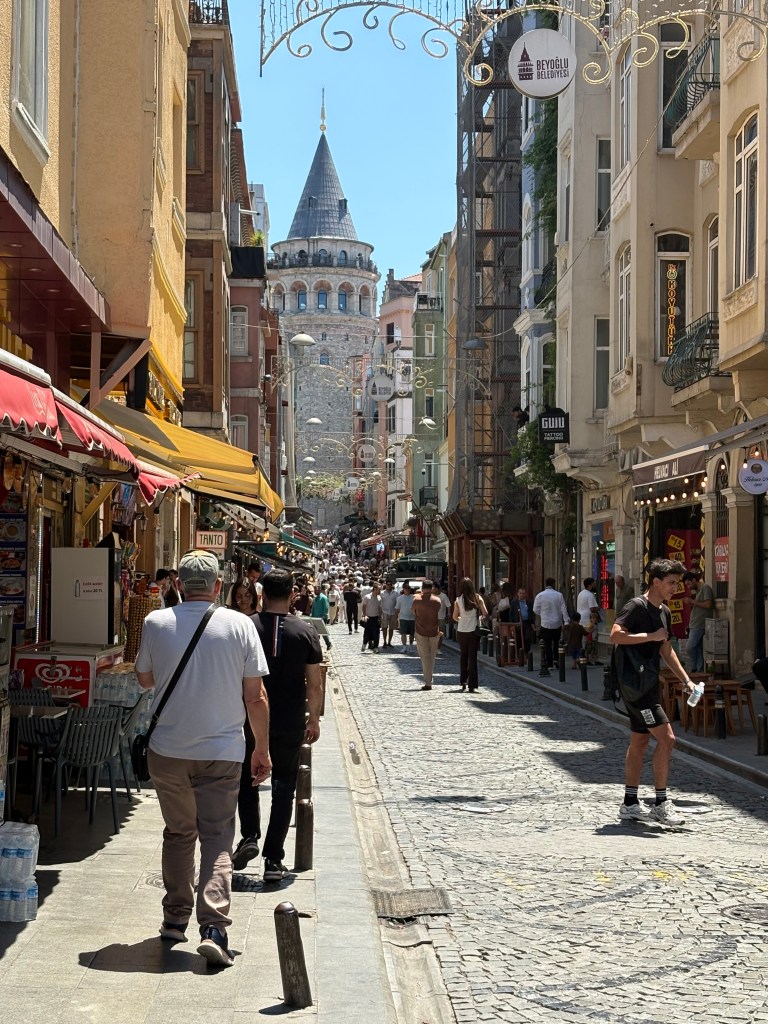
Actually negotiating ANY street in Istanbul takes constant watchfulness because the only significant change since it was known as Constantinople, apart perhaps from sewerage, is the advent of the internal combustion engine. These are streets made for donkeys. Here and there a meagre strip, perhaps slightly raised, has been set aside for pedestrians but the locals still drive and park all over it. Even the famed, fashionable and comparatively wide Istikal Street has to be shared with cars, motorbikes, bicycles and a tram. Electric cars are particularly sneaky because you can’t hear them coming; it’s only when you feel something gently nudging your hip do you realise that this is not a pedestrian mall – as it looks to be in the travel brochures.
Locals are of course cheerfully accustomed to this and you can spot the tourists by the sudden look of panic on their faces as they skip out of the way. Hard luck if you are too old to skip!
Apart from the wearisome vehicle-dodging, Istanbul is a very safe city for travellers. A LOT safer than when it was Constantinople, from what I’ve read. For one thing, the police are everywhere. Dressed in either usual police-type gear or combat camo. They look tough and ready but are surprisingly polite to tourists who ask for directions.
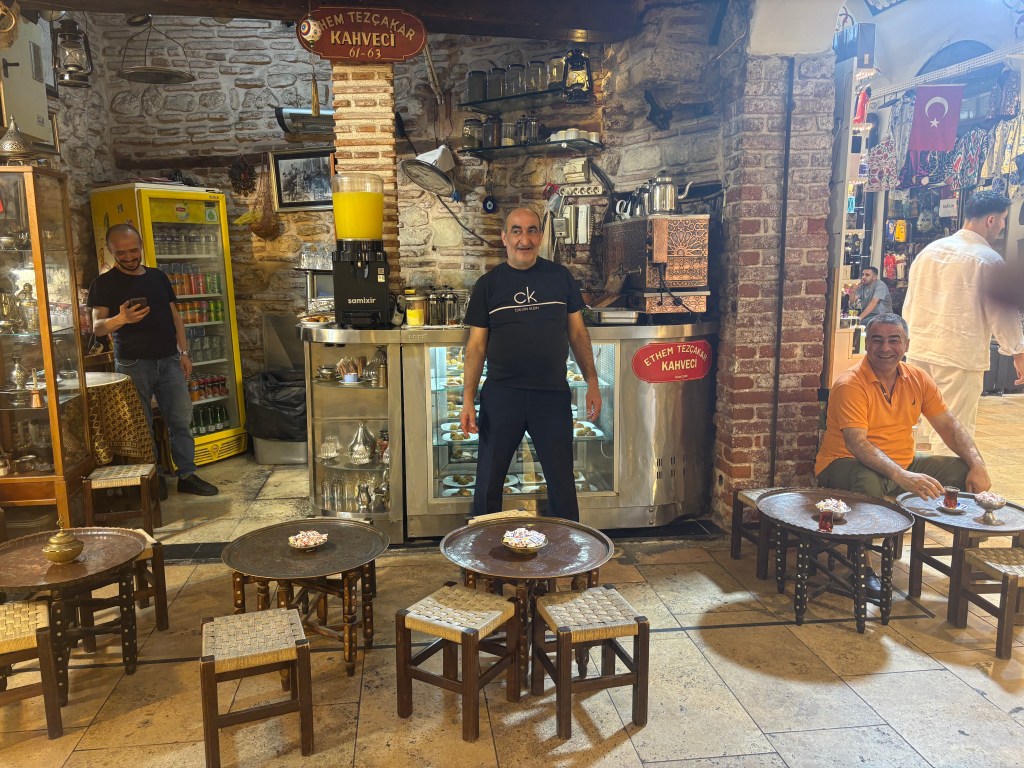
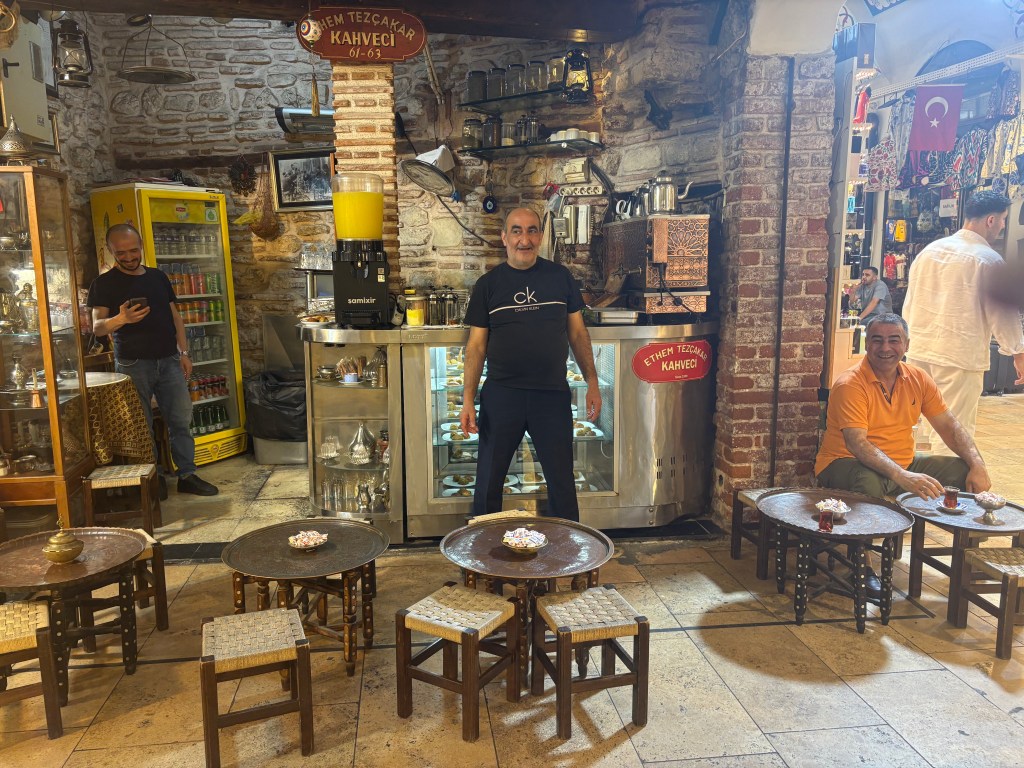
I found everyone in Istanbul to be polite and even kind to visitors. The men can seem a bit indifferent at first, they stare through women, especially elderly western women. But when this elderly western woman asked for help in negotiating the transport card machine one of these apparently indifferent middle-aged men suddenly turned all smiles and helpfulness even though he spoke no English. Ditto the tiny coffee shop proprietor in the Grand Bazaar (below)who slipped me an extra bit of baklava when I ordered some and said how much I liked it.
The biggest hazard in Istanbul for pedestrians is the amount of rubble and rough, broken paving everywhere except in the major squares. You do need strong, protective footwear with non-slip soles. I had bought a pair of new and expensive walking shoes especially for the trip and I was glad of them. How the glamorous young Turkish women manage in stiletto heels is one of this ancient city’s modern mysteries!
I avoided the major tourist attractions; that is, I sat outside and admired them over a cup of coffee but didn’t venture in. I’d already seen the interiors on YouTube and felt no desire to share their wonders with the madding crowd. Even if you go on a small, curated tour with skip-the-line tickets the pleasure in looking at the marvellous mosaics is severely prejudiced – for me, anyway – by being pushed and prodded and deafened by din. There is no space to stand and take it in peacefully – not in summer, anyway.
Moreover, there are so many interesting and relatively unknown (to foreigners) places to explore, so many exquisite little architectural wonders, so much archaeology and history to be found all around the back streets. Here you can wander at leisure, with no sense of pressure or bustle. And you can meander along the shoreline, so shiny with sunlit water and busy with boats and cheery little ferries luring you over to the Asian side.
To my mind, everyone should grab the opportunity to see Istanbul from the water, the way travellers have seen it for centuries. I was lucky to sail out of there on a small cruise ship on a glorious sunlit evening, saying goodbye with regret.
Taken all round, Istanbul is one of the world’s most splendid cities – particularly so at sunset when the lights come on and the whole place glows like a chest of fine jewells. And you can hear the muezzin calling out the isha, the fifth obligatory prayer that marks the end of day.
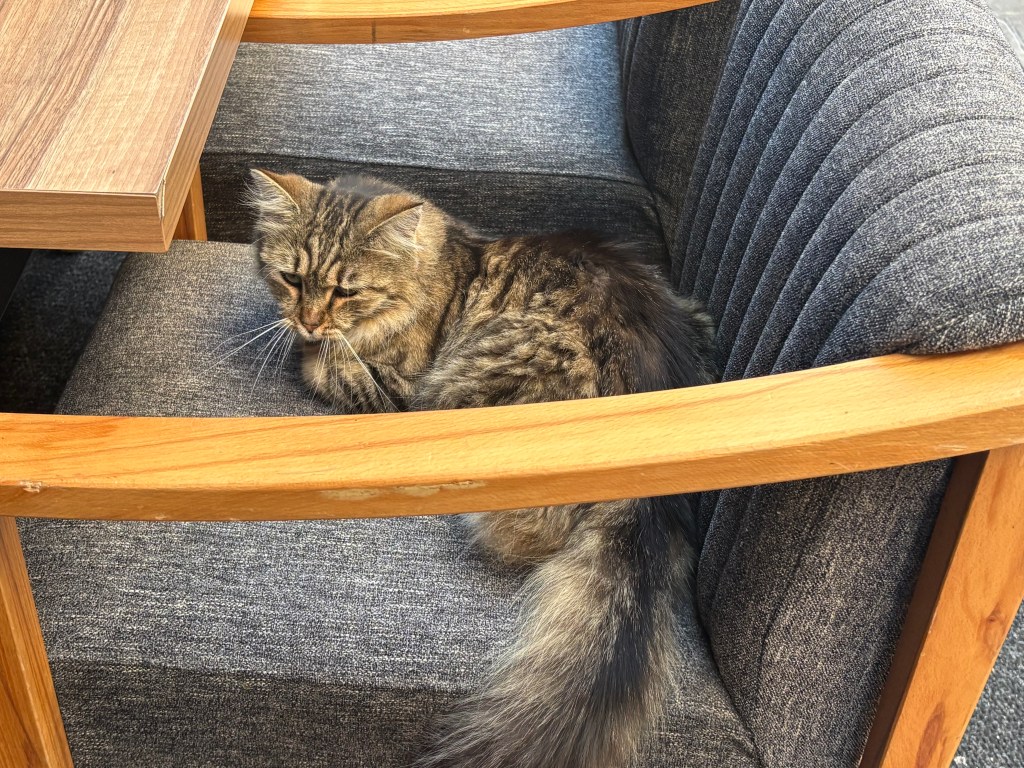
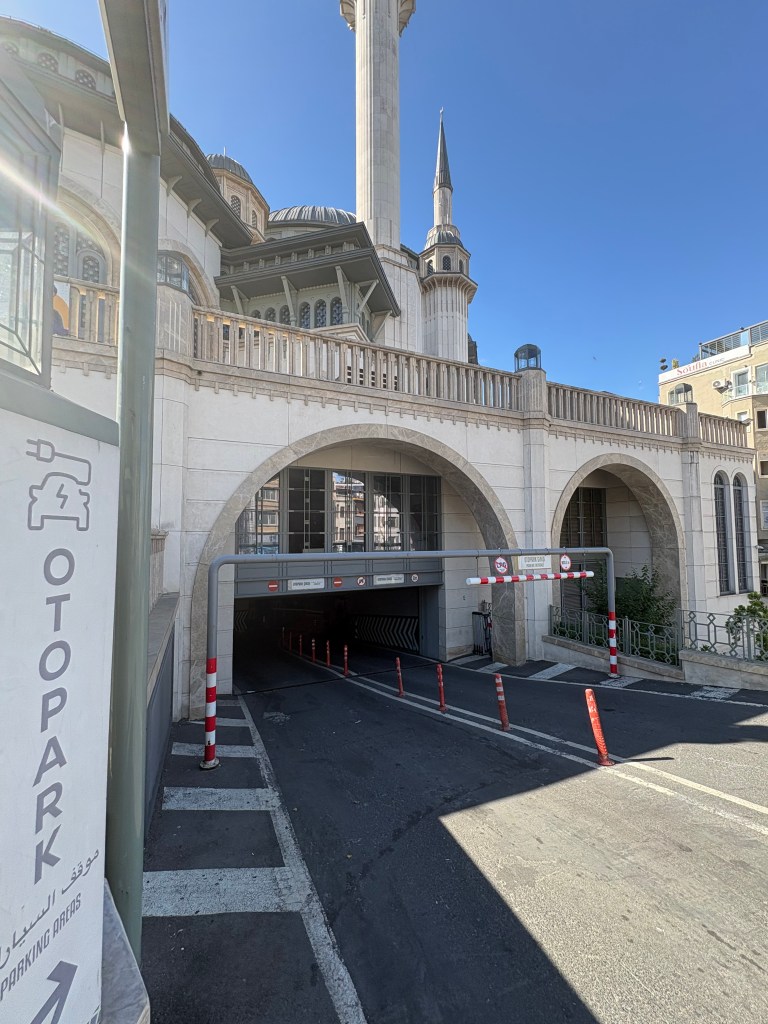
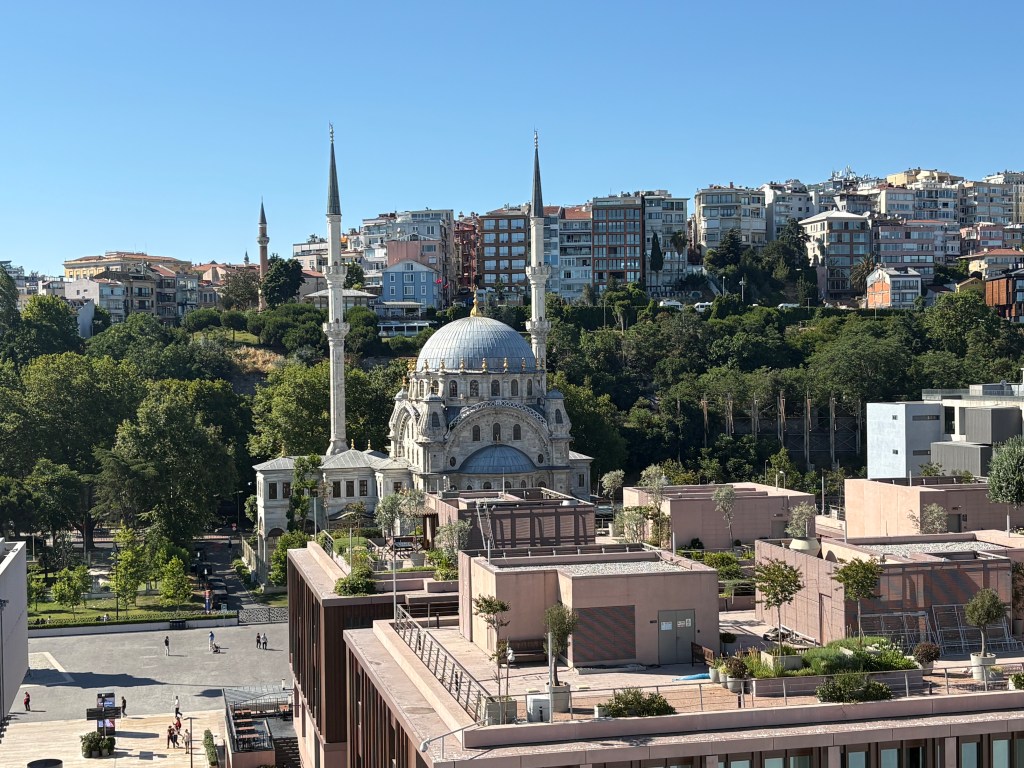
Below: Cats are everywhere in Istanbul. Top right: Traditional Islam yields to modern necessity – car parking under the old mosque.Bottom: Beautiful mosques are everywhere in this venerable city whose history is both brilliant and bloody as it spans two continents and continues to dazzle us today.
FOOTNOTE: Changing the name of cities is nothing new though today we’re more likely to change them back to some older indigenous name; perish the thought that we should retain the name given to any city by its conquerors or colonisers! Most of whom actually gave names to places that didn’t have cities before being invaded by the technologically more advanced. Personally, writing as an Australian, I’m in favour of renaming almost all our towns and cities with Indigenous names, not because I care about rejecting colonial and post-colonial history, which have earned their place, but because the present names are so ugly! The Americans got Arizona and Amarillo, Minnesota and Milwaukee and what do we get? Melbourne, Brisbane, Perth and Sydney! I forgive Darwin and Adelaide, the first because it has everlasting historical relevance and the second because it’s pretty. Of course we do have Toowoomba and Tocumwal, Goondiwindi and Gunedah. But nobody can be really proud of their city when it’s name for some long-gone English prime minister.
I digress…
Istanbul has always struck me as a rather unnecessary name change. Constantinople was Greek, though named by a Roman emperor (for himself – there’s hubris for you!). Istanbul is also basically Greek, meaning “to the city”. It’s commonly believed to be a statement of Turkish nationalism though why that should have been thought necessary in 1930 rather than 1453 is not clear (to me, at least). Perhaps they preferred Istanbul because it was shorter. Or perhaps, as the song quoted above goes on to say, “People just liked it better that way.”

