
April 21, 2025
This is my favourite time of year on the mountain – my favourite time of year anywhere in the subtropics. Yes, spring is the season of growth and a lot of enthusiastic breeding is going on with the flora and fauna. But the cool weather of April and May that follows the summer rains is a daily delight. The air is crisper, the sun wandering northwards to light up my courtyard, camellias out everywhere.
Around the streets, the Australian rainforest Golden Penda (Xanthostemon chrysanthus) is a glory of green and gold, the clumps of pompom flowsers almost covering the glossy green leaves. What a heart lifter this large shrub/small tree is. If I had my way it would be planted in warmer climates all over the world!
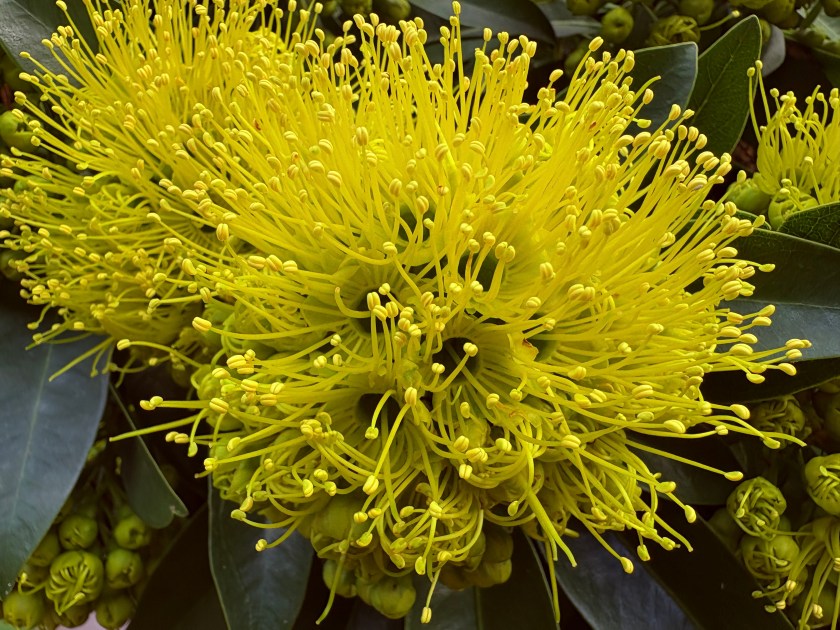
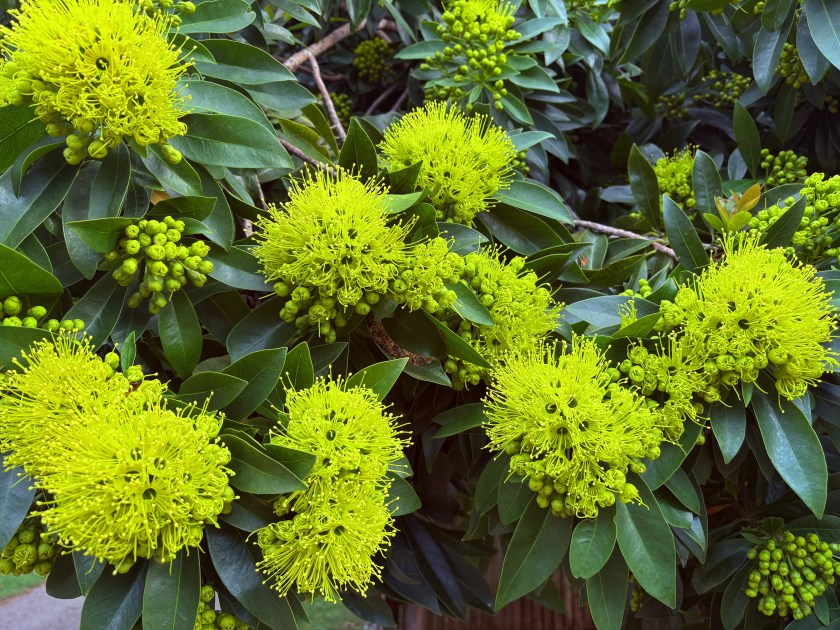
There are other plants, too, to brighten the autumn/fall landscape – in our gardens and streets. While the rainforest does not show much colour at this time, beyond its many shades of green, the exotics from all parts of the world that flourish on this mountain are relishing the mixture of mist and sunshine.
Most splendid of them is the Gordonia, related to the camellias and similar to them, with its big white petals surrounding a bright yellow centre – like eggs poached or fried sunny-side up.


August 1, 2025
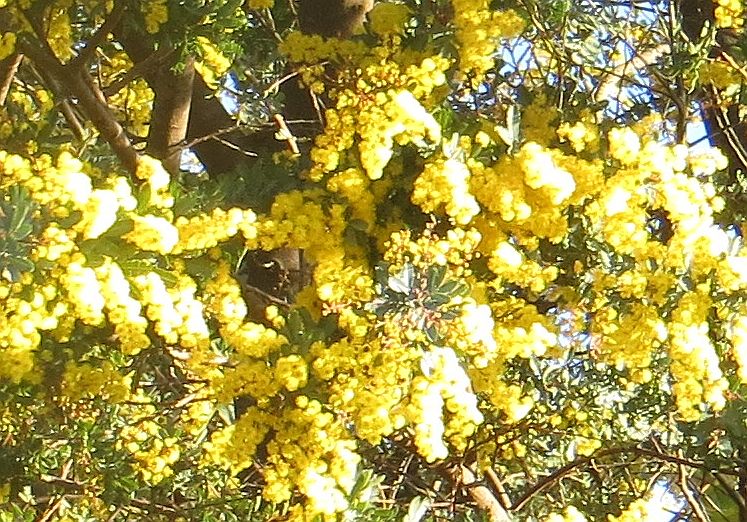
I love winter on this mountain. The days are warm and sunny, the nights cool and sometimes cold down to zero in the lower spots. On my back patio the temperature has not fallen between 10 degrees C. This means that the plants in my small courtyard – most of them tropical and subtropical – are able to get through the season. The secret is keeping them packed close together.
In pots I have the flowering annuals and perennials of the northern hemisphere – petunias, dianthus, pansies and a few early narcissi. Daisies are putting on a great show, especially the South African Osteospermums, now available in so many vibrant colours. Stick ’em in the sun, give them just enough water and they’ll bloom for months. Certain orchids, too, bloom even at this cooler time of year – you just never know, with orchids. In my garden the dullest bunch of green leaves, planted in baskets on the fence and in pots on the ground, can suddenly burst into surprising beauty.
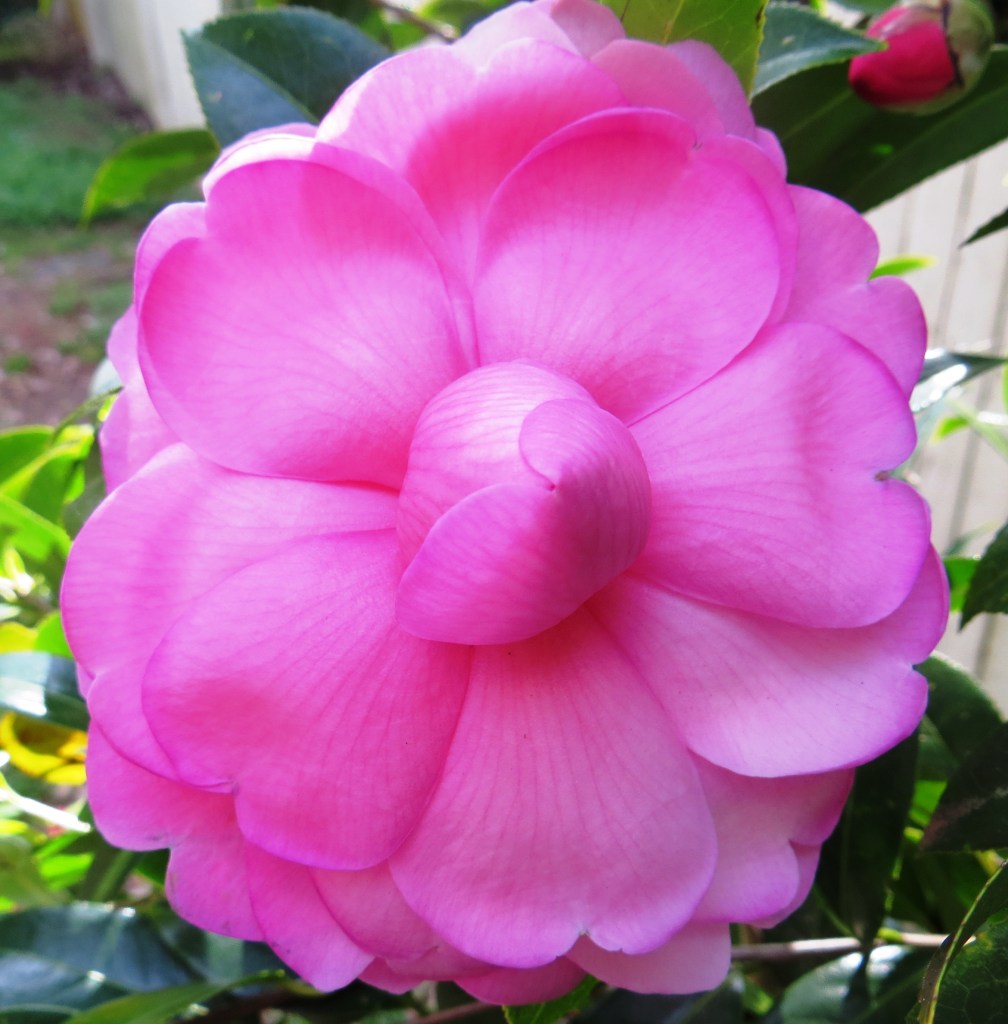
Around the mountain, the Gordonias and Camellias are the real source of winter colour and you can see them along the streets and in gardens, blooming away without much in the way of human aid.
In the wet sclerophyll areas of forest, several eucalypts are in flower and of course this brings in the birds – Scarlet and Yellow-faced Honeyeaters, Striated and Spotted Pardalotes have all been busy in the blossom this past week.
Today is the first day of the last month of winter and I, for one, shall be sorry to see the season turn again. I love our three of four months of wearing jumpers and getting into a bed warmed by an electric blanket. The smell of wood smoke in the air, though open fires are giving way to artificial logs heated by electricity or gas, now. Never mind, they still give out a heartwarming glow.
We’ve had a fair bit of rain this winter, unusually so, and the mountain is green. Let’s hope it doesn’t presage one of those long, dry springs that some of us find so dispiriting.
In the meantime, with a month of cool weather still to go, I’ll continue to enjoy living in a place where there is colour all year round – from the trees, from the plants in our gardens, from the birds that flit around them.
And I’m just about to go out and pick a bunch of camellias, knowing they will not be in flower for much longer.
November 15, 2025
I love Saturday mornings! The fact that I have been retired from full time work for decades has not diminished the old thrill of waking up on Saturday with the whole weekend before me.
So deeply embedded is it in my psyche that I find myself experiencing a sense of excitement – and then puzzling as to why. And then I remember.
This morning was a glory of sunshine after rain; the colours so vivid that I just had to get out there for a walk, to revel in it. We’ve had thunderstorms and that puts nitrogen into the greenery, making it glow. And as spring starts to turn into summer and the last of the cool climate annuals begin to succumb to the heat, the plants from the tropics and subtropics, and the South African veldt, and our own Australian forests, come into their glorious own.
I wandered down Beacon Road, where a White-headed Pigeon called to me. Well, perhaps it wasn’t me it had in mind but a mate somewhere nearby Or maybe it was calling for the sheer joy of sitting on a telephone wire on a lazy Saturday morning, dreamily observing all those flowers that will soon produce nutritious fruit.
“Hello Pij,” I said. “Watcher knowing?”
It’s doubtful that pigeons of any kind know a lot. The feral kind have many generations of street smarts bred into them but the lovely, quiet-mannered pigeons of the Australian bush never strike me as being all that bright. Like all fruit and seed eaters they follow the food without much control over their fate which, too often, has come hard to them at the hands of Humankind.
Not so the Pacific Bazza which I encountered when I entered the rainforest. He was alone, which is rare for Bazzas, and sitting bright and observant on a high eucalypt branch. Knowing, no doubt, that the large insects that make up its diet would be plentiful after the night’s rain. This year’s young would probably be fledged by now and there was time for leisure. Its crest was up and its striped front, so like that of a traditional matelot made it easy to identify.
Flying overhead was a Little Eagle, scrutinising the valley far below. Two raptors equipped with fierce beaks and talons yet so different in their habits.
All the gardens down the eastern end of Beacon Road are acreage, right up to Witches Chase, and boast an interesting mix of plants. As you can see below.
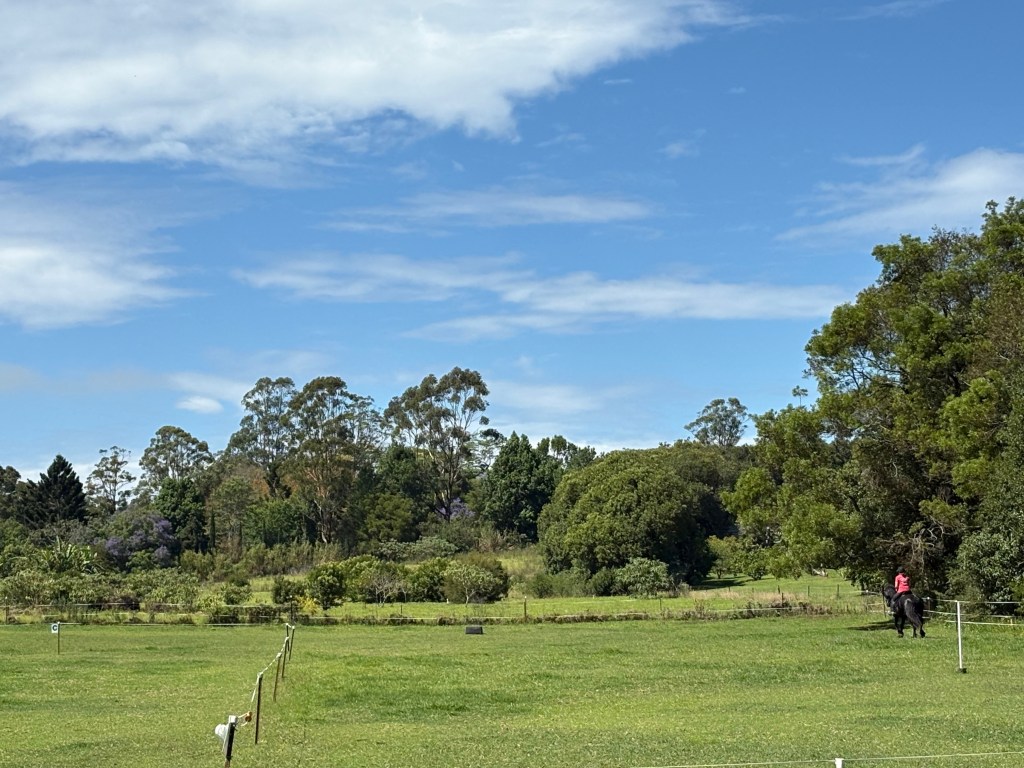

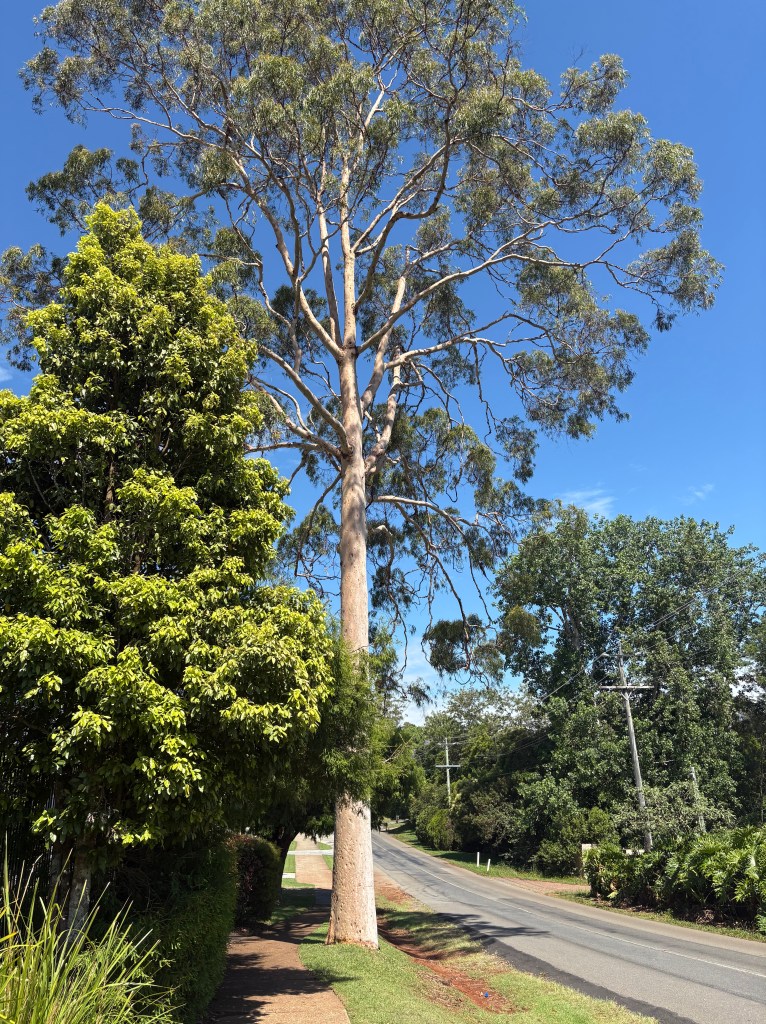
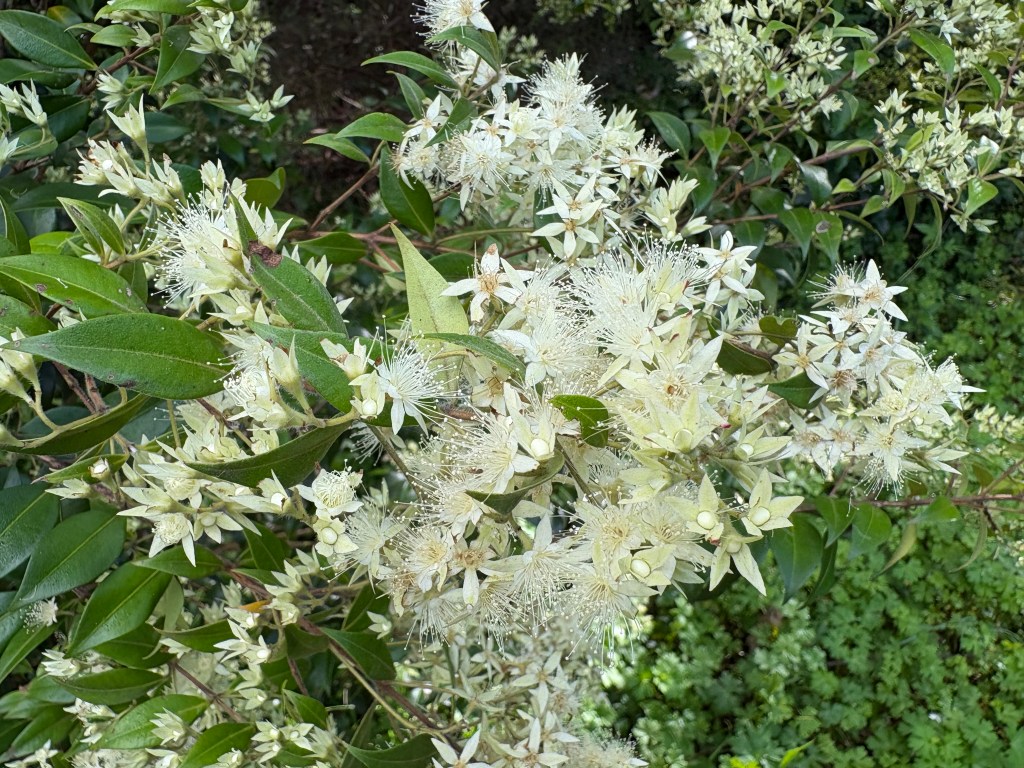


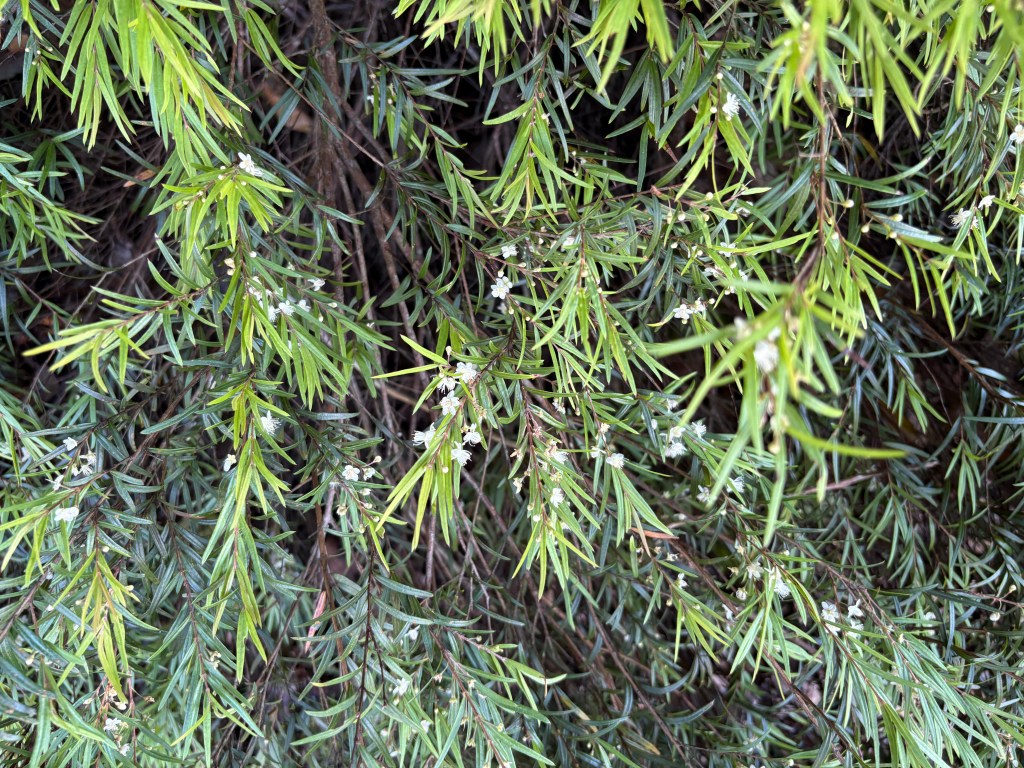
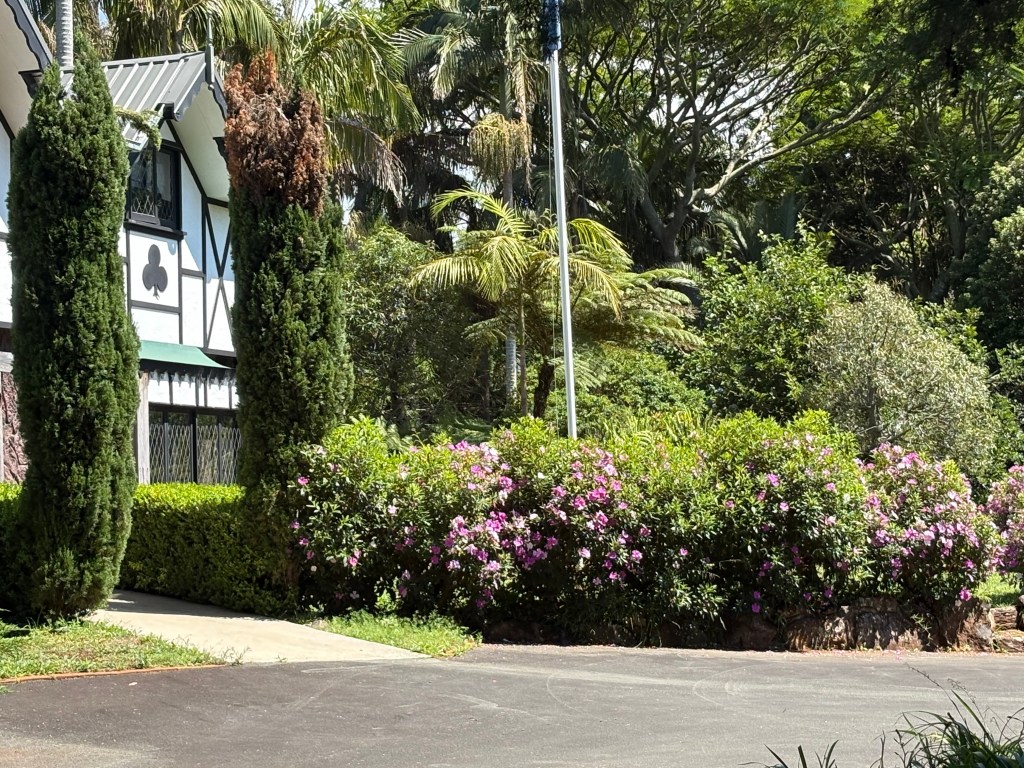


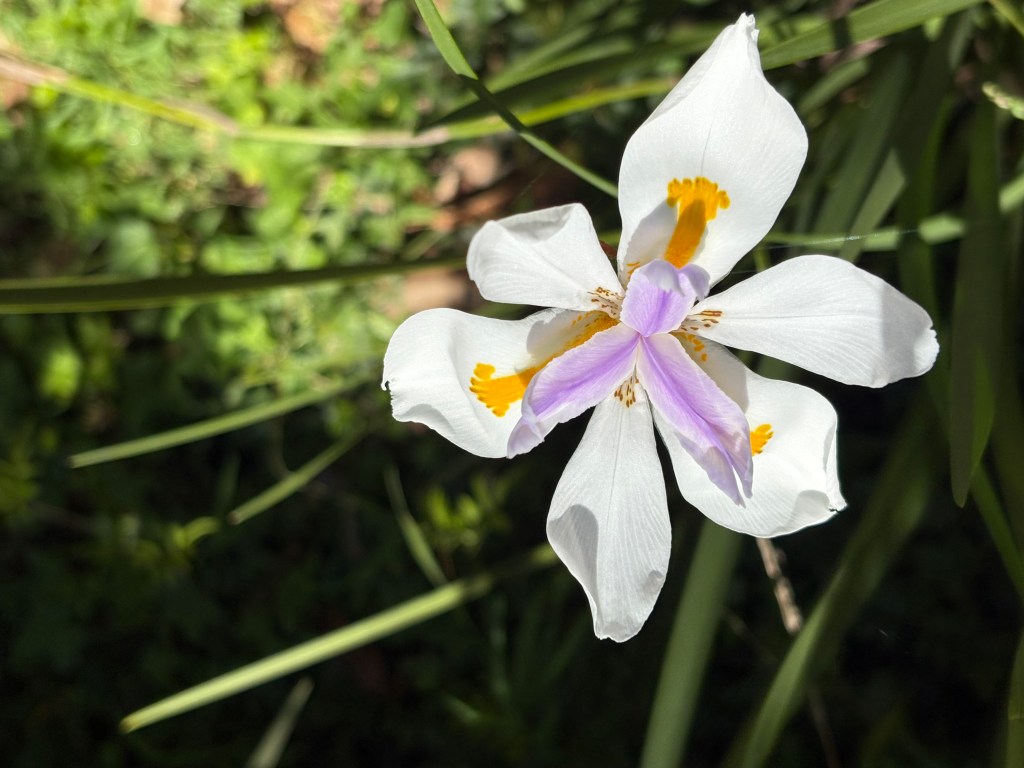
From top left: An open paddock, one of the few left at this end of the mountain. A house nestled among its rich gardens. A fine, tall Spotted Gum (Corymbia maculata) with, below at right, trunk detail. Centre, the fascinating little cones on a Thuja, flowers of the Himalayan Ash (Fraxinus griffithii), bottom left, a line of Tibouchinas (which could use a good trim), a rider puts her horses through its paces, the pretty Dietes grandiflora is flowering all over the mountain right now.

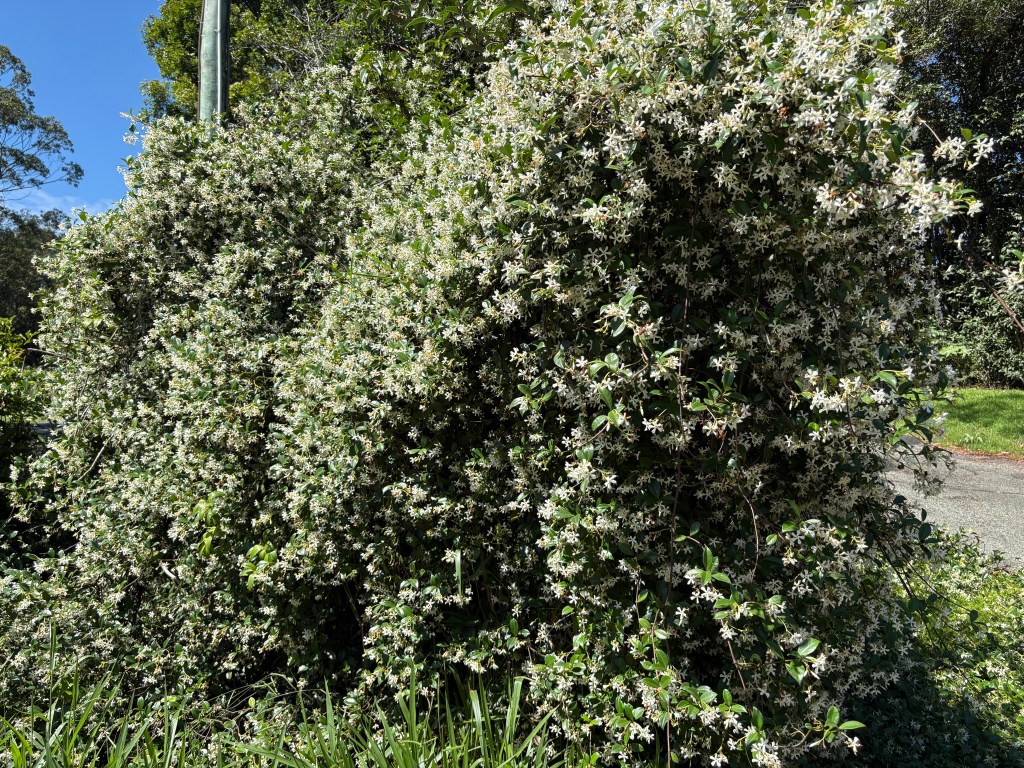
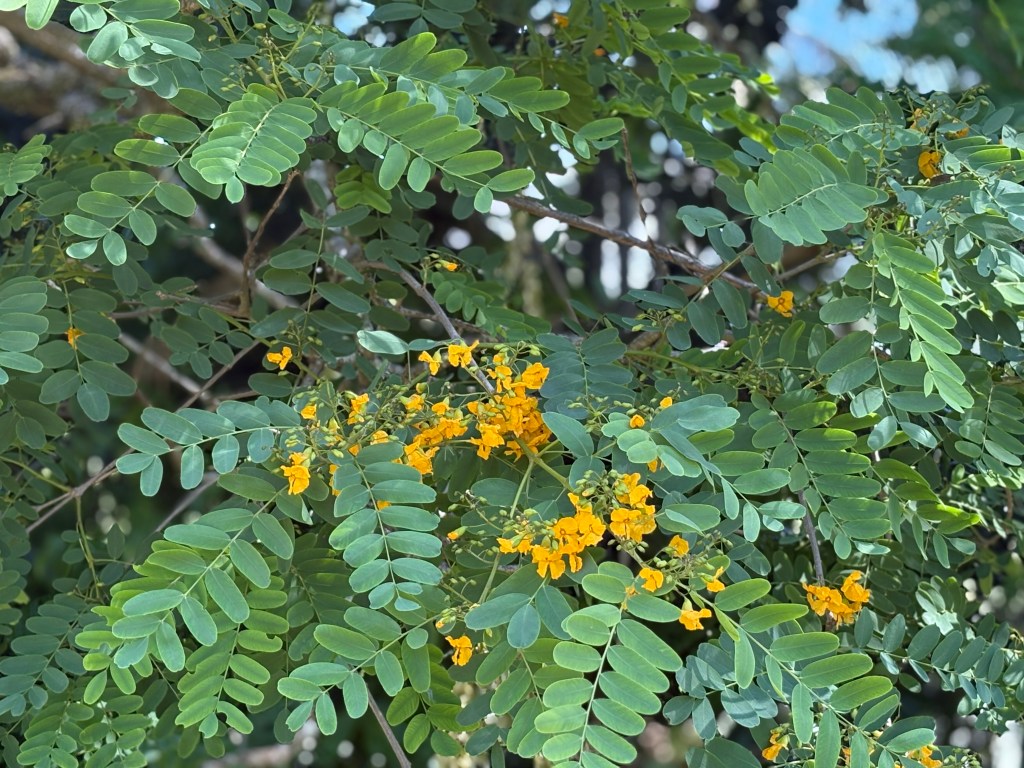
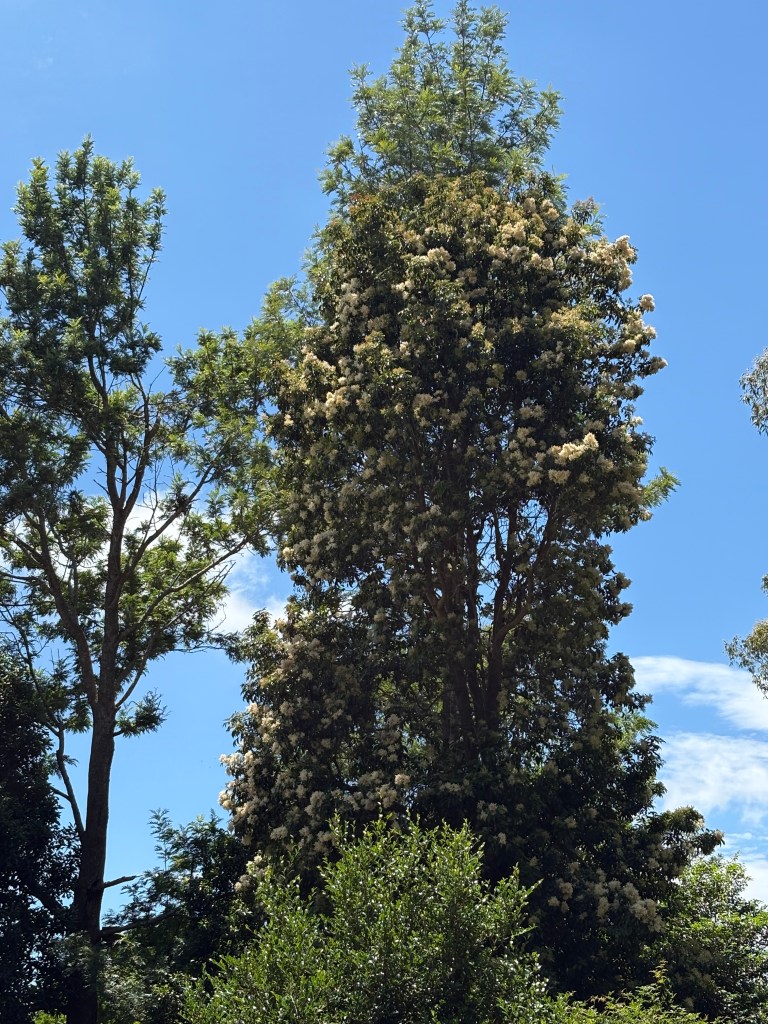
Close up of Thuja cones. Star Jasmine (Trachelospermum jasminoides) is perfuming the whole mountain right now, including my garden. The Tipuana tipu adds a touch of gold to my morning meander.
 Lyrebird Mountain