A story of love, loss and the power of place to bring its people home.
(To buy this book in print, ebook or audiobook format just go to Amazon or put Lyrebird Mountain, Julie Lake, Amazon into your browser and you’ll be taken to the sales site.)
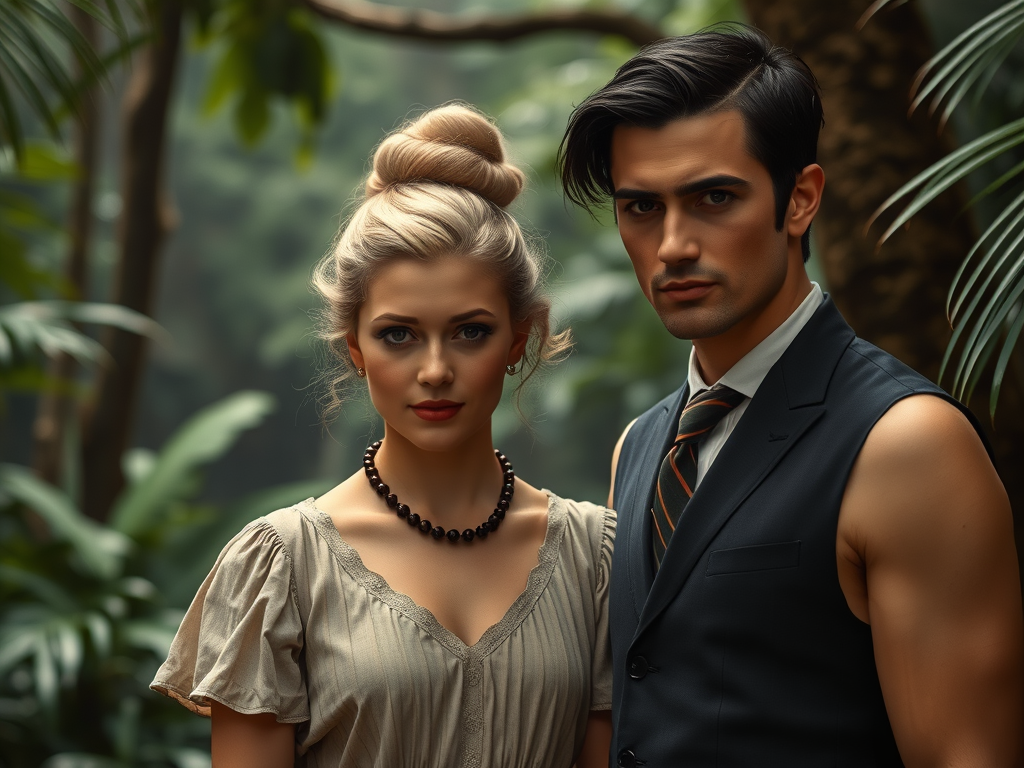
Lyrebird Mountain tells the story of Anna Bachmann and the misty, mysterious mountain where she lives – and loves.
As a child of eight Anna goes with her Swiss-German parents and six siblings to an isolated mountain in southern Queensland where the family builds and runs a guest house whose simple comforts and fine cuisine attract the rich and famous from around the world.
The surrounding rainforest becomes a playground for the Bachmann children but it is Anna who develops a deep spiritual affinity with it, learning the ways of its wild creatures, studying its plants, sensing the mountain’s ancient spirits.
It is here she finds solace when confronted by loss and tragedy. A death in the family is followed by the father’s departure for South America with another woman, or so it is believed. The resilient, many-talented Bachmanns, under the guidance of their resolute mother, Berthe, draw strength from each other and carry on, building the foundation of a small, strong, mountain community.
Anna and her sister become engaged to a pair of brothers, sons of a neighbouring farmer but Anna is restless and longs for an education beyond the tiny school run by her mother. She studies fine arts in Brisbane which is just finding its feet as a capital city, poor cousin to the older, richer cities of the south. Here she becomes part of the small but vibrant cultural scene and through this she meets Jack, a charismatic but self-centred painter. Swept suddenly into her first romance, overcome by passion, Anna breaks her engagement.
World War 1 takes the men of the mountain to war, and Jack as well. When he doesn’t return, Anna believes he is dead or has given her up, and, pregnant with his child, marries her farmer. The marriage is unhappy and when, in a few years, Jack returns, they resume their love affair.
Does this love have a happy ending? You’ll have to read the book to find out!
Anna’s story is narrated by her granddaughter, Laura, who inherits the diaries, papers, photographs and newspaper clippings from which she is able to recreate the life of the woman who raised her and whom she loved but never really knew. The story she puts together is not just one of a great love affair but also of Anna’s other relationships; with her war-damaged husband, her sister Liza who is her life’s confidante and companion, her stoical mother and idealistic, erratic father, her talented but difficult daughter Amaryllis, her great friend the journalist and famed naturalist Arnold Clemens with whom she spends her last years and her many friendships with the distinguished naturalists, scientists and artists of her time. It tells, too, of Anna’s own remarkable career as an internationally-known photographer, writer and innovative illustrator.
And always, always, as a backdrop to Anna’s story is the mountain she loves and rarely leaves, and the power it has over her. The power which, she believes, is the source of her strength and resilience.
Through Laura’s reconstruction of her grandmother’s life we learn something of her own life, too, and that of her doomed mother, Anna’s daughter, who disappears into the bloody carnage of World War 11 Vienna. And there is Laura’s own granddaughter, the nihilistic and troubled Sunny, who finds her own redemption in uncovering the secrets of the past.
To buy this book, in print, email or audiobook format go to Amazon and google the name of the book and the author.
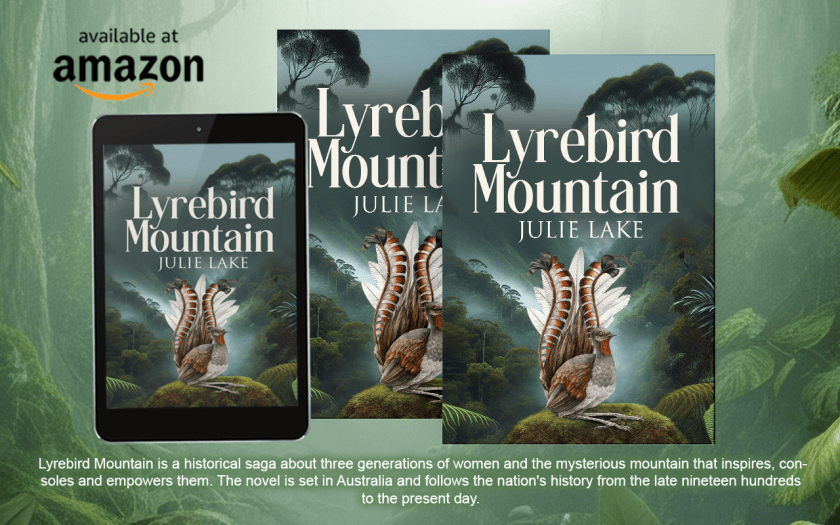
Scroll down to read more about Lyrebird Mountain
Meet the characters
Anna meets a lyrebird
Is Jack like Heathcliff?
Daphne Bell – talented sculptor and a bit of a bitch
Walter Cartright – is he guilty of murdering his wife’s lover?
MEET THE CHARACTERS IN LYREBIRD MOUNTAIN
ANNA BACHMANN
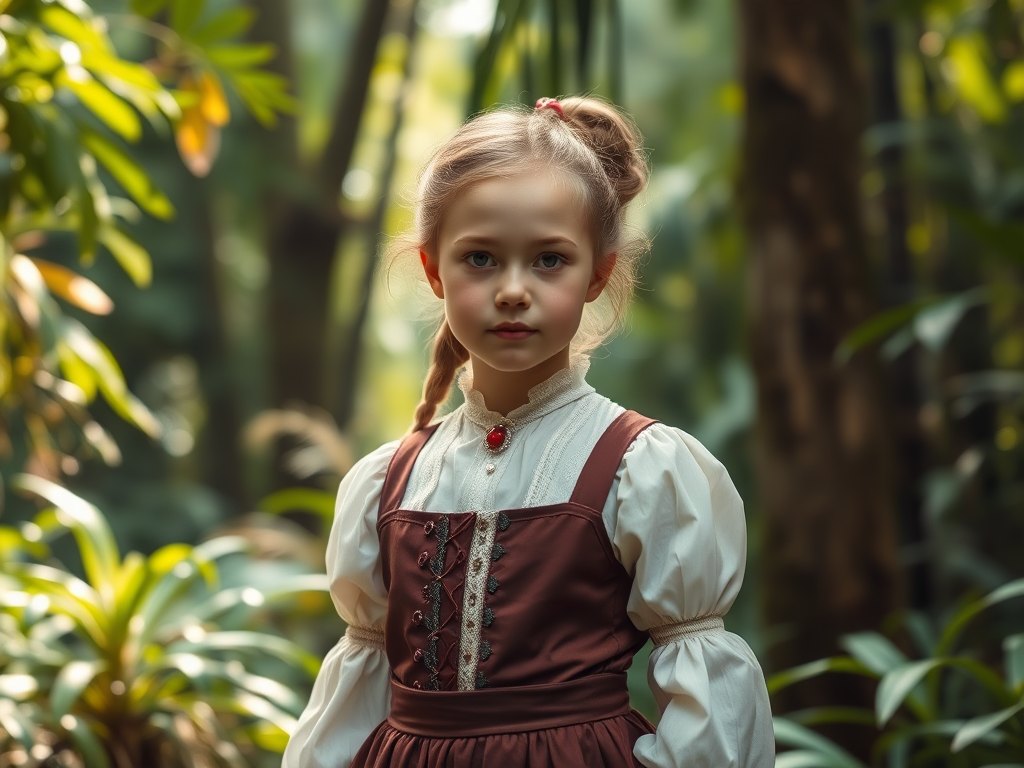
Anna is a wild but dutiful child who grows up in a happy home where her busy mother and idealistic father allow her to run free in the rainforest. At the same time, she is expected to undertake her share of household duties. Anna grows into a pretty girl, slender but strong, elfin of feature, full of charm and intelligence. Though she begins to take an interest in clothes and fashion she retains her tomboy ways and is much in demand as a nature guide to those who visit The Excelsior Guesthouse. These include many distinguished scientists and naturalists and from them Anna learns how to put her own observations into a wider scientific context. She is bright, cheerful, loving and kind, with a great capacity for happiness, but there is a toughness of spirit underlying her good nature which gives her resilience and the ability to face down whatever life throws at her. She is passionate, too, but though this overwhelms her senses when she finally falls in love, she tempers it with her inbred convictions of honour and duty.
Like all her family, she is artistic and in her it takes a very individual turn when she discovers photography and through this medium creates the original works that, when paired with her writing ability, make her career.
There is, too, a mystical side to Anna. She is subject to strange, waking dreams, the wachtraum and her relationship with the rainforest is deeply spiritual. In its dark depths she senses the ancient spirits that dwell among the great trees and fern gullies and feels creatively nurtured by them.
Though Anna suffers much tragedy and loss in her life, plus the unhappiness and guilt of a failed marriage, she never succumbs to grief and despair. For solace and healing she goes to the forest where all her life she feels most fully at home. It is the great truth of her life, greater, even, than her deep love for Jack. It is also the inspiration for the books that make her famous.
Everything that makes Anna Bachmann what she is goes into her love affair with Jack and though it ends badly she remains steadfast in her love and loyal to his memory. When war comes again and Anna finds the courage to leave the mountain and attempt the daunting task of recovering her lost daughter – Jack’s daughter – she does so with the power of that love to spur her on.
Anna is the hero of this book and so she has to be heroic – and she is. Hers is the spirit of the pioneer women who faced with such courage the harsh realities of settling Australia.
JACK RESNIK

Jack is the artist we have been taught to think all artists must be, and so often are – talented, self-gratifying and focused only on his work, selfish and demanding in his relationships, passionate rather than loving and alluring to women because of it. And with a certain darkness of soul. He is generous but careless of the feelings of others. The suffering of the world angers him rather than fills him with compassion, and his paintings show this. Today we would probably label him bi-polar or even put him on the spectrum. There is a wilfulness about him which fuels his impulsiveness – and this maybe what brings about his early death. Book lovers will find traces of Mr. Darcy in Jack and a lot more of Heathcliff and the mercurial Byron, and yet he is not a snob about rank (though he undoubtedly feels superior to those less educated and privileged than himself), nor prone to acts of brutality nor perversely wicked. Jack is a man we all know, if we know artists and musicians and writers. And many of us women have loved such a man!
WALTER CARTWRIGHT

Walter is a good man ruined by war. What he has seen and suffered does not make him an obvious victim – when he returns home he seems to be much the same kind, rather bland but cheerful young man who joined up after the agony of losing his wife and unborn child. But Walter has changed and only Anna really knows just how much. Though he is considered a fine and trusted member of the small mountain community inside he has become bitter, angry and resentful. Of what, not even Walter himself knows, probably, for there was no counselling for men like him back then. He vents his resentment on Anna, the first love who betrayed him, and her daughter – the child of another man. He is not violent or overtly cruel but grudging and complaining and disobliging. In ways guaranteed to chafe Anna’s lively, loving nature. And, underneath, one can sense a simmering violence, a hint of cruelty, always kept under control but as potentially dangerous as a dormant volcano. This is a man who has lost a lot and finds he cannot be compensated for that loss; a man who is doggedly determined to hang on to what he does have, even though he scarcely seems to value it. Just how far, readers will ask themselves, is he prepared to go?
BERTHE BACHMANN
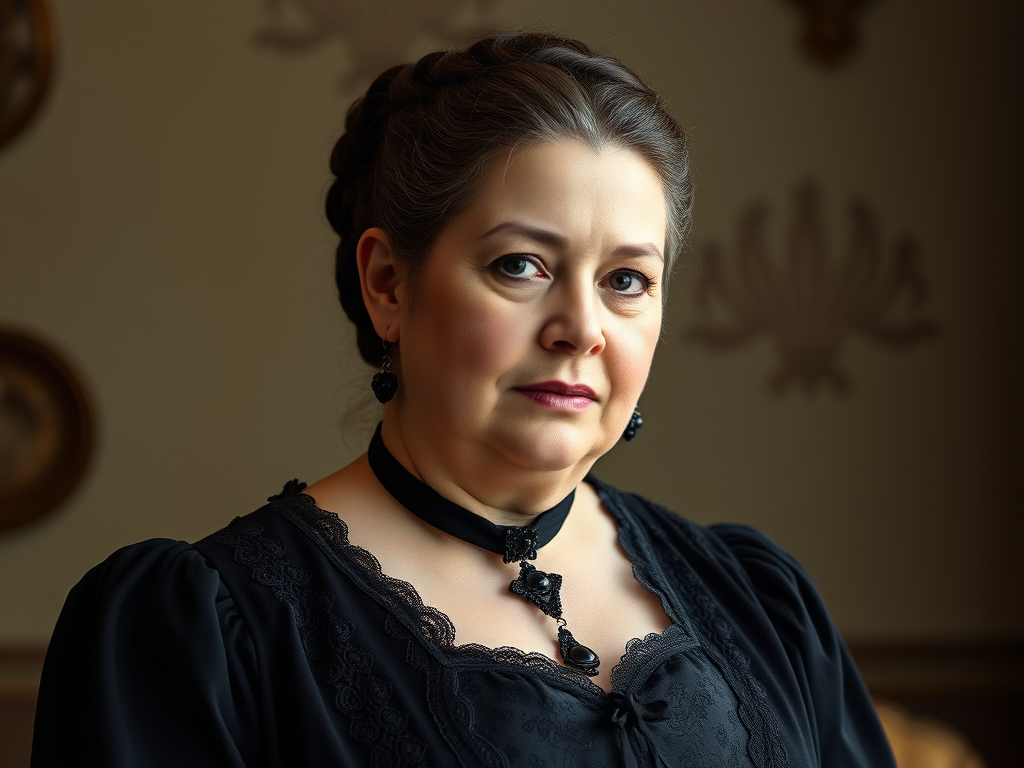
What a woman! Berthe, daughter of German immigrants but born in Brisbane, marries young to a man different to her in every way. So, under the stolid but kindly exterior of the wife and mother who cheerfully accompanies a mercurial husband to a remote mountain top we know she must have a romantic heart.
Berthe is the backbone of her family and of the community which she helps to create on the mountain. She is strong, competent, efficient, hardworking in the extreme. Her husband Martin might be the captain of The Excelsior Guesthouse but she is the engine which drives it. And yet, she is artistic too, skilled in various handcrafts and a good enough pianist. Learned enough to teach her children so that they could hold their own among the expensively educated. And, despite her many practicalities, a touch spiritual too so that she takes an interest in Theosophy and out-of-body experience though never, we sense, letting it get too great a hold on her. Berthe’s resilience is truly remarkable; she is a true stoic and this is a strong influence on all her children. They all adore her, almost revere her, strive to please her even though she is always too busy to be overly affectionate. But, if not demonstrative, she is kind and generous, to her neighbours as well as her family and they, too, admire this dumpy little woman in her long, dark dresses and stout boots and hair piled up in braids. Berthe never changes with the times but remains a constant in the lives of those who depend on this quality in her. And yet…and yet…does anyone really know this woman who once loved enough to defy her parents to marry an unsuitable man? There is a sense of latent passion, there, that is inherited by her daughter Anna.
MARTIN BACHMANN

Martin is a man of mystery who appears briefly at the beginning of the book. He migrates as a young man from Switzerland to Brisbane with the desire to find a new, raw country where society can be truly egalitarian and free of what he sees as the old, corrupt, jaded society of Europe with its divisions of class and religion. He marries Berthe, the young schoolteacher and has seven children. Tired of city life and looking for Utopia he buys, sight unseen, a few acres of land on the top of a mountain, south of the city. Here he builds a guesthouse which he is certain will attract an intellectual elite with views similar to his own. Martin has a quick, keen mind and is also a craftsman – talents which are inherited by his children. He is also easily bored and once the guesthouse is a success he becomes restless. One day he announces to his family that he is leaving for Paraguay, another subtropical country where he believes he can be part of a spiritual yet socialist community, living by its own rules, away from the capitalist economy, free from government intervention. He says he will send for his family but it appears he has not gone alone but with his mistress, a Theosophist and spiritualist who has been a regular guest at The Excelsior. He never sends for them, nor communicates with them nor returns to Australia – in fact nothing is heard of him until, several years later, a few of his belongings and an old family photograph are returned to Berthe under mysterious circumstances.
Anna loved her father very much and the careful reader will understand that she finds something of her father’s eccentricity and impatience with conventional society in herlover, Jack. And that when she marries Walter she is looking for a safe, comfortable father figure who is as unlike her real father as possible. Both men fail her, just as her father did.
FREDDY BACHMANN

Freddy is Anna’s brother, the second oldest member of the seven Bachmann children and her favourite childhood companion. He seems to combine the best qualities found in both his parents – he is clever, quick witted, mischievous, loyal to his family, affectionate and with capable hands that can manage almost anything from motor vehicles to horses. Though, like all the Bachmanns, he suffers his share of tragedy his buoyant nature sees him through and he is the rock on which his two sisters can always depend.
DEIRDRE BELL

Deirdre is a sort of composite of Daphne Mayo and Vida Lahey who were both important figures in the Queensland art world in the first half of the 20th century. Both, too, had a strong connection to Tamborine Mountain, the inspiration for my fictional Lyrebird Mountain. They were women who never married and who made their own way in the world, which was unusual for the time. Deirdre is a more vivid and dramatic character then either Mayo or Lahey was known to be. She is bold, often unfiltered in speech and action, utterly selfish yet fiercely loving to her friends. Her character in the book represents the bohemian world to which Anna is drawn but never quite adopts. Her character is too firmly rooted in the mountain that nurtures her and the plain values of her family. She is fond of Deirdre and obviously admires her talent, energy and independence &amamp;n n bsp;but never oblivious to her faults. As for Deirdre, her life never seems to be entirely satisfactory to her – she is capable of exaltation but not, it seems, of true contentment.
LIZA BACHMANN

Liza, Hilda’s beloved older sister, has an easy, resilient nature that is in sharp contrast to that of Deirdre Bell. If Deirdre adds drama to Anna’s life, Liza gives her steady and loving lifelong support. The rapport between the sisters is wonderfully strong and they are never apart from each other for very long. Liza, like Anna, wants to do more with her life than help run a family guesthouse in a rainforest remote from all she values in civilisation but when her father’s departure ruins her hope of becoming a concert pianist she does not rebel but accepts her fate. Admitting that in fact she doubts she has the kind of ambition to achieve success. Liza, like Hilda, makes a bad marriage to a man she doesn’t love and who, it soon appears, doesn’t really love her. And yet they stay together, despite his infidelities and the complete lack of empathy between them. Liza is quiet, dignified, able to find happiness in a simple life with her family ever close by. She is also both reticent and discreet; she has a woman friend in Brisbane who may or may not be her lover but Liza is no blatant sapphist and does not outwardly defy the conventions of the society in which she lives. Despite their closeness, even Anna might not know the truth of it.
hip for my own purposes, to add a third figure to the men in Anna’s life. Alec and Hilda did not become lovers; there are some that claim this but I can see nothing in Hilda’s circumstances or character to bear it out. And so my fictional Arnold and Anna are not lovers either, though he does propose to her and obviously has romantic thoughts about their relationship which she does not reciprocate. Certainly, when she most needs him, he is at her service. Alec Chisholm was greatly admired in his day but was also reputed to be cantankerous and sharp of tongue. And thus Arnold is the same. He and Anna spend their last years together because the mountain summons him, as it does all those who recognise its beauty and power. But they are friends and intellectual companions, not partners.
LAURA
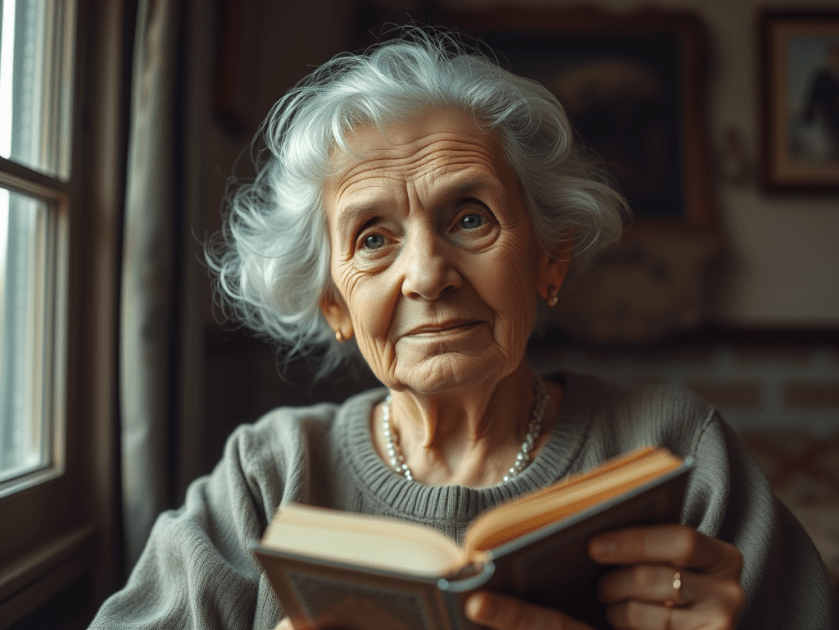
Laura Who? The reader never learns her full name, only that she is the granddaughter of Anna who rescued and raised her after the death of her daughter, Laura’s mother. We do learn that Laura was born in Vienna during World War 11, orphaned when still an infant and sheltered, with other lost children, in a convent. Here Anna finds her, after a dangerous search, and takes her to Australia, to the mountain, which embraces the terrorised child as firmly as it once did her grandmother. We learn snippets about Laura’s life – her girlhood, her career, her two marriages – as she searches through the treasury of diaries, newspaper and magazine cuttings and photographs that are part of Anna’s legacy. Here she finds the grandmother she loved but never really knew. Just as the reader never really gets to know Laura – her task is to be the narrator, not the hero. There is something of her in all of us who lived the post-war years in south east Queensland when it was a place of innocence, social equality, happy ignorance and safety.
ARNOLD CLEMENS

Arnold is inspired by the real life naturalist/writer/journalist Alec Chisholm who was a major figure in the Australian natural science world of the early twentieth century. His books sit on my shelves to this day and give me great pleasure, especially the one about his boyhood growing up in rural Victoria, where, like all true nature lovers, he learned the ways of wild things and let this early education define his life. Chisholm was a close friend of Hilda Geissmann, the inspiration for Anna and so I took this relations
SUNNY

Sunny is Laura’s granddaughter and thus the great, great granddaughter of Anna. She is in so many ways typical of modern youth – at least as it is viewed by its seniors. She is restless, unhappy, contemptuous of her grandmother’s values, nihilistic in outlook, pessimistic about the future, angry without apparent reason, uncertain of her sexuality. She is as different from the young Anna as it is possible to be, and yet, grudgingly, guided subtly by Laura, as she helps to put together the story of a remarkable woman from whom she is separated by three generations she begins to find her own redemption.
EXTRACTS FROM LYREBIRD MOUNTAIN – TO TEMPT YOUR INTEREST!
The family goes to the mountain
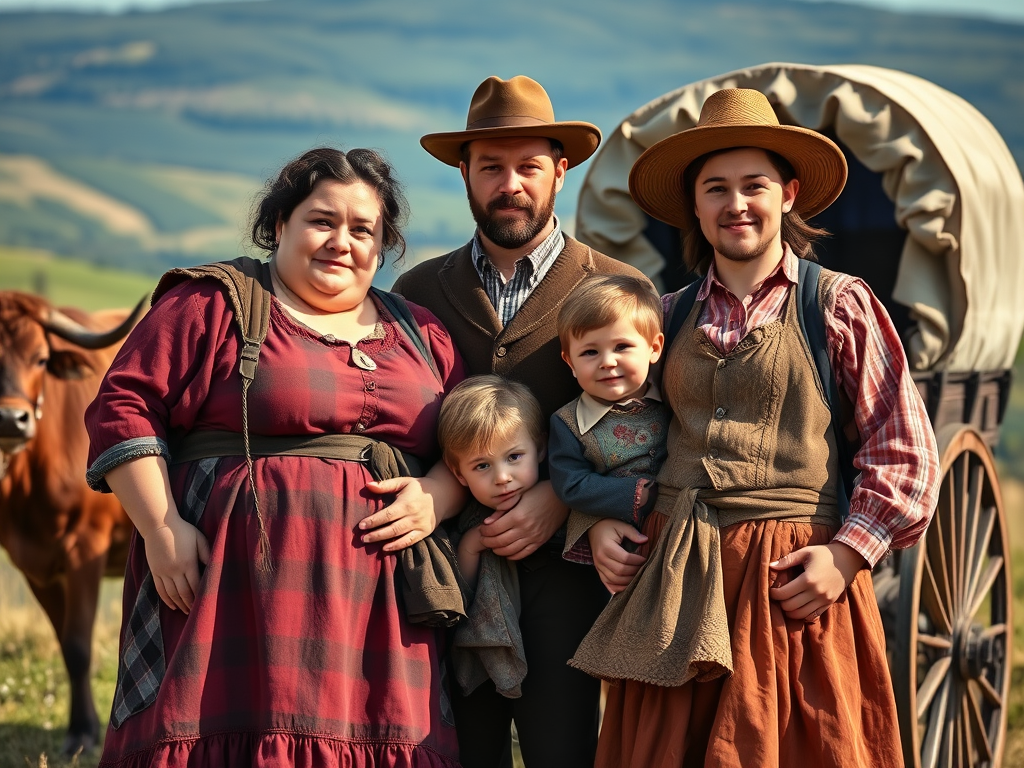
They first saw the mountain on the second day, a dull, smoky blue wedge against the hard, pale sky of a rainless July. In any other land but this it would have been considered merely a hill of no great height but it had grown to match the family’s expectations and those of the settlers who had first named it.
To Anna, aged eight, it seemed ethereal, as if it might disappear as suddenly as it had come into sight. Which it did from time to time as the scanty forest intervened. “Ho oh!” cried Freddy, always wanting to be first in everything. “There it is. Isn’t it Papi? Our mountain? Isn’t it?” And he ran ahead of the horse team, striking at rocks and tree stems with a stick he’d picked up along the way. The children had heard so much of this mountain, which their father had never visited but, on a sudden whim, bought land there.
They had travelled from river flats and farmland to open forest and grassland already browning under the winter sun. The forest was a dull collection of eucalypt and thin-leaved shrubs, brightened in patches by yellow wattle and the bronze florescences of scrawny pea plants which, to a discerning eye, indicated a possibility of harvesting their leguminous properties to help enrich the shaley buff-coloured soil.
Such an eye was possessed by Martin Bachmann, father of Anna and Freddy and leader of this small group of travellers whose hope of good things to come grew with each hour of plodding progress. Martin knew many things and his
brain was like a great cabinet where he stored his knowledge in many carefully-labelled drawers, where it could be drawn out when required. Or so Anna came to fancy in later years when she tried to remember what she could of her father and his accomplishments. He always seemed to be putting new and useful things into this cabinet and had recently added to it an understanding of botany and horticultural practice.
The mountain which was to become their home was his latest and dearest undertaking into which all the energies of mind and body could be channelled. The children had heard so much of this mountain yeti it seemed scarcely real to them; its mysterious forest and wild creatures invested with myth because Papi was such a taller of tales and dreamer of splendid dreams. He had taught them to long for it but still they couldn’t quite believe in it or the possibility of living there.
And now, as they continued to move towards it, they could see that there was such a mountain, first visible as they came to the stop of a steep pinch, then hidden again by smaller, closer hills and the increasing density of forest. The early afternoon sun was warm, the track dusty despite recent light rain. The long ridgeline that marked their destination as an upraised plateau rather than a true mount seemed so far away and yet, Martin assured them all, they would be at the top by tomorrow night.
He drove the horse wagon which contained the family’s smaller possessions. His wife Berthe sat beside him, round and substantial as a dumpling, nursing a baby of five months. Between them sat three-year-old Laurie. The second and larger wagon was drawn by a span of oxen and driven by a man hired for the occasion and with him Liza, seven years older than Laurie, who did not like to walk along the rutted track with the trees so close either side. Liza’s particular task was to mind her younger brother Steve whom, his mother considered, was far too adventurous for a boy of five. So constantly did he fight against any restraint that he had to be tied to the buckboard.
“You will fall out and go under the wheel and be crushed like a beetle,” Freddy told him several times throughout the journey, grinning at his brother’s torment. But Liza’s heart was already maternal, soft as a sponge for soaking up the suffering of others and she put her arm around the child’s squirming shoulder and hugged him close.
The other children hopped on to the wagons when they grew tired but mostly they liked to be on the ground where they found plenty to amuse them along the way. Joe, christened Johannes-Martin, for his father and called Joe by everyone except his mother, walked soberly by the ox wagon, conscious of his responsibilities as the oldest son. Anna and Freddy were quick, restless children who found natural wonders along the track – an unrecognised flower, an oddly shaped stone, a cast-off snakeskin hanging on a branch – and brought these back.
to the wagons to be admired. Anna went constantly to the heads of the horses and talked softly to them, stroking the broad noses which huffed constantly from exertion. The cart, she cried several times, was too heavy for them! They were too tired, poor dear things, they must be rested more! Martin agreed with her but did not say so. The wagon was piled too high and bore too great a weight. So many possessions, ach! But a new life required the necessities of civilised existence.
The children loved animals extravagantly; something they had got from their father who was tender-hearted to all creatures. Their mother, descended from generations of German farmers, regarded the animal kingdom as being there for her use, though she was fond of dogs. The family had four of these; large cross-breeds, which loped with the children alongside the wagons.
Anna felt less love for the stolid oxen which patiently endured the children’s caresses but were seemingly indifferent to them, answering only to the whip and occasional commands. They did not do as the horses did and nuzzle the small, eager faces in affectionate return, soft black lips whiffling for a carrot or piece of sugar. They stood still, too, when the children picked burrs and other matter from the thick fringes of hair which covered their great hooves. These hooves were lifted each step with surprising lightness, picking their way fastidiously over ruts and stones, not stumbling as the oxen often did. Yet they were, in their mass of ironbound horn, dangerous enough to stove in the head of a child and Anna knew enough to stay well clear of them, and keep her younger brothers clear too.
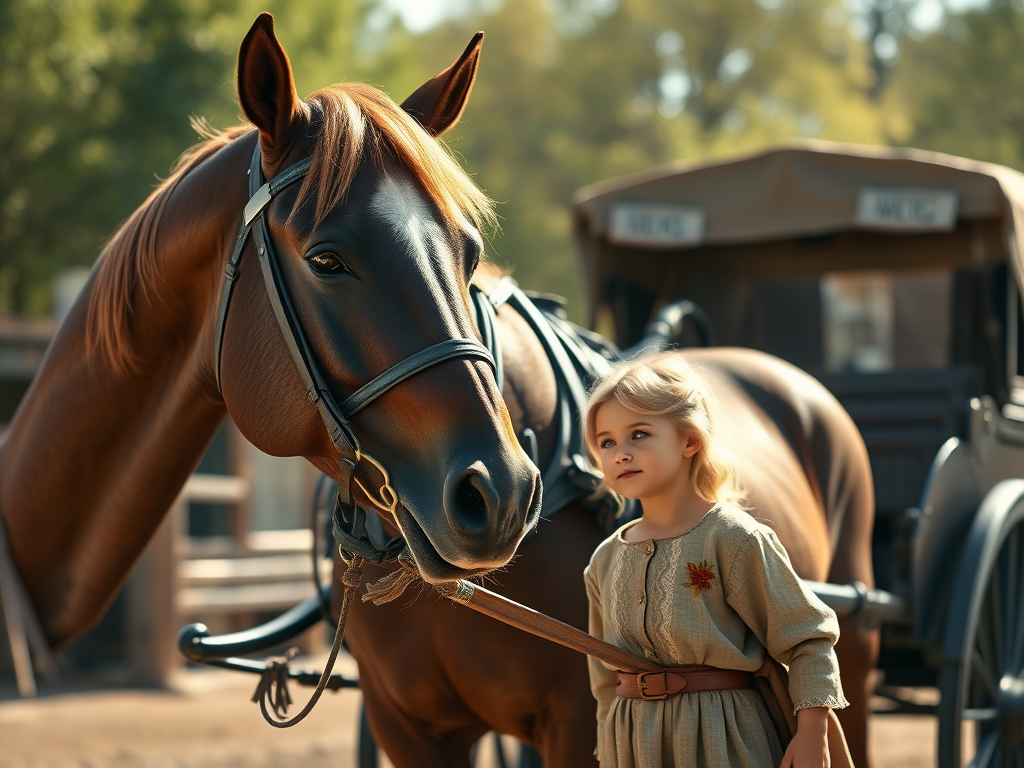
Berthe and all the children except Joe had started their journey by train from Brisbane, having stowed most of their furniture in the goods wagons. Joe had accompanied his father on the newly-purchased horse wagon as far as Logan Village, where the Logan River runs narrow and shallow during the dry season. This was the nearest station of substance to their destination, where the family was reunited and the trained goods unloaded and repacked onto the hired wagon with its driver and six oxen. Supplies of flour, maize meal, sugar, molasses, potatoes, tea, coffee, salt, spices, dried fruit and tinned goods were packed into the two-horse wagon. It all took so long to load that they did not get away until early afternoon and had only four hours to reach their destination before dark. This was a farm belonging to a family of German immigrants, acquaintances of Berthe’s immigrant parents.
If Martin had got his own way, they would have plodded on through the darkness, camping when they grew tired enough to stop. Martin never let practical considerations overpower his dreams and he had dreamed of taking his family across unsettled country to a new and splendid life, travelling to it as the wagon trains of an earlier generation had forced their way across America. He had infected his children with this expectation of wonderful adventure, though not his wife. She had ignored her husband’s romance of sleeping under the stars and instead made the arrangements to spend their first night where they could be sure of food and shelter and water for the animals.
Madame Kurcher
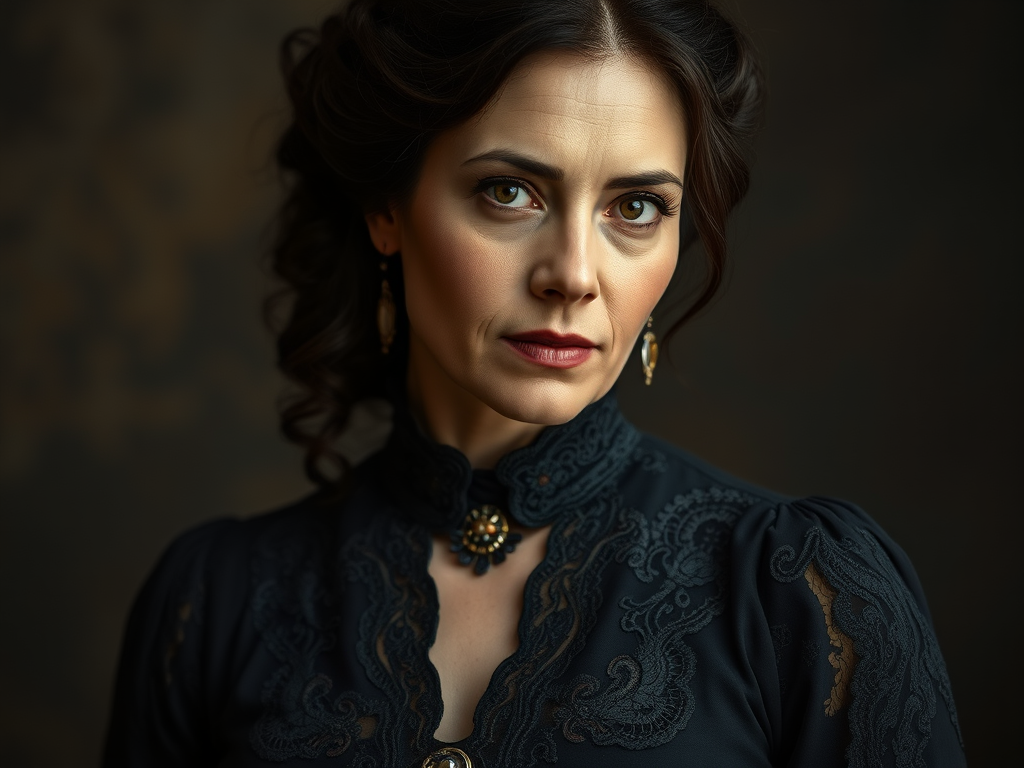
Mrs. Kurcher, or Madame Kurcher as she liked to be called, was very much a woman. Her looks were the kind thought of as typically Spanish, so it was no surprise to discover that she had an Argentinian mother. A fact which Anna learned soon and pondered later as something significant. Madame had shining dark hair, coiled high, very white skin and very full, red lips. Perhaps not quite naturally so. Her eyes were dark and the eyelids very plump and white. Her nose was strong. She kept her waist taut with whalebone, pushing up the bosom to an unnatural height that drew the eyes of men. Like Berthe, she dressed in sombre shades but bared her straight, white shoulders in the evening and carried a shawl vivid with flowers and parrots. She smoked little dark thin cigarillos.
This new quartet of exotics became regular visitors to The Excelsior. Anna barely noticed the other three for they were quiet, intense people and only came into themselves when Madame Kurcher was not in the room. When Madame was in the room, or anywhere around the place, other guests, however interesting and smart, seemed to disappear into the background. What made Madame and her friends exotic was their being avowed Theosophists, which was where the Scott-Dunns had first become acquainted with Martin. This acquaintanceship now became an intimacy and there was many a long, deep discussion in the guest lounge after dinner and the visitors were even invited into the family cottage which no other guest ever was or would be.
Anna, looking back, was never sure just how much her mother enjoyed these people. She had little to say at the gatherings but would appear to listen interestedly, when not brewing tea or passing plates. Or she would sit for long periods, always with some sewing or knitting in her hands, taking it in, while her husband and Madame Kurcher discussed the hope of greater world enlightenment to come. “We are old souls, you and I,” Madame said frequently to Martin, for her more passionate avowals were nearly always directed at him. As well as being ancient of soul Madame had another attraction for Martin Bachmann, she was a medium. In New York where she had lived for many years and also in India, where she had stayed for a time, her power to connect with the other side had been greatly appreciated.
“Must be the backside!” said irreverent Freddy and though the other children, even solemn Joe, giggled at this rudeness they were nonetheless impressed by Madame, even though they could not exactly like her. They were aware of their parents’ belief in a world beyond their own, where spirits resided. Not Heaven, for they had no concept of a particular or personal god. But a parallel dwelling place which housed a further existence. Or perhaps where the unborn waited; souls newly shuffled off and seeking incorporation. They did not believe Freddy when he said that Mrs. Kurcher, as he alone insisted on calling her, was a witch. They believed in witches, well, the little girls did, but witches were evil and physically repellent and lived in the forest. The doors of the guesthouse were never locked at night for there was nothing corporeal to fear but sometimes Anna and Liza, who shared a room, would creep into each other’s beds and assure each other that the night sounds of possums and birds were nothing more sinister. They didn’t name their fears. But they knew, from fairy tales, that witches devoured children.
Anna meets a lyrebird
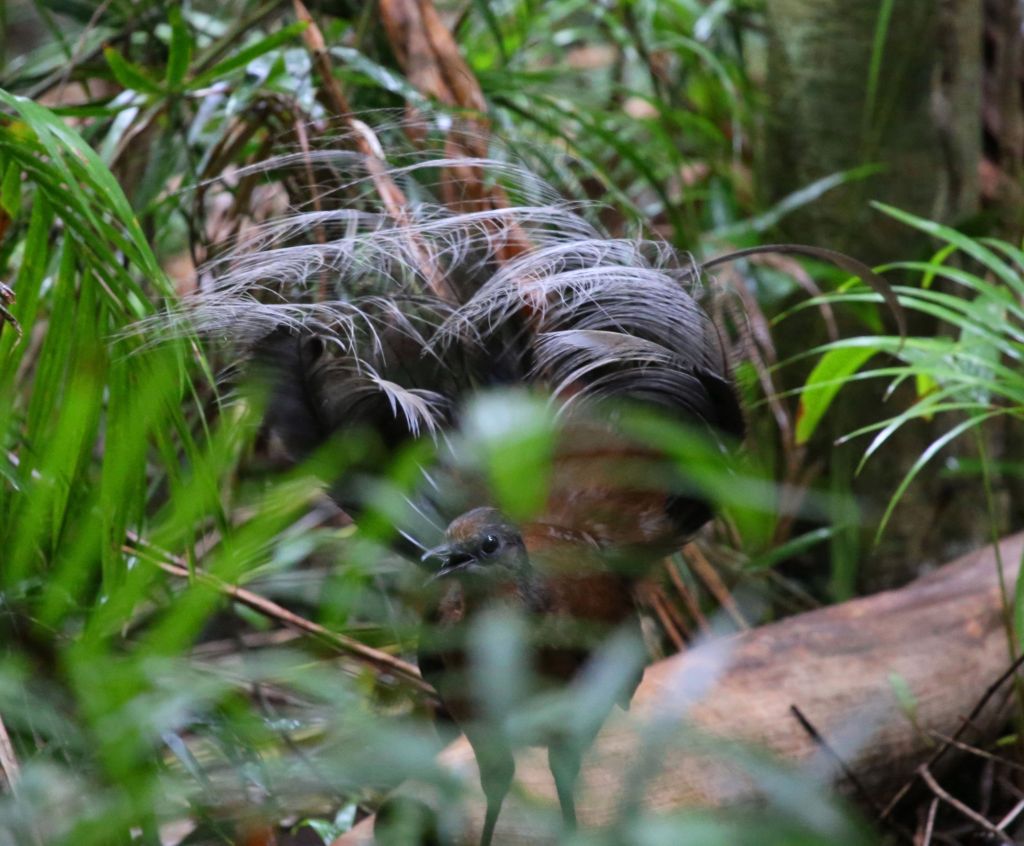
The lyrebird is the spirit of Lyrebird Mountain – the shy Albert’s Lyrebird, so much harder to see than its Superb cousin and found in so restricted an area. As my photo above shows, a flick of tail feathers when the male is performing is often as much as one gets to see. Mostly we only know they are there by the calling males, with their haunting whistle in the mist-shrouded gullies and the astonishing mimicry that identifies their mating performance. Anna, the main character in Lyrebird Mountain, is one of the lucky few who had the chance to study them closely in the wild and even find their nests, which even today, few have managed to do. Here, below, is the account of her first encounter with her special bird…
It was around this time that Anna saw her first Albert’s Lyrebird, or Prince Albert’s, as it had been patriotically named only a couple of decades before. This was to become her favourite bird, her signature bird, the bird of her heart. Lyrebirds were known to be plentiful about the mountain but rarely seen. So elusive as to be almost mythical. The timber getters who first hauled themselves and their axes up to the plateau had seen them because the birds had not learned to be shy, or so it was claimed. But as the great trees were felled and the scrub beneath them cleared and bare spaces exposed to the light the lyrebirds retreated into the gorges. Their high whistles and chatter could be heard in the winter months, especially when the mountain mist was down but their softly blended grey and russet rendered them cryptic among the buttresses and forest litter and they were glimpsed rather than seen; fleeing shadows trailing long lyres of tailfeathers. Anna recorded the great moment and was to write about it many times.
“I was watching a pair of Logrunners which were until then my favourite bird for they are such jaunty little things! So full of activity and noise! Although they must have seen me, and didn’t seem to mind, I sat very still and I was wearing my old brown bush skirt and a grey jumper so was quite invisible. I heard the long, downward call, part whistle and part hoarse trill, of the male Lyrebird and it was very close. Then I heard a rustling and a scratching. I scarcely dared open my eyes too wide but tried to see with my eyelids lowered. Pretty soon I noticed some fern fronds waving about and then I noticed something else waving and realised that I was seeing the long lyres that form the outer part of the tail and I knew I had him! He had come to one of his platforms and was dancing there. I had heard about this and longed to see it and now there he was, this handsome fellow, growing bolder every minute and exposing his whole head and body to me in his self-absorbed performance. I saw the large round liquid eye which is a feature of deep forest birds, and the blue-grey head and russet throat. He was smaller than I had imagined but so gracefully formed! He called often as he pranced and raised his tail over his back, every filament a-shiver with ecstasy. In his marvellous mimicry I heard the familiar birds of the forest such as the Chillawong and the Crimson Rosella and the Satin Bowerbird. And then, suddenly, a perfect Kookaburra’s cackle!”
*************************************************************
Is Jack like Heathcliff?
Some readers of Lyrebird Mountain have criticized Jack – the main male character and love interest of the heroine, Anna (I abhor the term “hero”, for women!). They find him weak and despise his stated reason for not returning immediately after the war to the woman he said was the love of his life.
Some have compared him to Heathcliff, possibly because thanks to yet another film of Wuthering Heights that quintessential anti-hero is on everyone’s mind right now. But of course he is not, any more than Anna is like the neurotic Catherine Earnshaw. He is, rather, the kind of man only too common to every age, and one whom women do best to avoid if they are looking for long-term bliss!
Lyrebird Mountain is not the kind of book that states the bleedingly, blindingly obvious. That’s not the kind of writer I am. I like my readers to look at the evidence – in this case letters, diaries, recollections – and make their own deductions about character and motive.
We, the readers, don’t go with Jack to the First World War so we can’t know exactly what he saw, did and suffered. But we do know enough of that terrible conflict to understand its equally terrible psychological effects on the survivors. Men not only lost their lives and limbs, they also lost their minds.
Wilfred Owen, most powerful and uncompromising of the WW1 poets, put it this way:
Happy the soldier home, with not a notion
How somewhere, every dawn, some men attack,
And many sighs are drained.
Happy the lad whose mind was never trained…
But most were trained – and then broken. Well over a century later and with all the benefit of psychology at our command, we, we, too, have been trained to associate shell shock only with those who fought in the trenches. But sailors were sent to the bottom on fiery ships and airmen in their novice planes were shot down and when they were not being shot at they were shooting at other boys.
And Jack, a person of over-tender sensibilities as all artists are, was one of the broken. We don’t know why. Jack didn’t know why and the doctors who treated him, and those like him, didn’t really understand the why of it either. Today we’d be diagnosing PTSD of the most severe kind. Back then, men were told that real men would – and should – just get over it. For Jack, this took a long time and the need to recover all his. By his own admission he started a new life, tried to find a new love. But remained haunted by the old.
And yes, he is selfish, as most artists of true talent are. A brilliant mind is rarely in synch with the sensibilities of others. In order to turn the brilliance into an output that can be shared with the world it’s necessary to focus inward. Early in their love affair it’s obvious to everyone except Anna that Jack has little sympathy for her needs. When she tries to put her strong sense of family and community before his expectation that she attend his exhibition, he is furious with her.
And when they are finally reunited, their senses overwhelmed by passion which seems to be even stronger for having been so long delayed, his self-focus is still evident. He has no understanding of the social and emotional chains that bind Anna to mountain and family, nor does he appear to take any real interest in her art, her work.
So…Jack’s essential sense of self-interest is neither created not modified by his war experience. Yet perhaps we should hesitate to judge him for this for he lives at a time when the needs, demands and expectations of men take precedent over those of women and even those who saw themselves as warriors for social change, and paid lip service to the “liberation” of woman-kind in general continued to treat their own women heedlessly, when viewed with the eye of today.
Think Karl Marx. Think Norman Mailer. Think Pablo Picasso.
The unsolved mystery of Jack’s death is really the heart of the novel and whatever its cause the reader can well assume that, as with so much else in his tragic life, it’s due to his self-willed impetuosity. An arrangement has been made. When it is changed, due probably to Walter’s malice, instead of waiting for Anna to resolve the issue, as only she can really do, he decides to go and fetch her. This might be seen as heroic if we hadn’t come to realise that Jack is a man who acts without thought of the consequences to others. His decision is also one of deliberate provocation to the husband he is cuckolding.
Troubled Jack certainly is, but also devastatingly attractive as such men often are to susceptible women. Otherwise prudent and sensible women. I myself have felt the tug of such attraction and if you are a woman reader so, I bet, have you. There is a part of us that responds, with heart and hormones, to the wild, the wayward, the misfit, the scorner of social norms, even the downright dangerous.
Think James Dean. Think Heathcliff. And, of course, Byron.
Love does not necessarily favour logic. So Anna falls hard and all her strength of character and will cannot defend her against so great a passion for a man who, though he shares it, can never give her anything more. It does, however, help her to endure the agonising loss of him. She does not die of love, nor spend the rest of her life in mourning, though she never allows herself to love so extravagantly again.
I, like so many of my friends, have also endured the loss of the love of my life. And, like so many of my friends – and Anna (who became a friend once I’d created her), I just got on with things. It’s what women do – most of us. And that’s really the main theme of this book.
The bold and the bad – getting to know Deirdre
Deirdre is one of the more enigmatic characters in Lyrebird Mountain because, like most of us only more so, she is not all of a piece.
She is, first and foremost, an artist and a successful one at that, at a time where women, particularly in Australia, had to work hard to be taken seriously in the art world.
Deirdre is modelled, though very loosely, on the Queensland sculptress Daphne Mayo whose work – statues and friezes – can be seen in places around Brisbane, especially the city hall. Like Daphne, Deirdre has affluent and obviously indulgent parents whose money helps keep her while she becomes established enough to earn a respectable income. She is a good friend to Anna Bachmann just as we know that the real-life Daphne was a good friend to those she chose to befriend. But she was known to be choosy, and so is Deirdre. Her love for her friends is firm, lasting and loyal – though not always wise.
Deirdre is an independent woman who seems to be unconstrained by family ties – unlike Anna whose family remains the underpinning of her life. Daphne travels where and when she likes, seeming to stride the world with casual ease, forging a chain of useful acquaintances. Greece and Italy were both countries that had a lot of appeal to Australian artists in the early part of the twentieth century – they were sunny, wonderfully cheap and built on cultural foundations that far surpassed any other place in the world. So Deirdre spends a lot of time there yet always comes back to the cultural black hole that was the city of her birth, alternately dusty or sodden, lacking in most of the amenities that were beginning to make the cities of Europe and America into places of sanitised comfort. Back to the large white house by the slow brown river where talents are shared and nurtured under the jacaranda trees.
Perhaps she likes being a big frog in a small pond; certainly she’s one of the important figures in the tiny but enthusiastic Brisbane arts scene. Up there with Daphne Mayo and Vida Lahey and Lloyd Rees and J. Godfrey Rivers. Anna is, at first, just a fellow student and bit player in this world – until she outshines them all in terms of fame and fortune.
This may explain Deirdre’s sometimes spiteful behaviour towards her friend. Yes, she is mischievous by nature, an inveterate meddler in the lives of others but sometimes this mischief-making goes too far, such as when she tells Jack that Anna and her daughter – Jack’s daughter though he doesn’t yet know it – will be lunching in the A.S.D Café. One wonders, too, whether Deirdre influenced Jack to go and fetch Anna from the mountain instead of waiting until she can come to him – a decision that ends in (spoiler alert!) tragedy. Deirdre loves Anna and their friendship endures until old age – but she may well have been jealous of her too.
She makes fun of Anna’s smaller life, of her “dull” husband and rustic mountain community and seems not to approve of marriage at all – even though she finally succumbs to it – twice. We never learn much about these marriages except that they don’t last.
In some ways she is the typical post-Victorian socialite, all brittle manners and acerbic wit, but she is serious about her art and does express strong feelings against fascism. Is she a communist? My guess is she would never go to the extreme of joining the party but, instead, opts for a soft-centred socialism. Neither she nor her exiled Italian lover actually take up arms for the cause they so passionately support, nor is there any record of Deirdre ever doing anything for those less fortunately circumstanced – and Brisbane had plenty of people scraping a bare living back then. It was a just-getting-by city in a just-getting-by state where the last gold rush was a memory and the boom in mining of other minerals was yet to come.
It’s easy to understand Deirdre’s attraction for Anna because her exuberant nature is so different from Anna’s own. Deirdre embodies a kind of freedom that most women of the time did not enjoy…but for all her intelligence, talent, chaotic love life, exotic travelling …it becomes obvious with time that she is incapable of the sort of happiness that comes so readily to Anna and helps her triumph over adversity. Anna – despite everything – is content with her life. Whereas contentment is not a word that one associates with the ever-restless, ever turbulent Deirdre.
This is why Anna can love just one man with a totality that lasts a lifetime, while Deirdre loves many men (and some women) with a passion that burns itself out each time, leaving only ashes. In truth, the only person Deirdre is capable of loving forever is herself.
One reader of Lyrebird Mountain contacted me to discuss the book and said it was a pity that Deirdre and Jack didn’t get together because they are in so many ways alike. A perceptive comment. But men like Jack are not attracted to women like Deirdre for that very reason – they recognise a comrade in arms but not a lover. This reader very much wanted Anna to fall in love with Arnold Clemens and wouldn’t that have been a marriage of minds! But life rarely works out so comfortably and literature would be boringly without tension if it did!
I like Deirdre Bell because I admire those women of the early part of the last century who demanded of themselves careers as well as – or instead of – wifedom and motherhood and forced society to take their demands seriously. I admire their freedom and their courage. I would have liked to have known Deirdre, to have lounged on her cool veranda by the river, sipping cocktails and discussing art and music and great literature.
She does not play a major part in this book but I believe she is an important foil for Anna, the hero, because the different choices they make and their very different emotional responses add piquancy to the narrative.
The difference between a “literary novel” and a novel intended only for entertainment is that the former attempts to tell life as it is as much as possible. I have friends like Deirdre – and I bet you do too!
Here is a couple of extracts from the book where Deirdre struts her stuff:
“I have made love with Jack,” she confided rather coyly to Deirdre.
“At last!” Deirdre tartly replied. Dierdre had been candid about her own sexual experiences and had no patience with what she termed narrow-minded old-fashioned so-called morality. And, in another letter she scoffs at: “Defining purity by maintaining intact until Church and State-sanctified marriage the fragile membrane of Hymen.” She had affairs with several men and had been married and divorced, but enjoyed sex with women, too, something that Anna found truly shocking and would never acknowledge. It didn’t impair their long friendship though. Deirdre was the only person she did confide in at that time; she was so overwhelmed by the discovery of her own sexuality that she had to tell someone. She did not, however, feel able to tell her sister for she thought Liza would not approve.
AND…
A year or so before Deirdre had gone to Italy to study working in marble and had fallen in love with an Italian communist. Now he had arrived, as a sort of refugee, in Brisbane and Deirdre wanted her friends to make him welcome. When Anna arrived at the white wooden house perched above the Brisbane River she saw plenty of familiar faces from her college days, most of them clutching glasses of white wine. Anna did not like alcohol so helped herself to some lemonade, which, unlike the wine, had not become unpleasantly warm but still retained some shards of ice. It really was hot! She was wearing a pale blue linen skirt with a loose white cotton overblouse, trimmed with blue to match the skirt. Unlike most of the other women her hair had not been cut into a bob, as was the fashion. Those women, Anna thought, looked cool and stylish whereas her own long, thick hair was piled high so that she felt the weight of it and the heat of it, causing sweat to trickle down the back of her neck. She wiped it away with a handkerchief dabbed with eau de cologne, hoping that nobody would notice.
Deirdre was in full flow of indignation about the situation in Italy where two attempts had been made that year on the life of Benito Mussolini. Her lover, who spoke very little English, sat shaking his head and beating his right wrist on his left palm. Right and left was what it was all about, said Deirdre, and the Right was in the ascendent.
“I detest the man!” she exclaimed of the all-powerful Duce and then exclamation became declamation as she told her audience why. “He is more than ruthless, he is a monster hiding beneath a fat smile! He promises law and order and fairness for all and jobs for the workers but his appeal is all to the little shopkeepers and clerks, he cares nothing for the working class, nor for the peasants.” Communist party members had been locked up, she told them, and probably tortured. Many had fled, including her Goffredo (taking his hand and kissing it exuberantly). They hoped to regroup and return, to arouse the world’s sympathy and overthrow the new dictator. “Some people admire him and say he is the making of Italy but I say he is the worst kind of bully who showed his murderous inclinations at an early age! He has not united Italy, as he claims. He is dividing it!”
Walter – a man destroyed by war
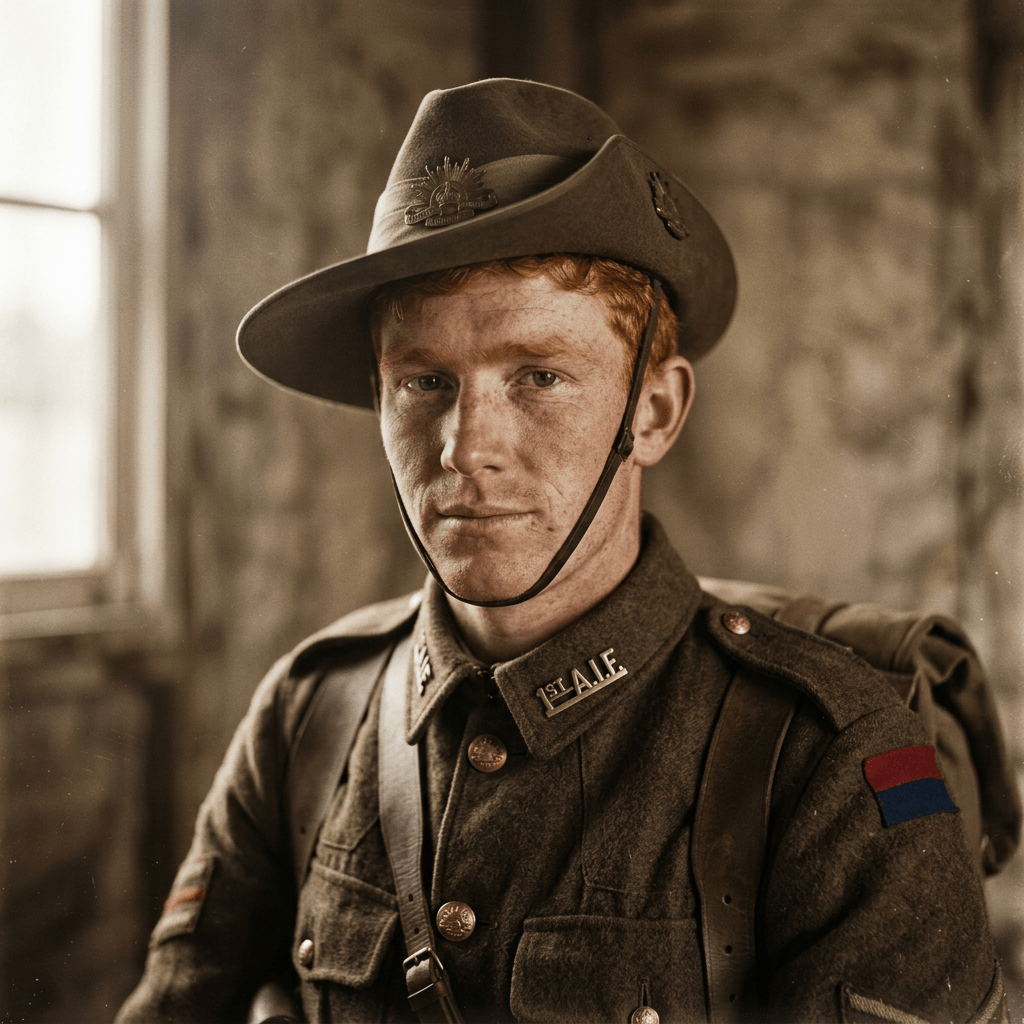
Walter Cartwright might appear to some as the “villain” of Lyrebird Mountain and it’s certainly possible that he was a murderer. But this is not a novel of heroes and villains, good and evil are never clear cut and no character is without flaw.
The young Water is a decent youth; hardworking, thoughtful of others, capable of love. When Anna, his boyhood sweetheart, falls in love with another man he quietly accepts his disappointment, finds and marries another girl, settles down to the quiet, productive life he was always intended to leave
Then he is stricken by tragedy and his response, while it might seem extreme to readers today, is in keeping with the times and his strong sense of duty – he goes to war to fight, to paraphrase Yeats, against those he did not hate to guard those he did not love.
And he is badly wounded. Unlike so many, he recovers from his physical wounds and returns home to his farm, hiding the more damaging wound to his psyche. The Walter who comes back from the European killing fields is very different from the man who went.
This is not obvious to everyone. Matured by his sufferings, he becomes a successful farmer and a well-respected member of his small mountain community, ready to help a neighbour and serve on the shire council. He marries his first love, who herself has suffered because of the war, and takes on another man’s child.
He appears content and for a while shows kindness to his wife but there is a darkness inside him; old resentments fester and then manifest themselves in a thousand small cruelties. He appears to have become incapable of love or any kind of understanding of his talented wife. They rub along together, never quite comfortable, never finding any true compatibility, despite all Anna’s efforts. He rejects the love of the child, Laura, doing his duty by her but unable to show her affection.
And yet, he is not prepared to let Anna go. In his way, he cares for her and is aware that he has not treated her as well as she deserves. As far as he is concerned, they have made a life together and though he never says so he seems proud of her achievements. It’s a life he wishes to continue and he is genuinely shocked when she plans to leave him. Does he realise that had he treated her better, had their marriage worked, she would never – being the kind of woman she is – have been susceptible to the revival of her old love? She might not have loved him as completely as she had once loved Jack but she would have felt for him a different love – the kind of quiet love that can overcome the exigencies of mere passion – if only he had let her.
He is willing, at the last, to try harder, to mend the frayed rope of their relationship. But it is too late. We know he doesn’t want her to go; in fact makes it difficult for her to leave in a petty, spiteful way that is so unworthy of the man he once was.
The question is, just how far is he prepared to go to keep her?
Because – that’s just what he does. There is a shock, a tragedy that might have changed their lives forever, but in fact it doesn’t. On the surface they go on as before; she, choosing to absorb her terrible grief into her secret being, he striving to conquer his demons to make their lives more amiable.
In a way, Walter Cartwright is a winner. When fate strikes him down it seems only right and just, and yet it’s a common enough fate and it succeeds in tying Anna to him for the remainder of his life, which appears to be what he wants.
There are excuses for Walter. He marries a woman whom he knows does not love him and is grieving for another man. No doubt his pride is hurt, his manhood diminished. Instead of wooing her afresh he succumbs to a bleak, loveless indifference. Today we would diagnose and deal with this as a form of PTSD, of chronic clinical depression. Back in the early part of the last century, people either took to drink or tried to get on with their lives – either way their inner damage too often damaged the lives of those close to them.
Both the men in Anna’s life suffered from the war which neither had wanted to fight; both of them forced her to suffer with them. Lyrebird Mountain’s main theme is the wonderful resilience of women in the face of such suffering but I do acknowledge that the men in the book, though selfish and self-focused, are deserving of compassion.
Thus Walter is not a villain. Just a deeply-troubled man who only learns to value what he has got when he is on the point of losing it – and is perhaps driven to a desperate and dreadful act in order to hang on to it.
Excerpts
During the drive Walter said very little but he was a good dancer, if sometimes heavy-footed and Anna did indeed dance the first schottische with him and several dances after that, including a waltz. She loved to waltz and the sisters had practiced this for hours, when younger, partnered by their father and brothers. To be in the arms of a youth unrelated to her, rather than going up and down the row in a country dance with others, was a thrilling new experience and though Walter was no stranger she felt that he was. This tall young man with a newly-grown moustache, his hair parted and pomaded, wearing a jacket borrowed from his father and a sprig of wattle blossom in his buttonhole seemed very different from her old playmate. He made her sit on a hay bale while he fetched her a supper of sandwiches and fruit, and a glass of ginger beer, which made her feel very odd, in a lovely way, because she had spent her life until then waiting on others. She saw people watching them; his parents and her own, Freddy with his latest girl on his arm and grinning like a pantomime villain, several neighbours. She felt happy in a strange, new way but also a little frightened.
Walter was more talkative on the way home and they laughed together over some of the funnier moments of the evening, such as when Garnett had almost fallen off the piano stool when demonstrating how to play a barn dance in the style of Paderewski or when a possum, blinded by the carbide lanterns, had tumbled from a beam and been pursued out the door by several delighted children. When they stopped outside her house, in the shadows, he kissed her. Anna had little experience of kissing for, as before stated, hers was not a demonstrative family. Only small children were ever shown overt tenderness. So when Walter leapt down from the sulky and moved quickly around it to help her down, in itself a new experience, and pulled her gently towards him and pressed his lips – firm and very dry, she noticed – against her cheek she was completely taken by surprised. But not annoyed. She didn’t step back but stayed in his embrace while he kissed her again, this time on her mouth. Very gently. They stared gravely at one another. Then, with a slight grimace, as of pain she thought, he let her go and jumped back into the cart.
“I’ll come and see you tomorrow,” he told her. “It was wonderful dancing with you. I think you are wonderful too. The most wonderful girl in the whole world.”
***
Walter had come home from the war, and his long convalescence, seemingly unchanged except for a slight limp and a few scars that were not ugly enough to disfigure him. He had, in his own words, got off lightly. He had a way of twisting his mouth as he said this that made his hearers uncomfortable. He had been maimed, it seemed to indicate, he had suffered agony and terror. But he would not lay claim to your pity or any self-pity on his own behalf because his sufferings were as nothing compared to those who had been blinded or left limbless or with gas-seared lungs, or whose fragments lay in the Flanders mud. He had always been a quiet man and now he was a little quieter, but still sturdily cheerful and ready to resume his old life. He confessed to Anna, with embarrassment, that when he had ridden once again up the raw, red road of the mountain and seen the green fields set against the deeper green of the forest he had got down from the horse and kissed the ground.
“I shall not leave here again,” he told her. And he never did. He began to work his neglected land, resumed his old friendship with Freddy, visited the grave of his wife and child and told Anna that the darkroom was his way of saying thank-you to all the Bachmanns who had cared for his farm as best they could while he was away. His brother wished him to go into real estate and land speculation as Garnett himself had done, and made a lot of money at it. But Walter had dreamed of his little farm while he walked the stark and alien hills of Cumbria and it was all he now wanted from a life that he had come so close to losing. On the lengthy voyage home he had planned future crops and done a lot of reading and developed ideas which he shared with Freddy and Anna. They all came together with the ease of old friends and neighbours though it was not long before Anna came to believe that Walter still loved her, had continued to love her despite his very sincere affection for his wife. Had Sybil lived, he would in time have let the flame of his old romance burn down to ashes but now he was a widower and hoped to fan those ashes back to a comfortable heat. Though outwardly genial he could not quite conceal his distrust of Arnold Clemens as one who might have a stronger claim to Anna’s affections. Of Jack Resnik he did not think at all.
***
There is a poignant diary entry that recalls an incident that disquieted Anna deeply. Amy had been given a pony for her birthday but was afraid of getting on its back. She enjoyed petting it but would not ride, despite Anna’s best efforts to coax and instruct her. Instead, she had marched up to Walter, in the yard, and asked, very quietly and sweetly, if he would teach her. “I don’t know why she did this,” Anna wrote, in obvious anguish. “She has learned by now never to ask anything of him. Never to trouble him in every way. He is the only person she seems to respect.” Anna never forgot the sight of the small, usually demanding child standing in front of her father – for to all the world as well as to Amy herself he was her father – looking up into his face with such a look of supplication and hope that Anna, watching from the veranda, found herself silently begging him to make some warm and natural response. Instead, Walter stared back with, Anna wrote, “such a terrifying disinterest” and walked away, shaking his head. Leaving the little girl standing there, thwarted, tearless, bewildered. “She didn’t make a fuss,” wrote Anna. “She just scuffed her feet a bit and came back to the house. Of course I went running to meet her and babbled that Daddy was busy and that Mummy would teach her but she just stood stiffly in my arms and told me not to fuss!”
Why would a man leave his family and run off to South America?
Martin Bachmann is Lyrebird Mountain’s man of mystery.
For a start, his character is contradictory. He is a family man, father of seven children and tender to them, respectful of his wife, readily involving them all in his dreams and projects. Yet he leaves them with shocking abruptness, abandoning them with scarcely a goodbye, never making contact with them again.
He is a dreamer, an idealist, turning his restless energy into a dozen creative projects yet never, it seems, able to get lasting satisfaction from them.
He is a socialist, a leveller who can yet make friends with the rich and famous. An utopian who constantly seeks his perfect place over the next hill.
At the beginning of the book we meet him taking his young family to a remote hilltop, surrounded by rainforest, to build a guesthouse. The odds against succeeding at such a venture in such a place are great and yet he makes a go of it, bringing people from all over the world to enjoy his rich hospitality. He greets the federation of the Australian states and the birth of a nation with lavish enthusiasm…and then walks away, apparently dissatisfied and seeking a new venture, a new life, in a place even more remote.
We never quite get to know this man. There is a suspicion that he has an affair with another woman, the lush spiritualist Madame Kircher and, because of her, goes to find new fortune in South America. Yet his family never knows this for sure, any more than they know of his eventual fate, until his few effects are handed over to his wife, Berthe, by a strange German woman in a Brisbane park.
It’s easy to think of Martin as a bad man and some of his children do – but not all. In today’s world where we are all encouraged to expose our frailties, vulnerabilities and psychoses to public scrutiny, Martin would be diagnosed as on the spectrum or bi-polar or in some way emotionally damaged. Back at the beginning of the last century, a man who left his family for no acceptable reason would have been roundly condemned.
Anna, the hero of Lyrebird Mountain, doesn’t condemn her father but his unexplained disappearance from their lives wounds her deeply. It’s all too possible that her later, tragic attraction to another restless and unreliable man is because she is unconsciously seeking her father. Because of it she breaks off her engagement to a sound, steady man and the consequences of this affect many lives.
Life is never tidy, loose ends are rarely tied up nearly into a bundle, mysteries are not always solved. That is one of the themes of Lyrebird Mountain and the strange behaviour of Martin Bachmann, who disappears into the jungles of South America in search of something nobody in his family ever understands, exemplifies the theme.
Below are some extracts from the book, telling us a bit more about Martin Bachmann…
Such an eye was possessed by Martin Bachmann, father of Anna and Freddy and leader of this small group of travellers whose hope of good things to come grew with each hour of plodding progress. Martin knew many things and his brain was like a great cabinet where he stored his knowledge in many carefully-labelled drawers, where it could be drawn out when required. Or so Anna came to fancy in later years when she tried to remember what she could of her father and his accomplishments. He always seemed to be putting new and useful things into this cabinet and had recently added to it an understanding of botany and horticultural practice.
AND, further on…
d Freddy and leader of this small group of travellers whose hope of good things to come grew with each hour of plodding progress. Martin knew many things and his brain was like a great cabinet where he stored his knowledge in many carefully-labelled drawers, where it could be drawn out when required. Or so Anna came to fancy in later years when she tried to remember what she could of her father and his accomplishments. He always seemed to be putting new and useful things into this cabinet and had recently added to it an understanding of botany and horticultural practice.
AND, further on…
Most of Martin’s dreams had practical outcomes; he designed boilers and copper conduits for steam and a better kind of wood-burning oven and a stone-lined cellar dug into the banked earth beneath the forest of pillars, where cream and beer could be kept cool and fresh meat hung in Coolgardie safes could be kept longer. He made a smoker for fish which were brought up from the coast, wrapped in mangrove leaves and straw. He bought an ice cream machine and modified it to easier use. The butter churns in common use were too slow-turning for his liking and he modified those too. Martin did not have much to do with the actual building of the house; he left that to others. He lived to tinker and create novelty.
AND, still further on
In this desire to know and understand the natural world she resembled her father, though Martin’s restless questing took a very different turn. He had a prodigious mental energy to match his several artistic skills but it never stayed fixed for long on any one thing. And yet he clearly hungered for this; to find some creed or practice to which he could commit his life. The building and establishment of The Excelsior had absorbed all his effort for a long period time and at the end of it he was exhausted, both mentally and physically. And, very quickly, he was bored. He loved or at least valued his children. He seemed to love his wife. The guests found him to be a fine host who could converse on almost any subject. But now they, too, had begun to bore him. Except for those who came to the mountain at his especial invitation because they professed a new belief which he thought made sense of a world that always seemed a little too chaotic and uncomfortable. Before leaving Brisbane, Martin and Berthe had attended two meetings of the newly-established Queensland branch of the Theosophical Society and they liked what they heard. Martin was drawn to the spiritual side because he believed he had found in herself an awareness of an unknown power, or force, that must exist in a universe very different from that of his staid Calvinist parents. He felt things. Sometimes he almost thought he saw things. And believed that his daughter, Anna, was similarly gifted or tormented. He was drawn also to what was claimed to be a science-based philosophy that encouraged the study of a different reality. He believed in the doctrine of powers lying dormant in Humankind that had rarely been accessed and then only by the chosen few. He did not believe in any god or prophet but rather that a person might have a certain godness within, if only it could be recognised and accessed. And he believed passionately in the intelligent evolution of all existence.

