Just scroll down to read them all…
Ephesus – where the Goddess Diana fired her last arrow at the Apostle Paul
The lure of the Tongas
Exploring in luxury
There’s still a lot of Constantinople in Istanbul
Arriverderci Roma? Alas, it’s addio
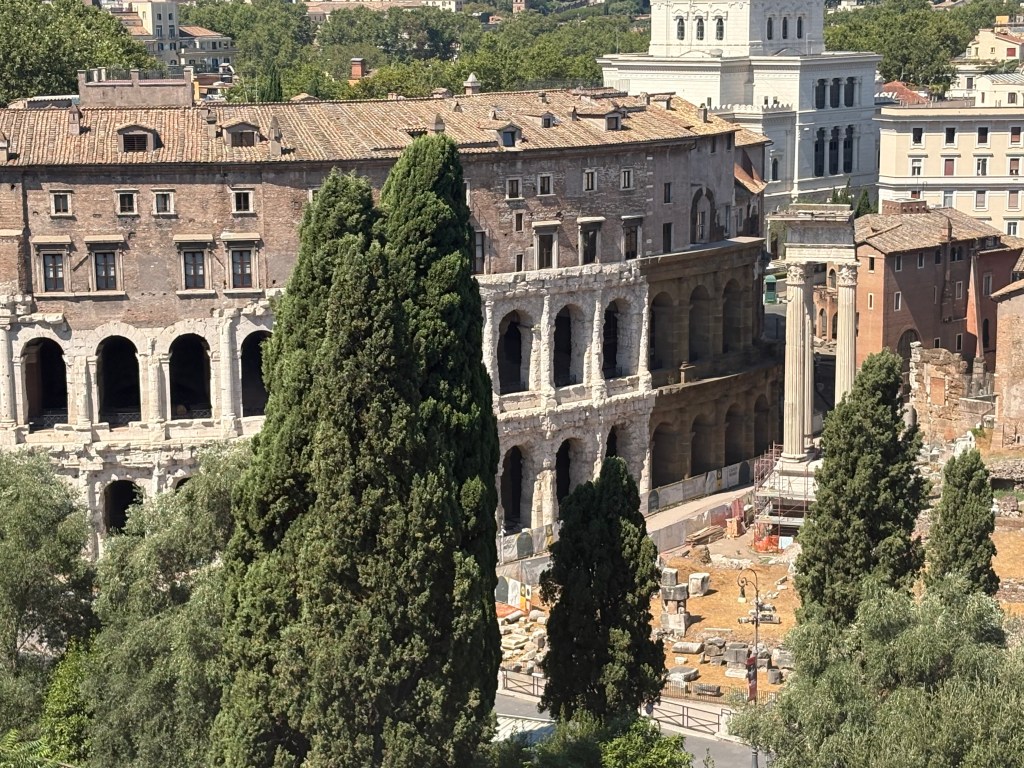
There are many grand photos of Rome to be found all over the internet, such as the iconic St Peter’s dome and the Colosseum. But to me it’s these small backside glimpses of ancient ruins or Renaissance splendour that make the city such a joy to explore.
It’s long been the custom when visiting Rome to throw a coin in the Trevi fountain, to ensure that you’ll return. I didn’t bother to do that on my recent visit because I knew – sadly – that I would not be going back.
This is not because I don’t want to but because age, distance, cost and other practicalities mean I have paid my last visit, much as I love this city of ancient beauty with its cultural depth and breadth that no other city in the world possesses.
In fact, I didn’t visit the Trevi fountain at all this time, just spared it a passing glance as I walked from my nearby hotel towards the river. And a passing glance is all you are likely to get in summer, when the tourist crowd is thick as brambles, hundreds of mobile phones held aloft in the vain hope of getting a decent picture. They even charge you now to go to the poolside lower level (tourist tip: go very early in the morning when they are cleaning the streets and you have a chance of a decent look).
The Trevi is a sculptural marvel but then Rome is full of marvels – and fountains. Not far from the Piazza Navone, with its three splendid fountains now also surrounded by tourists, I found a tiny square with a single pretty little fountain in it and no people at all apart from a couple of men playing cards outside an empty café.
And that’s the wonderful thing about Rome. If you’ve already seen all the Big Important Stuff there are always interesting little corners to explore, where the past – republic, empire, renaissance – is saved in stone.
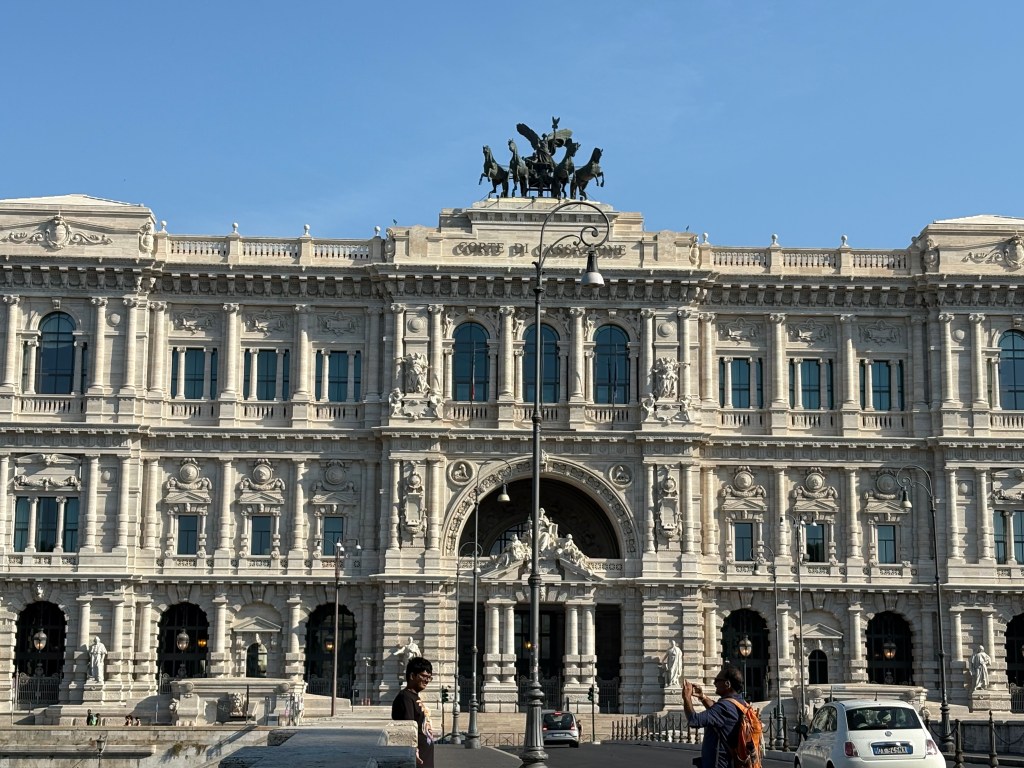
Splendid architecture everywhere you look
This is a robust city that handles its visitors well and of course it’s had a lot of practice because people from far flung parts of the world have been attracted to it for more than two thousand years. Some came for conquest and stayed, adding to the gene pool even as they knocked down walls and buildings and then built others. It’s hard to say whether today’s tourist horde (of which I, of course, was one, albeit there to visit someone, not just to gawk) do as much harm as the Visigoths in 410 or the Bourbon bullies in 1527 or the Nazis in 1943 but they certainly make it unpleasant if you want to meander around the museums, clamber around the Colosseum, saunter down the Spanish Steps or ponder the Pantheon. As for the splendid Sistine ceiling, it’s just one long neck-aching shuffle. No chance to linger and take it in, which surely was why it was painted in the first place. As for the forum, this interesting area of rubble is a heat-trap in summer and smells of cat piss. I’d rather be thrown to lions!
Better to go at some less populous time of year, though unfortunately many others have also taken this on board and make their visits in spring (beautiful), autumn (melancholy but pleasantly cool) or even winter.
Or else do as I just did and gaze at all the architectural wonders from the outside, without joining the crowds indoors. After all, you can see all the art and history stuff close up on YouTube!
On a Sunday morning in mid-July with the temperature predicted to hit 35C I went out early and walked – quite a long walk – to the river. The Tavere or, as we foreigners call it, the Tiber. Such a small and modest river to carry the burden of so long and bloody a history. In the past it has carried the city’s sewage and a fair number of dead bodies towards the sea and must have stunk something awful. Malarial mozzies lurked there too, blown in from the marshes. Today, however, it is a pleasant if turgid and unexciting waterway making its urban way through high-built banks, lined with restaurants and, on the high part, tacky stalls of tourist tat in the busiest part but shaded by old chestnut trees and crossed by bridges that are themselves repositories of history.
I leant on a parapet and stared at the bulk of the Castello d’Angelo, thinking about Floria Tosca leaping from the top of it. Not a true story but one of my favourite operas. How typical of Puccini, I thought, to give his best heroine so defiantly melodramatic an ending, with thrilling chords to take her over the edge.
I hadn’t intended to go near St Peter’s but the streets were so quiet that I wandered towards the great dome, drawn as by a magnet, thrilled by a sudden burst of organ music. Not coming from the famed basilica but from a smaller church on the right hand side as you approach the square, the Chiesa di Santa Maria in Transpontina. This is an exquisite church: highly decorated, glittering masterpiece of an altar, golden columns supporting vaulted archways and a ceiling covered in frescoes. The floor blessedly cooled by marble in a plain geometric patter, offering relief from the outside heat and the early baroque splendour above.
Mass was just beginning and I took a pew, an atheist who was once a devout little chorister, thrilled by the first lilting phrases of a sung mass and the procession of priests walking in line down the side aisle and through the transept to the central aisle, all gilded and embroidered and swinging censers.
It was one of those marvellous moments that one is sometimes lucky enough to experience while travelling, unexpected and exhilarating. Rather a shame, I thought, that the congregation was so small and consisting mainly of drab nuns.
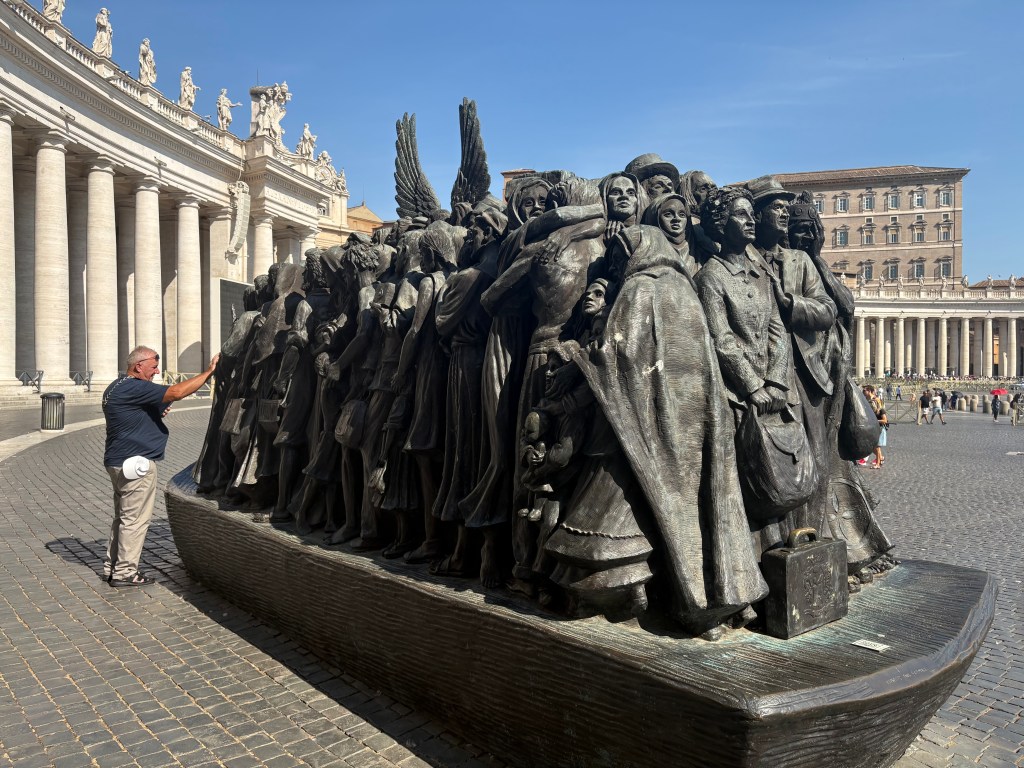
Feeling suitably sanctified I ventured somewhat nervously towards the square, for I am easily overcome by crowds – and also by heat. In proof that miracles do still happen, the whole area was surprisingly empty of people. I sat in the shade on the base of a pillar, admiring the sheer architectural artistry of it all – the two arching colonnades embracing the vast, paved space and, at the apex, the basilica of St Peter’s and its mighty dome, so familiar even to those who have never been there. Postcard stuff. I had no intention of going inside when everything opened – been there, done that, got the holy relic. Instead I braved the rising heat and wandered over to the other side to admire something I hadn’t seen before – the life-sized sculpture that honours refugees and migrants.
It’s called Angels Unawares; beautifully executed by a Canadian artist and of course created to tug at the conscience. All very well, I thought, but refugees have been on the run since the days when the Jews fled Pharoah, back when promised lands were easier to come by. Today it seems to me more lastingly humane to use our resources to fix the problems at home rather than reluctantly give refuge to those forced to flee and become strangers in a strange land. You only have to see the sad Africans trying to sell bottles of water and tat to tourists by the Colosseum to understand that.
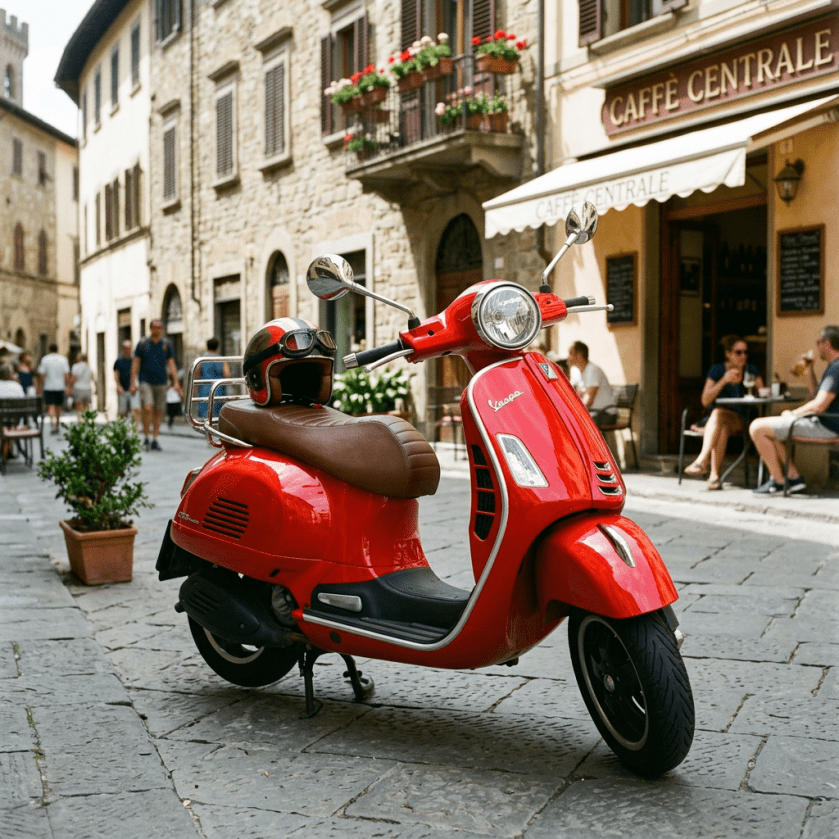
The crowd was building, along with the temperature, and so I walked back to the river, where there was a breeze, then south west away from the historical centre through Trastevere on the right, then crossing through the old Jewish quarter and walking back the other way. The higgledy-piggledy narrow, cobbled streets behind the busy river drive are full of little architectural wonders but I was most intrigued by the glimpse of ordinary lives – a woman walking her corgi, kids on bikes, a man washing his motor scooter. The Vespa is as powerful a symbol of Rome as any ancient statue and I idly wondered whether one day somebody would sculpt one in gisnt size and paint it bright red or yellow and mount it atop a building, like the horses on the Vittiorio Emmanuele statue that dominates the skyline. Something to make visitors hundreds of years hence marvel at the artefacts of the past.
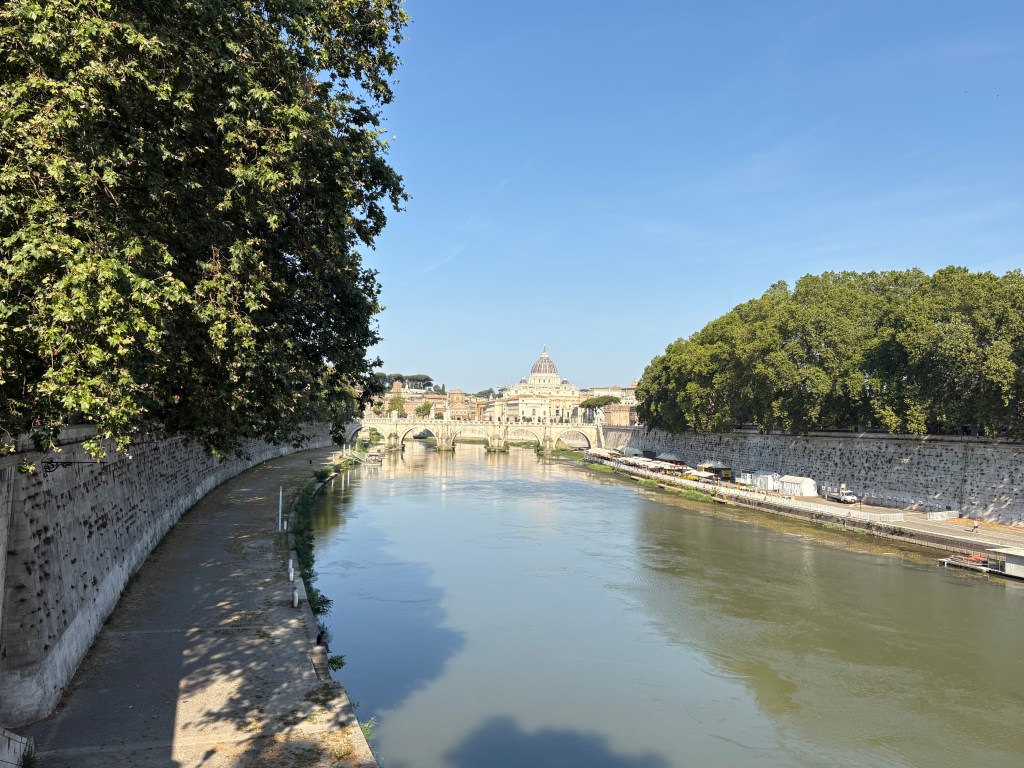
The Tavere or Tiber – hard to think that this placid little river has witnessed so much horror in its bloody past. But that’s the thing about rivers, they carry their horrors away.
In the meantime the Vespa, one year younger than I am and a triumph of affordable transport for the masses, is, like the wasp for which it was named, a bloody nuisance to pedestrians but a boon those who rely on it – slick, quick and so much easier to park than even the smallest car.
I skirted the Piazza Navone and its fringe of tourist trattorias, peeked at the Pantheon which, all but deserted when I’d walked by earlier, was now filled with folk, then caught a taxi and went to lunch with friends near the Piazza del Esquilino and Santa Maria Maggiore. (L’Angolo di Napoli, not on the main tourist route, authentic Roman cuisine, highly recommended).
When it comes to passing a Sunday morning in Rome, in high summer, this is the way to do it. Then grab a gelato somewhere and go back to your air-conditioned room for a rest before venturing out again into the hot streets. There’s a vibe to Rome after dark, when most of the populace, local and tourist, seems to idle away the evening at the thousands of restaurants that line the back streets. Most, thankfully, are air conditioned indoors but I like the pavement experience where you can watch the people on parade.
The good thing about visiting Rome at this time of year is that the sun is out and the sky is blue – a good way to see any city. Still, I decided to spend my next – and last – day in Rome by doing something I hadn’t done before and going to the Capitoline Museums.
These are, no surprise, on the Capitoline Hill – being a Roman history buff for most of my life I still get a buzz from ascending the seven hills on which the city was built and thinking about Julius and Anthony and Brutus and Octavius-Augustus and Cicero and Tacitus and all the other famous old blokes who once did the same. The two museums, built across a piazza designed by Michelangelo,are surprisingly little known to the average tourist and also have the attraction of being air conditioned.
So I headed out early, making a detour to the Tarpeian Rock from which all sorts of offenders used to thrown from earliest Roman times to at least the first years CE. It’s not that high, about 25 metres, so it’s possible some suffered for a while with horrible injuries before being finished off. Nowadays you’re more in danger of getting struck by a Vespa while crossing the road to the base. Did I imagine it or are the plants a bit greener there around the base than in other parts of this largely treeless city? Nurtured by all that blood and bone? It’s not far from the forum so I suppose people used to go along to watch this novel form of execution and then wander to the city’s main happening place for a cup of something and a chat. Something to do when you weren’t going the other way to the Colosseum and watching gladiators slaughtering tigers, or each other. Public entertainment is not what it was.
Because I was still too early for the museum opening at 10 am I sat in the middle of the Piazza Venezia watching the morning rush hour and wondering how cyclists found the courage to negotiate it as the cars, buses, trucks, motor cyclists and scooter riders jockeyed for positions in streets with no lanes marked. I gazed up at the grandiose monument to united Italy’s first king, famous for his large moustache, and thought how much better off those horses were than being down below in the morning muddle.
This is what I most enjoy about travelling at my age now. Just sitting there sipping something and observing the life that is, while pondering the life that was. Rome, my favourite city, is perfect for that.
The museums proved to be a cool, quiet haven. A mere handful of visitors including a couple of earnest Asian tour groups, all easily avoided in this museum of so many lofty rooms. To me, this place is the very essence of Rome, from the artifacts of early Etruria to the galleries of paintings and – above all – the splendid sculptures. Including the Dying Gaul and the bronze wolf suckling Romulus and Remus, mythical founders of Rome.
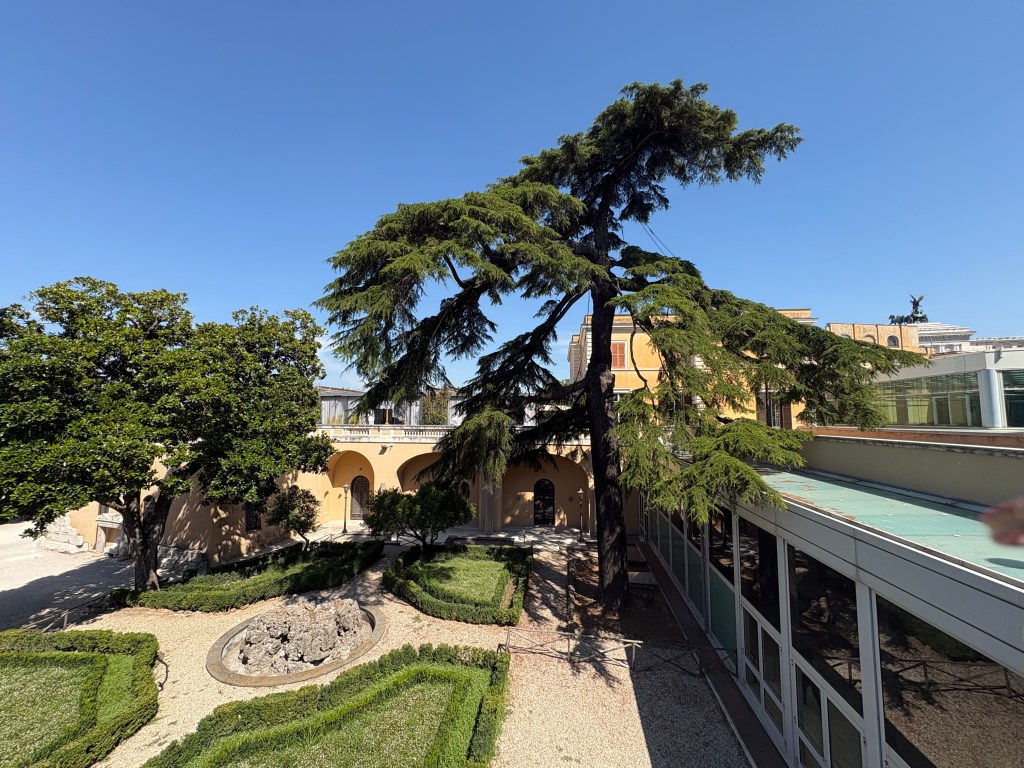
There is a small, secluded garden and a roof terrace which offers views right across the city. If you want a great vantage point from which to view the ancient rooftops and many domes of Rome, this is the spot. I spent most of the day there, enjoying the permanent collection and a couple of temporary art exhibitions – all marvellous.
The rooftops of Rome – from the Capitoline and, below, the very Roman courtyard garden in one of the Capitoline museums.
Then I went forth to brave the hot and crowded streets to grab a calzone on the way back to the hotel, where I did my packing and rested before delighting in a final meal at the charming little trattoria across the way, Mas, with its charming proprietor and friendly waiters and unpretentiously authentic cuisine. I ate here several times because they made an elderly woman, travelling alone, feel so welcome.
I do find Rome to be a warm-hearted city, displaying its historical treasures con brio but without undue pomp (though I do wish there wasn’t so much rubbish lying around!). I feel sad to think that I shall never see it again yet also happy because, knowing this, I made the most of my final visit. My final homage to the dual splendours of antiquity and renaissance which are still found there is such abundance.
Addio, bella Roma, brava cittå.
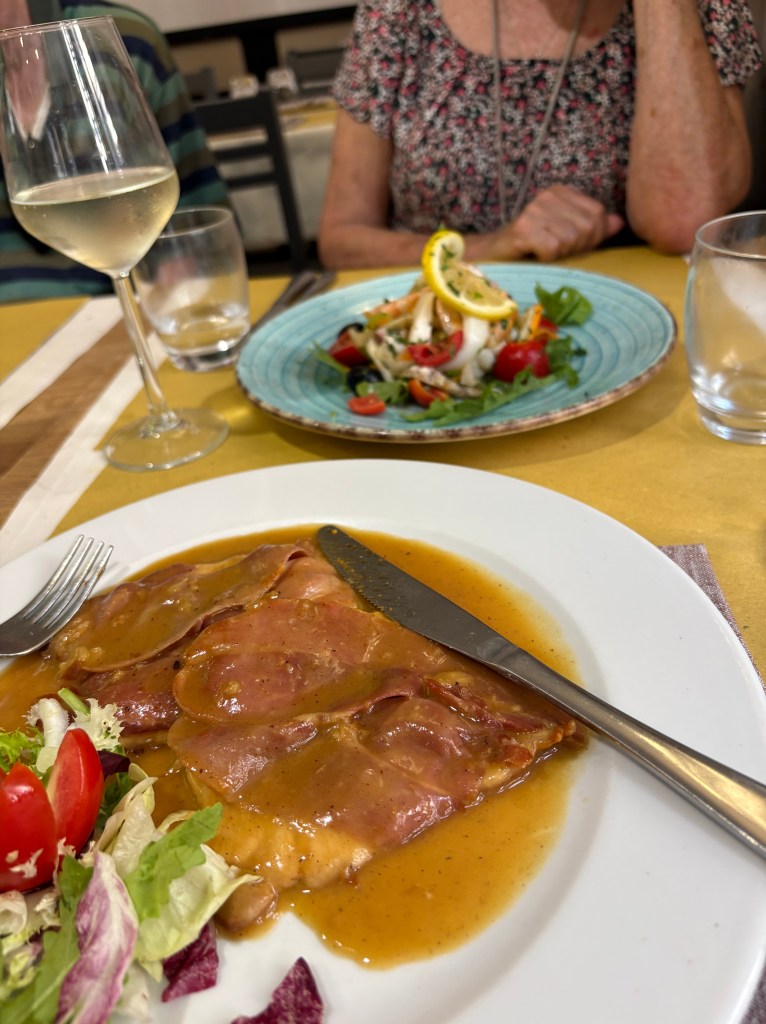
I love eating in Rome and here are some of my favourites – saltimbocca, gnocchi fresh made, fiori di zucca (zuccini flowers stuffed with anchovies and mozzarella and lightly battered and fried), seafood risotto and a glass of Aperol spritz beforehand to sharpen your appetite.
Share this:
Ephesus – where the Goddess Diana fired her last arrow at the Apostle Paul
Paul the killjoy – epileptic or schizophrenic?
One of the reasons I wanted to go to Ephesus was because it’s where, according to Christian writings, the apostle Paul – Saint Paul to Christians – was unceremoniously chucked out after lambasting the locals for worshipping the goddess Diana. Or Artemis, if you favour the Greek.
Of course, what VERY little we think know of Paul means that we can’t even be sure that he existed at all. Though believed to have been born more than half a century after the birth of Christianity’s foundation figure, Jesus of Nazareth, there is no mention of a Paul or Saul in any early Christian or non-Christian sources, even by the best-known historians of the time. And when his name does pop up, it’s as the writer of letters to various Christian communities (the term itself only just coming into use; it’s origin still a matter of scholastic debate). In fact according to the New Testament, Paul wrote to just about everyone: Romans, Colossians, Corinthians, Thessalonians, Hebrews, the Jewish community at Ephesus and his best buddy Timothy.
The authorship of all the writings attributed to Paul are themselves subject to ongoing scholastic debate. As a journalist, trained in the days when truth in journalism mattered, I would be sceptical of a bunch of old letters, attributed to one man only, being any kind of truth. Given what I know about how the Chinese-whispers effect of the spoken word is distorted through time (see Monty Python’s Life of Bryan, Sermon on the Mount), given how the written word is filtered and retranslated and too often edited or rewritten to serve a cause or individual interest, given what I know about the established codices of the early Christian church and indeed about Ephesus itself (more of this below) – I remain deeply sceptical about Saul of Tarsus.and his all-too-convenient conversion along the road to Damascus. As do many eminent historians today.
I also bear in mind that writing paper as we know it was not around until centuries after Paul’s time and it seems unlikely to impossible that he could have written so many “letters” to any people a distance away on parchment scrolls. Leading to the conclusion that these useful missives were written by churchmen long afterwards, when the New Testament as we know it was being put together from scraps of early tales and ecclesiastical construction.
After all, somebody somehow managed to collate all these scrolls, scattered as they were through so many countries and communities. Who did that? Who thought, “Blimey, here’s another of Paul’s long, long scrolls. Should we keep it for posterity? Where do we keep anything this damned big?” It’s not as if Paul was an important, famous figure whose works, like those of Plato, might have been deemed worthy of keeping in the city library. Itself prone to earthquake, war damage, rising damp and the abandonment that comes to all our buildings over the centuries.
It’s rather like the man’s death and subsequent martyrdom, which Christians claim to be about 62-64 CE. You can’t find anything about it in the New Testament. And, if as has been claimed, the Emperor Nero in one of his hissy fits chopped off the apostle’s head, it certainly wasn’t recorded by any Roman historian or writer of epistles. Like everything else, it was a legend propounded by later Christians and passed down as fact. My little copy of the King James bible version printed in 1944 has a handy note to this effect at the end of Timothy 2. He’s called a “saint” because he claimed to have performed miracles but was never formally canonised.
But for the sake of argument let’s assume that the Christian historians, most of them clergymen and women, have a point, and that there really was such a man, Certainly, according to them, he was the real founder of Christianity which, until he took it up as a cause was just a lot of disparate small groups of Jesusites. Really, the religion should be called Paulianity!
Though he doesn’t strike me as a very nice person on whom to found a religion; being, judging from”his” letters, dictatorial, opinionated, self-righteous, pushy, uncompromising and over-zealous – a term of which he himself would probably have approved. He suffered “visions” that realists would call hallucinations and this might have been caused by epilepsy, schizophrenia, wine, drugs or were just plain made up to bolster his connection with the divine – Mohammed claimed these sorts of otherworldly visions too.
Saul of Tarsus, according to Christian scholars, was a Jew and a Roman citizen and a Pharisee dedicated to Judaisman (like Christianity, a term not used back then), the Torah and the One God of Israel. In most respects that’s what he remained – the difference being that he viewed this Jesus of whom his persecuted followers spoke as the long-awaited Messiah. “Christians” to him, were just the Jews who had got it right, and the larger number of non-Jews who liked the idea of a God-made-man who stood up for the poor and downtrodden.
Saul-then-Paul was not silly or vain enough to claim messiahship for himself. He knew nobody would believe him, being so obviously of flesh and blood and apparently unattractive to boot. Rather like today’s tele-evangelists who evoke a superior Being to command our attention – and our money because their own earthly flaws are all-too-evident.
Archaeology – at a price (and don’t go in summer)
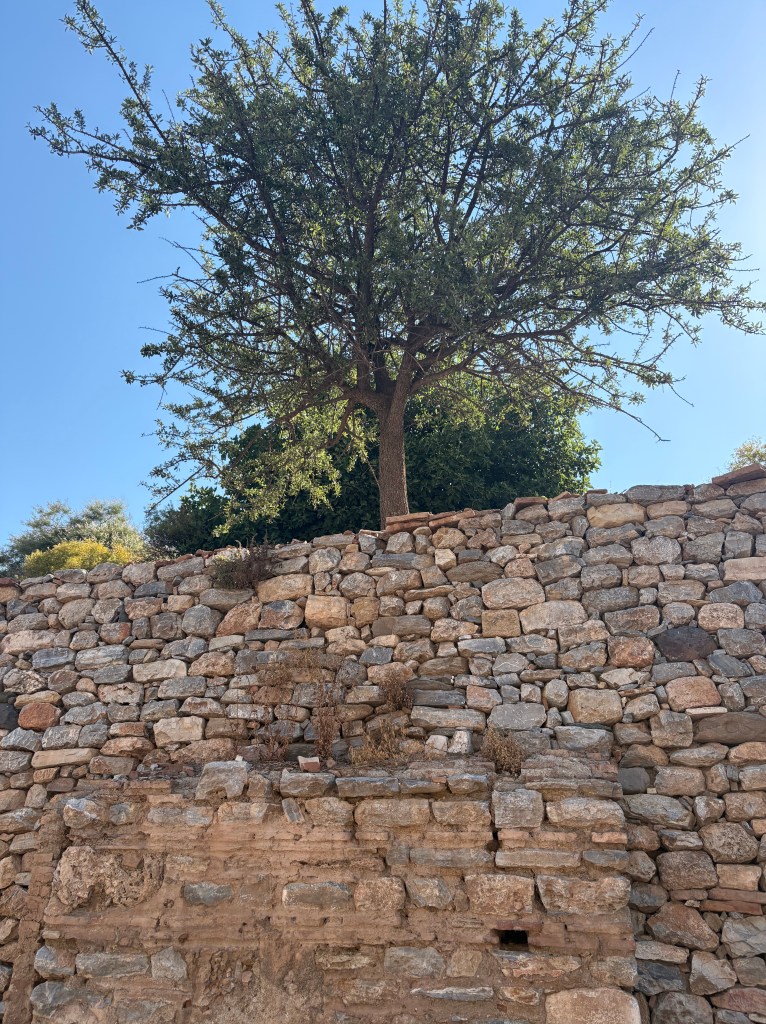
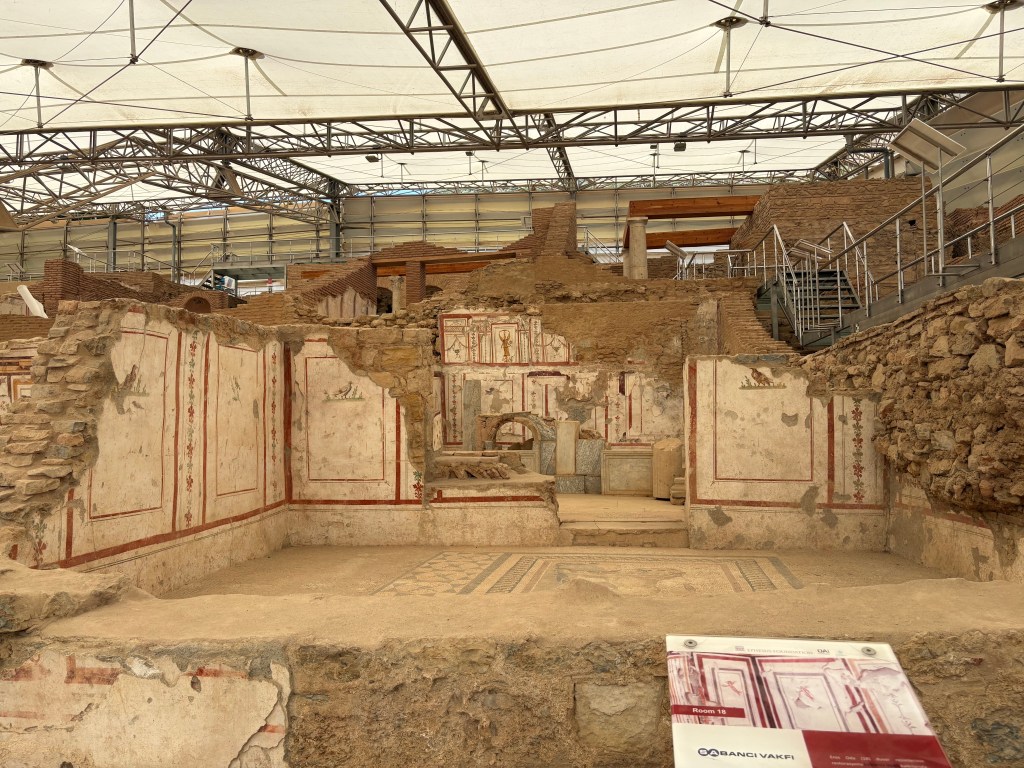
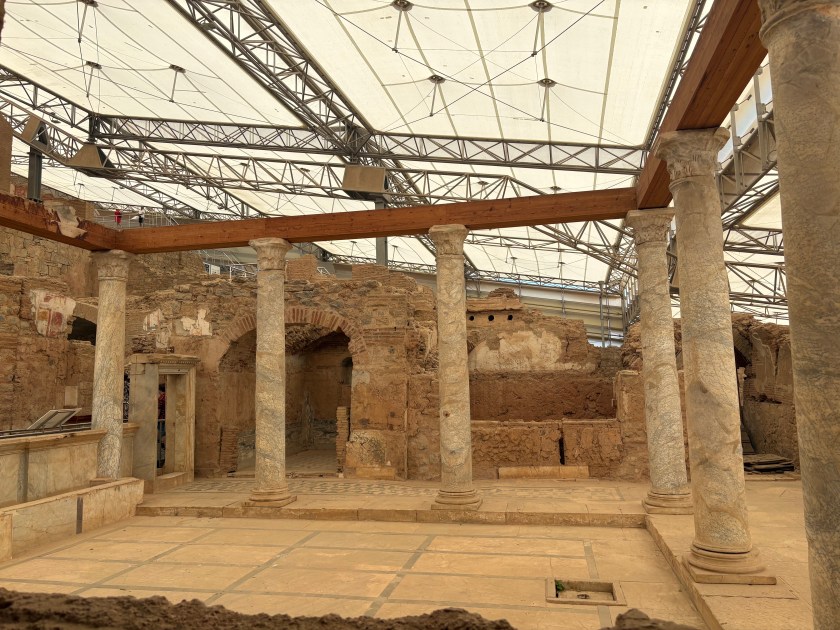
An old olive tree atop an ancient wall dating back to at least Roman times. Olives can live up to 3,000 years in this part of the world. Also, two shots of the Roman villas which have been painstakingly excavated so that we can get a good idea of how they lived. At least if they were rich!
Anyway, back to Ephesus, which I visited this year, in his (so it is writ) footsteps. He went there a time or two and lived there for a few months; preaching to mostly unconvinced Jews (who had already established a synagogue there) and Greeks. On one occasion his two companions were threatened by the crowd, instigated by artisans who made their living crafting artifacts that honoured the Goddess Diana whose temple there was one of the Seven Wonders of the World. Paul himself was advised by his fellow proto-Christians not to hang about and risk the wrath of the crowd.
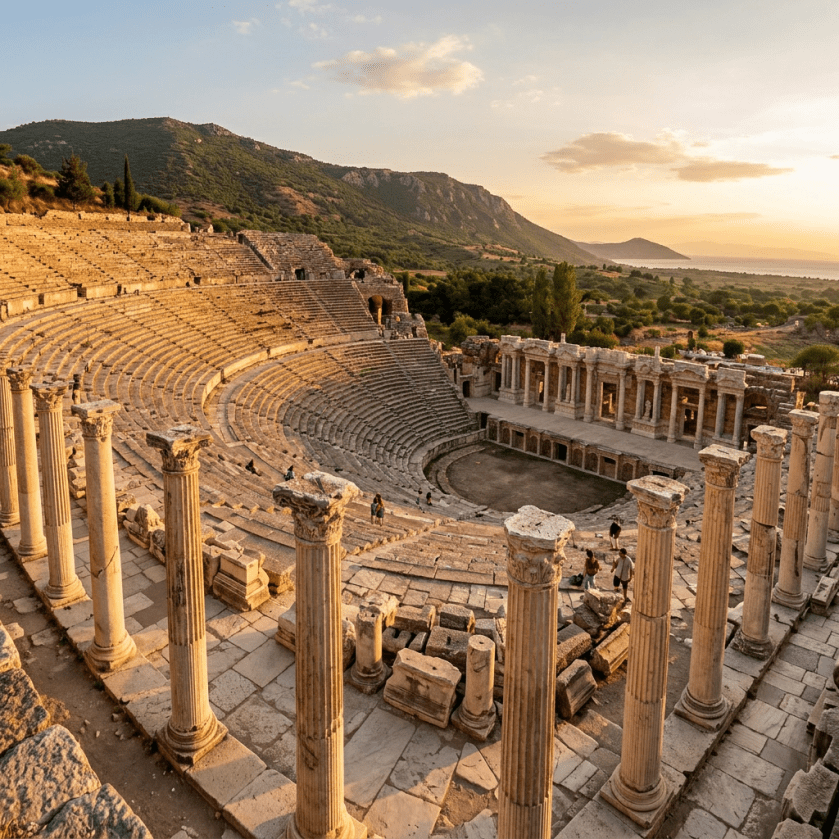
Today, you can see the amphitheatre where much of this story supposedly took place. It has all been dug up and bared to our eyes in one of the most spectacular and important architectural endeavours on the planet. Ephesus dates back at least 10,000 BCE and this city, once pivotal to the histories of first Greece and then Rome, now offers tantalising remnants of both. There are the remains of Artemis/Diana’s temple, there the great library in surprisingly good nick, there the remains of Roman villas with their mosaics and frescoes and excellent plumbing. And much more. You walk the ancient marble stairway, slippery as ice from the many feet that have trodden it (and still do), touch the walls of hewn rock and man-made stone, marvel at both the sheer oldness of it and the modern skills and dedication that have uncovered all this evidence of history for our contemporary eyes.
Rather a lot of eyes, unfortunately. Millions flock to Ephesus each year, most of them with very little true appreciation of what it reveals about our past. Groups of earnest Asians behind their be-flagged guides, admiring but lacking my advantage of cultural relevance (rather like the way I once went around Angkor Wat). Groups of bored schoolchildren. Women off cruise ships flaunting too much overweight flesh in skimpy tops and shorts and sandaled feet that bring them to grief in the rubble. Fat, elderly, red-faced men in Hawaiian shirts panting in the heat and thinking only of cold beer.
Because, for much of the year, Ephesus is HOT. South-western Turkey has brutal summers and the city today is in a bowl of low, dry, mountains and a long way back from the sea, thanks to the silting up of the once-busy harbour. Today’s harbour is at Kusadasi, nearly an hour’s drive away. If you visit there – and I recommend it if you love history and archaeology – go in the early northern hemisphere spring or late autumn. Possibly winter.
Of course, Ephesus attracts serious scholars both amateur and professional, including Christians. In New Testament terms the city is associated more with the apostle John than with Paul and nearby is a house which, it is claimed, was where Mary the mother of Jesus spent her last years. A claim so breathtakingly ridiculous that it’s a true wonder of the modern world that anyone would believe it or bother to visit the place. And yet they do, the faithful and the curious.
And that’s the thing about Ephesus as it appears in the bible, and about “saint” Paul himself. What we think of him today comes down to a matter of faith – if you are a Christian then you will disregard all evidence to the contrary and accept that he was what the early (and, I think, not-so-early) Christian writers want and believe him to be, and that all the letters were written by him. If you are not, then you will either dismiss them outright or subject these to the forensic examination of historical expertise.
Ephesus was very important to the formation of Christianity; indeed it is at least as important, if not more so, than Jerusalem or Antioch or Alexandria or Constantinople – even Rome. So many councils were held here that it’s not unreasonable to claim that it was this city, not just Nicaea, which effectively created Christianity and made it into a religious belief system powerful enough to take on the world. There were many stakeholders in such a power; not just churchmen (themselves hungry for a power that they abrogated to themselves through claiming Divine backing) but also rulers and the courtiers, politicians and military men who supported them. And thus, feeding upon itself down the ages and growing fat in the minds of the ignorant and cowed masses Christianity, like Islam that later sprung from it, Christian doctrine and practice dominated life and thought pretty well everywhere west of India.
These early councils were not by any means peaceful. Bishops, the newly-minted church leaders, fought bitterly over the tiniest nuances of doctrine. Schisms arose, some of which endure. Blood was shed – at least one bishop was murdered. The seeds of Christianity were indeed nurtured by the blood of its martyrs – most of it shed by fellow Christians who thought that Christ was god made man, and not the other way round. Or that a certain number of angels could dance on the head of a pin. It was like an early form of football rivalry and even more violent.
But there is so much, much more than early Christianity to be found at the archaeological treasure that is Ephesus. Diana/Artemis was a bigger deal here than Jesus ever was, and other deities as well. It was an important centre of government and trade for thousands of years. Rulers came and went, emperors visited, arts and crafts flourished. Until the Visigoths came and wrecked it and an earthquake finished the job and the sea became impossibly far away. It’s harsh country; goats thrive here and olives are grown and, where water can be accessed, stone fruits and figs.
In the nearby town is a delightful small museum which nicely completes your visit and there is no Christian reference here. There are restaurants nearby and a tourist vibe. The closest large town is Kusadasi where the cruise ships dock and ruthless men will sell you carpets of silk and wool, made (we are told) by village maidens subsidised by the government to keep the art of carpet-making alive. Seaside apartments here are owned by wealthy Turks and also by foreigners, lured by concessions that make property-owning easier than in other European seaside places. The beaches are quite good.
Paul would not recognise the place, nor would he approve. There are women flaunting flesh in skimpy clothing, with loose hair.Paul would not recognise the place, nor would he approve. There are women flaunting flesh in skimpy clothing, with loose hair. Much has been made of his misogynism but that is unfair because we see it through the eyes of twenty-first century society. Back in the beginning of the common era, women were expected to be quiet, modest in dress and behaviour, sticking to hearth and home and doing what their menfolk told them. Even empresses, though they might exercise power behind the scenes, could never reign and ruled (when they did) through the means of their male advisers.
At the same time, modern Christian reformists and in particular Christian feminists have tried to cherry pick the New Testament and interpret it to suit their notions – with a sad lack of historical understanding. Yes, women played a role in the early church, albeit a small and supportive one. No women bishops and to this day no woman pope or metropolitan. Certainly they were forbidden from preaching – which makes you wonder what Paul would have made of today’s Church of England female vicars! The sayings attributed to Paul are unambiguous – women were to remain submissive and keep their heads down – and covered. Don’t take my word for it, it’s there in the scriptures!
To whit:
“But I do not allow a woman to teach or exercise authority over a man, but to remain quiet! For it was Adam who first created, and then Eve. And it was not Adam who was deceived, but the woman being deceived, fell into transgression. But women will be preserved through the bearing of children if they continue in faith and love and sanctity with self-restraint.”
Take that, sisters!
Some of Paul’s modern apologists have claimed he must have been misunderstood and mistranslated down the years, with later writers putting words into his mouth to suit their own ends. That strikes me as a dangerous road for any scriptural reformist to travel because it just confirms what people like myself believe – that nothing in the testaments old and new can be taken as truth. It’s just religious fiction, as reliable as today’s journalism and AI-generated fake news, serving the beliefs of the writers who know that some, if not most, will take their reportage as – well – gospel!
Anyway, whatever you choose to believe, Ephesus possesses its unique archaeological truth and I’m glad I went there to see it for myself, despite the midsummer heat, appalling crowds and lack of decent lavatories.
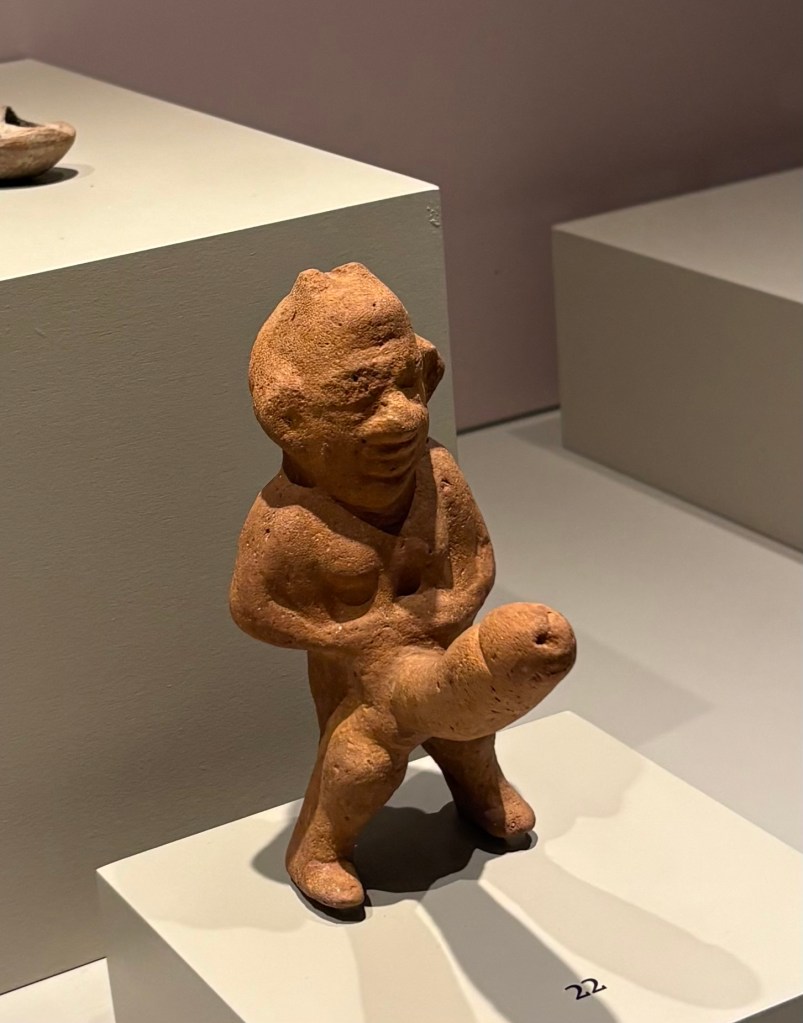
I bet the prudish Saul/Paul wouldn’t have approved of this pagan chap, dating from long before the Roman republic.
…………………………………………………….
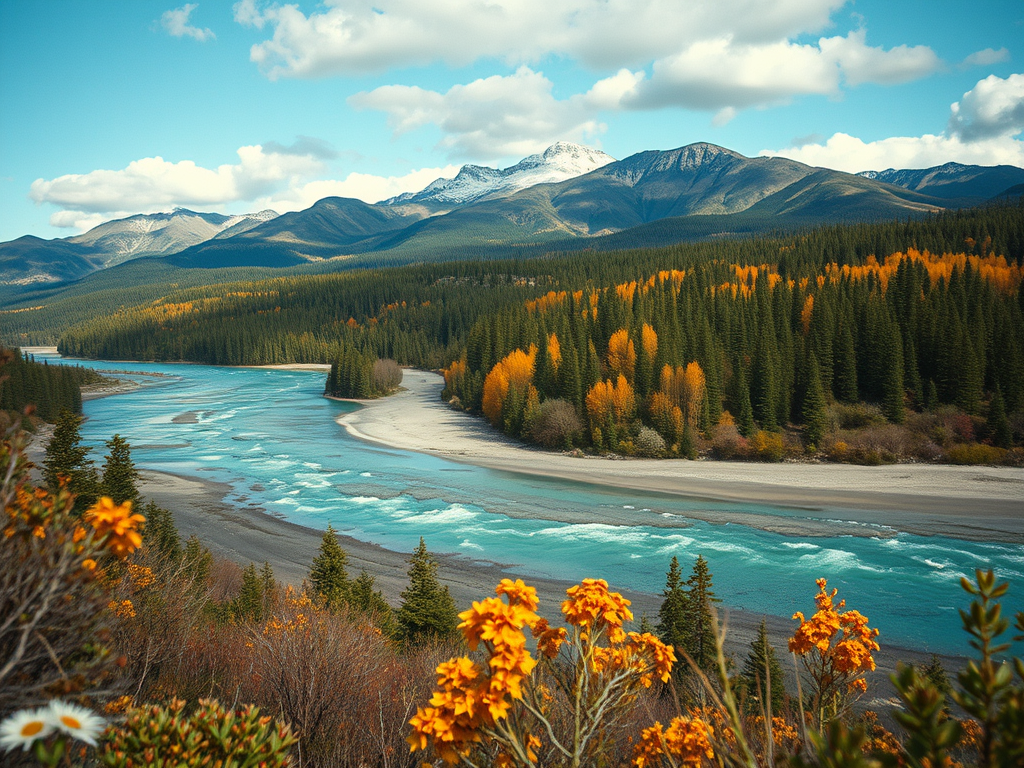
THE LURE OF THE TONGASS
Bears! That’s what the Tongass National Forest has in abundance. Blacks and grizzlies. Along with wolves, deer, mountain goats, ermine and a plethora (I love that word!) of marine life in the fjords and seas that abut this 16.7 acre (6.7 million hectare – really, I love the Americans but they ARE backward in some things!) national forest. The largest in the United States.
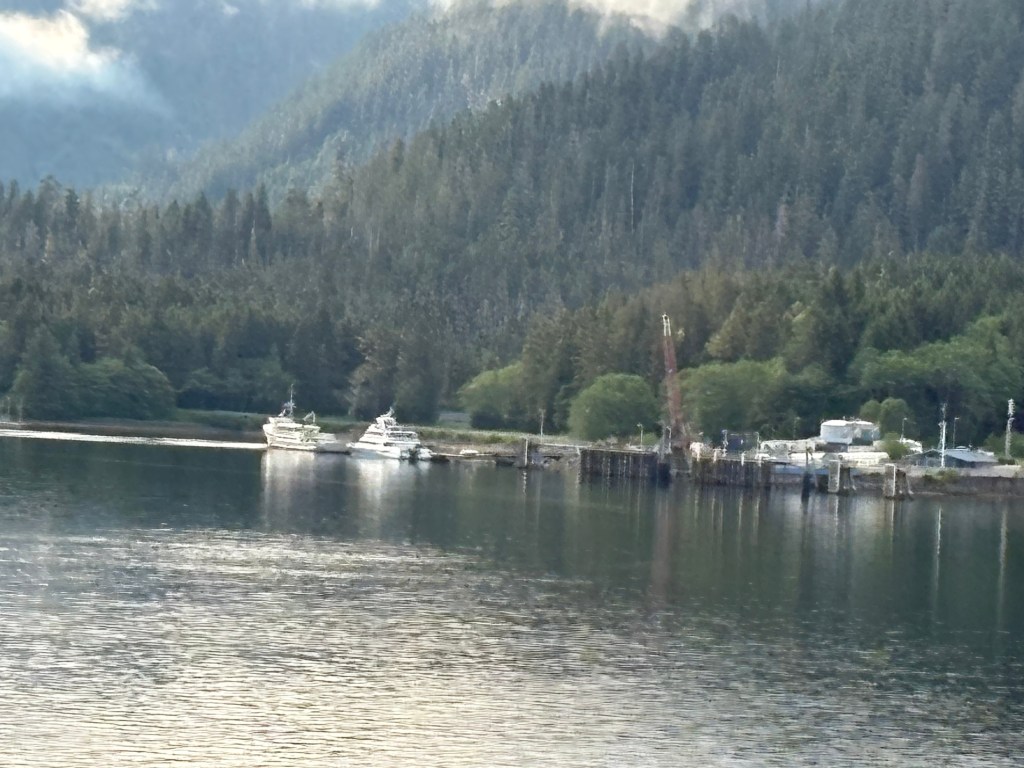
Bears lured me there this June – I’m a bear tragic! – but also the chance to spend time in a temperate rainforest when much of my working life has been spent in the rainforests of the subtropics and tropics.

I love the Tongass. Others say they find it forbidding, even sinister, and I can see that. All those dark cedars and hemlocks and spruces lowering over the groundscape of root and moss and fern. Like the great forests of pre-industrial Europe there could be witches lurking here, and goblins and worse. Stories are told by the indigenous Tlingit of Goo-Teekhl the Salmon Thief who sometimes attacks humans. Or did, until humans defeated him. But then he got his revenge – by bringing upon them the mosquito.
I am not too worried by monsters and mosquitoes don’t seem too numerous in the deep forest, only by the water and in the open country. And they are only bad in the short summer. The rest of the time the forest is covered in snow. Mozzies are found in MY forests too, the magical rainforests of southern Queensland and northern New South Wales and we, too, have our legends.
What we don’t have is bears. Or otters. Or indeed predators of any mammal kind.
So I went to the Tongass and loved every bit of it. The slight danger of encountering a predator better armed than myself. The slightly unsettling spongy softness of deep moss underfoot. The furious little streams pouring off the glaciers and snowy mountain tops. The deep fjords and bays bejewelled by islands that are also part of the Tongass. The blue glaciers crumbling in dramatic bursts of spray where they abruptly meet the sea. The charming small creatures that scuttle across the paths softened and deadened by pine needles and roughened by cones. The birds – for I am a birdwatcher since girlhood.
There are many fine birds in the Tongass though they tend to be secretive. But handsomest of all is the Bald Eagle and this must be that bird’s spiritual home (though the Canadians might have a thing or two to say about that!). These white-headed heroes of the sky are everywhere – perched on pine branches or seemingly quite at home on buildings and light poles in town, flapping with unhurried majesty across the inlets, diving with deadly accuracy for salmon. They are not as perfectly formed for this activity as are osprey but they are pretty damned good at it all the same.
In the little coastal tourist towns of Sitka and Skagway and Ketchikan it rains a lot in spring and summer and autumn (fall) but temperatures are milder than the interior thanks to the ocean and the great forest. Winters can be snowy but mostly on the mountains all around, that stick up like cake frosting.
These towns, like the capital, Juneau, are surrounded by the Tongass and it hugs them tight in its green hold, buffering them against the savage mountains high above where winds scour the rock faces and glaciers freeze the flow of constant rain.
Skunk cabbage grows thick in the gullies and fruiting canes along the edges where there is more light; food for humans and bears. High on the slopes the Red and Yellow Cedar (Thuja plicata and Cupressus nootkaensis) give way to the Mountain Hemlock (Tsuga mertensiana) and the spruce (Picea sitchensis) rules them all. The meagre Lodgepole Pine (Pinus contorta) huddle together like poor relations, upright and defiant in their low state.
There are medicines here close to the ground, Arnica and Angelica as well as the many berries full of vitamin C. In summer the largest dandelions in the world grow here, matching the buttercups for brilliance, digestive gold for bears. Apart from these, most of the flowers of this cold, wet forest are delicate and pale.
The Tongass is not only the largest national forest in the United States but also the largest temperate rainforest in the world. It has much in common with all rainforests everywhere– constant moisture, emergent trees fighting for light, a dark understorey where fungi flourish among the moss and lichen. And yet it is distinctively different in many features, with its snow melt and dominance of trees bearing needled foliage, rather than broad-leaved species as found in warmer forests. Its humidity has a frigid bite and its waters are more lively. And it has secret places where many of its inhabitants must den for the long, dark winter.
If you love rainforests, and you have never been to the mighty Tongass, go there before you are too old to be able to hike its steep trails and thus experience the inside mystery of it. I found myself conscious of my eighty years and knew that because of them I could only access the fringe and wished I had backpacked into there when young enough to go high and long.
But I was still fit enough to go in a little way and feel the dark weight of the forest around me and glimpse a few of its creatures and be happy in my brief time there. Other rainforest lovers will understand!
**************************************************
Exploring in luxury
A journey aboard the Regent Seven Seas Explorer
HONESTLY: This is not a paid advertisement! It has not been solicited by anyone. It is just a grateful tribute to a beautiful ship and a memorable voyage.
I first saw the ship from the landward end of the long jetty at Whittier, Alaska. There she was, brilliant white against the blue of sky and sea, bow curved in an elegant arc upward and outward from the waterline. Not too big as to be overpowering; not too small as to appear lacking in grandeur.

It was love at first sight! My ship, the beautiful Regent Seven Seas Explorer. I had studied this ship, on screen and in brochures, for a year. I had virtually walked her twelve decks on YouTube videos; finding my cabin and scrutinising the menus in the several restaurants; choosing my shore excursions and checking them out – again, thanks to fellow YouTubers; imagining myself perched on a stool in one of the cocktail bars, dressed to the nines, or walking the top deck after dinner with cashmere around my shoulders.
And now here I was, ready to set sail southwards to Vancouver for what turned out to be seven of the happiest days of my life.
My travel consultant, Sienna, from Travelling Places, with her boss Gina, had, with uncanny insight to my character and needs, selected Regent as the cruise line that would suit me best. This is what really good travel agencies do and Travelling Places, an honoured institution where I live, is very good indeed. And they were absolutely right.
Sure, I wanted to go new places and see new things and my preference is for wilderness rather than the built environment. But at my age, 80 but mercifully as active as I ever was, I wanted comfort, too. Pampering, even. I’ve had a lot of adventure in my life but not a lot of luxury. And as I was travelling alone I wanted everything to go as smoothly, and be as seamless, as possible. I may be as fit as any 50 year old but I have less resilience now and have small patience for sorting out the problems peculiar to travel – cancellations, delayed departures, transport connections, accommodation that doesn’t live up to advertisement.
(I shall digress here, remembering how in the early days of the internet I booked a hotel room in Brighton, England. It looked great online – a single room with bath in a newly-restored Georgian-era building, with a view of the seafront. The boutique hotel was actually rather nice but the room turned out to be hardly bigger than a cupboard; I could turn on the TV from the bed with my big toe, the view was a glimpse down a side street over an underground carpark and the “bath” was a tiny moulded fibreglass shower-and-loo cabinet. This is why I now prefer to use a travel agent!)
Boarding was well managed and non-stressful. In fact all boarding and disembarkation on this ship was fast and easy; a particular blessing for the elderly. And then I was given my card and directed to my suite. Which was – beautiful! Not just luxurious, as I had expected, but thoughtful as well. So many useful little touches; even the shoe horn was long and strong and made of steel (or a similar hard metal); none of your cheap plastic like I have at home.
As I was travelling solo I had this suite to myself but it was comfortably big enough for two. I would have been quite happy with the Deluxe Veranda suite that I’d booked originally but when the opportunity came up to pay a little more for a Concierge (now called Serenity) suite I grabbed it. Not so much for the larger bathroom and extra seating space but because in the Serenity suites the bed faces the ocean and I rather liked the idea of lying in bed and looking straight at the sea – though in truth having a sideways view is good enough. And anyway I usually got straight up in the morning and went out to my spacious balcony to lounge on the daybed where I could look down on the waves.
There was a bottle of good French champagne in the bucket awaiting me, and a bowl of fruit, and, within minutes, Putu to bring in my luggage and advise me on practical matters such as (huge!) TV operation followed by Cristy to tell me that she was always within call to attend to my every need. This is the life, I thought!
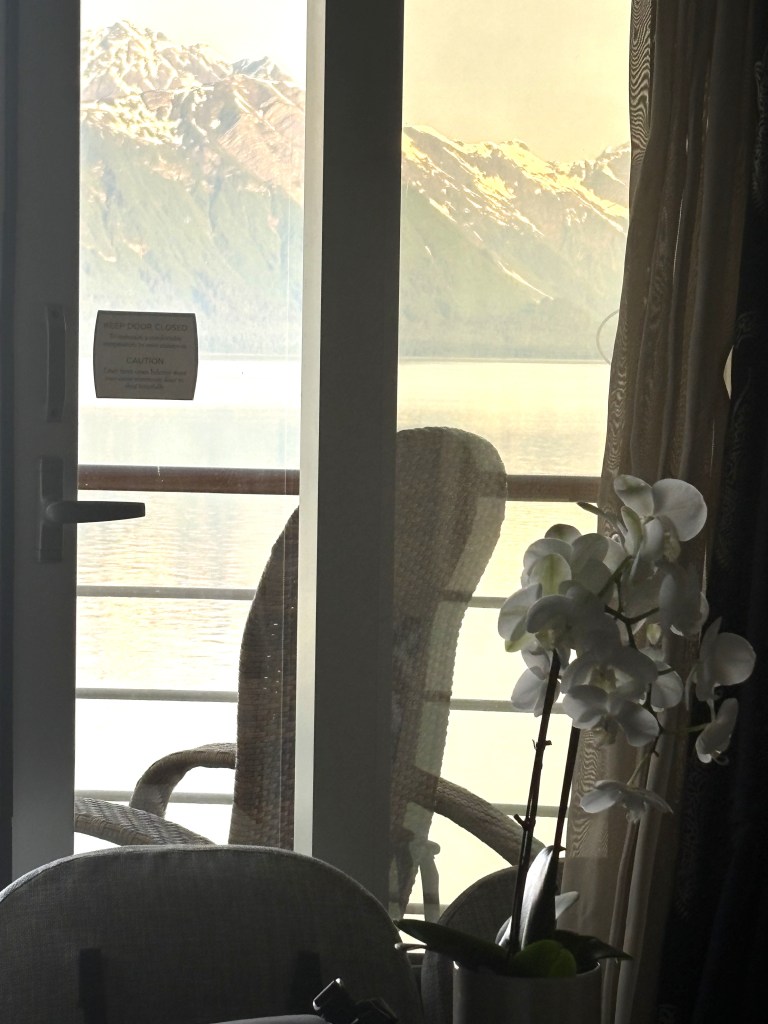
I loved that my suite featured so many handsome mirrors, which helped make it very light and bright and seemingly more spacious than it was – which was quite spacious enough anyway. I loved that it was so well equipped with glassware and chinaware, all enclosed in glass-fronted cupboards. I loved the fact that there were good quality paintings on the walls and soft, intimate lamps and a frig that could be stocked with any type of drink – alcoholic and otherwise and all included in the price. I loved the big bed with its fine linen and marvellously sleep-inducing mattress. I loved the big walk- in robe with its plentiful high-quality hangers and drawers and shoe storage. I loved the bathrobes, made from a silky white fabric with faint silvery stripes and a terry-towelling lining – sumptuous. And with matching slippers. I loved the little gifts – the handbag bearing a discreet Regent logo and the metal water bottle to take ashore, refillable either from the glass flasks changed daily in your cabin or from filling stations around the ship – Vero water, clean and fresh of taste. And of course I loved the bathroom, all in marble, two sinks, huge bath, spacious shower, big mirrors, lots of drawers and cupboards, high quality toiletries. Elegance plus.
I told you this was a love affair!
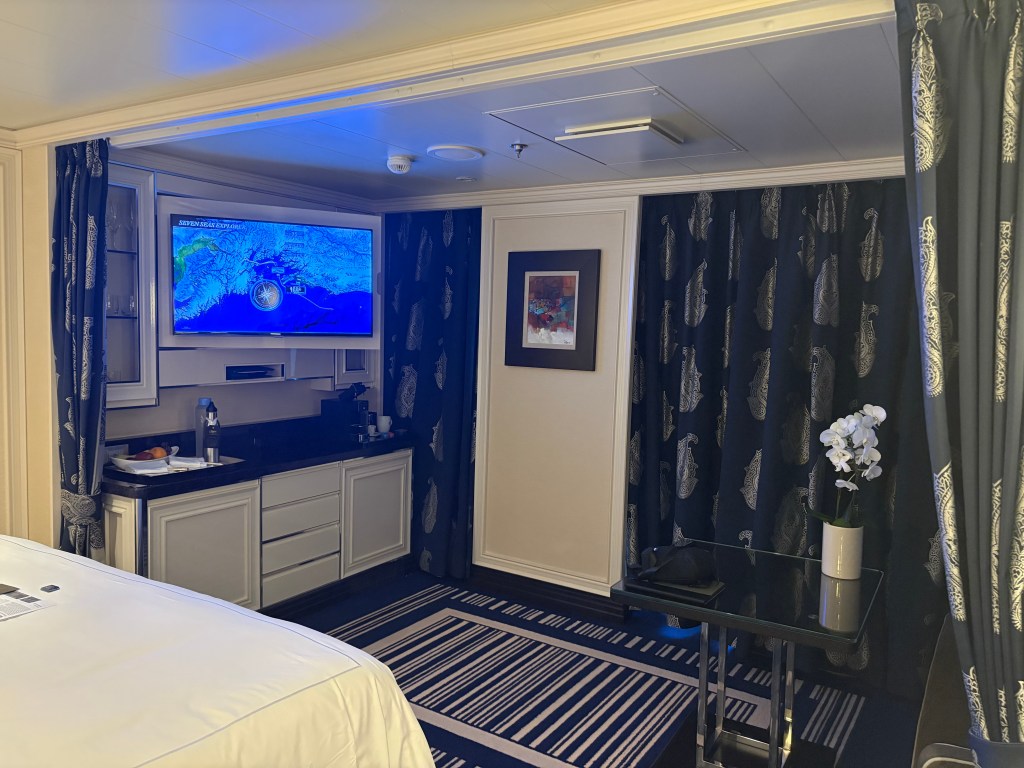
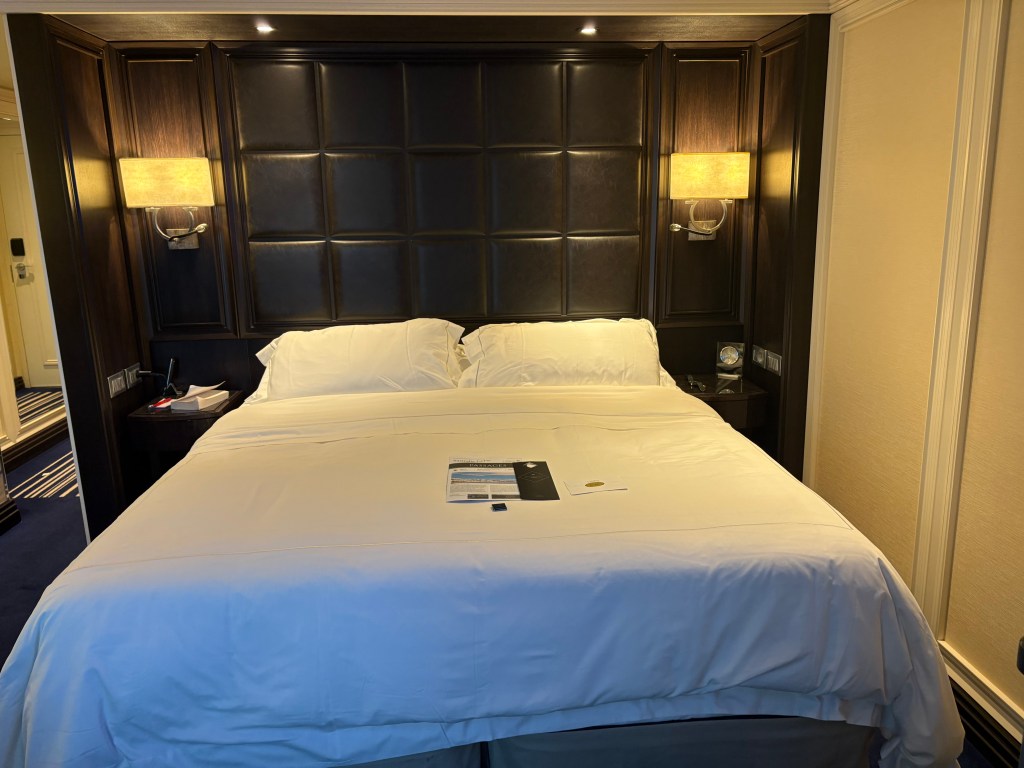
Below: My suite at night, curtains drawn, bed made ready. So quiet and restful, a true escape from the world.
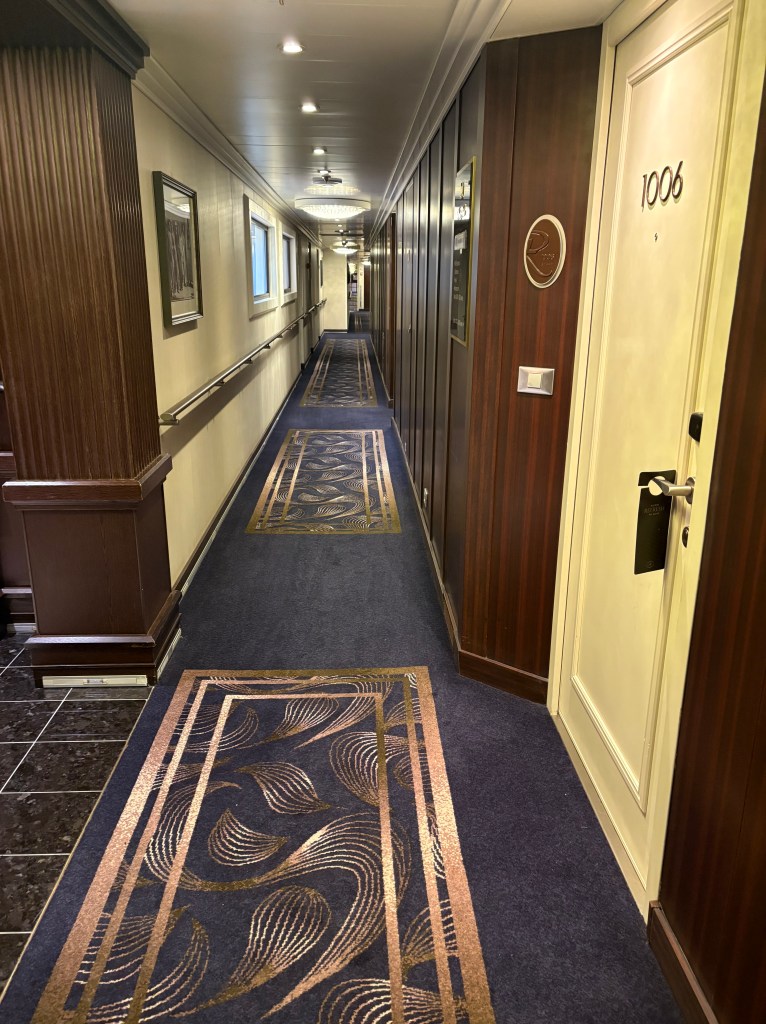
The corridor outside my suite
That first night, because the weather was so surprisingly good for early June in Alaska, the Captain threw a sail-away party on Deck 11 where there are two bars and the main swimming pool and a brasserie-style grill and buffet, part of which turns into an Italian restaurant at night. Champagne flowed, cocktails were handed round along with the daintiest of canapes. Surrounding us was the calm blue ocean and the snow-peaked mountains that remained a feature of the whole voyage. A small yacht sailed by. The tiny town of Whittier, where pretty well everyone lives in one building, slowly disappeared as we made our stately way down the sound. It was a wonderful start to my seven days of bliss!
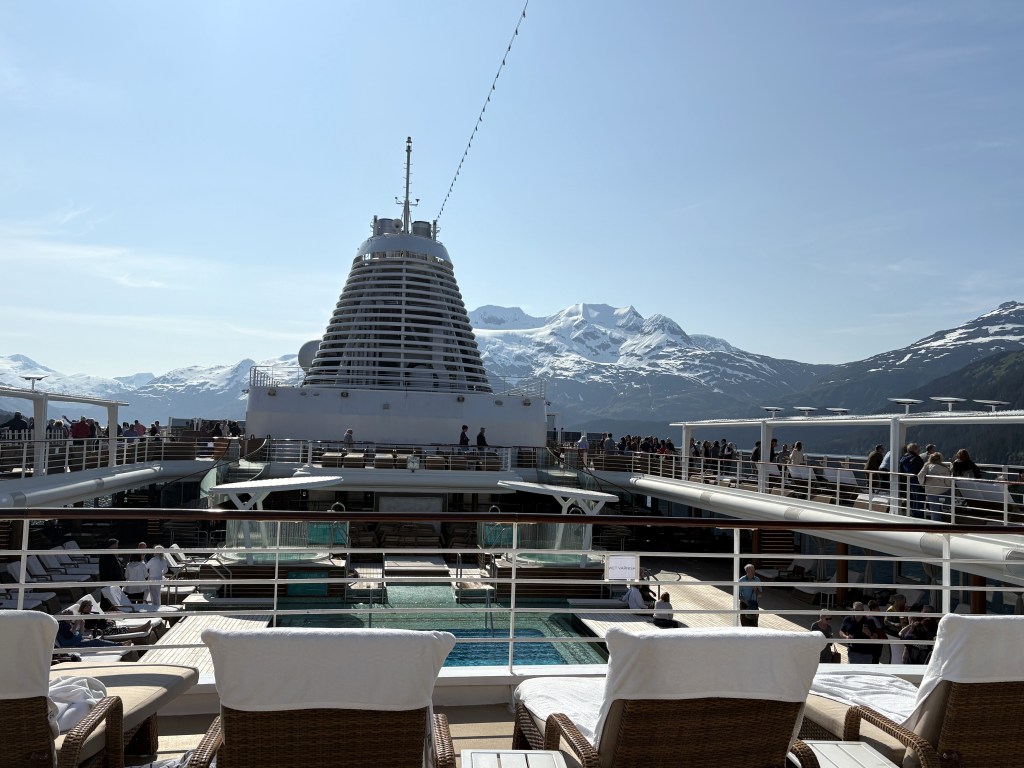


I shan’t describe the journey down through the pretty albeit touristy little fjord towns of south western Alaska with their alluring names – Sitka, Skagway, Juneau, Ketchikan. Their charms are well-known. It was all impressive glaciers and more mountains with water cascading down them and the mighty Tongass forest and calm, narrow waterways with many small, pine-covered islands. We saw seals and sea lions, Orcas, seabirds, sweet little sea otters and different species of whale. We went ashore to feast on salmon and crab and buy local crafts and taste indigenous culture.
And each day we returned, thankfully, to our beautiful ship and another night’s sailing.
Regent does not overwhelm you with entertainment, thank goodness. Though there is plenty there, if you want it. In the several lounges there is music of different kinds – a cocktail pianist, a pop duo, a jazz combo, light chamber performances, all discreet and catering very much to an older vibe. The on-board troupe gives about three shows a week in the gorgeous theatre, with its deep blue décor and little round lamps along the seating rows. These shows (I am told) don’t compare with the world-class affairs seen on the big cruise ships with their thousands of passengers but they are amusing enough, with singers and dancers doing all the safe nostalgic stuff that the Regent audiences obviously love. And there’s a comedian, on other nights. And a show put on by the crew on the last night.
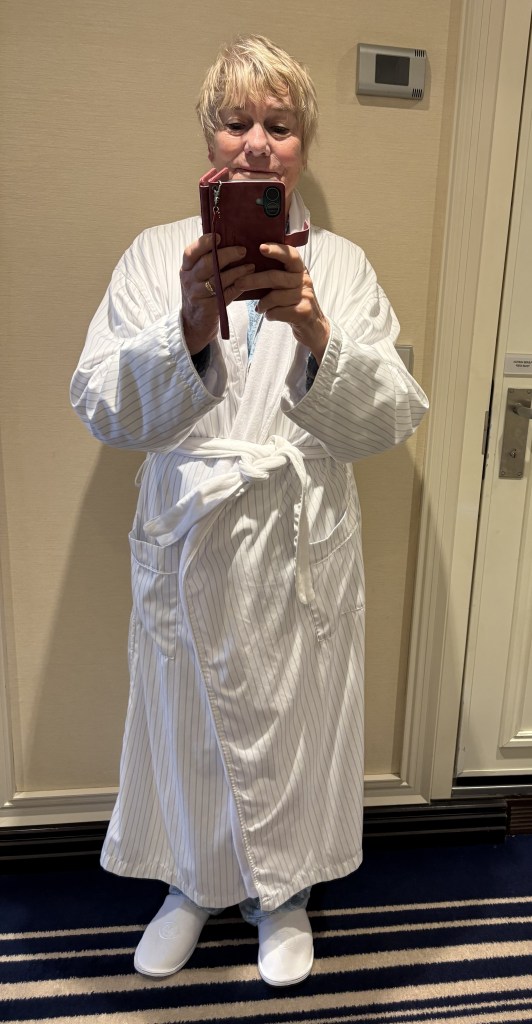
It was lovely after my shower to put on the luxurious Regent bathrobe.
More enjoyable, to me, were the lectures given by the on-board naturalist, Dr. Dave. These are tailored to the voyage – in my case, bears, Bald Eagles, sea otters and wolves. If you miss one of these lectures they are replayed on the TV in your cabin. There was also an excellent lecture by an Alaskan historian who came on board to deliver it; making us realise the hard, cold reality that lies behind those small, coastal, summertime towns that, like bears, have to all but hibernate during the long, ice-bound winter.
Karaoke, trivia, bridge, games, other fun stuff are features of day and night activity on board though I didn’t sample any of these. Too busy. And too tired after undertaking the more strenuous on-shore expeditions. It was enough for me to enjoy a peaceful cocktail while gazing over the sea, still sunlit at 7 pm, then dine in one of the specialty restaurants or the excellent main restaurant, the Compass Rose. And after that, I’d enjoy a cognac or similar after dinner digestif followed by a meander round the top deck.
When I returned to my suite each night the bed would be turned down, lamps glowing softly, curtains drawn. At first I’d draw them back and sit on the balcony for a while, looking at the sea and hoping for a whale. But I soon learned what Cristy had tried to tell me, that when you have 16 hours of daylight and a busy daily schedule you need the curtains drawn at night so that you can get some sleep.
On my bed would be a chocolate, an attractively presented ship’s newspaper to advise you of all the next day’s doings plus another four page budget of Australian news. Whatever your nationality, you get a small summary of home country news as it unfolds each day. I threw mine in the bin! Who cares what’s happening back home when you’re in Paradise! And as the ship has excellent wi fi you’re going to find out anyway, via your phone or ipad. But it’s a thoughtful touch.
One of the things that struck me most forcibly was how spacious and uncrowded the ship felt. I was told we had 680 passengers on board, plus almost double that number of crew, but as I walked the long corridors I rarely saw a soul, apart from an occasional quiet-footed polite suite attendant. The lifts – rather splendid lifts at that – were rarely crowded. In the evening the several restaurants and bars were busy and buzzing but never overwhelmingly so, though the largest dining venue, Compass Rose, has something of that Big Ship clatter.
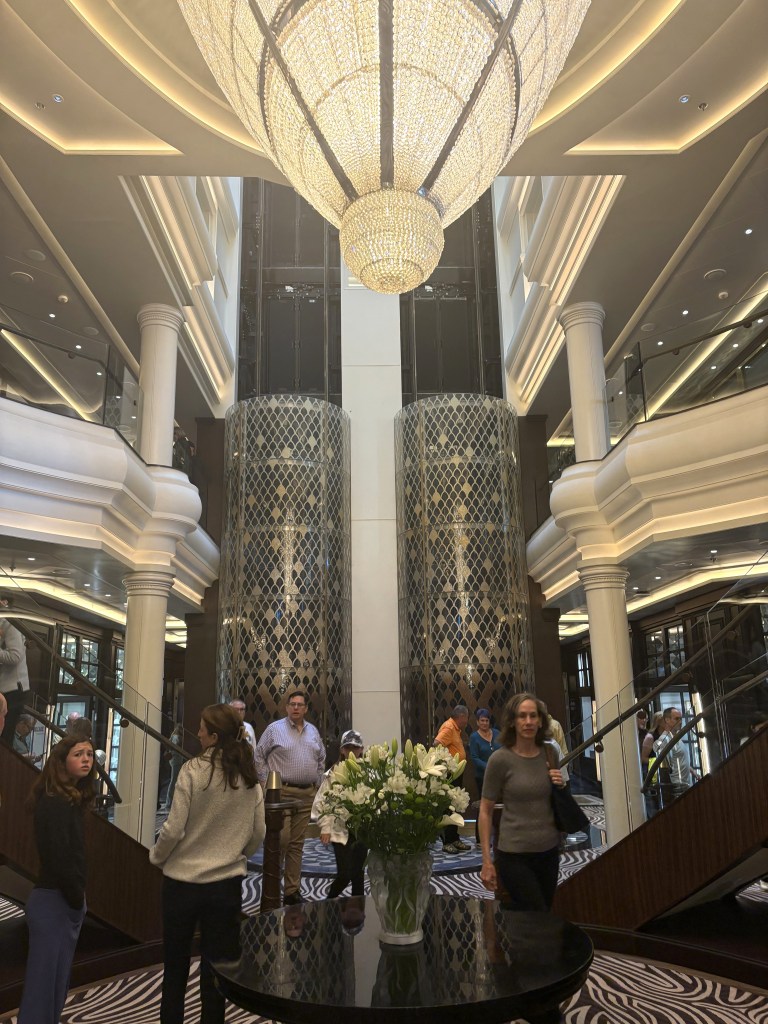
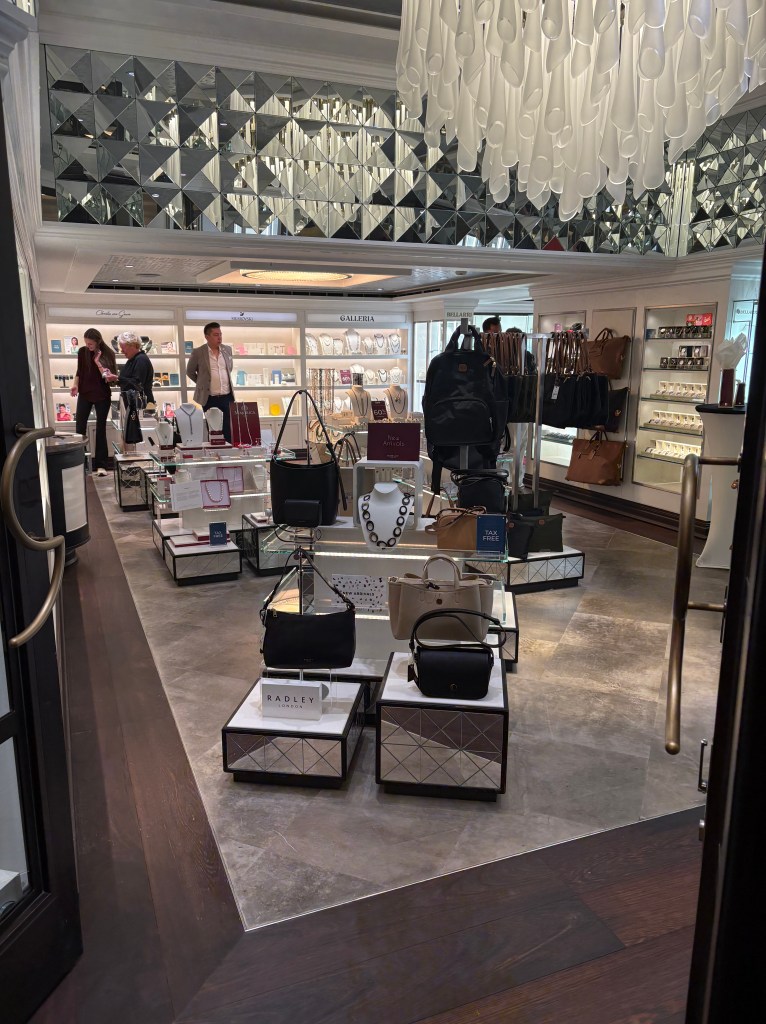


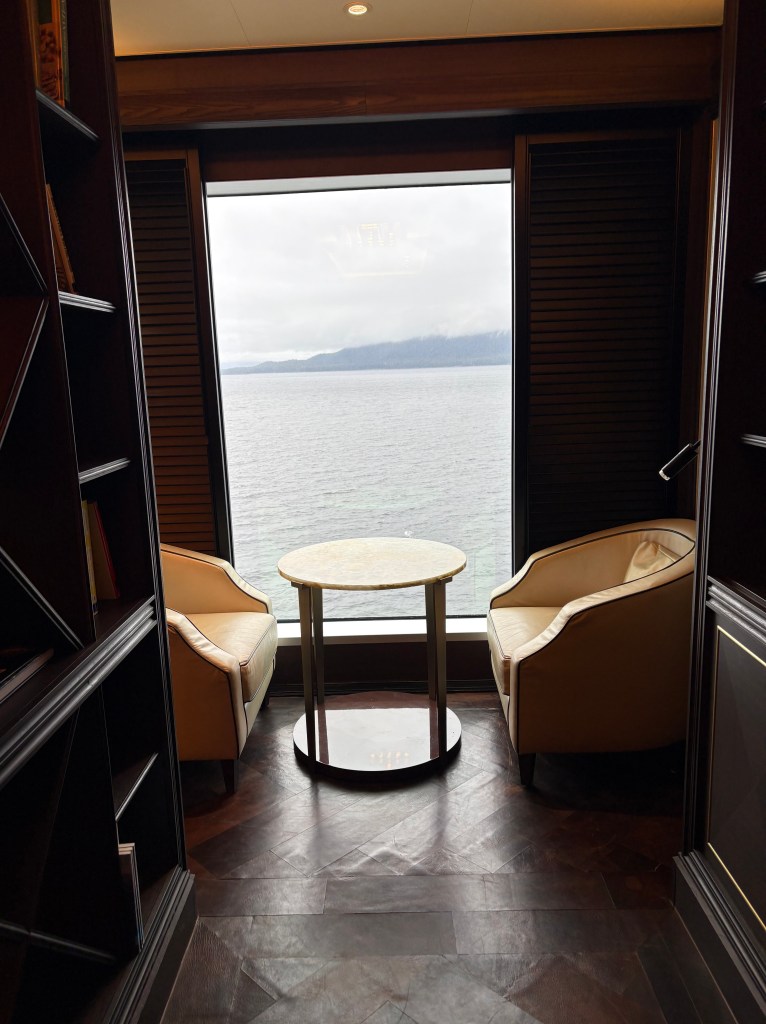
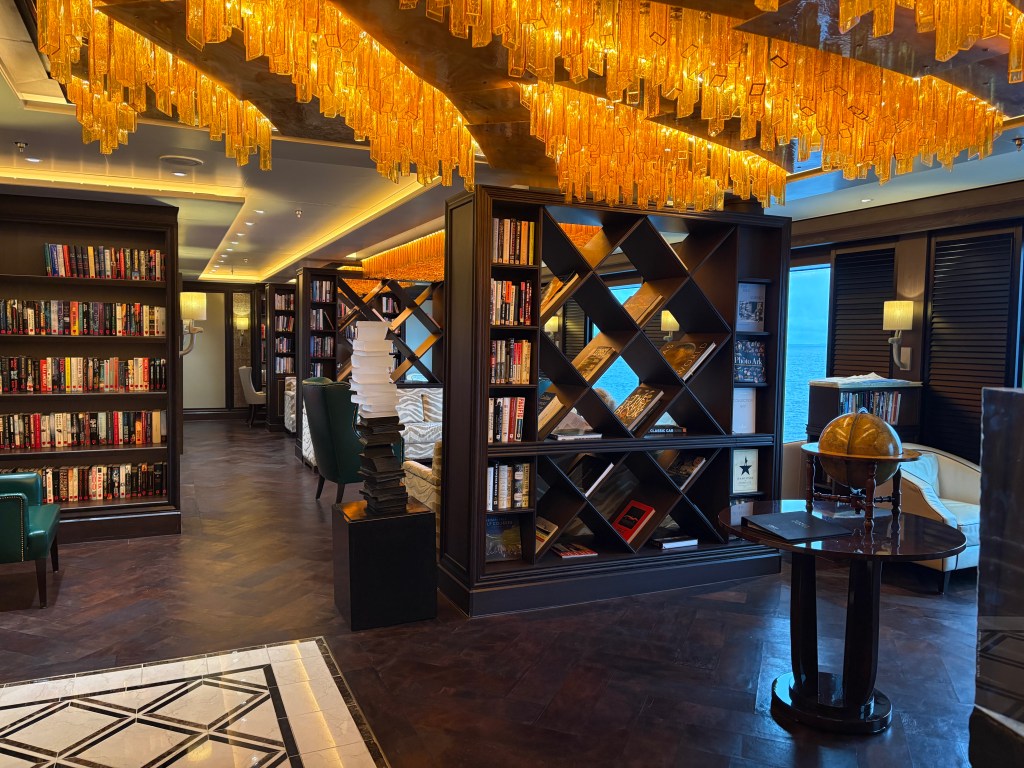
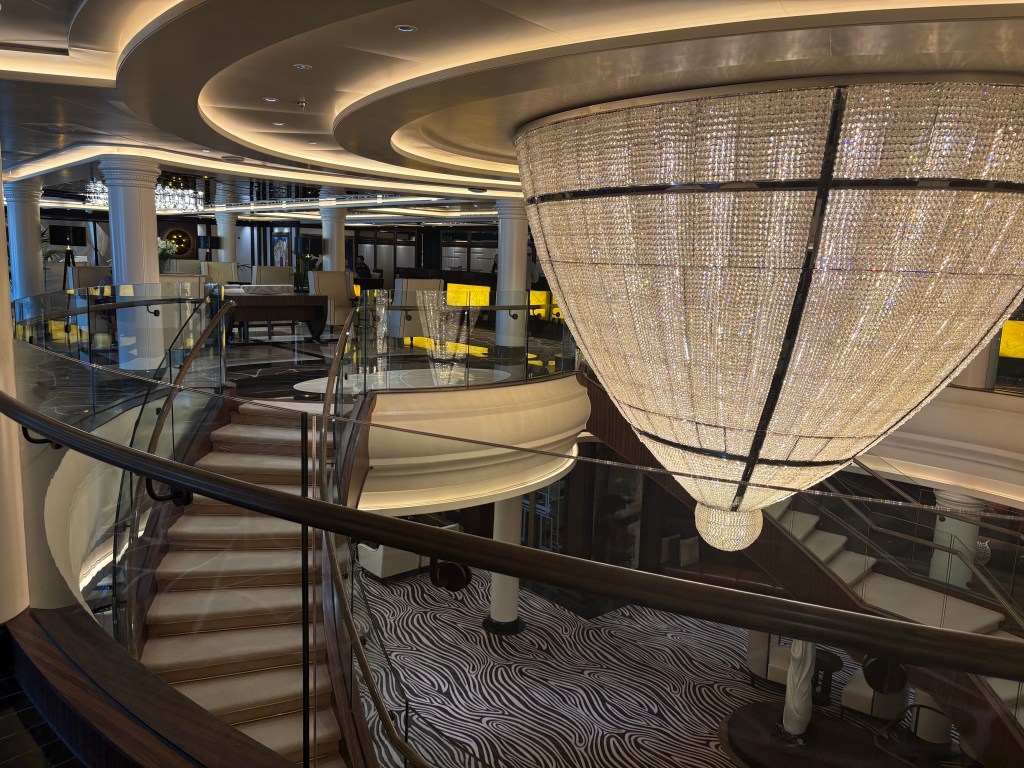
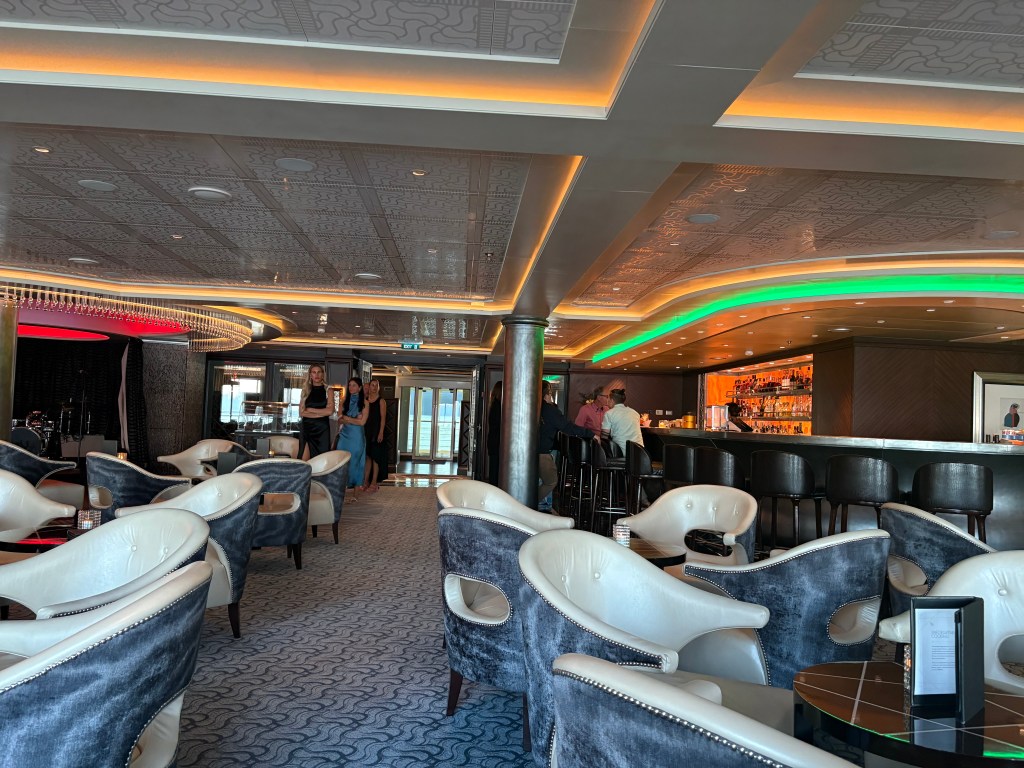
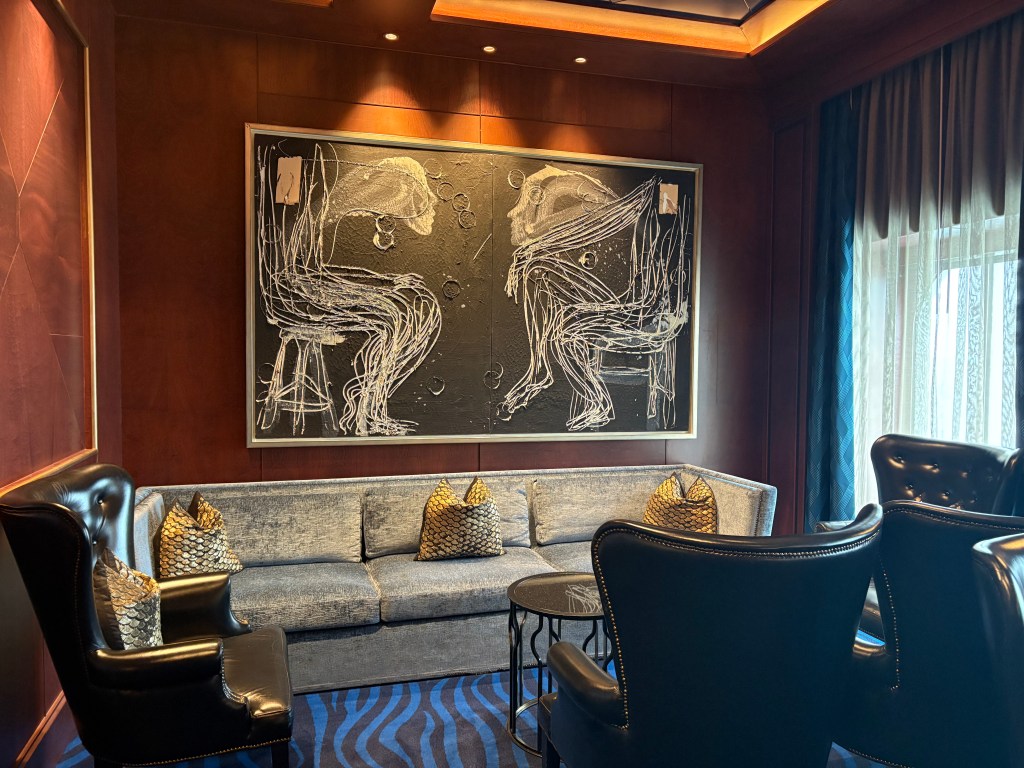
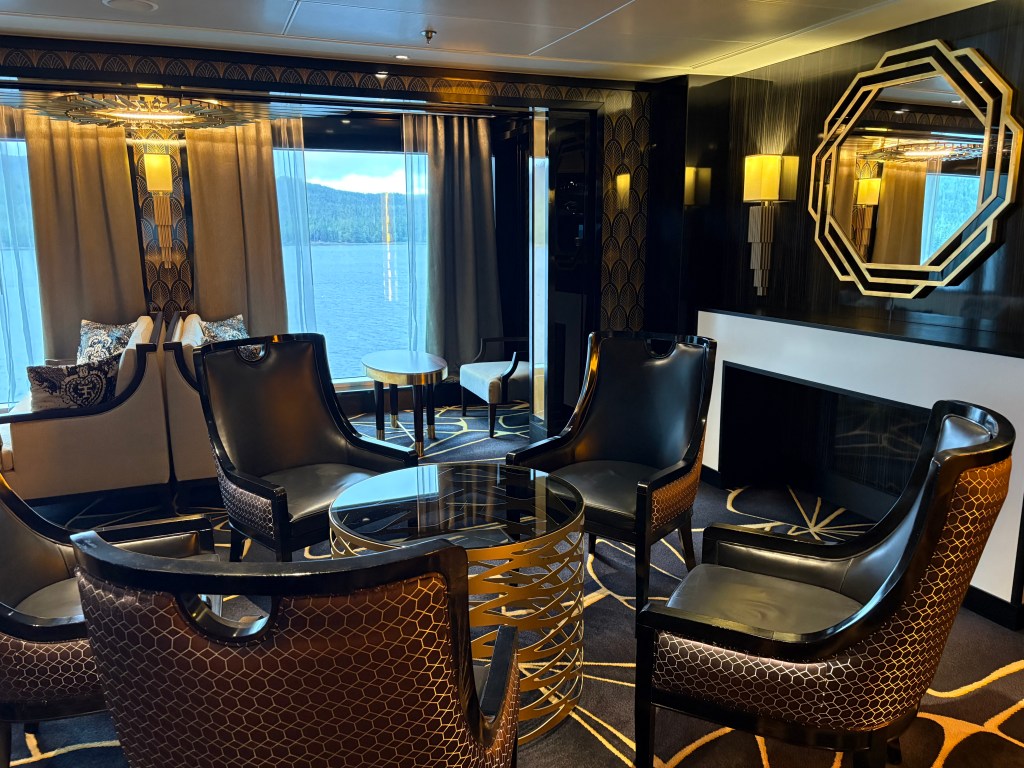
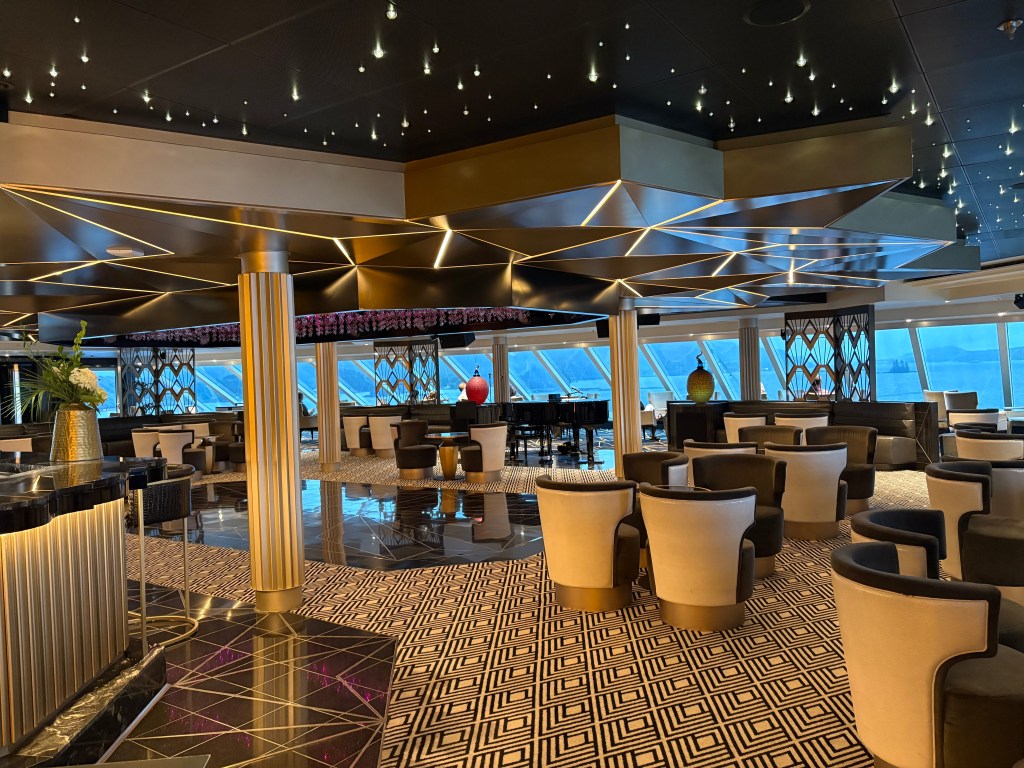
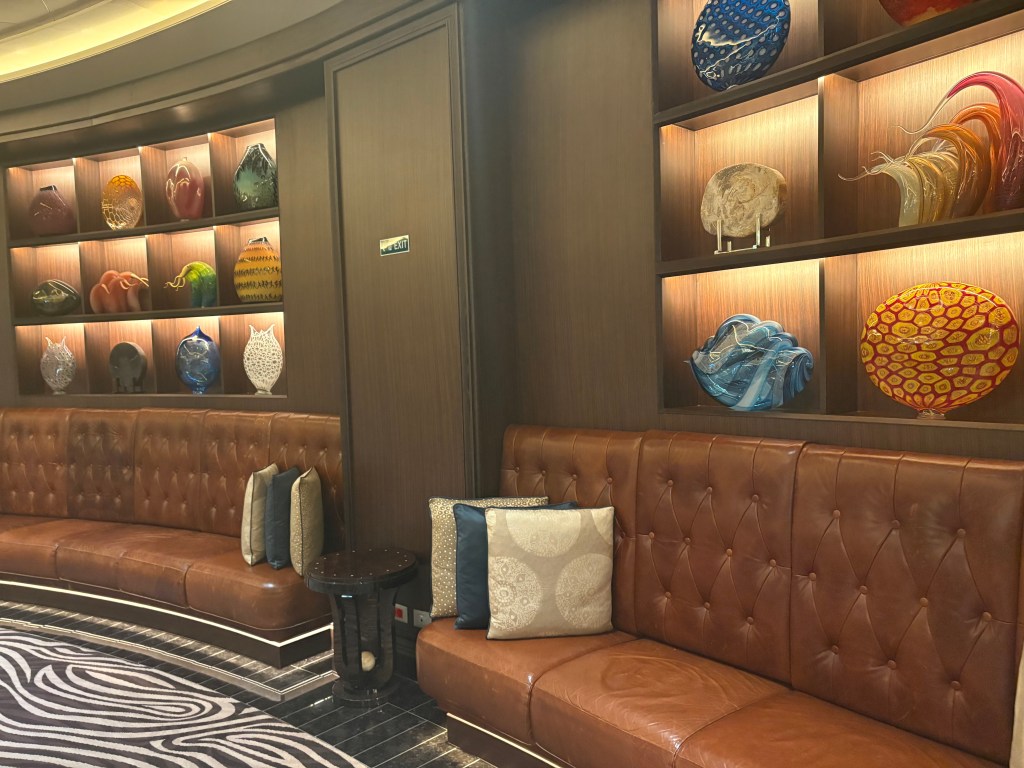
Around the ship – The Atrium, different lounges, library, seating nooks, boutiques…
Food aboard Regent Seven Seas Explorer is a gourmet delight. Truly! I loved every mouthful. You have to book well in advance for three of them – the Prime 7 (steak etc), Chartreuse (French) and the much-acclaimed Pacific Rim (Asian fusion). Even the Italian restaurant usually requires you to book for dinner earlier in the day. Although most people appear to prefer the Pacific Rim, and indeed the food is exquisite, my favourite was Chartreuse. Lovely food, beautifully served. And I loved the Compass Rose, too, for its elegance. Service in all restaurants, bars and cafes is excellent. Deft and friendly. The hospitality crew just can’t seem to do enough to make you happy.
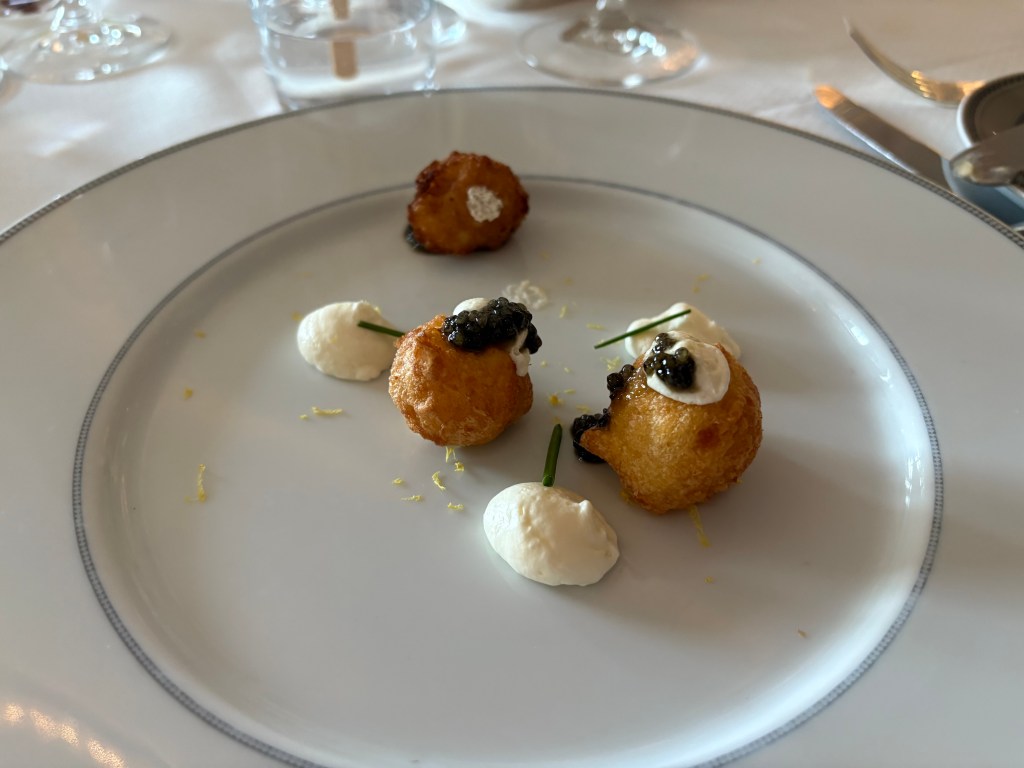
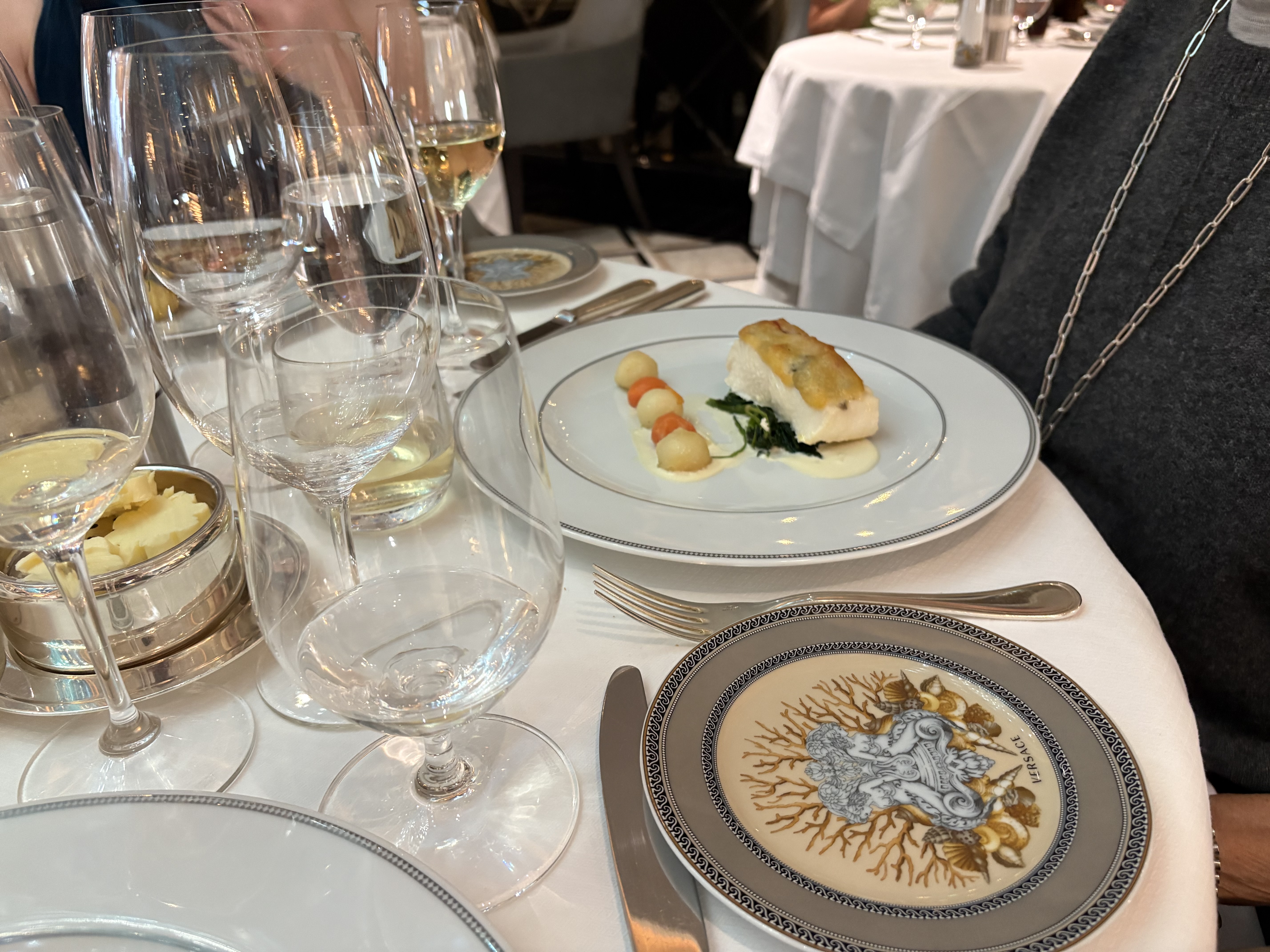
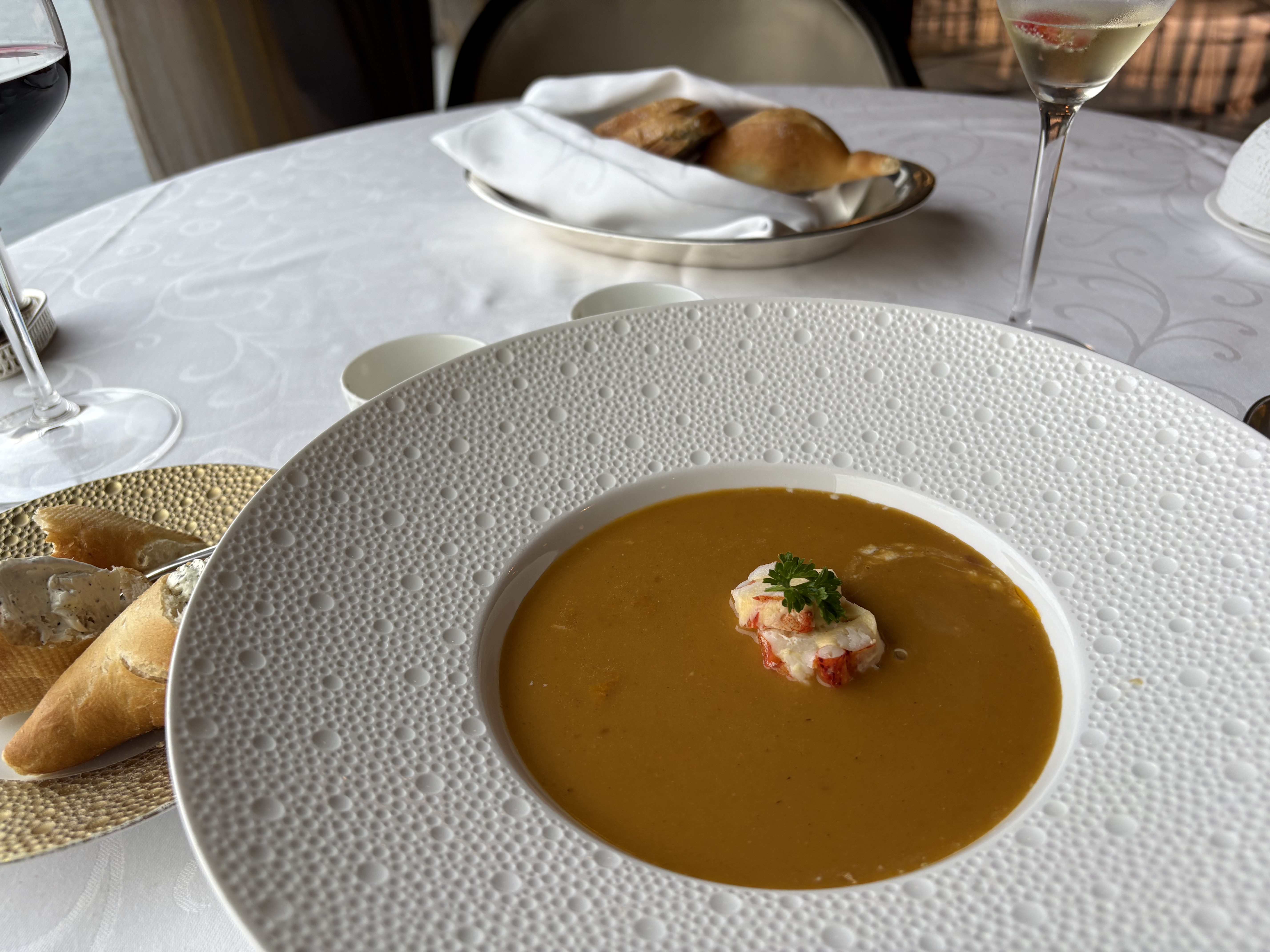
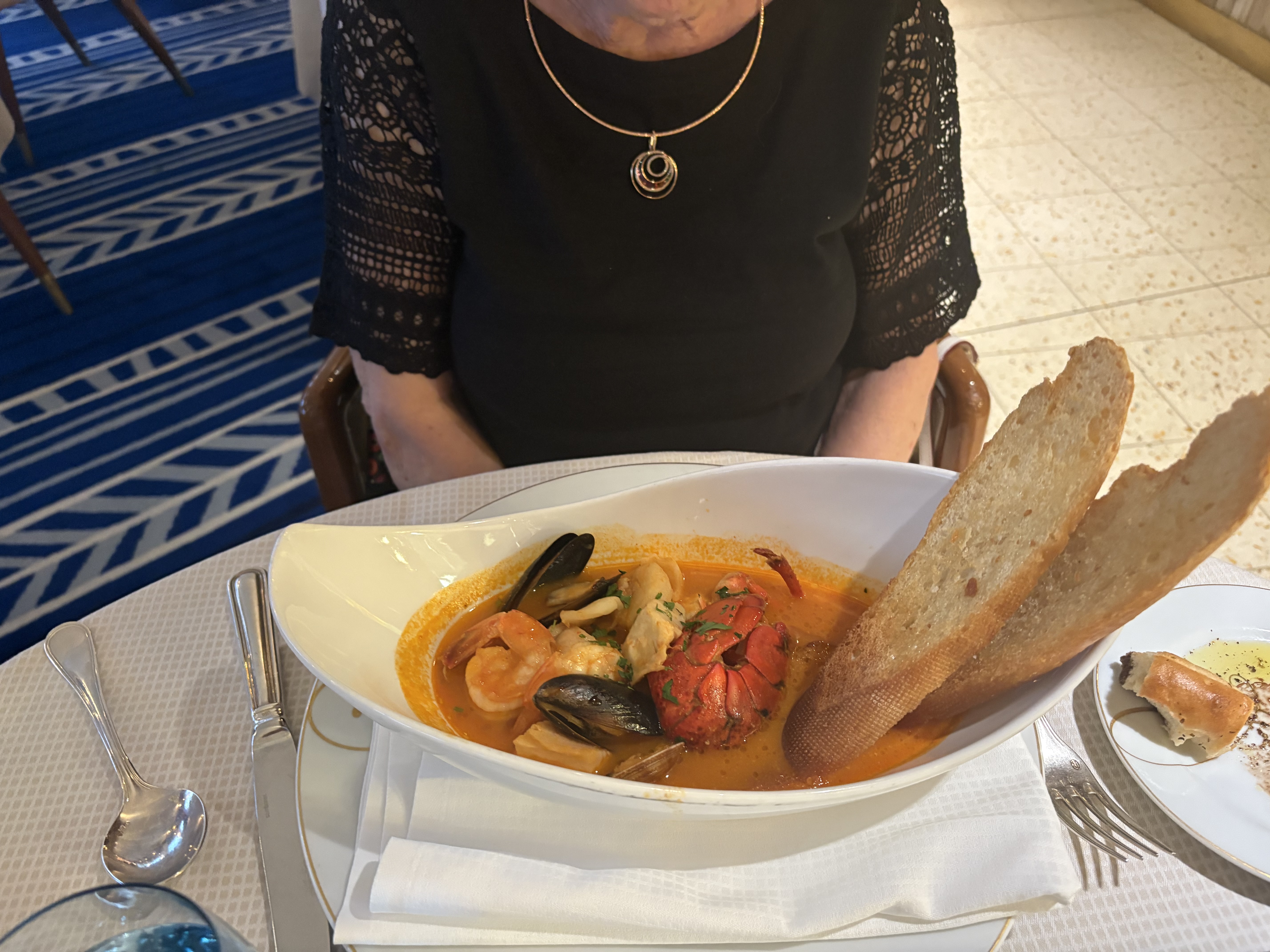

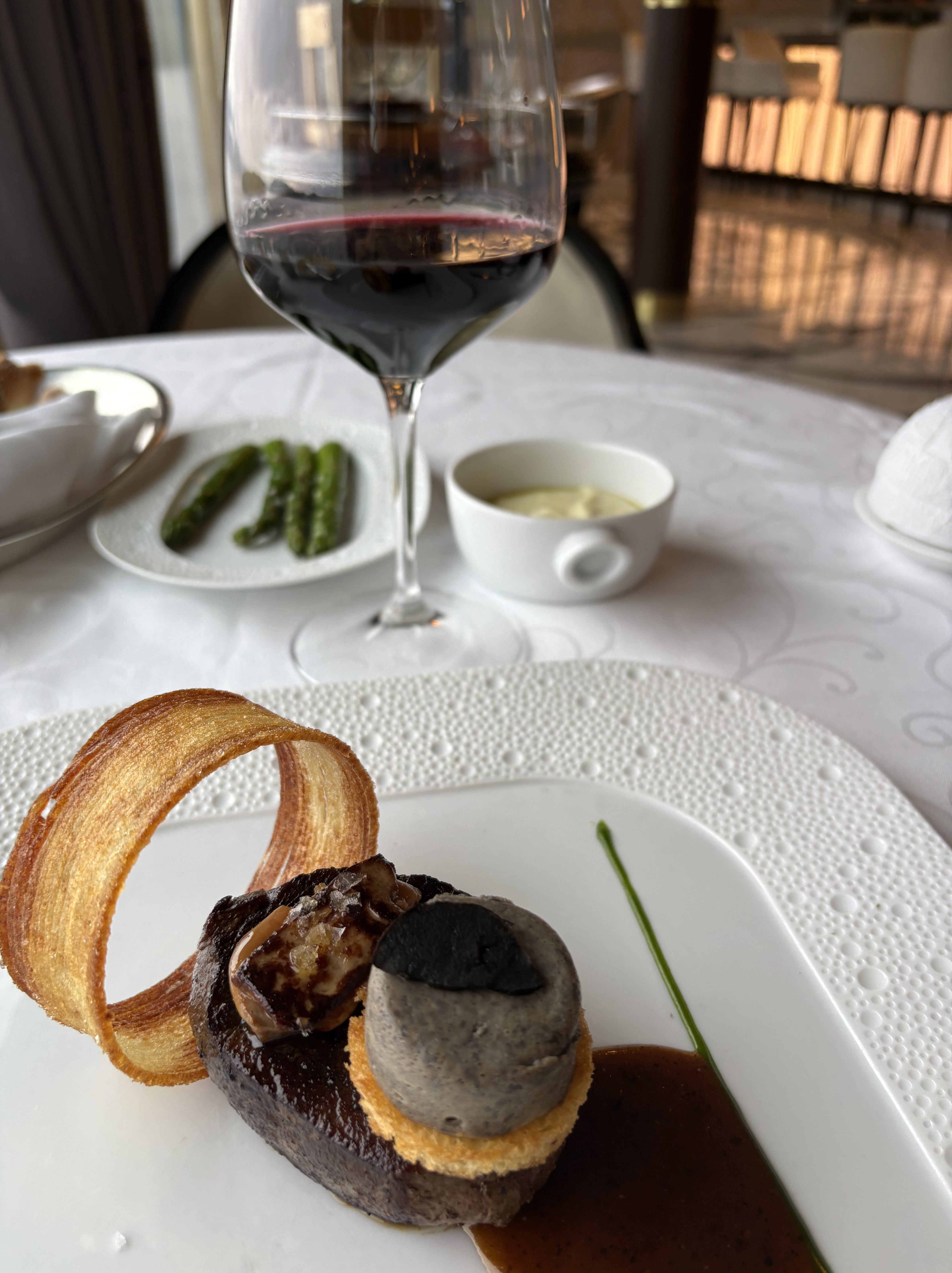
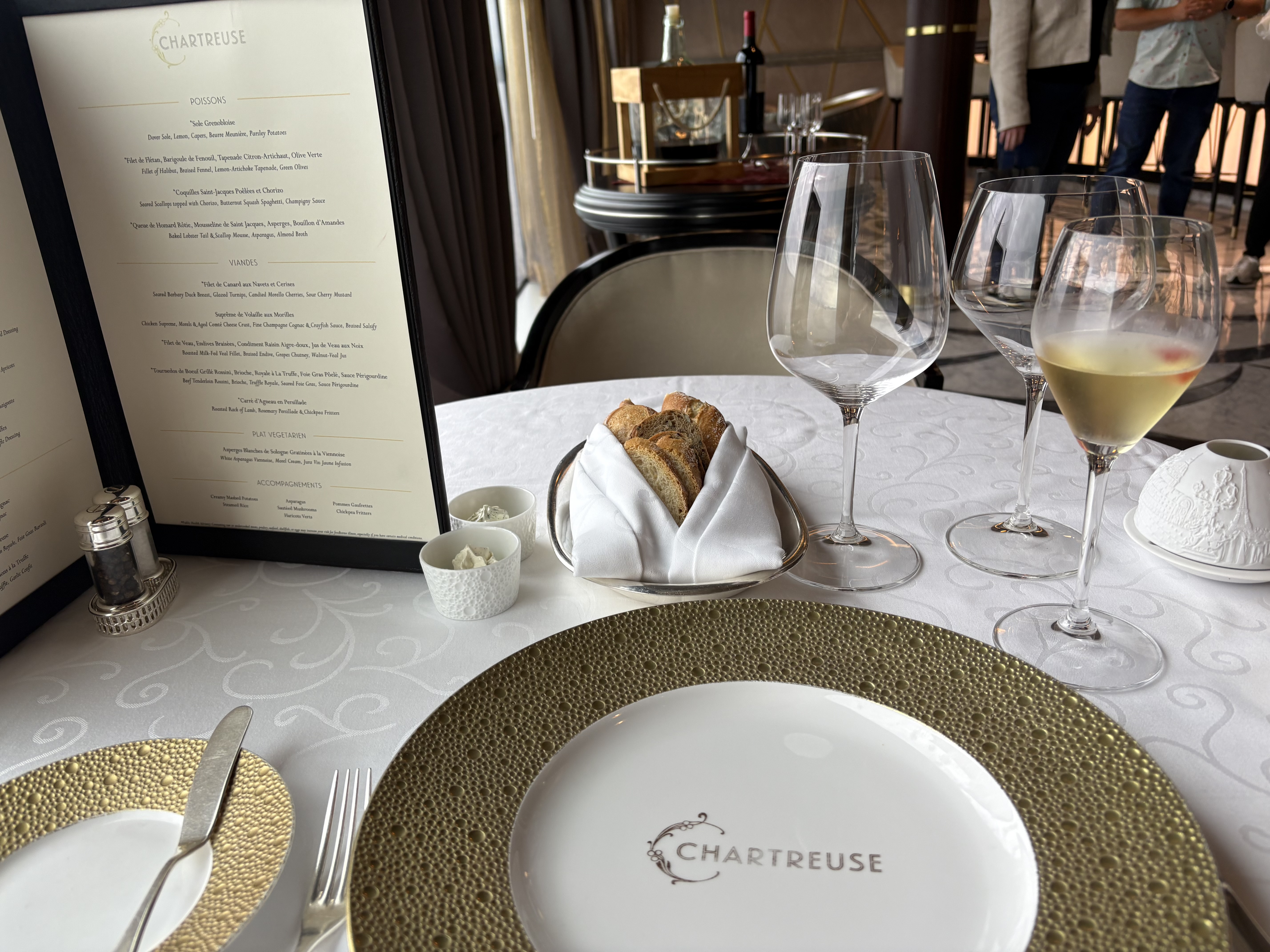
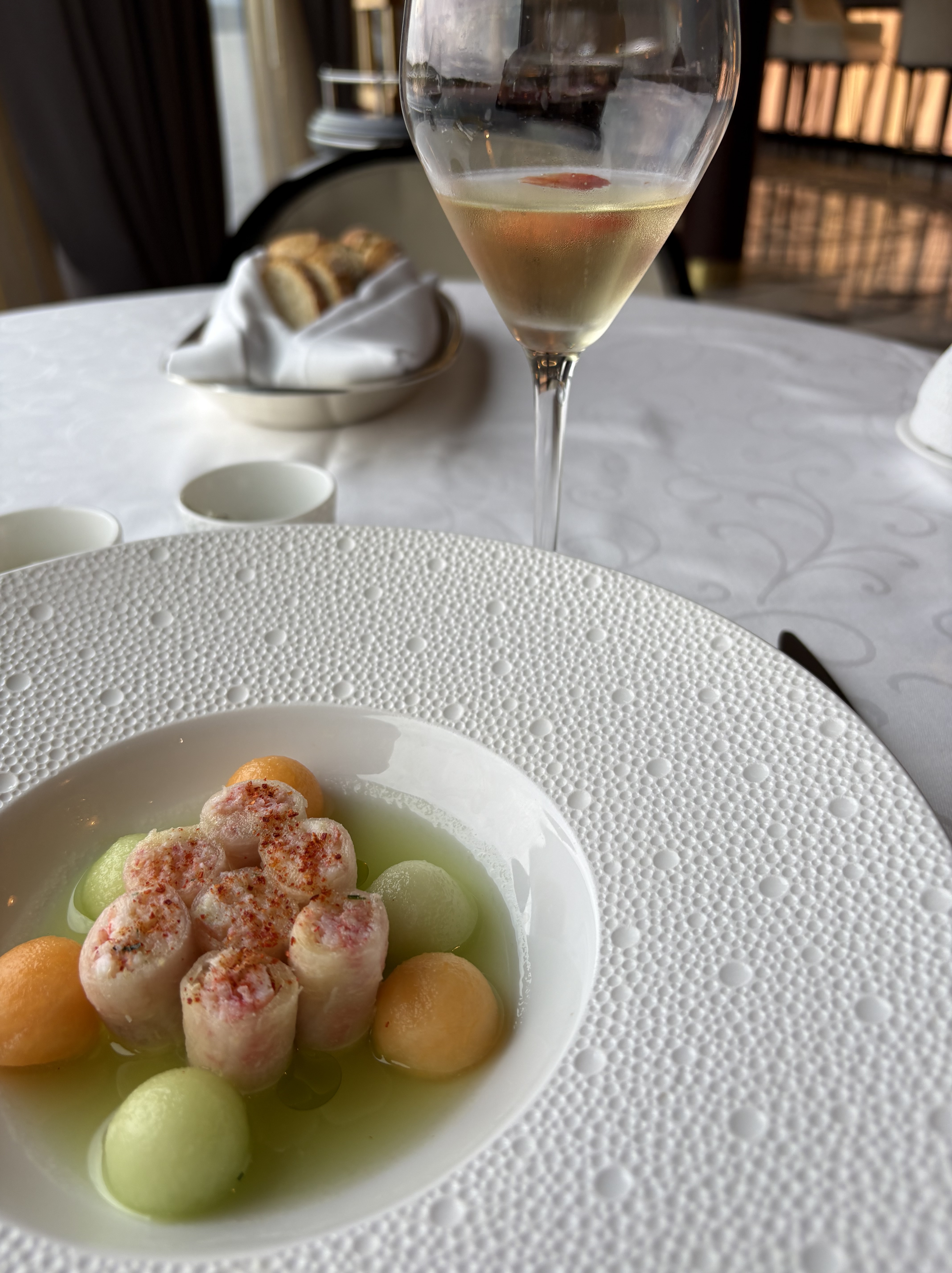
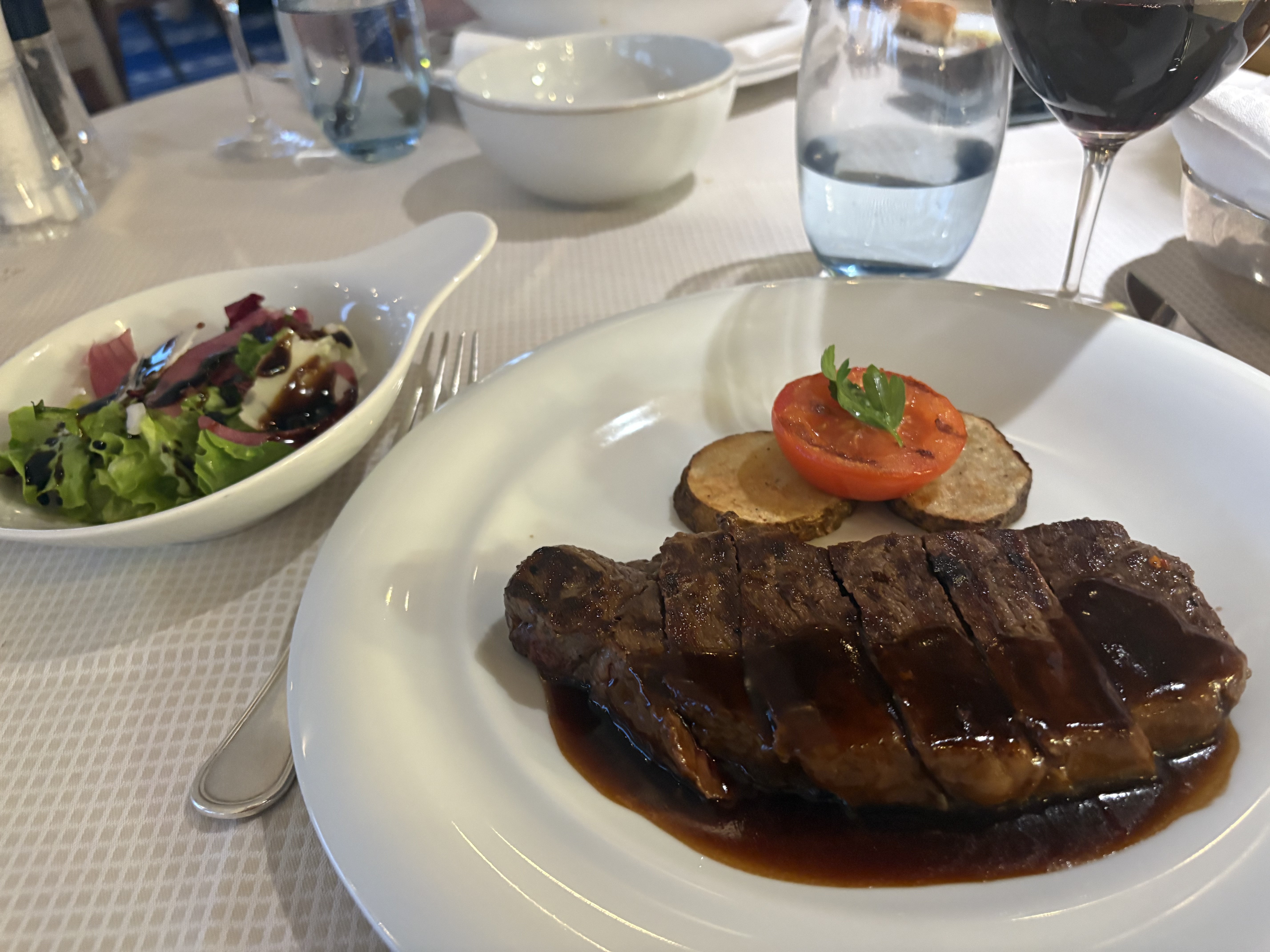
Above: Dishes from four of the restaurants: Prime 7, Compass Rose, Sette Mare and lovely Chartreuse.
I noticed that one cruise reviewer criticised the quality of fish on board Regent and I have to say I agree. Salmon was excellent, as you’d expect on an Alaska/Canada cruise. But the lobster tail WAS a bit dry and the Dover sole likewise disappointing. The result of prolonged deep freezing. Prawns, by contrast, were always very fresh-tasting and the seared black cod in Pacific Rim was divine.
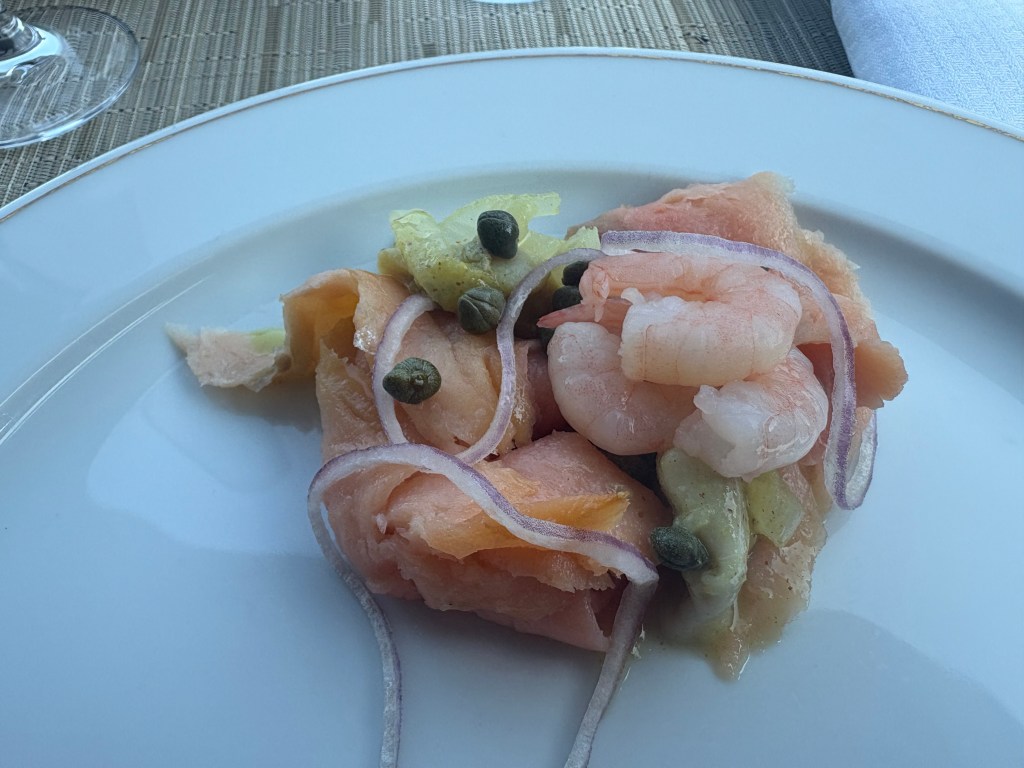
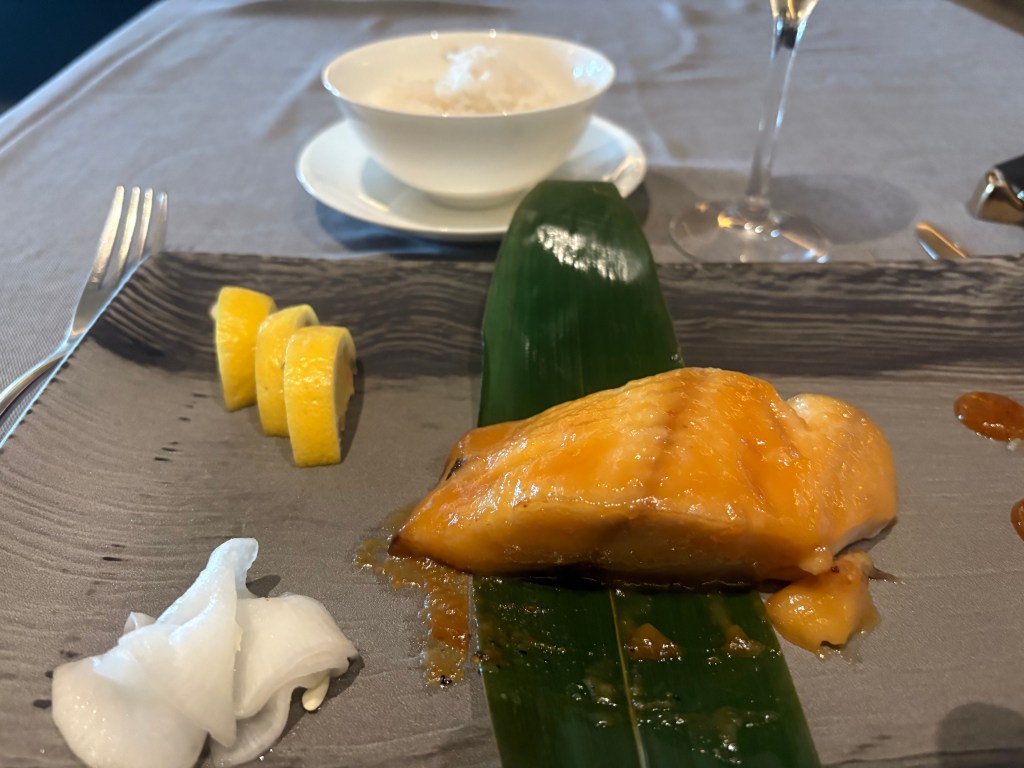
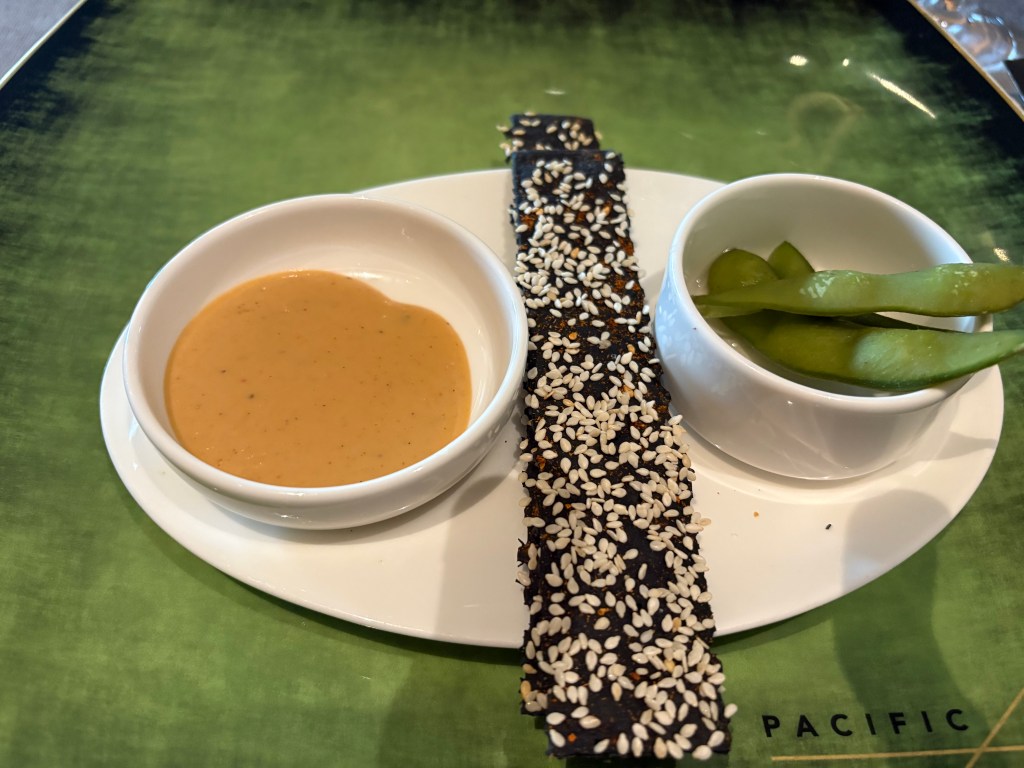

Specialties from the very popular Pacific Rim

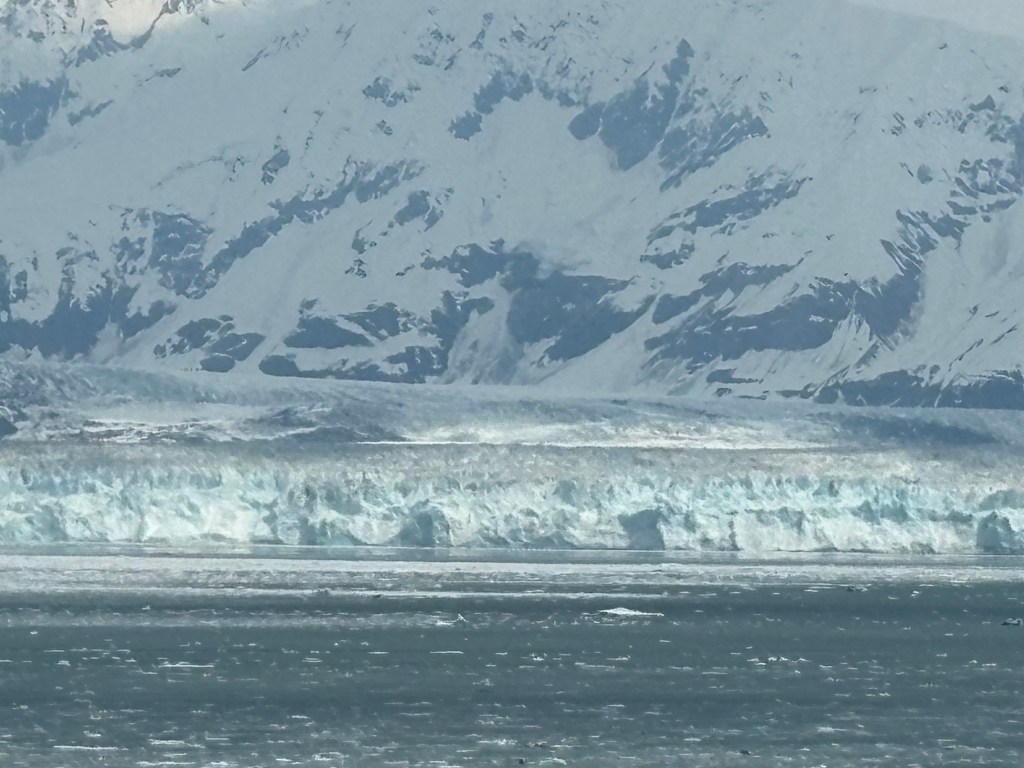
Eating fresh-made ice cream from a silver dish seemed an appropriate way to view the Hubbard Glacier.
There are several breakfast options but my own choice was the La Veranda buffet on Deck 11 because you can sit in the big glassed-in dining areas at either side, at spotlessly laid tables, or in the lovely open area at the stern, when the weather is good. Just about anything you want is on the menu and you can enjoy table service or help yourself. They keep bringing round that awful bottomless American coffee in jugs but I ordered mine from the barista bar and got perfect espresso. There is, of course, an omelette station and a waffle station and a pancake station and…oh…hot food and cold food and caviar on Sundays.
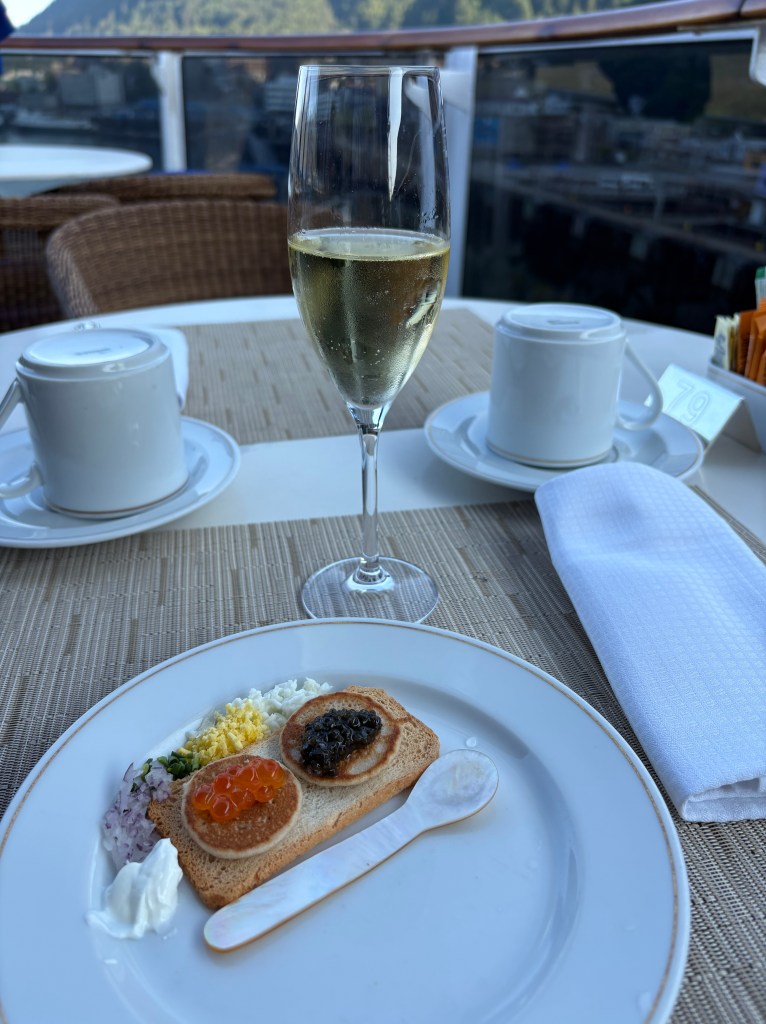
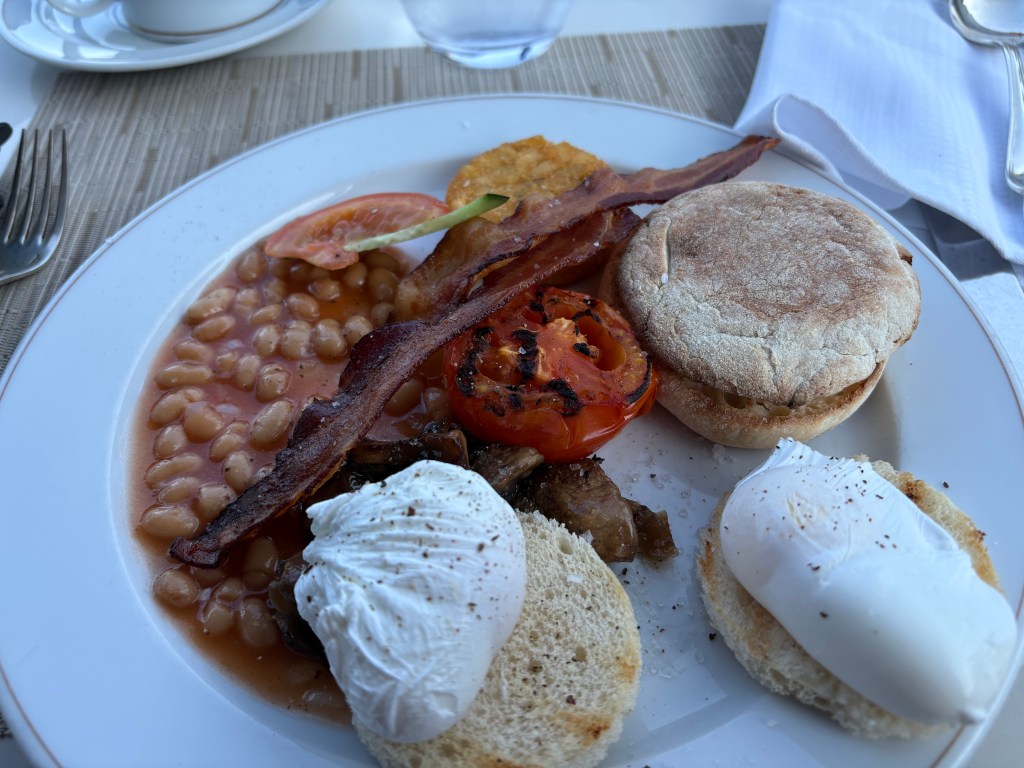
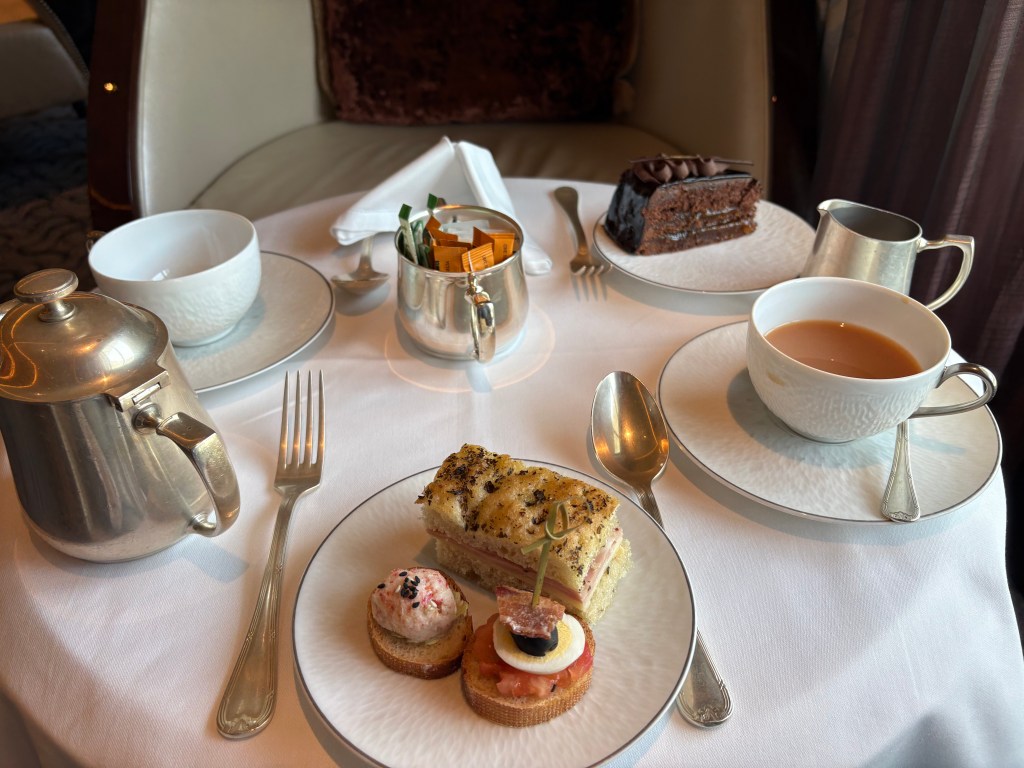



And one day, just because I could, I ordered breakfast in my room, or, rather, on my balcony, enjoying my several beautifully served courses while we sailed into Sitka.
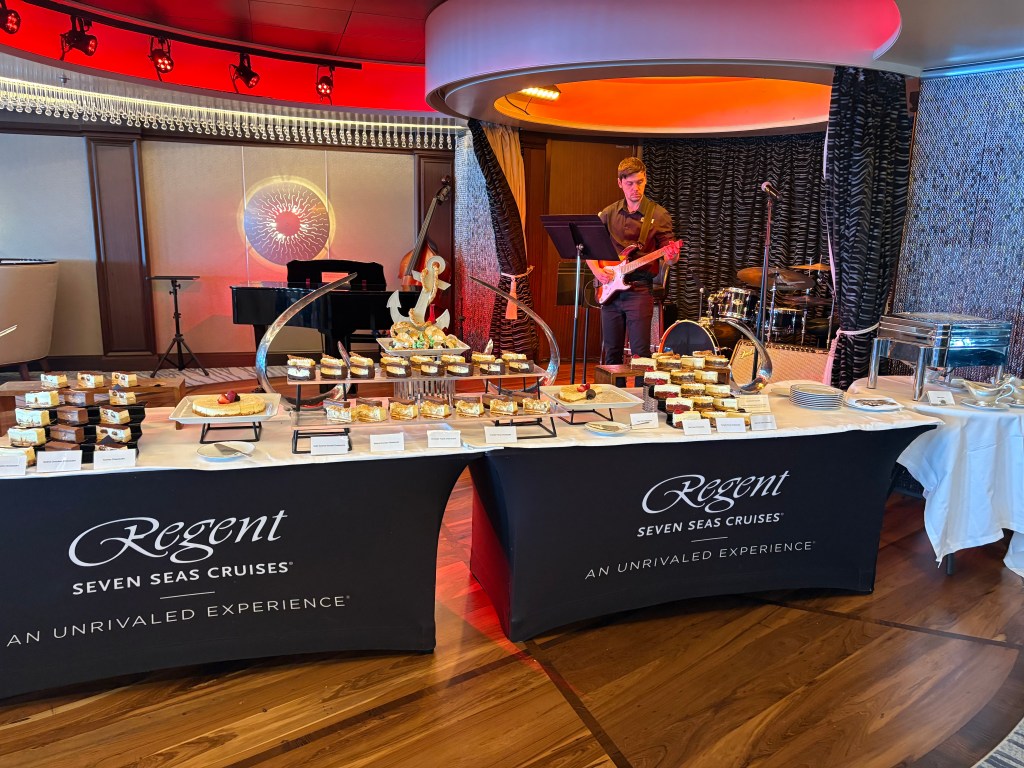
Two other foodie things worth mentioning – the fresh-made ice cream (there is something rather wonderful about eating ice cream in a silvery dish while gazing at a glacier) and the afternoon tea. This is served in one of the several elegant salons and every day offers something special beyond the canapes and little sandwiches – one afternoon it was a whole, long table full of different types of cheesecake. Another day, cupcakes. Disappointingly the tea is made from tea bags but never mind, there is live music in the background and the furnishings are, though modern enough, reminiscent of a more glamorous bygone time.
Seven Seas Explorer is small enough to get around easily and large enough to always find a quiet space – the library with its nooks and books, for example, or the many sheltered corners on the deck, or little niches near the central atrium where fine paintings hang – even a Picasso. The Observation Lounge over the bow, with its great raked glass windows and 270 degree view, comfy furnishings and large bar is a popular spot for an evening cocktail but during the morning it’s barely occupied and one can sit there gazing for’ard and cosily reading in perfect peace on a rainy day. Same goes for the Connoisseur Club where you can smoke cigars and sip fine brandy. I never once saw anyone in there but it has all the understated opulence of an old-fashioned gentleman’s club and children are not allowed.
I haven’t mentioned the casino. I never do mention casinos because I hate them but there is a small one on board, with pokies and a roulette wheel or two. A tiny touch of Vegas for those who like that sort of thing. My other pet hate is other people’s children though I must say those few on board were very well behaved, as Regent expects them to be. There is a modest Kids’ Club of some sort but no big waterslides or special play areas and too much splashing and noise in the pool is frowned upon. Those under eighteen are welcomed but not especially catered to.
I’m not a big gym fan either but, as with the casino, I must at least mention that there IS a gym and a very good one. As far as a non-gym person can judge. It was certainly full of scary-looking digitally operated equipment and staffed by some buff-looking attendants. The spa, however, IS worth a mention. I have never seen anything like it! So many interesting therapies (an aroma shower, a cold room as well as a huge sauna) and treatments, so beautifully laid out, so exquisitely designed. An absolute fairyland of soft colours and luminescence. You just wanted to go in there and yield your body to massaging and moisturising and come out the other end beautified and refreshed. I didn’t have time to get even my nails done but next time I’m on a Regent ship I’ll make the spa a priority! Use of the spa facilities is included in the cruise cost but treatments are extra.
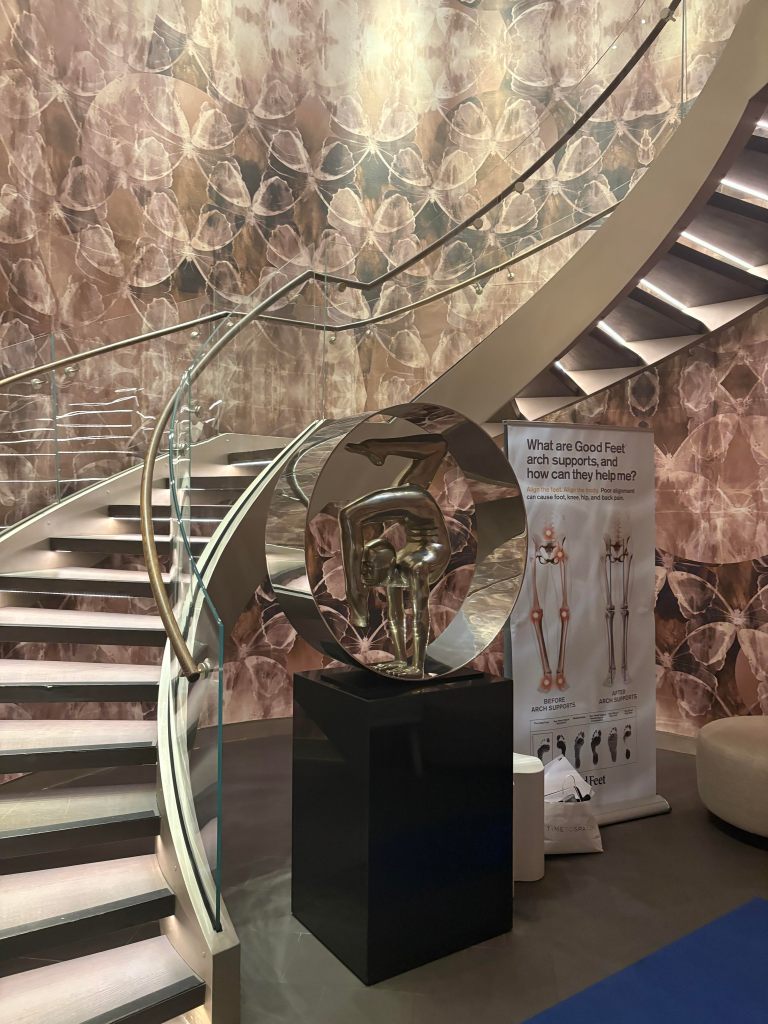
I didn’t get around to taking photos of the many wonders of the spa – but here is the glamorous staircase to the upper level
I shall let my photographs tell the rest of the story. But one last happy comment – laundry is included in the price and it comes back perfectly done, folded in tissue in a Regent box, or on hangers covered with plastic. A gorgeous touch.
Do I think Regent Seven Seas is expensive? That is, of course, a subjective question. Other cruise lines offer luxury, though not many of them to Regent standard. But what Regent offers beyond that is space. You never feel overcrowded or pushed about; it’s like being in a really well-run top class hotel from stem to stern. I like the all-inclusive price; not having to worry about tipping or paying for extras because everything you eat, drink and do is covered in the cruise price, and most of the shore excursions too. My opinion is that you get a lot of bang for your buck.
For me, the outstanding thrill was a feeling of glamour. It’s not easy to feel glamorous, at my age, but for seven nights on the Explorer, I did. Getting ready for the evening in my elegant suite, dressing up for dinner and putting on my pearls, meeting equally well-dressed shipboard acquaintances in one of the cocktail lounges, dining later than usual in such splendid surroundings, enjoying the after-dinner entertainment – these were a lovely reminder of long-gone times. The Regent Seven Seas Explorer, for a short and sweet while, gave me back my youth.
I can’t wait to go again!

We disembarked in Vancouver early in the morning and I felt so sad to leave my lovely ship and so envious of those who were sailing back up the Inside Passage. In the evening I went down to the dock to wave goodbye.
There’s still a lot of Constantinople in Istanbul
“Istanbul was Constantinople
Now it’s Istanbul not Constantinople…“
…sang The Four Lads, back in 1953, thus earning themselves a hit with this silly but harmless song which referenced the official name change of that city in 1930.
That song came out exactly half a century after Constantinople was conquered and invaded by the Ottoman Turks, the city having been a pivotal centre of Christianity for more than a thousand years before that and much more important in the formation of that religion than Rome was in those early years AD.
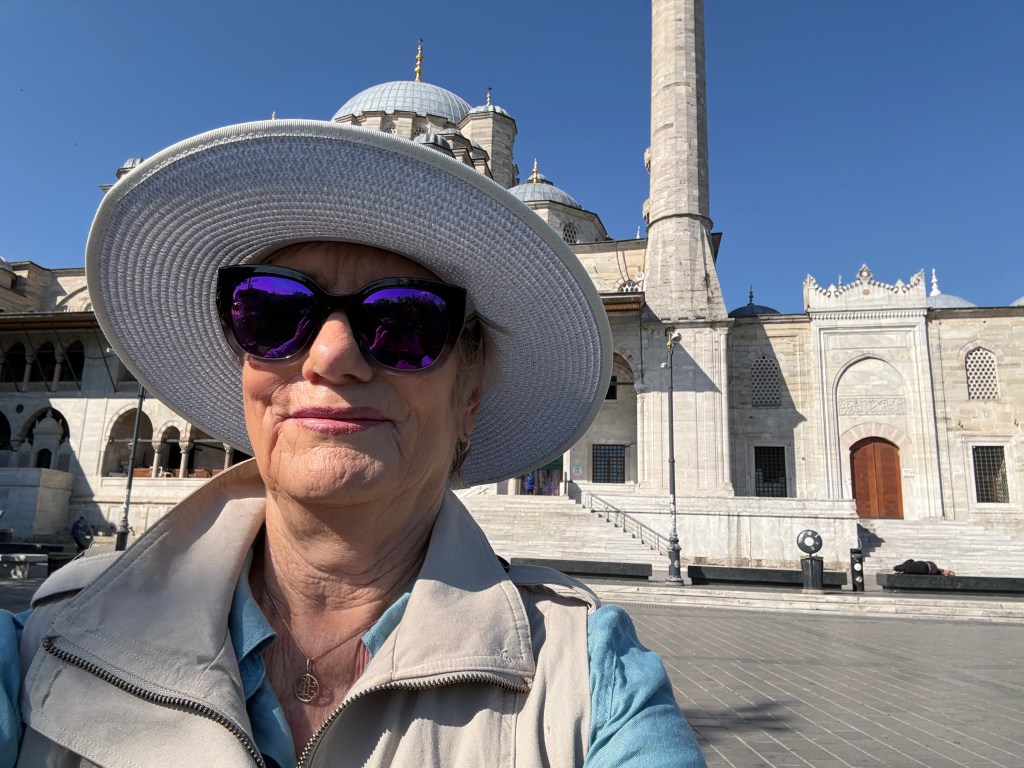
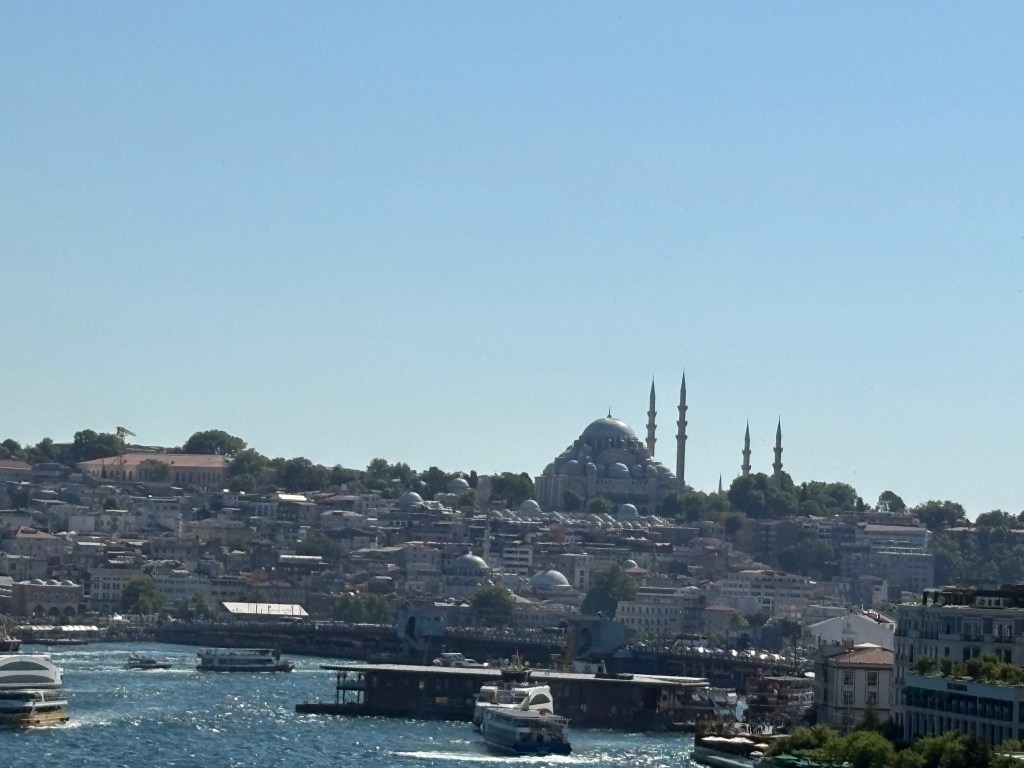
Today, it is very much a city of mosques and very beautiful mosques at that. Their graceful minarets are the city’s defining characteristic, along with the great seaway of the Bosporus and Golden Horn. Mosques are everywhere, not just the postcard famous buildings but pretty little ones in backstreets around the city. I am no fan of Islam (or any religion for that matter, but Islam I find particularly distasteful) but I do love its architecture. The one great thing it has given the world (yeah, okay, algebra, but I hated that at school so am not going to big it up here!).
The old world boasts magnificent cathedrals built to honour the Christian god but while they inspire awe and contain wondrous art they don’t have the grace of a domed and minareted (is that even a word?) mosque. The famed Blue Mosque sits close to the equally famed Hagia Sofia but to my mind the latter looks squat and rather dowdy besides the splendour of the former.
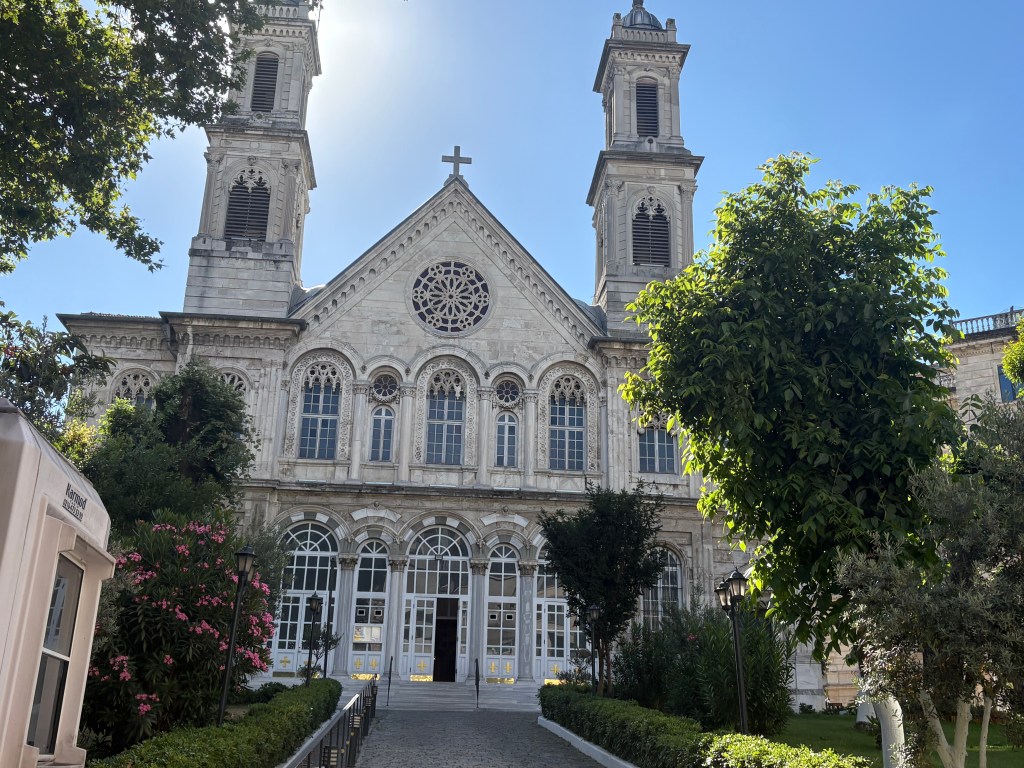
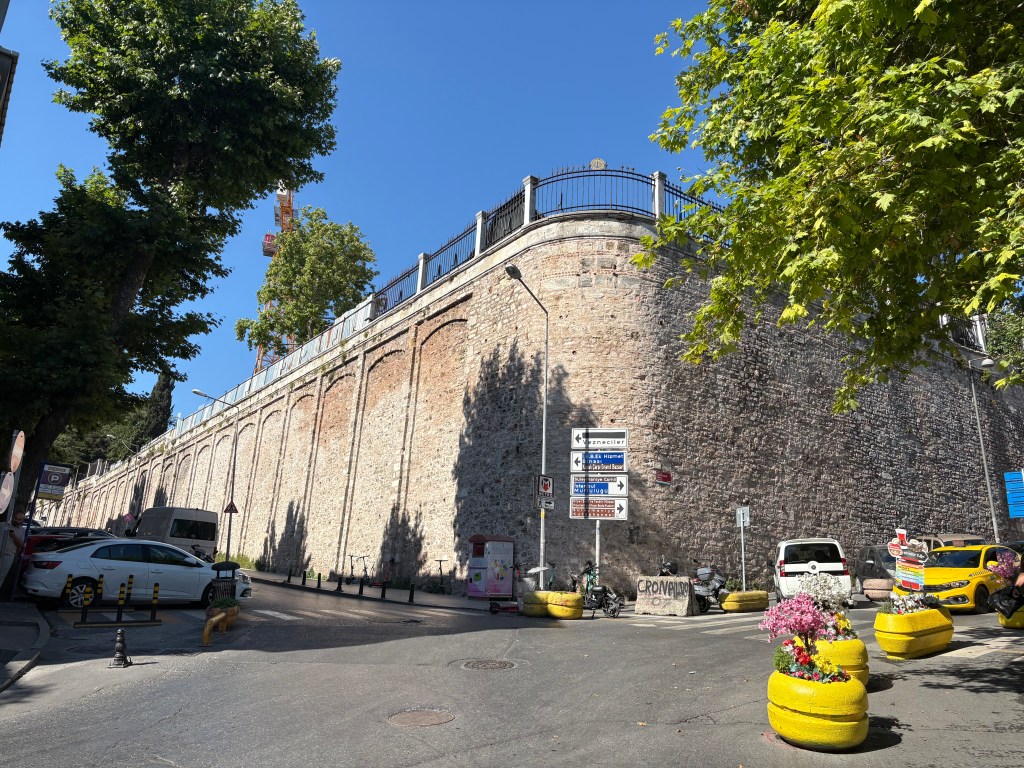
Around the city you can still find sly reminders of Christianity in churches here and there (see picture below, old Orthodox Christian church near Taksim Square). They look a big neglected but still operate, though Hagia Sofia itself has long since been turned into a place of Islamic worship. And Constantinople remains visible in the mighty walls that once protected the city, in the occasional sight of an orthodox priest in rusty black cassock, in Byzantine flourishes that distinguish pre-Ottoman buildings and in the food which offers the same dates, figs, olives, melons, peaches, unleavened breads and roasted kid that you find on menus from Justinian’s day. Foods that predate both Christianity and Islam. And Judaism, for that matter, because this part of the world was inhabited by the wandering sons and daughters of Yahweh long before the two latecomer monotheisms were invented. Pagan polytheists too.
In the city of mosques the muezzins, electronically amplified, call from the towers five times a day, summoning the faithful to prayer. It’s hard for an outsider to figure out the Turks, religion wise. The main religion is Islam, obviously, though other religions are tolerated and the government, while conservative and claiming adherence to Islamic values, remains secular. When the muezzins call, the people on the street carry on as usual, either shopping or glued to their mobile phones. They don’t drop to their knees as happens in the stridently Muslim cities of the Arabic Middle East. Yet the mosques are well-attended on the holy days.
The Turks are not Arabs, of course, and come in many types. You do see women in full black, faces covered. They come mostly from the country, I was told by the Turkish manager of my hotel (an urbane and very handsome man). Quite a lot of the women wear the Abaya style long dress for modesty; young women pair this with a matching headdress and look very smart, stylish and feminine. Older women tend to wear rather shapeless versions in dull colours. Then again, a lot of women wear the headscarf with jeans, which makes me wonder about the hijab and other head coverings – is it really about modesty today and not tempting men with your flowing locks? Or is it just an excuse to cover up a bad hair day?
And then there are Turkish women walking about the streets wearing crop tops and shorts or mini skirts with high heels and animal prints and showing a lot of flesh that makes them look just like the women from other European countries – you’d mistake them for tourists if you didn’t hear them speak. Again, while I don’t care for Islam and hate the burquah and face-covering, I’d be all in favour of the modesty police enforcing a stricter dress code for locals AND tourists. All that fat and flesh thrust before your eyes! Bosoms and unlovely bums and flabby thighs! If you ain’t got the goods, don’t display ‘em! And PERLEASE don’t message me and rabbit on about how we shouldn’t body shame people because we absolutely should if they insist on flaunting what is better concealed – it’s a matter of aesthetics!
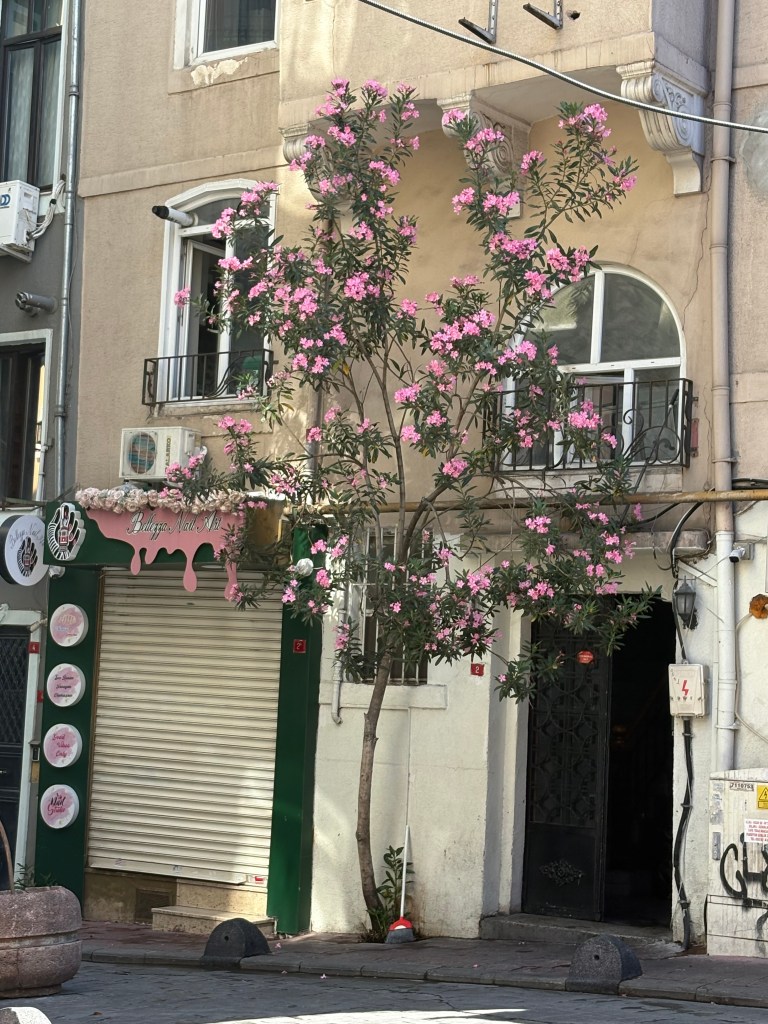
Turkish men dress like anyone and don’t have all that irritating “I’m a proud Muslim man” face fungus. Of course there are gorgeous costumes for both sexes in many shop windows, for the ceremonial occasions of the many different ethnic groups. But you don’t see them on the street. Pity, really.
Istanbul is a splendid city in every way – the setting, the architecture and archaeology, the history, the fine harbour, the food. Yes…the food! Again, it reflects the many cultures that have gone to make up modern Turkish cuisine. Here you find the traditional dishes of the Levant, based on eggplant and yoghurt, honey and nuts, lamb and fish. Pistachio and pomegranate add flavour and colour to many meals. Clay pot cooking is perhaps the best thing I tasted, along with the koftehs. Doner kebab is everywhere, sesame studded tsimit sells well on the streets, other breads come with every meal. Soup is popular, especially lentil. The baklava is better than in Greece or anywhere else, in so many honey-sweet varieties. The tomato and the potato have long since been assimilated into many family recipes, along with the ancient grains. It’s hearty fare, no fancy French flourishes, there’s nothing nouvelle about THIS cuisine! Istanbul takes food very seriously indeed; restaurants are numerous and in every price range, some very cheap indeed, dedicated to nourishing both body and soul.
Of course, there is Macca’s even here, and Asian restaurants, and French and Italian. But, really, why would you!
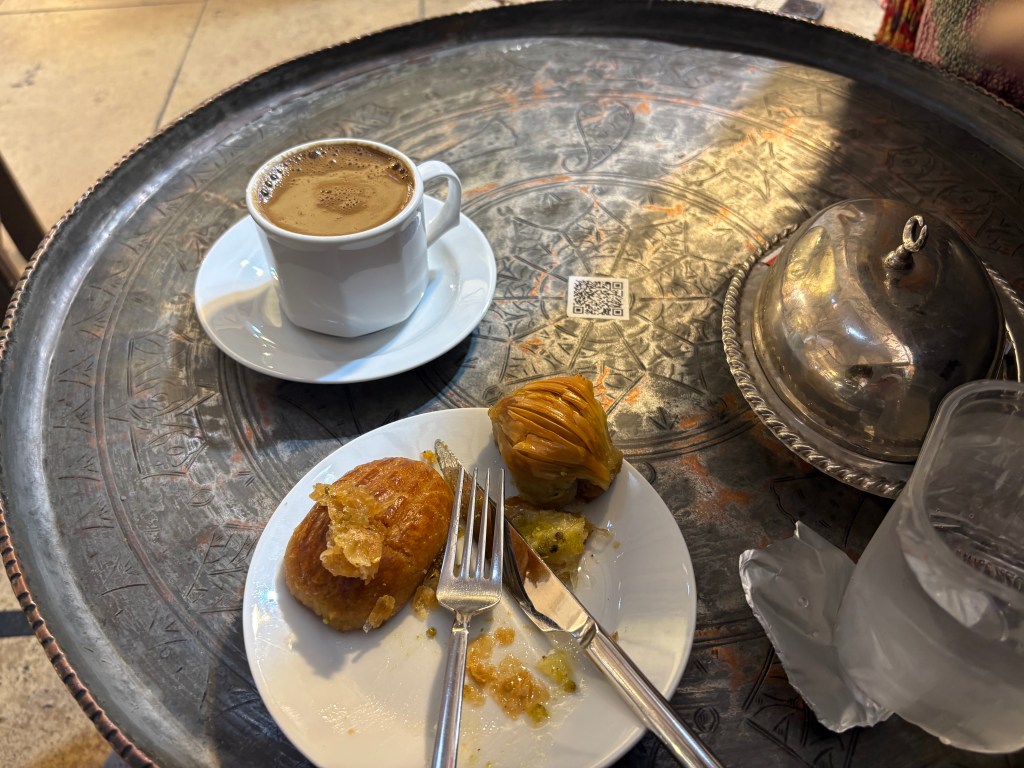
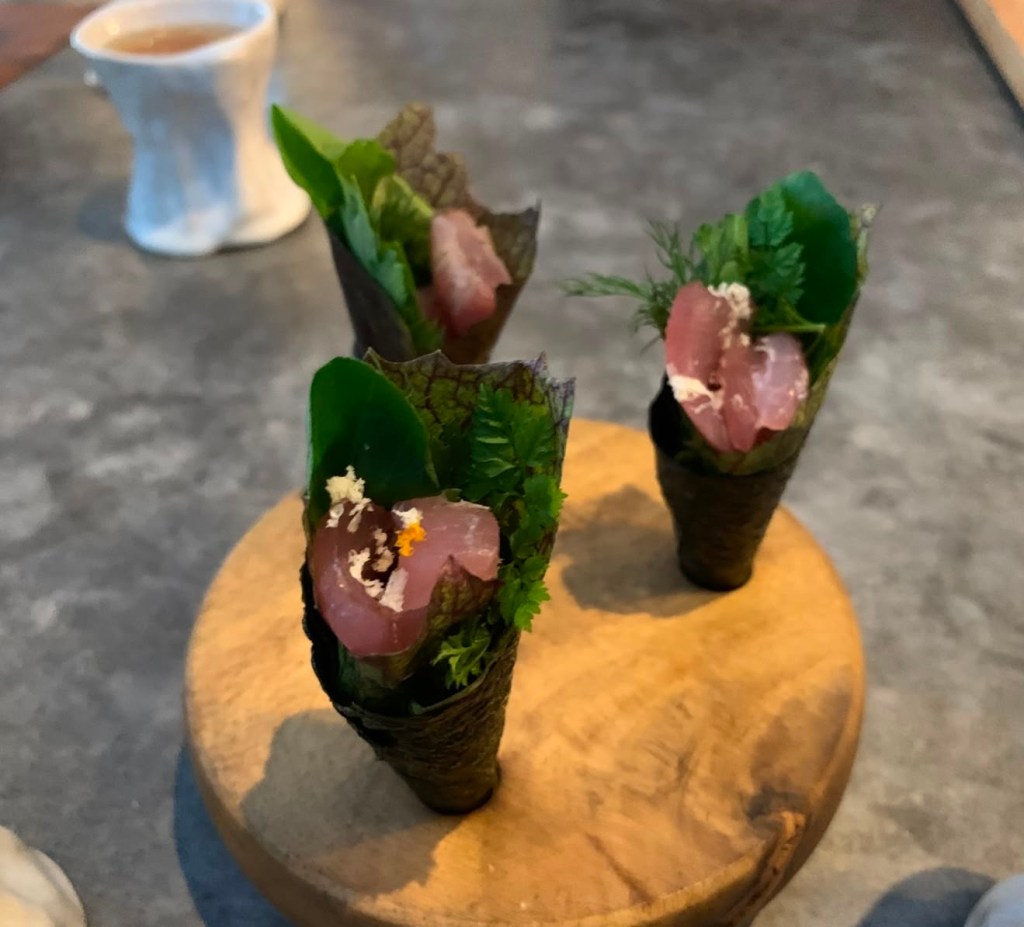
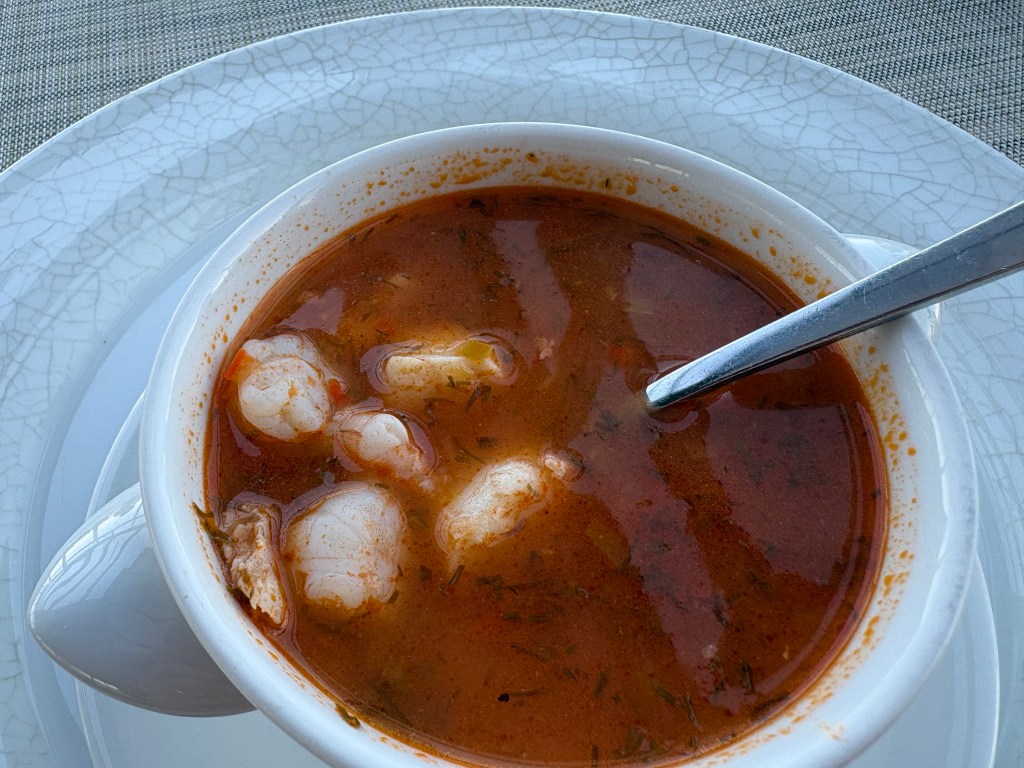
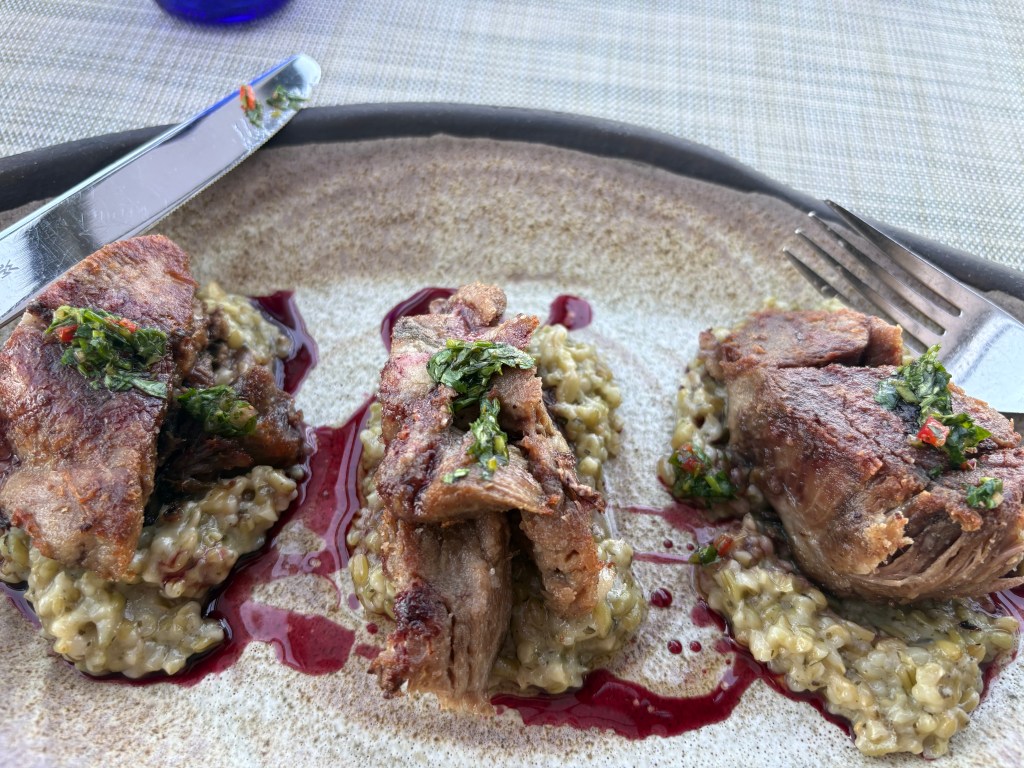
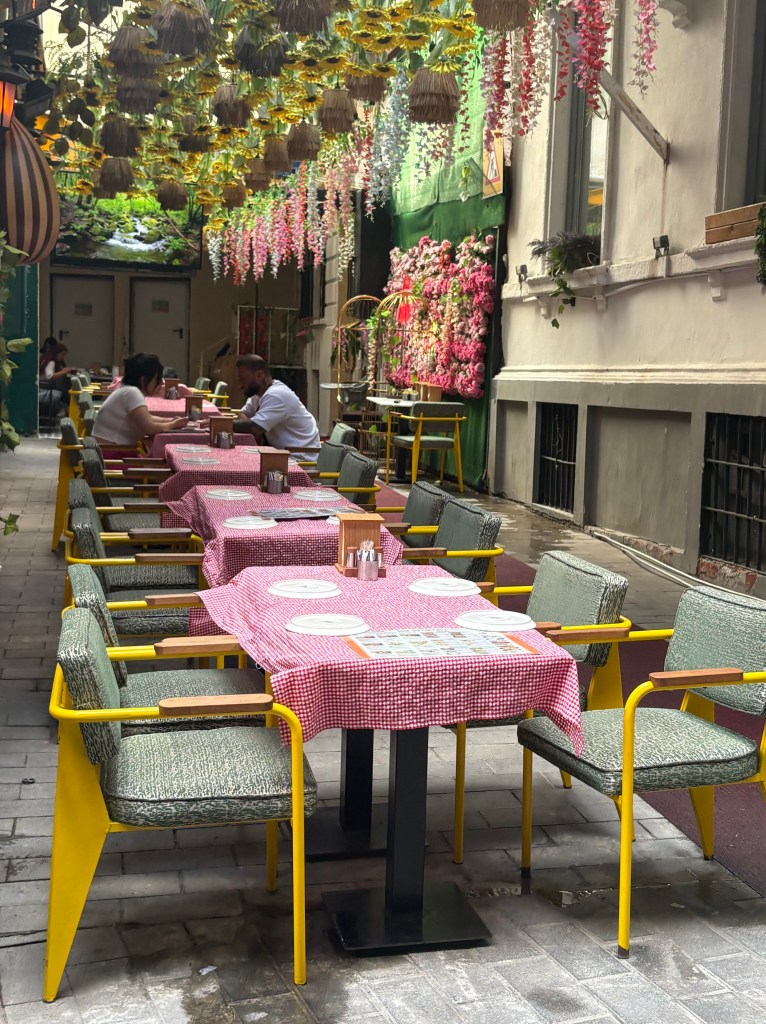
Food in Istanbul can be as simple as a couple of pieces of baklava with Turkish coffee to fine cuisine using typical ingredients such as the exquisite lamb dish above. Also the delicately crafted seafood cocktail. But most dishes are more basic and robust, as found in the typical little backstreet family restaurantss pictured here, where dishes from different regions are found. Soup, such as the fish soup above, is available everywhere.
Getting about this hilly metropolis is easier than it looks at first. The traffic is chaotic as you’d expect in a city which consists mainly of twisted, steep, paved or cobbly streets with a couple of broad, modern avenues lined with modern hotels and offices. Only a masochist would drive there. I, who normally avoids public transport at home, found the excellent bus, rail and tram service surprisingly easy to negotiate once I’d got the necessary card. Easy and cheap.
True, the first bus I took was going the wrong way but that was because I’d forgotten to adjust for them driving on the right! A kindly bus driver soon put me right – and put me off at the next stop so I could cross the road and find one going the right way!
Crossing the arterial avenues of Istanbul is no easy task; it’s a bit like that old song Running Bear, where everything you long for is on the other side and getting there is likely to end in tragedy. It takes boldness. It takes courage. But I managed it, though I thought it might cause atrial fibrillation. (It didn’t, that came next, when I had to climb the steep little alleys around the Blue Mosque in 30 degree heat).
Actually negotiating ANY street in Istanbul takes constant watchfulness because the only significant change since it was known as Constantinople, apart perhaps from sewerage, is the advent of the internal combustion engine. These are streets made for donkeys. Here and there a meagre strip, perhaps slightly raised, has been set aside for pedestrians but the locals still drive and park all over it. Even the famed, fashionable and comparatively wide Istikal Street has to be shared with cars, motorbikes, bicycles and a tram. Electric cars are particularly sneaky because you can’t hear them coming; it’s only when you feel something gently nudging your hip do you realise that this is not a pedestrian mall – as it looks to be in the travel brochures.
Locals are of course cheerfully accustomed to this and you can spot the tourists by the sudden look of panic on their faces as they skip out of the way. Hard luck if you are too old to skip!
Apart from the wearisome vehicle-dodging, Istanbul is a very safe city for travellers. A LOT safer than when it was Constantinople, from what I’ve read. For one thing, the police are everywhere. Dressed in either usual police-type gear or combat camo. They look tough and ready but are surprisingly polite to tourists who ask for directions.
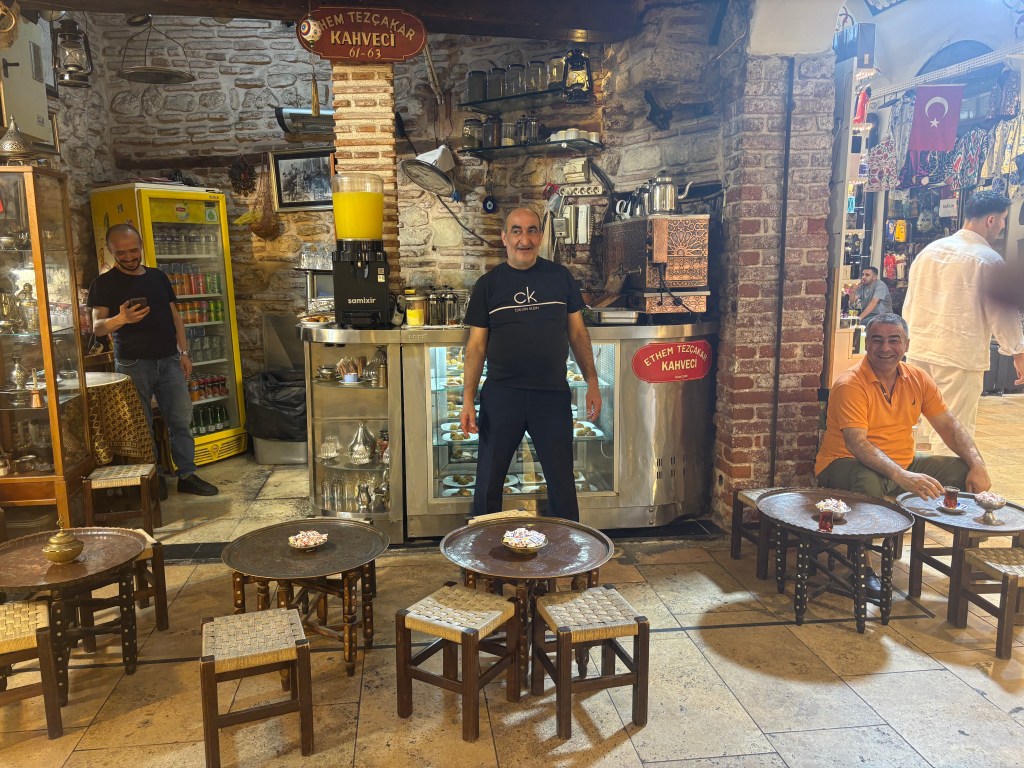
I found everyone in Istanbul to be polite and even kind to visitors. The men can seem a bit indifferent at first, they stare through women, especially elderly western women. But when this elderly western woman asked for help in negotiating the transport card machine one of these apparently indifferent middle-aged men suddenly turned all smiles and helpfulness even though he spoke no English. Ditto the tiny coffee shop proprietor in the Grand Bazaar (below)who slipped me an extra bit of baklava when I ordered some and said how much I liked it.
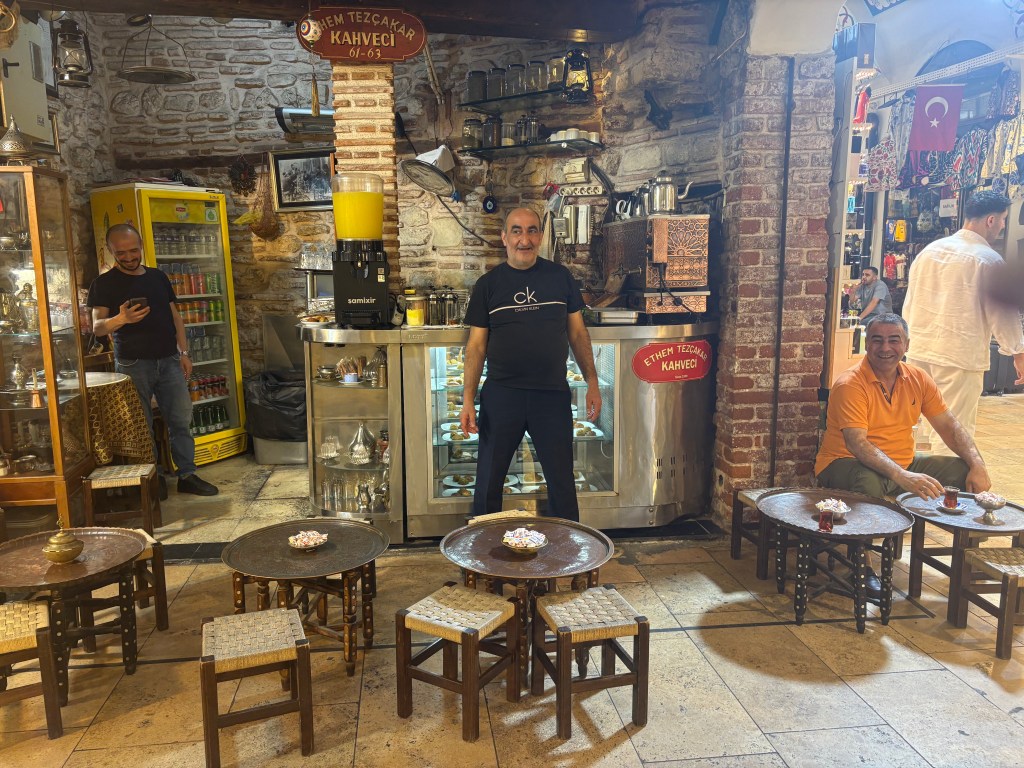
The biggest hazard in Istanbul for pedestrians is the amount of rubble and rough, broken paving everywhere except in the major squares. You do need strong, protective footwear with non-slip soles. I had bought a pair of new and expensive walking shoes especially for the trip and I was glad of them. How the glamorous young Turkish women manage in stiletto heels is one of this ancient city’s modern mysteries!
I avoided the major tourist attractions; that is, I sat outside and admired them over a cup of coffee but didn’t venture in. I’d already seen the interiors on YouTube and felt no desire to share their wonders with the madding crowd. Even if you go on a small, curated tour with skip-the-line tickets the pleasure in looking at the marvellous mosaics is severely prejudiced – for me, anyway – by being pushed and prodded and deafened by din. There is no space to stand and take it in peacefully – not in summer, anyway.
Moreover, there are so many interesting and relatively unknown (to foreigners) places to explore, so many exquisite little architectural wonders, so much archaeology and history to be found all around the back streets. Here you can wander at leisure, with no sense of pressure or bustle. And you can meander along the shoreline, so shiny with sunlit water and busy with boats and cheery little ferries luring you over to the Asian side.
To my mind, everyone should grab the opportunity to see Istanbul from the water, the way travellers have seen it for centuries. I was lucky to sail out of there on a small cruise ship on a glorious sunlit evening, saying goodbye with regret.
Taken all round, Istanbul is one of the world’s most splendid cities – particularly so at sunset when the lights come on and the whole place glows like a chest of fine jewells. And you can hear the muezzin calling out the isha, the fifth obligatory prayer that marks the end of day.
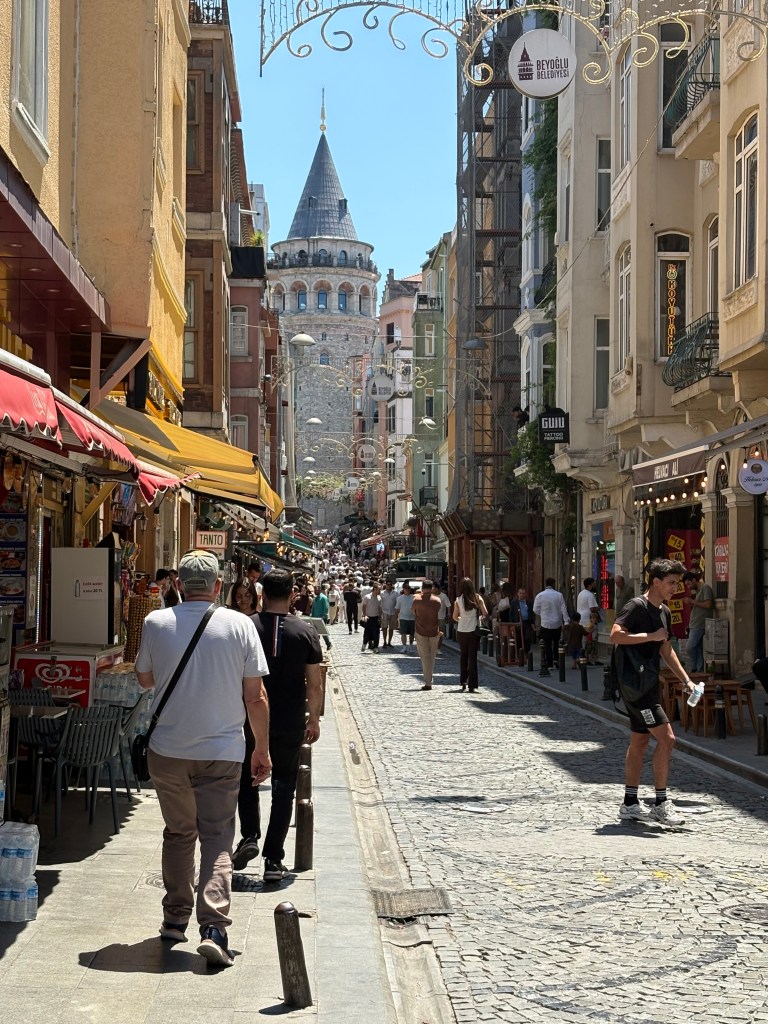
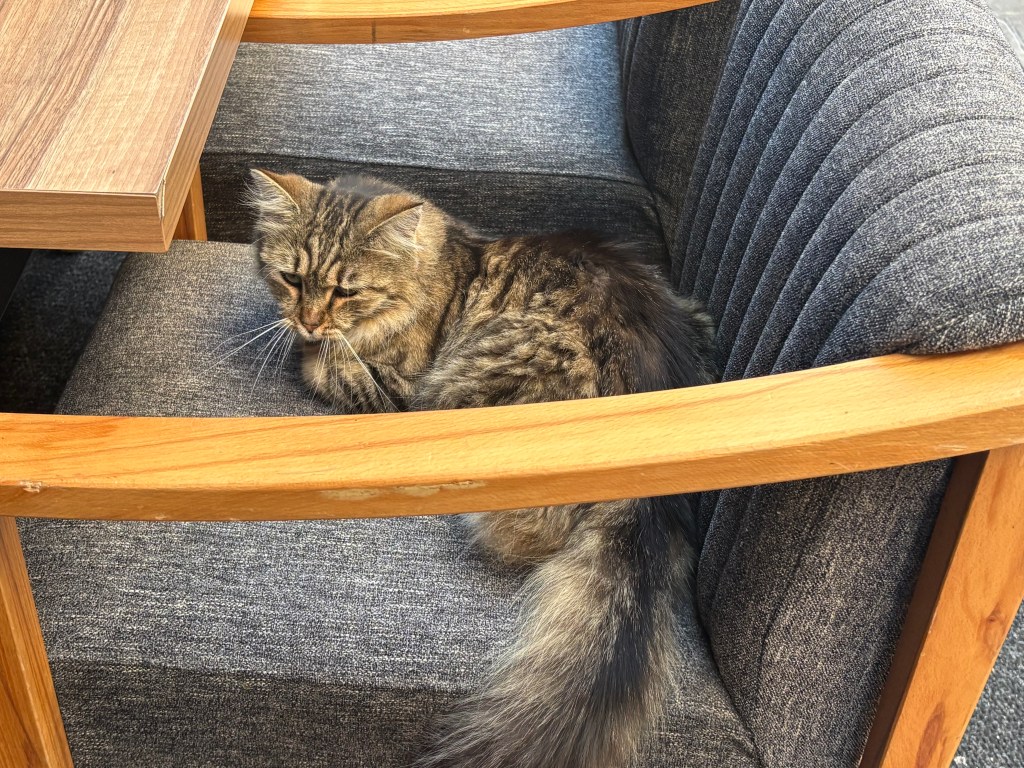
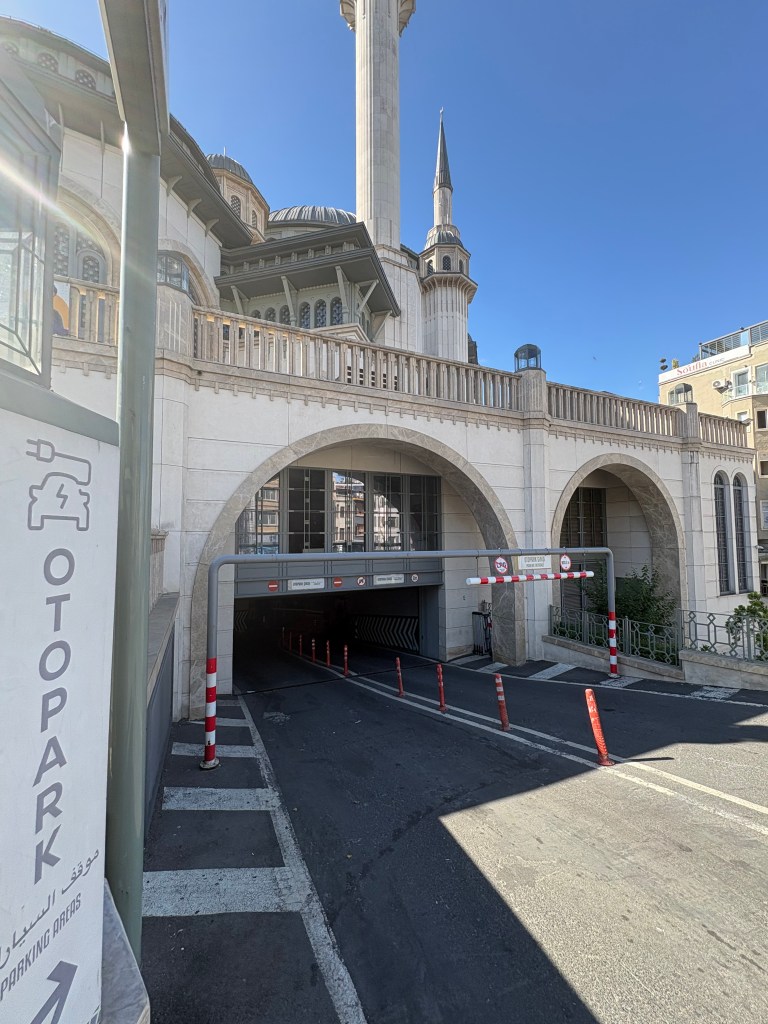
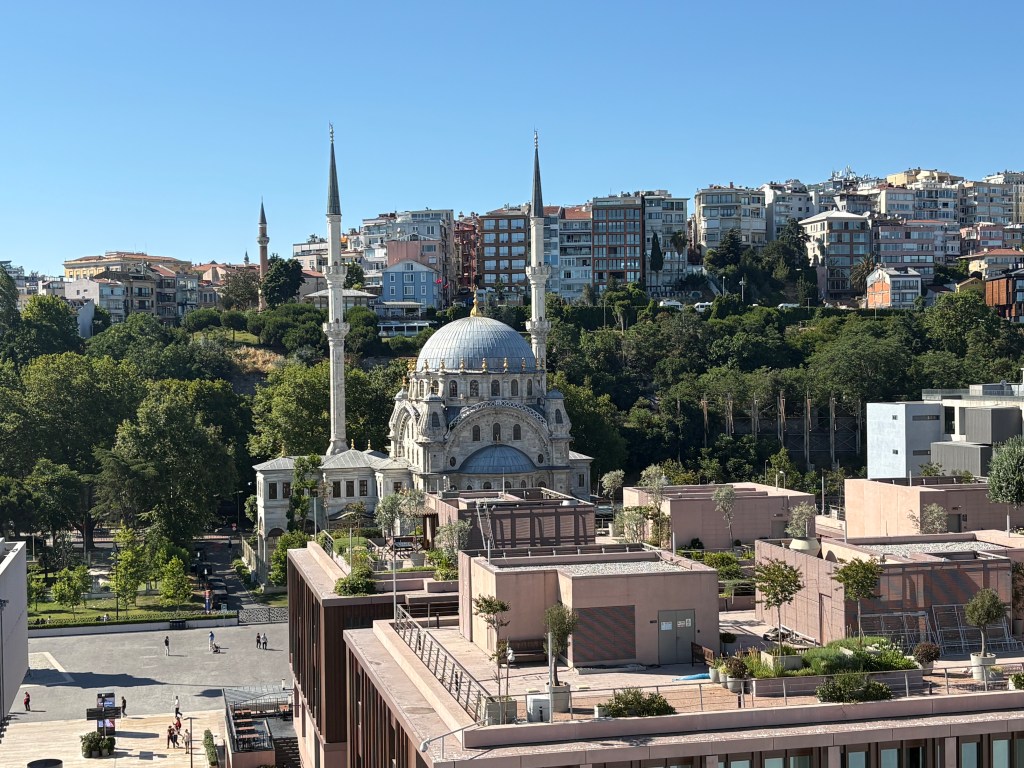
Below: Cats are everywhere in Istanbul. Top right: Traditional Islam yields to modern necessity – car parking under the old mosque.Bottom: Beautiful mosques are everywhere in this venerable city whose history is both brilliant and bloody as it spans two continents and continues to dazzle us today.
FOOTNOTE: Changing the name of cities is nothing new though today we’re more likely to change them back to some older indigenous name; perish the thought that we should retain the name given to any city by its conquerors or colonisers! Most of whom actually gave names to places that didn’t have cities before being invaded by the technologically more advanced. Personally, writing as an Australian, I’m in favour of renaming almost all our towns and cities with Indigenous names, not because I care about rejecting colonial and post-colonial history, which have earned their place, but because the present names are so ugly! The Americans got Arizona and Amarillo, Minnesota and Milwaukee and what do we get? Melbourne, Brisbane, Perth and Sydney! I forgive Darwin and Adelaide, the first because it has everlasting historical relevance and the second because it’s pretty. Of course we do have Toowoomba and Tocumwal, Goondiwindi and Gunedah. But nobody can be really proud of their city when it’s name for some long-gone English prime minister.
I digress…
Istanbul has always struck me as a rather unnecessary name change. Constantinople was Greek, though named by a Roman emperor (for himself – there’s hubris for you!). Istanbul is also basically Greek, meaning “to the city”. It’s commonly believed to be a statement of Turkish nationalism though why that should have been thought necessary in 1930 rather than 1453 is not clear (to me, at least). Perhaps they preferred Istanbul because it was shorter. Or perhaps, as the song quoted above goes on to say, “People just liked it better that way.”

