Excerpts from Lyrebird Mountain

The Bachmann family come to Lyrebird Mountain

They first saw the mountain on the second day, a dull, smoky blue wedge against the hard, pale sky of a rainless July.  In any other land but this it would have been considered merely a hill of no great height but it had grown to match the family’s expectations and those of the settlers who had first named it.

To Anna, aged eight, it seemed ethereal, as if it might disappear as suddenly as it had come into sight. Which it did from time to time as the scanty forest intervened.  “Ho oh!” cried Freddy, always wanting to be first in everything.  “There it is.  Isn’t it Papi?  Our mountain? Isn’t it?”  And he ran ahead of the horse team, striking at rocks and tree stems with a stick he’d picked up along the way.  The children had heard so much of this mountain, which their father had never visited but, on a sudden whim, bought land there. 

They had travelled from river flats and farmland to open forest and grassland already browning under the winter sun.  The forest was a dull collection of eucalypt and thin-leaved shrubs, brightened in patches by yellow wattle and the bronze florescences of scrawny pea plants which, to a discerning eye, indicated a possibility of harvesting their leguminous properties to help enrich the shaley buff-coloured soil. 

Such an eye was possessed by Martin Bachmann, father of Anna and Freddy and leader of this small group of travellers whose hope of good things to come grew with each hour of plodding progress.  Martin knew many things and his brain was like a great cabinet where he stored his knowledge in many carefully-labelled drawers, where it could be drawn out when required.  Or so Anna came to fancy in later years when she tried to remember what she could of her father and his accomplishments.  He always seemed to be putting new and useful things into this cabinet and had recently added to it an understanding of botany and horticultural practice. 

The mountain which was to become their home was his latest and dearest undertaking into which all the energies of mind and body could be channelled.  The children had heard so much of this mountain yeti it seemed scarcely real to them; its mysterious forest and wild creatures invested with myth because Papi was such a taller of tales and dreamer of splendid dreams.  He had taught them to long for it but still they couldn’t quite believe in it or the possibility of living there.

And now, as they continued to move towards it, they could see that there was such a mountain, first visible as they came to the stop of a steep pinch, then hidden again by smaller, closer hills and the increasing density of forest.   The early afternoon sun was warm, the track dusty despite recent light rain.  The long ridgeline that marked their destination as an upraised plateau rather than a true mount seemed so far away and yet, Martin assured them all, they would be at the top by tomorrow night.

He drove the horse wagon which contained the family’s smaller possessions.  His wife Berthe sat beside him, round and substantial as a dumpling, nursing a baby of five months. Between them sat three-year-old Laurie. The second and larger wagon was drawn by a span of oxen and driven by a man hired for the occasion and with him Liza, seven years older than Laurie, who did not like to walk along the rutted track with the trees so close either side.  Liza’s particular task was to mind her younger brother Steve whom, his mother considered, was far too adventurous for a boy of five.  So constantly did he fight against any restraint that he had to be tied to the buckboard. 

“You will fall out and go under the wheel and be crushed like a beetle,” Freddy told him several times throughout the journey, grinning at his brother’s torment.  But Liza’s heart was already maternal, soft as a sponge for soaking up the suffering of others and she put her arm around the child’s squirming shoulder and hugged him close. 

The other children hopped on to the wagons when they grew tired but mostly they liked to be on the ground where they found plenty to amuse them along the way.  Joe, christened Johannes-Martin, for his father and called Joe by everyone except his mother, walked soberly by the ox wagon, conscious of his responsibilities as the oldest son.  Anna and Freddy were quick, restless children who found natural wonders along the track – an unrecognised flower, an oddly shaped stone, a cast-off snakeskin hanging on a branch – and brought these back to the wagons to be admired. Anna went constantly to the heads of the horses and talked softly to them, stroking the broad noses which huffed constantly from exertion.   The cart, she cried several times, was too heavy for them! They were too tired, poor dear things, they must be rested more!  Martin agreed with her but did not say so.  The wagon was piled too high and bore too great a weight.  So many possessions, ach! But a new life required the necessities of civilised existence.

………………………………………………………………………………………………………………………………..

Madame Kurcher…

Mrs. Kurcher, or Madame Kurcher as she liked to be called, was very much a woman.  Her looks were the kind thought of as typically Spanish, so it was no surprise to discover that she had an Argentinian mother.  A fact which Anna learned soon and pondered later as something significant.  Madame had shining dark hair, coiled high, very white skin and very full, red lips.  Perhaps not quite naturally so.  Her eyes were dark and the eyelids very plump and white.  Her nose was strong.  She kept her waist taut with whalebone, pushing up the bosom to an unnatural height that drew the eyes of men.  Like Berthe, she dressed in sombre shades but bared her straight, white shoulders in the evening and carried a shawl vivid with flowers and parrots.  She smoked little dark thin cigarillos. 

This new quartet of exotics became regular visitors to The Excelsior.  Anna barely noticed the other three for they were quiet, intense people and only came into themselves when Madame Kurcher was not in the room.  When Madame was in the room, or anywhere around the place, other guests, however interesting and smart, seemed to disappear into the background.  What made Madame and her friends exotic was their being avowed Theosophists, which was where the Scott-Dunns had first become acquainted with Martin.  This acquaintanceship now became an intimacy and there was many a long, deep discussion in the guest lounge after dinner and the visitors were even invited into the family cottage which no other guest ever was or would be.

 Anna, looking back, was never sure just how much her mother enjoyed these people.  She had little to say at the gatherings but would appear to listen interestedly, when not brewing tea or passing plates. Or she would sit for long periods, always with some sewing or knitting in her hands, taking it in, while her husband and Madame Kurcher discussed the hope of greater world enlightenment to come. “We are old souls, you and I,” Madame said frequently to Martin, for her more passionate avowals were nearly always directed at him. As well as being ancient of soul Madame had another attraction for Martin Bachmann, she was a medium.  In New York where she had lived for many years and also in India, where she had stayed for a time, her power to connect with the other side had been greatly appreciated.

“Must be the backside!” said irreverent Freddy and though the other children, even solemn Joe, giggled at this rudeness they were nonetheless impressed by Madame, even though they could not exactly like her.  They were aware of their parents’ belief in a world beyond their own, where spirits resided.  Not Heaven, for they had no concept of a particular or personal god.  But a parallel dwelling place which housed a further existence.  Or perhaps where the unborn waited; souls newly shuffled off and seeking incorporation.  They did not believe Freddy when he said that Mrs. Kurcher, as he alone insisted on calling her, was a witch. They believed in witches, well, the little girls did, but witches were evil and physically repellent and lived in the forest. The doors of the guesthouse were never locked at night for there was nothing corporeal to fear but sometimes Anna and Liza, who shared a room, would creep into each other’s beds and assure each other that the night sounds of possums and birds were nothing more sinister.  They didn’t name their fears.  But they knew, from fairy tales, that witches devoured children.

Exactly what it was that made the forcefully fascinating Madame Kurcher so welcome at the Excelsior remained a mystery to Anna and her sister.  They didn’t like her, that was for sure.  Not even the infant Harry, whom Madame insisted on calling by his given name, really took to her. She embraced him too fervently and was too lavish in her affections towards all the children except Joe and Freddy, whom she ignored.  When Madame and the Theosophists came to visit, to talk of developing self-knowledge and observation without evaluation, there was usually a séance and this would involve other guests if they showed an interest.  And many people were interested in such things, back then.  It may have been, certainly it seems so now, that as the restless and rebellious century turned, the heirs to western civilisation knew and feared that their very world, rotten as an infected wound, would soon erupt into agony. Religion seemed to be failing them so they looked elsewhere for solace and explanation.

How the séance were conducted and exactly what happened in them Anna never knew. Madame K, as the children called her, would make arch allusions.  Martin seemed embarrassed when asked by Freddy about Mrs. K’s magic and warned his second son not to try any of his verdammt tricks in the small parlour where, presumably, the spirits were invited to visit.  Berthe told the children she would explain when they were older.  What prophecies were made, what messages were passed from the dead to the living, were apparently too awesome for dinner-table discussion.  Only tea and lemonade were drunk before and after each session; there would be no accusations of spiritous summonings by those poor sceptics who recognised only the kind of spirit that manifested itself in a glass!

Anna didn’t like Madame K but she found her fascinating in a weird way.  “You will follow your father,” the woman would tell her, flashing her large, white teeth and her large, dark eyes which she could invest with so much soulfulness (her own description) that the little girl felt both compelled and repelled at the same time.  Anna knew she wasn’t talking about Martin’s many talents and questing intellect.  Madame K would question her about the strange dreaming, the wachtraum, which still came sometimes and always the same.  Of all the children Anna was Madame’s pet and she brought with her every visit some nice little gift.  Always something which Anna would have chosen for herself and because the Bachmanns did not often give presents to their children, except for books and pens and serious things, Anna was grateful and responded by embroidering the waking dream with details from her imagination.  These were of the goblin and fairy kind and if these were believed she never really knew. 
What Lyrebird Mountain is – and is not

Well, it’s not a murder mystery.  Though there is a mystery at the heart of the book and that mystery may – or may not – be the result of a murder. 

It’s not a romance novel. Though there is romance woven through the story, not just of the kind between humans but the romance of natural things; the romance that’s around us everywhere, every day, if we only learn to look for it.

It’s not a crime novel.  Most of us go through our lives, thank the Powers, without being directly affected by crime, though we know it is out there and that we must try to avoid it. A crime may have been committed in Lyrebird Mountain – a terrible crime.  And if it was, who dunnit? 

It’s not a historical novel although the history of Queensland, Australia and the wider world is recorded through events that affect the characters in the book – over more than a century.

It’s not a family saga – in the usual sense of the word.  It is essentially the story of one woman’s life but her story carries the reader through six generations of women with whom her life is linked, from mother to daughter.

It’s not women’s fiction even though the main character is a woman and the story looks at life through a woman’s eyes.  I don’t pretend to know the hearts of men; I can only experience them from the outside. But there is other stuff in Lyrebird Mountain besides the affairs of women…war gets a mention and politics and historical events and…yes…even cricket.

An author is by trade and inclination an observer of life and my observation is that novels rarely tell about life as it is.  Of course they don’t; the job of the novelist is to shock, excite, thrill, entrance, intrigue, move you to laughter or tears.  It’s entertainment, baby, not real life.

And yet, I have learned more in my life from novels than I ever learned from a non-fiction book. 

So Lyrebird Mountain is not a genre novel.  I did not want my characters to be larger than life, I wanted them to be the kind of people we encounter in our own lives.  Life is not well-organised like fiction and people do not always have clear motives.  Nor behave logically. Situations go unresolved, mysteries remain unsolved.  It’s not neat, it’s not tidy, it’s LIFE.

So when people ask me what Lyrebird Mountain is about, I find it hard to answer.  I say it is about love and loss, strength and resilience in the face of misfortune, the power of passion and the even greater power of place.  It’s about the relationship between grandmothers and granddaughters and the cruel impact of war.  And it’s all set against the historical evolution of a still-young nation finding its place in a sometimes terrifying world.  (Yes, yes, I knew it’s an old continent with an older set of inhabitants but I’m talking about nationhood.)

I have often relied on allusion to tell my tale, rather than spelling it all out.  As much as possible I have tried to treat cliches like potholes in the road – to be avoided. I don’t insult my readers by telling them the bleedingly bloody obvious!  I prefer to let them work it out for themselves.  Those who can’t are welcome to discuss it here on my blog.

There is, for example, a constant allusion to the mystery of the rainforest, especially higher-altitude forest like that of Lyrebird  Mountain, where mist throws a gauze over the trees and clouds of vapour float up the gullies.  I have always found rainforests of any kind – from the mighty Tongass of Alaska to the jungles of Africa – to be mysterious places.  Spirits lurk there, ancient as the trees, though spirits of what I am never sure.  Like Anna, I sense them, I feel them around me. Whispering.  The life of the rainforest, whether in the canopy or on the littered floor, is secretive.  If you listen, there is always a scuffling or a rustling or the cries of birds that often have a wailing eeriness to them.  As if song or cackle belongs only to sunlight. 

Such mystery, such hints of a magic powerful but unseen, can affect people in strange ways.  Men have gone mad in rainforests; especially those who have gone there to cut timber and found themselves alone among the tree shadows, their axes suddenly falling from their hands.  Women, in my experience, have a better understanding that keeps them safer; visiting as they do mostly to seek and examine plants and birds, doing no harm. 

In many ways Lyrebird Mountain is an old-fashioned book.  Deliberately so. I’ve gone against the contemporary trend to recast history through modern eyes and ears, in film, in television in books. Where characters speak and act as they do today and not as they did then. For I have lived  through much of the timespan of Lyrebird Mountain and know, too, how my parents and grandparents spoke and behaved.  And those of earlier generations.  And there are, quite simply, things they didn’t do or say because of the prevailing standards of behaviour.  Some bold few might have said and done things that broke the code.  But most people didn’t.  And those are the people I’m writing about. People who set a high price on reticence, restraint, fortitude, good manners and self-control.  And who understood the difference between compassion and sentimentality. This is how they coped with the tough stuff.  Looking back, it seems amazing to me that they could be happy in a world where even the rich did not have the comforts, conveniences, services, safety measures, medical treatments, social support and readily-accessible entertainment that we take for granted.

But, by and large, they were.  Like Anna and her family, they bore it all and carried on.

This is not, I know, the stuff of great drama.  But I wanted to write something real. For the kind of readers who like it that way. 

I hope I succeeded.

BIRDS OF THE RAINFOREST

This page is very much a work in progress. I have spent many decades watching birds in my local subtropical rainforest and on this page you’ll meet some of my favourites. I hope to expand the page so that rainforest bird lovers from around the world can post their pictures and descriptions here.

All over the world, jungles or rainforests have always been home to some of our rarest, most colourful and least known bird species.

Ever since Long John Silver and other pirates took to walking around with parrots on their shoulders, we’ve coveted those brilliant and talkative birds, to the point where some species have been driven to extinction in the wild. Parrots, which are not of course limited to jungles (think Australian Budgerigar, think New Zealand Kea) are the poster species for those deep, mysterious places where the trees grow tall and the vines grow thick and the constant heat and moisture fosters rampant vegetative growth. Where the shadowed forest floor conceals furtive creatures and serpents can grow to monstrous size. Where insects buzz and seek blood or scuttle in the litter.

Birds are the true beauties of such an environment and some of the most interesting can be found in the rainforests of Australia, east of the Great Dividing Range.

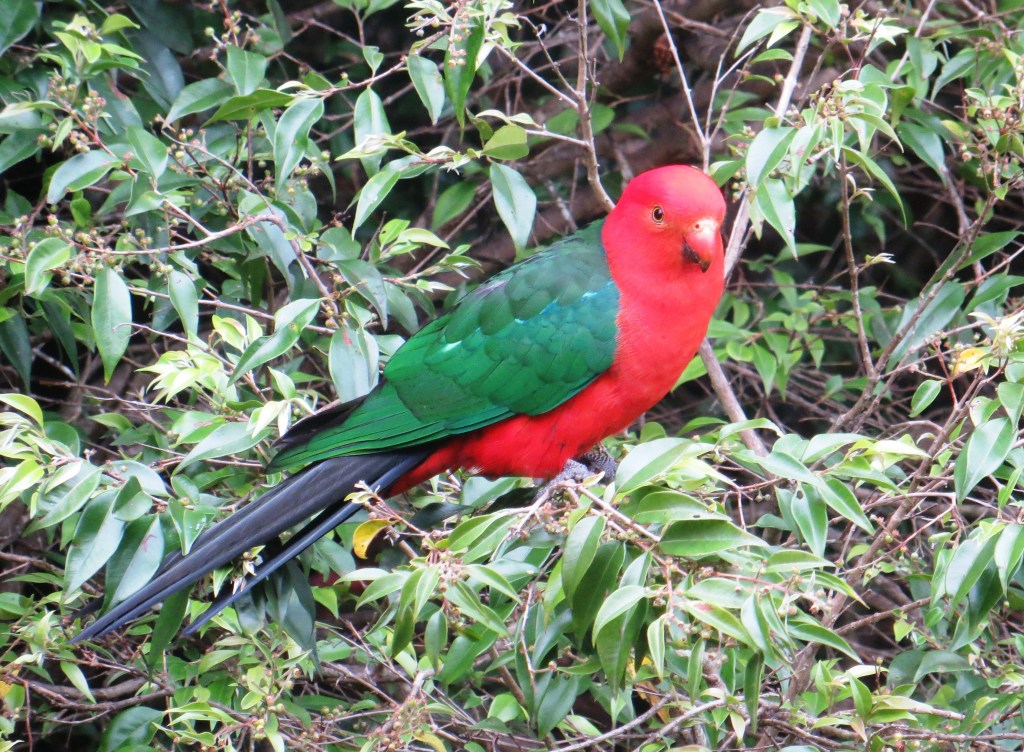
King Parrot (Alisterus scapularis)

The sweet whistle and chatter of the King Parrot rings out across the rainforest, and the adjacent wet sclerophyll woodland, and you’ll look up to see a flash or red and green as they alight nearby, usually in pairs but sometimes in small flocks.

This bird is as friendly as it is beautiful, with a gentle face and nature that makes it more lovable than many other parrots, which can be rather beady-eyed and spiteful.

The male has a read head, breast and belly with vivid green wings, banded at the top with turquoise, vivid blue feathers on the rump area above the blue-green tail. As is often the case with parrots, the female is a little more muted with greenish head, yellowy-green breast and crimson from breast to belly.

King parrots are sedentary but after breeding in the denser forests and mountains near the coast they wander further afield into drier lowland areas.

Call is a high-pitched one note whistle (males) usually accompanied by harsher chattering sounds when flying. Alarm call is more of a metallic screech, like “aaark”.

Breeding is from about September through to midsummer, and the birds nest high up in deep eucalypt hollows. Some of these holes go right down inside the trunk so the young chicks are pretty secure from predators. The nest is a layer of wood chips chewed or naturally decayed to a soft consistency. The female broods the eggs (usually 4 – 6, lustrous white), for three weeks while the male fetches food for her. When the chicks hatch they are fed by both parents for about five weeks until they are able to look after themselves, though they usually stay with the parents until it’s time for them to mate.

King Parrots have a varied diet of seeds, flower buds nuts, fruit and insects. They are frequent visitors to my garden and, though I do not feed wild birds, are tame enough to come and sit on my veranda chairs and look at me hopefully.

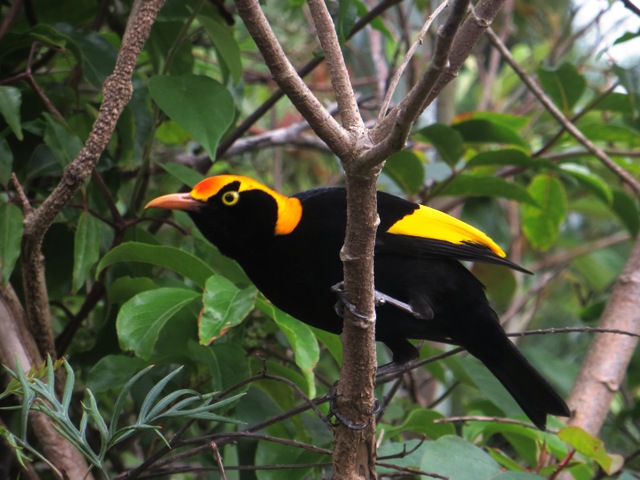
Regent Bowerbird (Sericulus chrysocephalus)

Few rainforest birds are as striking as he Regent Bowerbird, pictured here. This bird is slimmer than most bowerbirds, and while the female, poor thing, is rather a drab the slightly smaller male is a masterwork of black and golden yellow. He is yellow from bill and eye to neck to mantle and then again on the primary and secondary wing feathers. The rest is a dense jet black. On the forehead is a tiny tuft or patch of a bright, sub-irridescent sunrise orange-yellow quite impossible to describe and not seen in any painter’s palette.

Females are dull brown on the back with a few arrowhead-shaped pale spots on the shoulders, a black neckband, crown patch and darker-feathered cheek line. Bill is dull brown too. Breast and belly are off-white, with scalloping on the breast and fain dark wavy lines on belly. Juveniles are like females but without the black neckband and facial markings.

The Regent Bowerbird is a shy, retiring type who, like its nest and bower, is rarely seen. When you do see the male, it’s because of the yellow flash as he dives for cover. The bower is a modest two-sided affair, slightly less “finished” in appearance than its cousin the Satin Bowerbird. He decorates it modestly too, with a few pale petals and sail shells and sometimes blue artifacts placed carefully inside the bower. Rather than depending on this collection to attract his temporary mate the splendid Regent courts her up in the nearby trees and shows her the way to the bower of seduction where, once the deed is done, he goes looking for another. And she goes off to build a nest, lay a couple of eggs and raise the chicks.

The nest is very hard to find, usually (but not invariably) high in thick leaves and branches of tree or thick vine, shallow and made from thin sticks and twigs. Eggs are a delicate greenish or greyish white with darker streaks and blotches. Breeding season is October to January-February, before the usual onset of the subtropical wet season.

The Regent Bowerbird occurs mostly in the coastal and montane rainforests and adjacent wet sclerophyllof northern New South Wales and Southern Queensland, plus Eungella inland from Mackay and some isolated coastal rainforest north of Bundaberg.

The Regent BB is not much of a vocalist: the male communicates alarm calls and warnings to other males (and possibly come-ons to females) with typical harsh, raspy bowerbird calls. Those with keen ears may hear him apparently serenading the females with long, soft, meditative songs that mimic other birds. The female is usually silent.

Food is mostly fruit, with the native tamarind (Diploglottis australis) being a favourite.

Nest is a shallow saucer of long, thin sticks, less robust than that of Satin Bowerbird. Usually well above ground and in thick vines or tree foliage. Eggs: usually 2, Creamy white with faint tinge of grey or green, “painted” with wavy lines and spots and blotches and scribbles, dark brownish, olive and tinges of pale mauve.

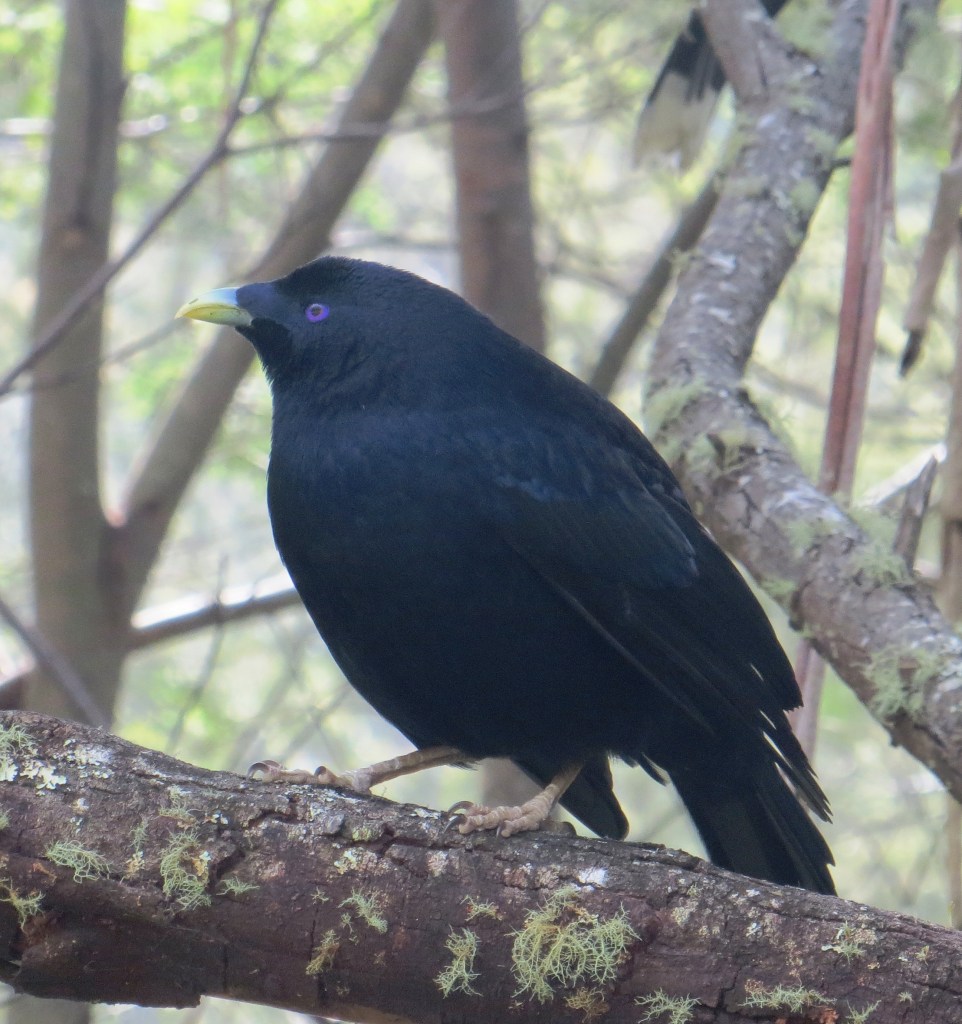
Satin Bowerbird (Ptilonorhynchus violaceus)

The Satin Bowerbid is familiar to most people who live on the east coast of Australia from the forests of south eastern Victoria to southern Queensland. This is a handsome, confident bird which boldly sets up bowers in parks and home gardens just as easily as it does in the forest, braving domestic pets, lawn mowers, people and cars to pursue its construction goals.

In fact I know a male Satin Bowerbird who has, for some years, persistently built and rebuilt his bower within ten metres of a house wall on one side and a busy barbecue/entertainment area on the other, right by a path and close to a well-maintained lawn. He prudently hops out of the way when people pass, or flies to a low nearby branch but is quite happy to hop around if you come with an offering of bright blue objects such as clothes pegs or Evolvulus flowers. (NOT ringed bottle tops!).

Male Satin Bowerbirds are chunky and smoothly rounded and always look rather pleased with themselves. They are a rich black all over, with an iridescent bluish sheen and lovely violet eyes. Beak is white. Females are greenish all over with dull brown wings and creamy buff breasts and bellies with a definite but sometimes hard to see greenish band around the chest. Beak is dark grey, appearing black in the field. Juvenile birds are similar but lack the breast band and have brownish foreheads.

The nest is shallow and made of small twigs and dry leaves, well-hidden in upright tree forks in outer foliage of treees, or in clumps of twigs or mistletoe. Casuarina trees are specially favoured. Eggs: 1 – 3. Dark cream or brownish cream with blotches, spots, streaks and wavy lines in dull brown or brownish green or pale mauve.

Wonga Pigeon (Leucosarcia melanoleuca)

These big, plump pigeons can drive people mad! True! In the summer when the males are calling their long, monotonous, medium-pitched call, repeated over and over, causes some folk to shut their windows, curse, and wish for a shotgun! And indeed, in days of yore, they were commonly shot for food though as they are usually solitary birds a single Wonga, however juicy of breast, wouldn’t provide much of a feed/

Wongas are usually found on the edges of rainforests (and inhabit wet schlerophyll forests too) where they can be seen waddling along peacefully, head down, pecking. They are dark grey on the head and back with a grey neck and chest dramatically decorate3d by a long, vee shaped collar. The underparts are white with many markings that from a distance look like spots but are in fact little “u” shaped patches.

Seeds, fruits and berries are their food and they forage for them on the ground rather than in trees and bushes.

They are true love birds, mating for life. The next is quite a large flat arrangement of twigs, on a tree limb or in a fork, very simple and without embellishment. Eggs: 2. White.

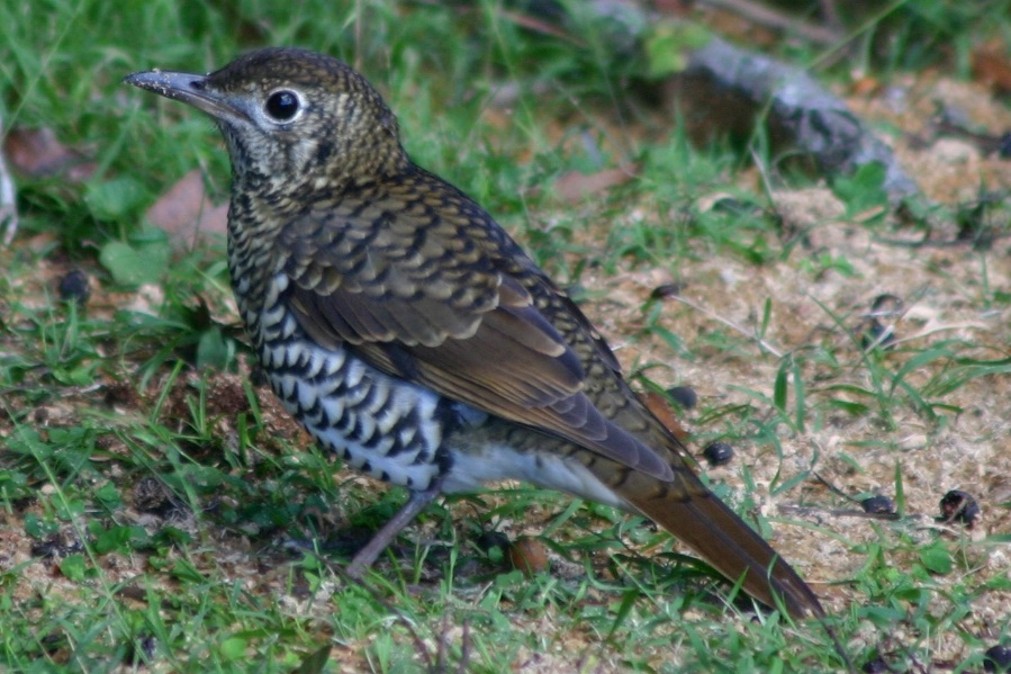
Noisy Pitta (Pitta versicolor)

(Photo courtesy of Geoff Eller)

The Noisy Pitta really isn’t all that noisy and in fact is no noisier than any other pitta but its distinctive “Walk to Work” whistle rings through the forest when it is breeding time and the males are proclaiming their territorial boundaries. This is a splendid bird to see as it hops along the rainforest path, poking into the tree litter for grubs. It will also eat small fruits and lizards and is particularly partial to snails, which it cracks open on rocks with workmanlike skill.

This is a truly beautiful bird of brilliant colour with its chestnut cap, black face and throat, vivid green and blue wings, buffy yellow-to-apricot breast and bright orange to scarlet vent.

Though the Pitta is quick to flee at the sight of a human it doesn’t go far on its stubby wings and if you stay still and quiet you will see it alight not too far away, watchful but happy to continue with its eternal search for food. The strong, longish bill is a useful tool for poking and prodding bark and tree roots.

There are two other types of Pitta found in Australia; the rare Red-bellied Pitta, much sought after by birdwatchers, is found in the far north of Cape York and the Rainbow Pitta is limited to the top end from Darwin across to the Kimberley. All have similar habits.

The Noisy Pitta is the most common, ranging from North Queensland down the east coast to south of Sydney. It’s a true rainforest bird but sometimes strays into adjacent wet sclerophyll forest or drier scrub.

Breeding season is shorter in the north of its range, from late spring through February; further south it starts in July. The number of eggs is usually four but can be half that, or as many as five when breeding conditions are good in the south. The southern eggs tend to be larger, too, than those of northern birds. Strange, because the northern rainforests offer better food and the heavier rainfall that brings out the big forest snails.

Nests, built by both sexes, are usually on or very near the ground at the base of roots, rocks or tree stumps. They are made, rather nicely, from locally available materials such as bark, twigs, plant fibres and moss, with feathers woven in for insulation and lined with soft material such as grass and lichen, bound with animal dung. Some birds make a little ramp at the entrance, from sticks and mud or dung. A spacious yet snug “home” is obviously important to parent Pittas who raise their brood together during the height of the wet season.

Pittas that inhabit and breed in montane areas usually migrate to lower, warmer ground in winter. In some areas numbers are believed to be decreasing due to human encroachment and disturbance.

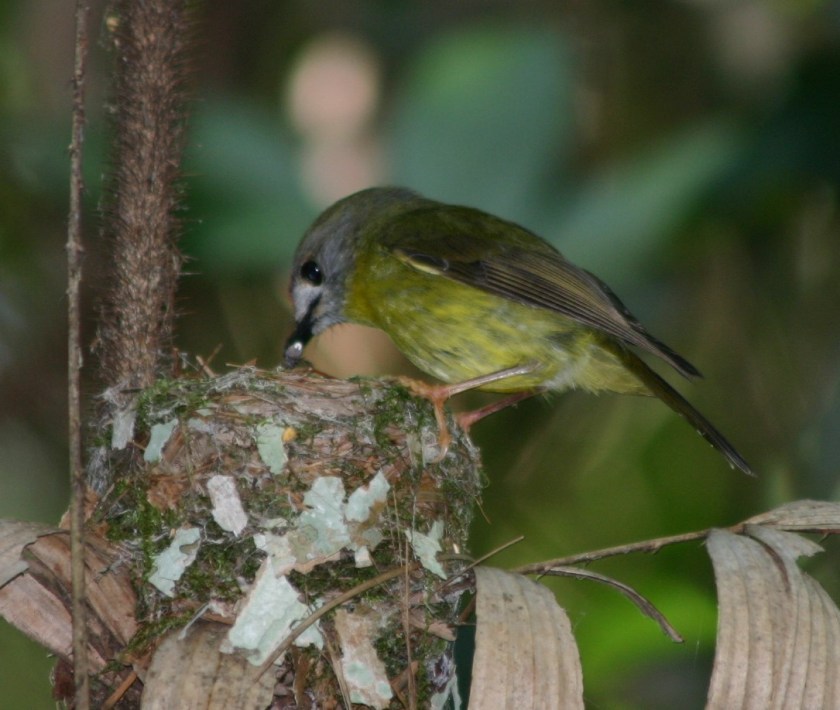
Pale Yellow Robin (Tregellasia capito)

This shy little bird is a true denizen of the deep rainforest (though sometimes found in adjacent woodland) and is very easy to overlook as it flits quietly from tree to tree, often perching sideways on a vertical sapling to check you out. It’s certainly a lot less bold than the better-known Eastern Yellow Robin and in fact the two are not closely related.

The Pale Yellow Robin has a drab greyish green back with a white throat to just above the short, sturdy bill. The belly is pale yellow down to the vent and the legs are an inconspicuous buff. The head is quite large compared to the body; tail is short and squared at the end. The alarm call is a sharpish repeated chah and its other call is a quick, sharp whistle of three to four notes, sometimes more and best heard at dawn. Though a quiet bird, in the mating season the call rings out and may be followed by soft little tweets exchanged between the mated pair.

Range is limited to the forests of the coastal fringe from south east Queensland to norther eastern New South Wales; there is also a population in far north Queensland and, as often is the case, these northern birds are smaller.

This bird stays in the lower shrub layer of the forest and from its perch it can pounce on the small beetles and grubs that make up its diet, pecking at them with its strong little beak.

It nests in the forks of saplings or, more commonly, in the thick, well-protected cover of lawyer vine (Calamus muelleri), using leaves from the vine and other plant debris, including lichen, to build the little cup-shaped nest. It breeds once or twice in the July to December season, producing two pale green eggs with brownish markings.

Human encroachment on its habitat is reducing the numbers of the Pale Yellow Robin.

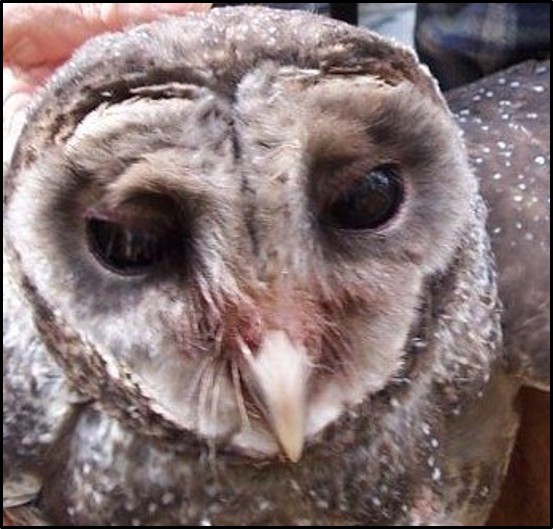
Sooty Owl

This is one of the most dramatic owls in looks and behaviour. It’s the third largest Australian member of the family though a fully mature female Sooty is close in size to her counterpart the Rufous Owl, found much further north.

The rainforest is not the prime habitat of this big owl; it prefers wet schleropyll coastal forests from south east Queensland to southern Victoria but where rainforest is adjacent it will hunt there, it’s long, descending, harsh whistle sounding like a falling bomb, often startling unsuspecting campers and forest dwellers on hot summer nights.

This is an owl more often heard than seen by humans as it is both stealthy and highly secretive. It’s darkish grey colouring conceals it well among the shadows and the big, mournful eyes set in a wide, pale, heart-shaped face can only easily be detected by torchlight, when they give off a ruby red shine that’s diagnostic.

The grey (with hints of russet) plumage is speckled with small white spots which give the bird a sparkling appearance when looked at by torchlight. The grey breast is also spotted with white. The pale facial disc is rimmed with darker feathers, the legs are thickly feathered like white leggings and the talons are massive, capable of seizing prey up to the size of a rabbit. Rabbits, small gliders and rodents are this bird’s main prey.

The secretive Sooty Owl likes to roost in deep tree hollows and trees that have become hollowed out from the inside. Here it also nests, as well as in caves. Breeding is usually March- June and again in spring. Eggs are large and white, usually two but only one chick survives to fledge – though two surviving chicks have been reported, at least in captivity. They don’t leave the nest until at least six months old.

There is a Lesser Sooty Owl in far north Queensland which is similar in most respects, though smaller and the sexes closer in size.

I used to do a regular walk where the track went right through an old, hollowed out Argyrodendron tree. A few metres up in this tree lived a lone Sooty Owl, or at least I never saw another owl with her. Every time anyone walked under the tree she would scream! Louidly! In fact it was quite fun to sit quietly nearby and watch the shock on the faces of hikers as they triggered this ghostly shriek! Sometimes I’d sit there at dusk and wait for her to emerge and you had to look hard because she would emerge like a silent dark shadow, wingbeats barely audible unless you were listening for them. And then she’d be away through the darkening trunks of the Bunya Pines, off to hunt. I’ve also listened to the Sooty Owls in my nearby forest at night and when their calls give them away I can sometimes catch them in the spotlight, sitting on a branch. It’s the red eyeshine that gives them away.

Leave a comment

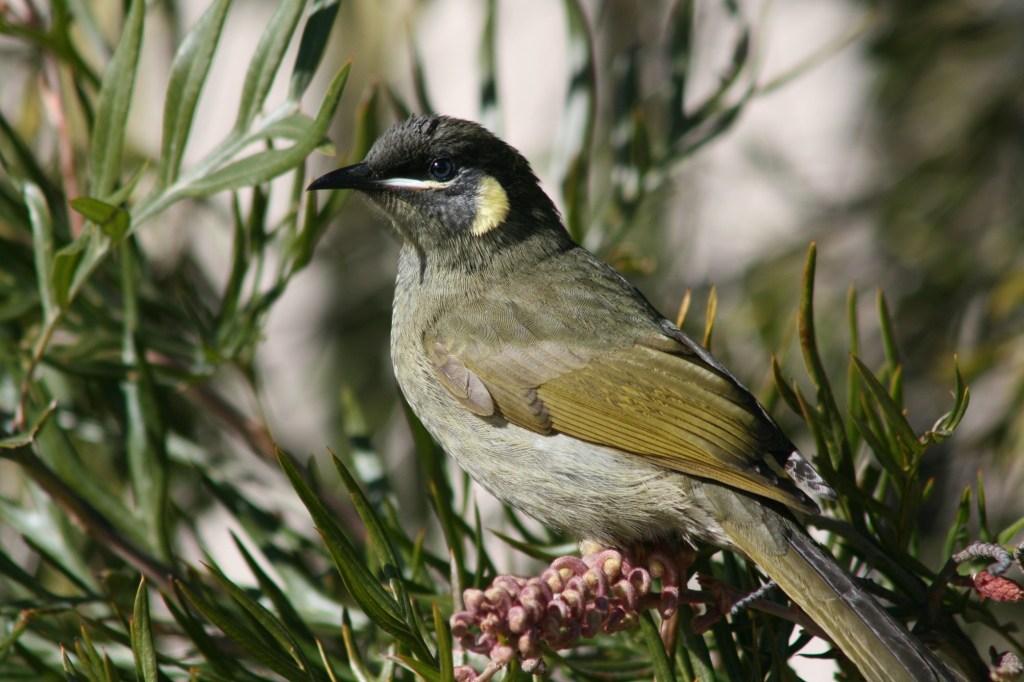
Lewin’s Honeyeater (Meliphaga lewinii)

This bright, energetic small honeyeater can often be seen darting out from flower to flower in search of nectar, often hanging upside down from blossoms and dabbing at them with its curved black bill. It’s quite aggressive and the males will see off competitors in the breeding season (early spring to midsummer) or else engage in lively chases with females – for the casual observer it’s hard to tell the difference!

The call is unmistakable, a piercing staccato, frequently uttered and because this is a common bird in its habitat, the rainforests of the east coast from north Queensland to Victoria, any birding trip in those areas will yield several pairs of Lewin’s Honeyeaters in close proximity.

Sexes are similar, with olive, grey-green backs, greyish buff on the breast, more richly olive on the wings. Feathers around the eye are dark and the most conspicuous feature is the pale-yellow ear patch and creamy white line (gape) along the bill to the eye. Two north Queensland species, the Graceful and Yellow-spotted Honeyeaters, are very similar but smaller, with smaller ear patches and different calls.

The nest is a strongly built cup made from leaves, moss and bark strips, lined with down from the parents’ ‘breasts and woven with spiders’ webs. It is cunningly secured by the rim on one side to a thin branch, hidden among thick foliage. Eggs are two, sometimes three, creamy white with brown blotches at the fat end.

Though a common bird of rainforest, the Lewin’s Honeyeater is also found in wet eucalpyt forest and sometimes in adjacent lighter woodland.

Murder in the jungle!

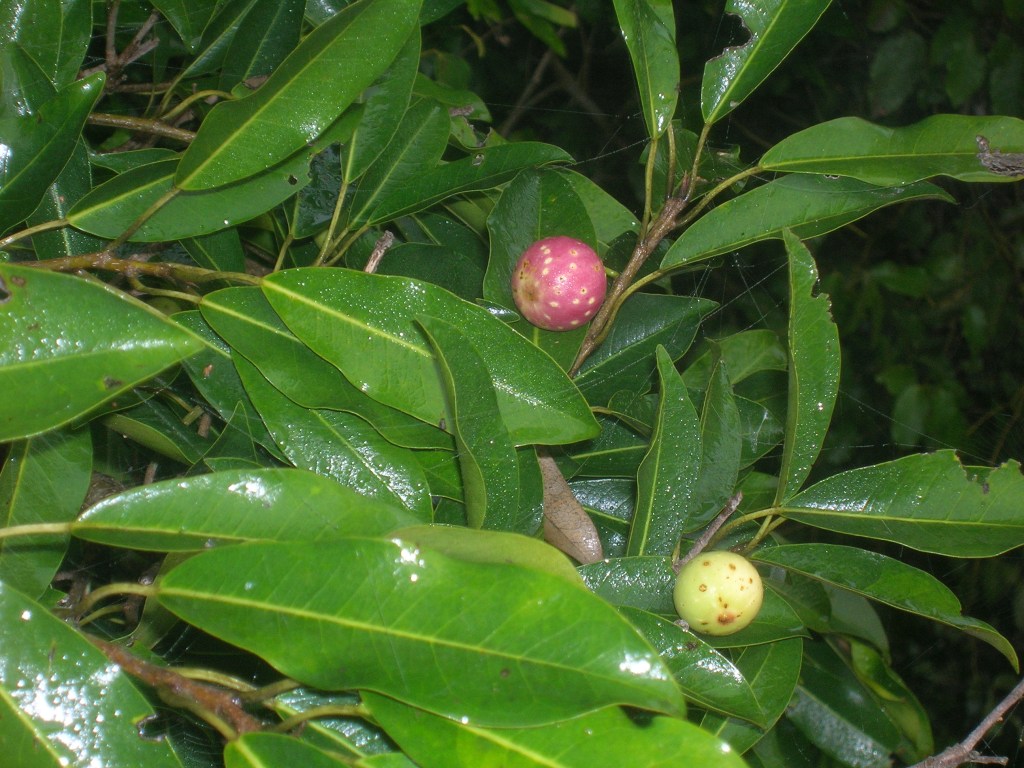
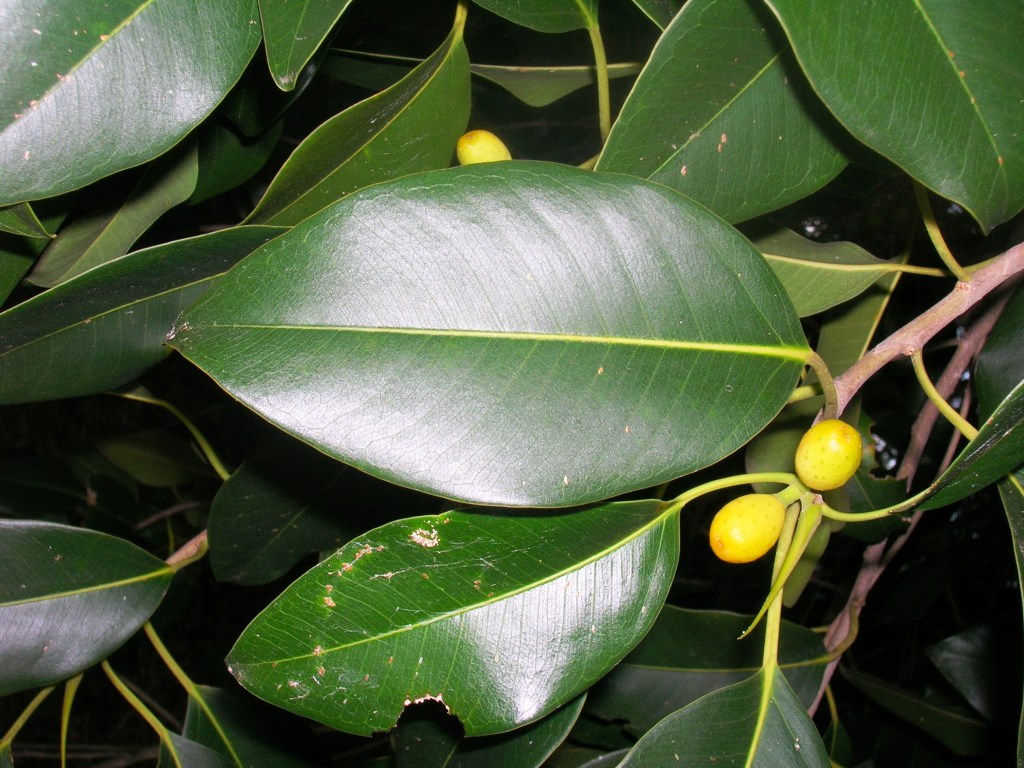
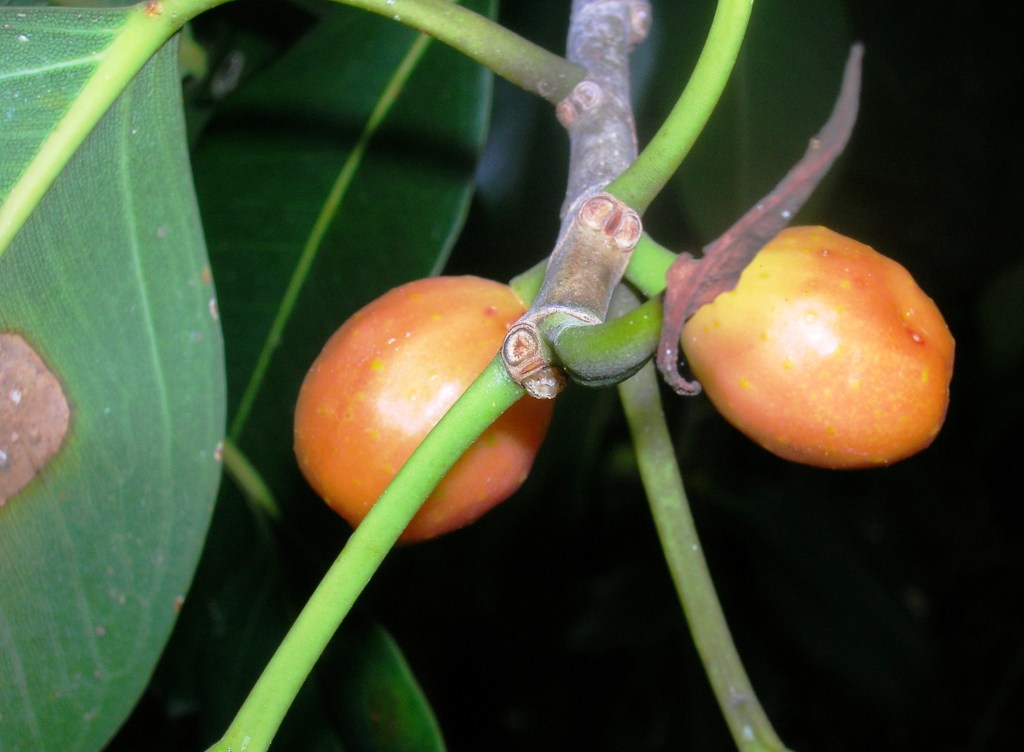
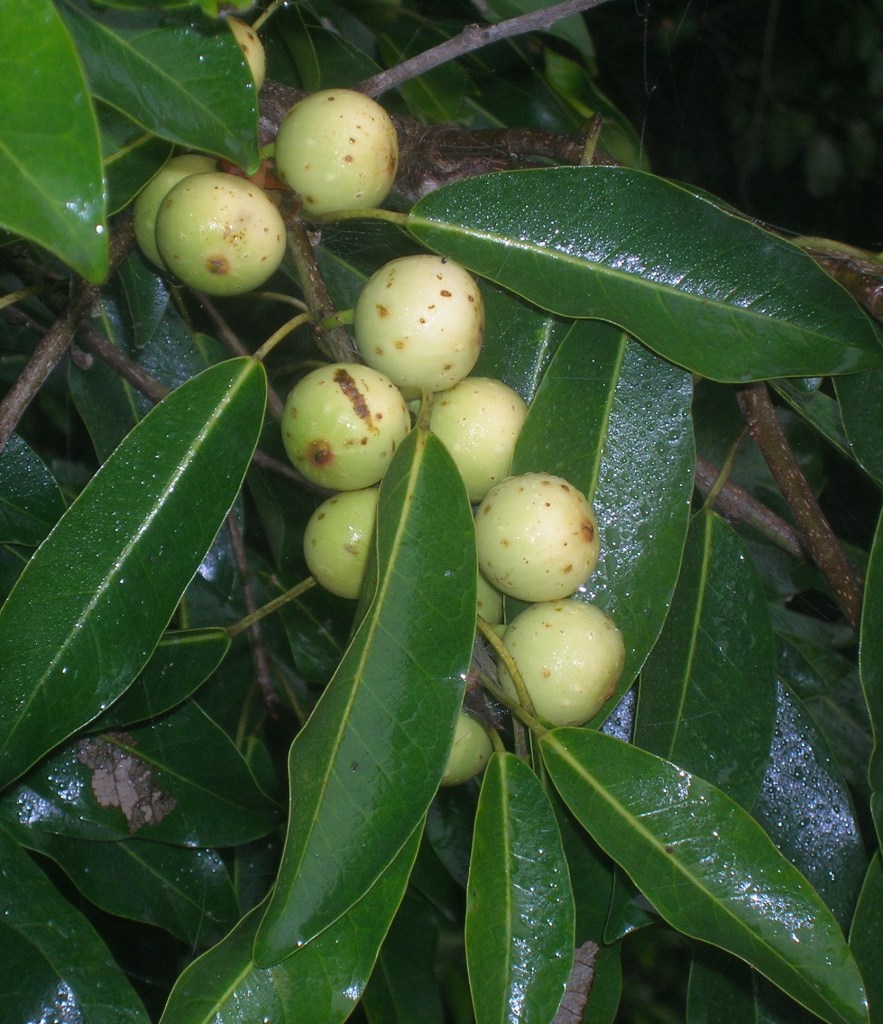
Different type of Strangler Tree fruit: Top left and bottom to pics, Ficus henneana (which grows in near-coastal NSW, Queensland and the Northern Territory. Two top right pics, Ficus rubiginosa or Port Jackson Fig (grows from southern NSW coast to tip of Cape York).

Death comes to the rainforest in a thousand different ways; slow and fast, gentle and brutal; premeditated and impulsive; silent and terrified shrieking.

This kind of forest – or jungle – is not a gentle place though on a fine day when the sun slants benignly down through the canopy and the sound of a running creek soothes the ear, it can seem that way.

And yet…there is a constant predation of the weak by those stronger and fiercer; above in the tops of the great trees, below in the leaf litter and under the boulders. The rainforest is so filled with life and yet even as we walk through, things are dying all around us. Big insects eat smaller insects and are in turn eaten by birds and small animals. Snakes and lizards slither and scuttle in search of sustenance. Frogs lurk in pools, waiting for dragonflies. Dragonflies swoop down on smaller flies.

And that’s just at ground level. Up above, the ruthless struggle just to make it through another day or hour or minute goes on. Pythons wrap themselves around high branches, eyeing birds’ nests. At night, bats dip and weave through dense foliage. Raptors hover. Leaves wither and drift to the ground, fruit ripens and falls into hungry mouths.

In the rainforest it’s the rule of the Three Fs – Feeding, Fornicating and Fighting.

And there is another “F” that features in the ecology of the rainforest; a silent, stealthy, sinister killer. The strangler fig!

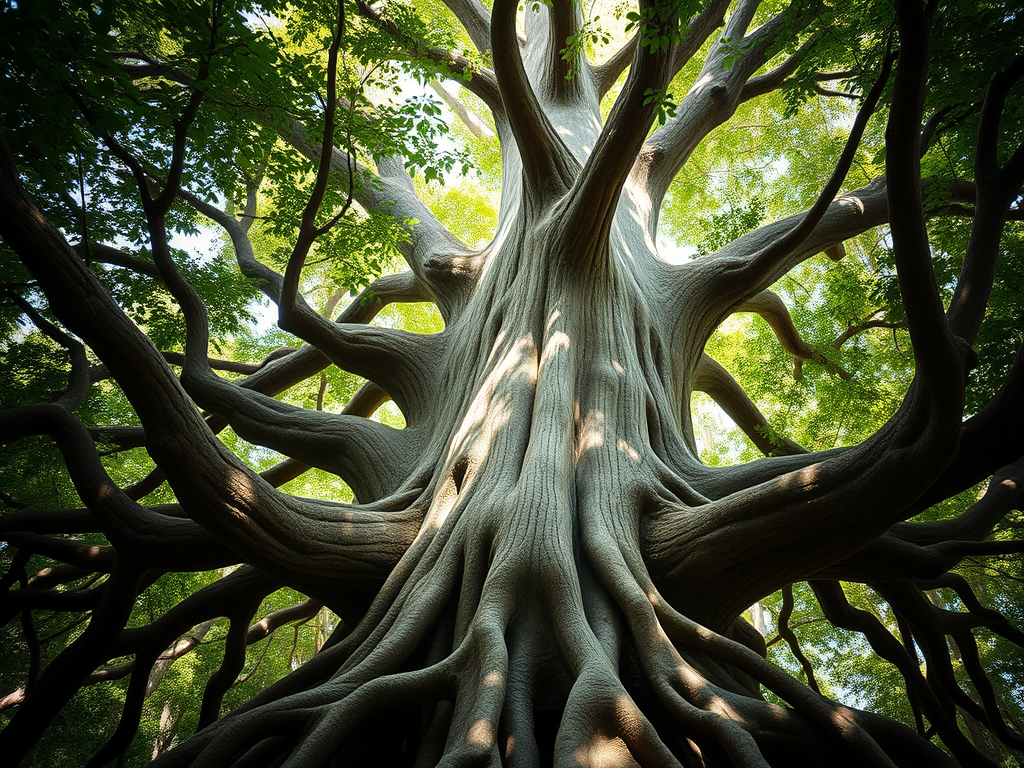
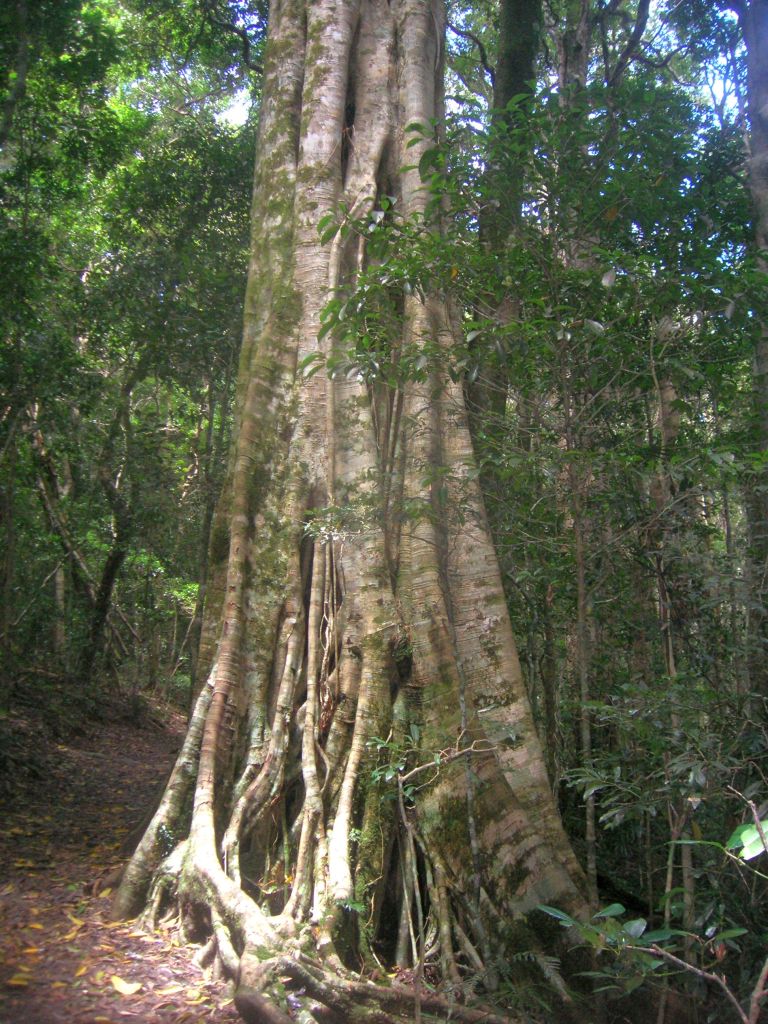
This type of fig, mighty of girth, high of canopy, with its roots spreading like serpents for metres across the forest floor, is hemiepiphytic. This means it actually starts life as a seed dropped or excreted by a bird in branches belonging to a variety of host trees. The crevices where the seeds sprout into life are filled with leaf litter rich in decayed plant and animal matter. This nurtures the seed which produces aerial roots that spread downwards until they reach the ground, where they become terrestrial , growing into a latticework of separate “trunks” that support the tree and, in the process – and this is the cruel part – over time “strangle” the unfortunate host tree by denying it light, food and water.

The epiphyte is now a tree, growing wider and taller and stronger, supported by its wide-spread roots, some of which grow as big and thick as buttresses around the base. But the host is a prisoner, increasingly hidden behind the curtain of inter-twining stems that form the trunk of the new tree, until the old tree collapses and decays into the ground, thus continuing to nurture its killer!

It all takes a very long time. The ways of the rainforest are ancient and patient, beyond the easy measuring of Humankind. As with all the eternal cycle of life and death in this shadowy treescape, Nature is not cruel but merely remorseless, following its essential biodynamic.

Strangler figs grow in all types of warm-to-hot climate rainforest in Indika, South East Asia and the Pacific, Australia has several such figs, including examples of “banyan” type trees with multiple “trunks” from canopy to below ground. Several of these are famous, such as The Cathedral and The Curtain trees on the Atherton Tableland in far north Queensland. These are fine examples of Ficus virens and another famous site for this tree is in Eagle Street, Brisbane, right in the middle of an intersection. Here two seedlings of F. virens and one of F. benghalensis were planted in 1889 by Walter Hill, father of the nearby Brisbane City (formerly Botanical) Gardens.

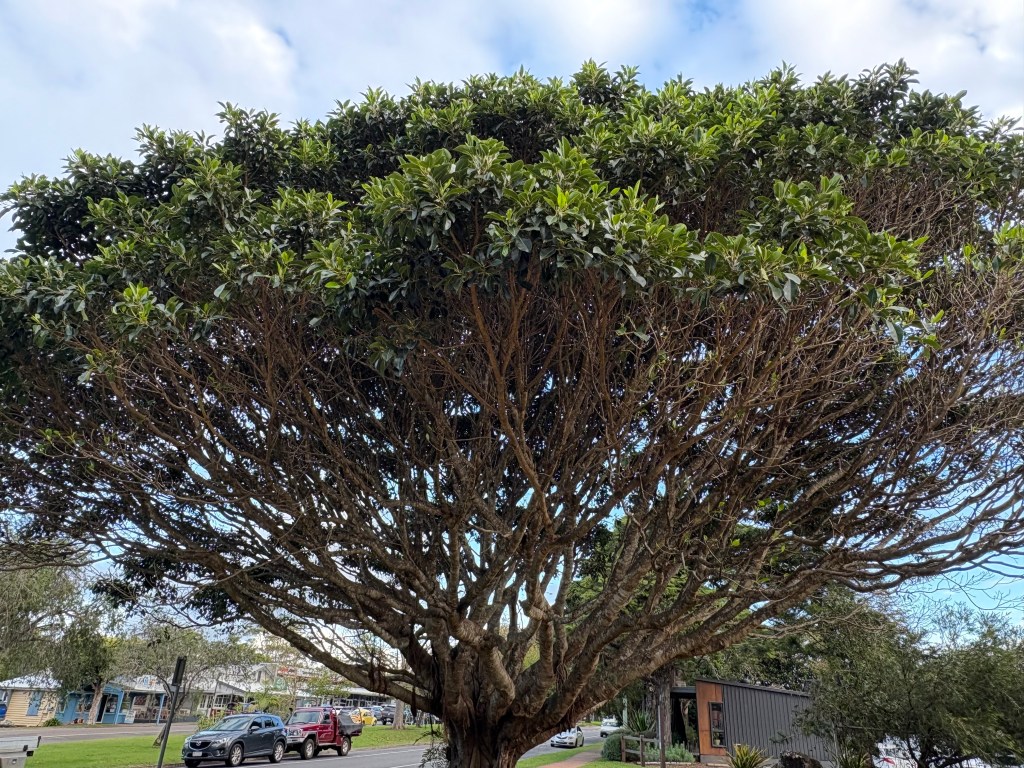
Growing over a wider range of habitat than F. virens are the Moreton Bay Fig (Ficus macrophylla) and the Small-leaved Fig (Ficus obliqua) which are found from New South Wales right up the Queensland coast. Their huge size at maturity dominates the landscape; in the open they spread their limbs wide and don’t get too tall; in the rainforest their long trunks twist and lean upward to carry their branches into the sunlight.

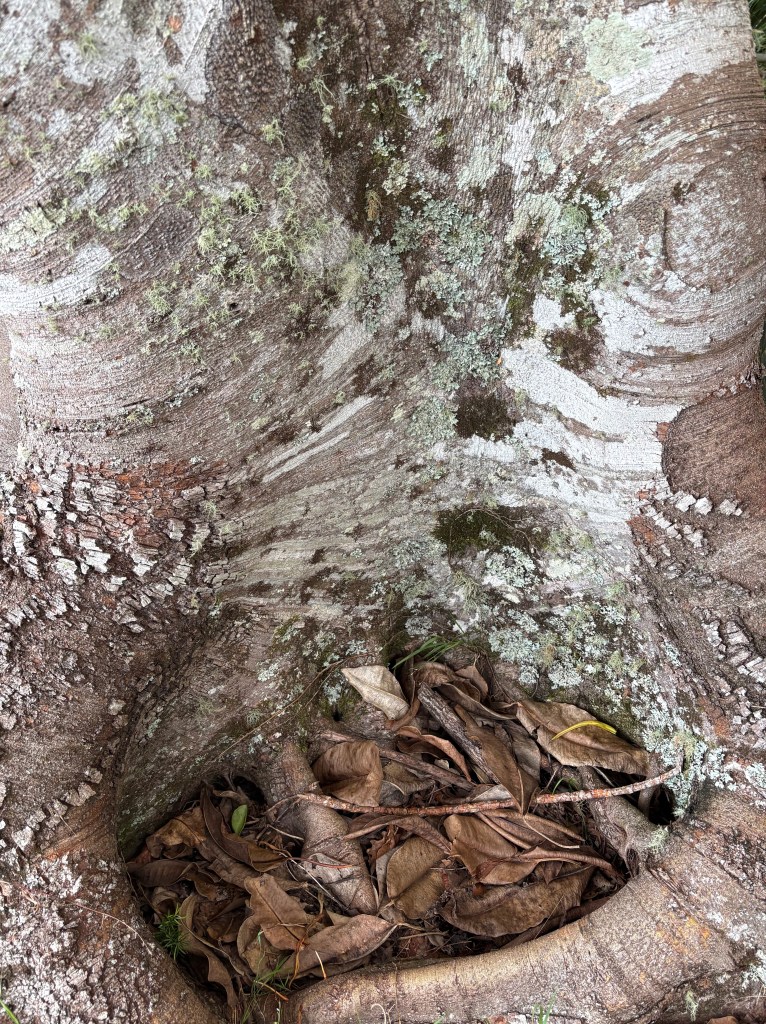
A young Ficus macrophylla growing happily in a busy street. This tree has not yet developed the rusty underside to its leaves, as happens with most mature trees. The roots develop laterally at the base and form little “pockets” which trap water and leaf litter a fertile place for all sort of ground insects. And a trap, too, because foraging birds, reptiles and small insectiverous critters know it’s a good place to get a feed.

Most widespread and common of the hemiepiphytic figs is the one that carries the common name Strangler Fig – Ficus watkinsiana. This is a giant that is found in most types of rainforest from north of Sydney to north Queensland. Like all its kind, it plays a very important role in the ecology of the rainforest. The fruit, edible (albeit not very palatable) to humans is essential to the diets of many birds and a few mammals. Insects burrow into the flesh and breed there. The wide, thick branches provide nesting and roosting opportunities. Possums bats and gliders hang around in them too. Insects of all kinds can be found in or on the bark, a feast for the reptiles that feed on them. Mighty pythons spread themselves lazily, digesting their latest meal. The thick leaves provide shelter from sun and rain. Down below, the many above-ground root angles are filled with rich litter and housing opportunities for all sorts of small creatures.

Ficus watkinsiana, a giant of the forest.

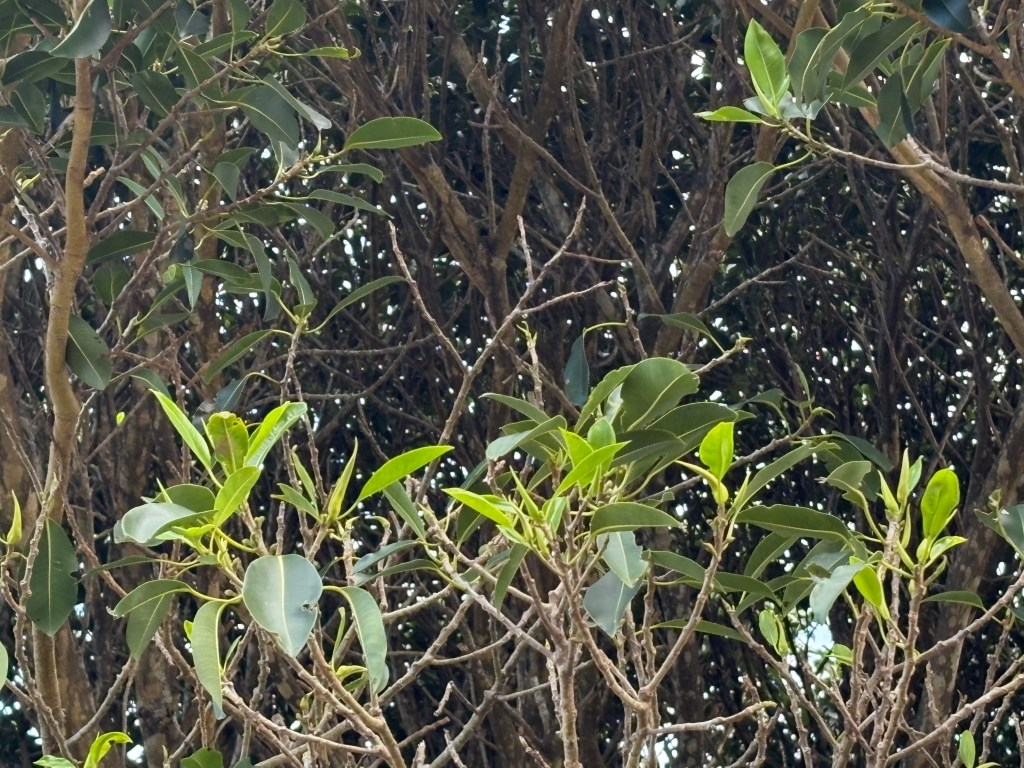
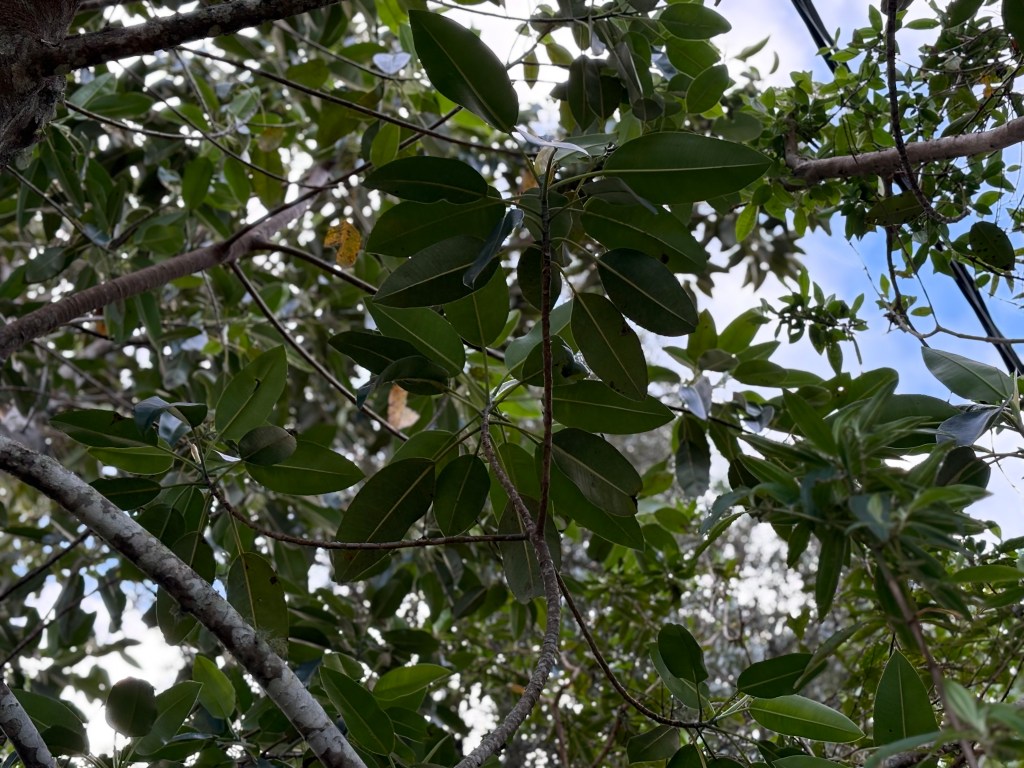
All the strangler figs have similar leaves and fruit and these similarities are shared with others in the Ficus genus. The leaves are simple, tough, with strongly-marked lateral veins. They may be as small as those of F. obliqua (to 8cm), broadly elliptic, on longish petioles. A distinguishing feature are the long, rolled stipules, growing from the axils (very prominent in F. macrophylla). Another is the thick, milky sap in leaves and stems.

The fruit is not unlike that of the domestic fig but a lot smaller, varying in colour (when ripe) from yellowish-green to deep purple to red, usually with small, pale spots and a nipple on the end.

The roots are opportunistic in the extreme, seeking far and wide for nutrients, snaking over man-made barriers, laughing at our puny efforts to obstruct them. See the ancient temples of India and South East Asia where the mighty banyans clasp the walls and buttresses in a loving embrace which may be mutually beneficial as, with time, the trees support the crumbling buildings that once supported THEM. No wonder many belief systems attribute spiritual dimensions to them, or see them as home too dryads and Strangler Figs and humans have lived together for a long time. In Australia we don’t permit such liberties but we do allow these trees to disrupt the pavements and some public spaces in our cities, putting up with their disruptive powers for the sake of their shade and beauty.

Strangler and other Ficus species belong to the Family Moraceae, along with mulberries, jackfruit and breadfruit. It’s a noble family that has fed the creatures of the Earth for many an aeon. Figs were part of the diet of indigenous Australians, with the fruit of the related Sandpaper fig (Ficus coronata) being preferred.

When you look at one of the great rainforest strangler figs you don’t see it as a murderer, thriving at the expense of another tree which once generously provided the tiny seed with food and shelter. What you see is something heroic in its hugeness and admirable in its will to survive in a highly competitive environment.

As a species, it’s among my five favourite trees. There is just something so splendid about a tree that starts life as a tough little opportunist and then grows into something so magnificent to the eye and also a symbol of botanic redemption – ultimately giving back so much more than what it takes.

Ficus watkinsiana leaf – smaller than F. macrophylla, larger than F. obliqua.

Meet me

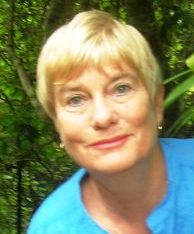
I’m Julie Lake writer, gardener, music lover, horticulturalist and long-time student of the plants and ecology of the subtropical rainforest.

I write books, too. If you are interested in Africa, you might like to read A Garden in Africa, about the remarkable Flora who created a famous garden out of the dry Kenya bush. If you love Wagner and enjoy the novels of the late Terry Pratchett you’ll get a laugh out of Ringtones, a satire on The Ring, where Gods behave badly and dwarves, giants and dragons behave even worse. Both are available on Amazon at http://www.amazon.com/dp/B00HNTL18Q and http://www.amazon.com/Ringtones-Julie-Lake-ebook/dp/B00HNVHLBA.

Or perhaps you are new to gardening and don’t have the best soil in the world. You can learn how to do something about this with my book www.amazon.com/Improving-Your-Soil-GardenEzi-ebook/dp/B007IXY6Y8

Then again, you might like to supplement your income by growing herbs – if so, I wrote a book on that too – How to Make Money By Growing Herbs. http://www.amazon.com/Herbs-Money-GardenEzi-Books-ebook/dp/B008R9JIUE

Both these gardening books are cheap to buy and full of useful advice in an easy-to-read format.

And then there’s my new book, a novel. Lyrebird Mountain. About Anna Bachmann, an ordinary woman who lives an extraordinary life on a mountain just like my own. It’s a family saga of love and loss, triumph and tragedy, war and peace – all those ingredients which make up a good read! Available now on Amazon in printed, ebook and audiobook formats. Go to: https://www.amazon.com.au/Lyrebird-Mountain-Julie-Lake-ebook/dp/B0FMMNDJS7?