
The game drive – death on the African plain

THE beginning of the 1960s was a bad time for Kenya farmers.  First, in 1960, came a severe drought which hit the Ukambani around Machakos  harder than most other areas.  As so often happens in Africa, the drought which forced farmers to sell off cattle cheaply or else move them to other and often remote grazing areas was followed by some of the worst flooding known since European settlement.

And then came the army worm (Spodoptera exempta), a voracious little caterpillar that can gobble up entire pastures in a few hours.  This time the army worm plague was so thick on the ground that the Mombasa-Nairobi train couldn’t run on its tracks, greased to impassability by the crushed bodies.

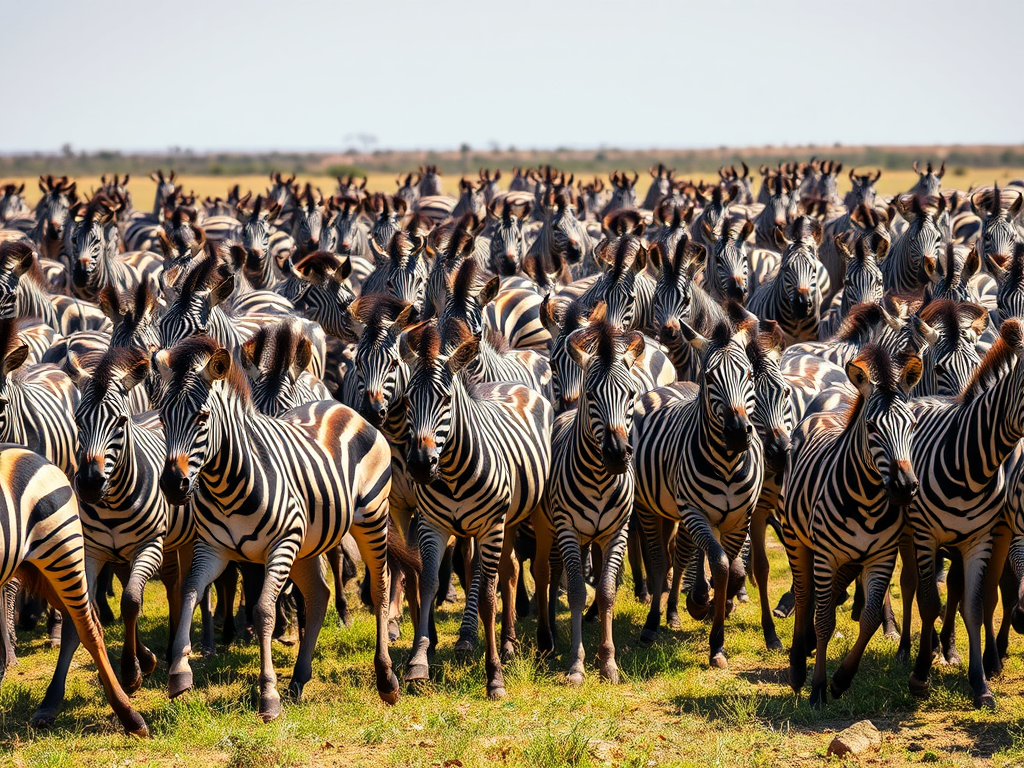
After the army worm the precious new grazing that came up after the rain was suddenly invaded by herds of zebra and wildebeest.  The first time in years such a thing had happened and the timing seemed almost deliberate, as if the game was getting its revenge for the invasion of the wilderness with our pampered domestic stock.

And so the farmers gathered in the Ukambani to save their grazing by driving the herds of zebra and wildebeest, impala and kongoni back into the Masaai Reserve.  Half a dozen families including children over the age of twelve, assorted friends and relatives from “town” who enjoyed a bit of shooting, and plenty of watu to do most of the “driving” because it was not only white settlers who were affected by the infestation of game but also the squatters who lived on their land and those who worked the village shambas.

Imagine if you can today, in the age of endlessly clicking cameras and little zebra-striped safari buses and game lodges with infinity pools what is was like to rise in the chill of dawn on the day of the game drive.  To eat a hearty breakfast of porridge or cornflakes, eggs and bacon, kedgeree and sliced venison, toast and marmalade.  To hear the click of bolts as guns were checked and feel the excitement sizzle through your veins like a lighted fuse. It sounds terrible to tell such a tale today,  but this is how it was, back then and one shouldn’t judge the past by the mores of the present.

All had been planned days before.  A shallow valley selected along which the herds could be driven; the strategic placing of the best shots along that route, the starting point for the mass of yelling beaters waving sticks and bright pieces of cloth and clubs to finish off the wounded animals.  Also in the rearguard were those Europeans who would follow the herds in vehicles, some armed, some just along for the fun of it, all making a great deal of noise as they bush-bashed their suffering vehicles over the rough and mostly trackless terrain.  Here and there lookouts were stationed on rock outcrops and small kopjes along the slopes above the valley. These were mostly younger people and the less-experienced shots, positioned where their sharp eyes could be of benefit to the hunters but where they were in no danger from the stampeding mass of hooves and horns.  We (for I was once one of them) were given light rifles and two pieces of cloth, one red and one white.  We waved the white “flag” when we first saw the game coming towards us down the valley.  The red cloth was used mostly to drive back any animals desperate enough to stray up the slope. It could also be used to signal danger to the other watchers, for where there are zebra and wildebeest in a panic there are also lion and hyena.  Other creatures used to get caught up in game drives, too, made dangerous when their natural fear of humans was overcome by confusion.  Rhino for example.  Or stray buffalo.

Standing on one of the kopjes with hands shading eyes, we looked to where we’d been told the game would come.  It was a long wait, in the hot early sun that drove the chill from the air and hyrax back to their holes after a night’s foraging.  This was Africa so in that early hour there was always something to see; a Bataleur eagle soaring overhead, a cloud of vultures rising on distant thermals, a family of wart hogs trotting busily by, tails in air, a cobra slithering hood down in the grass.  We were always warned to be wary of cobras which were plentiful thereabout and used to lie and sun themselves on the rocks, ever ready to take offence.  Meandering across the long, shallow valley was a creek, dry in that season and a likely hazard to the vehicles that would soon cross it in pursuit of the driven herd.  Its belt of shrubs and long grass was a daytime shelter for the small solitary antelope such as Dik Dik and Duiker and they, too, would be caught up in the general stampede and perish there, unless they could stay calm and low among the boulders. 

It takes a long, long time to get grazing herds of wildebeest and zebra on the move.  They start easily when disturbed by humans but don’t run for long.  They must be steadily, mercilessly harassed until the spark of panic ignites into a headlong rush that will not easily be stopped until the stronger beasts tire.  For once they are in range of the guns and begin to fall they must run on and on, or die.  On the particular day that lives in my memory, it was early afternoon before those of us acting as lookouts far down in the valley saw the first puff of dust on the horizon.  The puff soon became a cloud, thick and brown, rising higher and higher, sinister as smoke.  Then we heard the dull, insistent thud of many thousands of hooves and, as they came closer, the wild cries of the beaters and the blare of vehicle horns.  We enthusiastically waved our white flags to signal the distant marksmen and soon enough the vanguard was a hundred yards from us, heads down, back legs driving through under the hard bellies or else kicking up in occasional bursts of terror or perhaps rage.

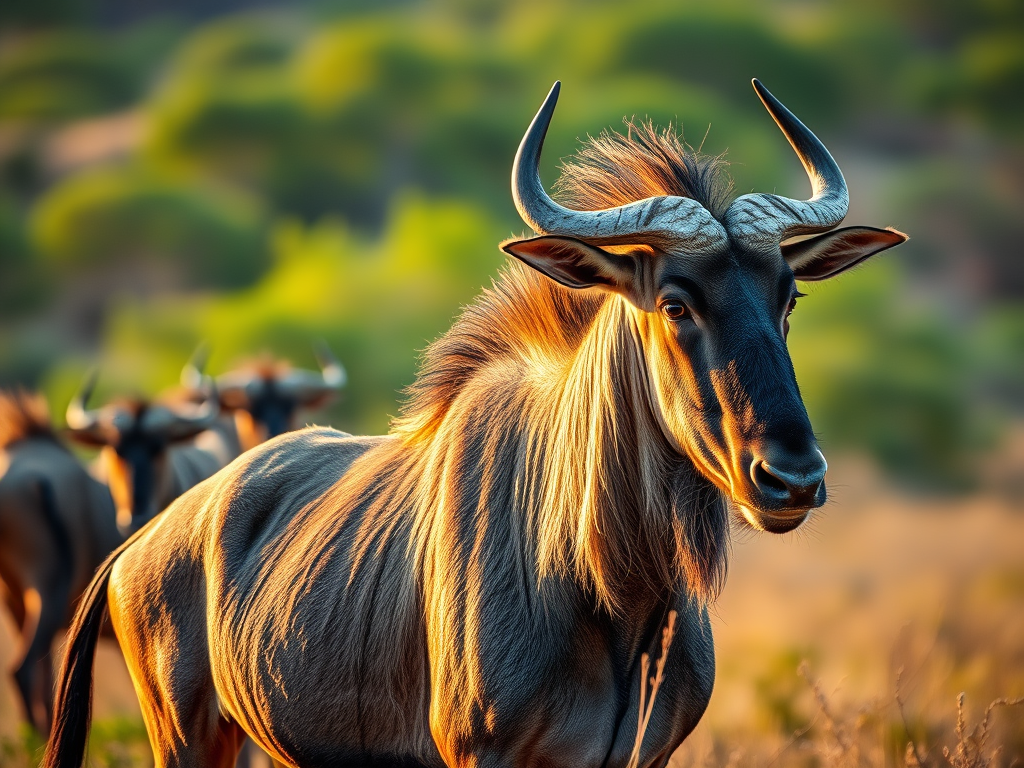
On and on they came, the heavy grey bodies of the wildebeest, the flashing stripes of the zebra, an occasional flash of dun or chestnut. Small self-contained herds of impala stayed wisely on the edge of the stampede, leaping high and long, graceful even in panic.  You could smell them from a long distance;  the bovine gaminess of fleeing ungulates; the reek of squirted dung turned liquid by fear.  And over it all, and through it all, the coppery smell of African dust that is made up of so many elements both ancient and new.   Amazingly, despite the general pandemonium, a few creatures here and there would stand off to the side, grazing for a few minutes as if they hadn’t a care in the world, before suddenly rejoining the stampede.  Some of these strayed innocently up the slope to where the lookouts were waiting to shoo them back into the mainstream and though here and there some developed a sudden sense of self-preservation and broke through to safety up the slope and beyond, most obeyed the herd instinct and continued to run with the rest.

The din was beyond description yet soon another and louder sound reached our ears as the guns began their merciless slaughter.  And slaughter it was, because the point of the exercise was not fine shooting but simply to send the herds far enough away from the European-owned farms and tribal shambas so that they could not easily come back.  So the hunters – and perhaps hunting is not quite the right word here for it denotes skill and there was no skill involved in this – just fired into the solid mass of animal flesh as it galloped by, not worrying whether they killed outright or merely wounded.  In any case, no wounded animal would survive long in the rush for if it stumbled or fell the hooves of its fellows would make sure it never got up again.  And so it went on, hour after hour, and we all felt the blood-madness that takes over at such time until the last few exhausted stragglers staggered by. 

This blood madness is a fearful thing and when it passes people look at one another uneasily or cough and turn aside or light up a cigarette or shuffle themselves about a bit, embarrassed by such a loss of the self that is usually governed by everyday decencies.  Some find it harder to shed than others.  I remember an incident involving two young soldiers from the Cameronian regiment, invited out for the day by a kindly farmer who feeling sorry for them as being far from home and friendless in a strange land,  thought they should be given a chance to know Africa better before being sent elsewhere.  This pair were not officers but ordinary squaddies from the slums of Glasgow whom nobody else would have thought to invite into their homes. 

They were conspicuously ill-at-ease among the settlers, shy and mumbling and sounding so much like the comic-book hero Oor Wullie that nobody could understand a word they said. Yet at the end of the day, with the blood madness still on them, they suddenly became volubly over-excited.  As we drove home in the red dusk, with several of us standing close-packed in the big farm truck, they were swearing and yelling every time the wheels hit a pothole, boasting of all they had shot that day.  Game drives got to some people like that; they just couldn’t come down or let go.  A jackal ran in front of the truck, its eyes glinting in the dusk, presenting an easy target.  One of the soldiers picked up his rifle and shot it, but the shot only caused a gut wound and the jackal spun round and round, shrieking and snapping at its side.  The soldiers laughed at the spinning jackal; almost screaming with mirth that sounded every bit as frenzied and horrible as the shrieks of the wounded animal.  The whole convoy of vehicles stopped and somebody – I can’t remember who – finished off the jackal with a merciful bullet.  The soldiers stopped laughing and there was a dark silence.  Having killed all day and seen others kill, they couldn’t understand that what they had done was an appalling breach of etiquette.  That enough was enough, even for hunters.  That we were sated with slaughter and could suddenly bear no more of it.  Especially when it was gratuitous and unnecessary.  I think one of the soldiers had been planning to jump out and seize the dead animal’s brush, as a trophy, but if so he thought better of it and they were both silent for the rest of the journey.  Nor did we see them later at the post-hunt barbecue on one of the farms, for they had been packed off back to their regiment.

Behind us on the plane we had left more than a thousand corpses scattered in heaps of grey and brown and black-and-white.  The watu from the farms would take some of the meat and so would the tribespeople from the reserve but most would be left to the scavengers, for Africa has a vast appetite and can soon swallow up any excess, any outrage.  Blood and bone and flesh would soon enough be reduced to fragments in the dust and where in the fresh morning the herds had grazed and kicked their heels, now the carrion eaters would come through the evening murk for their turn at the table. 

Rumours of blood travel far and fast in Africa.
Mrs R and the tiger

Though Kenya is famous for its wild game the island of Mombasa has always been rather poorly equipped with wildlife, if you exclude marine creatures.  Mongooses were plentiful, and birds and reptiles but no antelope or elephant or zebra and certainly no large feline predators.

Until, that is, the Day of the Leopard.  Or, to be more correct, a couple of weeks of The Leopard because once, a long time ago, a rumour went racing round the island that a leopard had crossed from the mainland and was on the prowl.  I can’t exactly remember the year but it was possibly 1959 or 1960, and I missed all the excitement because I was at boarding school in Nairobi.

*

Africans on their way home at night reported a large, spotted cat – a chui for sure, glimpsed slinking through gardens or following them at a discreet but still nerve-wracking distance.  An Indian shopkeeper thought he saw the same creature skulking about when he was emptying some food bins one night.  Soon sightings were coming from all parts of the island and these gained credence among the scoffers – such as my father – when pug marks were found in the grounds of the Church of England cathedral.  The protestants of Mombasa considered this a definite triumph over the Papists down the other end of Fort Jesus Road and some wag suggested that the Provost of the Cathedral (not sure if it was still Rex Jupp at that time) buy himself a rifle!  The pug marks were identified, by those who knew how, as being definitely those of a leopard.

After that the search was on, but the leopard proved elusive which, consider how crowded was our little island, without a lot of natural bush left upon it, is a tribute to the ability of big cats to conceal themselves from human view. We were not, in fact, particularly frightened of this particular big cat because leopards were not known to attack humans unless seriously provoked.  However, a leopard is still a formidably strong and well-armed animal and who knew what it might do if it became hungry enough.  Children were warned not to wander too far and dogs were kept indoors at night.  As it was, any dogs that disappeared at that time were considered to have become leopard food and a couple of gung ho types actually sat up at night with native pi-dogs bought especially for the purpose and tied up as bait nearby, until the RSPCA put a stop to it.  Men – European men at least – seemed to consider the whole thing a good joke but women and Africans – who were of course less-securely housed and more likely to be out on foot at night – were frightened.  Indians were frightened too or at least the man behind the counter of our grocer, Beliram Parimal was, because, as he told us, “leopard is terrible man-eater”.  In India, said my father, that’s quite true, for there leopard are larger than ours and also seem to be fiercer. He was a great fan of the books of the Indian hunter Jim Corbett, whose brother lived at Bamburi, and had not long since read The Man-eating Leopard of Rudraprayag. Unfortunately others in Mombasa had read this book too, borrowed from the British Council Library at Tudor, which probably helped fuel the general hysteria.

Leopard were, of course, quite common on the mainland wherever there was heavy forest.  I myself saw them a few times – one on the roof of a cottage at Jadini Hotel, one crossing the road not far south of Malindi.  When calves were taken at Kilifi Plantations a leopard was the suspected culprit and when I lived at Port Reitz my servants were afraid to walk home after dark because leopard were often seen in the vicinity. But a leopard on Mombasa Island would have to have either crossed the causeway, or Nyali Bridge, or swum  across Tudor Creek or possibly the lower mangrove reaches of Kilindini Harbour.  Suggestions that it might have crossed on the ferry from Likoni were generally disregarded!  It all seemed so unlikely and even the reported pug prints in the church ground were regarded with suspicion by some – Mombasa was never short in those days of young practical jokers and some still remember the night a few of us drove all over Nyali pulling out name posts (remember those?) and swapping them around to confuse home owners and visitors.  And then, suddenly, the leopard did something quite unexpected.

We lived in Kizingo Road and not far from us was a collection of small, cheap, thatched houses known collectively as “the bandas” and inhabited by the lower-ranking  white local government employees.  Among them was a woman I shall call simply “Mrs R”.  She was married to a mechanic employed in the council workshops and her Lancashire origins were very obvious in an accent so broad that those of us who spoke “home counties” English could barely understand her – and thus she was much imitated behind her back.  For Mrs R was not popular.  She nagged her husband, gossiped spitefully about her neighbours, had few friends and was feared not only for her uncompromising opinions, loudly expressed in that harsh accent, but for her constant trouble-making.  She was particularly unpopular with the neighbourhood children because, childless herself, she was always shouting at us to stay well clear of her house and garden and “keep roody noise daown”.   I may be libelling the poor woman who has been dead many years now and thus unable to defend herself – but this is the way I (and others) remember her.

Mrs R was of that type and class – fortunately a tiny minority in Kenya – who went out to Africa purely for the job – and perhaps the sun – and appeared to get very little out of it.  They never learned Swahili, never went into the bush or even a game park, never in fact stirred very far from their government-supplied house.  They lived frugally in order to save to go “home” one day and buy a small bungalow at somewhere like Hove.  They employed only one servant to do everything and as their houses usually contained little besides the basic PWD furniture this little was not much.  In fact they feared and despised Africans and were, in turn, despised by those who did work for them and who preferred their bwanas and memsaabs to not interfere in the kitchen or lock up the pantry or dole out groceries with parsimony. 

Mrs R was a case in point – she had a succession of servants from tribes who did not take well to domestic service and she treated them with rudeness and suspicion.  Worse, she raised her voice to them in a way that other memsaabs would consider ill-bred as well as likely to be counter-productive.  Possibly she did this because she had never bothered to learn any Swahili and believed, in true British fashion, that the only way to get a foreigner to understand you was to shout at them.  Again, I am being rather harsh, and more than a teeny bit snobbish!  But that’s the way it was.  People like Mrs R never felt any kind of affinity with Africa, never felt the deep love felt by the rest of us, never tried to understand it, longed always for the day when she could finally return “home”.  Where, no doubt, she would bore her friends and relatives with tales of her glory days as a memsaab.  And people like Mrs R never took any interest in wildlife nor learned to tell one animal from another.

Ironic, therefore, that it was to Mrs R that the Mombasa leopard made its most famous appearance.  According to two close neighbours, they were awakened late one night by a scream and a terrified voice calling out “Wilf, Wilf, it be taiger!  It be taiger!”.  When they rushed outside they realised the voice they were hearing was that of Mrs R, emanating from the conjugal bedroom.  “Wilf, wake up!” she called.  “It be taiger!”.

The way it was reported to me (and to many around the neighbourhood) Mrs R had been lying awake in bed when she saw a large, spotted, bewhiskered face peering right in her bedroom window.  “When I realised what t’thing was,” she confided to my mother, “I were raight terrified”.  Mrs R might not have known her animals but she did know a big cat when she saw one in her window, and had then woken up her sleeping husband.  Loudly enough so that every one else in the neighbourhood (the bandas were very close together) could hear.  The Story of Mrs R and the “taiger” winged its way round the island next day and she may well not have been believed except…that one of the neighbours who rushed to her aid reported later that his dog, an Alsatian known for its savage nature, had cowered whimpering at his side.  And…the clincher…several pug marks of an unmistakable leopard nature were found in the soft sand of the garden bed outside Mr and Mrs R’s window.

The search was intensified but though expert trackers were brought in they found it difficult to find a trail through the little roads and gardens large and small that comprised the area between Kizingo Road, Prince Charles Street (as it was then) and Ras Serani Drive.  However a couple of days later an African wandering under a baobab tree not far from the Likoni Ferry looked up and got the fright of his life, for there,  draped nonchalantly over a branch, was the leopard.  I got a fright too, when I heard about it, as did some of my friends, because this tree was a favourite play spot of ours and we’d even built a small cubby house in its thick, protective branches.    The big cat was then captured, caged and (I think) released on the mainland.  Nobody ever knew, conclusively, how it had got on the island, let alone why.  The rumour mill ground out theories by the day – it had been brought on to the island deliberately as a joke; it was an escaped pet; it had escaped from one of Carr-Hartley’s zoo shipments at the port. The first might just possibly be true, albeit unlikely, the other two were obviously ridiculous because any escape would have been reported.  And you don’t keep a large creature like a leopard in your home without friends and neighbours knowing about it…I’m just repeating this now to show how so many people don’t bother to think before they theorise! 

We kids, of course, happily believed all the rumours in turn and even came up with a few of our own. One, I remember, was that the leopard (we always thought of it as “he”) would for sure have had a mate somewhere who would look for him everywhere and, through starvation and revenge, would prey on those who had taken him. Which shows that, back then, we knew little more about the habits of leopards than did poor Mrs R! 

A Baobab tree, found all over eastern Kenya in the dry nyika country between the Nairobi uplands and the coast. Mombasa island was covered in them and legend had it that under each one was an Arab soldier, slain during the wars with the Portuguese who occupied Mombasa for a while. Baobabs are useful trees; the fruit is edible (though not particularly palatable) and a good substitute for cream-of-tartar, birds and other wildlife find refuge in the branches, some people even made temporary homes in them and we kids made cubby houses in them. We had a big specimen in our garden and I (with help from our gardener) made a snug little refuge there, impregnable to my ayah and most adults but not, alas, to my agile father!