Acuminate: When referring to a leaf, narrowing to a point, often forming a “drip tip” which channels water off the leaf and down to the ground below.
Acute: Sharply pointed
Alternate: Leaves arranged alternately along the stem or branch (as opposied to opposite)
Apex: the tip of the leaf
Attenuate: gradually narrowin
Axil: the angle between the leaf stem and the branch
B
Berry: Fleshy, often edible fruit that contains one or more seeds.
Bifoliate: Compound leaf made up of two leaflets
Bipinnate: Compound leaf which divides into separate leaflets which bear a second arrangement (variable) of leaflets up the stem.
Bole: Area of tree trunk below the lowest branches, sometimes thickened, rounded or swollen.
Bract: a form of leaf often found enclosing flower. Some plants, such as poinsettias, have large and colourful bracts which are often mistaken for flowers. This is rarely the case with Australian rainforest plants.
Buttress: Large sections of the lower trunk which jut out from it and act as stabilisers (rainforest trees have very shallow, albeit spreading, root systems). They also help prevent soil erosion and gather nutrients and moisture in the leaf letter that piles up in their crevices.
C
Calyx: The sepals of a flower grouped together
Cauliflory: Flowers and fruits growing “cauliforously” on the branches or trunk of a tree.
Canopy: Top forest layer of trees.
Capsule: Dry seed case of some plants
Carpel: Ovary, stigma and style inside a flower
Chlorophyll: Green colouring in plants that absorbs sun’s energy
Compound leaf: Leaves that are divided into two or more leaflets
Coppice: Shoots that develop on some tree trunks (usually at the base but sometimes on branches), developing from a dormant bud
Cordate: Heart-shaped, as in some leaves
Cotyledon: The first leaves that appear as shoots from a planted seed
Crenate: Leaves with blunted, rounded teeth around the margin. (Crenulate is the same only teeth are smaller, finer and usually more numerous)
Crown: All the branches and foliage above the lowest branches of tree or shrub
D.
Deciduous: Sheds leaves in certain seasons, usually winter
Dioecious: Male and female flowers borne separately on different plants (as opposed to monoecious where a plant bears both male and female flowers)
Dentate: Leaves with sharpish teeth around the margin
Domatia: Pits or tufts in the vein angles on the underside of a leaf
Drip-tip: Leaf with long, narrow tip that “drips” water on to the soil – and thus the roots – below.
E
Elliptic: An oval-shaped leaf which is widest in the middle.
Endemic: Plants originating from and restricted to a specified region.
Entire: Leaf margin that is neither toothed nor lobed.
Epidermis: The outer cell layer or “skin” of a leaf or stem.
Epiphyte: A plant supported by another plant and dependent on it but not nurtured by it; unlike a parasitic plant which feeds off the host. One example is a Staghorn Fern (Platycerium bifurcatum)
Evergreen: Has leaves throughout the year, i.e. is not deciduous. Like a pine tree.
F
Falcate: Leaf that is sickle-shaped.
Flora: From the Latin, collective name for plants. As with fauna, the collective name for animals.
Floristic: The adjective for “Flora”
1-Foliate: Leaf with swollen joint at the base, where it meets the petiole
Frond: Compound leaves of ferns and palms
Fused: Joined parts of stem, leaf or flower that are growing together
G
Genus: Taxonomical term for group of species that are closely related
Glabrous: Smooth, without hairs or fuzz
Gland: A secreting swelling on leaf surface, leaf base or petiole
Glaucous: dull bloom either white, grey or bluish, either waxy or powdery, found on the undersurface of leaves and, rarely, on the surface.
Globose: round and solid like a globe
Gymnosperm: Ancient plant group with uncovered seeds and ovules not encased in an ovary. Seeds usually born in cones as with conifers and cycads. Often loosely categorised as “non flowering” plants
Inflorescence: Cluster of flowers on one stem
Pinnate: Compound leaf composed of small leaflets either opposite or alternately arranged along the stem (rachis).
Raceme: A single long inflorescence with a non-flowering bud on the end and lots of tiny florets along the stem. Often pendant, as in Buckinghamiacelsissima and Macadamia species.
Sepal: Small leafy growths that surround the petals, constituting the calyx
Stigma: receptacle of the pistil; part of flower’s reproduction “organs”
Style: Slender stalk that connects the stigma to the ovary in a female flower
Palms are the graceful dancers of the rainforest, slender stemmed, green fronds swaying to the slightest breeze.
They are found in all types of rainforest except the temperate and the niche they occupy in the biosphere is important. Those great fronds act as fans to cool the temperature around them, the berries nurture birds and small creatures, the balls of hard-packed roots take up little space in the ground, the long stems are efficient conductors of water and nutrients.
This is done through vascular bundles because palms have no bark and no inner rings to mark age in the trunk. These bundles strengthen the stem against strong wind, while the round shape deflects it.
In fact palms are not trees at all but monocots, like lilies, lacking the features of dicots such as trees. When wounded, the outer “bark” does not regrow; when beheaded, new fronds do not form.
In the subtropical rainforests that surround my home, the dominant palm is Archntophoenix cunninghamiana, a very customer than can tolerate quite cold conditions providing there is no hard frost or heavy snow. Heat, it tolerates very well; particularly when coupled with high humidity.
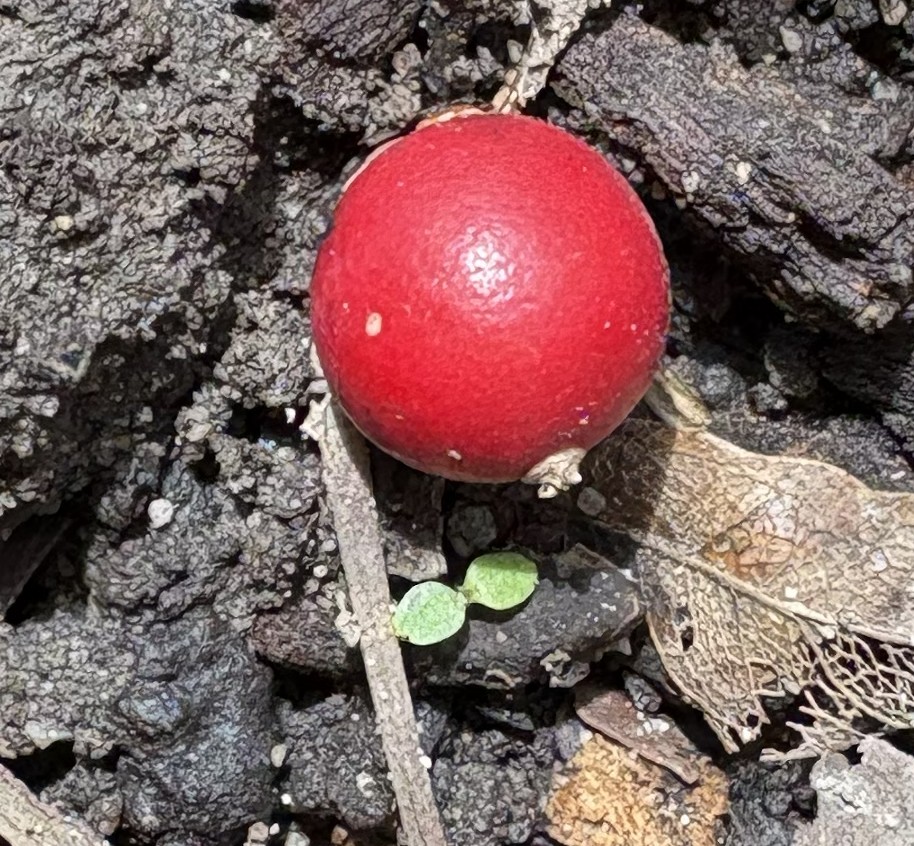
Top: The fruit of the Piccabeen Palm.
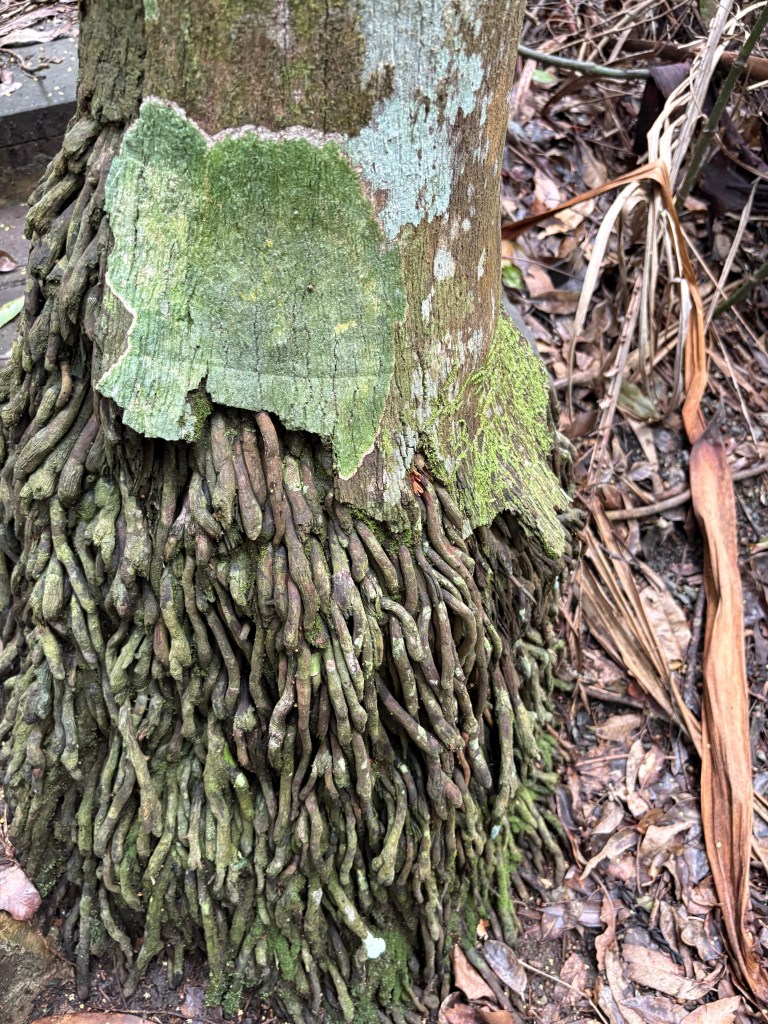
Top right: Aerial roots above ground on the stem of the palm improve absorption of water and sunlight while also providing extra stability.
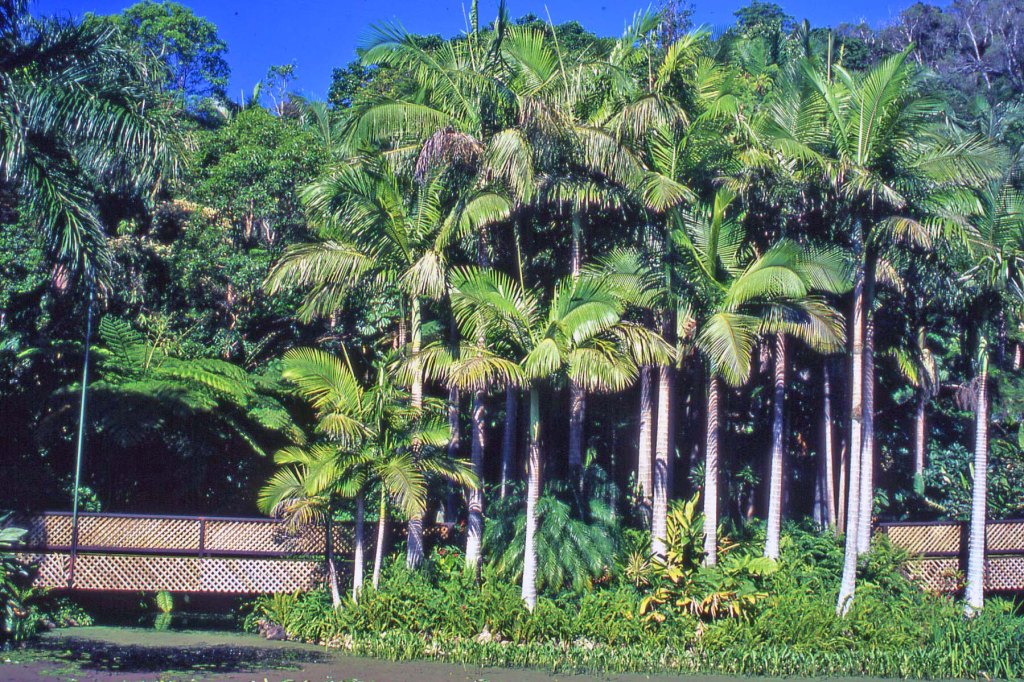
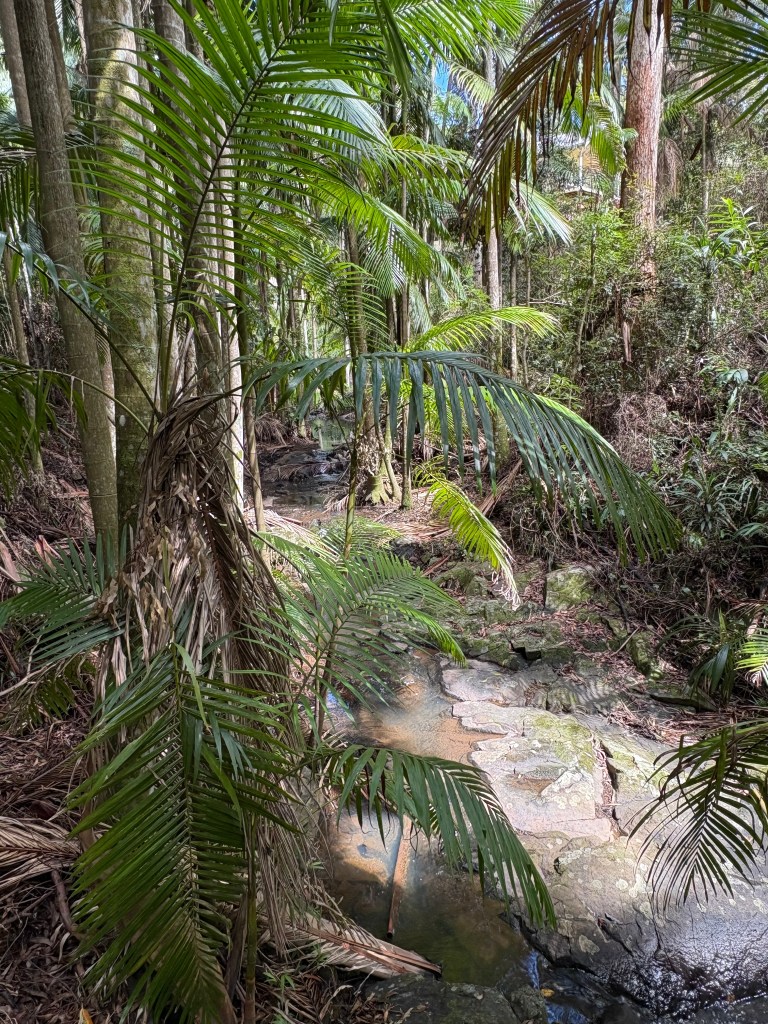
These palms, which we call Piccabeen, the name by which they were known to the indigenous people, grow in all parts of the forest and will do well as solitary specimens in the open, but are seen at their best in deep gullies along water courses and clustered in groves on the flattish bottoms of groves where the water table is high. Here they flourish to the exclusion of most other species, growing high and slender as they reach for the sky.
Lyrebirds and some other species roost in those lofty perches where the fronds cluster at the apex and some birds nest there. Rain washes the bird poo, rich in nutrients, down to the forest floor. Insects are attracted to the summer spikes of tiny, nectar-rich flowers and they, in turn, insects and flowers both, fall to the ground.
Thus enriched, the leaf litter is a rich nursery for the palm seeds that drop there, bright red in the case of the Archontophoenix palms and very ready to germinate. This is how the palm groves form and also why these plants are so readily available in nurseries. The flesh around the single seed is tempting to certain birds and animals but not palatable to humans, and thus the palm is part of the wild banquet that is an essential feature of this particular ecosystem. Other parts of the palm, including the heart for consumption and the fronds for basket-making, were a resource for the indigenous peoples who foraged and hunted among the thickets.
To me, palms make an elegant contrast to the great buttressed rainforest trees and I love to sit on a hillside and look down upon them wherePalms
Palms are the graceful dancers of the rainforest, slender stemmed, green fronds swaying to the slightest breeze.
They are found in all types of rainforest except the temperate and the niche they occupy in the biosphere is important. Those great fronds act as fans to cool the temperature around them, the berries nurture birds and small creatures, the balls of hard-packed roots take up little space in the ground, the long stems are efficient conductors of water and nutrients.
This is done through vascular bundles because palms have no bark and no inner rings to mark age in the trunk. These bundles strengthen the stem against strong wind, while the round shape deflects it.
In fact palms are not trees at all but monocots, like lilies, lacking the features of dicots such as trees. When wounded, the outer “bark” does not regrow; when beheaded, new fronds do not form.
In the subtropical rainforests that surround my home, the dominant palm is Archntophoenix cunninghamiana, a very customer than can tolerate quite cold conditions providing there is no hard frost or heavy snow. Heat, it tolerates very well; particularly when coupled with high humidity.
These palms, which we call Piccabeen, the name by which they were known to the indigenous people, grow in all parts of the forest and will do well as solitary specimens in the open, but are seen at their best in deep gullies along water courses and clustered in groves on the flattish bottoms of groves where the water table is high. Here they flourish to the exclusion of most other species, growing high and slender as they reach for the sky.
Lyrebirds and some other species roost in those lofty perches where the fronds cluster at the apex and some birds nest there. Rain washes the bird poo, rich in nutrients, down to the forest floor. Insects are attracted to the summer spikes of tiny, nectar-rich flowers and they, in turn, insects and flowers both, fall to the ground.
Thus enriched, the leaf litter is a rich nursery for the palm seeds that drop there, bright red in the case of the Archontophoenix palms and very ready to germinate. This is how the palm groves form and also why these plants are so readily available in nurseries. The flesh around the single seed is tempting to certain birds and animals but not palatable to humans, and thus the palm is part of the wild banquet that is an essential feature of this particular ecosystem. Other parts of the palm, including the heart for consumption and the fronds for basket-making, were a resource for the indigenous peoples who foraged and hunted among the thickets.
To me, palms make an elegant contrast to the great buttressed rainforest trees and I love to sit on a hillside and look down upon them where they emerge from the canopy, raising their fronds to the sun, rustling mysteriously, lush with tropical allure. they emerge from the canopy, raising their fronds to the sun, rustling mysteriously, lush with tropical allure.
Of course all rainforest trees bear flowers. Many of them are too large for the home garden but some are just the right size and will reward you with beautiful flowers in season. It may take some years – up to seven – for the trees to bear their first flowers and fruit – but they are worth waiting for!
(NOTE: The trees on this page are well suited to growing in the warmer parts of the United States and other parts of the world where there is no ice, snow or heavy frost. If you need further advice, just email me or use the comments section below).
Beach Acronychia, Logan Apple (Acronychia imperforata)
This is a nice little bush tucker tree, growing to about 15 metres, very common in coastal areas north from Port Stephens in New South Wales.
Vital statistics
Flowers are a bit like apple blossom, born in creamy-white clusters throughout summer to the end of April, four-petalled and very attractive to bees and butterflies.
Leaves are simple, opposite and 1-foliate (bump/joint at the bottom where leaf joins petiole); stiff, very bright green, elliptic to ovate, up to about 12 cm long with a notch at the end.
Fruit is a pale yellow drupe, rounded to slightly pear-shaped. Tart but edible and very good for making jam and chutney, or cooked with sugar into a syrupy dressing over ice cream.
Bark is distinctive; smooth but with fine vertical cracks.
In the garden
This is a tough customer! It will grow almost anywhere but does best near the coast with sandy soils, tolerating long, dry periods as well as sea winds and salt spray. An excellent screening plant.
No need to fertilise, nor water once established. Prune lightly for good shape and desired height.
The similar North Queensland tree/shrub Acronychia acidula (Lemon Aspen) has creamy white, round, usually slightly ribbed fruit which is even tastier than A. imperforata.
Blueberry Ash – (Eleocarpus reticulatus)
Vital statistics
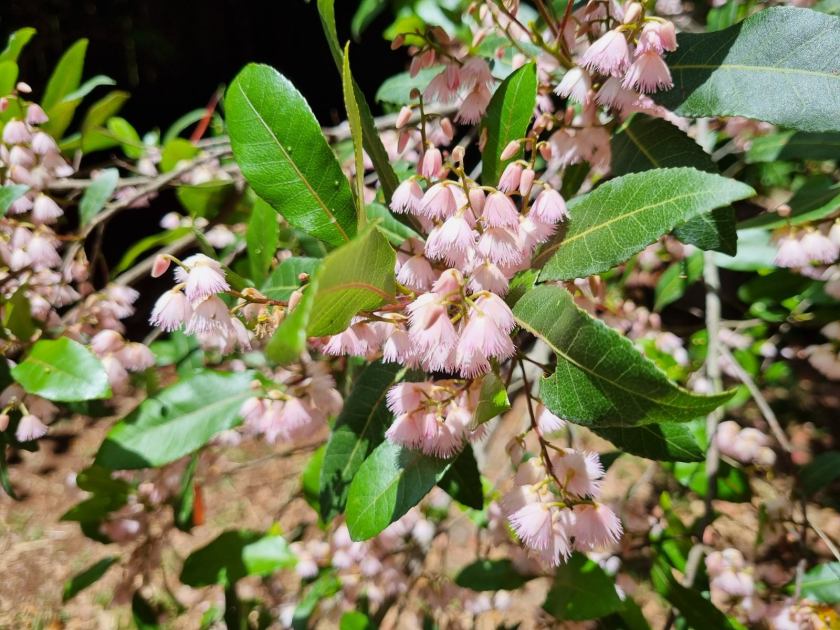
Flowers: Small, pink or white and fringed, like delicate little lampshades or ballerina skirts. The variety sold as “Prima Donna” in garden centres has pink flowers.
Leaves: Oblong or obovate, elliptical, up to about 12 cm long with strongly marked lateral veins. Domatia form small, reddish pockets in the vein angles, tough. 1-foliate, though the swollen joint where it joins the stem may not be prominent. As with all Eleocarpus the leaves turn an attractive red when they fall.
Fruit: An oval drupe, small, a bright blue that attracts birds.
In the garden
This plant occurs naturally in most types of rainforest and also adjoining wet sclerophyll (eucalypt) forest so will tolerate most conditions including light frost when established. Quite easy to propagate from seed.
Give it plenty of space from other trees/shrubs and once it gets to a couple of metres high start pruning the tips so it develops a good growth habit. This tree or large shrub grows very tall and straggly, like most rainforest species, if it is allowed to grow untrimmed or is planted too close to other trees. This may inhibit flowering when young but once it has reached maturity it will reward you with a spectacular burst of colour every spring.
FLAME TREE (Brachychiton acerifolius)
A familiar tree to Australians everywhere because it is one of the few of our rainforest trees to really make it big in the cultivated landscape. The name “Flame Tree” is also used for the African Tulip Tree (now a week in Queensland) but the only thing the two species have in common is red flowers. In winter to early spring this gorgeous tree warms and brightens our streets and gardens wherever it’s planted, while in the tropical and subtropical forest it stands out like…well…a flame among all the greenness of the canopy.
Vital statistics:
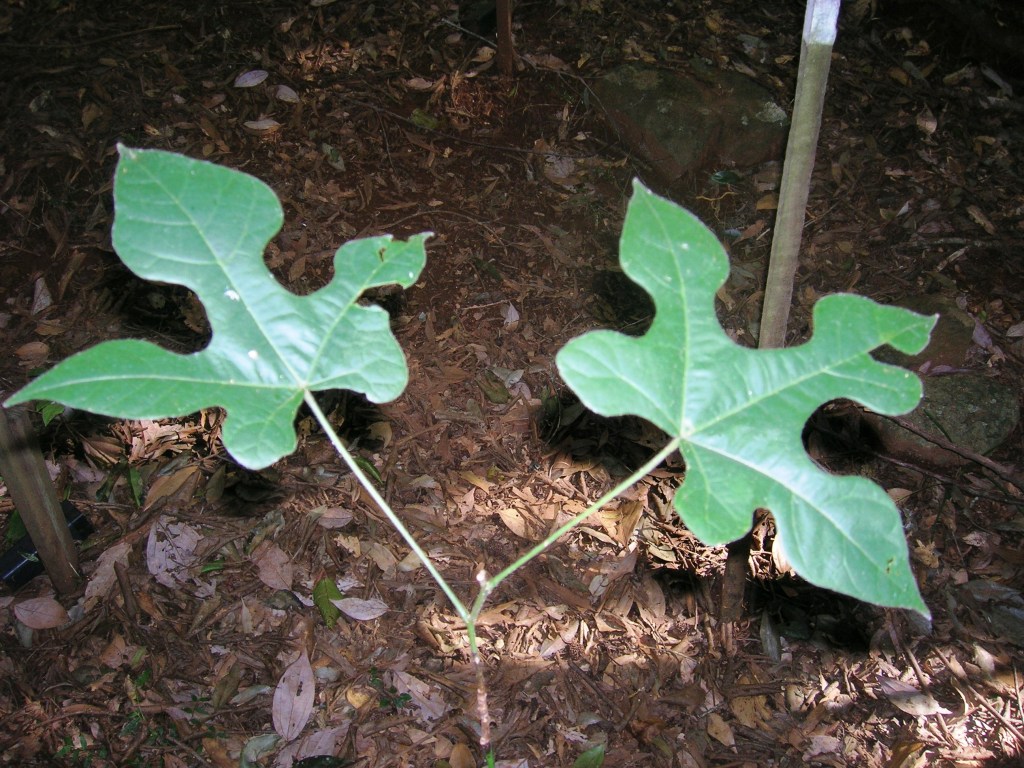
The large, simple, alternate leaves, margins lobed or entire are borne on long stems (petioles). They are shed in winter. Flowers can vary from vivid scarlet to a deeper red and are very showy,each one a little five-petalled bell borne in clusters. The seed pods are shaped like boats and can be used in floral decoraion. The yelowish seeds are edible. The bark is distinctive; smooth and lightish green with fawn-coloured roughish horizontal lesions and blotches.
In the garden
This tree is too large for most home gardens though it takes a long time to reach maturity and tends not to grow taller than about 20 metres when in full sun. Pruning when young will keep it under control and promote denser branch growth. It grows almost everywhere except snowy and very arid areas. Propagation is easy from seed or cutting and in warmer areas young plants often seed themselves and pop up in the landscape.
Lacebark is another rainforest species of Brachychiton and though not common in cultivation it is a better size for the home garden. The flowers are a velvety pink and very pretty. This tree needs plenty of careful pruning when young to stop it becoming straggly; if managed in this way it makes a delicious garden specimen. It tolerates up to three months without water, once established.
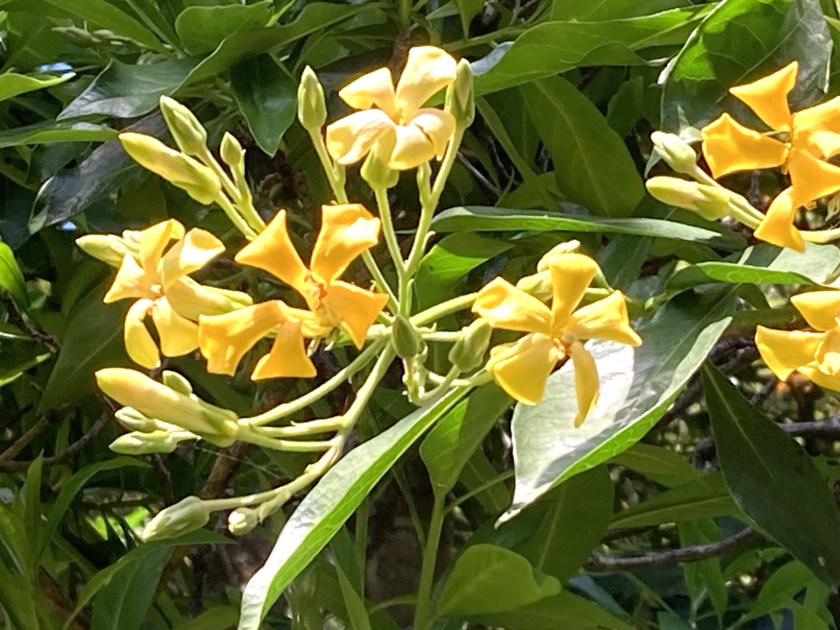
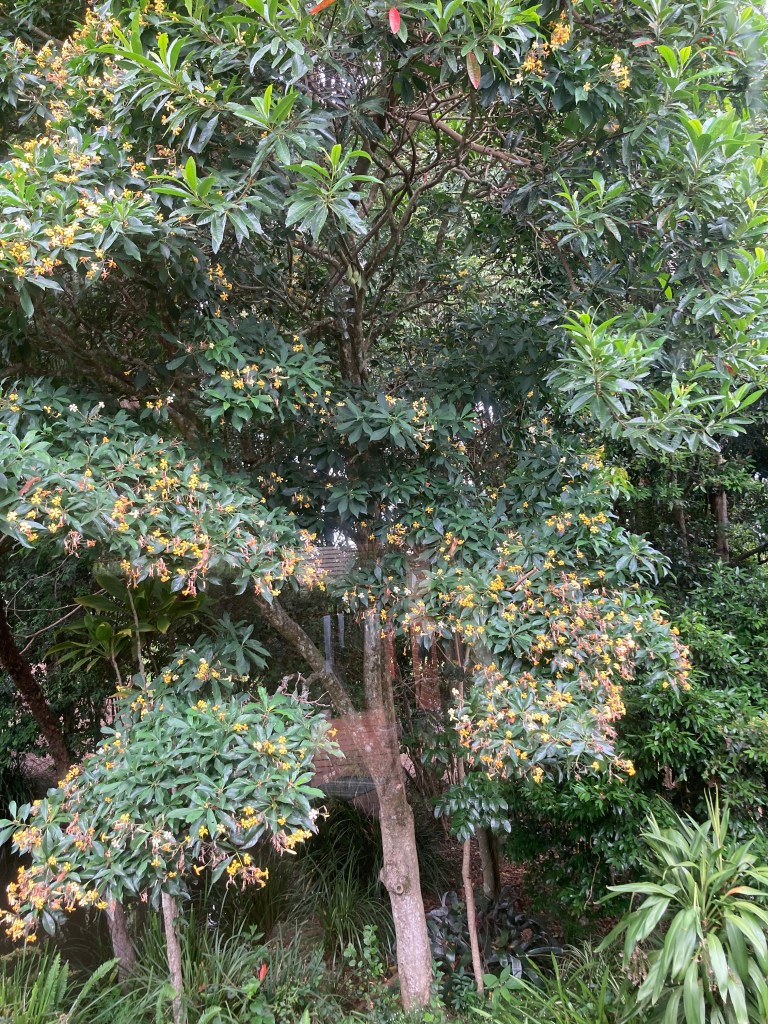
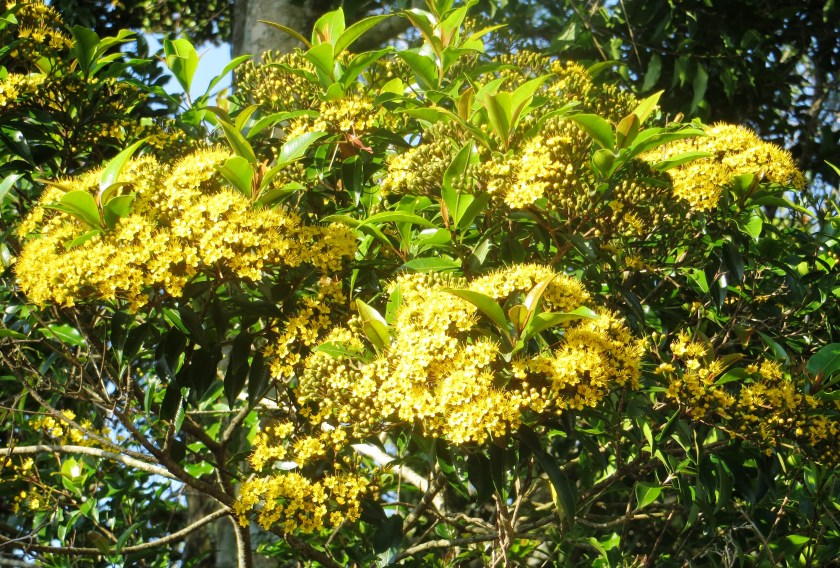
Oh what a delight this tree is when it reaches the age of full flowering, usually at about six years old. And every year after that it gets bigger and better – a shower of gold and creamy white cascading down from the top every spring.
Vital statistics
Small tree or large shrub that grows northwards from the Blue Mountain forests, in rainforest and close by open forest. Leaves are bright green, growing in whorls around the branchlet, obovate to a sharpish point, veins strongly marked, to about 16 cm in length. Fruit is a capsule containing brown two-winged seeds.
In the garden:
Very easy to propagate from seed. Tolerates all soils. Likes plenty of water when young. Does best in areas with good rainfall but can survive short droughts, up to 3 – 4 months. Young plants susceptible to frost.
This is a good tree for all but the smallest gardens but if space is limited keep to about three metres with trimming. Regular pinching out of new growth when young will form a neat, rounded shape.
This tree was pruned when young to make it bushy.
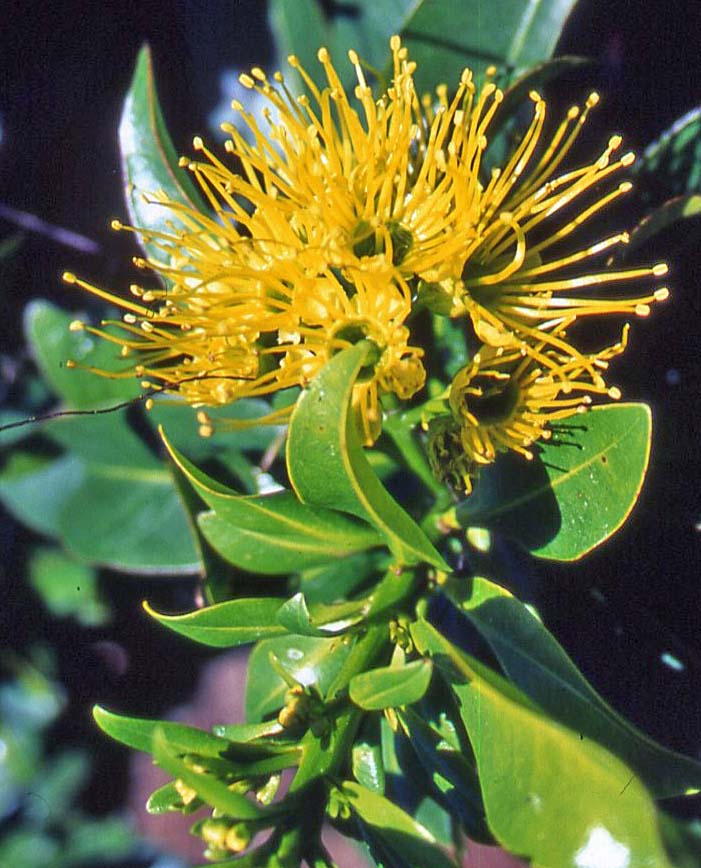
GOLDEN PENDA(Xanthostemon chrysanthus)
This golden treasure of a garden tree is well named – gold in colour, gold in overall size and appearance, gold in trouble-free growing. What’s not to like about this lovely North Queensland tree that grows anywhere that’s frost free and has good rainfall – or at least plenty of available water in dry seasons.
Vital statistics
Leaves are simple, alternate or whorled, long (to about 20 cm), thick and leathery, usually eliptic with a blunt point and yellowish mid-vein. Flowers are born prolifically in panicles of golden petals containing many long bright yellow stamens. Flowers may appear at any time but are most spectacular in summer to autumn. When the tree is not in flower it still looks good, with a naturally tidy habit and bright green leaves
In the garden
Very easy to grow in most conditions but does best with a reasonably loamy soil. It doesn’t need fertilising, just regular mulching with leaf litter or sugar cane. It makes a spectacular single specimen in full sun or light shade but like most rainforest plants it grows faster when it has a few companions around such as low growing shrubs. If you border it with annuals or other plants that require fertilising, be careful, because this is another plant in the Proteaceae family that can’t take too much high-phosphorus fertiliser. It’s best to give your flowering annuals light sprays of liquid formulation that doesn’t seep to deep into the surrounding soil.
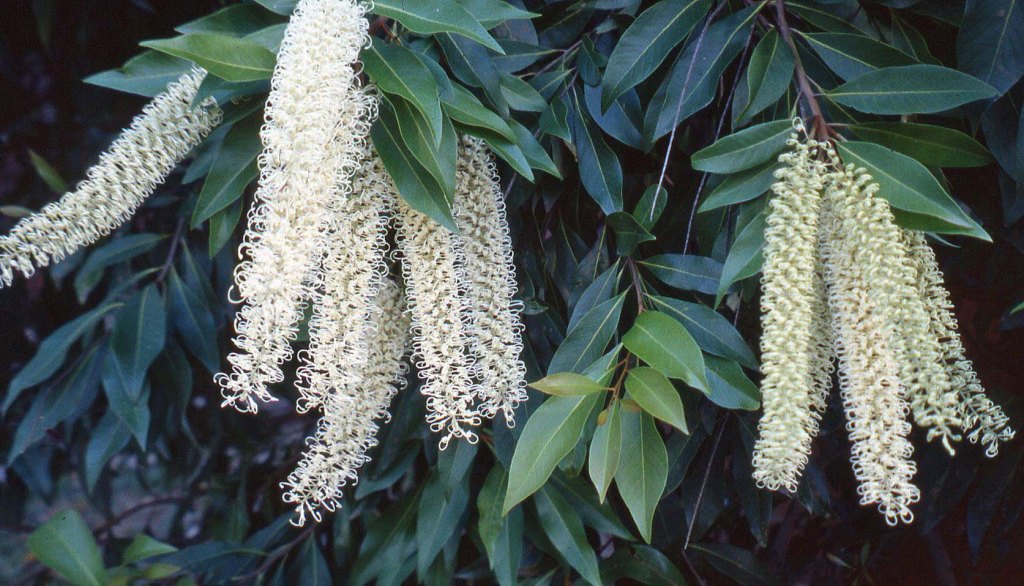
IVORY CURL (Buckinghamia celsissima)
This north Queensland rainforest beauty can be grown as either a tree or a shrub. In the forest it stretch to 30 metres but when it is grown as a single specimen out in the open where it doesn’t have to compete with other trees the Ivory Curl will multi-stem and grow to the height of a tall shrub or tree to about eight metres. It’s a very popular street tree in Queensland and northern New South Wales but is also comfortable in Melbourne gardens.
Vital statisics
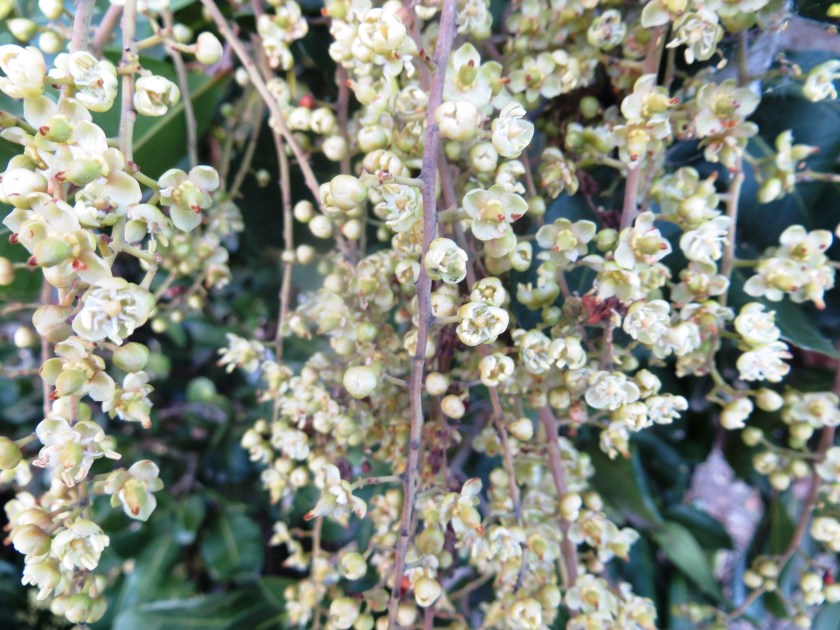
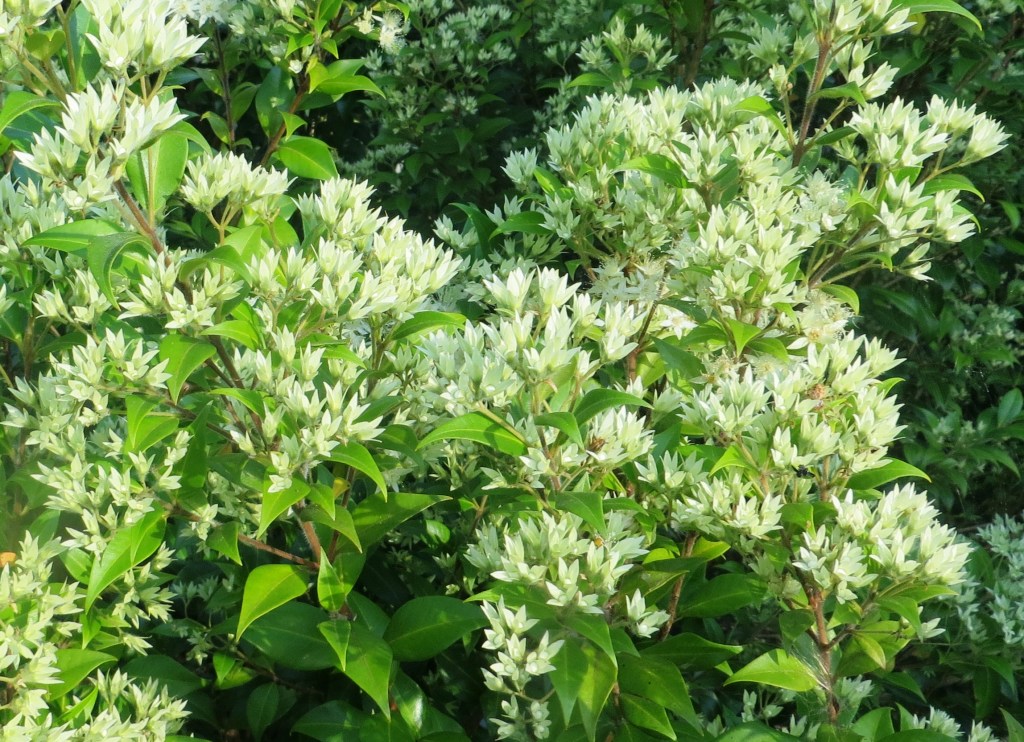
Leaves are long (to 20 cm), simple, young plants with lobes but margins entire in mature plants with a strongly marked mid-vein. Flowers are typical of the Proteaceae; creamy white, in pendant clusters, each long raceme made up of tiny flowers. These appear for a long time during autumn-winter and the tree can be so thickly covered that from a distance it looks like snow! Seed pods are green and clustered along the stem after the flowers have gone, turning first a greyish-buff colour and then a dull black. They have a little tendril-like appendage at the tip and are very attractive when dried.
In the garden
Ivory Curl will tolerate the worst clay and rocky soils though growth is faster in richer, loamier ground. There is no need to feed when young but if you wish to give your seedling a boost, make sure to use a native plant formula because plants in the family Proteaceae are sensitive to phosphorus overdose, having evolved on soils deficient in this nutrient. Water regularly when young; as the plant matures it can tolerate long periods without rain. Prune for a neat, rounded shape.
This really is one of the best and toughest and prettiest small trees for the home garden. Plant them in a row and you’ve got a spectacular hedge.
Lemon Myrtle (Backhousia citriodora)
This is a MUST for any home garden. It’s a small tree that can be encouraged to multi-stem and remain at shrub height, the flowers are pretty and bright green leaves are lemon-scented and flavoured – in my opinion it’s the best source of lemon flavour to use in cooking apart from lemons themselves. A lot more palatable than, for example, lemon grass.
If I could choose only one rainforest tree/shrub for my garden, this would be it!
Vital statsitics
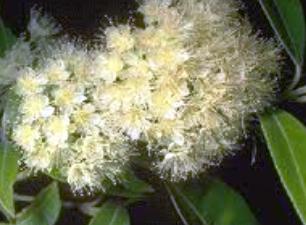
Leaves are simple, opposite, light green, narrowly elliptic to a drawn-out point, margins can be lightly toothed, oil dots typical of rainforest plant leaves in the Myrtaceae family (myrtles) and give out a strong lemony smell when crushed. Flowers are creamy white and fluffy. The fruit has a flower-like appearance because of the five sepals arranged around the central capsule.
In the garden
Lemon myrtle is a tough performer in all climates except the coldest and driest. It tolerates any soil but grows faster and with brighter, lusher foliage in moderately deep, loamy soils. Water regularly when young, mulch with sugar cane or any vegetative matter at least once a year in spring, feed with any general tree/shrub fertiliser. Prune early and regularly to limit height and encourage bushiness.
This is a hard plant to propagate from seed; cuttings will take but very slowly. Leaves can be harvested for cooking when needed, or dried and kept bagged. Both fresh and dry leaves make a fragrant tea.
In the home
Lemon myrtle leaves can be used in the kitchen whenever you want a lemon flavour. The leaves are especially useful in infusing dishes made with either milk or cream as they don’t cause curdling. They can also be used in pickles and chutneys.
And there is one more thing about this marvellous plant – the essential oils in the leaves have disinfectant and biocidal properties. When distilled they are used a great deal in homeopathic medicine and also in mainstream products for treatment of minor skin problems and household cleaning. Using the leaves as an infusion in hot water MAY help with intestinal parasites and maintain good health in the digestive and urinary tract. There is no hard scientific evidence of this but it won’t do you any harm! I have a friend who for years has drunk infusions of leaves (fresh and dried) three times a day for years and claims she owes her excellent health and digestion to this. I often drink lemon myrtle “tea”, from my own tree, and chill infusions to make a lightly-flavoured, slightly astringent lemonade, with whole leaves and lemon slices floating in it. This infusion can also be frozen into ice blocks.
Grey myrtle, Carroll (Backhousia myrtifolia)
The Grey Myrtle doesn’t possess the lovely lemony qualities of its better known Lemon Myrtle cousin but it is still an attractive shrub with a light, spicy-sweet aroma. It looks very similar, though the leaves tend to be shorter and more ovate with more tapered tips. It’s a small enough tree for any garden if trimmed to an appropriate height. The leaves can be used in cooking, in the same way that you would use nutmeg or cinnamon.
Tree Waratah (Alloxylon flammeum)
Now here’s a showy spring-flowering tree for the larger home garden, which is quite easy to grow in warmer, wetter areas. It doesn’t usually flower until it’s about ten years old but when it does the big, red blooms are worth the weight.
Vital statistics
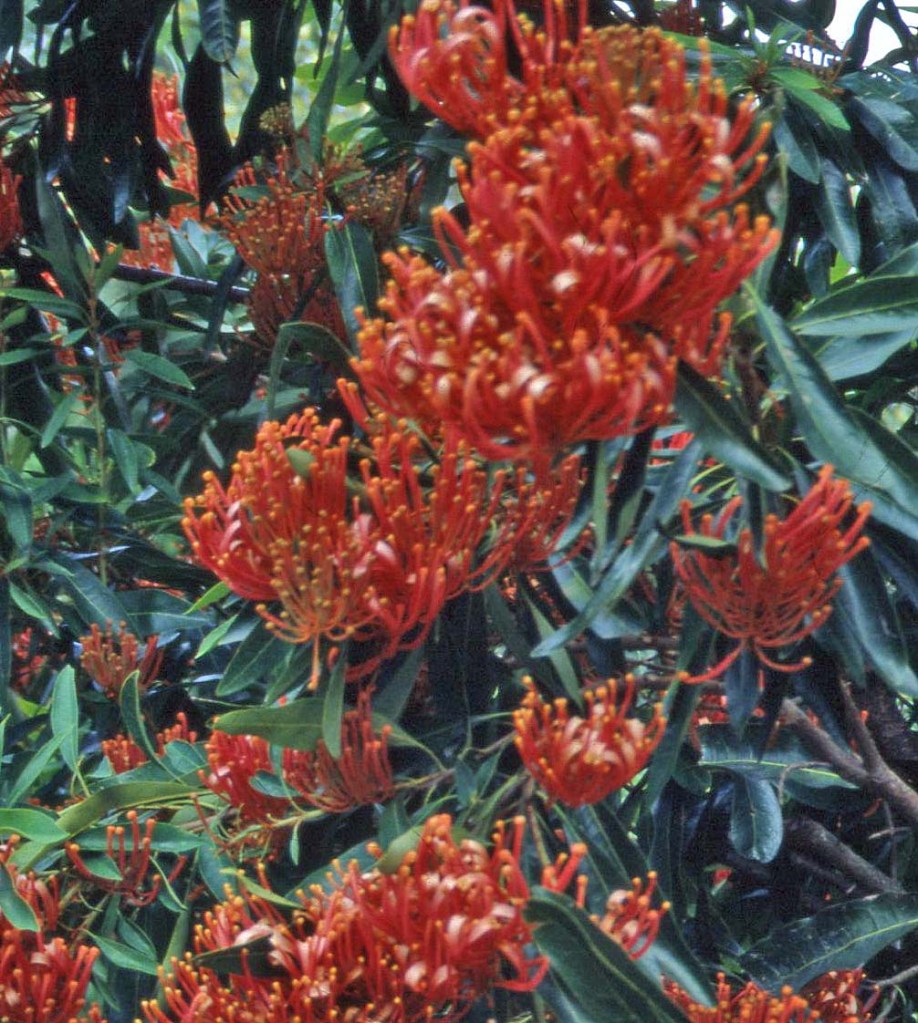
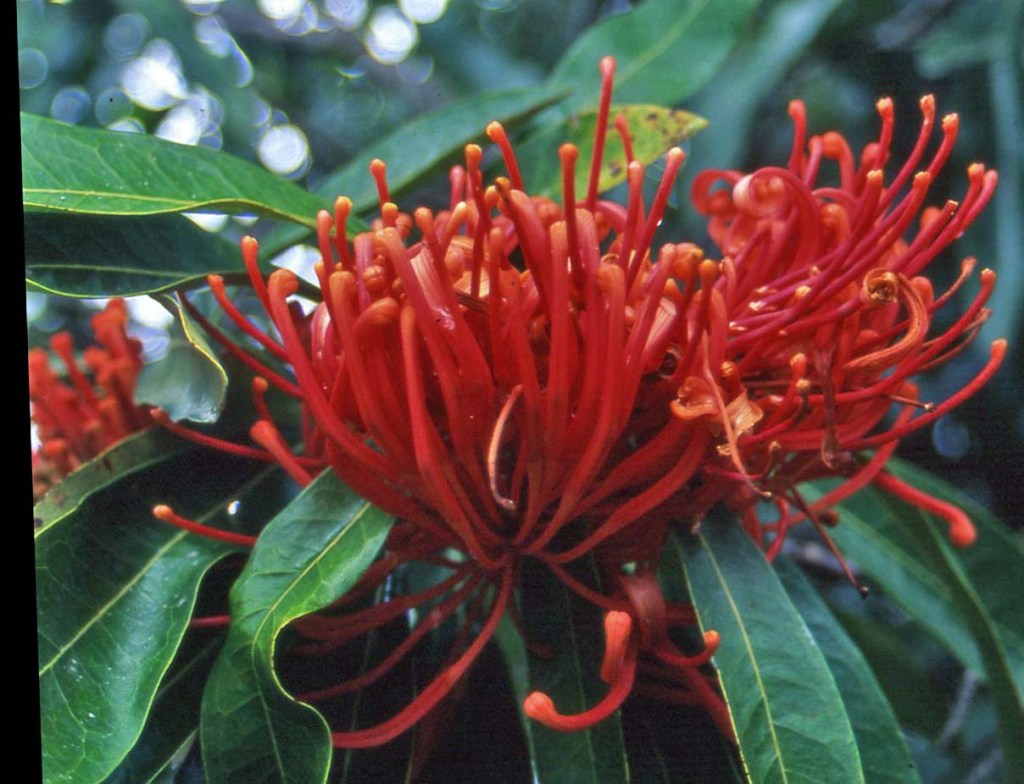
The leaves are handsome: large, shiny, simple, alternate and often lobed when mature. Flowers are rather like those of grevillea species, large and clustered, bright orange-red with long, tubular perianths arranged in a corymb. The seed pods are interesting too, long and rectangular containing flattish, winged seeds. These pods can be dried and used in floral arrangements.
In the garden
Not a tree for small gardens but a lovely as a specimen tree or in a cluster of other trees and shrubs. It’s frost-tender when young and needs plenty of water at this early stage. Some light feeding with a low phosphorous native plant fertiliser for strong growth will help too though is not essential except in very poor soils. Trim new growth regularly to stop the young tree becoming straggly.
Propagate from seed or hard wood cuttings (slow!).
The Dorrigo Waratah (Alloxylon pinnatum) has proved difficult to propagate past the seedling stage but if you can find one in a native plant nursery it’s worth growing. For one thing, it’s not as tall as its more flamboyant cousin. The flowers tend to be less prolific but are an attractive pinkish red and look great in a vase.
Golden myrtle (Thaleropia, formerly Metrosideros queenslandica)
Thaleropia is a lovely tree from the mountain forests of far north Queensland and it doesn’t grow very large, 10 metres at most, making it suitable for the home garden.
Vital statistics: The glossy green simple leaves are slightly serrated with a prominent mid vein. They are born close to the stem and have typically pointed rainforest species “drip tips” at the apex. The bright golden flowers are five-petalled and slightly cupped from the centre, with long and prominent stamens.
In the garden: Thaleropia will do well in any warm climate garden and, once established, needs very little care. It can be pruned every autumn to control height and promote bushiness, if desired. Regular watering is required in dry periods – just a good soaking with the hose once a week will do.
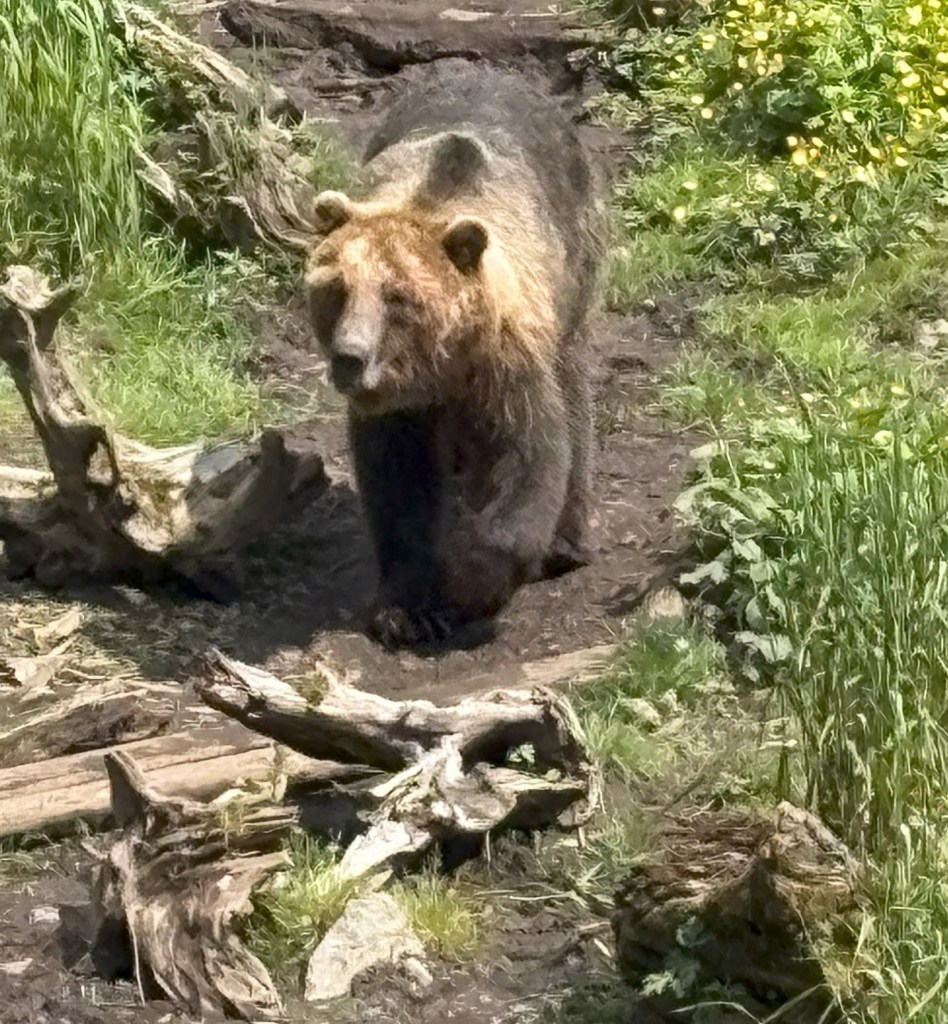
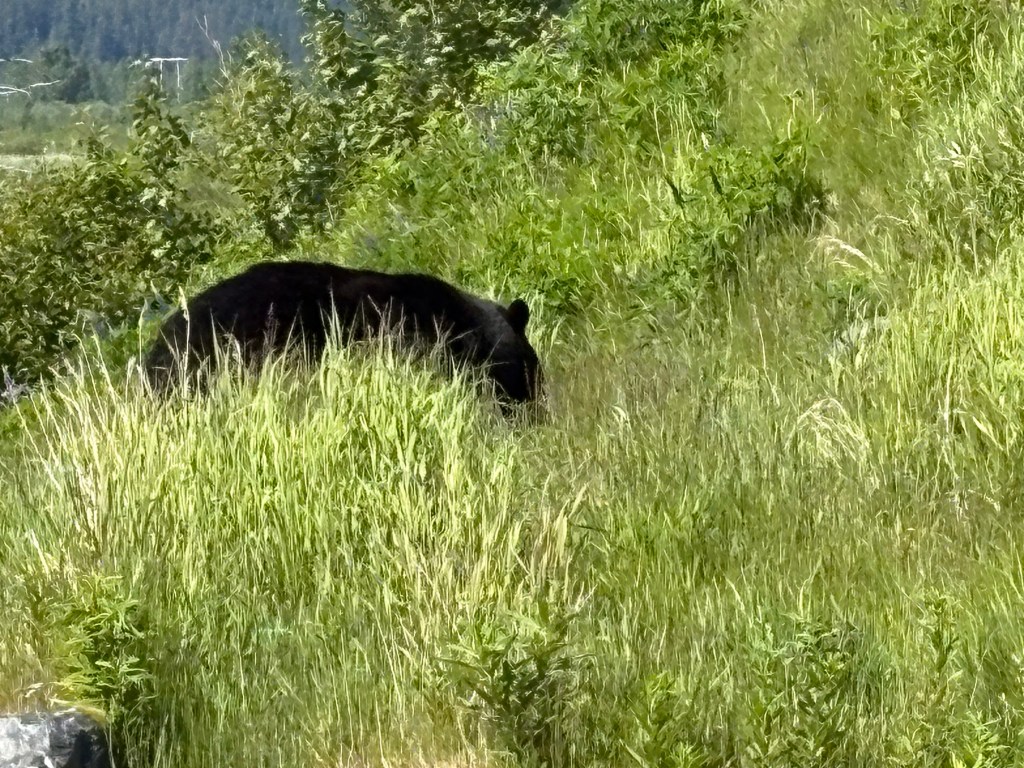
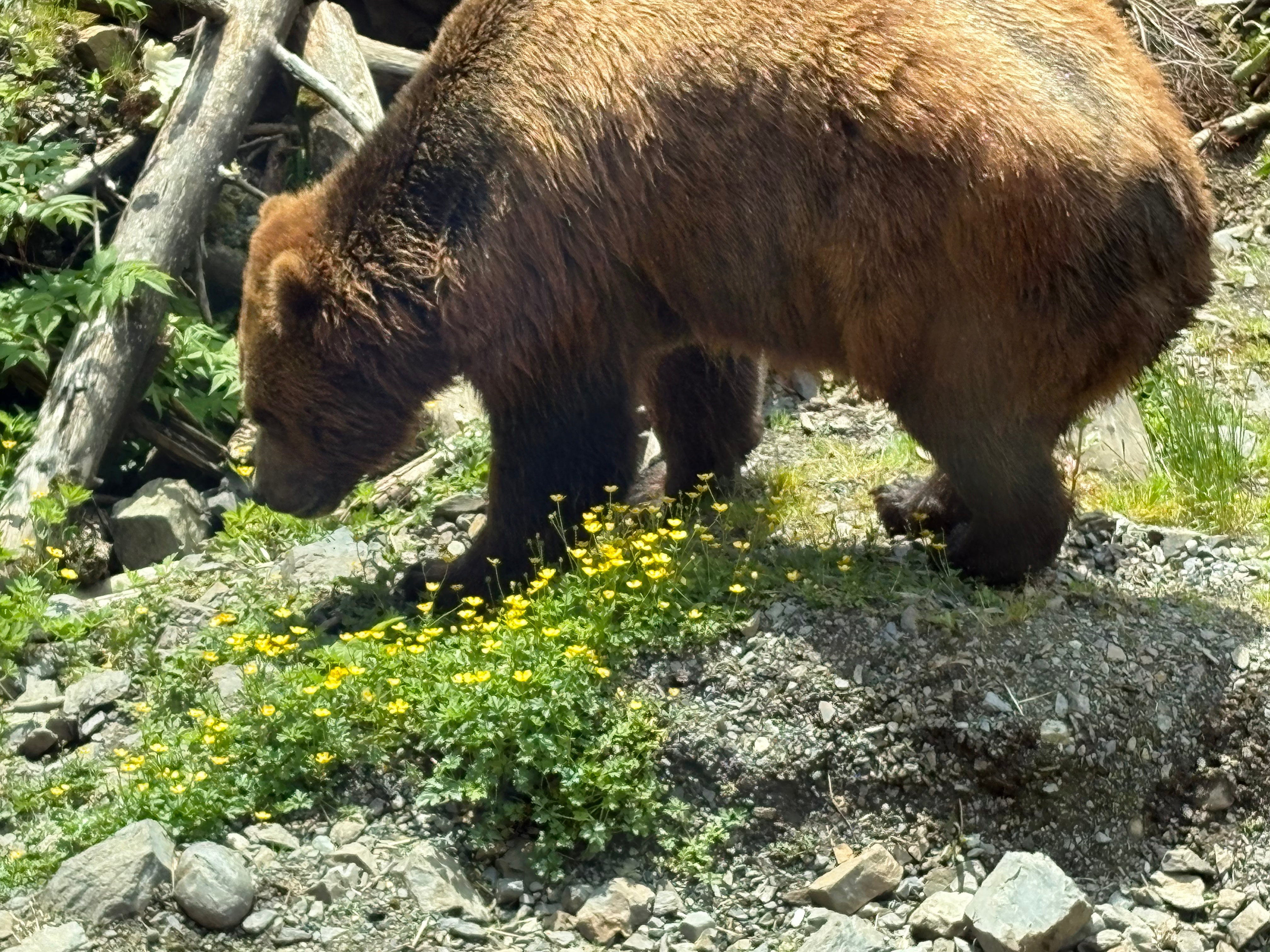
Bears! That’s what the Tongass National Forest has in abundance. Blacks and grizzlies. Along with wolves, deer, mountain goats, ermine and a plethora (I love that word!) of marine life in the fjords and seas that abut this 16.7 acre (6.7 million hectare – really, I love the Americans but they ARE backward in some things!) national forest. The largest in the United States.
Bears lured me there this June – I’m a bear tragic! – but also the chance to spend time in a temperate rainforest when much of my working life has been spent in the rainforests of the subtropics and tropics.
I love the Tongass. Others say they find it forbidding, even sinister, and I can see that. All those dark cedars and hemlocks and spruces lowering over the groundscape of root and moss and fern. Like the great forests of pre-industrial Europe there could be witches lurking here, and goblins and worse. Stories are told by the indigenous Tlingit of Goo-Teekhl the Salmon Thief who sometimes attacks humans. Or did, until humans defeated him. But then he got his revenge – by bringing upon them the mosquito.
I am not too worried by monsters and mosquitoes don’t seem too numerous in the deep forest, only by the water and in the open country. And they are only bad in the short summer. The rest of the time the forest is covered in snow. Mozzies are found in MY forests too, the magical rainforests of southern Queensland and northern New South Wales and we, too, have our legends.
What we don’t have is bears. Or otters. Or indeed predators of any mammal kind.
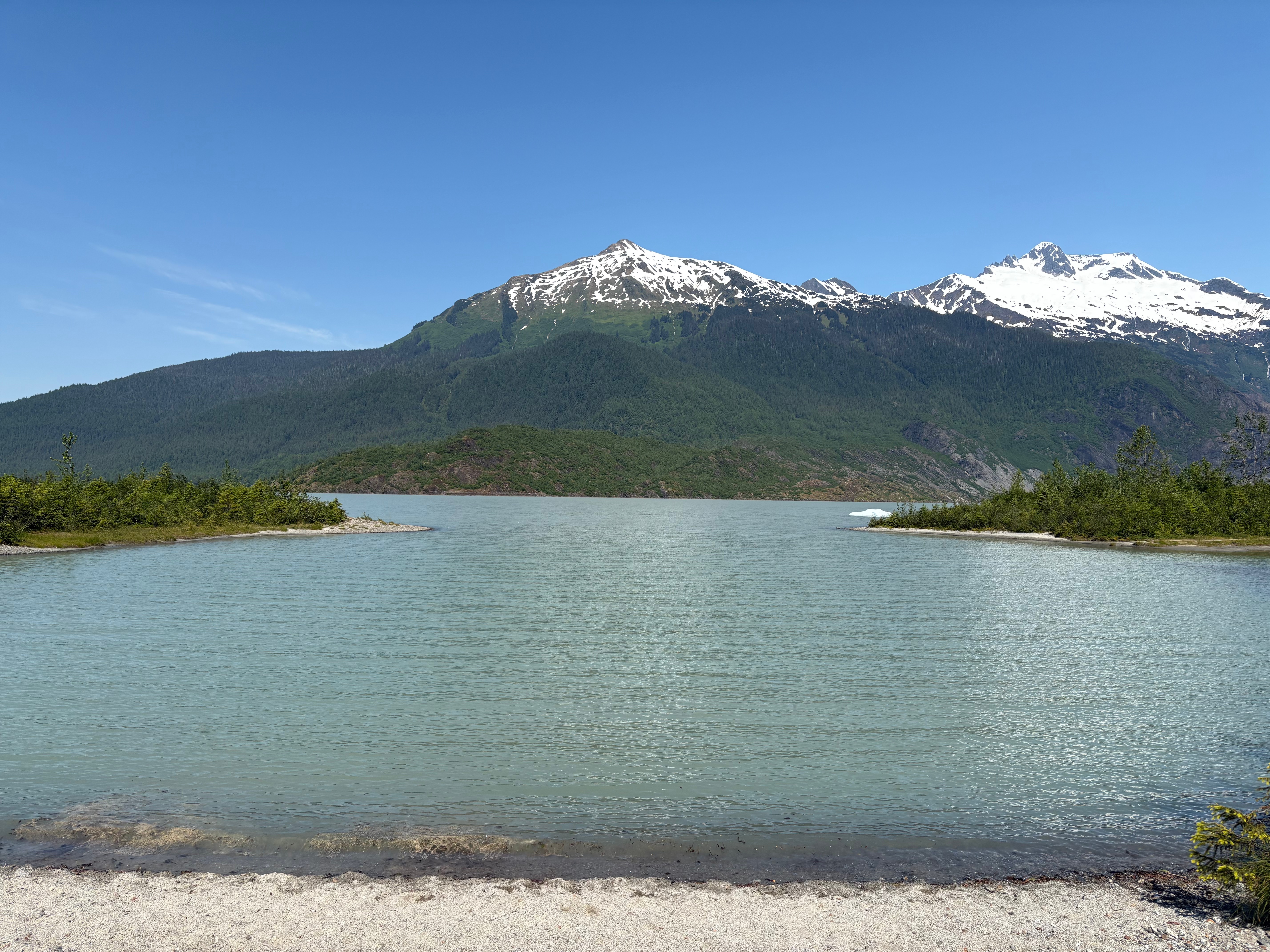
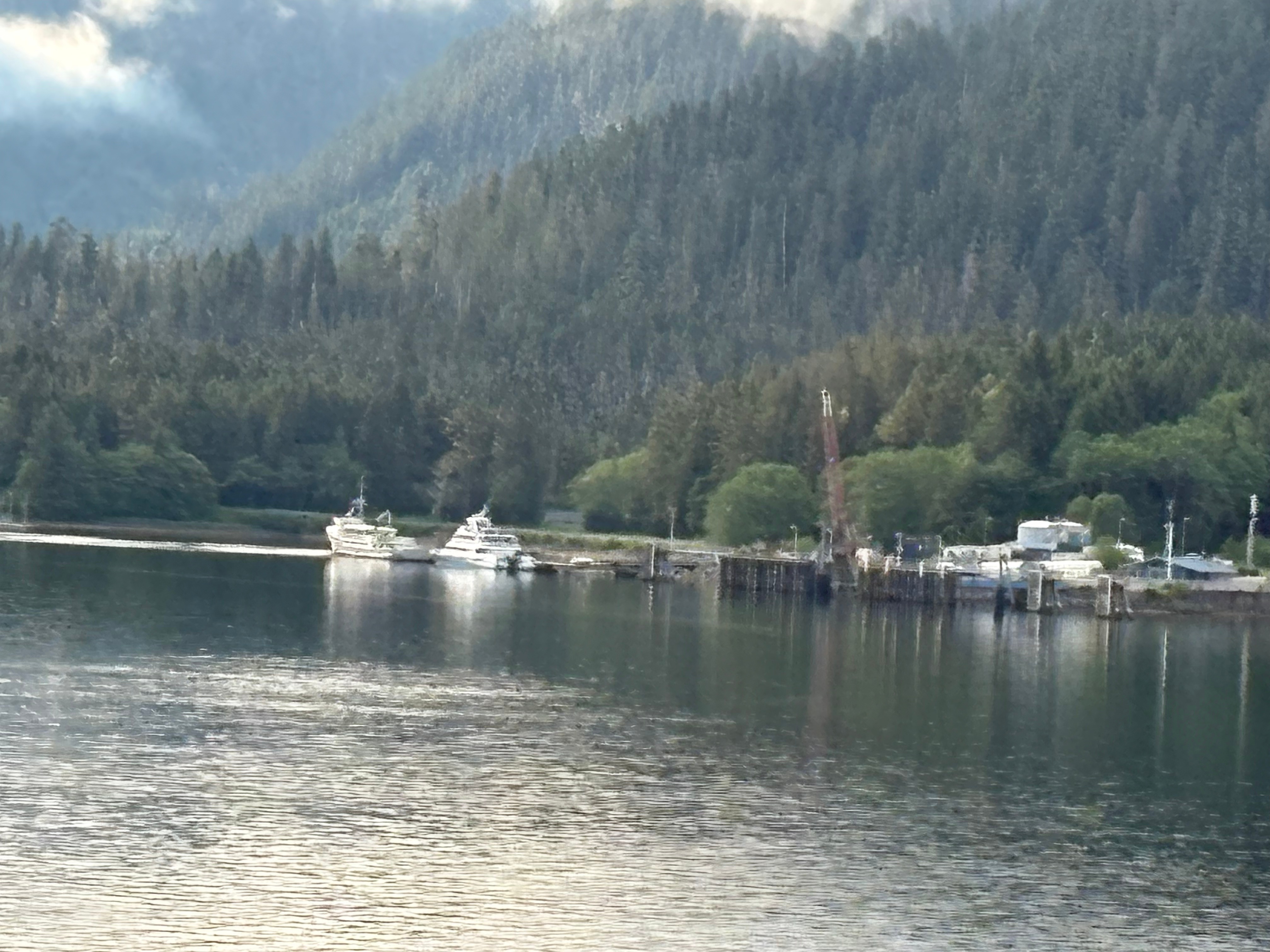
So I went to the Tongass and loved every bit of it. The slight danger of encountering a predator better armed than myself. The slightly unsettling spongy softness of deep moss underfoot. The furious little streams pouring off the glaciers and snowy mountain tops. The deep fjords and bays bejewelled by islands that are also part of the Tongass. The blue glaciers crumbling in dramatic bursts of spray where they abruptly meet the sea. The charming small creatures that scuttle across the paths softened and deadened by pine needles and roughened by cones. The birds – for I am a birdwatcher since girlhood.
There are many fine birds in the Tongass though they tend to be secretive. But handsomest of all is the Bald Eagle and this must be that bird’s spiritual home (though the Canadians might have a thing or two to say about that!). These white-headed heroes of the sky are everywhere – perched on pine branches or seemingly quite at home on buildings and light poles in town, flapping with unhurried majesty across the inlets, diving with deadly accuracy for salmon. They are not as perfectly formed for this activity as are osprey but they are pretty damned good at it all the same.
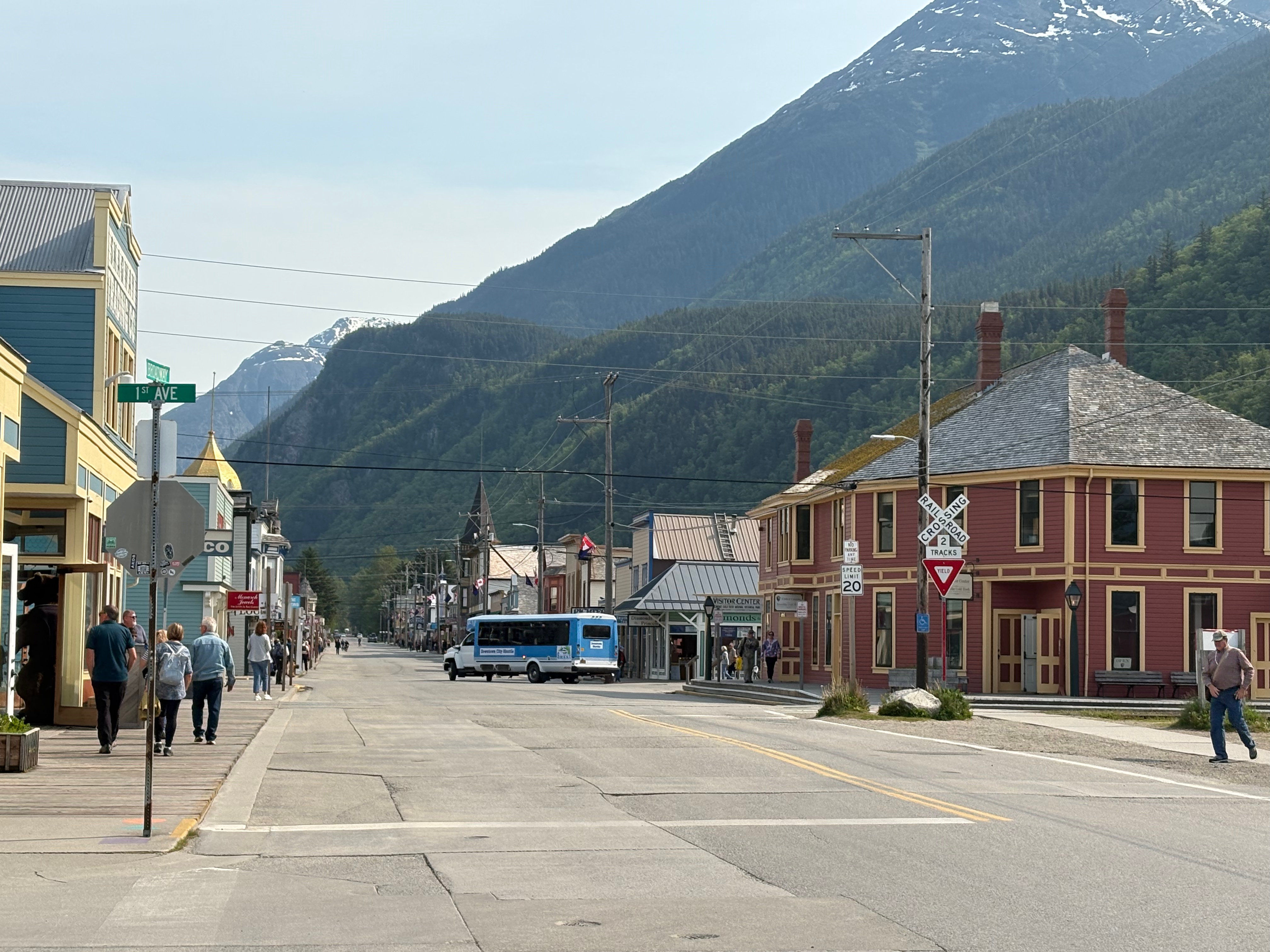
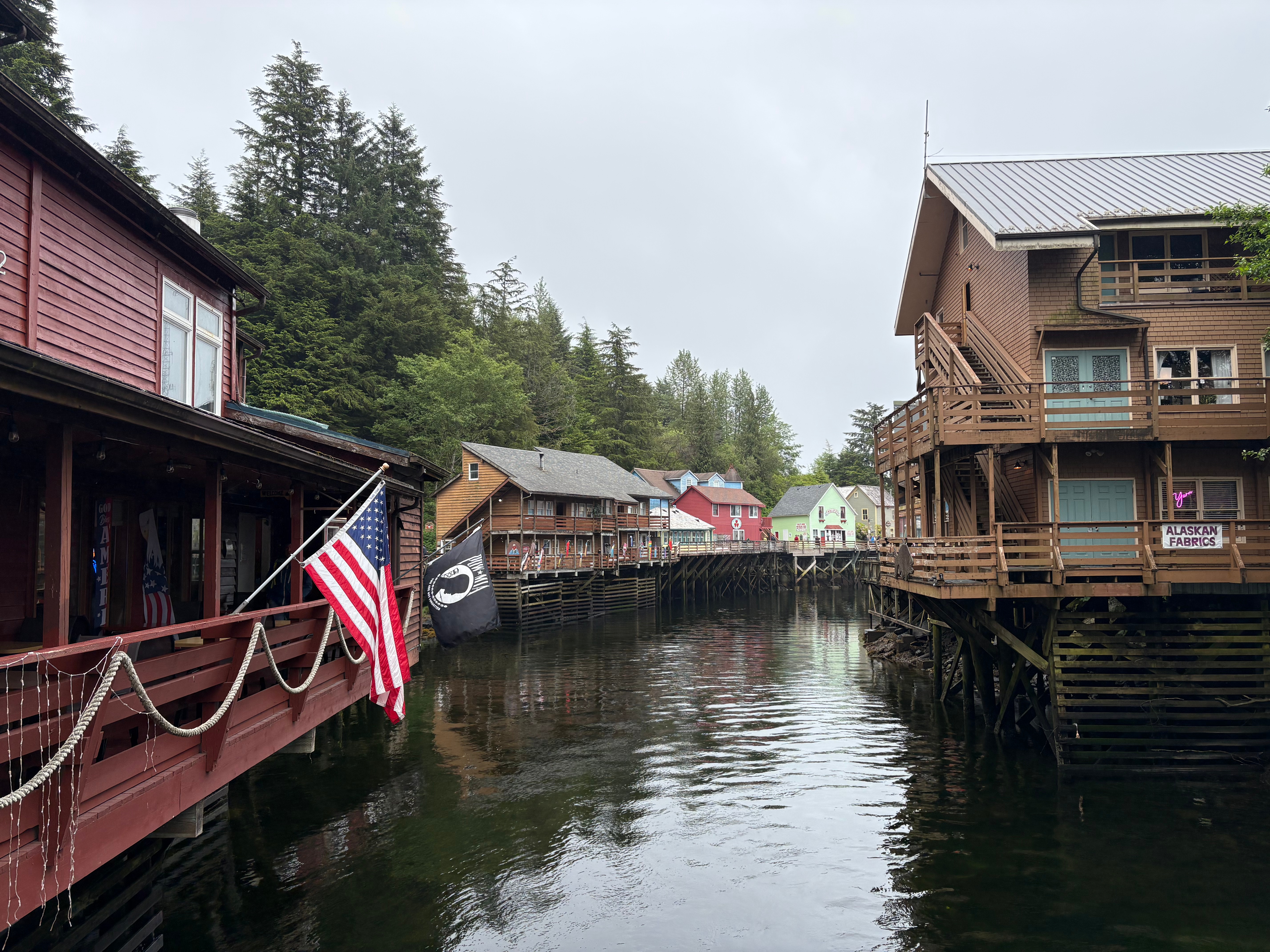
In the little coastal tourist towns of Sitka and Skagway and Ketchikan it rains a lot in spring and summer and autumn (fall) but temperatures are milder than the interior thanks to the ocean and the great forest. Winters can be snowy but mostly on the mountains all around, that stick up like cake frosting.
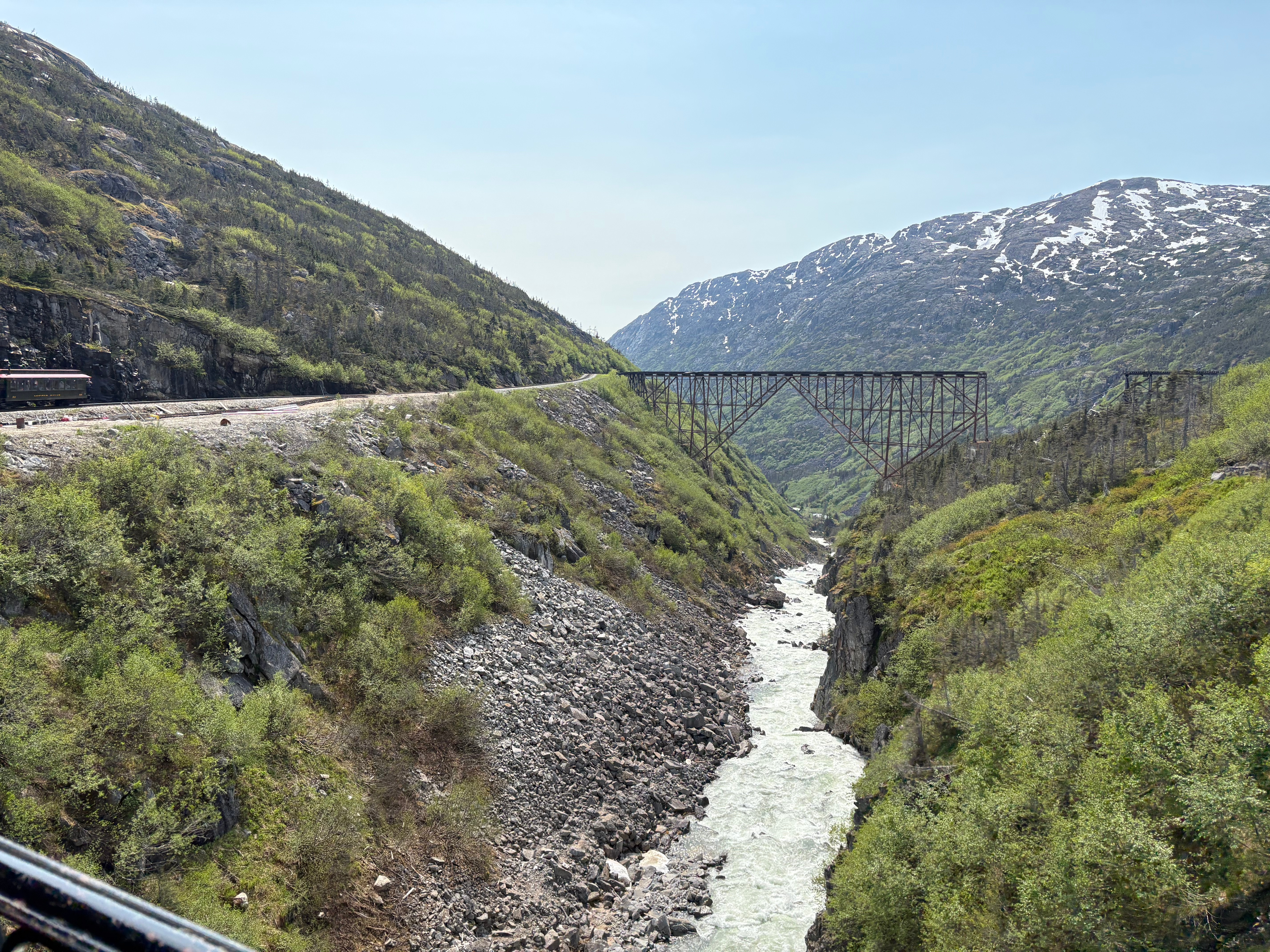
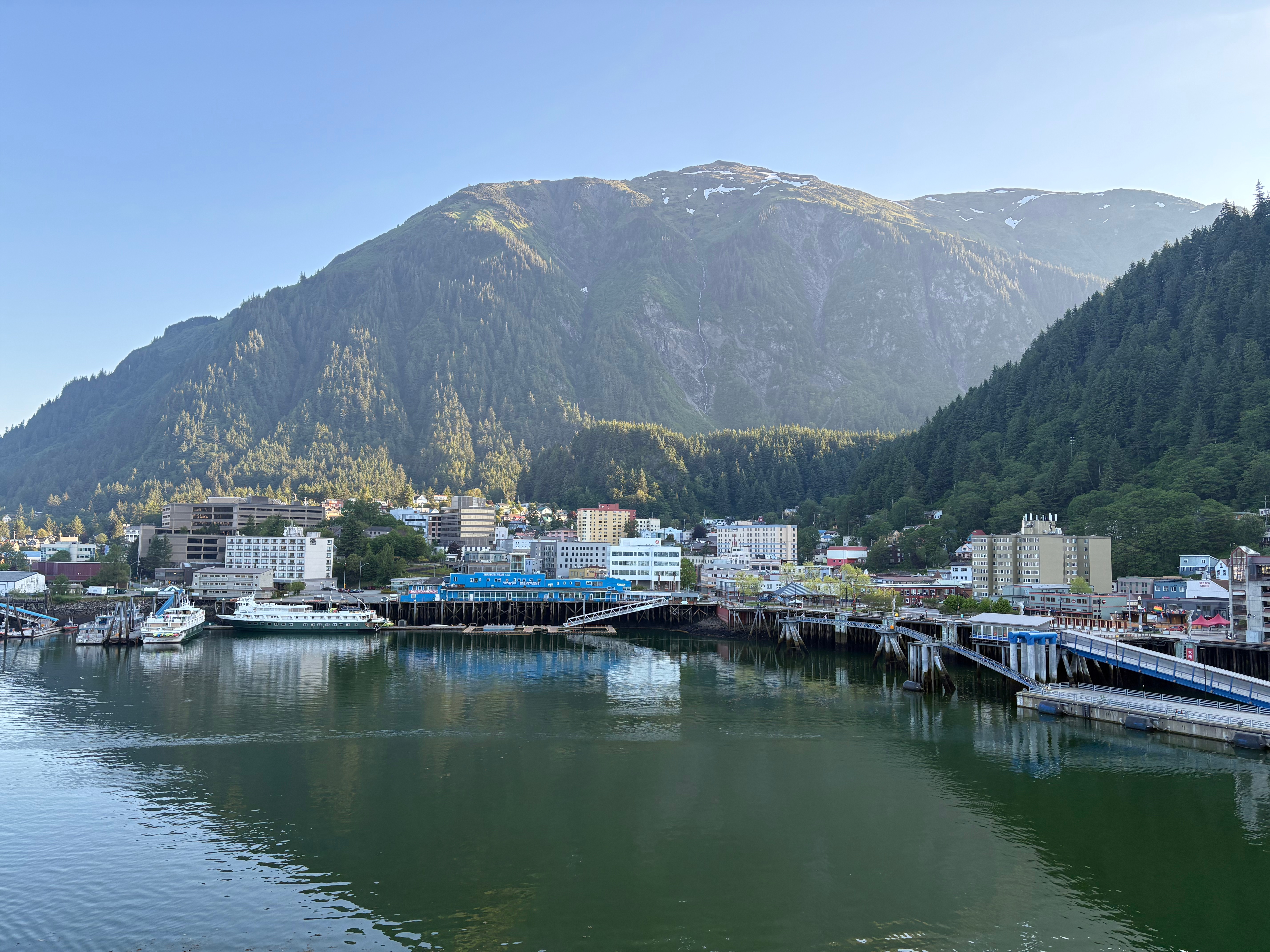
These towns, like the capital, Juneau, are surrounded by the Tongass and it hugs them tight in its green hold, buffering them against the savage mountains high above where winds scour the rock faces and glaciers freeze the flow of constant rain.
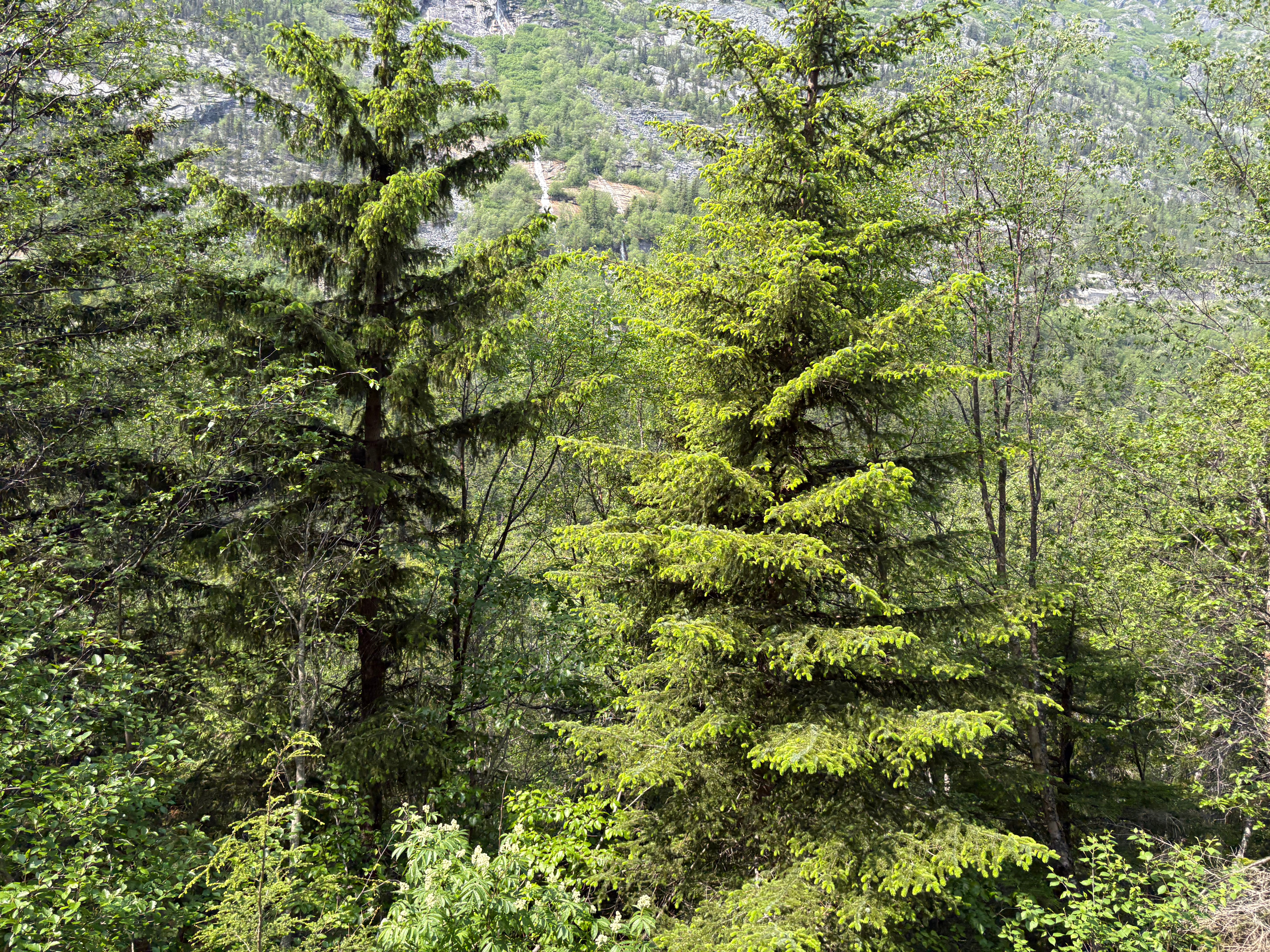
Skunk cabbage grows thick in the gullies and fruiting canes along the edges where there is more light; food for humans and bears. High on the slopes the Red and Yellow Cedar (Thuja plicata and Cupressus nootkaensis) give way to the Mountain Hemlock (Tsuga mertensiana) and the spruce (Picea sitchensis) rules them all. The meagre Lodgepole Pine (Pinus contorta) huddle together like poor relations, upright and defiant in their low state.
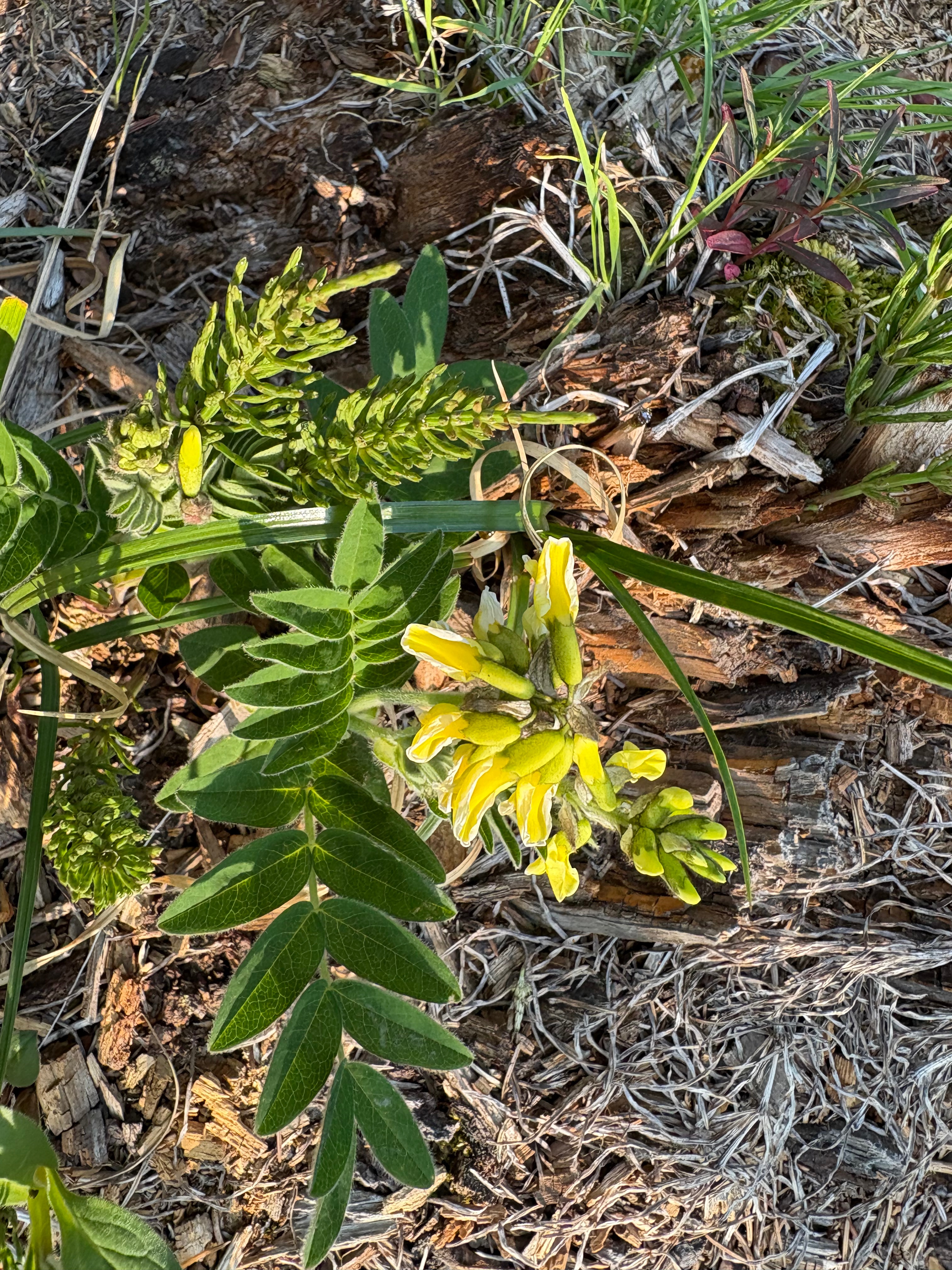
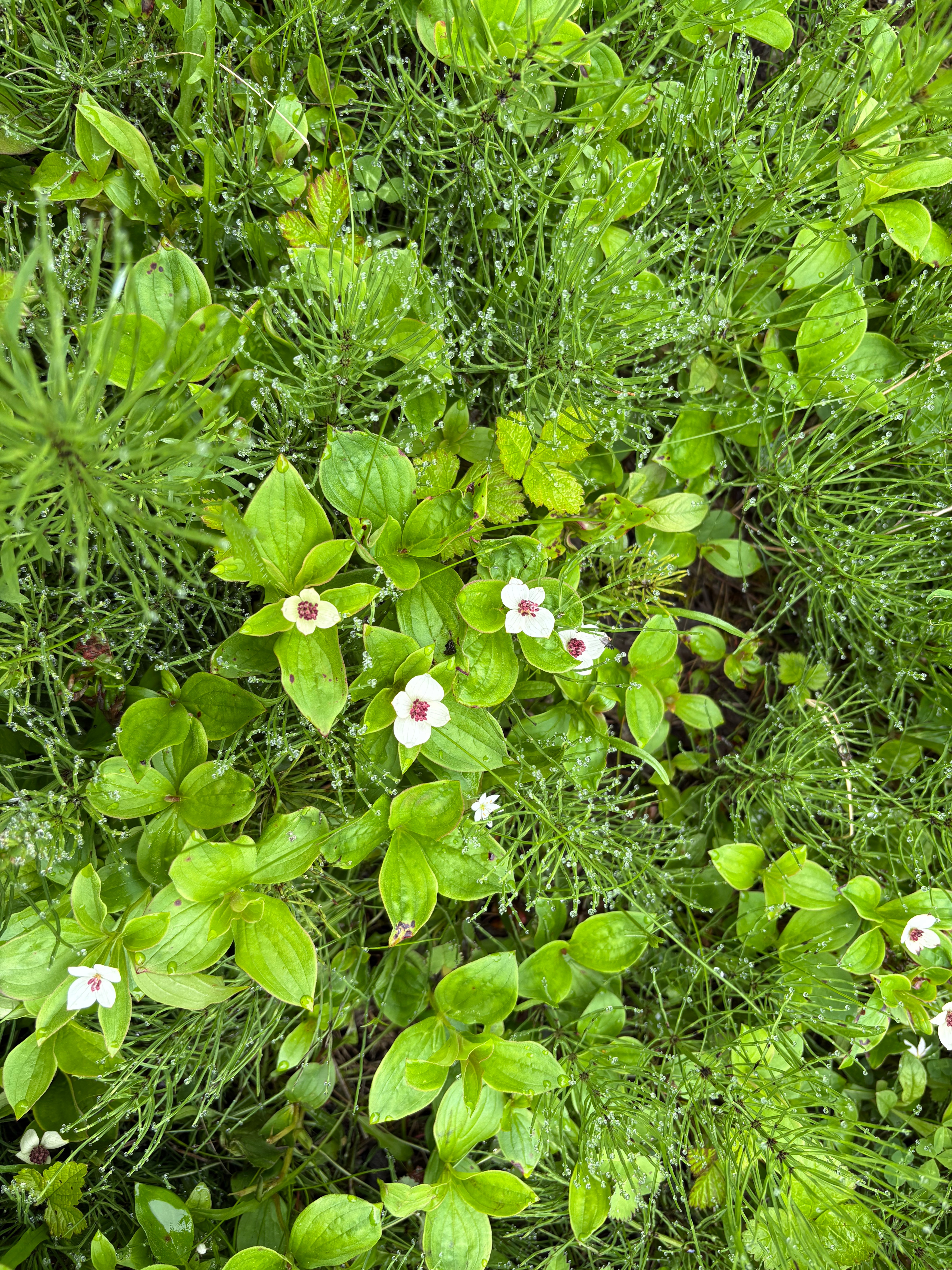
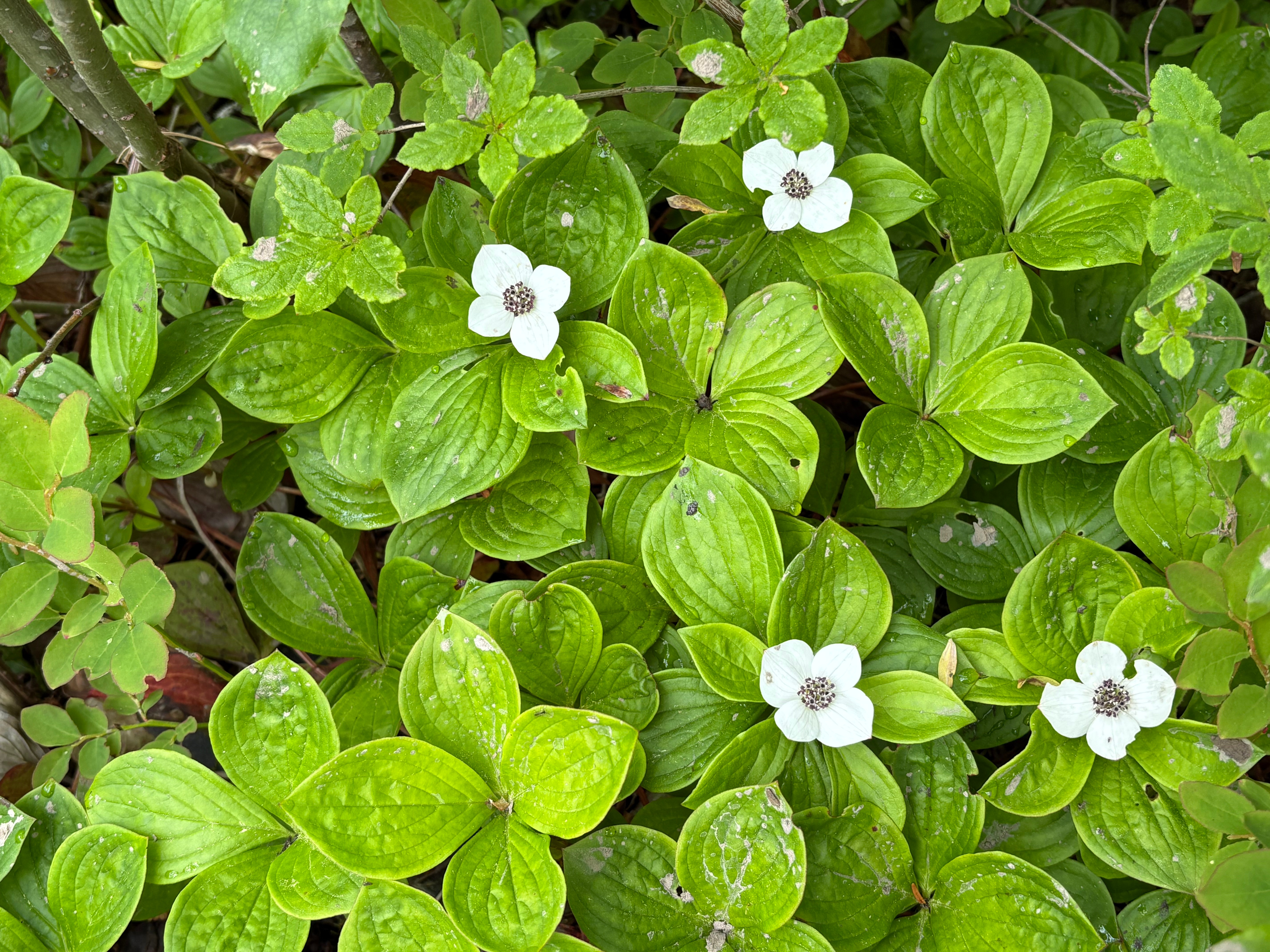
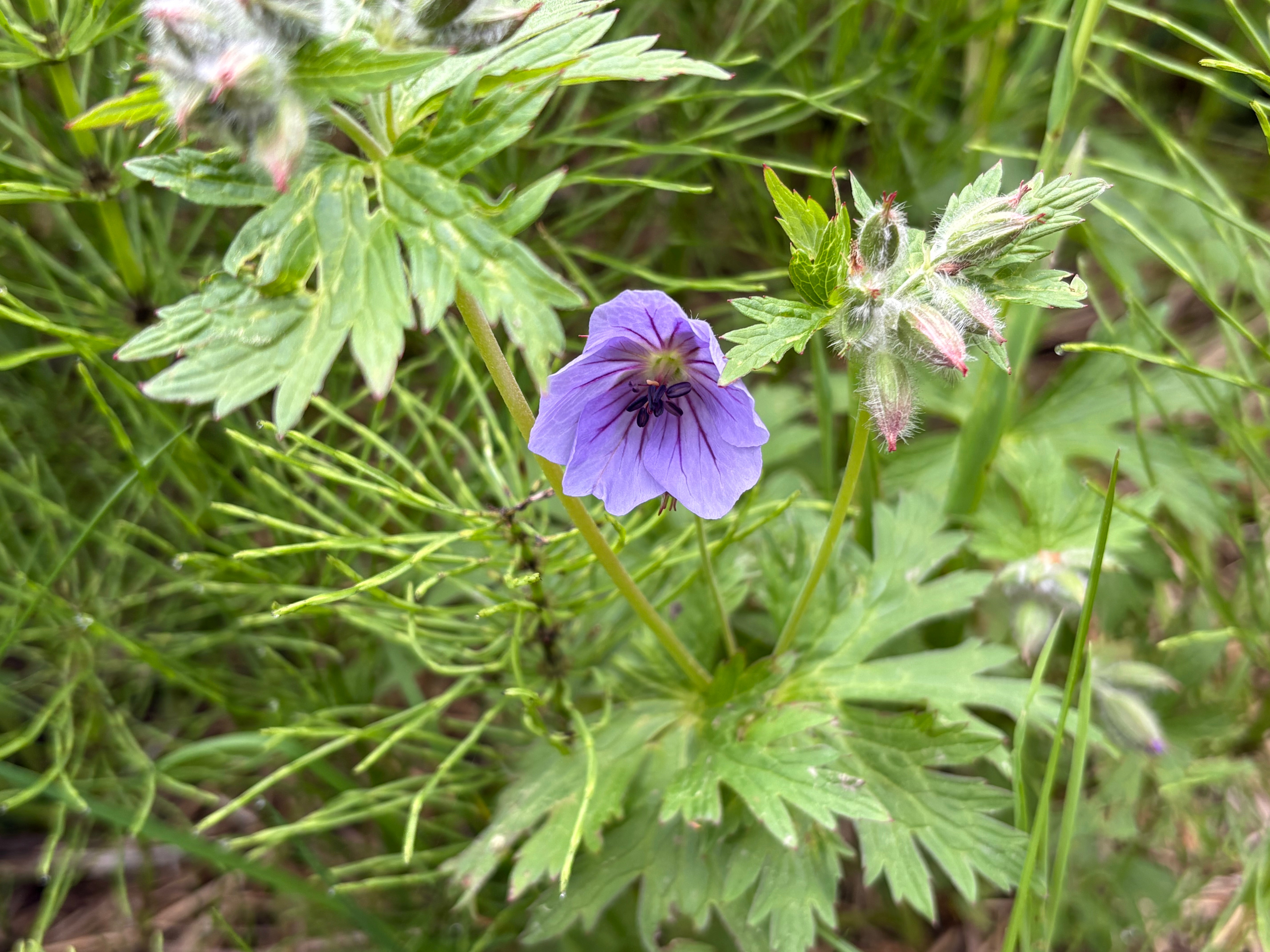
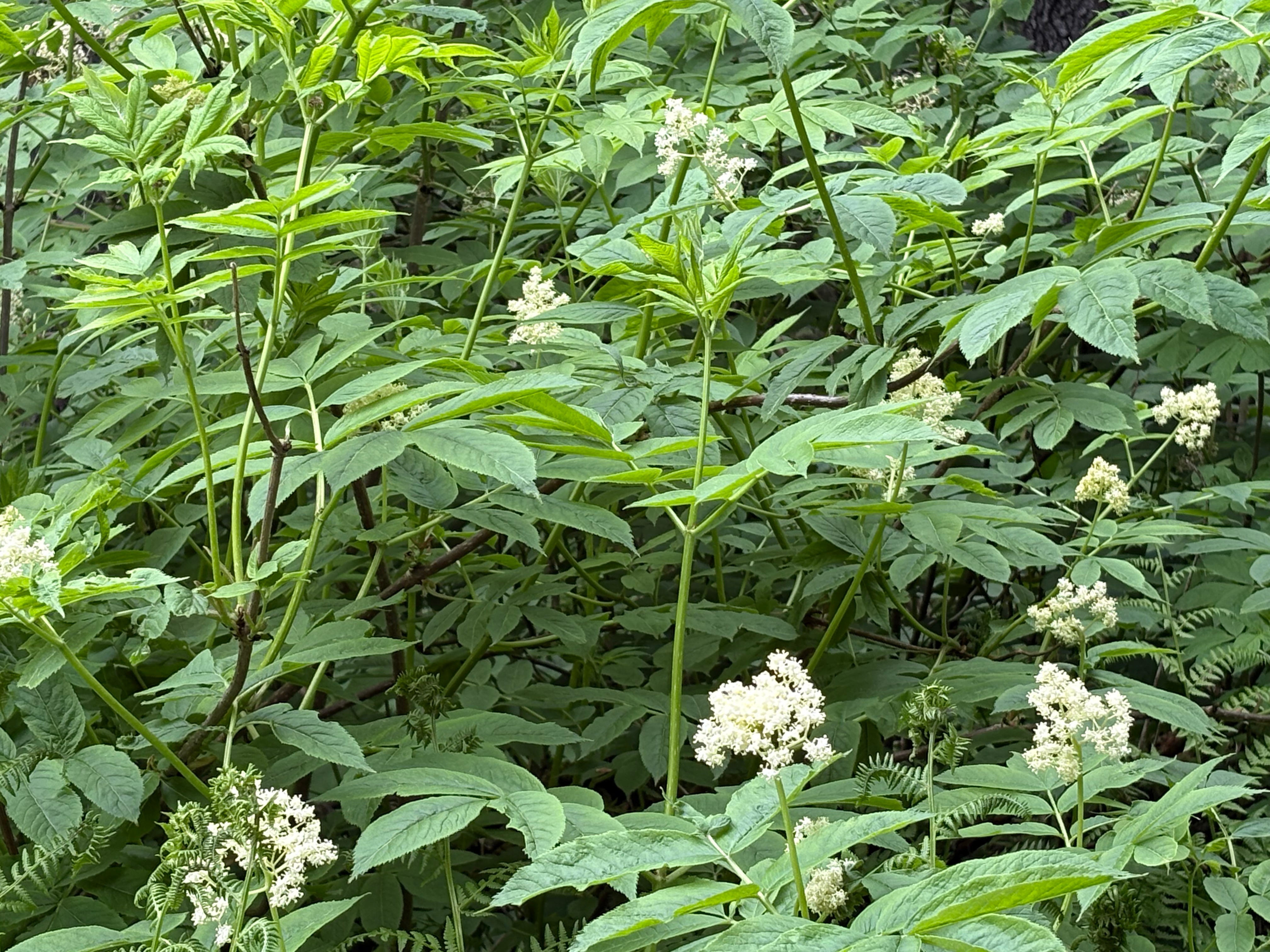
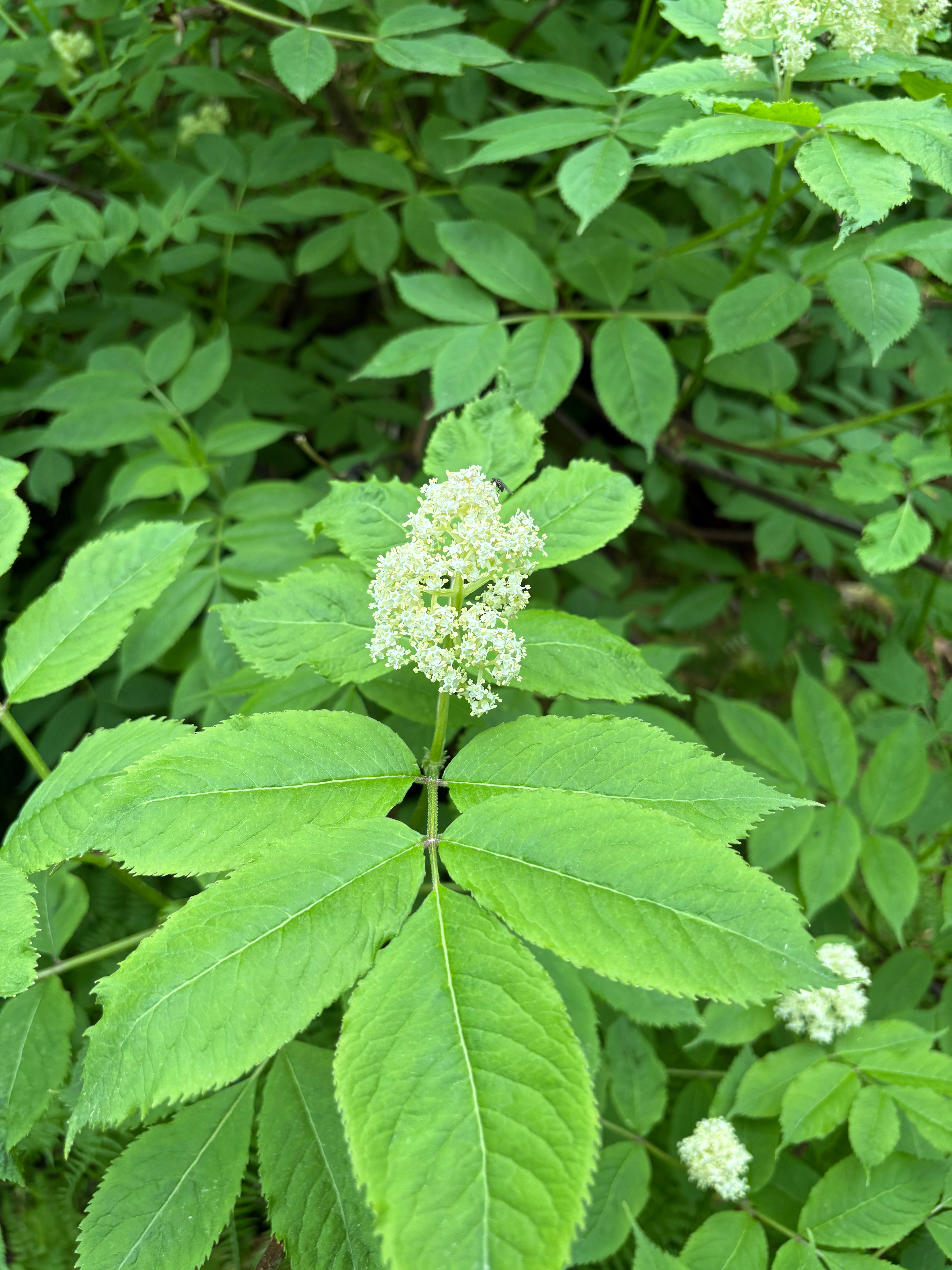
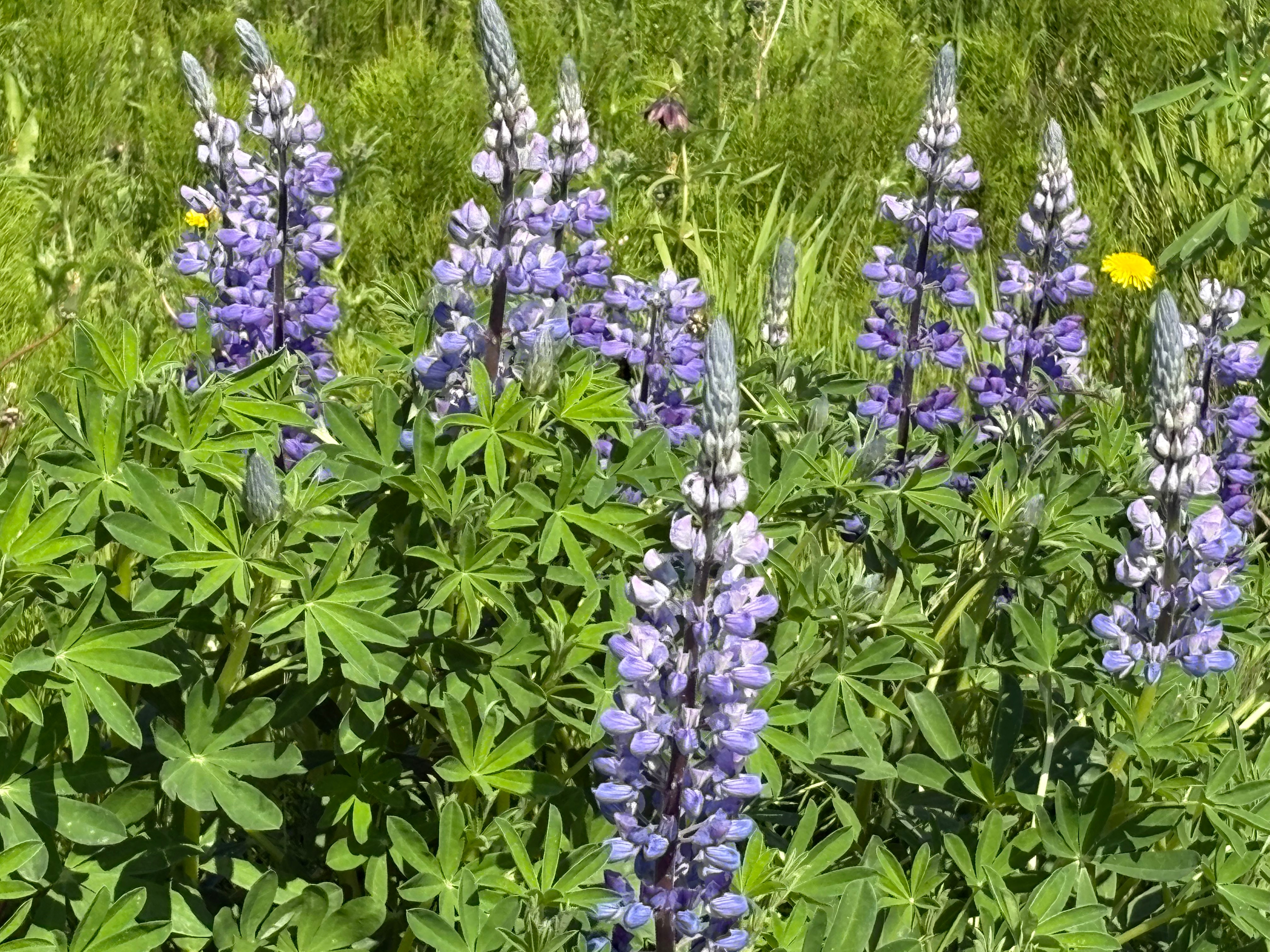
(Above: There are many well-marked hiking trails through the Tongass. And in summer, wild flowers and lush plants compete for sunlight along the forest verge, many of them with medicinal value known to the indigenous peoples.)
There are medicines here close to the ground, Arnica and Angelica as well as the many berries full of vitamin C. In summer the largest dandelions in the world grow here, matching the buttercups for brilliance, digestive gold for bears. Apart from these, most of the flowers of this cold, wet forest are delicate and pale.
The Tongass is not only the largest national forest in the United States but also the largest temperate rainforest in the world. It has much in common with all rainforests everywhere– constant moisture, emergent trees fighting for light, a dark understorey where fungi flourish among the moss and lichen. And yet it is distinctively different in many features, with its snow melt and dominance of trees bearing needled foliage, rather than broad-leaved species as found in warmer forests. Its humidity has a frigid bite and its waters are more lively. And it has secret places where many of its inhabitants must den for the long, dark winter.
If you love rainforests, and you have never been to the mighty Tongass, go there before you are too old to be able to hike its steep trails and thus experience the inside mystery of it. I found myself conscious of my eighty years and knew that because of them I could only access the fringe and wished I had backpacked into there when young enough to go high and long.
But I was still fit enough to go in a little way and feel the dark weight of the forest around me and glimpse a few of its creatures and be happy in my brief time there. Other rainforest lovers will understand!







 Lyrebird Mountain