Acuminate: When referring to a leaf, narrowing to a point, often forming a “drip tip” which channels water off the leaf and down to the ground below.
Acute: Sharply pointed
Alternate: Leaves arranged alternately along the stem or branch (as opposied to opposite)
Apex: the tip of the leaf
Attenuate: gradually narrowin
Axil: the angle between the leaf stem and the branch
B
Berry: Fleshy, often edible fruit that contains one or more seeds.
Bifoliate: Compound leaf made up of two leaflets
Bipinnate: Compound leaf which divides into separate leaflets which bear a second arrangement (variable) of leaflets up the stem.
Bole: Area of tree trunk below the lowest branches, sometimes thickened, rounded or swollen.
Bract: a form of leaf often found enclosing flower. Some plants, such as poinsettias, have large and colourful bracts which are often mistaken for flowers. This is rarely the case with Australian rainforest plants.
Buttress: Large sections of the lower trunk which jut out from it and act as stabilisers (rainforest trees have very shallow, albeit spreading, root systems). They also help prevent soil erosion and gather nutrients and moisture in the leaf letter that piles up in their crevices.
C
Calyx: The sepals of a flower grouped together
Cauliflory: Flowers and fruits growing “cauliforously” on the branches or trunk of a tree.
Canopy: Top forest layer of trees.
Capsule: Dry seed case of some plants
Carpel: Ovary, stigma and style inside a flower
Chlorophyll: Green colouring in plants that absorbs sun’s energy
Compound leaf: Leaves that are divided into two or more leaflets
Coppice: Shoots that develop on some tree trunks (usually at the base but sometimes on branches), developing from a dormant bud
Cordate: Heart-shaped, as in some leaves
Cotyledon: The first leaves that appear as shoots from a planted seed
Crenate: Leaves with blunted, rounded teeth around the margin. (Crenulate is the same only teeth are smaller, finer and usually more numerous)
Crown: All the branches and foliage above the lowest branches of tree or shrub
D.
Deciduous: Sheds leaves in certain seasons, usually winter
Dioecious: Male and female flowers borne separately on different plants (as opposed to monoecious where a plant bears both male and female flowers)
Dentate: Leaves with sharpish teeth around the margin
Domatia: Pits or tufts in the vein angles on the underside of a leaf
Drip-tip: Leaf with long, narrow tip that “drips” water on to the soil – and thus the roots – below.
E
Elliptic: An oval-shaped leaf which is widest in the middle.
Endemic: Plants originating from and restricted to a specified region.
Entire: Leaf margin that is neither toothed nor lobed.
Epidermis: The outer cell layer or “skin” of a leaf or stem.
Epiphyte: A plant supported by another plant and dependent on it but not nurtured by it; unlike a parasitic plant which feeds off the host. One example is a Staghorn Fern (Platycerium bifurcatum)
Evergreen: Has leaves throughout the year, i.e. is not deciduous. Like a pine tree.
F
Falcate: Leaf that is sickle-shaped.
Flora: From the Latin, collective name for plants. As with fauna, the collective name for animals.
Floristic: The adjective for “Flora”
1-Foliate: Leaf with swollen joint at the base, where it meets the petiole
Frond: Compound leaves of ferns and palms
Fused: Joined parts of stem, leaf or flower that are growing together
G
Genus: Taxonomical term for group of species that are closely related
Glabrous: Smooth, without hairs or fuzz
Gland: A secreting swelling on leaf surface, leaf base or petiole
Glaucous: dull bloom either white, grey or bluish, either waxy or powdery, found on the undersurface of leaves and, rarely, on the surface.
Globose: round and solid like a globe
Gymnosperm: Ancient plant group with uncovered seeds and ovules not encased in an ovary. Seeds usually born in cones as with conifers and cycads. Often loosely categorised as “non flowering” plants
Inflorescence: Cluster of flowers on one stem
Pinnate: Compound leaf composed of small leaflets either opposite or alternately arranged along the stem (rachis).
Raceme: A single long inflorescence with a non-flowering bud on the end and lots of tiny florets along the stem. Often pendant, as in Buckinghamiacelsissima and Macadamia species.
Sepal: Small leafy growths that surround the petals, constituting the calyx
Stigma: receptacle of the pistil; part of flower’s reproduction “organs”
Style: Slender stalk that connects the stigma to the ovary in a female flower
Palms are the graceful dancers of the rainforest, slender stemmed, green fronds swaying to the slightest breeze.
They are found in all types of rainforest except the temperate and the niche they occupy in the biosphere is important. Those great fronds act as fans to cool the temperature around them, the berries nurture birds and small creatures, the balls of hard-packed roots take up little space in the ground, the long stems are efficient conductors of water and nutrients.
This is done through vascular bundles because palms have no bark and no inner rings to mark age in the trunk. These bundles strengthen the stem against strong wind, while the round shape deflects it.
In fact palms are not trees at all but monocots, like lilies, lacking the features of dicots such as trees. When wounded, the outer “bark” does not regrow; when beheaded, new fronds do not form.
In the subtropical rainforests that surround my home, the dominant palm is Archntophoenix cunninghamiana, a very customer than can tolerate quite cold conditions providing there is no hard frost or heavy snow. Heat, it tolerates very well; particularly when coupled with high humidity.
Top: The fruit of the Piccabeen Palm.
Top right: Aerial roots above ground on the stem of the palm improve absorption of water and sunlight while also providing extra stability.
These palms, which we call Piccabeen, the name by which they were known to the indigenous people, grow in all parts of the forest and will do well as solitary specimens in the open, but are seen at their best in deep gullies along water courses and clustered in groves on the flattish bottoms of groves where the water table is high. Here they flourish to the exclusion of most other species, growing high and slender as they reach for the sky.
Lyrebirds and some other species roost in those lofty perches where the fronds cluster at the apex and some birds nest there. Rain washes the bird poo, rich in nutrients, down to the forest floor. Insects are attracted to the summer spikes of tiny, nectar-rich flowers and they, in turn, insects and flowers both, fall to the ground.
Thus enriched, the leaf litter is a rich nursery for the palm seeds that drop there, bright red in the case of the Archontophoenix palms and very ready to germinate. This is how the palm groves form and also why these plants are so readily available in nurseries. The flesh around the single seed is tempting to certain birds and animals but not palatable to humans, and thus the palm is part of the wild banquet that is an essential feature of this particular ecosystem. Other parts of the palm, including the heart for consumption and the fronds for basket-making, were a resource for the indigenous peoples who foraged and hunted among the thickets.
To me, palms make an elegant contrast to the great buttressed rainforest trees and I love to sit on a hillside and look down upon them wherePalms
Palms are the graceful dancers of the rainforest, slender stemmed, green fronds swaying to the slightest breeze.
They are found in all types of rainforest except the temperate and the niche they occupy in the biosphere is important. Those great fronds act as fans to cool the temperature around them, the berries nurture birds and small creatures, the balls of hard-packed roots take up little space in the ground, the long stems are efficient conductors of water and nutrients.
This is done through vascular bundles because palms have no bark and no inner rings to mark age in the trunk. These bundles strengthen the stem against strong wind, while the round shape deflects it.
In fact palms are not trees at all but monocots, like lilies, lacking the features of dicots such as trees. When wounded, the outer “bark” does not regrow; when beheaded, new fronds do not form.
In the subtropical rainforests that surround my home, the dominant palm is Archntophoenix cunninghamiana, a very customer than can tolerate quite cold conditions providing there is no hard frost or heavy snow. Heat, it tolerates very well; particularly when coupled with high humidity.
These palms, which we call Piccabeen, the name by which they were known to the indigenous people, grow in all parts of the forest and will do well as solitary specimens in the open, but are seen at their best in deep gullies along water courses and clustered in groves on the flattish bottoms of groves where the water table is high. Here they flourish to the exclusion of most other species, growing high and slender as they reach for the sky.
Lyrebirds and some other species roost in those lofty perches where the fronds cluster at the apex and some birds nest there. Rain washes the bird poo, rich in nutrients, down to the forest floor. Insects are attracted to the summer spikes of tiny, nectar-rich flowers and they, in turn, insects and flowers both, fall to the ground.
Thus enriched, the leaf litter is a rich nursery for the palm seeds that drop there, bright red in the case of the Archontophoenix palms and very ready to germinate. This is how the palm groves form and also why these plants are so readily available in nurseries. The flesh around the single seed is tempting to certain birds and animals but not palatable to humans, and thus the palm is part of the wild banquet that is an essential feature of this particular ecosystem. Other parts of the palm, including the heart for consumption and the fronds for basket-making, were a resource for the indigenous peoples who foraged and hunted among the thickets.
To me, palms make an elegant contrast to the great buttressed rainforest trees and I love to sit on a hillside and look down upon them where they emerge from the canopy, raising their fronds to the sun, rustling mysteriously, lush with tropical allure. they emerge from the canopy, raising their fronds to the sun, rustling mysteriously, lush with tropical allure.
I have travelled the world’s coastlines and now live in a country of many fine beaches but I have never yet seen beaches more perfect than the Kenya beaches of my childhood.
Of course, as with all my African reminiscences, my mind is harking back to a time as well as a place. A time when I, a child of privilege, had as my backyard a couple of hundred kilometres of exquisite white sand and turquoise sea and sighing coconut palms.
The varied faces of a typical Kenya beach. Photos by Thomas Ackenhausen.
And these beaches were all but deserted, except for a few local fishermen who earned their meagre living there. And, on weekends, the “white” community for whom going to the beach on Sunday – or even Saturday – and any day during the school holidays – was a type of holy ritual. It was our main form of recreation, our temple of pleasure. And we knew we had something special that could be found in few other places on earth.
Of course there are plenty of beaches around the world with sand white as snow, fringed with palms and overlooking an ocean sparkling in more shades of blue than you ever see in a painter’s palette. But what made the Kenya coastline so special was the reef, located a mile or so offshore and stretching from near Malindi in the north to about Shimoni in the south, which protected the beaches from rough seas, big waves and sharks. When the tide was full, we could swim in safety and enjoy a bit of body surfing or just jumping up and down in the modest waves. And when the tide was out….
…Aaahhhh…when the tide was OUT! Then indeed we had a playground full of fascination. For the seascape from shore to reef was a mosaic of coral outcrops and gleaming pools, some shallow, some deep enough to lie in or even swim around a bit. The white sand at the bottom of these pools was pristine apart from a small scattering of shells and little, darting, bright-hued fish. And the occasional crab scuttling from one outcrop to another. There was so much of interest in these pools and in the coral. And a few dangers, too. Moray eels lurked in crevices, sharp of tooth and aggressive to small, inquisitive hands. Sea urchins clung to the hard surface, spines dark and painful if you stepped on them. Which we did, and suffered the consequences when the punctures became infected, as they often did. But apart from these minor irritations, a child – or an adult – could spend the long hours of low tide mucking about in the pools or walking out to the reef or looking for shells which – back in the fifties and early sixties – could still be found there.
The fishermen in their frail-looking outrigger canoes would seek out the biggest and most commercially-valuable shells – the conches and cowries – and sell them to traders or to white folk on the beach, particularly those on holiday from up-country who would take them home as souvenirs. We locals were more blasé, though there were few European homes in Mombasa back then without a giant conch shell lamp! By the time I was in my teens these large shells had become over-harvested and rarely seen but we could still find leopard cowries and take them home and leave them to stink in the garage or on a veranda ledge until the sea-starved dead “dudus” inside had disintegrated or been eaten by ants.
Few of us children were lucky enough to live right by the beach and of course there were no real beaches on the island, except for Tudor Creek, and we didn’t think much of them! Murky, muddy, full of sharks and – it was rumoured – crocodiles. So we were dependent on our parents to take us there, and for most of us this was a Sunday outing. A picnic would be packed and a groundsheet or blanket to sit upon. Sandwiches and perhaps quiche, which we called egg and bacon pie, and fruit. Possibly cake. Never chocolate because it melted in the tropical heat. We kids didn’t care – all we wanted was to get there and stay there for as long as parental tolerance and comfort would allow.
Top: Whitesands Hotel in the 1950s and Bottom: Nyali Beach Hotel about the same time. These were two of the popular beach destinations on the northern beaches, both for up-country holidaymakers and locals looking for a day out.
We were never bored. If the tide was out, we had a thousand pools to play in. If it was in, we swam and played water games. We also built sandcastles. Or drew hopscotch lines. If the grown-ups could be persuaded to play with us there was cricket and rounders, with improvised wickets and bases gathered from the debris beneath the palm trees and casuarinas. The endless imagination of children meant we were never tired of the beach – in the days when reading books, the weekly radio shows and an occasional visit to the cinema were the only forms of entertainment. We were pirates, we were shell seekers, we were castaways building our own palm-thatched shelters. Skinny, sunbrowned, always on the go. And we went for walks, too, both with our parents and alone. It was so safe, back then, on those beaches. You could walk, alone, for miles and in the long distances between the handful of beach entry roads and modest hotels and see only a friendly fisherman, checking his traps.
Fish trap under construction. Photo courtesy of Robin Swift.
Those traps were another source of adventure. Made of sticks and poles and jutting from the tidal zone out into the water they cunningly trapped fish that came in on the tide, leaving them to be picked out at will when the tide went out. We would sometimes help the fishermen catch the worthwhile fish and crustaceans and that was fun too. Sometimes, however, on a particularly high tide, dolphin got trapped there and small shark. Small but still sufficiently toothed to bite off the arm of a fisherman one day, who bled to death before he could be given medical aid. Once this story got around, we kids found the traps even more fascinating!
The Sunday beach expedition was usually a multi-family affair. On longer journeys we would go in convoy. Our favoured beaches were Jadini, in the south, which we believed had the best beach (from there to Diani) and where instead of a picnic we would have lunch in the dining room banda and my parents and friends would have a drink in the bar with Dan and Madeleine who were something of a legend for hospitality. But it was a long haul to Jadini and so our most visited beach was Nyali where the big hotel offered excellent hospitality, the great terrace overlooked the sea and the lido down on the beach provided drinks, snacks and changing rooms for day visitors. As well as an outdoor dance floor. And a raft just offshore. At other times we would go north to Shanzu, owned by my friend Margaret’s parents who were also famed for their hospitality. Or Whitesands, then owned by the Durwood-Browns. These were all casual sort of places with thatched bandas for the guests and a big, open-sided thatched dining room and recreation centre with bar. So simple, so unpretentious, so created for a perfect beach experience. At various times these places offered dancing and Whitesands had a radio that played the Hit Parade on Sunday evenings. It was there I first heard Elvis sing It’s Now and Never and we teenagers were shocked and disappointed that our badboy hearthrrob, fresh from army service, was now singing music of which even our parents approved!
My mother and I on the beach at Jadini, about 1957. Jadini was a long drive from Mombasa Island but the beach strip along Jadini and Diani was one of our favourite destinations on Sundays.
How clearly I recall going home in the car, all passion spent, our skins roughened by sand and salt water, hair stiff with both. Home to hot baths and the modest Sunday night supper of salad with ham or tinned salmon, left ready by the cook before taking his day off. The slight sting of sunburn and the smell of calamine lotion as we crawled under our mosquito nets and fell instantly into the deepest and most satisfying of sleeps.
During school holidays, our greatest desire was to spend all day, every day in the water. At Nyali, or the Swimming Club just over Nyali Bridge, or, more rarely, the south coast beaches close to the Likoni ferry, Twiga or maybe Tiwi. What joy it was when we were old enough to have bikes that could carry us across bridge and ferry to be where we most longed to be. Independent, free, sunbrowned and skinny, needing only a soft drink and a cheese sandwich to get us through the day.
These simple whitewashed and thatched bandas were the typical accommodation of the day, simply furnished but comfortable enough to suit our modest holiday needs back then. And the sea was right at our door. (Photos courtesy of Beaver Shaw).
And then we put away our buckets and spades and our contented innocence and became teenagers for whom the beach had a very different interest. It was the popular place for birthday parties and teenage barbecue dances, scuffing the sand with our bear feet to Buddy Holly and Carl Perkins and, later, The Beatles, as rock and roll gave way to The Twist. We walked along the sand into our first love affairs, shyly holding hands, sneaking away from our parents and sullen when they insisted on knowing where we went. We still swam and frolicked but we were more self-conscious now, aware of our developing bodies, plagued by pimples and periods and embarrassing erections. Soon enough we had steady boyfriends and girlfriends and the boys had cars and it was down by the beach, or on the beach, that we lost our virginity, some of us.
Top: Myself on the beach at the Mombasa Swimming Club when I was fifteen. This was on the seaward side when you crossed over Nyali Bridge; a tiny, simple little building and a rather indifferent beach facing across the harbour to the Old Town. Its main attraction was that we could reach it easily on our bikes! Bottom: A year later and I’m on Nyali Beach with my BF Val Wheeler. We’d go to the beach with our boyfriends on Saturdays, change our clothes and shower at the beachfront Lido and then dance to a live band on the terrace of the Nyali Beach Hotel on the cliff above.
And then we were young adults and still the beach was our main weekend playground. We ventured further afield, north to Malindi and lovely Watamu, south to Shimoni which was all-but deserted in those days, always looking for a new and perfect and empty stretch of pristine sand. We took our picnic rugs and our simple food and often stopped in the little villages for cool madafu, watching while an obliging local cut the top off the coconut with a panga. We took along gear for spearfishing now, and hauled tanks for scuba diving, no longer satisfied just to stay within the protection of the reef but going into the blue deep beyond, where the bombies were.
There were only a dozen or so beachside hotels on the north and south coast in those days and they offered reasonable access off the main road but everywhere else you could only get to the water over rough sand tracks, the sand itself red or white depending on where you were, often so deep that we had to get out and help push each other’s cars through it. Old cars were all we young folk could afford – Morris Minors and Ford Prefects and battered Peugeots and Beetles with their engines at the back. No café SUVs for us! Our tyres were worn, our radiators prone to overheating and yet we got through. Lured by the siren song of turquoise water and the white waves breaking on the distant reef and a perfect day in the paradise that was soon to be lost to us.
For by the time we were taking our own children down to the sea on a Sunday, things were changing. The beaches, once so safe, were no longer places where we could wander alone. In the post-Independence boom more and more hotels were built, of much greater sophistication, and new people from around the world came to stay in them and new people from up-country came to work in them and today there are highways and bridges and buildings and shops and a degree of commercialisation that we could never have imagined, when we were young. There are camels on the beach, now. And vendors of tourist tat. And posh lounge chairs under the palms.
Yet the sand and the sea and the reef remain the same and children still play there, thrilled by what once thrilled the children of my generation. They have so much more than we ever had, in a material sense, and many virtual worlds at their command, so perhaps to them the beach is just one of many pleasurable experiences. Whereas for us, it was everything.
(I wish to acknowledge the photos used here of Thomas Ackenhausen, Robin Swift, Kevin Costa and Beaver Shaw, all contributors to the Kenya Friends Reunited Facebook site – without their photos this story would not be nearly so appealing. Thank you all).
The siafu came, like all true horrors, at midnight.
They came stealthily as they always do, determined of purpose. The leaders made their choice and the long columns followed, obedient as automatons, the scouts ahead and to the side, the stalwart marshals vigilant along the side of each column, keeping the foot soldiers in line. There would have been several columns. I didn’t see this for myself but knew it to be so because I had witnessed these sudden, forced marches before and, though well aware of their deadliness, had teased and provoked and dropped obstacles in their path, gleefully and fearfully watching the seething mass that soon sorted itself into order and marched on, over the bodies of comrades. . Overcoming everything. Leaving me awed at such sacrificial resolve.
I was the giant, so immensely huge by comparison that they would barely have been aware of my existence. I could destroy them, like a god, but while I had the size, they had the numbers and should I for any reason fall they would swiftly discover me to be no deity but mere flesh, and devour me.
On that night the siafu came I was asleep in my bed, in our solid-walled house of cream palnted coral block and terra cotta tiled roof in Kizingo Road, on the seaward side of Mombasa. Across from us was a grassy vlei and beyond that a collection of small cottages separated by narrow laneways. These were known collectively as the bandas and they housed lower-ranking white employees of the City Council, many of them of South African origin. These bungalows were tiny, two-bedroomed and hot, with kitchens out the back to be fire-safe, joined to the main house by narrow covered walkways. There were no ceilings below the thatched roofs and geckos hunted along the beams while snakes and rodents made homes in the straw. Those today who think all the colonial white bwanas and memsaabs lived in luxury should be taken back in time to live for a few nights in one of the bandas.
I had playmates living there and so spent some after school hours chalking out hopscotch squares on the melting black tarmac and throwing balls against the mud-and-wattle walls. One of my favourite activities was to visit a couple known as Aunty Bertha and Oupa and in the strange way that some children attach themselves to adult oddities, so I became enamoured of this couple, so very different from my parents and their friends. Aunty Bertha was a large, fat, jolly woman and Oupa was her father, an immensely old (to me) man who rarely seemed to stir from his armchair. They spoke mostly Afrikaans, at least to each other, and his English was poor or else, as was the way then of elderly Afrikaners, spoken grudgingly.
Aunty Bertha loved children and always had sweeties for us. They kept no servant – unheard of! – and she did her own baking so that we could be sure of gingerbread and sugary biscuits. She kept bottles of Vimto for us in the old, noisy frig and had a forlorn monkey on a chain in the tiny baked-earth yard whose main amusement was to leap out at passing children, teeth bared. We could not play with him but could instead fondle and throw balls for the sweet-natured golden cocker spaniel who was Bertha’s darling. She had never been married and this dog, Meisie, was the object of all her maternal affection. She had a heart as big as her body, did Aunty Bertha and all the time in the world for the neighbourhood children whose own, more affluent parents were usually either at work or at the club.
The old man would watch us play and listen to us prattle without saying much but we always assumed his presence was benign and, as he did not engage with us, we ignored him. He, too, was very fond of the dog and would take it on his lap and feed it little treats – and as a result the dog was, like its mistress, very fat.
It was to this modest household, on one dark night in, I think, 1957, that the siafu, in the inscrutable way of marching ants, directed their attack.
It was all too well known in the Kenya of those days that once the safari ants went on the march, and your house was in their way, then all you could do was get out. Africans, in their village huts, had long known this but a traditional hut only takes minutes to clean out and you can flee to a safe distance and wait while they trail relentlessly through and go on their way. For the white folk and Indians, however, there was rarely enough time to remove everything except all foodstuff not in tins and as much clothing as possible.
Because the ants would consume everything except metal, stone and hard timber. Soft fabric on furniture, clothing, bed linen, paper, carpeting, shoe leather and every kind of foodstuff could be chewed to pieces or totally gobbled up by those savage mandibles.
Siafu invasions of urban areas were rare. We did not live in daily fear of them. But we knew they could happen, had seen them happen to others and had heard the stories – no doubt wildly exaggerated and the stuff of myth but – as I was to learn that night – sometimes true.
These ants of the Dorylus genus were indomitable. They marched in their millions and nothing except wide water or fire would stop them. Usually when they were spotted nearing houses or shops there would be a concerted community effort to deflect them – chemicals would be sprayed on them, water would be blasted at them through hoses and though millions would die, millions more marched over them towards their mysteriously-determined goal. Mysterious to humans, that is.
In the bush, one often came upon these columns which seemed to go on forever, consuming anything in their path such as vegetation, baby birds and young creatures too weak to run. All things that could run, from bush mice to elephants, got out of their way. But in this environment the siafu played their part in the natural way of things and no doubt it was a useful one. It was only in the urban environment that they became a menace.
Houses like my own were better able to stand up to ant attacks but the Bandas, only a step up from African huts, were very vulnerable. Full of nooks and crannies and entryways and the walls that ended just short of the thatched roof so that the air could move through and keep the place cool.
When the ants marched during the day they would usually be spotted well in advance and evasive action taken. Or a line of fire lit to deter them, though it had to be continuous and wide or else the siafu would just march through across the bodies of their frizzled comrades. But when they came at night the chances of detection were minimal.
As was the case that night, of which I write after nearly seventy years, when the siafu came to the Bandas and, of all the little houses there, chose to invade the home of Aunty Bertha and her father.
We heard the shrieks and shouts. Even from our house, on the other side of the vlei , we heard them and woke. Closer neighbours crowded the little laneways and some rushed in to help the stricken couple while others checked the lines of ants to see if their own houses were in danger. The fire brigade was called. And in this white residential area, the live-in servants emerged from their quarters and gathered in small groups, speculating and sending runners to find out what was going on. Soon the dread word siafu was whispered around and my father, deciding this was not his affair, ordered us all back to bed.
But I didn’t go. I was twelve and curious. So was one of my friends who lived across the road. Together we sneaked out of our homes and across the grassy open space to where the action was. There were so many people milling around that we could not get very close, but close enough that we could see Aunty Bertha and Oupa, wrapped in sheets, being ushed into a car, and that big, kindly woman dishevelled and in tears, arguing with those assisting her. She was, I learned the next day, desperately trying to tell them something, and to get back into the house. And they were just as desperately trying to urge her away.
I could see a wide pathway that had been left between the roadway and the house and along it flowed a relentless river of ants which was, in the next minute, sprayed by the fire hose. Other hoses were being sprayed on the house. Here and there firemen and a mixed crowd of Africans and Europeans were beating – rather uselessly – at other ant columns, using brooms and sticks and even hippo-hide whips. The lights of the fire engine whirled and made everything glow eerily. Torches bobbed. I heard men discussing the possibility of lighting a fire line and deciding it was too dangerous in that close environment of thatched homes. It was the kind of chaotic drama that kids love.
By this time we knew the bones of it. The siafu had come and invaded the little house of Aunty Bertha and her father. They had woken only when the ants were upon them, biting them, covering everything. A horror too terrible to think about. Overweight, aged and slow, it had taken them a while to yell for neighbours and get out of the house – but they had done so and, though shocked and badly bitten, would survive.
“The ants were all in her hair,” I heard a woman say, and I shuddered. “All over and…you know…up in every part of her”. I envisaged this and shuddered again – fascinated as well as appalled.
Nobody knew quite what to do in such a situation and it was decided that the stricken couple, beating at their bodies and in great distress and pain, should be taken to hospital. But, good neighbours that they were, nobody wanted to use their own car for fear of filling it with ants, for the bite of one siafu is very painful, as I had long since learned to my cost, along with other overly-curious children. The bit of many is true agony.
Later, my mother told me, a solution of a kind was found and the poor old couple was liberally sprayed with DDT, using the little barrelled flit guns that were found in every home, our only defence against the mosquitoes and other annoying insects which bedevilled the African night. The chief of the fire brigade sent a departmental vehicle to take Bertha and Oupa to the hospital – but still she protested and struggled back towards the house.
And then I could hear…we could all hear…what she had been hearing. The long, dreadful howl of a dog. A dog in agony. A dog in terror. A dog abandoned. Poor Meisie was in the house. People do strange things in time of panic. Aunty Bertha, from sheer force of habit, had locked the door when she left the house! And in all the beating and the fumbling of clothing and the frenzied attempts to rid herself of the biting ants, she could not find the key!
When this was conveyed to those standing by, there was talk of breaking down the door, or smashing a window. But the ants were everywhere around the house as well as inside it, thick on the ground and up the walls, wreaking havoc on the thatch, a seething and malignant dark mass. Nobody would be foolish enough to try and rescue a dog.
The firemen were urged to spray the door and try to break it down so that Meisie might be able to rush out but they would not do it – their remit was to kill ants but not damage property, even if the owner was begging for it. And really, what good could it do? Already the dreadful shrieking – so appallingly different from any dog howl that we had ever heard – was muting to faint whimpers. And then silence.
My friend and I sneaked back home and I lay in bed, deeply distressed and sleepless. I longed to tell my parents, next morning, what I’d seen and heard but didn’t dare. However they soon learned about Meisie and it was a great relief that I could now share my misery with them. We hugged our own dogs closer and wondered aloud what we would do if such an awful fate had befallen them.
My mother and other members of the East African Women’s League visited the hospital with food and other comforts.
“Bertha is very brave,” she told me. “But she blames herself terribly for leaving her dog behind.” The two women had never spoken before and my mother was gratified – and very surprised – to learn that in one household, at least, I was considered a “lovely little girl.” Dear Bertha and her kind heart, no other adult had ever described me thus!
It was a week before Aunty Bertha and Oupa were released from hospital. In that time their house had been thoroughly cleaned and replacements found for soft furnishings that had eaten by the ants. They had not owned much and most of what they had was consumed or damaged so badly it had to be thrown away. Pots and pans and china remained, as did the frig and the stove and the water filter. The old man’s pipe was intact along with the tobacco tin. Somebody had taken away the little skeleton which was all that had been left of pretty Meisie, with her soft floppy ears and lively eyes.
The ants had disappeared as silently and mysteriously as they had arrived.
Charlie, the Vervet monkey, had survived. His shrieks were one of the first things to attract attention to the unfolding threat and a neighbour had rushed into the yard and freed him. For which act of mercy he was rewarded by a severe bite, requiring several painful rabies injections!
Somebody gave Aunty Bertha another dog; another golden cocker spaniel. I don’t know how she really felt about that, but she accepted it.
I, along with the other neighbourhood kids, grew up and moved away. But for years I had nightmares about swarming ants and, as you can see, the sound of that little dog’s dying haunts me to this day.
My parents in our house in Kizingo Road, getting ready for their usual Christmas morning Pimms party. This was taken not long after the night of the siafu invasion, which took place only a short distance away. And no, that’s not the family bath in the left hand corner, it’s the ice tub!
(This post is an ongoing project with new Australian rainforest plants – and new information about those plants – being included as I find the time to do so. I am always happy to answer questions.)
Syzygium leuhmanni or Riberry, with and without coppery red new growth.
Lillypilly is the name given to several trees and shrubs in the genus Syzygium, though several of them also go by the common name of satinash because the inner bark has a satiny texture.
Lillypillies occur in most rainforest and closely associated habitats in Australia; one species, Syzygium wilsonnii, is found along the Gippsland coast and Wilson’s Promontory in Victoria, extending north to just over the Queensland – New South Wales border. S. paniculatum is found in coastal scrubs around Woollongong and Sydney but no further north while the lovely S. oleosum can also be found that far south but extends north to the border. The area from the mid north coast of New South Wales through to south east Queensland boasts many lillypilly species but by far the greatest number is found in north Queensland where the rainfall and humidity are high and a rich feast of soil nutrients readily available year round.
Yet despite their obvious preference for moist environments most Syzygium species can tolerate long, dry periods and some do well in the low rainfall dry scrubs, such as Queenland’s Bunya Mountains, provided they get plenty of rain in summer. This is because their roots, like those of so many Australian rainforest plants, are well adapted to seeking out water. They have no tap root (except for very young seedlings)but rely, instead, on a wide spread of fibrous roots that grow thicker as the tree/shrub grows higher and the canopy develops. A growing tree is a thirsty tree! This spreading root system, extending in mature trees beyond the canopy, also adds stability.
Leaves and fruit
The genus is readily identified in the field by certain features. Leaves are small to medium in length (with some exceptions), opposite, simple, margins entire, distinguished by many close, parallel lateral veins, central vein clearly visible, lots of oil dots which may or may not be visible without a lens, tips either blunt or drawn out to a long “drip tip” point.
One of the most attractive features about all species in this genus is the new foliage which, depending on species, can be deep red, copper, bronze or gold.
The fruit, too, is attractive. Most have bright pink or magenta berries though some species have white, purple or blue. All these fruits are attractive to birds and other wildlife; some are palatable to humans especially the popular Riberry (S. leuhmanni) whose fruit makes excellent jam.
Lillypillies are close to the top of the list when it comes to attractive plants in the rainforest – they are good-looking from top to toe, with interesting bark, lush and spreading canopies full of leaves, colourful with flowers and berries and new growth throughout much of the year.
This means of course that they make excellent garden plants, particularly if lightly but regularly pruned when young to make a good, compact shape. They can be temperamental when it comes to flowering (and thus fruiting). Some years they are prolific and a sight to behold. Other years the flowers and fruit are sparse or non-existent. The cause is not really known – wet spring, dry spring, other seasonal factors – theories abound but no consistent theory has yet evolved. My own observations over many years indicate that dry springs DO bring on more flowers but then again I have known periods of almost no rain for three months in the subtropics when certain lillypilly species haven’t produce a single blossom! And unusually wet late winter/springs when they have. When it comes to climate, trees know things that we humans don’t!
Pests and diseases
The only pests that worry lillypillies are psyllids, tiny little critters that show up as pinkish-brown pimples on the leaves, making the plant look unsightly. It’s been claimed that unhealthy plants are more prone to psyllid attack and maybe that’s true but in my experience perfectly healthy specimens suffer attack. One that’s already suffering stress may give up and die but this is rare; the main problem is that a tree/shrub with gnarled and pimpled leaves looks unsightly. White oil or Confidor can be sprayed on affected leaves; my own method is to trim off unsightly growth in young plants when I see it (this requires a daily patrol!) and otherwise leave it to run its course. Until the next infestation! Birds and beneficial inects do a good job in my garden at keeping psyllid infestation to a minimum.
And now let’s take a look at the most familiar members of this fascinating genus…those that we see in the forests around us and those that we grow in our gardens.
Syzygium australe(Brush Cherry, Creek Satinash)
This is the most common lillypilly found in our gardens and it comes in many forms, shapes and sizes because it has proved a versatile breeder from seed and clone. And it’s very, very easy to grow, in the production nursery and in the home garden.
Vital statistics.
Leaves vary variable, elliptic to obovate with a blunt tip or small point. Up to 8 cm long. Lots of lateral veins. Surface dark green and glossy, undersurface paler, new growth varies from pale green to pale coppery reddish-pink. Oil dots scattered and visible with a hand lens. Flowers white and fluffy, born at the end of branch. Fruit roughly pear-shaped, small, pink, fleshy with a single seed.
It’s found mostly in coastal and nearby mountain forests from mid south coastal New South Wales to just over the Queensland border, which means it thrives in several different soil types and temperatures.
In the garden
This makes it very handy for the home garden so your first decision is how big do you want it to grow? The average garden centre will have several from which to choose and each variety will have a different height estimation, so read the label. I use the word “estimation” because while a lot of work goes into breeding these shrubs/trees through selection, it’s impossible for anyone to forecast just how high an individual plant will grow – much depends on soil and climate.
Syzygium australe is a battler, able to thrive in any kind of soil, once established, and tolerant of dry periods. It’s fast-growing in the early stages and will grow faster and thrive better in good soil with plentiful watering – like any plant. Fertilising is not really necessary in reasonably good sandy loam soil which is regularly mulched but a bit of liquid feeding in the first year after planting, during spring-summer, will speed up growth and improve leaf quality.
It takes sun or shade but will form a more compact shape and better leaf colour with plenty of morning sun. All llillypillies grown in full sun develop bushier shapes and don’t grow as tall as they do in the rainforest where they have to compete with other trees for sunlight. So it makes an attractive single feature tree.
Syzygium australe has one big weakness – it’s prone to attack by psyllid insects which distort the foliage. They don’t kill the tree/ shrub but do make it look unsightly and a severe attack on new growth can set growth back for an entire season. For years I tried various remedies, none (except pruning off the galls) of which were truly effective. Now there is at least one remedy, a pill containing Confidor which I used to use on azaleas to control lace bugs. It’s said to work really well.
Also, there are no varieties on sale which are said to be psyllid-resistant. I remain sceptical about such claims but they may be worth trying.
This is a good plant for hedging or as a single feature shrub/tree and prunes well. Trim regularly, and lightly when young to promote good form.
Syzygium leuhmanni (Riberry)
This is one of the loveliest trees to be foun anywhere and though if left unchecked it can grow too large for the home garden- to 30 metres where water is readily available it can easily be kept in check by regular pruning when young.
It makes a good hedge, as well as a handsome feature tree and is not as prone to psyllid attack as S. australe (above). The white flowers are pretty but when the bright pink new growth covers the tree in spring it’s truly magnificent. And the fruits (below) are the most edible of all the lillypilly fruits being crisp, juicy, sweet and full of pectin so that it makes good jam. Fruit should be picked young, before the bugs find it.
Vital statistics
Leaves (see photo below) are usually obovate, gracefully rounded into an almost globular shape, or they may also be narrower and lancelolate, drawn out to a long, narrow point. They are a glossy green, darkening with age, smooth and hairless, paler underneath, lateral veins close and parallel and slightly angled towards the tip. Oil dots are numerous and easy to see with a hand lens.
Fruit is a bright pink, round, very juicy and crisp when young. It makes excellent jam.
In the garden
Unless you have a garden of half a hectare or more this tree needs to be kept low and trimmed. It can be used for hedging if trimmed regularly. It needs little care beyond light fertilising in its first year; mulching will also help it establish strong roots. But these roots can be a problem because this lillypilly needs a lot of water (though it will survive up to three months without) and the roots will go searching for it. So don’t plant it near the house!
Syzygium wilsonii– Powder Puff Lillypilly
The large red fluffy flowers of this species makes it one of the prettiest small lillypillies for the home garden.
Syzygium wilsonii comes from far north Queensland but does pretty well, once established, anywhere there is plenty of available water and no severe frost.
This plant usually grows no higher than three metres but should be kept trimmed to develop an attractive shape.
Vital statistics
Leaves are typically lanceolate, mid to dark green and quite tough. Lateral veins are numerous, with large oil dots visible under a lens. The branches usually develop an attractive drooping habit and the lovely pink new growth also hangs down which makes this plant spectacular in spring.
The flowers are spectacular too; big and pinkish red pompoms that, like the new growth, hang down from the branches.
In the garden
Choose a spot in sun or light shade that’s protected from cold winds. Mulch and fertilise lightly in the first year until you are sure the s shrub is growing well. When it reaches about two metres high, begin regular tip pruning to promote density. Do this in autumn. You’ll be rewarded with a mass of red flowers in summer.
Fruit are unusual in that they may be drupes (one seed) or berries (several seeds). They are white, slightly pear-shaped and palatable – but only just! You can make jam with them but it will need a lot of sweetening.
A hybrid of S. leuhmanni and S. wilsonii, sold as “Cascade” is a lovely smallish shrub for the home garden – it has the best qualities of both its parents with attractively drooping foliage, bright pink new growth and big, fluffy pompom flowers.
Syzygium oleosum (Blue Lillypilly)
A young Blueberry, still at the shrub stage and needing trimming for a tighter, more rounded shape.
After Syzygium luehmanni, the Riberry, the Blue Lillypilly is my favourite in this outstanding tree/shrub species and proves my point that there is a Lillypilly for just about any garden except snowy climates and deserts. Blue Lillypilly is a neat little tree with dense, glossy foliage that has a delightful fragrance.
Vital statistics
Leaves are small(to 10 cms), narrow to rounded in the middle with a long point and los of faintly visible lateral veings. If you hold them up to the light you can see lots of little, bright dots. These oil dots are common to all lillypillies but are most easily visible in Blue Lillypilly and are responsible for its strong perfume. The berry ispurplish blue when ripe, not really edible unless you are starving! There is a little crown of sepals on top. Flowers are white and fluffy. New growth is a bronzy red.
In the garden
This tree takes most soils and conditions but grows fastest and best in well-drained basalt soils where underground water is available most of the year. Mulch when young and water regularly until established, after which it will look after its own water needs. Trim saplings so that in time they form a tight, shapely tree. This lillypilly makes a good hedge if trimmed regularly to increase density.
Syzygium smithii (Lillypilly, Satinash)
This was long considered the definitive “lillypilly” and still carries that common name without any addition. The same goes for the common name “satinash” – several lillypillies carry this name but always with some other descripor e.g. “Creek Satinash”. Goodness knows why because the inner bark of lillypillies does not appear all that “satiny” to me and the genus owes nothing to the European Ash except early whitefella nostalgia. Nor do the simple leaves bear any resemblance to those of the European Ash which are compound and serrated.
If I was to be given the task of renaming this plant for common use I’d probably call it Smith’s Lillypilly or Garden Lillypilly or name it for one of the great Australian nursery propagators who have done so much to bring this plant into our gardens and parks.
It’s just SO useful for many purposes and grows west of the Great Dividing Range as well as from southern coastal Victoria to the tropics. In fact it amazes me that when I wrote Gardening With Australian Rainforest Plants, back in 2001, with Ralph Bailey, that we didn’t give this plant more of a mention. In any case, in the past couple of decades I have learned to love it a lot more!
Vital statistics:
S. smithii has three common forms, “normal” with the usual lanceolate to obovate Syzigium leaves up to 16cm long, narrow-leaved (about half that length and linear to a fine point) and small-leaved (small, sometimes almost rounded leaves with blunter points). Oil dots and lateral veins are visible. Flowers are small and white, fruits are purplish pink and edible but not as palatable as, say, Riberry fruits.
In the garden:
One advantage of this plant – which rarely grows to more than four metres high – is that it makes a good substitute in warmer climates for traditional northern hemisphere garden hedges. The small-leaved form is particularly good for outlining parterres in formal gardens.
Trim regularly to make dense hedge. A good plant for pots. In the ground, mulch when young, sprinkling an all purpose fertiliser such as Dynamic Lifter on the soil before you lay the mulching material. Water well during the first few months. No care is needed after that.
Syzigium moorei (Rose Apple)
Although this tree is rather too large for the home garden I have included it because it is becoming increasingly rare, due to habitat destruction, and thus encouraging people to grow it on their own land will help preserve the species. If you have acreage, make sure you plant it because it is an attractive tree.
I don’t know why it is commonly known as “Rose Apple” because the fruits are white with a pale green tinge and look nothing like apples, though they are large for a Lillypilly.
Vital statistics
The trunk of this large tree can be brown to grey and features distinctive soft tissue-like scales if you look closely. Leaves are typically “Lillypilly”; simple, opposite, obovate to oblong-elliptical with a small, blunt point; lots of oil dots (seen through a lens) and parallel veins. Plus a fairly obvious intramarginal vein. Fluffy flowers are a gorgeous watermelon red, cauliferous (born along the branches) in clusters. Fruit is edible but boring.
In the garden
Give Rose Apple plenty of space and don’t plant too close to buildings. It can be part of a boundary or cluster planting but also makes a fine single specimen out in the open where it won’t grow as tall. Prune the tips lightly and regularly to keep it low (6 – 8 metres) and bushy. Water well and fertilise lightly with blood and bone or chook poo when young.
Of course all rainforest trees bear flowers. Many of them are too large for the home garden but some are just the right size and will reward you with beautiful flowers in season. It may take some years – up to seven – for the trees to bear their first flowers and fruit – but they are worth waiting for!
(NOTE: The trees on this page are well suited to growing in the warmer parts of the United States and other parts of the world where there is no ice, snow or heavy frost. If you need further advice, just email me or use the comments section below).
Beach Acronychia, Logan Apple (Acronychia imperforata)
This is a nice little bush tucker tree, growing to about 15 metres, very common in coastal areas north from Port Stephens in New South Wales.
Vital statistics
Flowers are a bit like apple blossom, born in creamy-white clusters throughout summer to the end of April, four-petalled and very attractive to bees and butterflies.
Leaves are simple, opposite and 1-foliate (bump/joint at the bottom where leaf joins petiole); stiff, very bright green, elliptic to ovate, up to about 12 cm long with a notch at the end.
Fruit is a pale yellow drupe, rounded to slightly pear-shaped. Tart but edible and very good for making jam and chutney, or cooked with sugar into a syrupy dressing over ice cream.
Bark is distinctive; smooth but with fine vertical cracks.
In the garden
This is a tough customer! It will grow almost anywhere but does best near the coast with sandy soils, tolerating long, dry periods as well as sea winds and salt spray. An excellent screening plant.
No need to fertilise, nor water once established. Prune lightly for good shape and desired height.
The similar North Queensland tree/shrub Acronychia acidula (Lemon Aspen) has creamy white, round, usually slightly ribbed fruit which is even tastier than A. imperforata.
Blueberry Ash – (Eleocarpus reticulatus)
Vital statistics
Flowers: Small, pink or white and fringed, like delicate little lampshades or ballerina skirts. The variety sold as “Prima Donna” in garden centres has pink flowers.
Leaves: Oblong or obovate, elliptical, up to about 12 cm long with strongly marked lateral veins. Domatia form small, reddish pockets in the vein angles, tough. 1-foliate, though the swollen joint where it joins the stem may not be prominent. As with all Eleocarpus the leaves turn an attractive red when they fall.
Fruit: An oval drupe, small, a bright blue that attracts birds.
In the garden
This plant occurs naturally in most types of rainforest and also adjoining wet sclerophyll (eucalypt) forest so will tolerate most conditions including light frost when established. Quite easy to propagate from seed.
Give it plenty of space from other trees/shrubs and once it gets to a couple of metres high start pruning the tips so it develops a good growth habit. This tree or large shrub grows very tall and straggly, like most rainforest species, if it is allowed to grow untrimmed or is planted too close to other trees. This may inhibit flowering when young but once it has reached maturity it will reward you with a spectacular burst of colour every spring.
FLAME TREE (Brachychiton acerifolius)
A familiar tree to Australians everywhere because it is one of the few of our rainforest trees to really make it big in the cultivated landscape. The name “Flame Tree” is also used for the African Tulip Tree (now a week in Queensland) but the only thing the two species have in common is red flowers. In winter to early spring this gorgeous tree warms and brightens our streets and gardens wherever it’s planted, while in the tropical and subtropical forest it stands out like…well…a flame among all the greenness of the canopy.
Vital statistics:
The large, simple, alternate leaves, margins lobed or entire are borne on long stems (petioles). They are shed in winter. Flowers can vary from vivid scarlet to a deeper red and are very showy,each one a little five-petalled bell borne in clusters. The seed pods are shaped like boats and can be used in floral decoraion. The yelowish seeds are edible. The bark is distinctive; smooth and lightish green with fawn-coloured roughish horizontal lesions and blotches.
In the garden
This tree is too large for most home gardens though it takes a long time to reach maturity and tends not to grow taller than about 20 metres when in full sun. Pruning when young will keep it under control and promote denser branch growth. It grows almost everywhere except snowy and very arid areas. Propagation is easy from seed or cutting and in warmer areas young plants often seed themselves and pop up in the landscape.
Lacebark is another rainforest species of Brachychiton and though not common in cultivation it is a better size for the home garden. The flowers are a velvety pink and very pretty. This tree needs plenty of careful pruning when young to stop it becoming straggly; if managed in this way it makes a delicious garden specimen. It tolerates up to three months without water, once established.
Oh what a delight this tree is when it reaches the age of full flowering, usually at about six years old. And every year after that it gets bigger and better – a shower of gold and creamy white cascading down from the top every spring.
Vital statistics
Small tree or large shrub that grows northwards from the Blue Mountain forests, in rainforest and close by open forest. Leaves are bright green, growing in whorls around the branchlet, obovate to a sharpish point, veins strongly marked, to about 16 cm in length. Fruit is a capsule containing brown two-winged seeds.
In the garden:
Very easy to propagate from seed. Tolerates all soils. Likes plenty of water when young. Does best in areas with good rainfall but can survive short droughts, up to 3 – 4 months. Young plants susceptible to frost.
This is a good tree for all but the smallest gardens but if space is limited keep to about three metres with trimming. Regular pinching out of new growth when young will form a neat, rounded shape.
This tree was pruned when young to make it bushy.
GOLDEN PENDA(Xanthostemon chrysanthus)
This golden treasure of a garden tree is well named – gold in colour, gold in overall size and appearance, gold in trouble-free growing. What’s not to like about this lovely North Queensland tree that grows anywhere that’s frost free and has good rainfall – or at least plenty of available water in dry seasons.
Vital statistics
Leaves are simple, alternate or whorled, long (to about 20 cm), thick and leathery, usually eliptic with a blunt point and yellowish mid-vein. Flowers are born prolifically in panicles of golden petals containing many long bright yellow stamens. Flowers may appear at any time but are most spectacular in summer to autumn. When the tree is not in flower it still looks good, with a naturally tidy habit and bright green leaves
In the garden
Very easy to grow in most conditions but does best with a reasonably loamy soil. It doesn’t need fertilising, just regular mulching with leaf litter or sugar cane. It makes a spectacular single specimen in full sun or light shade but like most rainforest plants it grows faster when it has a few companions around such as low growing shrubs. If you border it with annuals or other plants that require fertilising, be careful, because this is another plant in the Proteaceae family that can’t take too much high-phosphorus fertiliser. It’s best to give your flowering annuals light sprays of liquid formulation that doesn’t seep to deep into the surrounding soil.
IVORY CURL (Buckinghamia celsissima)
This north Queensland rainforest beauty can be grown as either a tree or a shrub. In the forest it stretch to 30 metres but when it is grown as a single specimen out in the open where it doesn’t have to compete with other trees the Ivory Curl will multi-stem and grow to the height of a tall shrub or tree to about eight metres. It’s a very popular street tree in Queensland and northern New South Wales but is also comfortable in Melbourne gardens.
Vital statisics
Leaves are long (to 20 cm), simple, young plants with lobes but margins entire in mature plants with a strongly marked mid-vein. Flowers are typical of the Proteaceae; creamy white, in pendant clusters, each long raceme made up of tiny flowers. These appear for a long time during autumn-winter and the tree can be so thickly covered that from a distance it looks like snow! Seed pods are green and clustered along the stem after the flowers have gone, turning first a greyish-buff colour and then a dull black. They have a little tendril-like appendage at the tip and are very attractive when dried.
In the garden
Ivory Curl will tolerate the worst clay and rocky soils though growth is faster in richer, loamier ground. There is no need to feed when young but if you wish to give your seedling a boost, make sure to use a native plant formula because plants in the family Proteaceae are sensitive to phosphorus overdose, having evolved on soils deficient in this nutrient. Water regularly when young; as the plant matures it can tolerate long periods without rain. Prune for a neat, rounded shape.
This really is one of the best and toughest and prettiest small trees for the home garden. Plant them in a row and you’ve got a spectacular hedge.
Lemon Myrtle (Backhousia citriodora)
This is a MUST for any home garden. It’s a small tree that can be encouraged to multi-stem and remain at shrub height, the flowers are pretty and bright green leaves are lemon-scented and flavoured – in my opinion it’s the best source of lemon flavour to use in cooking apart from lemons themselves. A lot more palatable than, for example, lemon grass.
If I could choose only one rainforest tree/shrub for my garden, this would be it!
Vital statsitics
Leaves are simple, opposite, light green, narrowly elliptic to a drawn-out point, margins can be lightly toothed, oil dots typical of rainforest plant leaves in the Myrtaceae family (myrtles) and give out a strong lemony smell when crushed. Flowers are creamy white and fluffy. The fruit has a flower-like appearance because of the five sepals arranged around the central capsule.
In the garden
Lemon myrtle is a tough performer in all climates except the coldest and driest. It tolerates any soil but grows faster and with brighter, lusher foliage in moderately deep, loamy soils. Water regularly when young, mulch with sugar cane or any vegetative matter at least once a year in spring, feed with any general tree/shrub fertiliser. Prune early and regularly to limit height and encourage bushiness.
This is a hard plant to propagate from seed; cuttings will take but very slowly. Leaves can be harvested for cooking when needed, or dried and kept bagged. Both fresh and dry leaves make a fragrant tea.
In the home
Lemon myrtle leaves can be used in the kitchen whenever you want a lemon flavour. The leaves are especially useful in infusing dishes made with either milk or cream as they don’t cause curdling. They can also be used in pickles and chutneys.
And there is one more thing about this marvellous plant – the essential oils in the leaves have disinfectant and biocidal properties. When distilled they are used a great deal in homeopathic medicine and also in mainstream products for treatment of minor skin problems and household cleaning. Using the leaves as an infusion in hot water MAY help with intestinal parasites and maintain good health in the digestive and urinary tract. There is no hard scientific evidence of this but it won’t do you any harm! I have a friend who for years has drunk infusions of leaves (fresh and dried) three times a day for years and claims she owes her excellent health and digestion to this. I often drink lemon myrtle “tea”, from my own tree, and chill infusions to make a lightly-flavoured, slightly astringent lemonade, with whole leaves and lemon slices floating in it. This infusion can also be frozen into ice blocks.
Grey myrtle, Carroll (Backhousia myrtifolia)
The Grey Myrtle doesn’t possess the lovely lemony qualities of its better known Lemon Myrtle cousin but it is still an attractive shrub with a light, spicy-sweet aroma. It looks very similar, though the leaves tend to be shorter and more ovate with more tapered tips. It’s a small enough tree for any garden if trimmed to an appropriate height. The leaves can be used in cooking, in the same way that you would use nutmeg or cinnamon.
Tree Waratah (Alloxylon flammeum)
Now here’s a showy spring-flowering tree for the larger home garden, which is quite easy to grow in warmer, wetter areas. It doesn’t usually flower until it’s about ten years old but when it does the big, red blooms are worth the weight.
Vital statistics
The leaves are handsome: large, shiny, simple, alternate and often lobed when mature. Flowers are rather like those of grevillea species, large and clustered, bright orange-red with long, tubular perianths arranged in a corymb. The seed pods are interesting too, long and rectangular containing flattish, winged seeds. These pods can be dried and used in floral arrangements.
In the garden
Not a tree for small gardens but a lovely as a specimen tree or in a cluster of other trees and shrubs. It’s frost-tender when young and needs plenty of water at this early stage. Some light feeding with a low phosphorous native plant fertiliser for strong growth will help too though is not essential except in very poor soils. Trim new growth regularly to stop the young tree becoming straggly.
Propagate from seed or hard wood cuttings (slow!).
The Dorrigo Waratah (Alloxylon pinnatum) has proved difficult to propagate past the seedling stage but if you can find one in a native plant nursery it’s worth growing. For one thing, it’s not as tall as its more flamboyant cousin. The flowers tend to be less prolific but are an attractive pinkish red and look great in a vase.
Golden myrtle (Thaleropia, formerly Metrosideros queenslandica)
Thaleropia is a lovely tree from the mountain forests of far north Queensland and it doesn’t grow very large, 10 metres at most, making it suitable for the home garden.
Vital statistics: The glossy green simple leaves are slightly serrated with a prominent mid vein. They are born close to the stem and have typically pointed rainforest species “drip tips” at the apex. The bright golden flowers are five-petalled and slightly cupped from the centre, with long and prominent stamens.
In the garden: Thaleropia will do well in any warm climate garden and, once established, needs very little care. It can be pruned every autumn to control height and promote bushiness, if desired. Regular watering is required in dry periods – just a good soaking with the hose once a week will do.
Bears! That’s what the Tongass National Forest has in abundance. Blacks and grizzlies. Along with wolves, deer, mountain goats, ermine and a plethora (I love that word!) of marine life in the fjords and seas that abut this 16.7 acre (6.7 million hectare – really, I love the Americans but they ARE backward in some things!) national forest. The largest in the United States.
Bears lured me there this June – I’m a bear tragic! – but also the chance to spend time in a temperate rainforest when much of my working life has been spent in the rainforests of the subtropics and tropics.
I love the Tongass. Others say they find it forbidding, even sinister, and I can see that. All those dark cedars and hemlocks and spruces lowering over the groundscape of root and moss and fern. Like the great forests of pre-industrial Europe there could be witches lurking here, and goblins and worse. Stories are told by the indigenous Tlingit of Goo-Teekhl the Salmon Thief who sometimes attacks humans. Or did, until humans defeated him. But then he got his revenge – by bringing upon them the mosquito.
I am not too worried by monsters and mosquitoes don’t seem too numerous in the deep forest, only by the water and in the open country. And they are only bad in the short summer. The rest of the time the forest is covered in snow. Mozzies are found in MY forests too, the magical rainforests of southern Queensland and northern New South Wales and we, too, have our legends.
What we don’t have is bears. Or otters. Or indeed predators of any mammal kind.
So I went to the Tongass and loved every bit of it. The slight danger of encountering a predator better armed than myself. The slightly unsettling spongy softness of deep moss underfoot. The furious little streams pouring off the glaciers and snowy mountain tops. The deep fjords and bays bejewelled by islands that are also part of the Tongass. The blue glaciers crumbling in dramatic bursts of spray where they abruptly meet the sea. The charming small creatures that scuttle across the paths softened and deadened by pine needles and roughened by cones. The birds – for I am a birdwatcher since girlhood.
There are many fine birds in the Tongass though they tend to be secretive. But handsomest of all is the Bald Eagle and this must be that bird’s spiritual home (though the Canadians might have a thing or two to say about that!). These white-headed heroes of the sky are everywhere – perched on pine branches or seemingly quite at home on buildings and light poles in town, flapping with unhurried majesty across the inlets, diving with deadly accuracy for salmon. They are not as perfectly formed for this activity as are osprey but they are pretty damned good at it all the same.
In the little coastal tourist towns of Sitka and Skagway and Ketchikan it rains a lot in spring and summer and autumn (fall) but temperatures are milder than the interior thanks to the ocean and the great forest. Winters can be snowy but mostly on the mountains all around, that stick up like cake frosting.
These towns, like the capital, Juneau, are surrounded by the Tongass and it hugs them tight in its green hold, buffering them against the savage mountains high above where winds scour the rock faces and glaciers freeze the flow of constant rain.
Skunk cabbage grows thick in the gullies and fruiting canes along the edges where there is more light; food for humans and bears. High on the slopes the Red and Yellow Cedar (Thuja plicata and Cupressus nootkaensis) give way to the Mountain Hemlock (Tsuga mertensiana) and the spruce (Picea sitchensis) rules them all. The meagre Lodgepole Pine (Pinus contorta) huddle together like poor relations, upright and defiant in their low state.
(Above: There are many well-marked hiking trails through the Tongass. And in summer, wild flowers and lush plants compete for sunlight along the forest verge, many of them with medicinal value known to the indigenous peoples.)
There are medicines here close to the ground, Arnica and Angelica as well as the many berries full of vitamin C. In summer the largest dandelions in the world grow here, matching the buttercups for brilliance, digestive gold for bears. Apart from these, most of the flowers of this cold, wet forest are delicate and pale.
The Tongass is not only the largest national forest in the United States but also the largest temperate rainforest in the world. It has much in common with all rainforests everywhere– constant moisture, emergent trees fighting for light, a dark understorey where fungi flourish among the moss and lichen. And yet it is distinctively different in many features, with its snow melt and dominance of trees bearing needled foliage, rather than broad-leaved species as found in warmer forests. Its humidity has a frigid bite and its waters are more lively. And it has secret places where many of its inhabitants must den for the long, dark winter.
If you love rainforests, and you have never been to the mighty Tongass, go there before you are too old to be able to hike its steep trails and thus experience the inside mystery of it. I found myself conscious of my eighty years and knew that because of them I could only access the fringe and wished I had backpacked into there when young enough to go high and long.
But I was still fit enough to go in a little way and feel the dark weight of the forest around me and glimpse a few of its creatures and be happy in my brief time there. Other rainforest lovers will understand!
Different type of Strangler Tree fruit: Top left and bottom to pics, Ficus henneana (which grows in near-coastal NSW, Queensland and the Northern Territory. Two top right pics, Ficus rubiginosa or Port Jackson Fig (grows from southern NSW coast to tip of Cape York).
Death comes to the rainforest in a thousand different ways; slow and fast, gentle and brutal; premeditated and impulsive; silent and terrified shrieking.
This kind of forest – or jungle – is not a gentle place though on a fine day when the sun slants benignly down through the canopy and the sound of a running creek soothes the ear, it can seem that way.
And yet…there is a constant predation of the weak by those stronger and fiercer; above in the tops of the great trees, below in the leaf litter and under the boulders. The rainforest is so filled with life and yet even as we walk through, things are dying all around us. Big insects eat smaller insects and are in turn eaten by birds and small animals. Snakes and lizards slither and scuttle in search of sustenance. Frogs lurk in pools, waiting for dragonflies. Dragonflies swoop down on smaller flies.
And that’s just at ground level. Up above, the ruthless struggle just to make it through another day or hour or minute goes on. Pythons wrap themselves around high branches, eyeing birds’ nests. At night, bats dip and weave through dense foliage. Raptors hover. Leaves wither and drift to the ground, fruit ripens and falls into hungry mouths.
In the rainforest it’s the rule of the Three Fs – Feeding, Fornicating and Fighting.
And there is another “F” that features in the ecology of the rainforest; a silent, stealthy, sinister killer. The strangler fig!
This type of fig, mighty of girth, high of canopy, with its roots spreading like serpents for metres across the forest floor, is hemiepiphytic. This means it actually starts life as a seed dropped or excreted by a bird in branches belonging to a variety of host trees. The crevices where the seeds sprout into life are filled with leaf litter rich in decayed plant and animal matter. This nurtures the seed which produces aerial roots that spread downwards until they reach the ground, where they become terrestrial , growing into a latticework of separate “trunks” that support the tree and, in the process – and this is the cruel part – over time “strangle” the unfortunate host tree by denying it light, food and water.
The epiphyte is now a tree, growing wider and taller and stronger, supported by its wide-spread roots, some of which grow as big and thick as buttresses around the base. But the host is a prisoner, increasingly hidden behind the curtain of inter-twining stems that form the trunk of the new tree, until the old tree collapses and decays into the ground, thus continuing to nurture its killer!
It all takes a very long time. The ways of the rainforest are ancient and patient, beyond the easy measuring of Humankind. As with all the eternal cycle of life and death in this shadowy treescape, Nature is not cruel but merely remorseless, following its essential biodynamic.
Strangler figs grow in all types of warm-to-hot climate rainforest in Indika, South East Asia and the Pacific, Australia has several such figs, including examples of “banyan” type trees with multiple “trunks” from canopy to below ground. Several of these are famous, such as The Cathedral and The Curtain trees on the Atherton Tableland in far north Queensland. These are fine examples of Ficus virens and another famous site for this tree is in Eagle Street, Brisbane, right in the middle of an intersection. Here two seedlings of F. virens and one of F. benghalensis were planted in 1889 by Walter Hill, father of the nearby Brisbane City (formerly Botanical) Gardens.
Growing over a wider range of habitat than F. virens are the Moreton Bay Fig (Ficus macrophylla) and the Small-leaved Fig (Ficus obliqua) which are found from New South Wales right up the Queensland coast. Their huge size at maturity dominates the landscape; in the open they spread their limbs wide and don’t get too tall; in the rainforest their long trunks twist and lean upward to carry their branches into the sunlight.
A young Ficus macrophylla growing happily in a busy street. This tree has not yet developed the rusty underside to its leaves, as happens with most mature trees. The roots develop laterally at the base and form little “pockets” which trap water and leaf litter a fertile place for all sort of ground insects. And a trap, too, because foraging birds, reptiles and small insectiverous critters know it’s a good place to get a feed.
Most widespread and common of the hemiepiphytic figs is the one that carries the common name Strangler Fig – Ficus watkinsiana. This is a giant that is found in most types of rainforest from north of Sydney to north Queensland. Like all its kind, it plays a very important role in the ecology of the rainforest. The fruit, edible (albeit not very palatable) to humans is essential to the diets of many birds and a few mammals. Insects burrow into the flesh and breed there. The wide, thick branches provide nesting and roosting opportunities. Possums bats and gliders hang around in them too. Insects of all kinds can be found in or on the bark, a feast for the reptiles that feed on them. Mighty pythons spread themselves lazily, digesting their latest meal. The thick leaves provide shelter from sun and rain. Down below, the many above-ground root angles are filled with rich litter and housing opportunities for all sorts of small creatures.
Ficus watkinsiana, a giant of the forest.
All the strangler figs have similar leaves and fruit and these similarities are shared with others in the Ficus genus. The leaves are simple, tough, with strongly-marked lateral veins. They may be as small as those of F. obliqua (to 8cm), broadly elliptic, on longish petioles. A distinguishing feature are the long, rolled stipules, growing from the axils (very prominent in F. macrophylla). Another is the thick, milky sap in leaves and stems.
The fruit is not unlike that of the domestic fig but a lot smaller, varying in colour (when ripe) from yellowish-green to deep purple to red, usually with small, pale spots and a nipple on the end.
The roots are opportunistic in the extreme, seeking far and wide for nutrients, snaking over man-made barriers, laughing at our puny efforts to obstruct them. See the ancient temples of India and South East Asia where the mighty banyans clasp the walls and buttresses in a loving embrace which may be mutually beneficial as, with time, the trees support the crumbling buildings that once supported THEM. No wonder many belief systems attribute spiritual dimensions to them, or see them as home too dryads and Strangler Figs and humans have lived together for a long time. In Australia we don’t permit such liberties but we do allow these trees to disrupt the pavements and some public spaces in our cities, putting up with their disruptive powers for the sake of their shade and beauty.
Strangler and other Ficus species belong to the Family Moraceae, along with mulberries, jackfruit and breadfruit. It’s a noble family that has fed the creatures of the Earth for many an aeon. Figs were part of the diet of indigenous Australians, with the fruit of the related Sandpaper fig (Ficus coronata) being preferred.
When you look at one of the great rainforest strangler figs you don’t see it as a murderer, thriving at the expense of another tree which once generously provided the tiny seed with food and shelter. What you see is something heroic in its hugeness and admirable in its will to survive in a highly competitive environment.
As a species, it’s among my five favourite trees. There is just something so splendid about a tree that starts life as a tough little opportunist and then grows into something so magnificent to the eye and also a symbol of botanic redemption – ultimately giving back so much more than what it takes.
Ficus watkinsiana leaf – smaller than F. macrophylla, larger than F. obliqua.


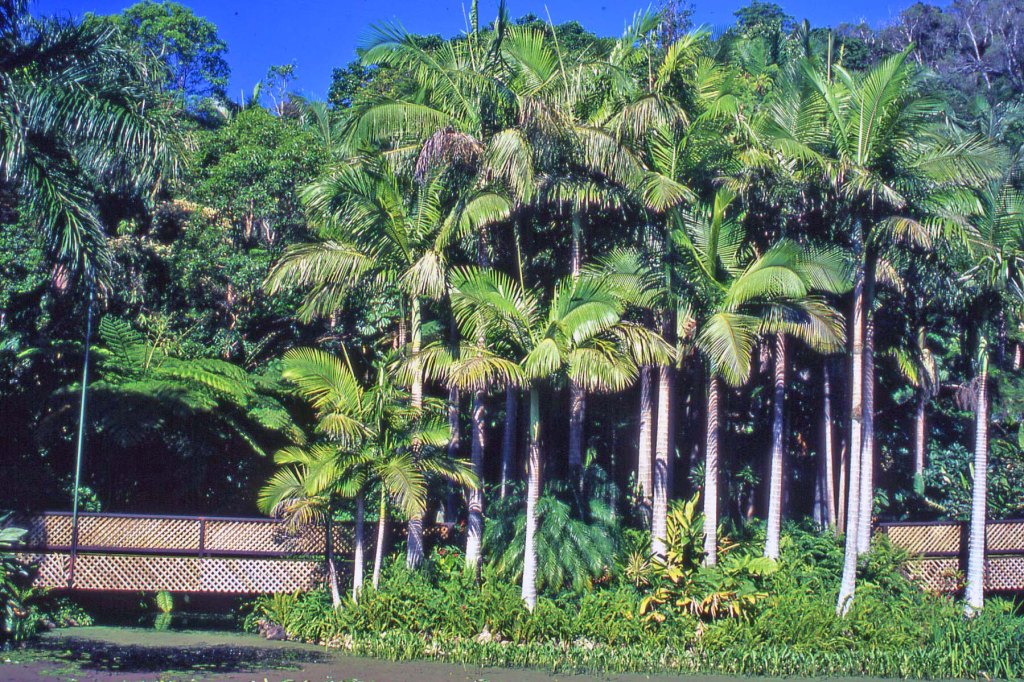
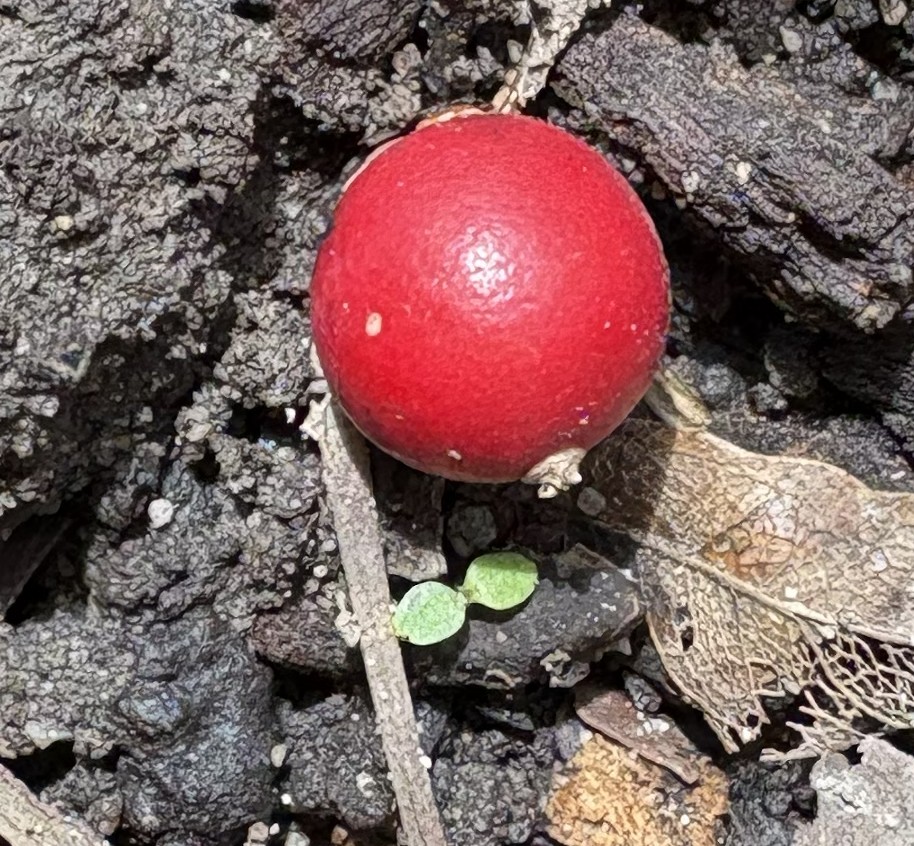
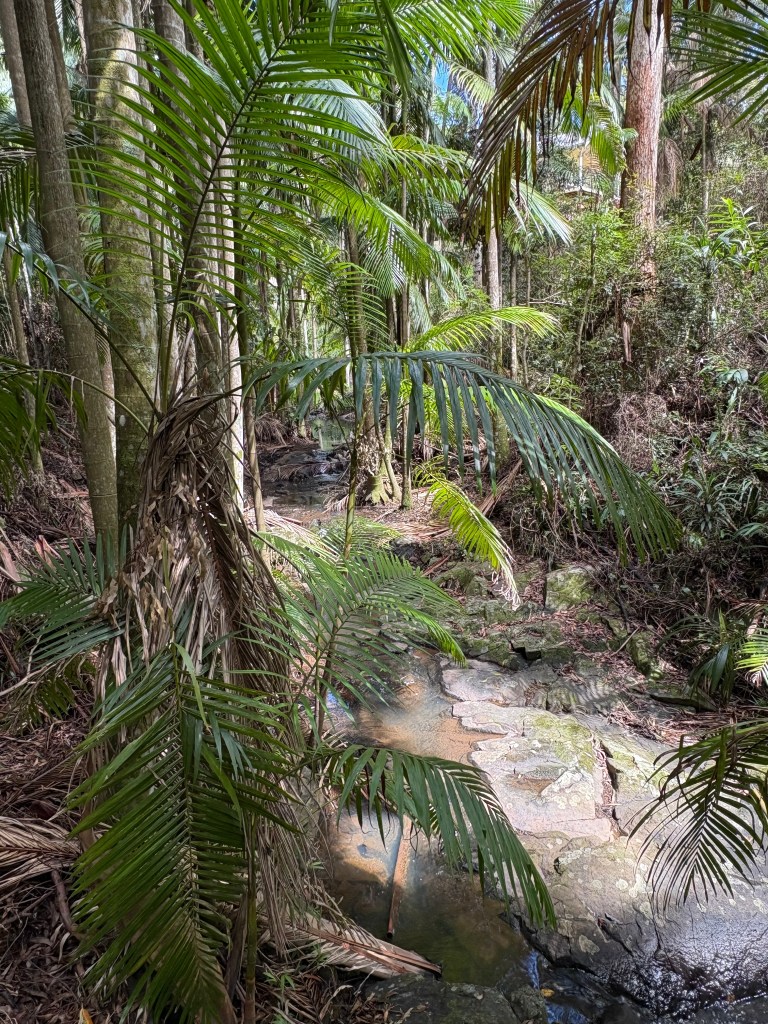
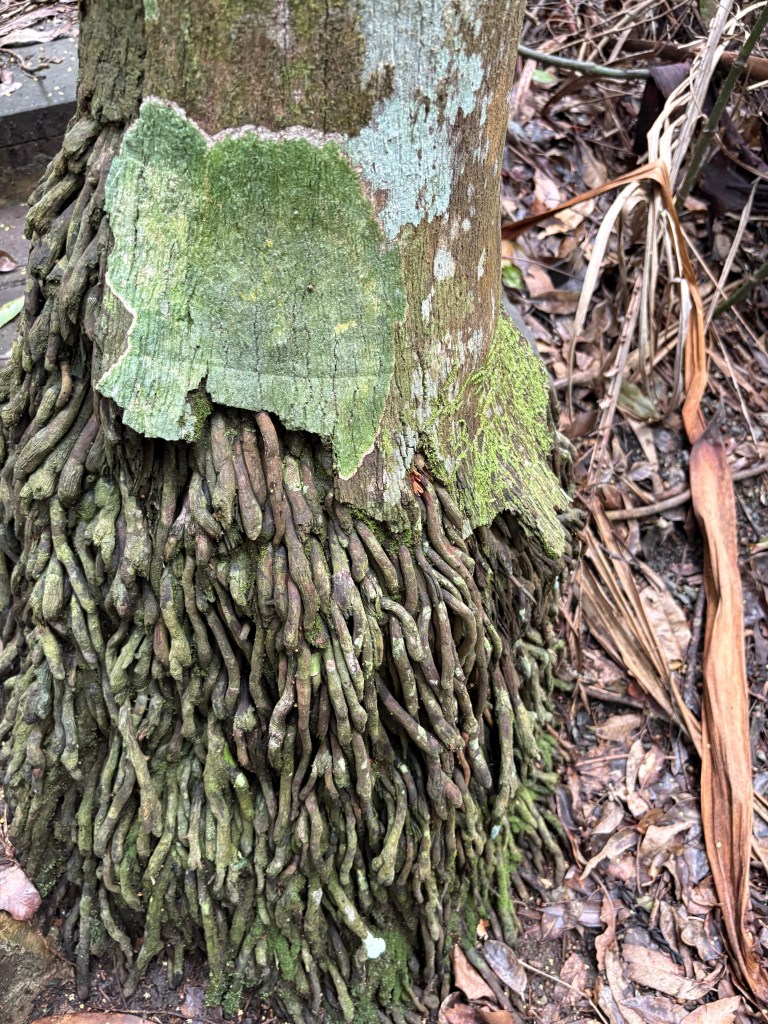
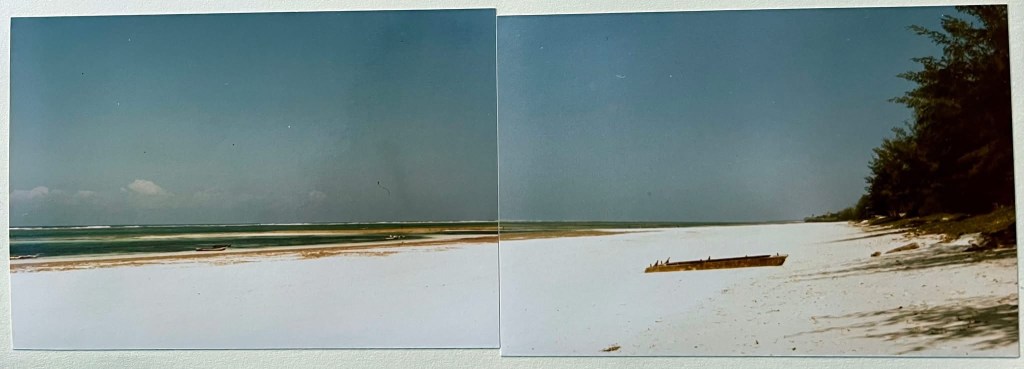

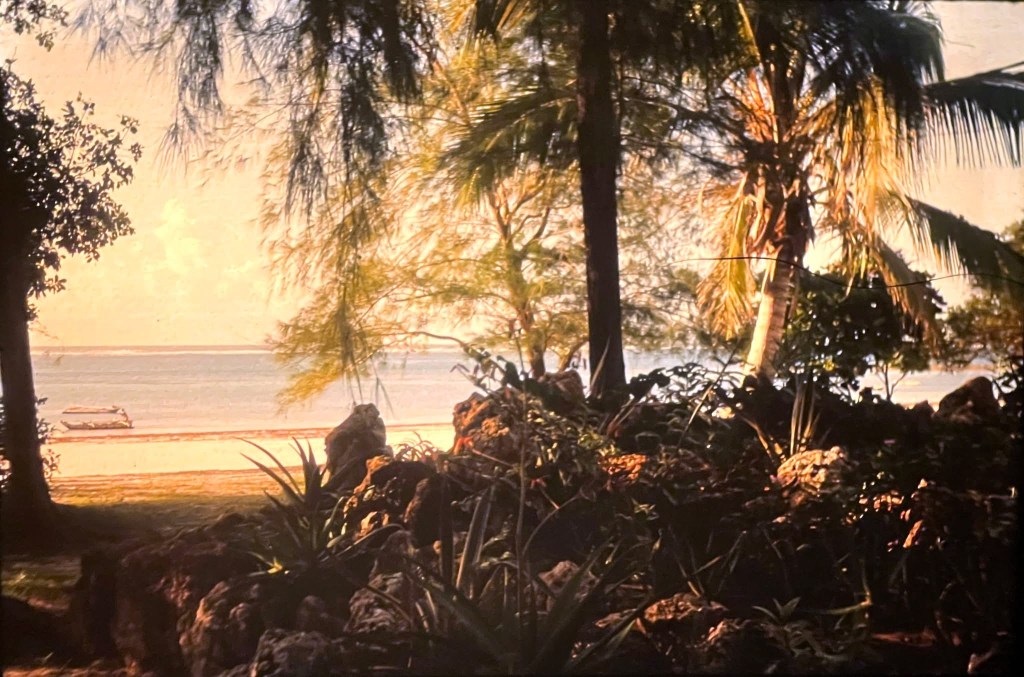
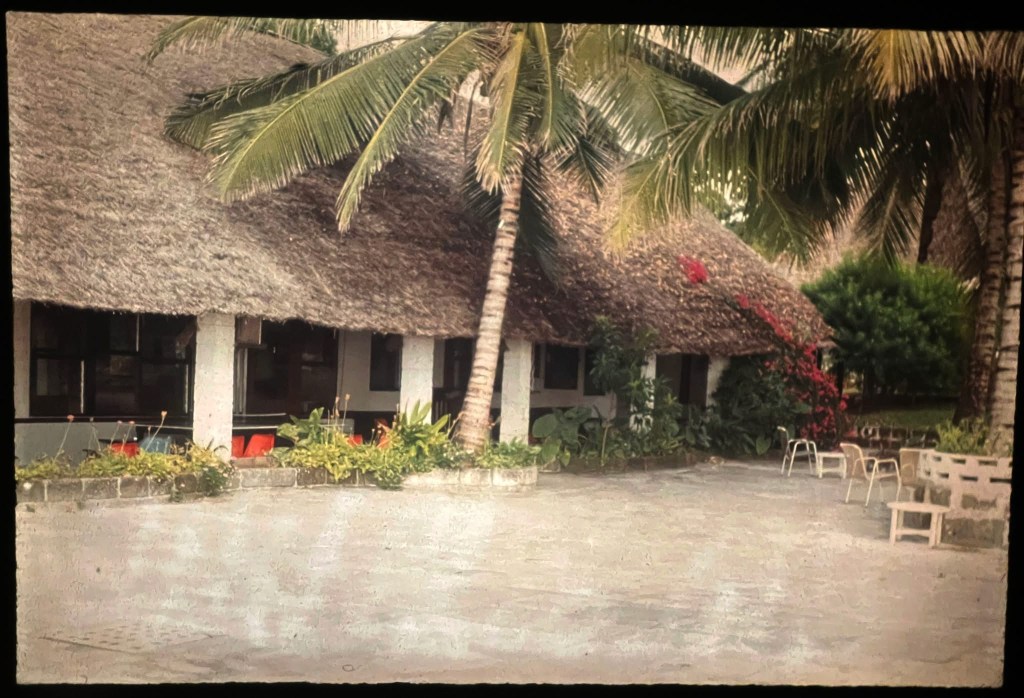
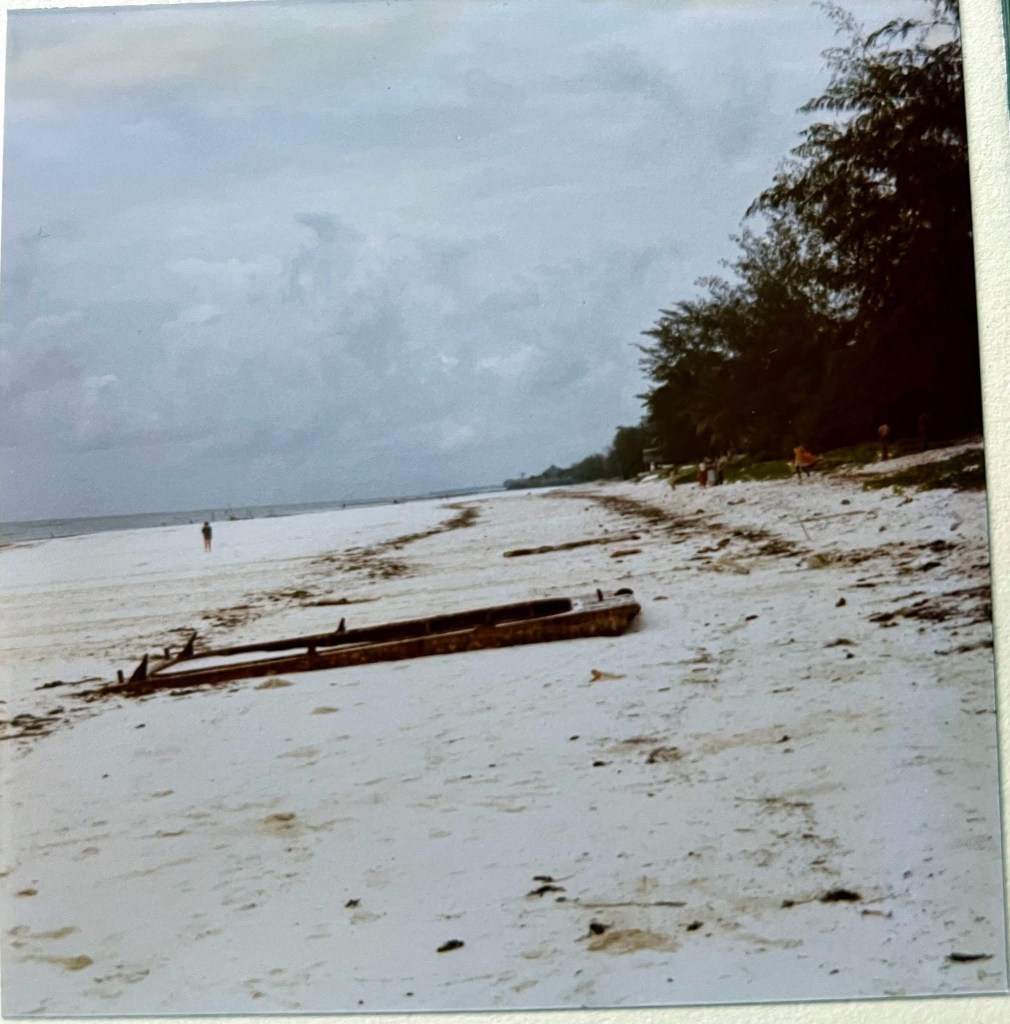
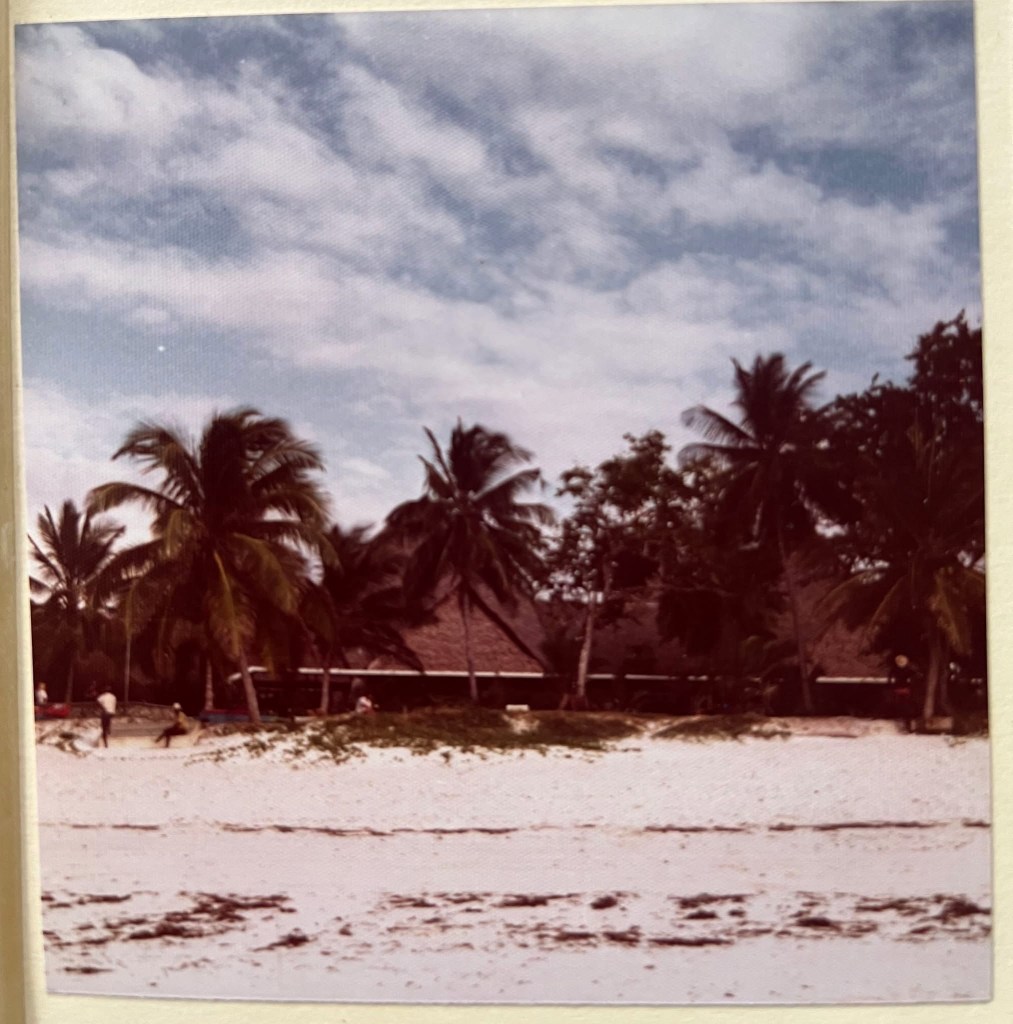

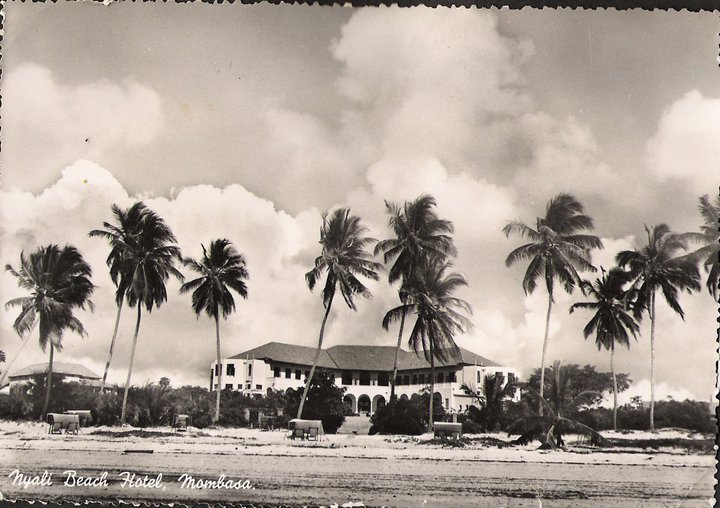


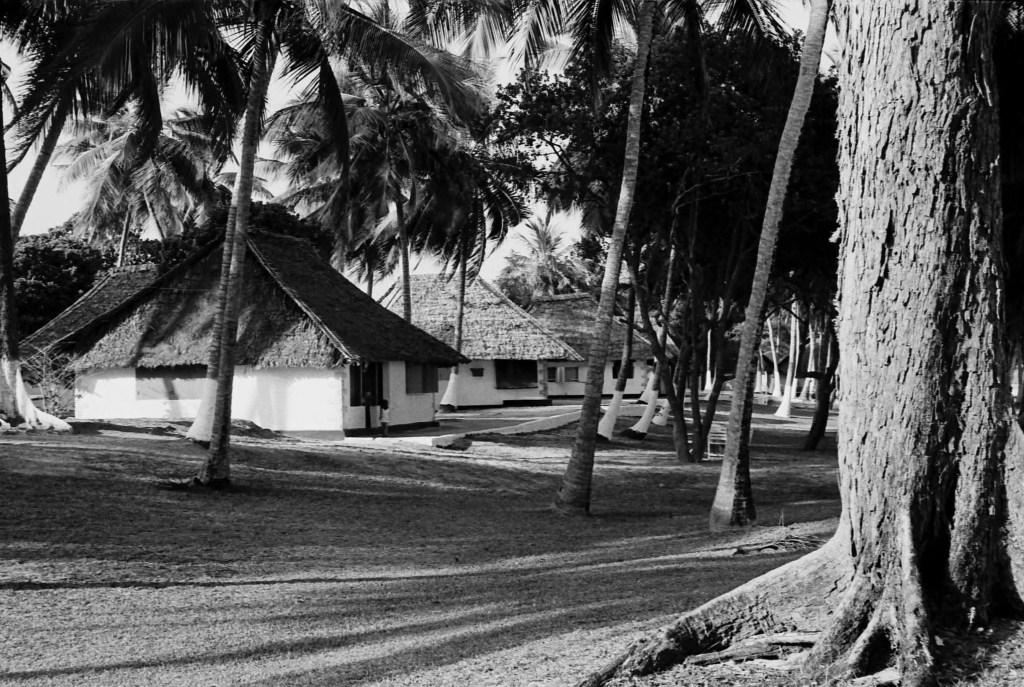
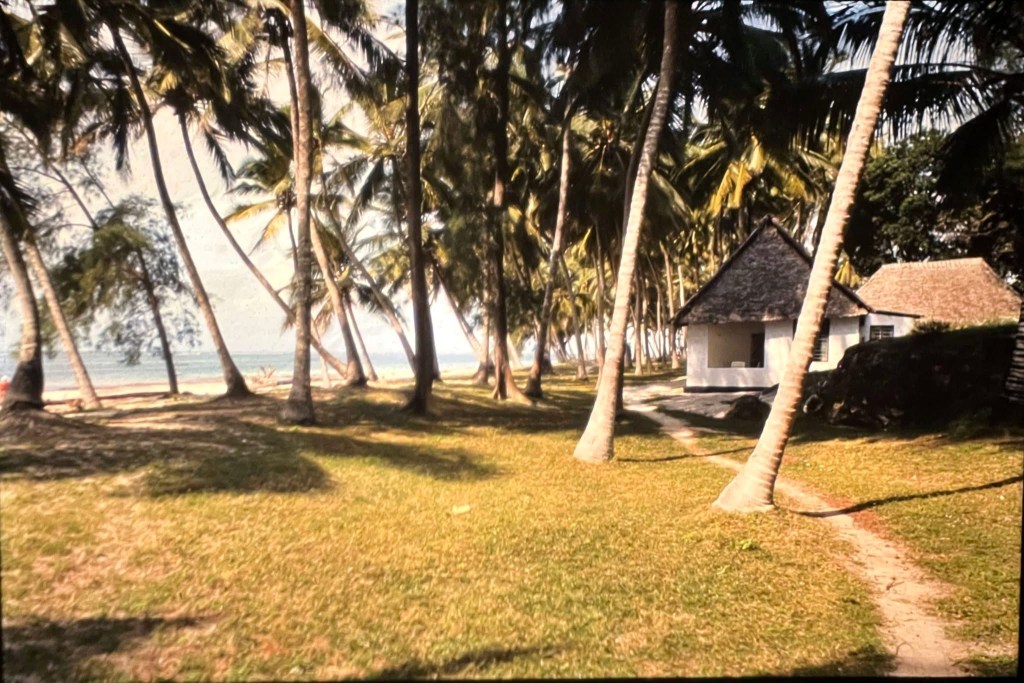



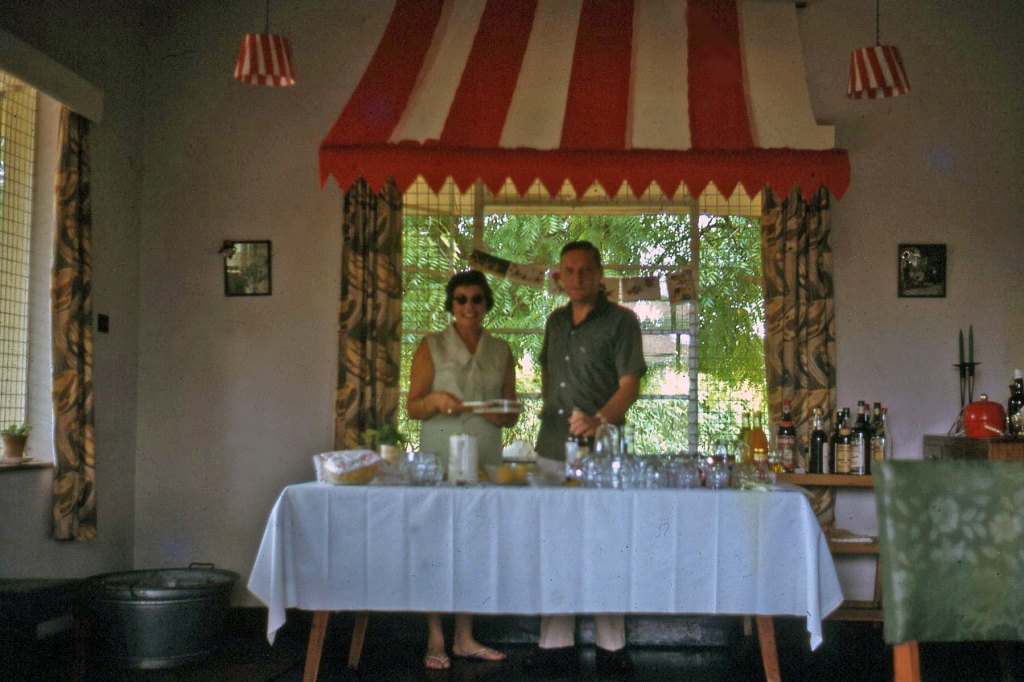
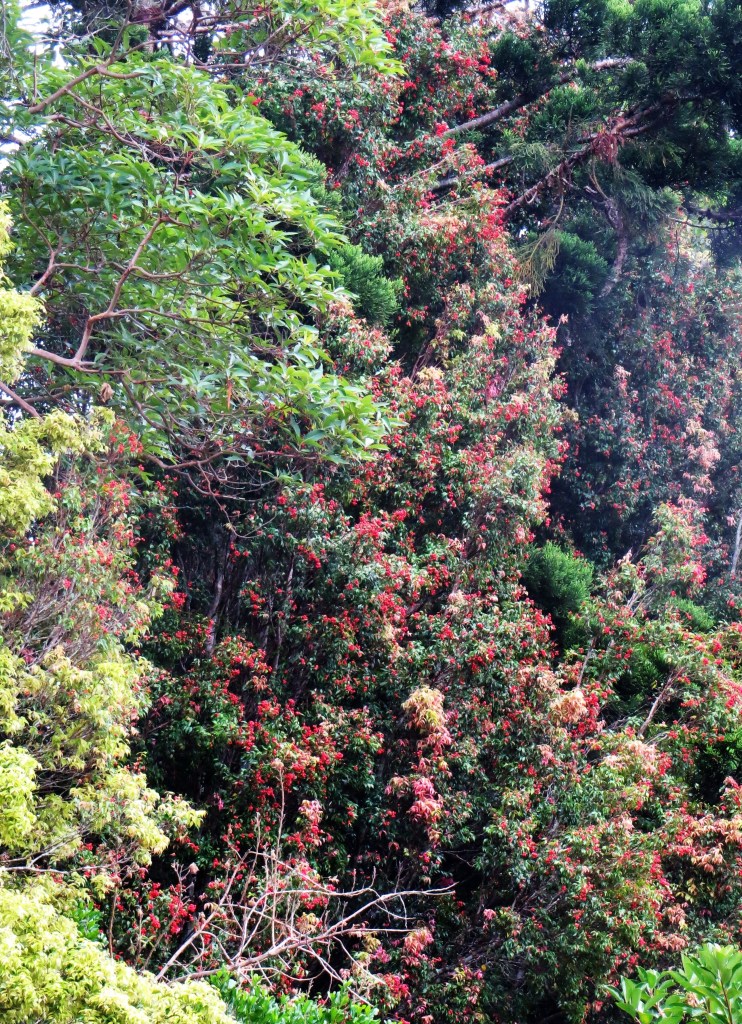

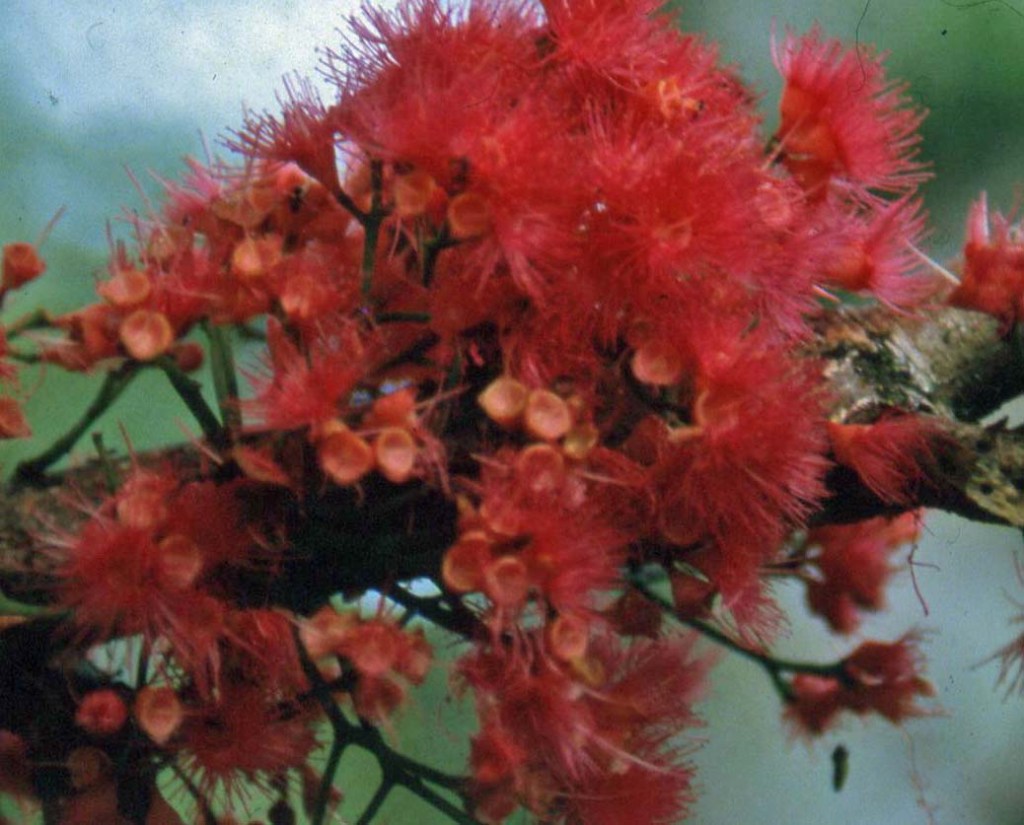

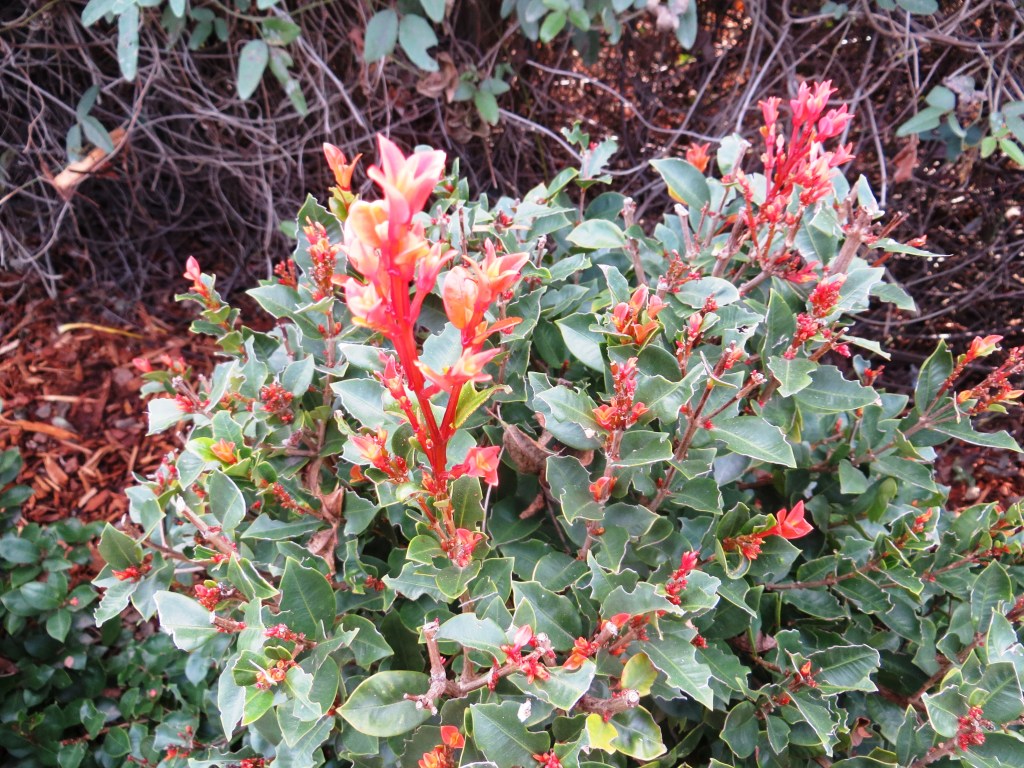
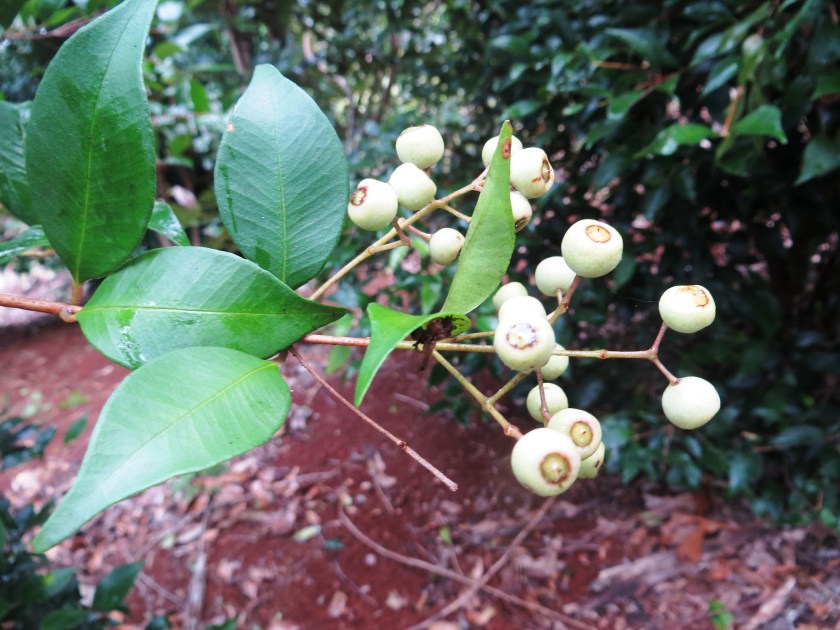
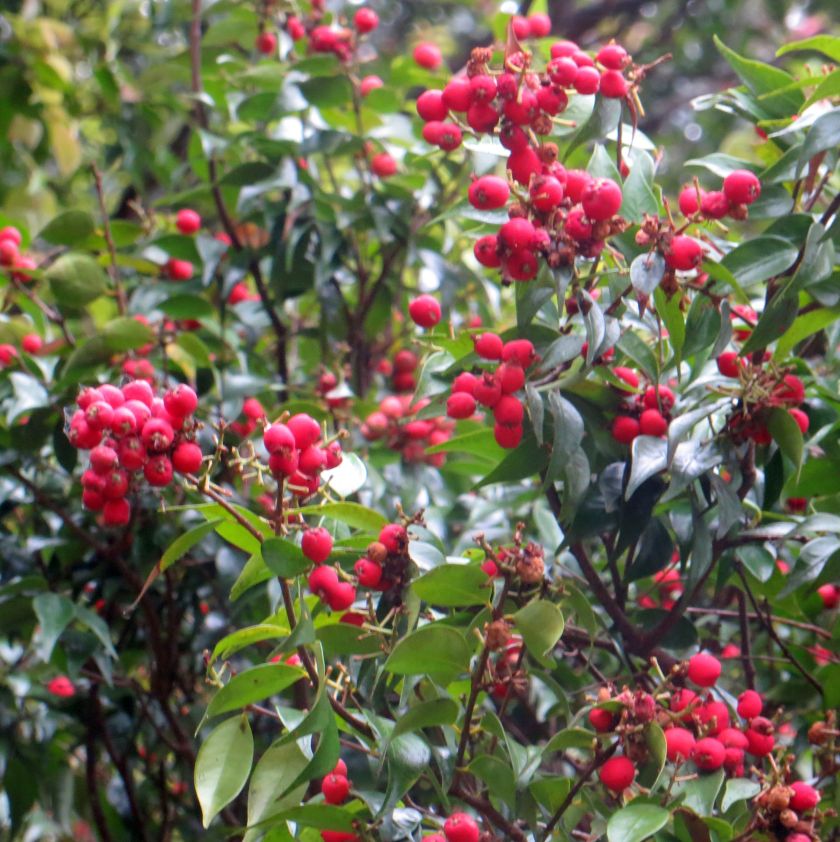
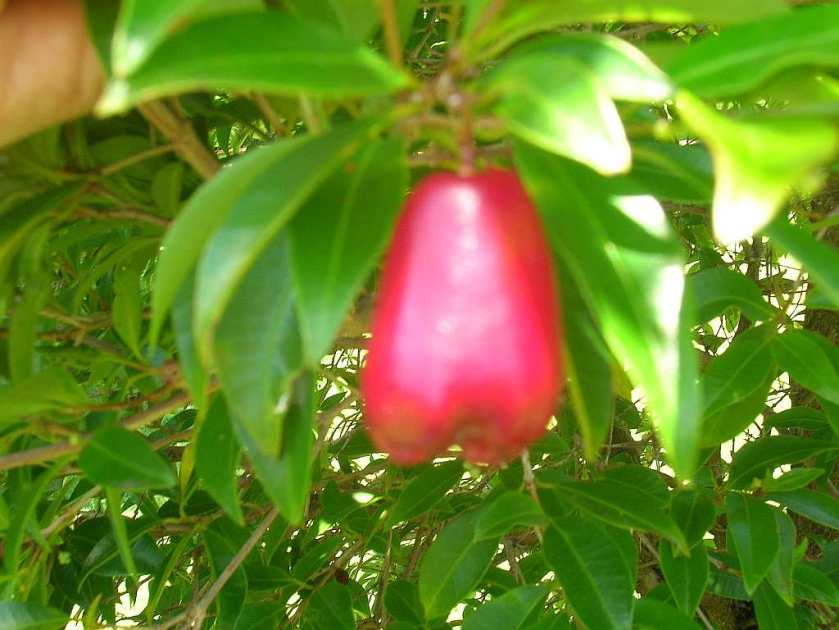
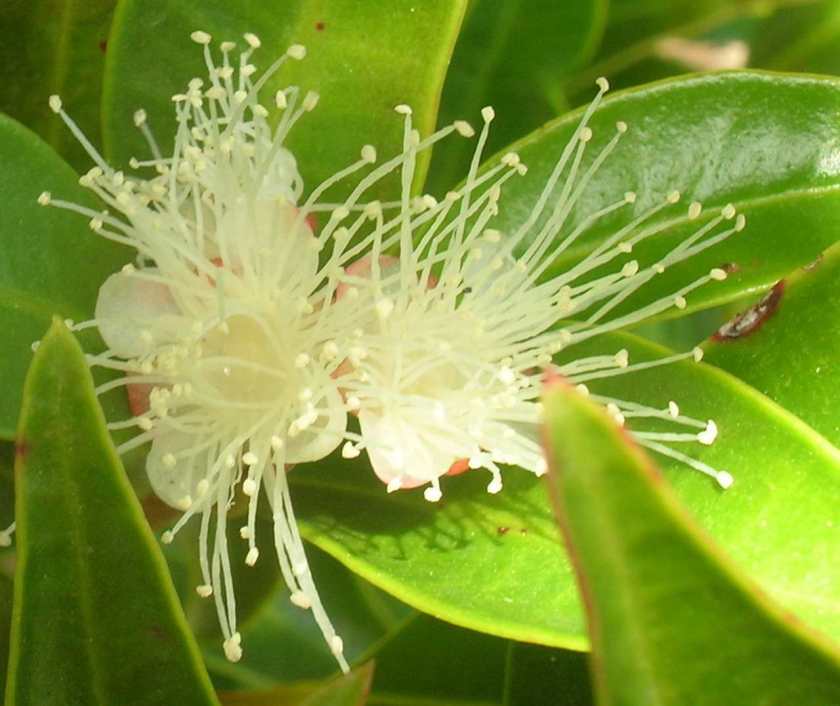
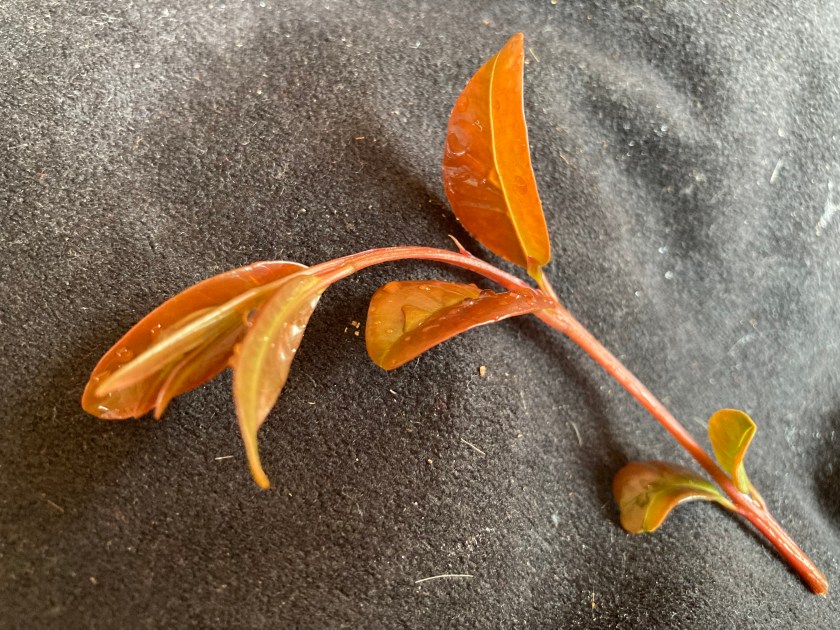
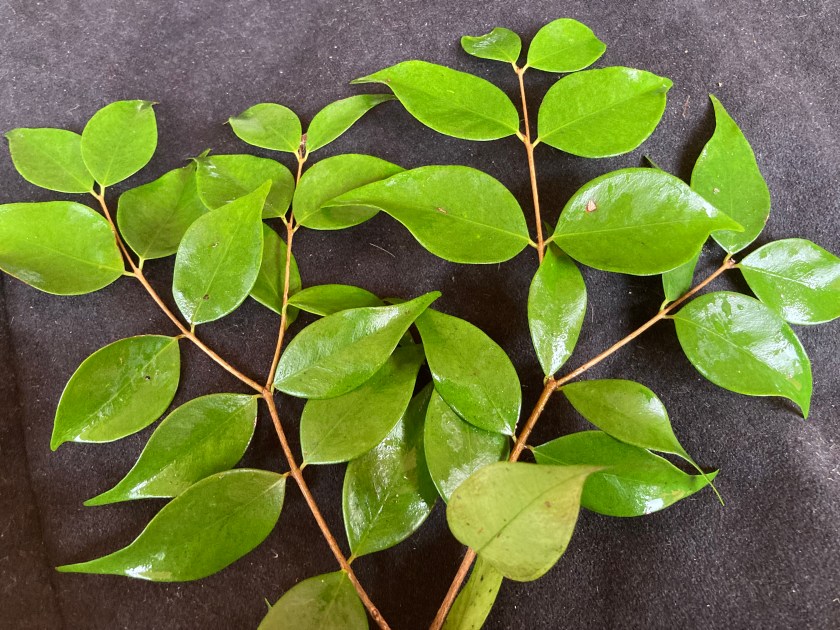

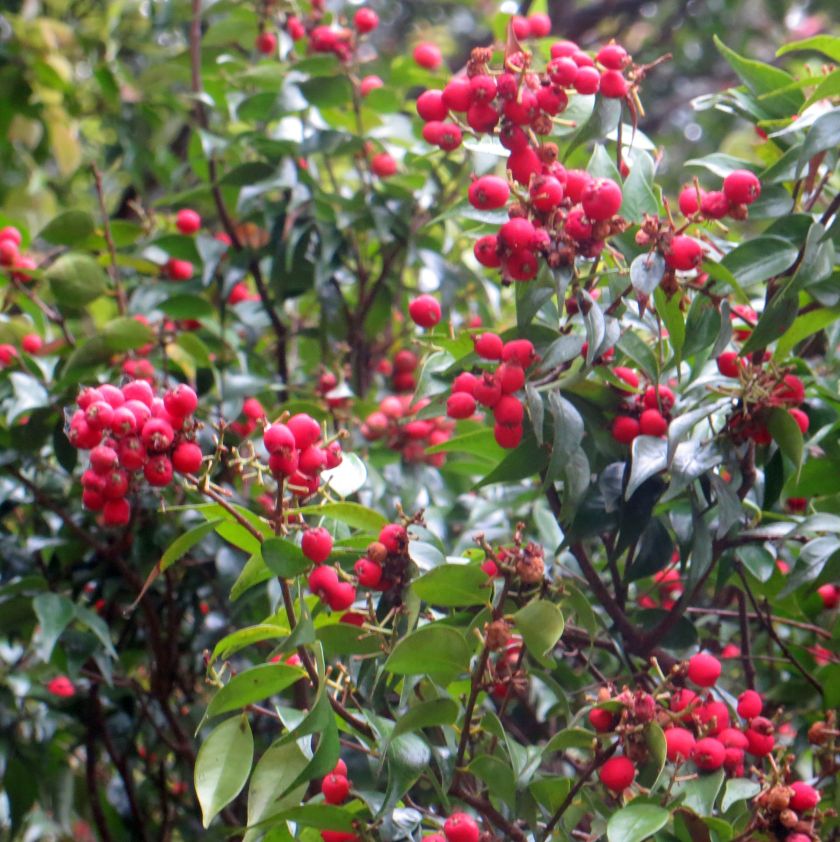
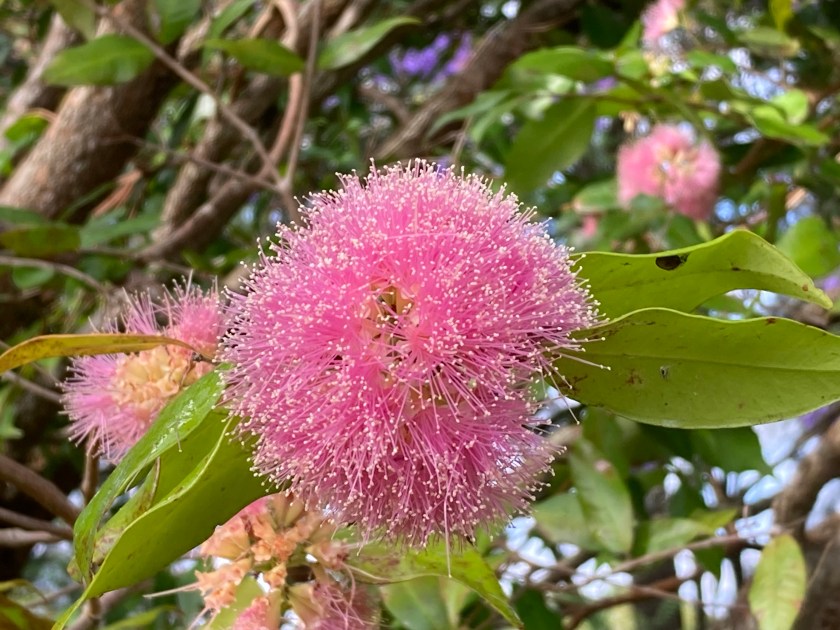
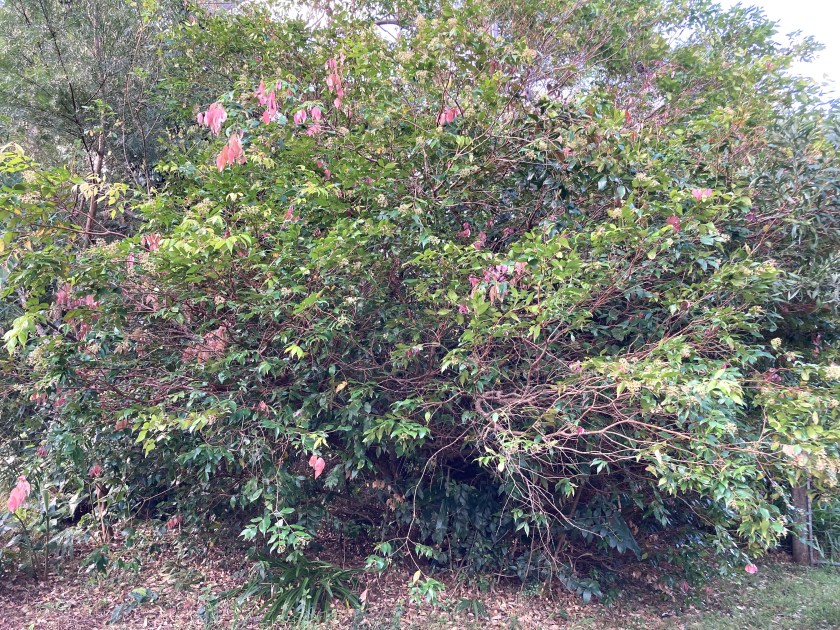

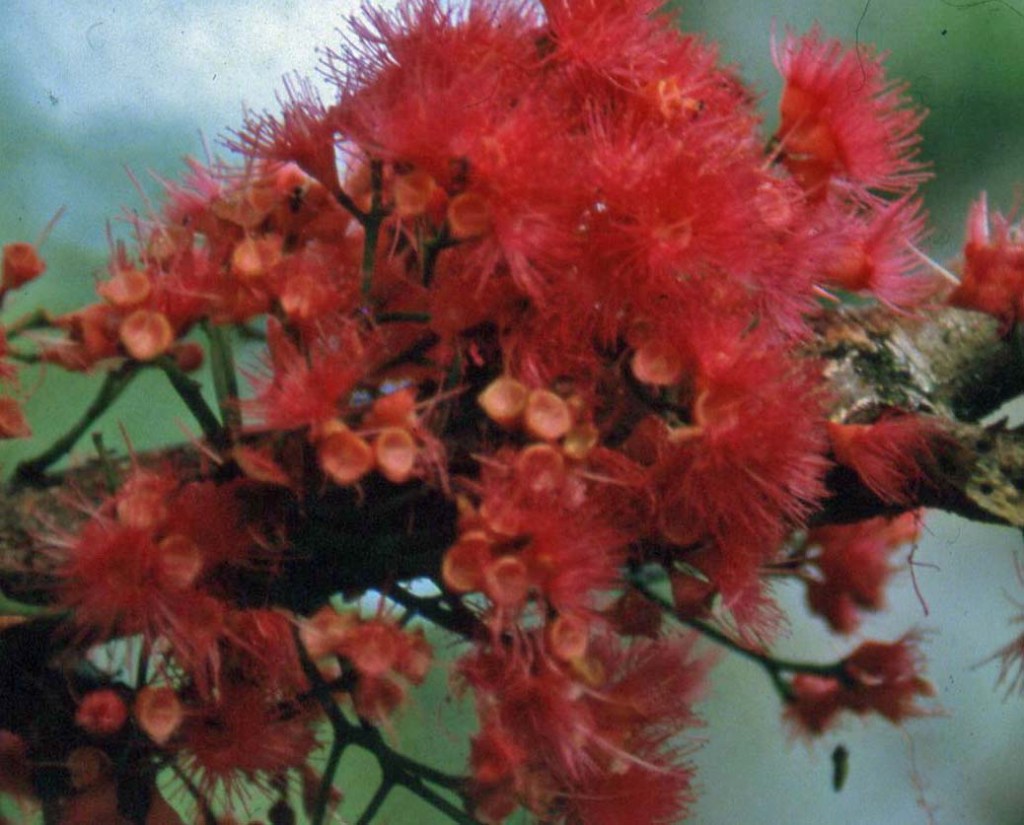
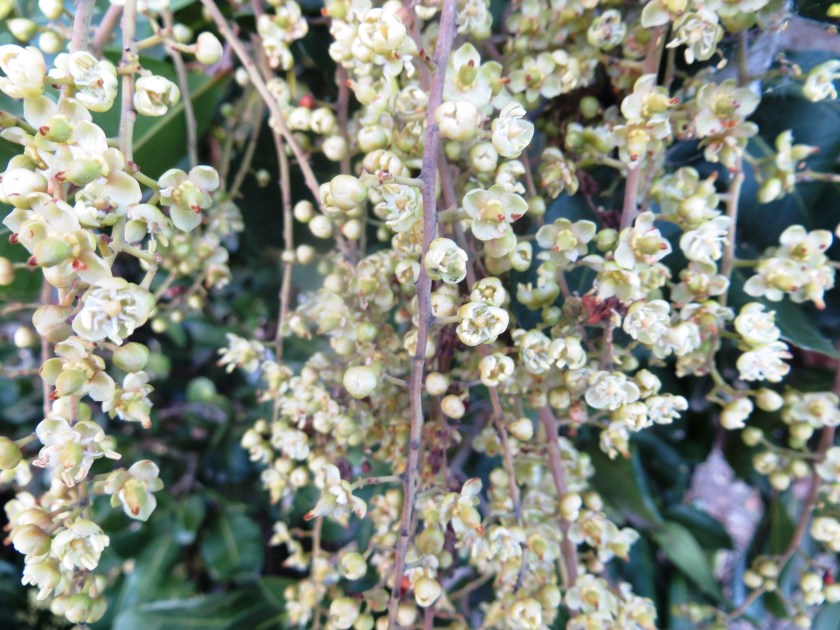
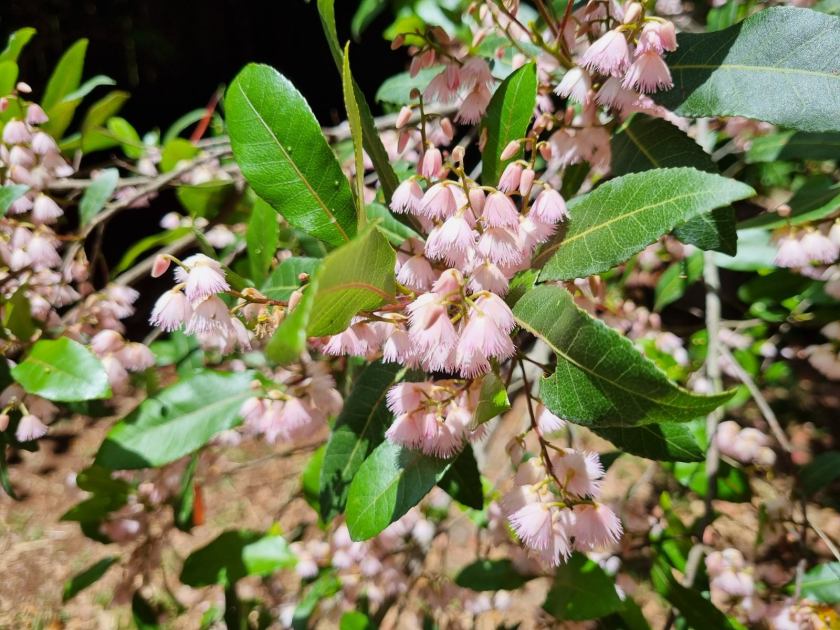

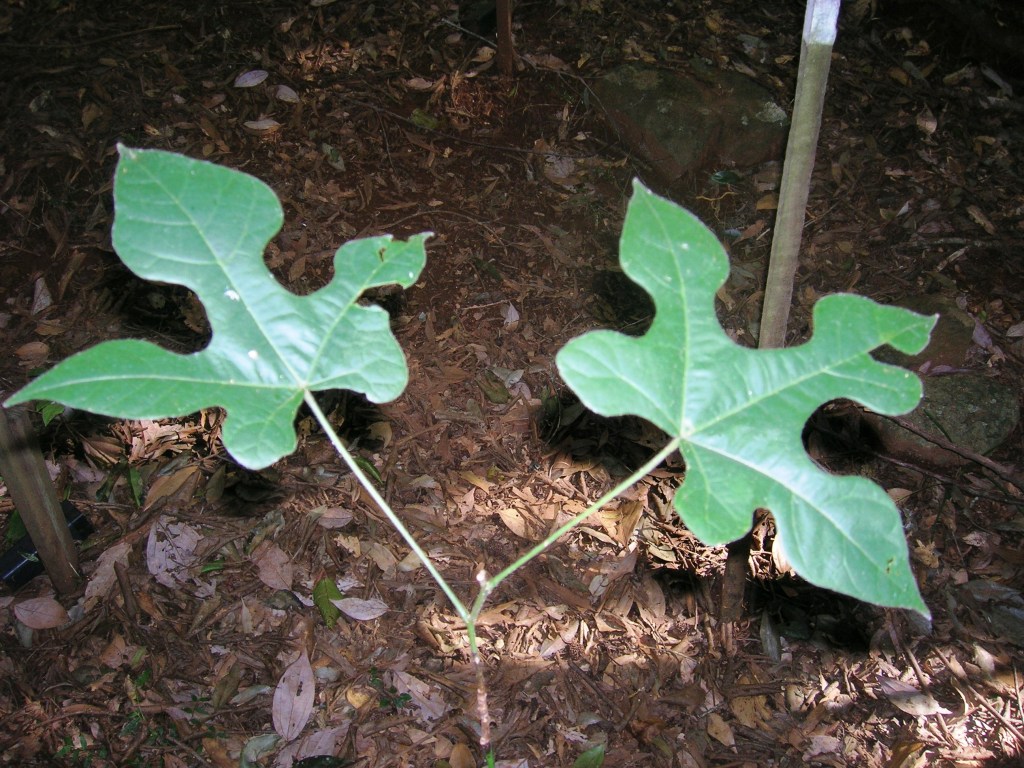
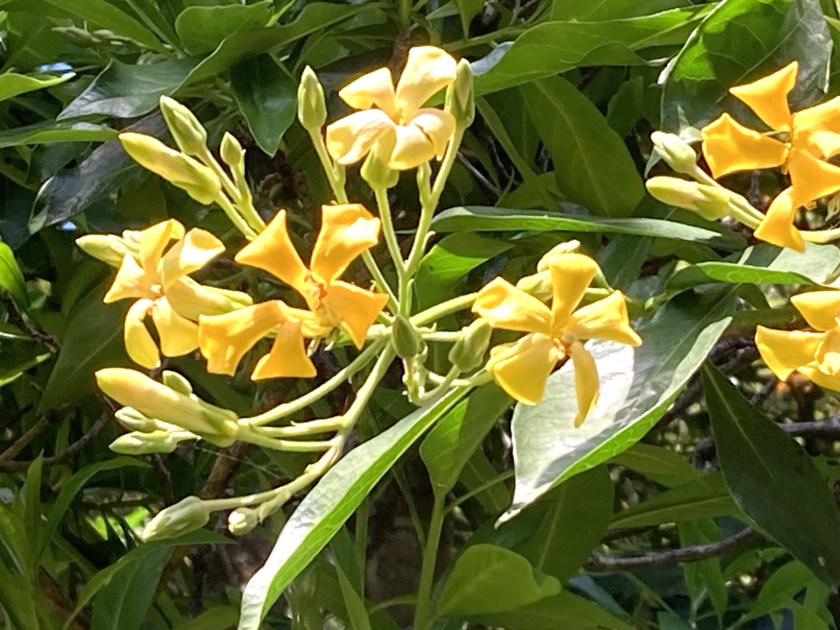
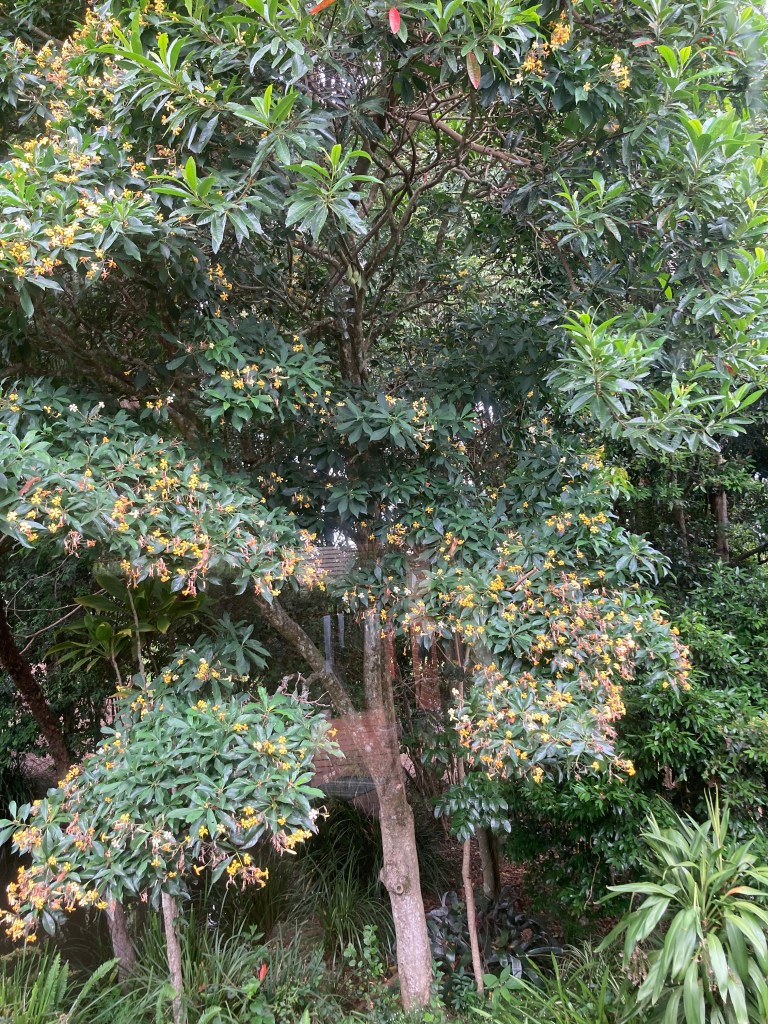
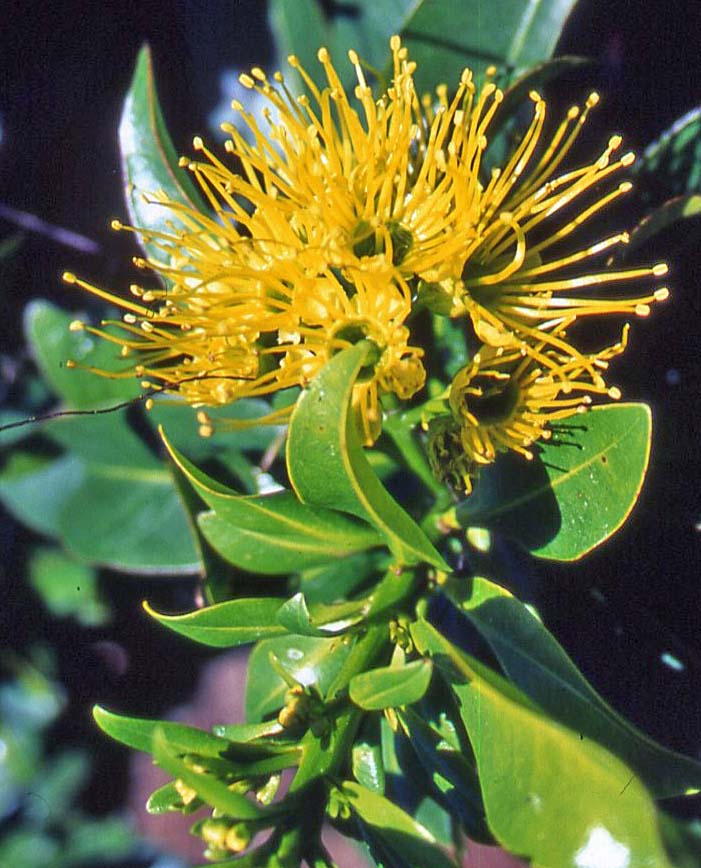
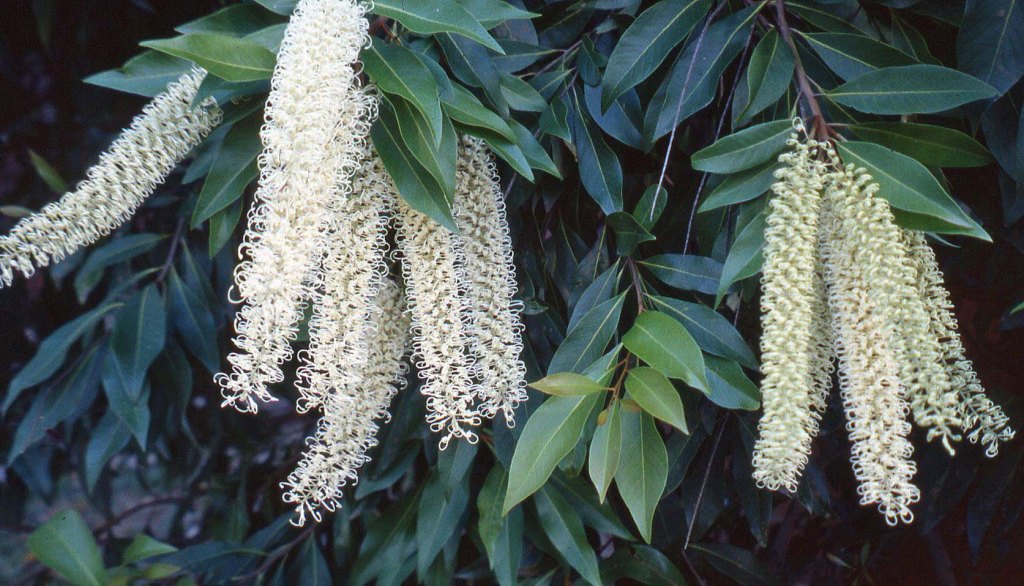
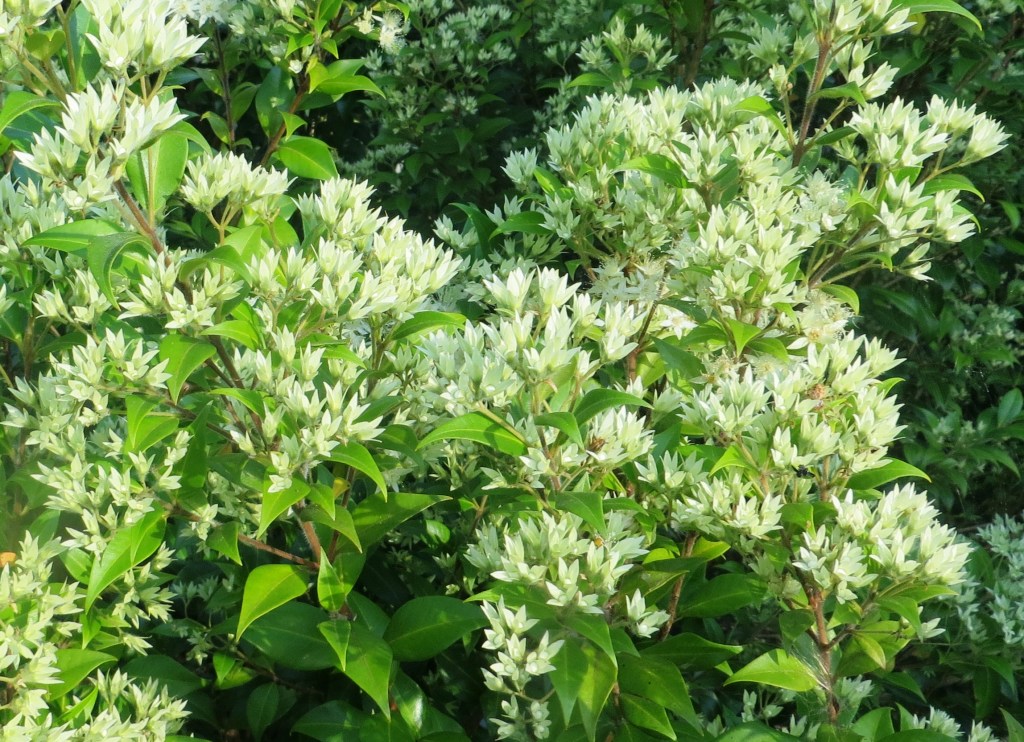
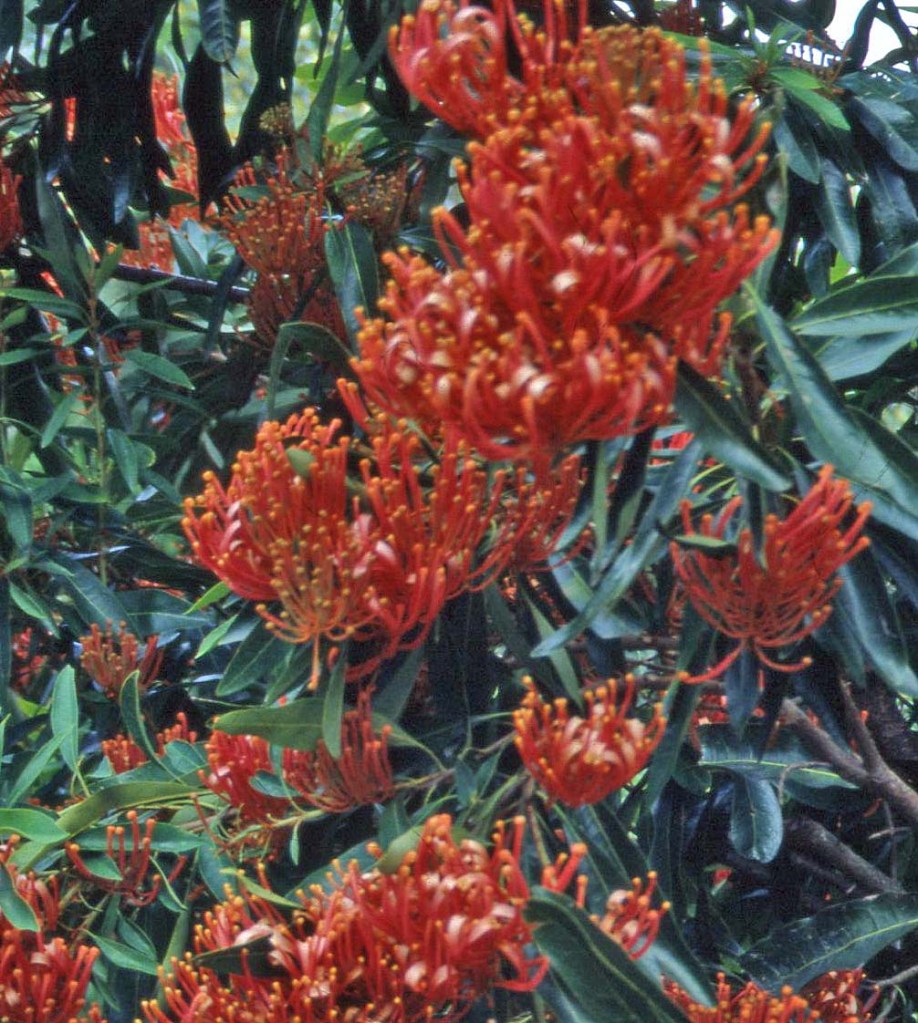
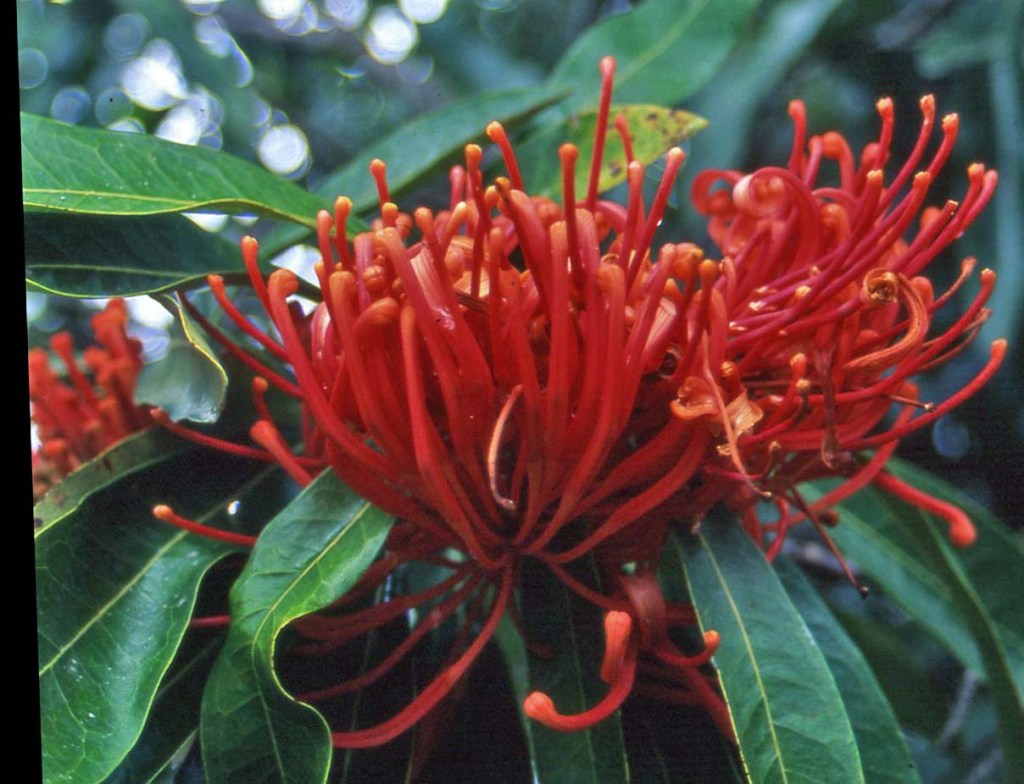
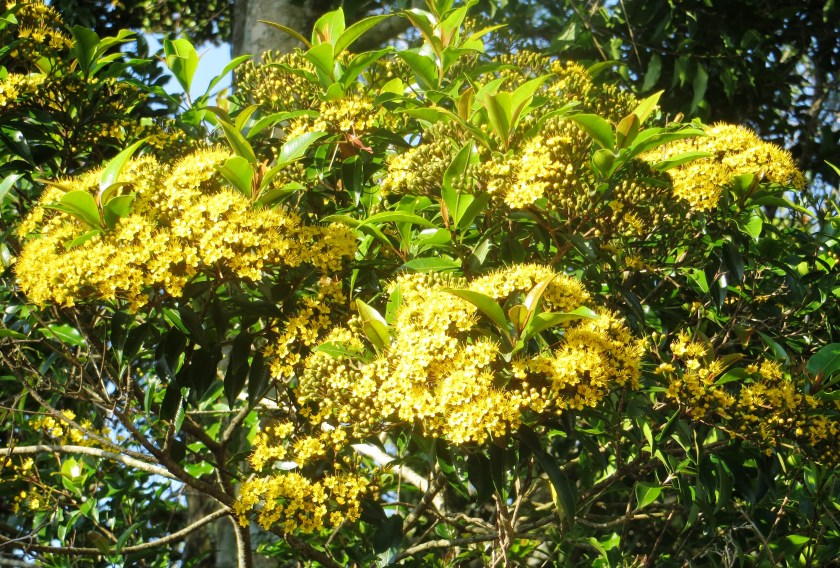


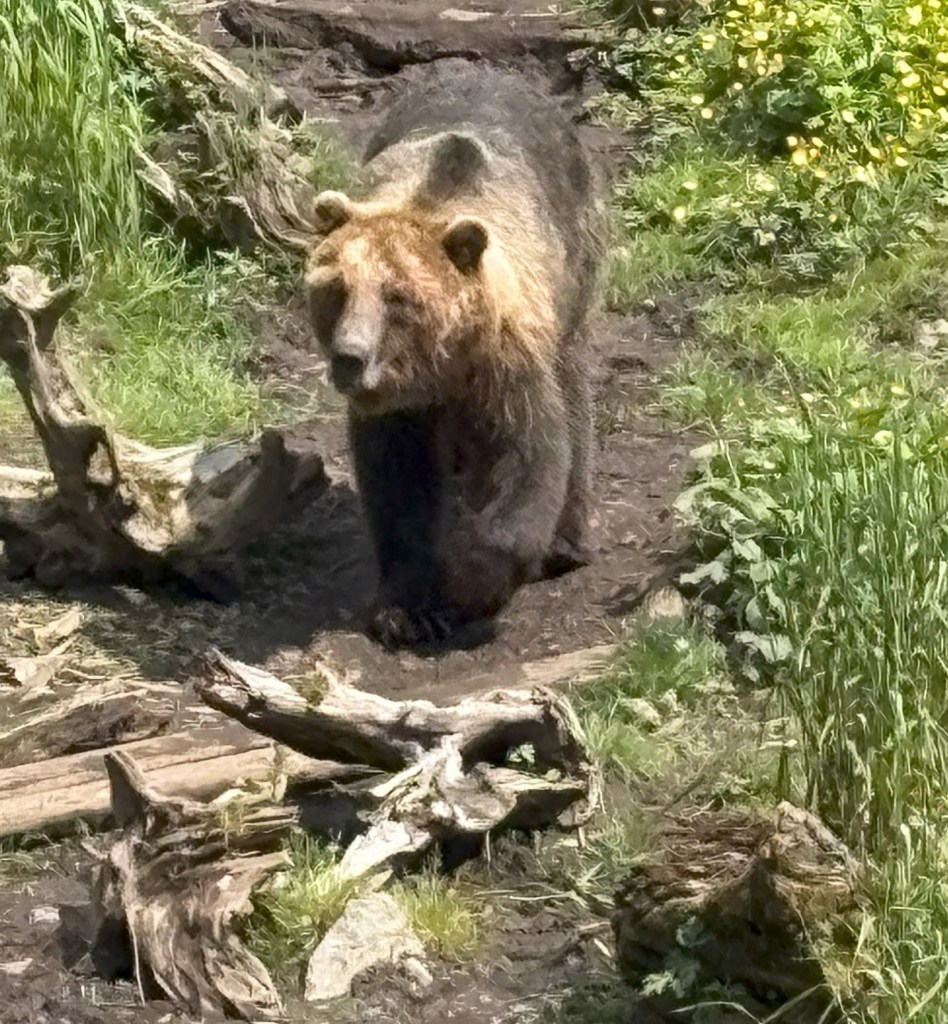
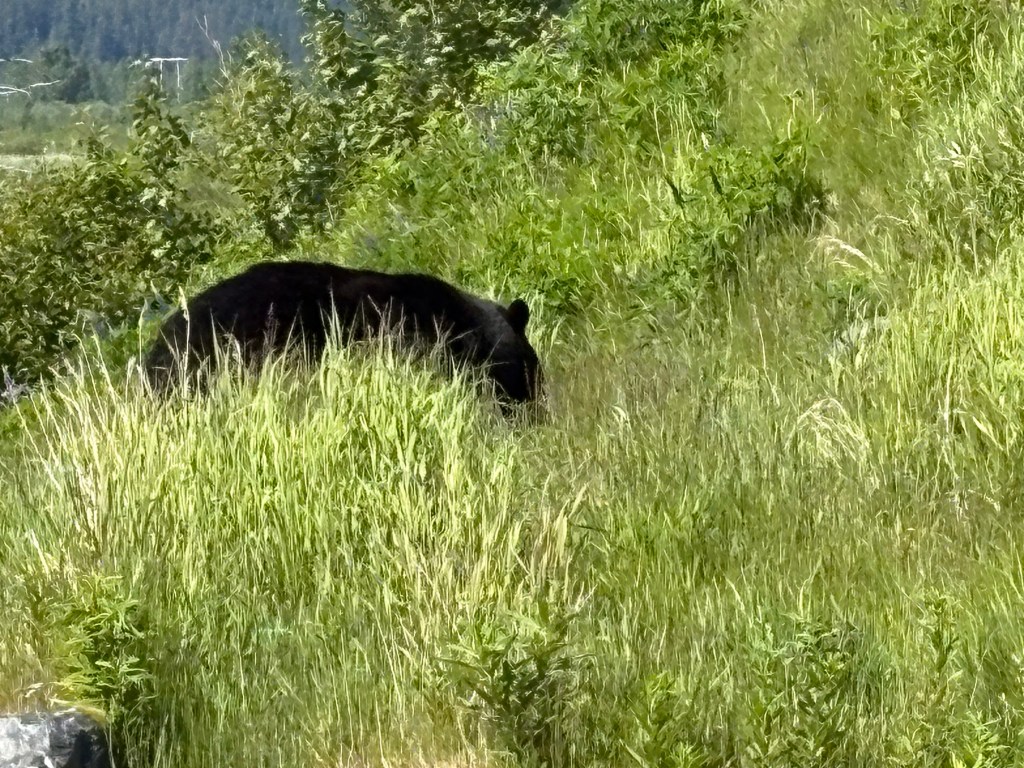

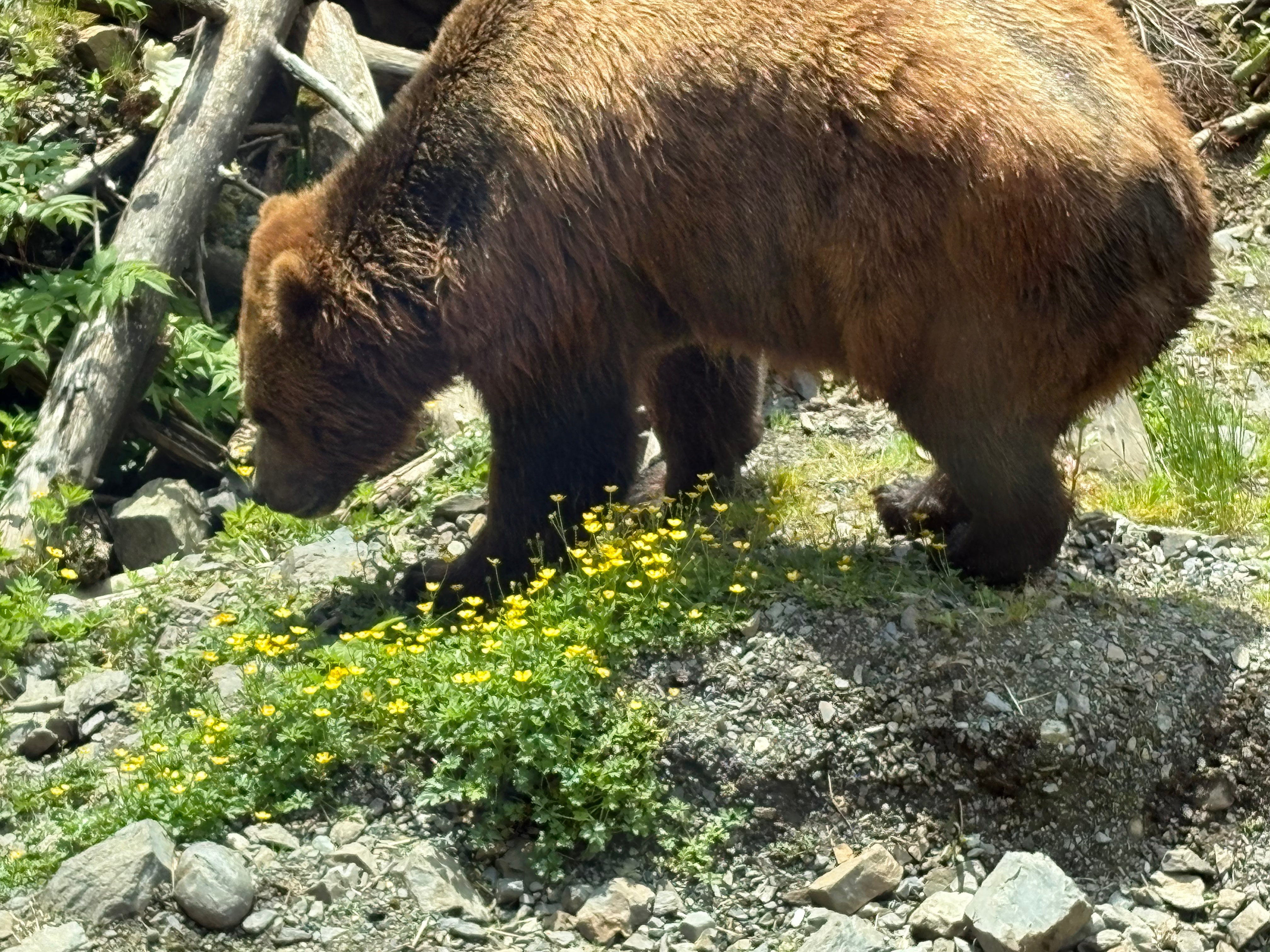
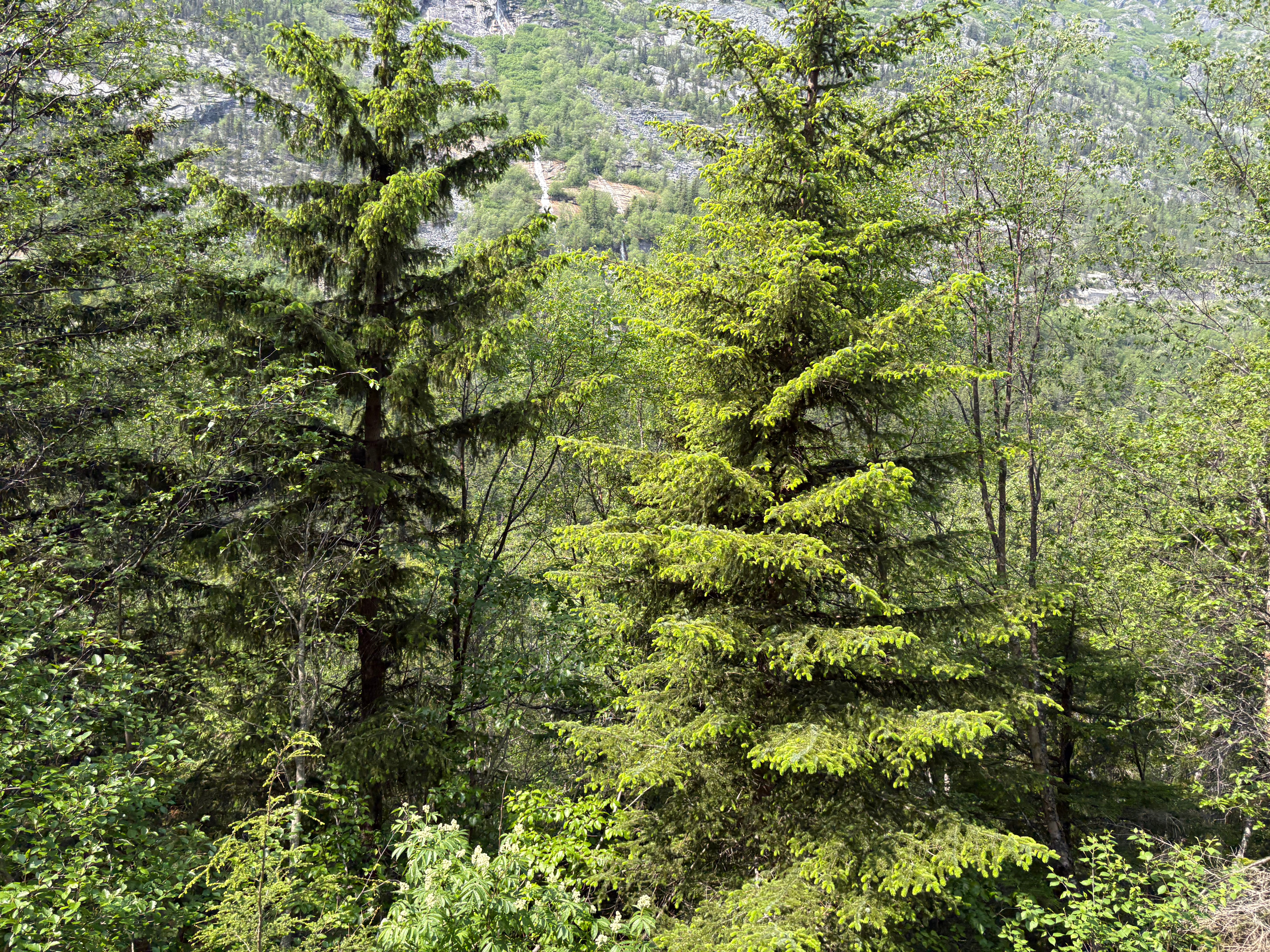
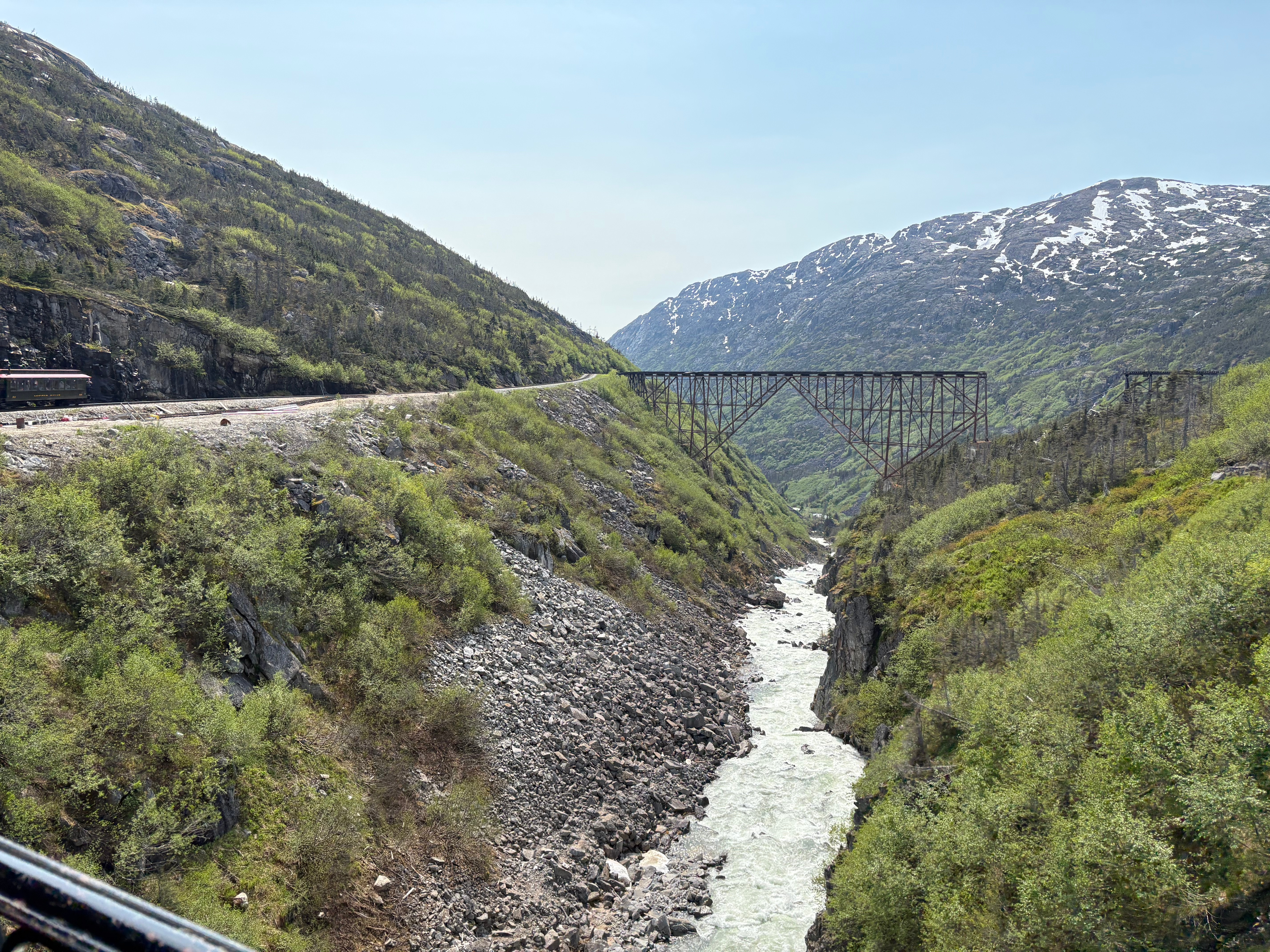
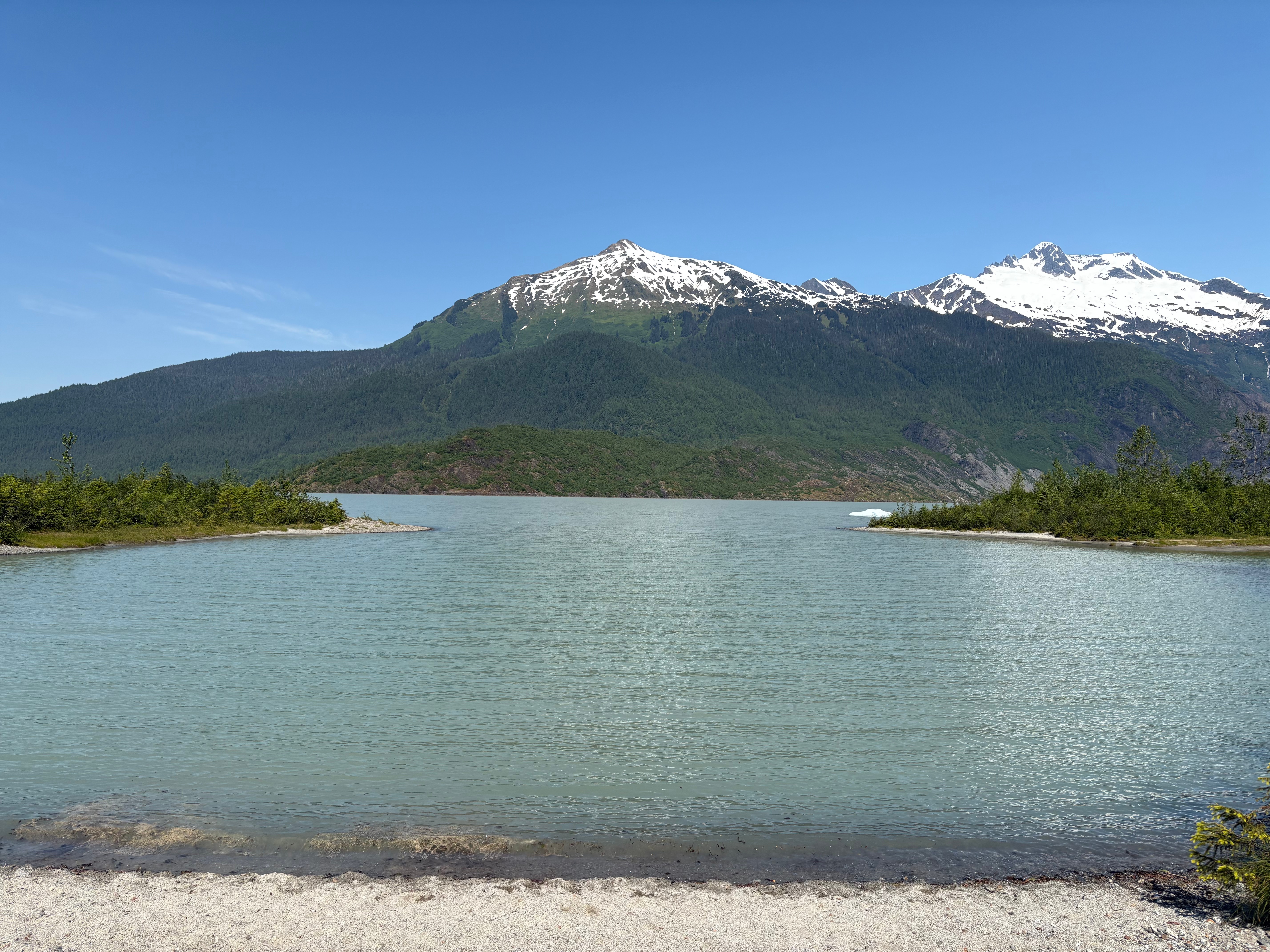

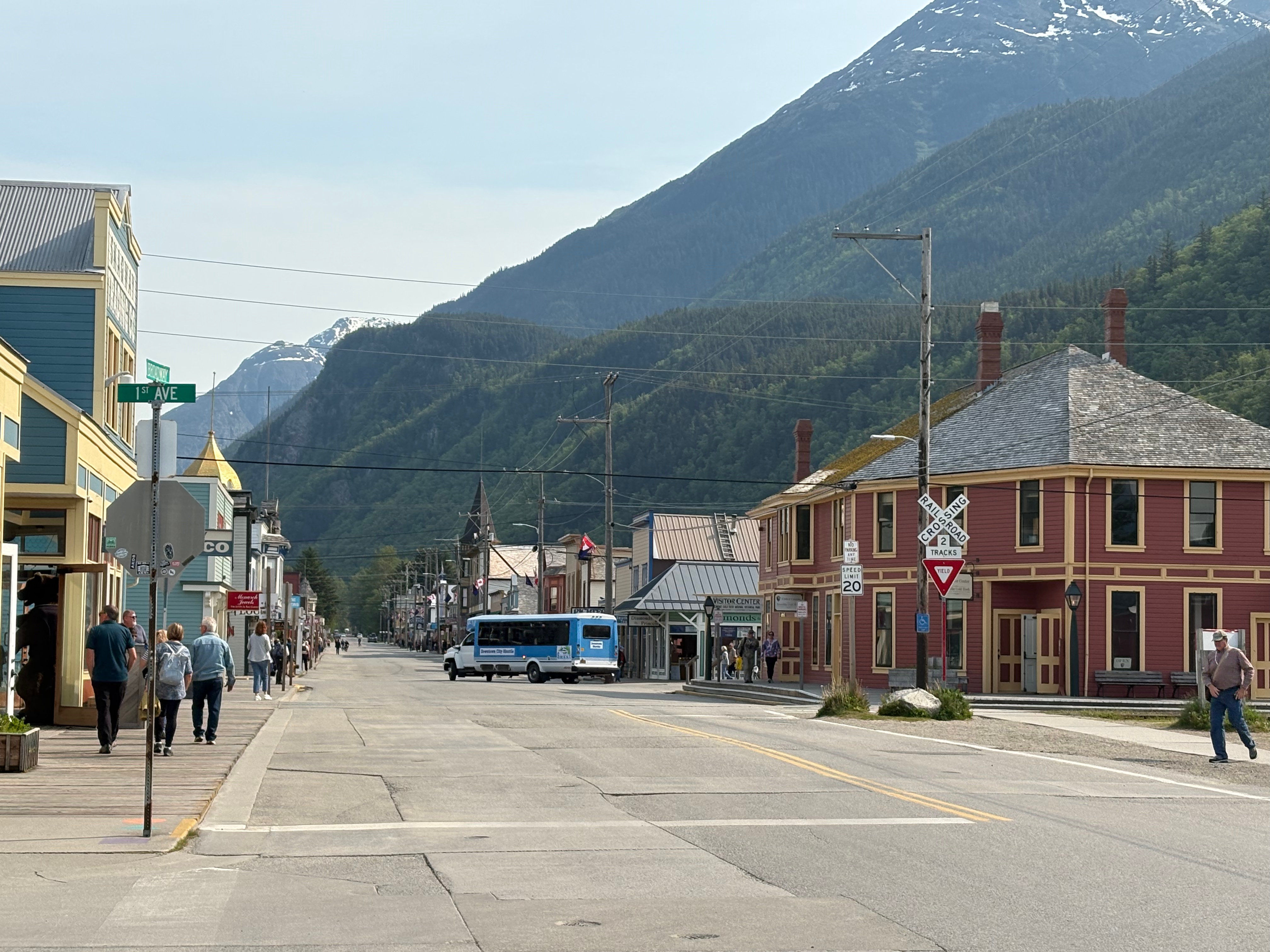
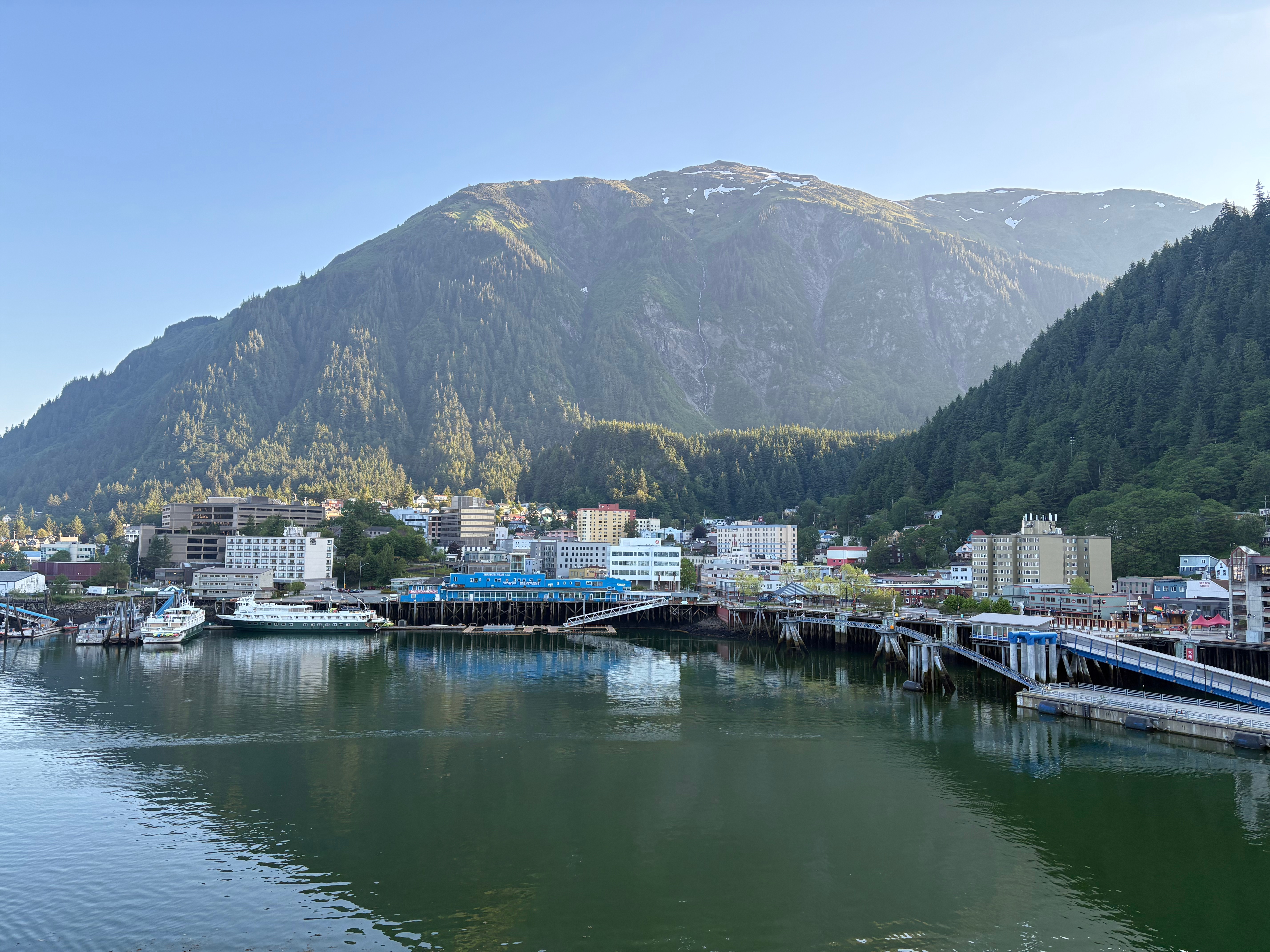
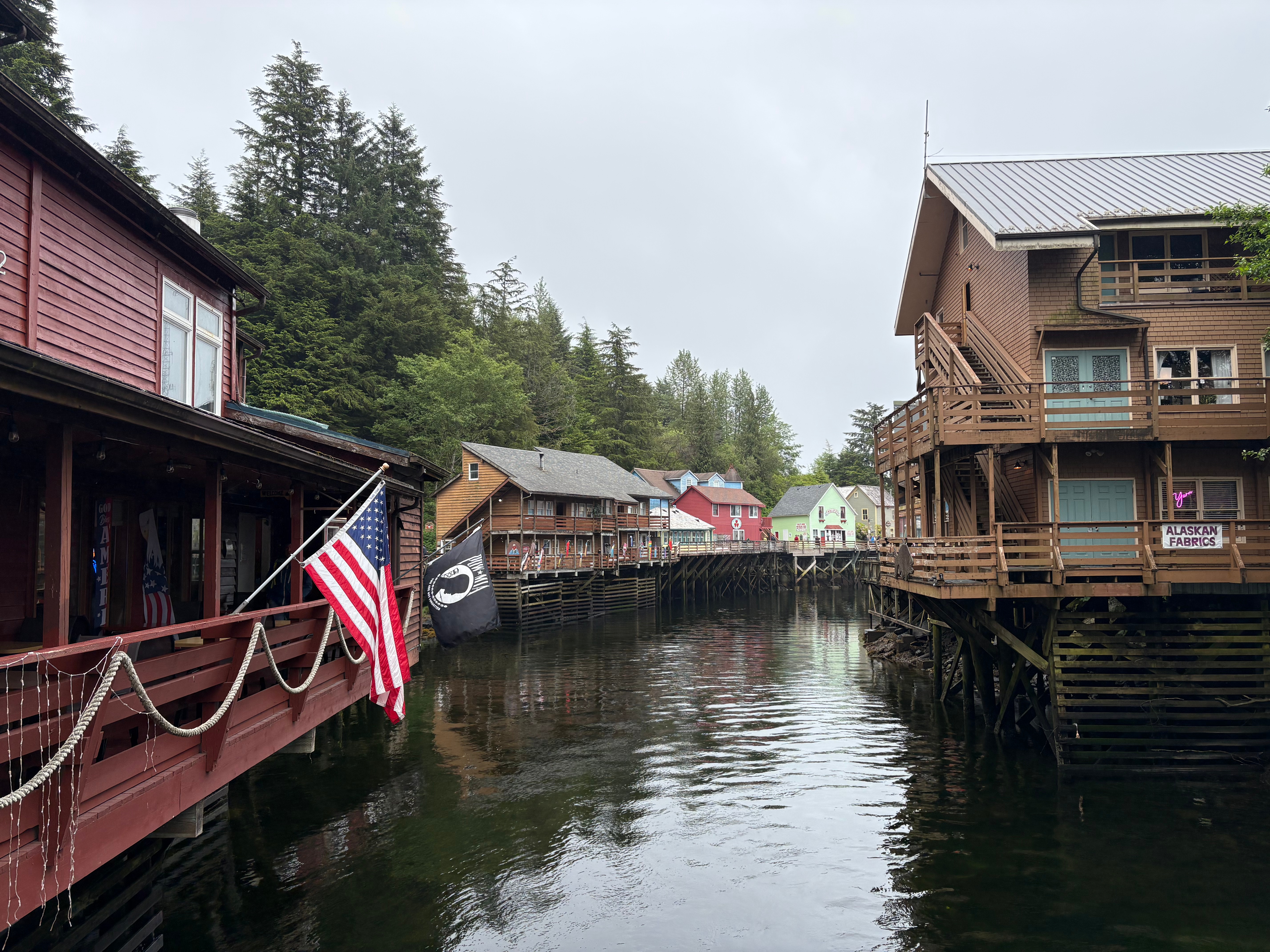

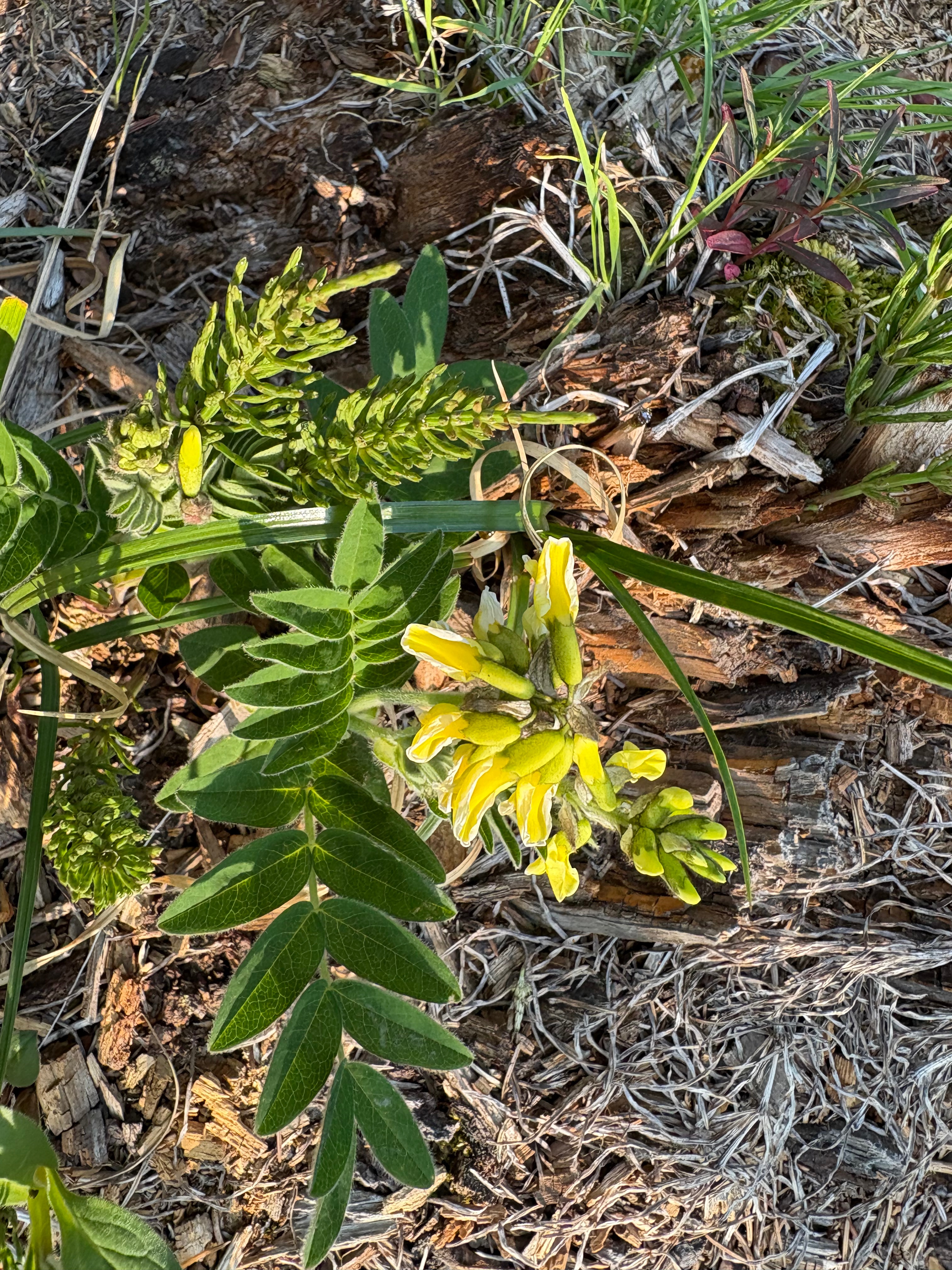
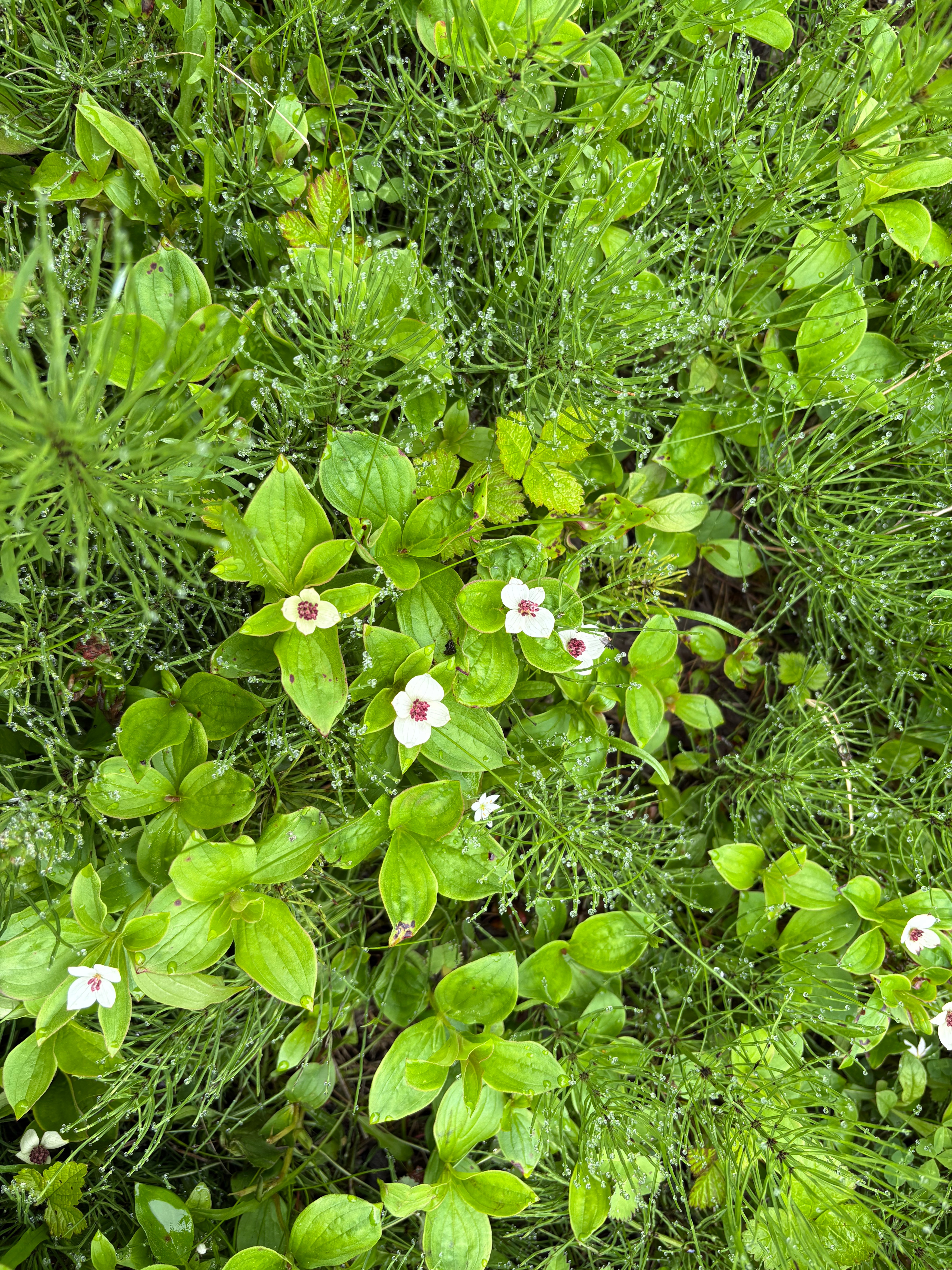
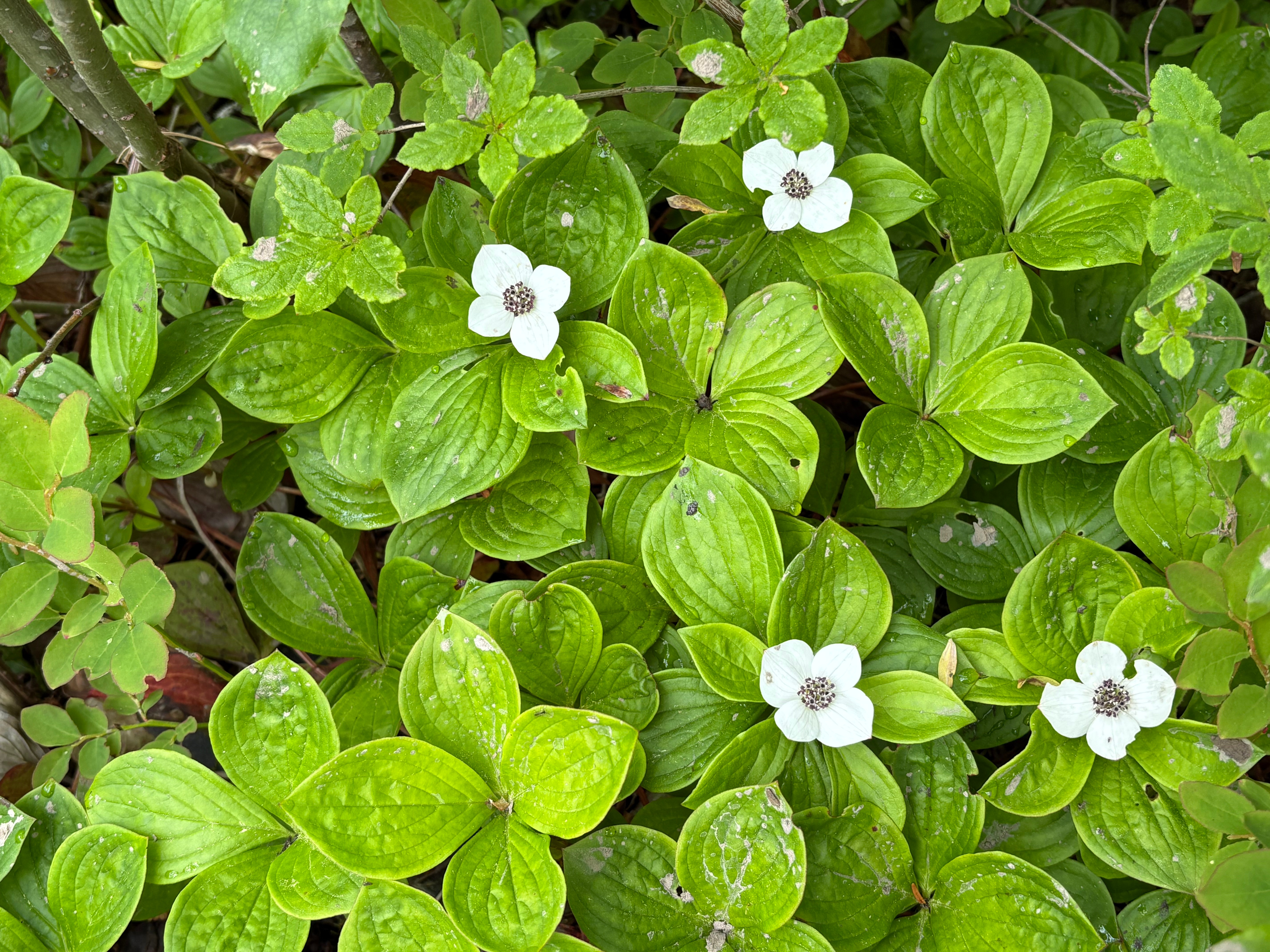
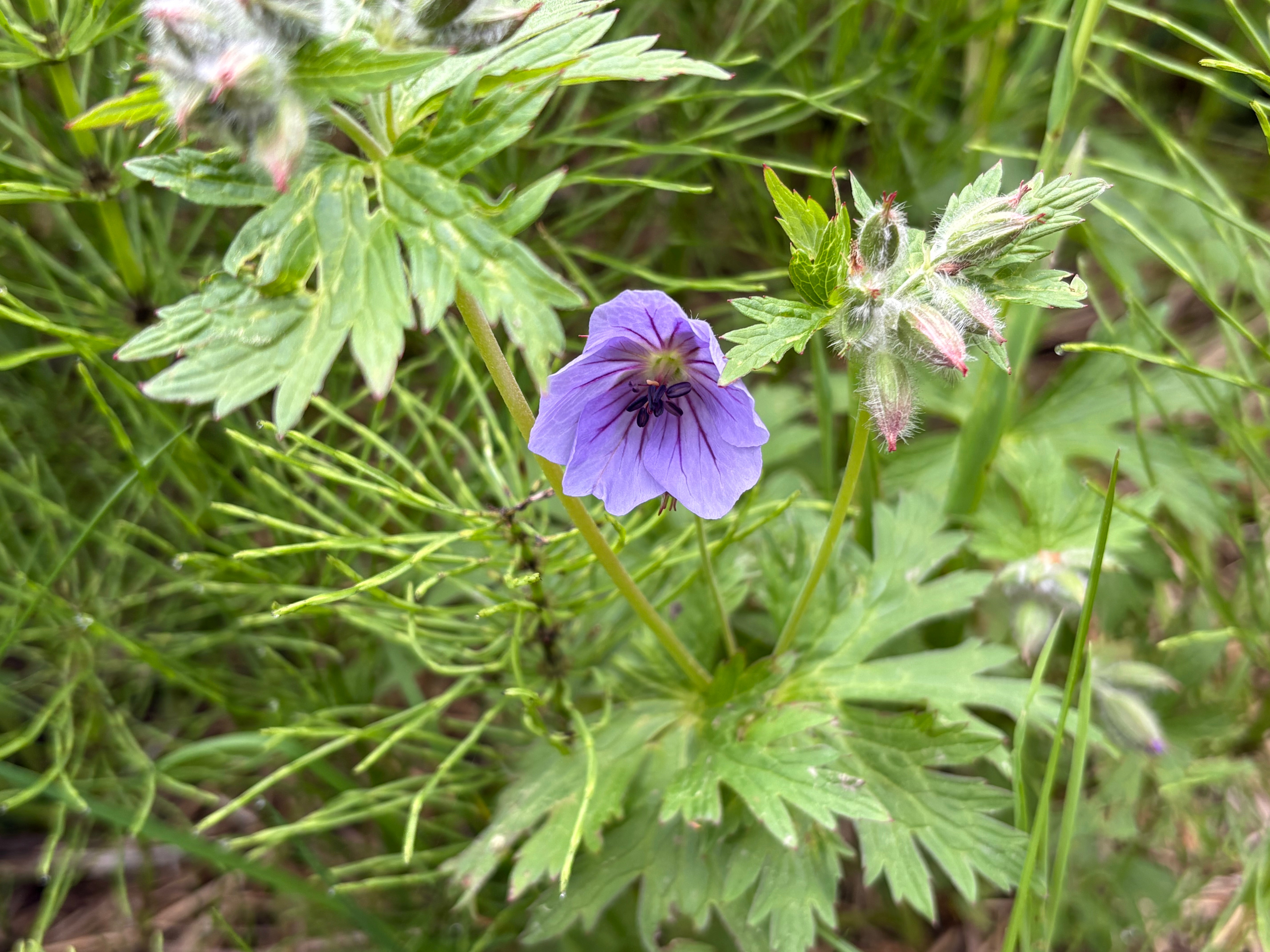
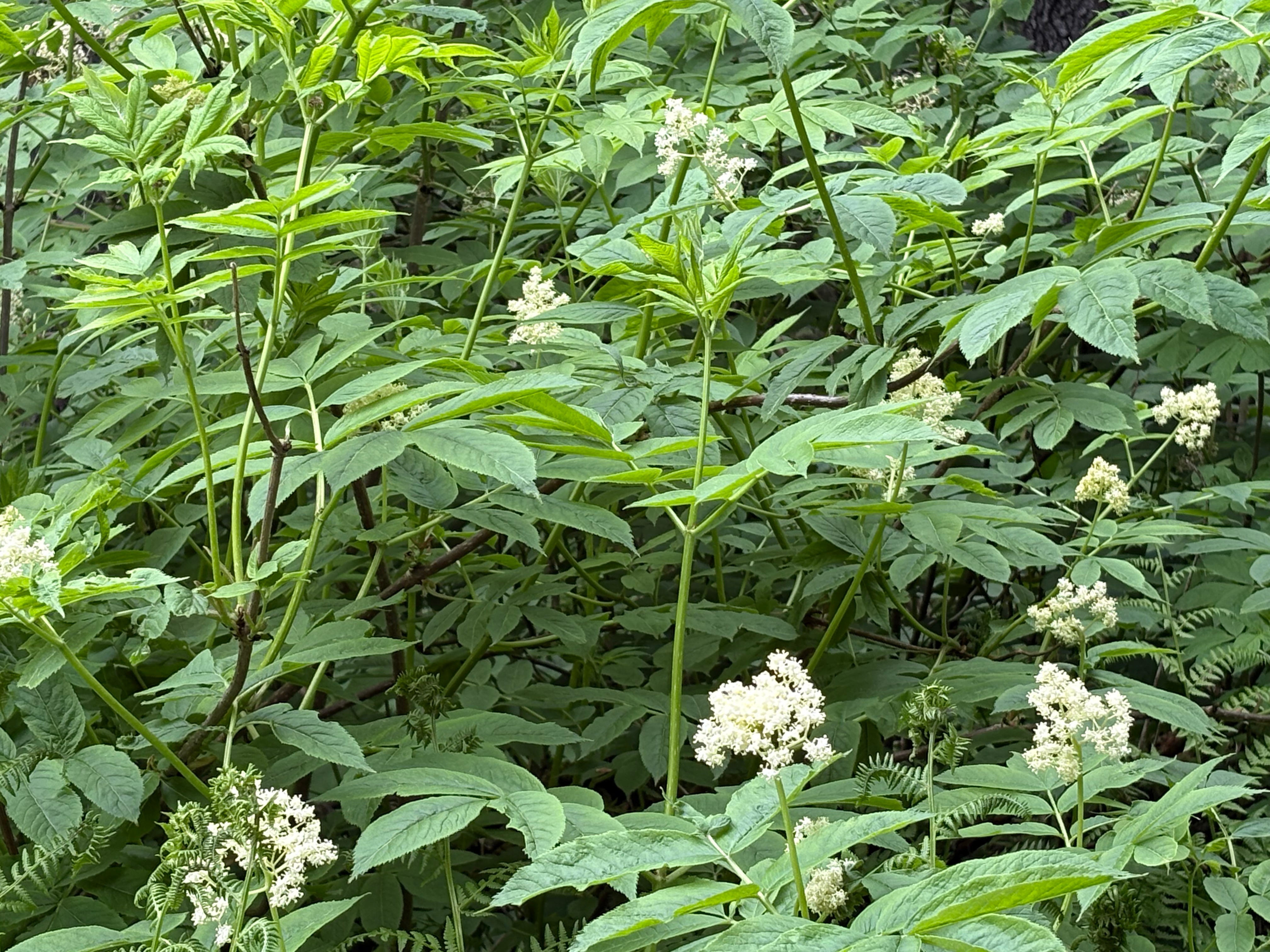
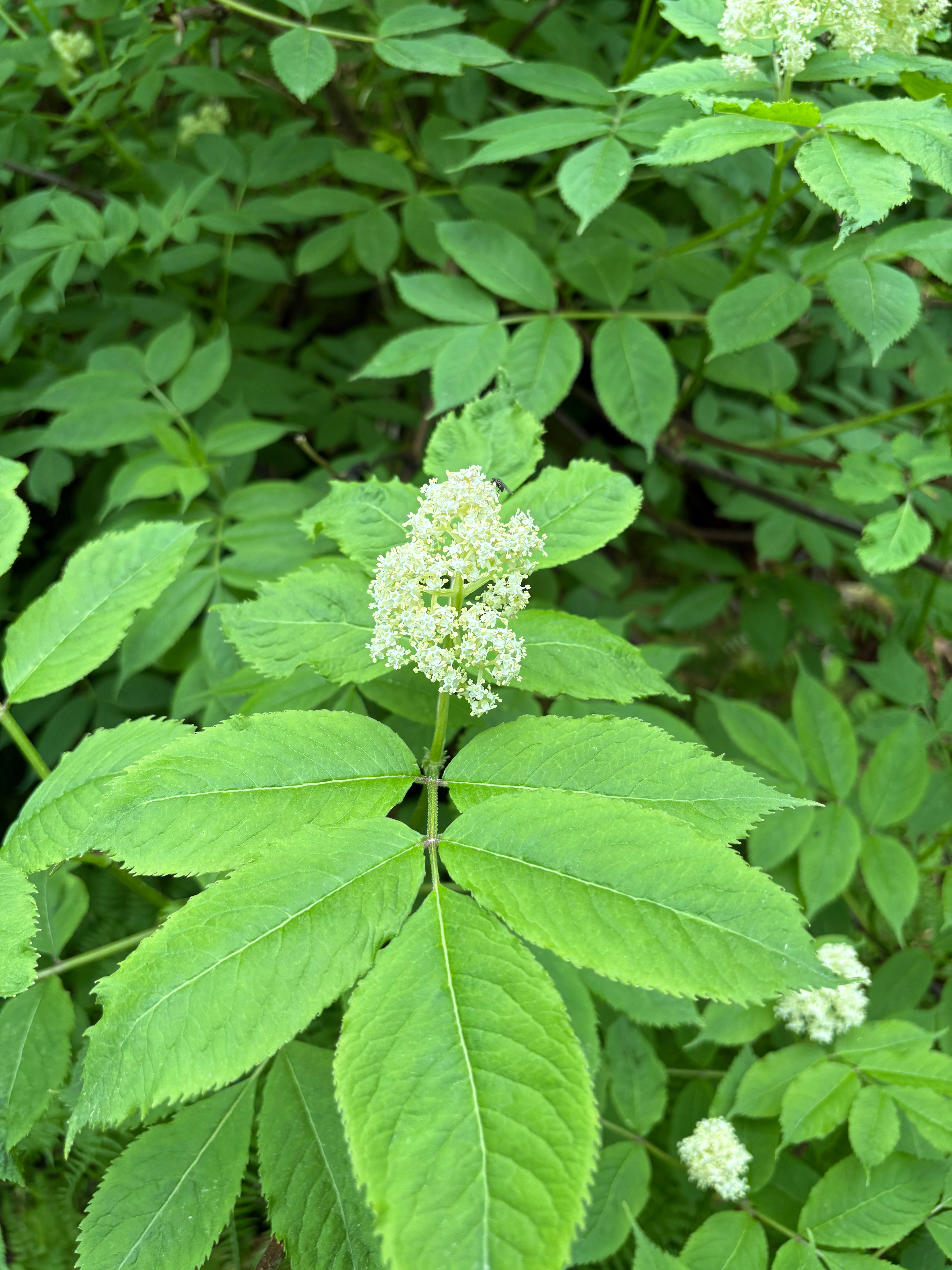
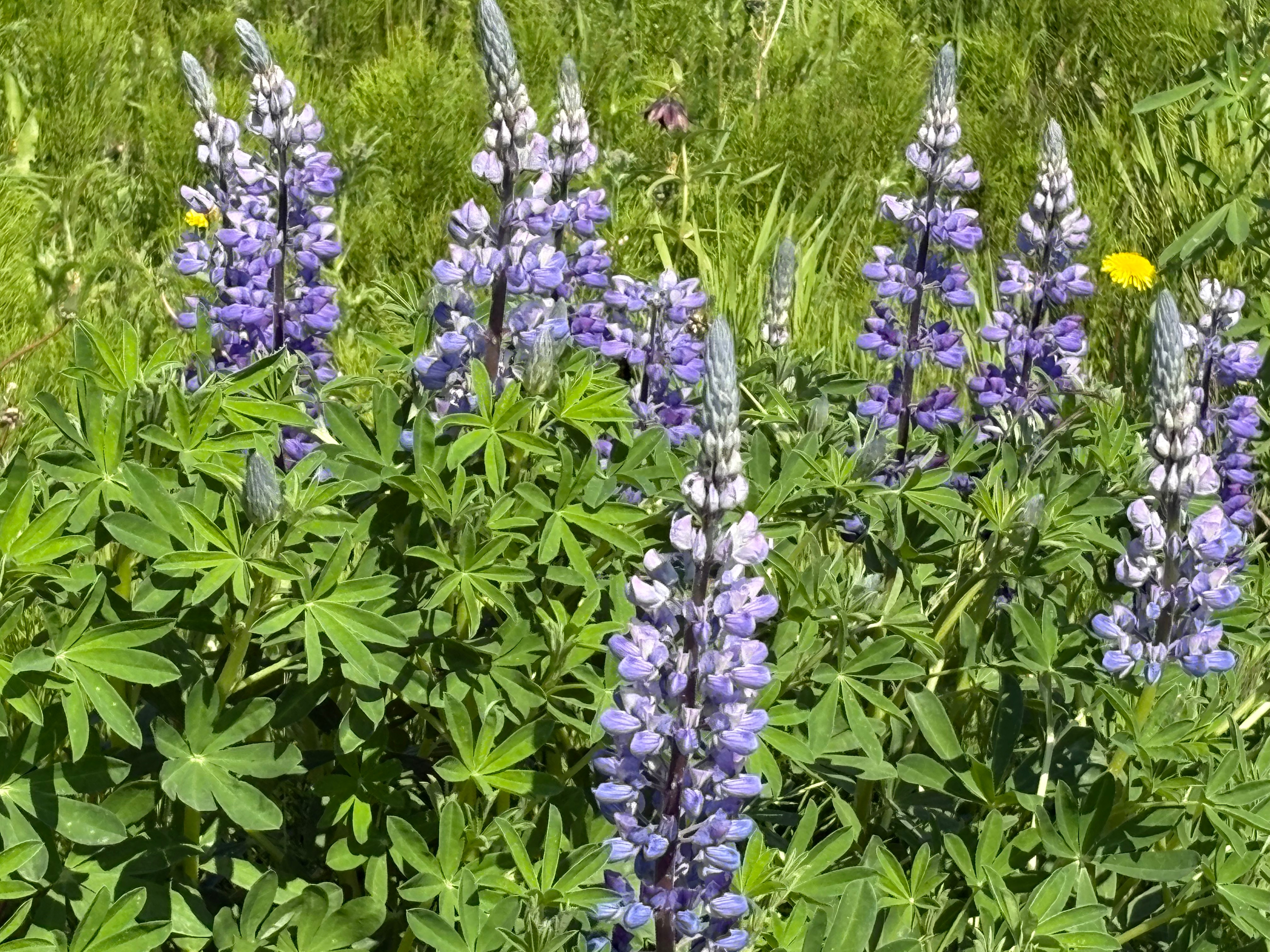
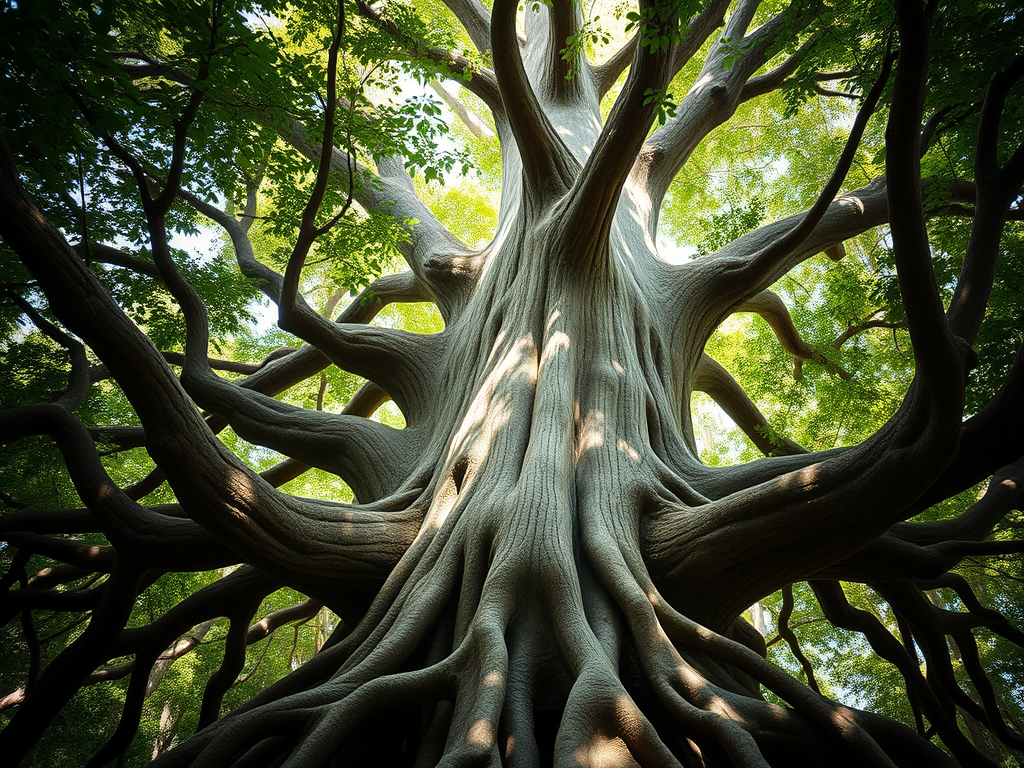
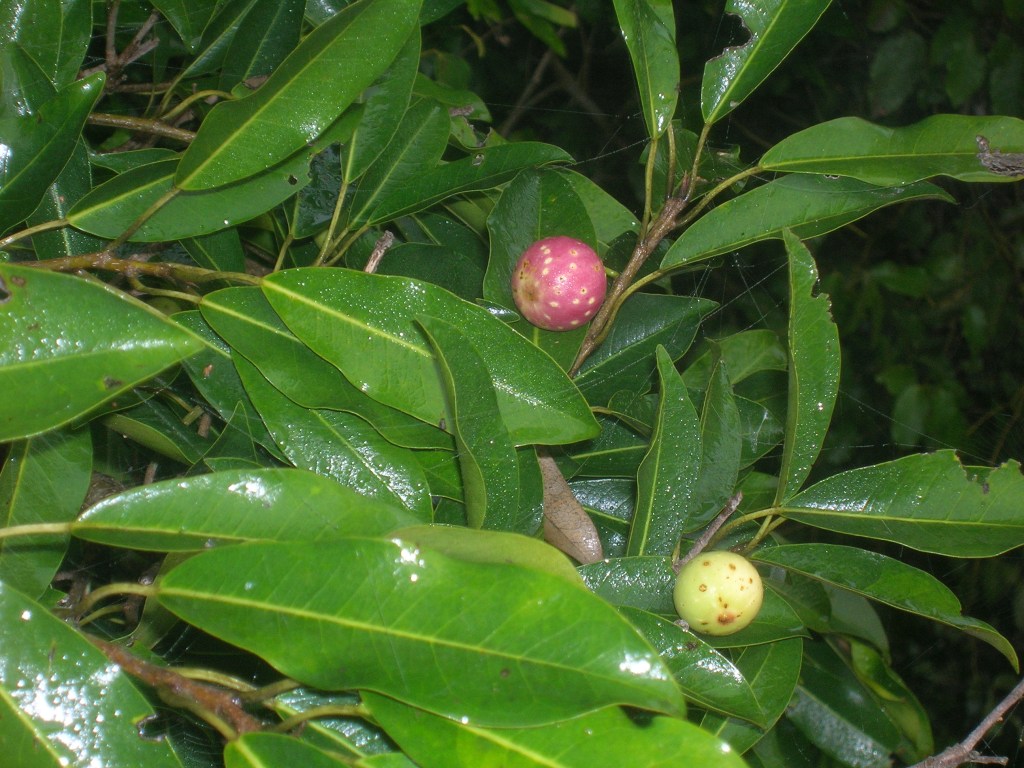
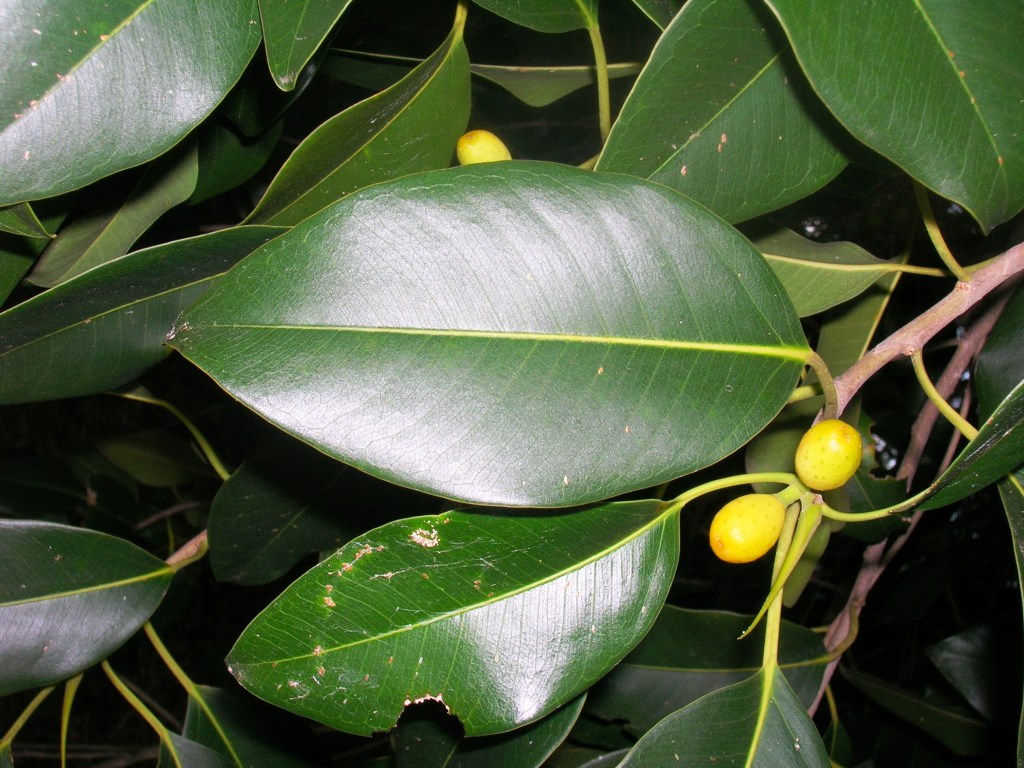
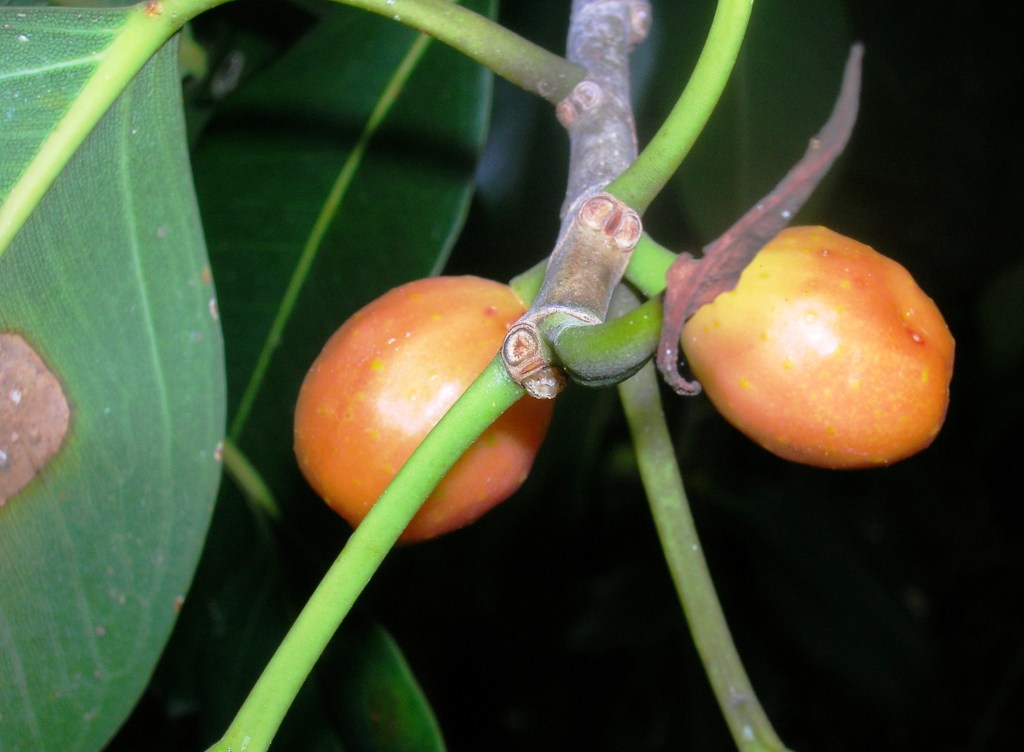
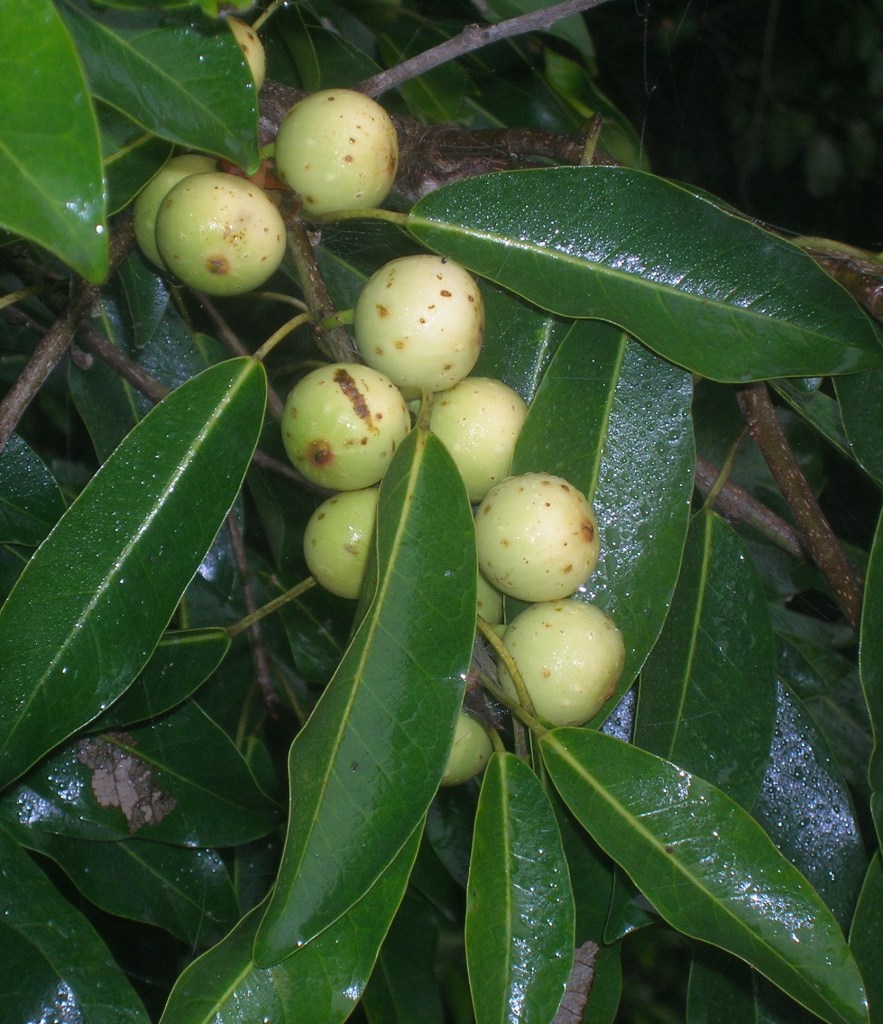

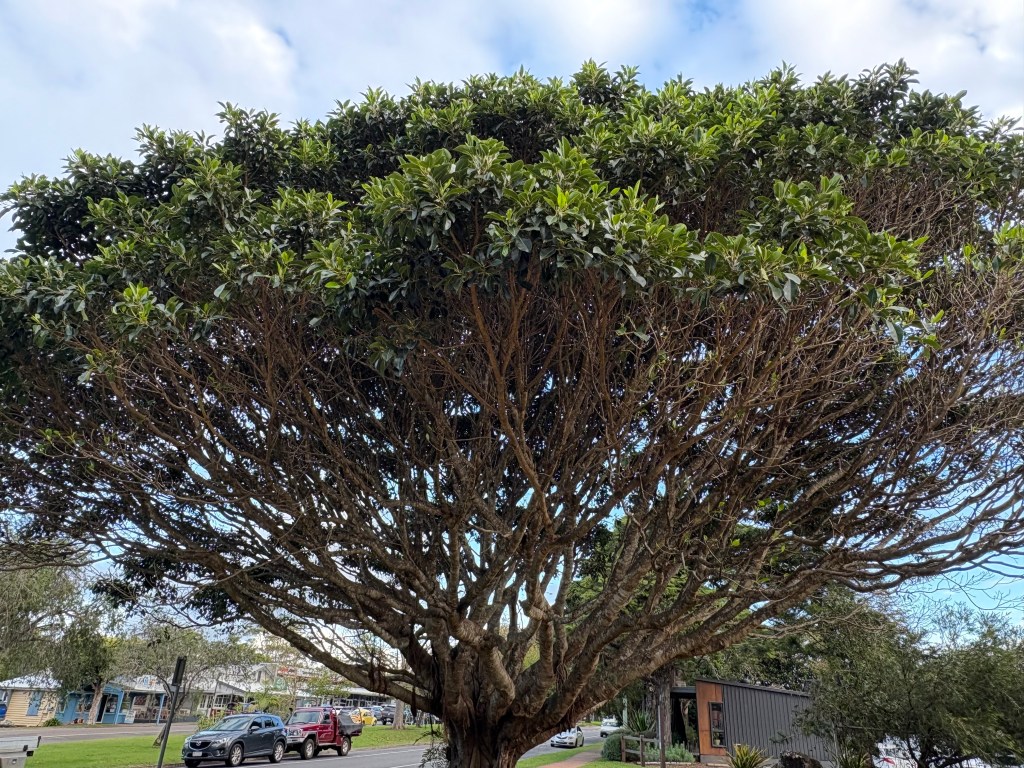
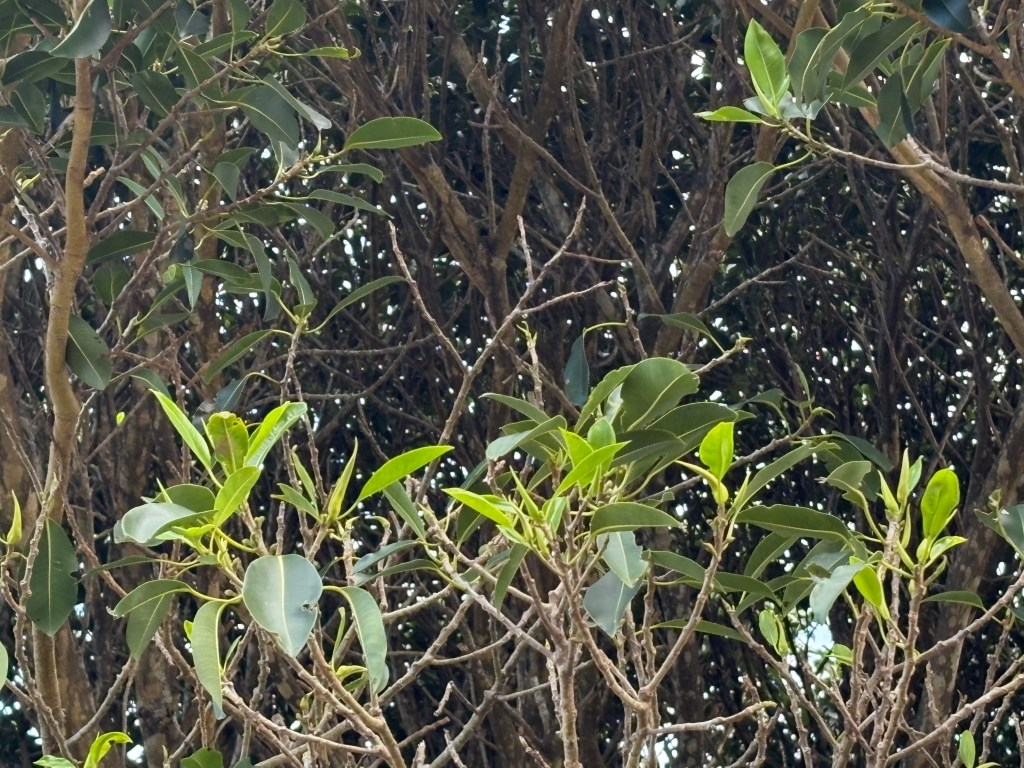
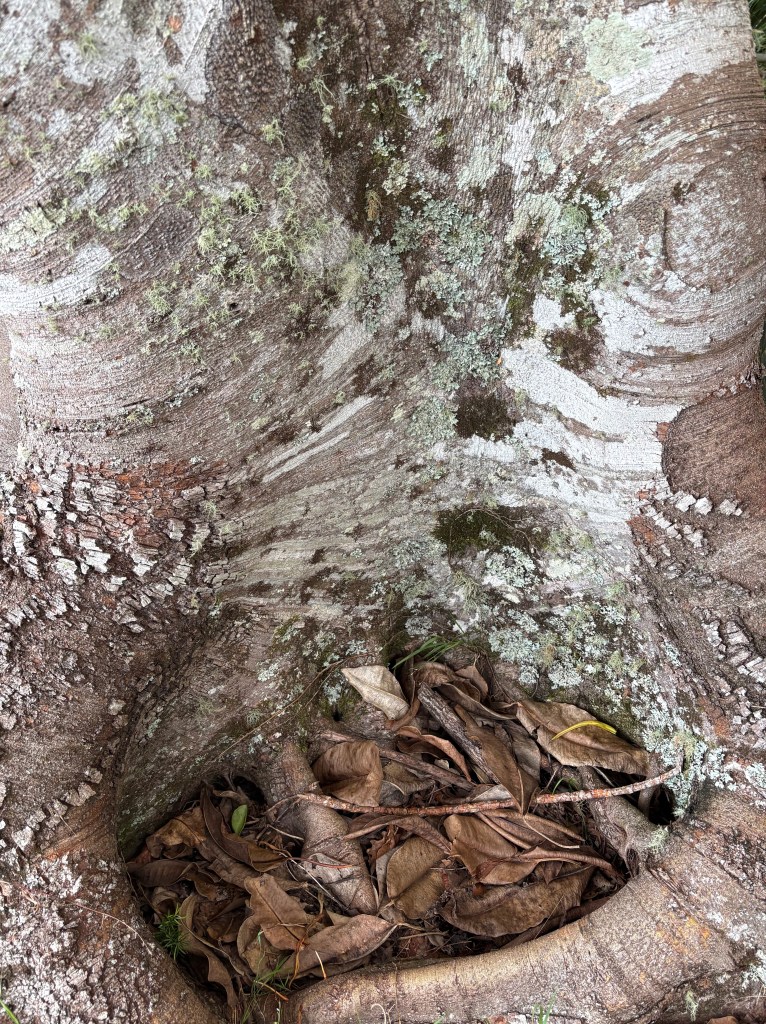
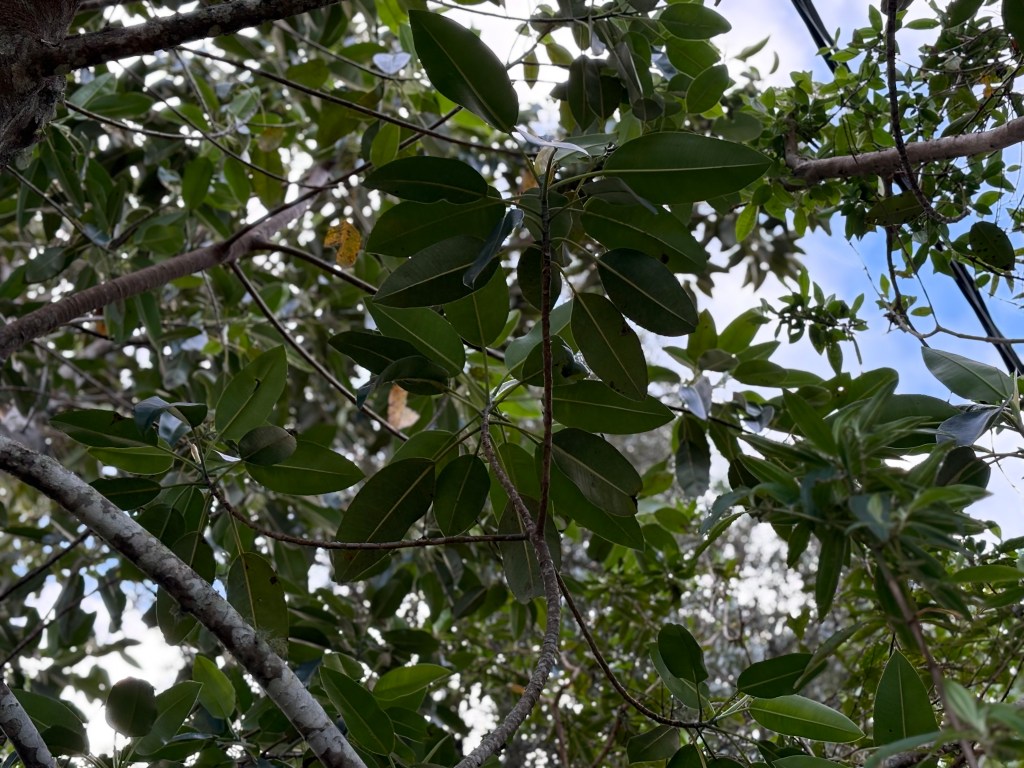

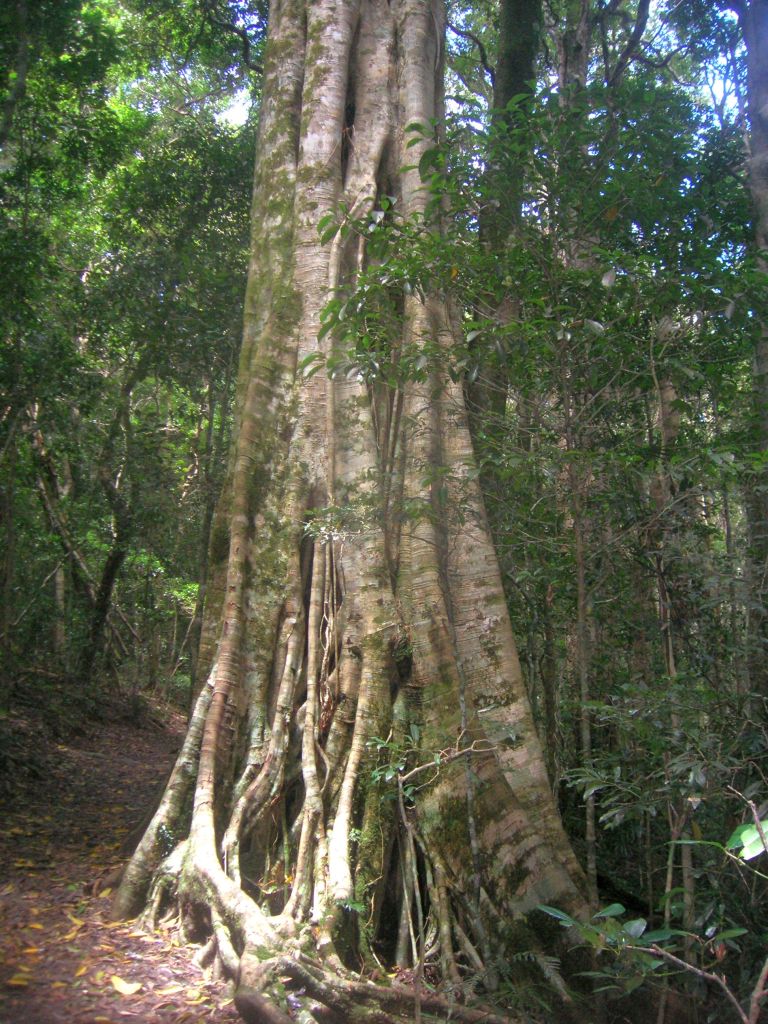

 Lyrebird Mountain