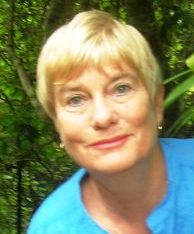
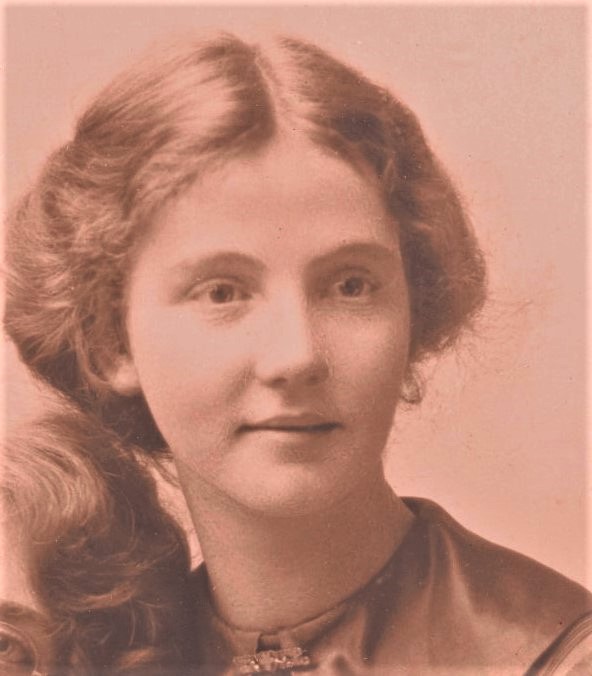
I based the early part of Lyrebird Mountain, and the character of Anna, on the lives of Australian naturalist-photographer Hilda Geissmann and her family.
The Geissmanns did indeed come to Tamborine Mountain, south of Brisbane, in the 1890s and established a famous guesthouse there, Capo di Monte, the name of which is perpetuated today in a building, a retirement community and two streets.
I wrote a short biography of Hilda, published in 2023, and put the research material gathered during the creation of that book to good use in the early chapters of Lyrebird Mountain.
Capo di Monte, like The Excelsior, was an instant success that lasted several years and did indeed attract visitors from all over Australia and the wider world – artists, writers, naturalists, scientists, theatre folk, politicians, graziers and wealthy merchants, minor royalty and the governors who represented the British Crown.
The Geissmann children served these luminaries, learned from them and, in the case of Hilda and her brother Barney, acted as guides through the rainforest that they knew so well.
Hilda, like Anna, loved the forest and always felt at home there. She learned to be an excellent ornithologist, orchidist and all-round naturalist, her photographs and articles appearing in many newspapers, magazines and learned journals.
The character of Berthe almost exactly corresponds with what we know of Elfriede Geissmann, whose second name was Berthe, and her physical description matches the photos of Elfriede I have in my possession. Her husband, William Felix, did indeed run off unexpectedly to Paraguay, never to be seen again or heard of by his family. The scene that takes place in the Brisbane Botanical Gardens, during World War 1, when his effects are handed over to his abandoned wife by a mysterious German woman, is exactly what happened in real life. And though “Madame Kurcher” is a character of my creation, the Geissmanns did become very involved in Theosophy and Hilda herself, as well as her siblings, was influenced by it all her life.
Once I have got Anna through her childhood, so like Hilda’s, my book takes flight and the Geissmanns are relegated to true history. Anna’s story and that of her brothers and sisters bears little resemblance to that of Hilda and her family, though facts do intrude here and there. For example, the guesthouse did burn down (though two years after the date in Lyrebird Mountain) and though one of the Geissmann brothers went to the 1914-18 war he returned only slightly wounded. Hilda and her sister Elsie married local farmers but they were cousins, not brothers, and though Hilda’s husband, Herbert Curtis, was wounded and did indeed convalesce in the English Lake District, and their house was named Windermere, he was a kind and good husband (or so I’ve been told by those who remember him) and Elsie’s husband, Willie, was certainly not a money-hungry philanderer.
I doubt very much Hilda ever had a love affair like Anna’s but her long friendship with the naturalist/journalist Alec Chisholm, very much her mentor, was reimagined by me into the friendship between Anna and Arnold Clemens. Chisholm, however, did not end his days on the mountain. His death was terrible to Hilda and she paid a moving tribute to him in a speech she gave to the Queensland Naturalists’ Club in 1976.
Again, Hilda’s lifelong closeness to her sister Elsie is mirrored in Anna’s with her sister Liza who lives close by to her on Lyrebird Mountain. Elsie was very musical – taught music in fact – just like Liza and there is some hint in my research material that she gave up a potential concert career to come home and help her mother run the guesthouse. I doubt, though, that Elsie was a lesbian or even knew what one was! She and Hilda grew cut flowers commercially, just like my Anna and her sister and were each other’s confidantes in all matters.
The character of Freddy does draw somewhat on that of Hilda’s best-known brother, Barney. Barney’s memoirs show him to be a charmer with a fine turn of phrase and a great sense of humour – and indeed, when the family first went to the mountain, he was for some poorly-explained reason left at the bottom overnight and had to find his own way up the next day. Imagine that, for a twelve year old town boy! And there was no part-aboriginal guide, either. Barney Geissmann was always a resourceful man who could turn his hand to most things. He is still remembered on the mountain today though, like his briefly famous sister Hilda, there are very few left who actually knew him. And they themselves are now old.
The character of Deirdre Bell is very loosely modelled on a sort of composite of the artists Daphne Mayo and Vida Lahey, both good friends of Hilda’s (especially Daphne) and both connected with Tamborine Mountain. In her, I have tried to convey some of the New Woman, often deliberately naughty and outrageous of prevailing morals, that appeared in Brisbane’s tiny, self-consciously kultured art community of pre-World War 1 Brisbane. A stuffy little city in a huge, barely populated state dominated by the competing values of graziers and blue-singlet unionised labour. Neither of them particularly sympathetic to the arts. Daphne and Vida were not really like Deirdre in character but their independence was unusual for the time and research shows there are some similarities
Arnold Clemens, in Lyrebird Mountain, is very obviously based on the writer/journalist/naturalist Alec Chisholm who is now almost forgotten in Australia, except by dedicated older naturalists. He was a self-educated prodigy with a childhood love of nature that became his life’s passion. He befriended and mentored Hilda early in the twentieth century and their friendship lasted until his death, despite the fact that both could be sharp-tongued and outspoken. Chisholm, in fact, could be downright cranky! And you see a touch of that in Arnold!
After I had published Hilligei, Hilda’s biography, I realised that aspects of her life would make the basis of a novel; in Anna I found the Hilda that my imagination had wanted her to be – more successful, more interesting, more desirable to men. I have set a mystery in the heart of Lyrebird Mountain – the death of Jack Resnik – and there was a mystery at the heart of Hilda’s life, too. Which was that, having achieved modest fame and recognition from the natural science world over a decade or so, she just packed it in. Her name no longer appeared in journals and she stopped taking photographs. Her correspondence with leading naturalists of the day dwindled. She remained a lifelong member of the Queensland Naturalists Club and continued to host and help organise club expeditions to Tamborine Mountain but the Hilda whose knowledge of birds and plants was so respected, who could find the elusive Albert’s Lyrebird nest and photograph it when nobody else could, who wrote articles about her interests that were full of charm and refreshingly non-stuffy, took early retirement. She lived to be almost one hundred, as a farmer’s wife, flower grower and pillar of her community. But by the time she was in her forties, these mundane activities had become her lot.
And as far as I know, she was quite happy with it. When I started my research for Hilligei I interviewed several people who had known her, both family and friends. They all remembered her as a nice old lady. But none of them had more than a vague awareness of her youthful fame and contribution to Australia’s natural science. Sic transit gloria and all that. The captains and the kings depart.
And I like to think that a little of Hilda Geissmann lives on in the Anna of Lyrebird Mountain.
 Lyrebird Mountain