
Denali – the very name has magic. To the Athabascans who speak the Koyukon language it means ‘The High One’, a fitting name for the highest mountain in North America.
Donald The Trump wishes it to be once again called Mt McKinley, named for a particularly dull president of the Republican persuasion, distinguished only by his assassination. But most Alaskans I have met, and those from the Lower 48 states, prefer the original name for its musical quality.
Denali is a magnificent mountain and all the more powerful and mysterious for being rarely seen. I am one of the lucky few who have seen it, three times this past June, and I have a badge to prove it – now worn proudly on my down puffer jacket.

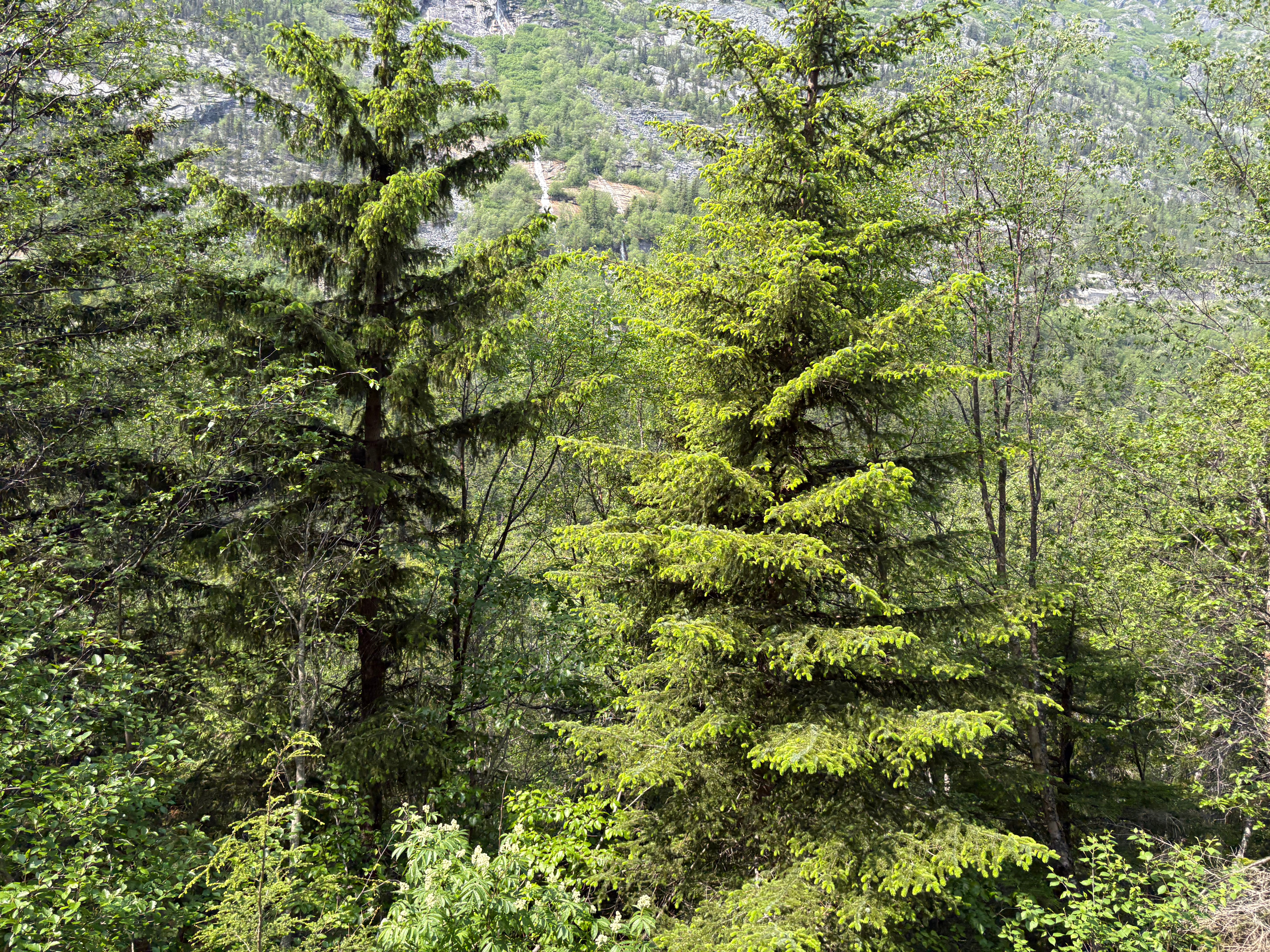
The mountain is the crowning jewel in the splendid crown that is Denali National Park and Preserve, 24,464 square kilometres (9,446 sq miles) of mostly unspoiled wilderness. It’s all mountain and tundra and boreal forest, the latter consisting mainly of skinny Black Spruce. This latter treescape would be monotonous if not for the backdrop of snowy peaks and the pale glaciated waters running through.
The tundra, by contrast, is undulating and varied by grasslands, swamps, mixed forest and thickets of alder and willow – the haunt of bears black and brown and much other wildlife besides. Wolves live here and elk and moose and caribou. Wolverines, too, and squirrels and Snowshoe Hares. Even bison. In Denali the wildlife is plentiful because this land is too harsh and underlaid with permafrost to permit agriculture or horticulture of any other kind of culture. For the indigenous peoples it’s always been a source of bounty in summer but the long, harsh winters are an endurance test.
Today, those Alaskans, indigenous and of European origin, who remain in their small, scruffy, hardship communities all year round have got snowmobiles and wi fi and frozen/tinned food and TV and alcohol and drugs and social services of various kinds to get them through. Planes, too, when the weather permits flying which it often doesn’t. But it’s still an isolated few months.
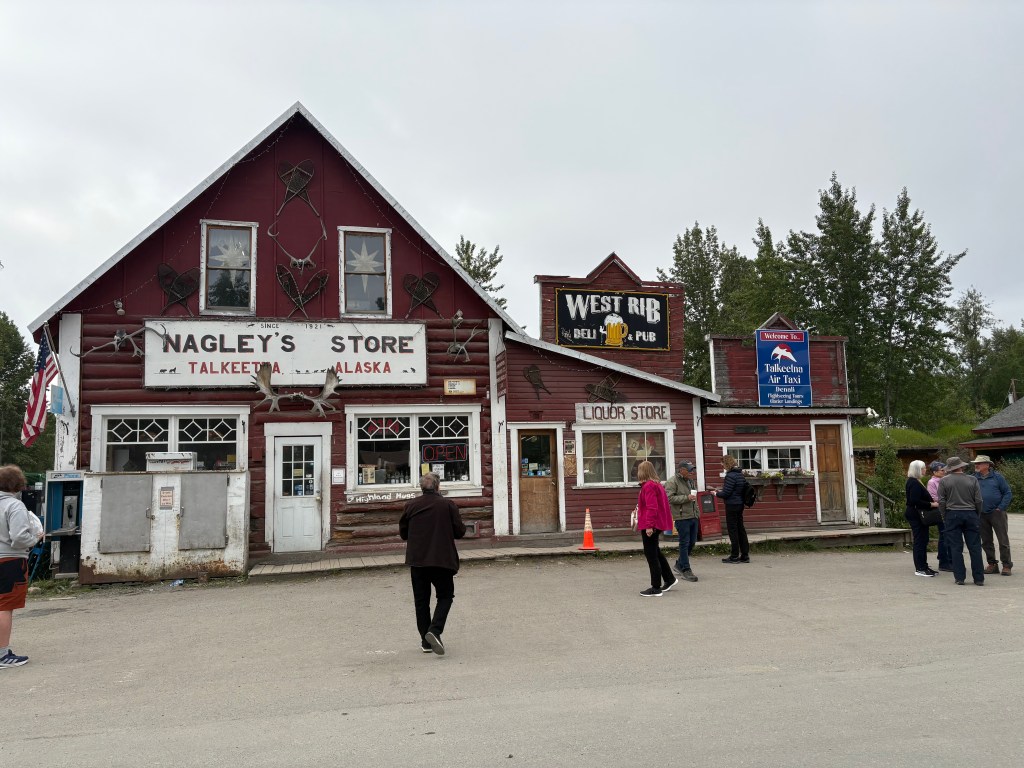
My first day in Denali was a long bus ride to the little town of Talkeetna (below), where most expeditions to climb Mt. Denali take off. On YouTube it looked like a pretty little town in summer but the reality is less appealing; a rackety tourist trap with dirty toilets. The buildings have an appealingly traditional look and the inhabitants are friendly…well, they would be, wouldn’t they, when there is little except tourism to keep the township going. In the siding was something that interested me more, the Denali Star stop-and-go train that as its name implies runs through from Fairbanks to Anchorage. Many people choose to live off the grid along the route, close to the railroad tracks and when they want to board the train they just flag it down.
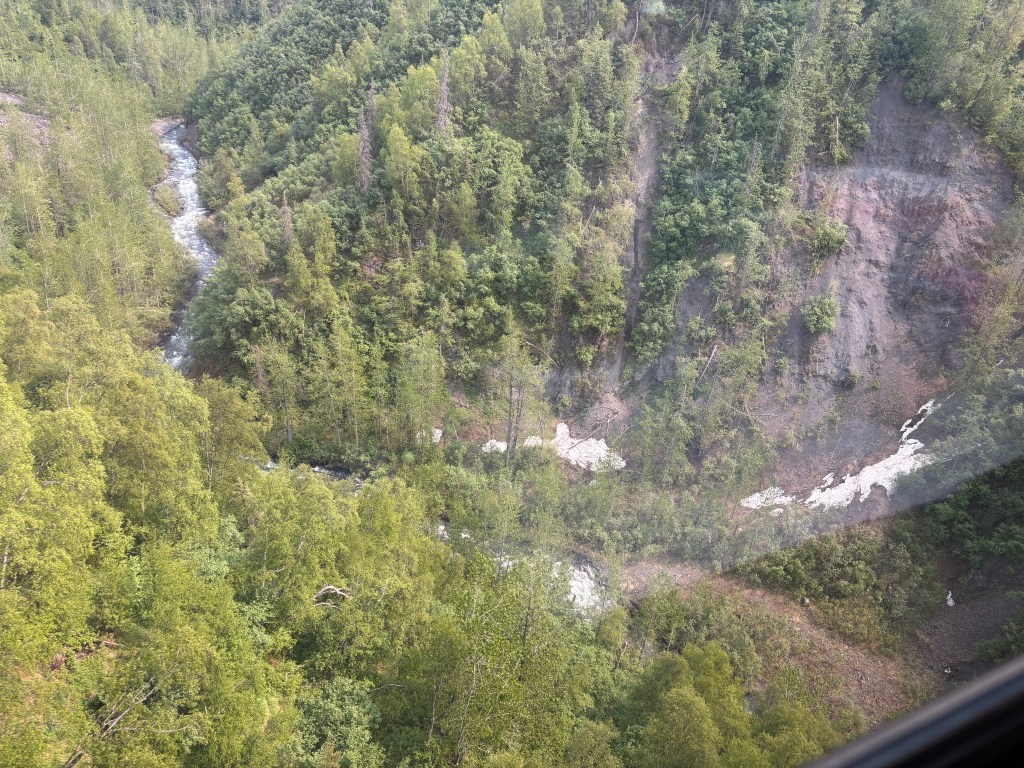
My tour group took the Gold Star service which doesn’t stop anywhere but instead offers comfortable seats in bubble-top carriages, a good lunch, clean loos, snacks and cocktails while the hosts in each carriage offer historical and other information. In truth, this route is scenic but the scenery gets monotonous after a while because the boreal forest, its Black Spruce trees dying for long stretches from attack by looper beetles, offer little variety. The rivers are dramatic but they are gone in a glimpse.

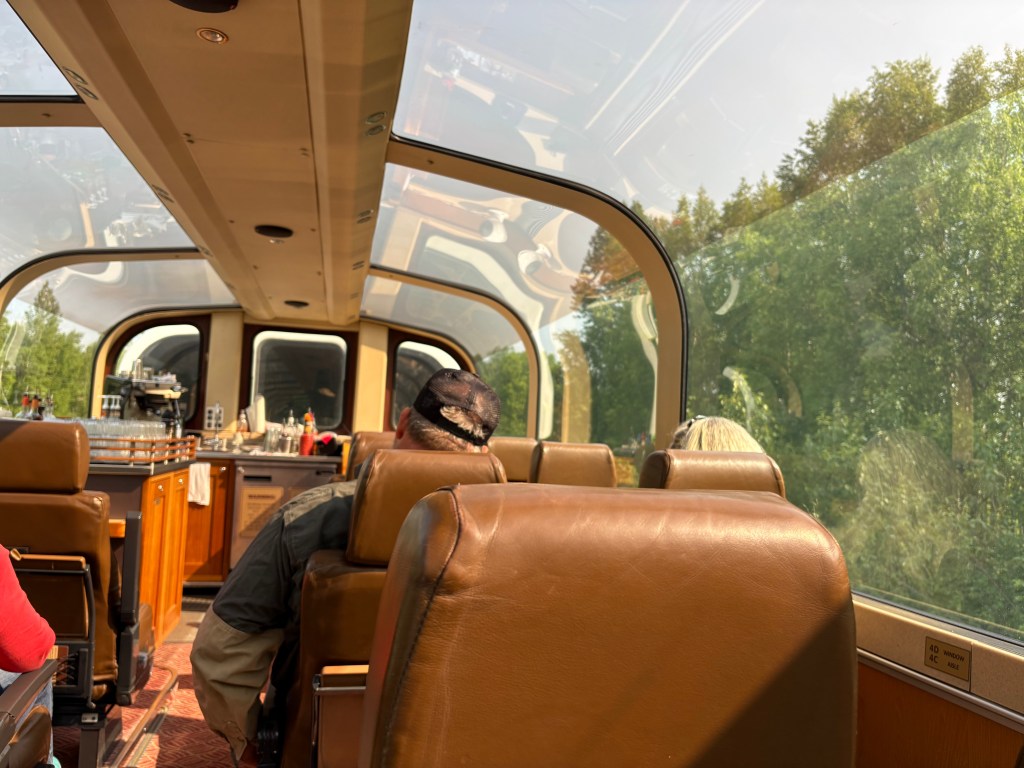
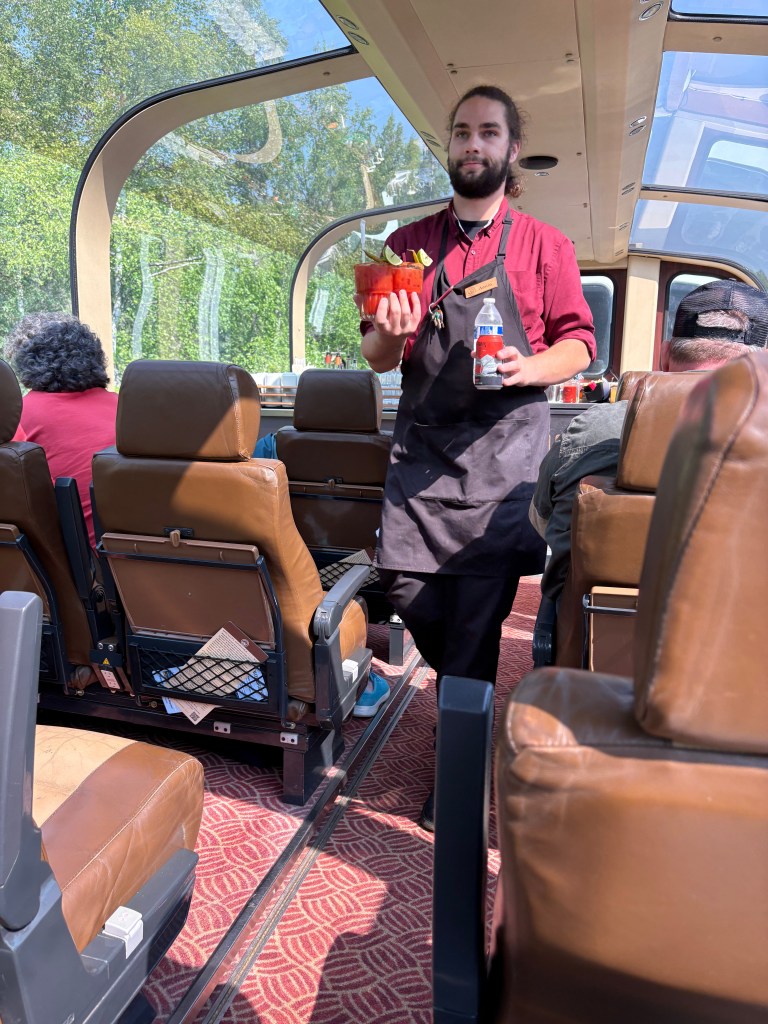
That’s not our Gold Star train at top left but me at Talkeetna siding in front of the stop-and-go Denali Star service. Our Gold Star service was much posher, as you can see from the other two pics – including a very talented cocktail bar host. Lower pic shows some of the more spectacular scenery.
Here below you can ride the rails with me a little way. It’s a fun trip but you can see what I mean about the monotony of all those Black Spruces.
Still, there is something rather wonderful about sipping a fine local gin and tonic while watching the world rush by.
After a night at the Grand Denali Lodge, set high on a ledge with great views of mountains and the Nenana River, I was up early for my first full day in the Denali National Park. There is only one road through here so your chances of seeing a lot of wildlife are limited, especially when you are on an old school bus full of people. The guide and driver (both women on my trip) do their best but on a hot day (as it Was, in early June) the animals stay under cover.
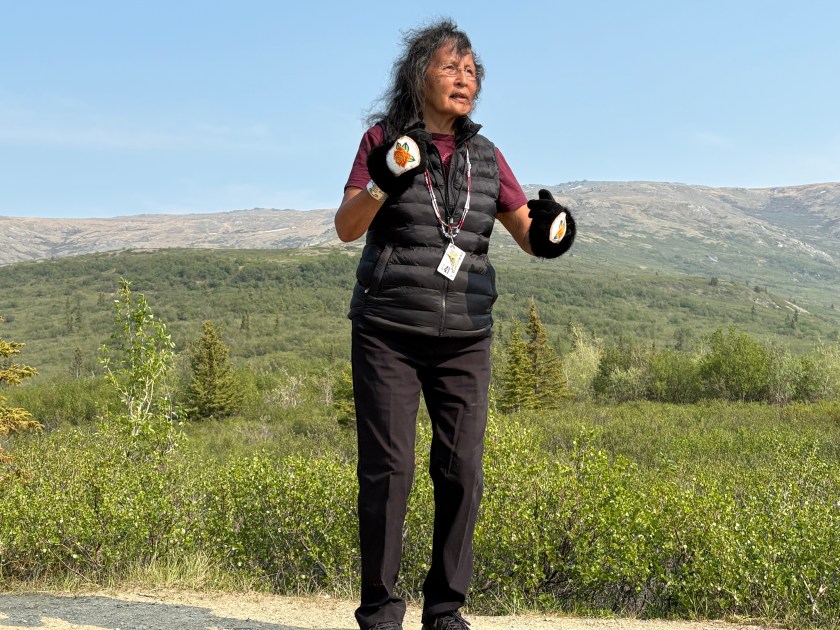
The brochures, of course, show bears walking along the road and caribou everywhere but the reality is that, like Denali itself, exciting wildlife is not so easily glimpsed. I remembered younger days when I and my husband would have hiked and camped that country but for most of us it’s a matter of riding that single road, quite busy with tour buses and settling for splendid scenery and the fun of passive “hunting” for wild creatures with binoculars. Mine were the most powerful on this trip (I’m a birdwatcher) and so only I got a reasonably good glimpse of Dall Sheep high up on the crags – for the others on board the sheep might as well have been white boulders. We saw a Snow-shoe Hare and, to my delight, a Willow Ptarmigan by the side of the track. And that was all. But there were other treats, such as the marvellous Athabascan woman, Shirley, who entertained us with stories about the park and her people and showed us, with appealing irony, a tribal dance.
Usually I dislike this kind of faux native experience, put on for tourists; us condescending to the locals, them laughing at our gullibility. But Shirley was different and what she had to say was worth hearing. Several times on the journey our driver/guide kept assuring us how much the Alaskans “loved” their native peoples. She said it so many times I wondered why she felt the need to do so. It came across as patronising though I know she didn’t mean it that way.
And it’s simply not true or, rather, wishful thinking. I met a few white Alaskans who felt that the Athabascans, Klingit and other indigenous inhabitants were idle hangers on to the coat tails of American society – getting education, health, plane transport etc for nothing while white Alaskans were doing it tough.
“Easy to say we took away their land and their traditional ways but we have given most of those back, and more,” one man told me when I sat next to him on a park bench in Anchorage. “Every aspect of life is easy for them today – store-bought food, snow machines, aeroplanes, boats with motors, high-powered guns, free health care and education, entertainment. They get everything we get and more – and don’t let anyone tell you differently. And yes, they also get the bad things, like drink and drugs. But, as with our kids, they make their choices. There’s a fair bit of murder and domestic violence and brawling in those so-called native communities.”
This last claim is born out by local media bulletins. And in Anchorage, at least, the homeless street people appear to be mostly indigenous. But then, I ask myself, what is an Alaskan? I met some in Anchorage but the hotel staff consisted of Russians, other Europeans and Asians. Chinese and Indians run most of the shops and eateries. The guides and drivers in Denali are usually students from the lower 48; the wonderful naturalist guide who took me on a long hike through bear country was Bolivian. Hunters and recreational fisherfolk can hire indigenous guides from the interior but I never got to meet one.
Only in the little coastal tourist towns on the fjords do you get to meet boat crews and others who are Alaskans born and raised – and even there the shops, despite their “locally manufactured” signs, are operated by Chinese, Japanese, Indians (from India) and other outlanders.
But…back to Denali. The park tour is still exhilarating but on our tour we were offered two highlights. One was a talk by Jimmy Hendricks (yes, he’s heard all the jokes), a true local who has climbed Mt. Denali. He turned out to be one of the most inspiring speakers I’ve ever heard, yet so simple and down-to-earth in his presentation. Denali, I discovered, can be more dangerous to climb than anything in the Himalayas, mainly because of the unpredictable weather. It’s killed a lot of people over the years. Jimmy and his two companions, one a woman, took a month to reach the summit. A month! Thank goodness they filmed it; I found it quite the most interesting climbing video I’ve ever seen – and I am not usually interested in mountaineering.
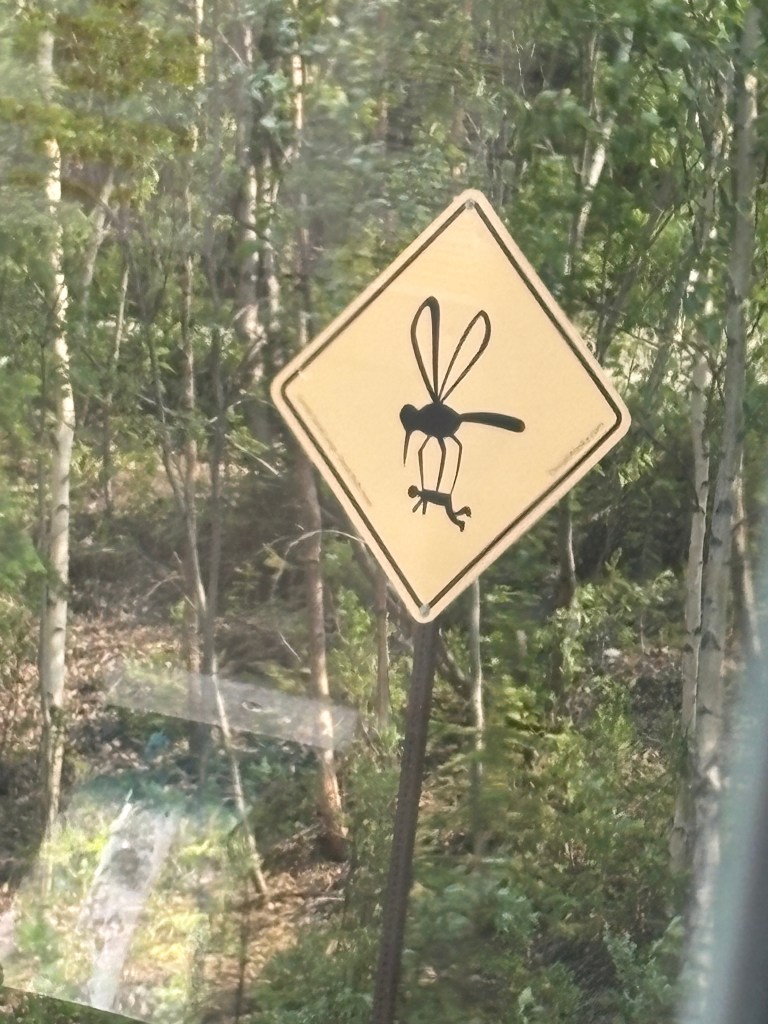
It’s been said that the state bird of Alaska is the mosquito! Big as eagles, the locals will tell you, and twice as fierce. They weren’t in plague proportions when I was there in June, and though they hovered around us in the forest, their whine was worse than their bite!
There are plenty of good hikes around the small Denali tourist village and I did a couple of them, one with a guide. No bears but the scenery was great and the plantlife fascinating. We saw half a moose; the front half was stuck in a bush, eating, so all we got was the bum.
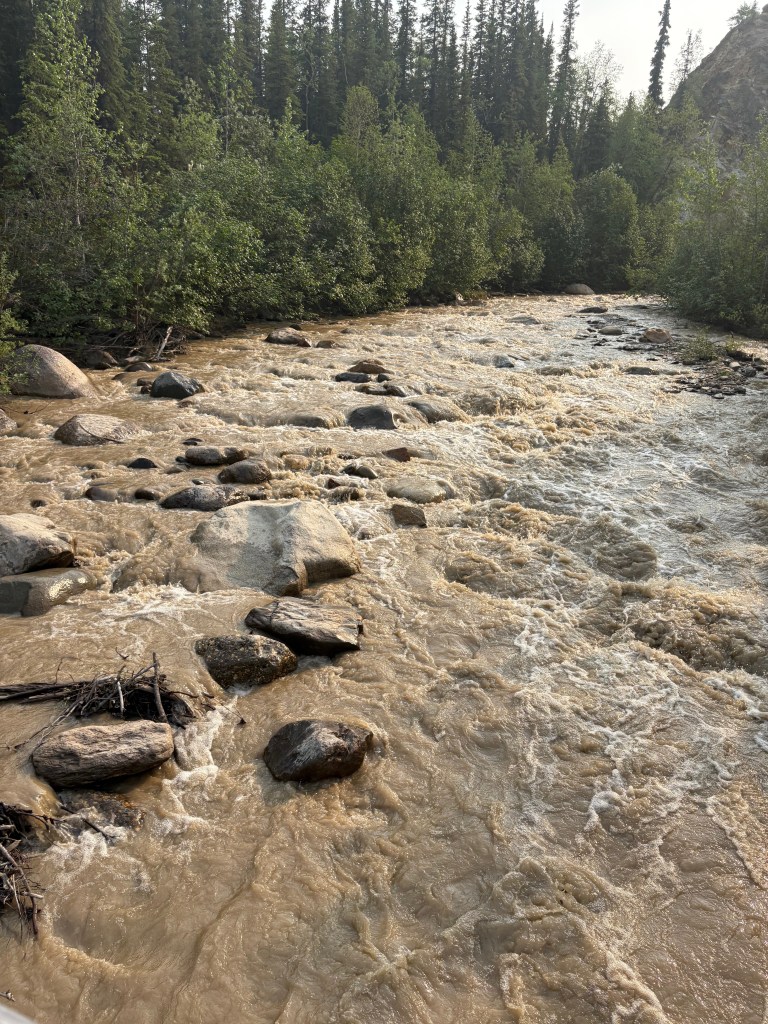
The township itself is dusty, hot (on a fine summer’s day) and uninspiring. A tourist trap where I had the worst sushi ever – had to throw it in the bin. To be fair, I then went down the street (it’s not long) and had an excellent crepe. Made and served by students. And all around are the mountains and forest and the river rushes through, milky with snow melt.
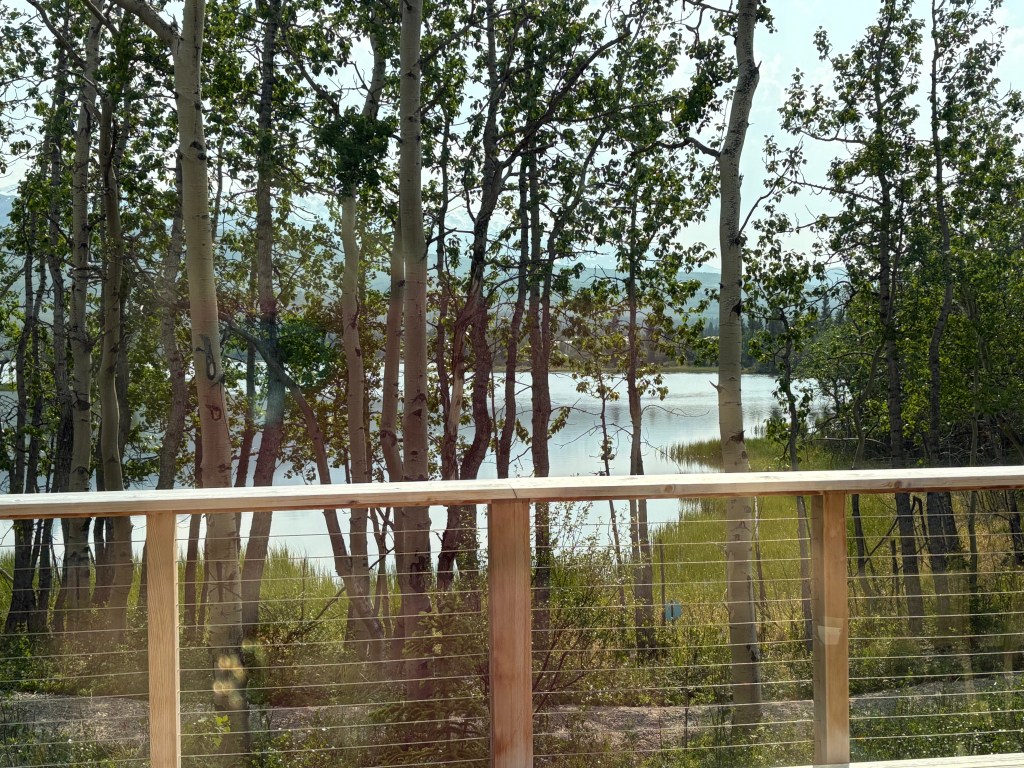
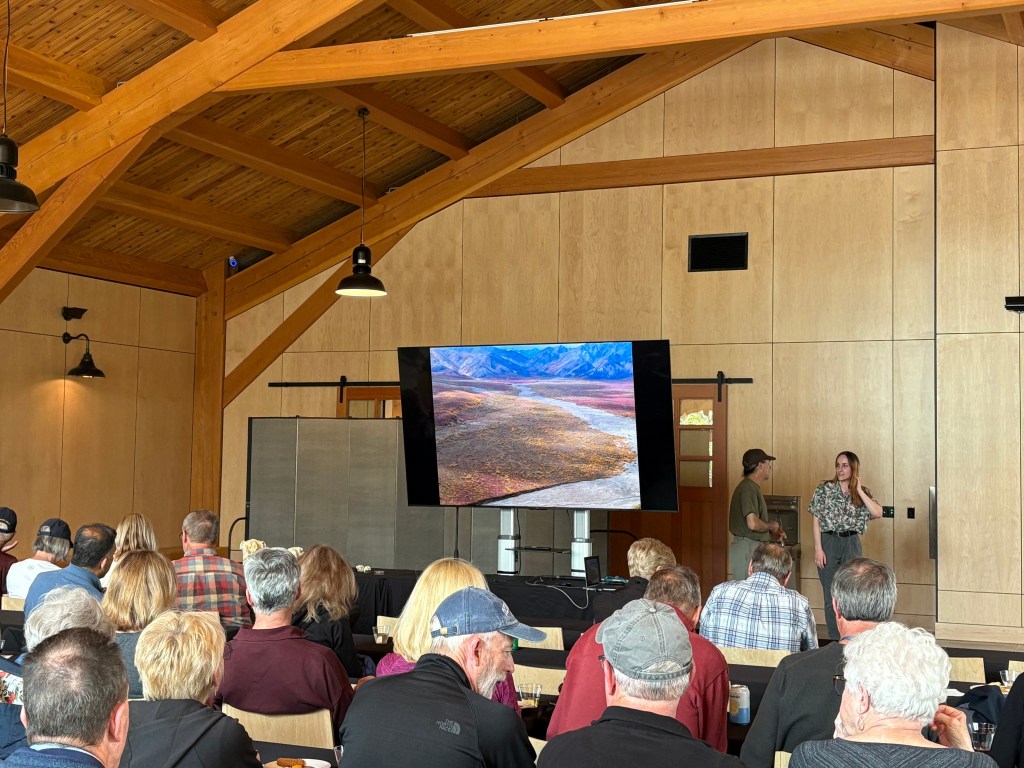
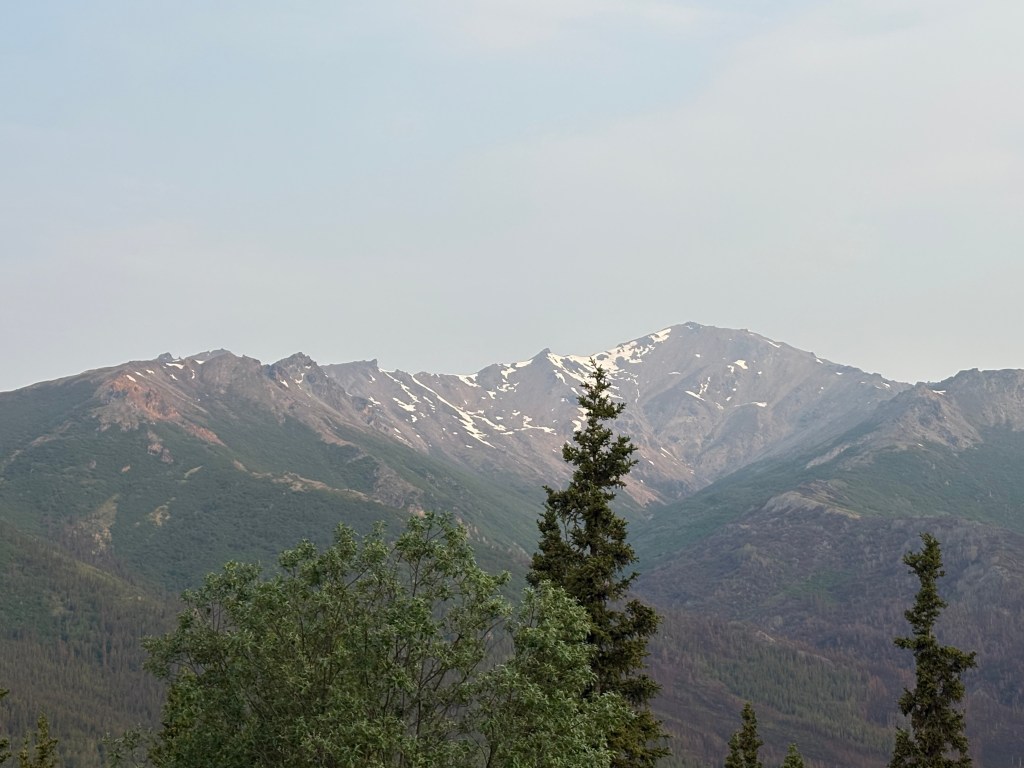
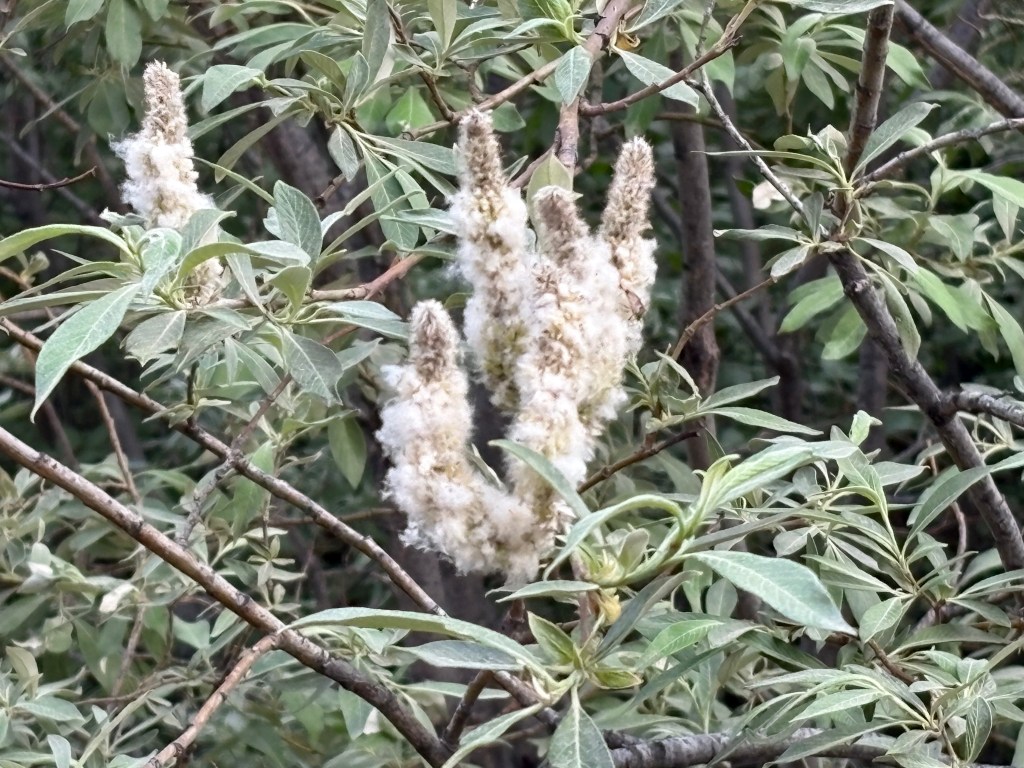
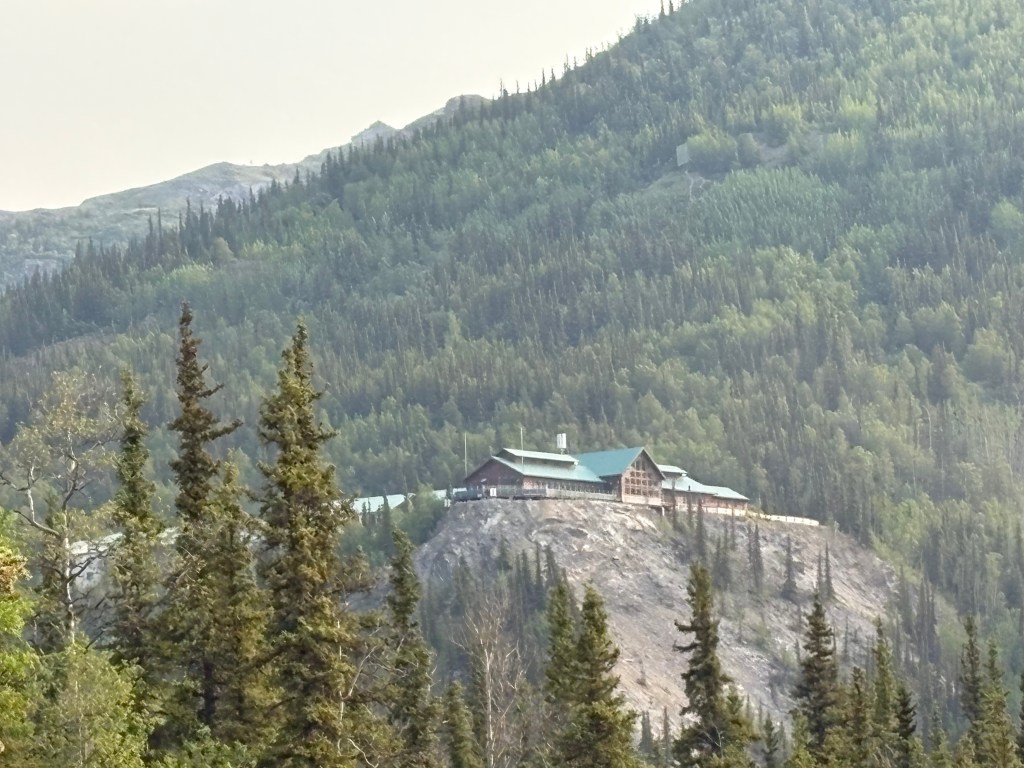

All tours of Denali start with an introductory talk in the visitor centre, perched overlooking a lake. Fluffy little Willow catkins are everywhere in June, including around the Grand Denali Lodge, high above the town. We toured the park in this bus.
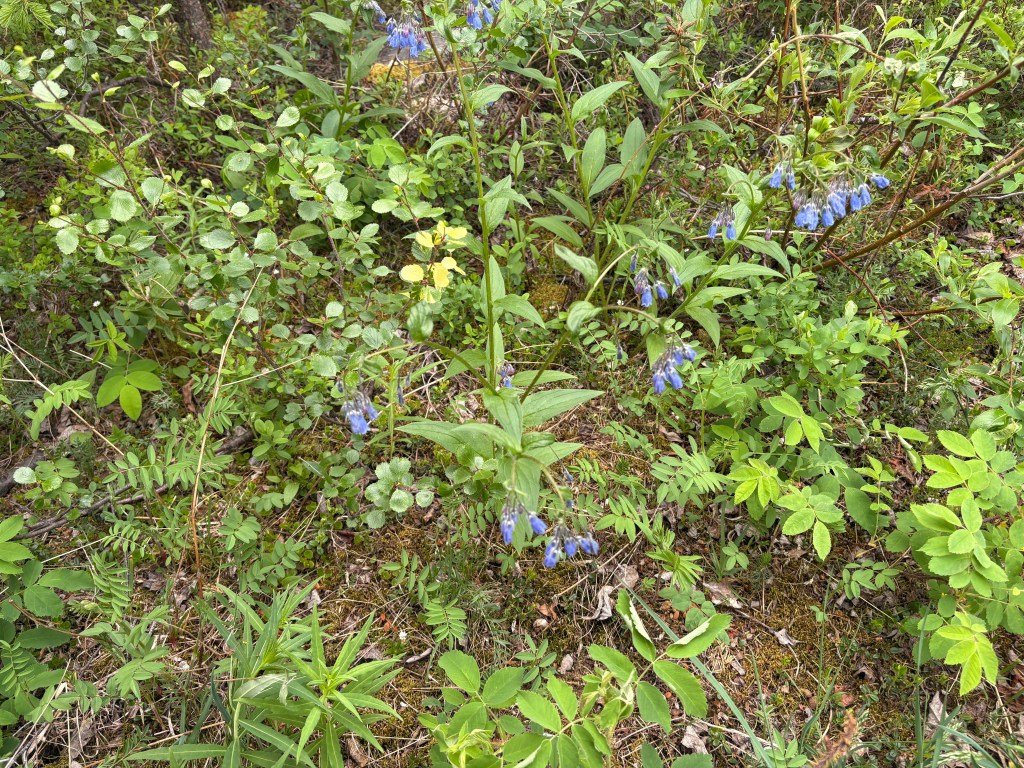


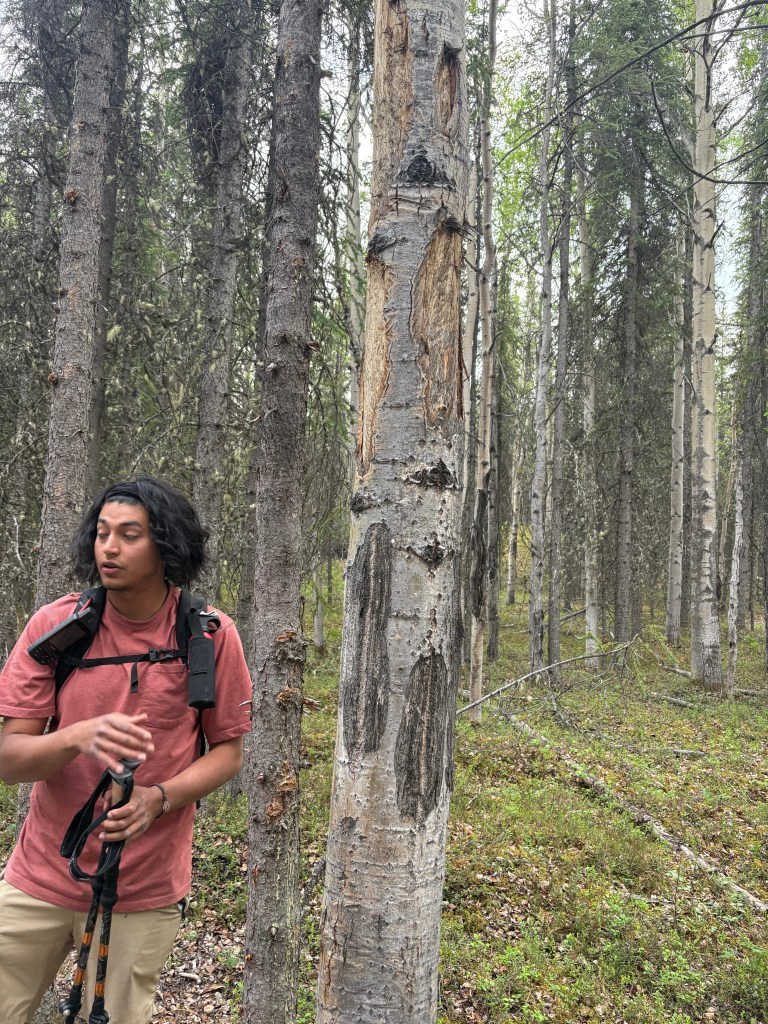
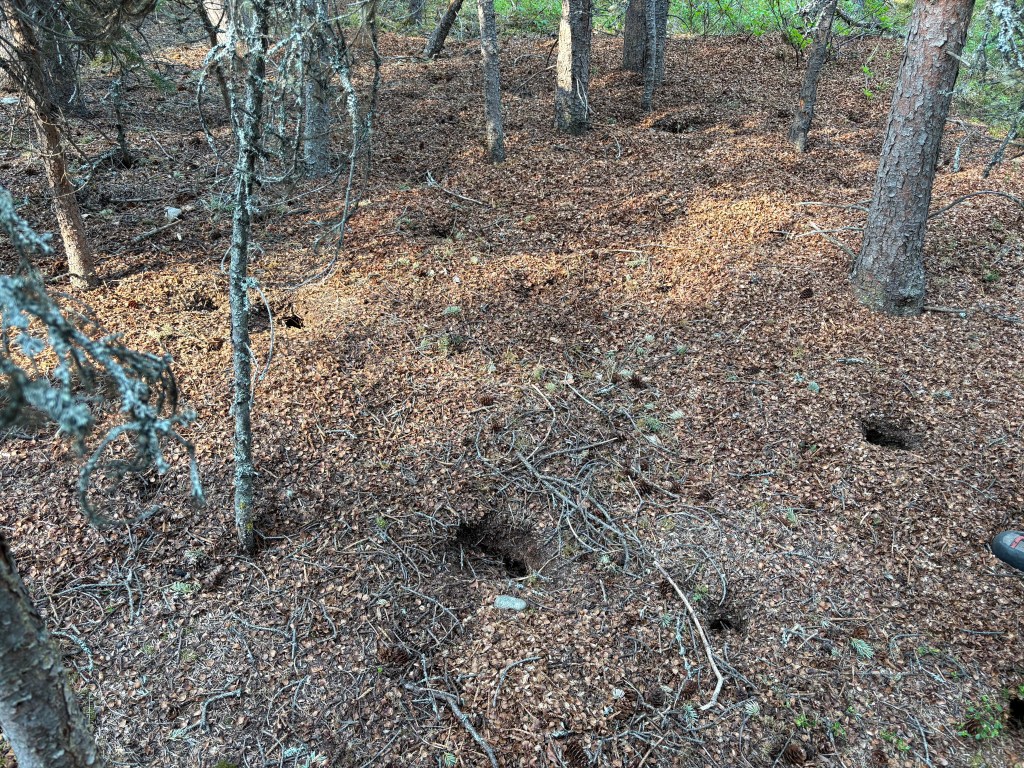
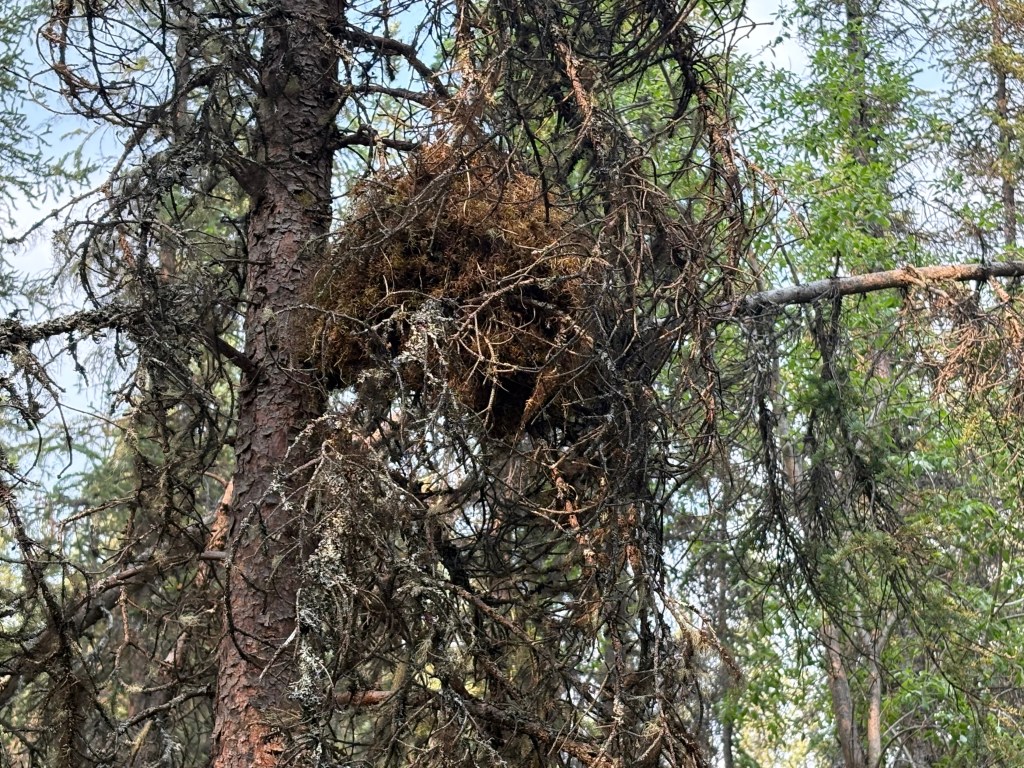
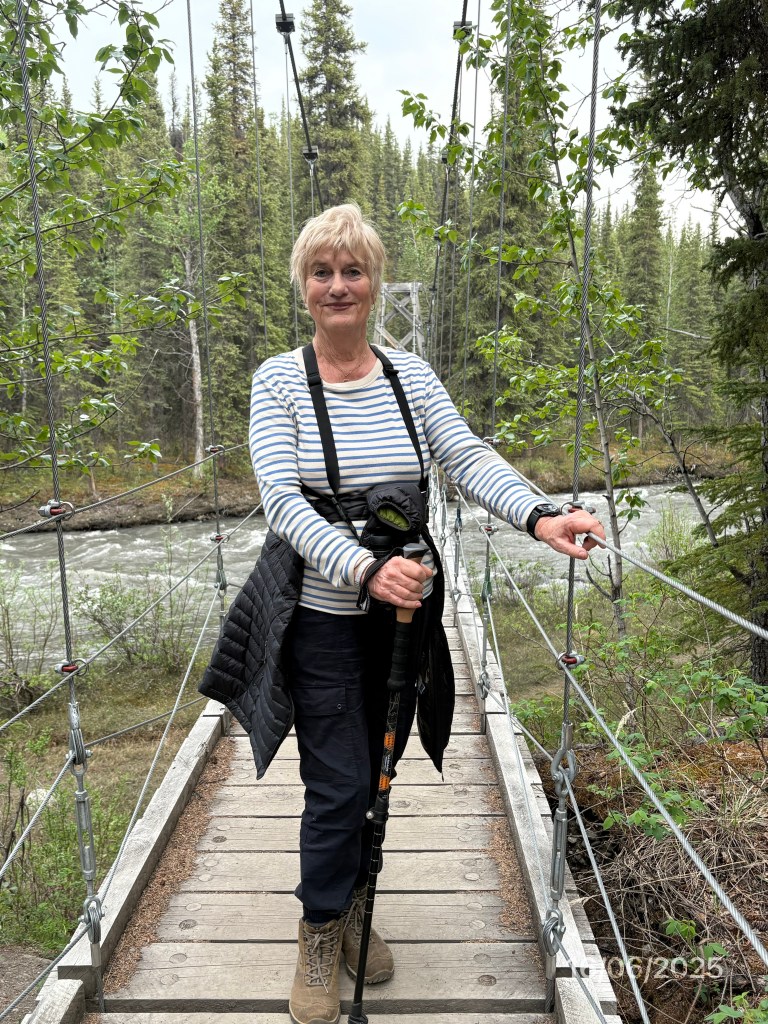
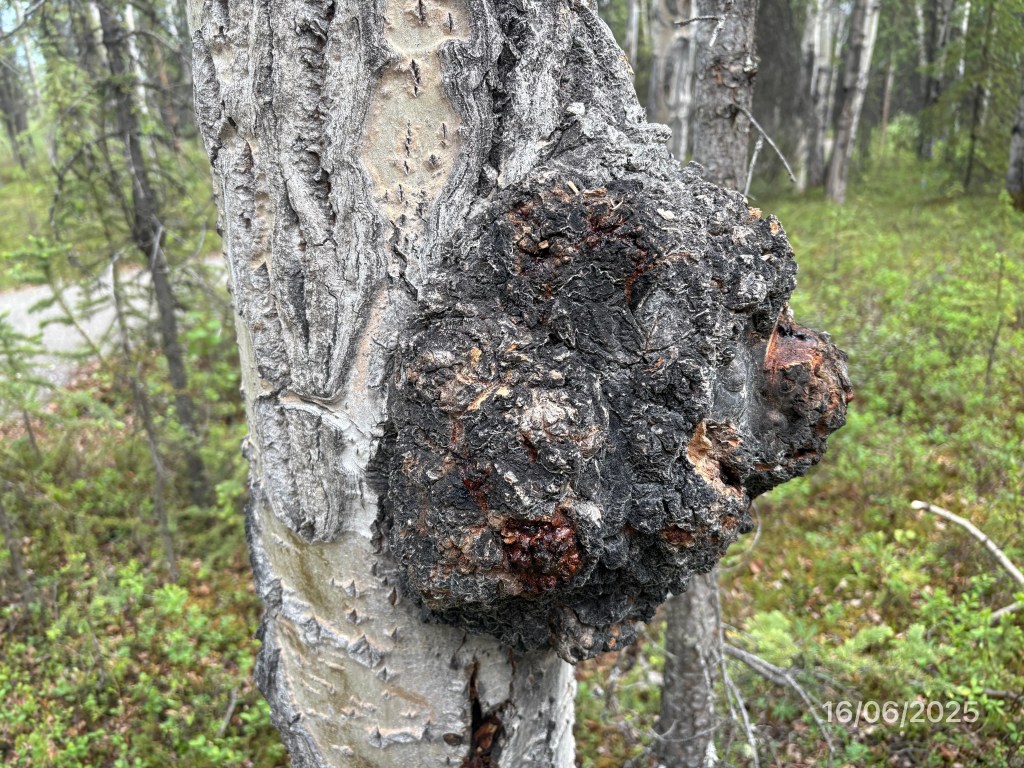
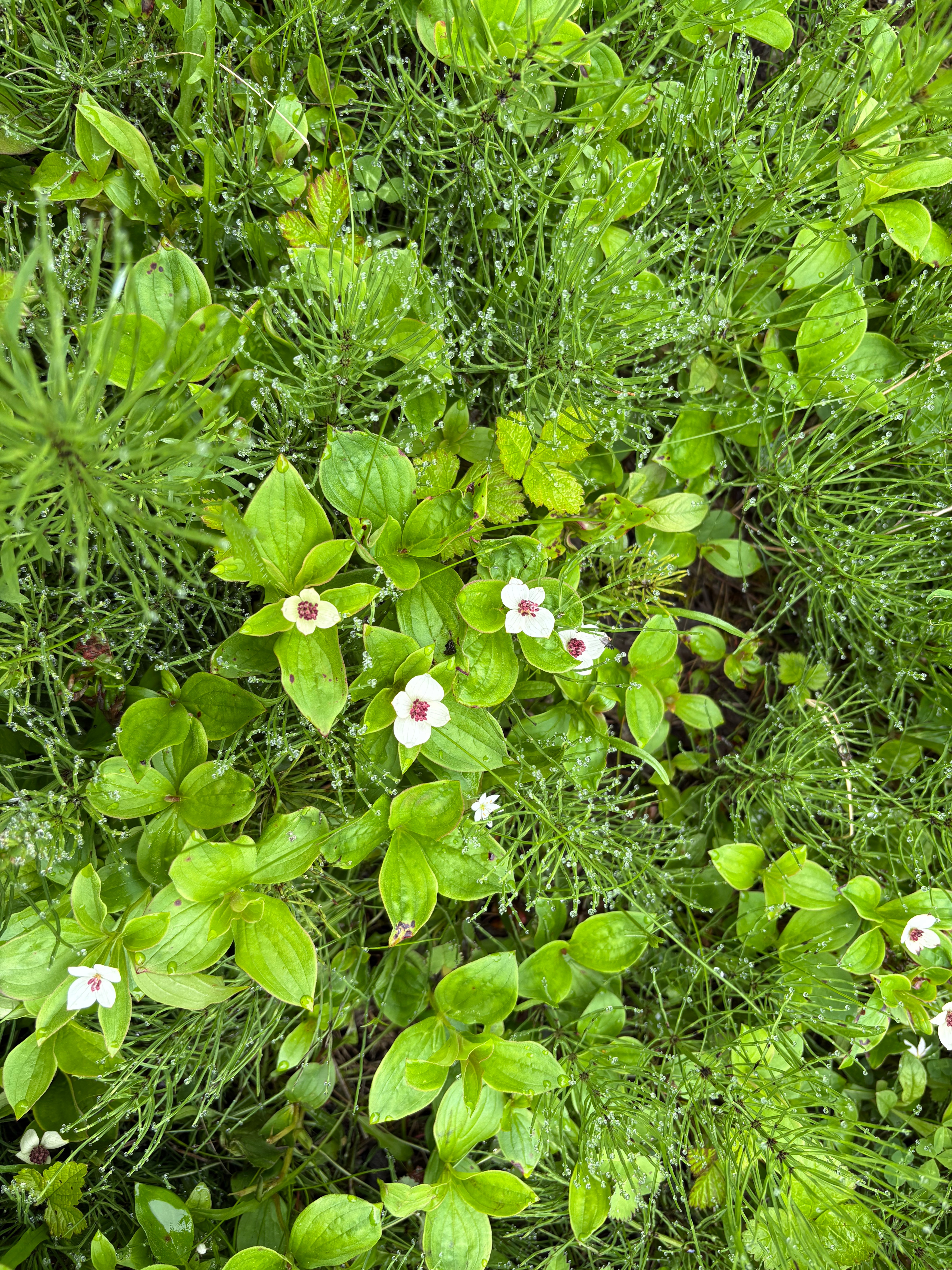
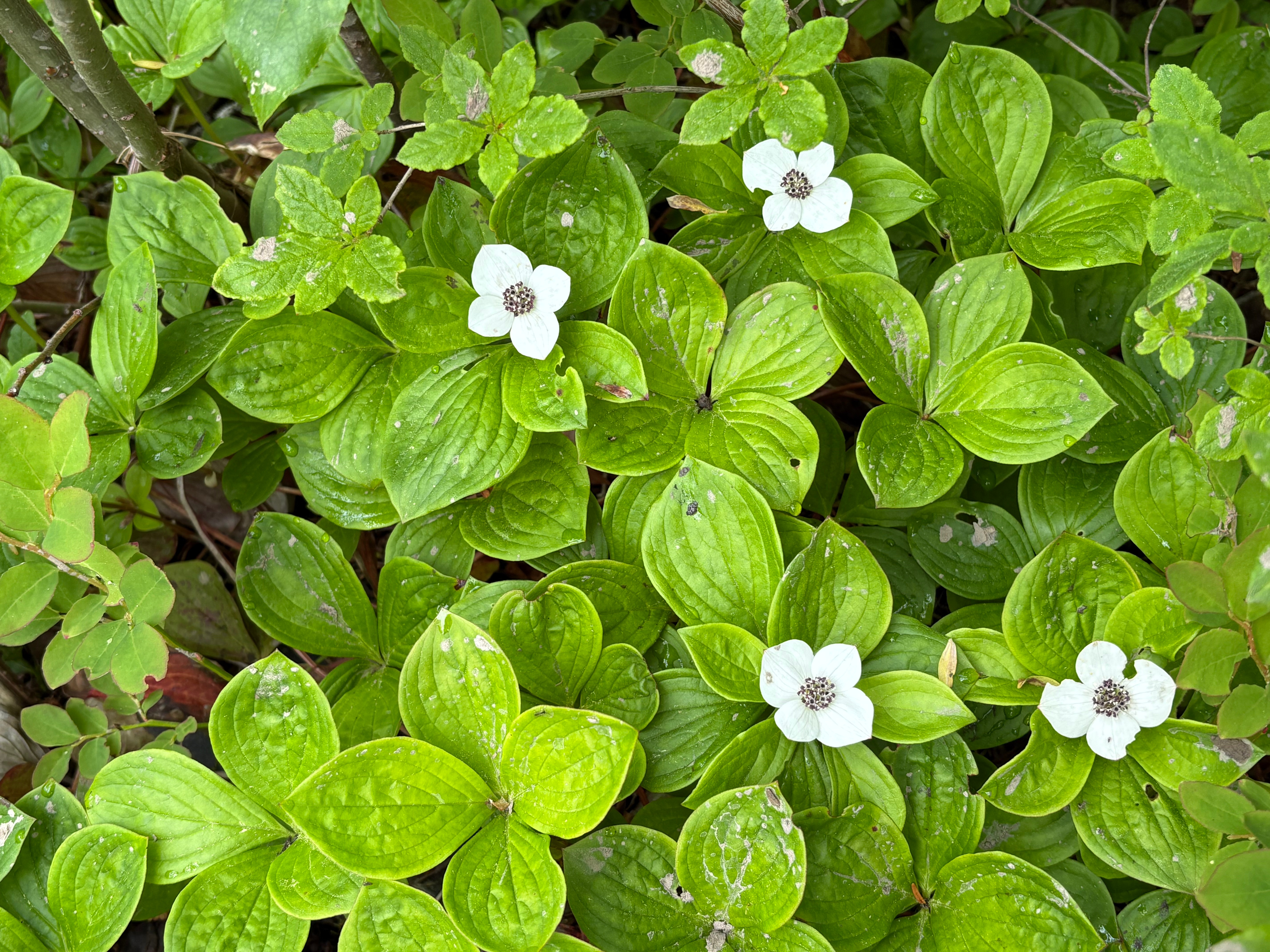
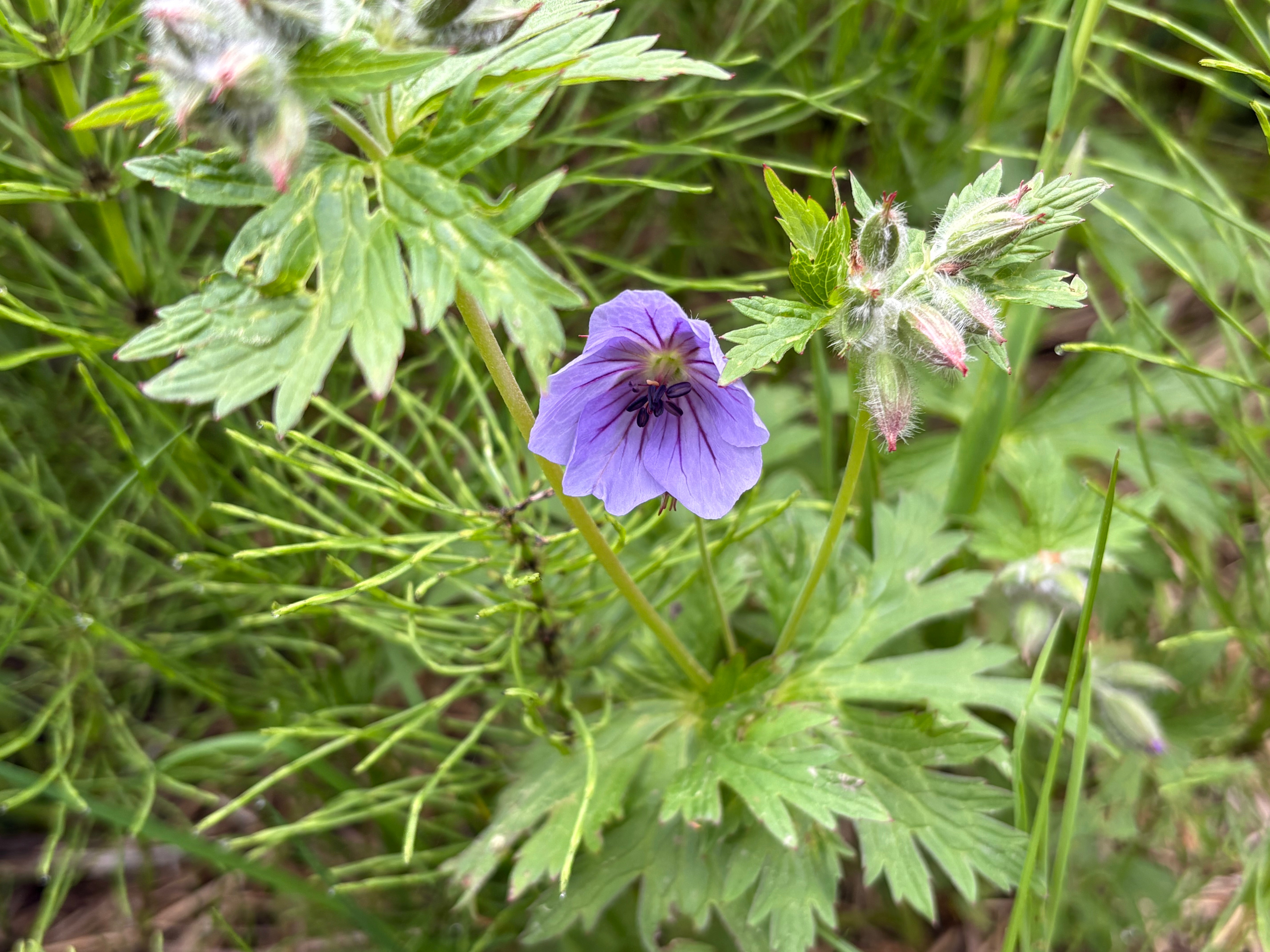
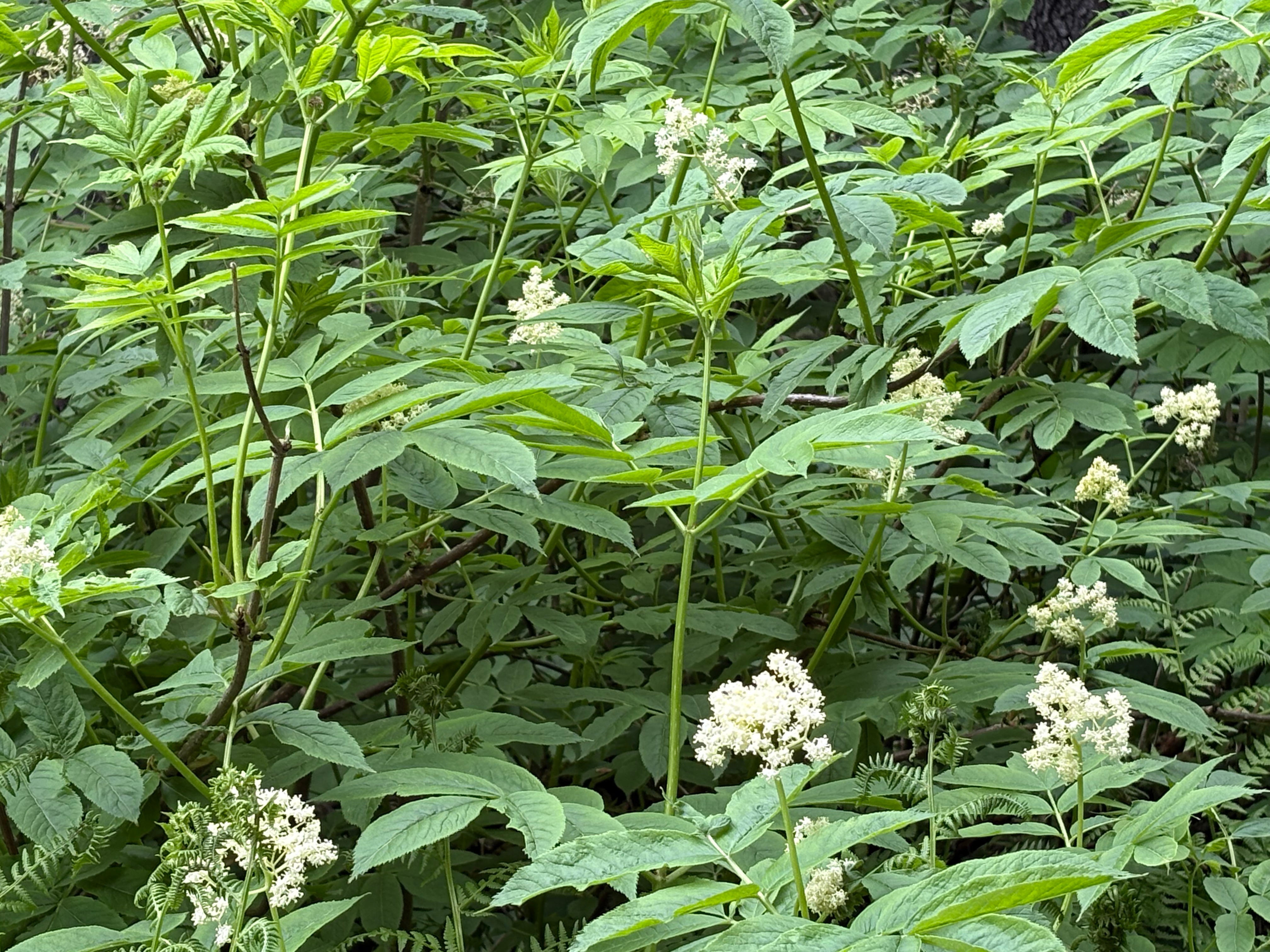
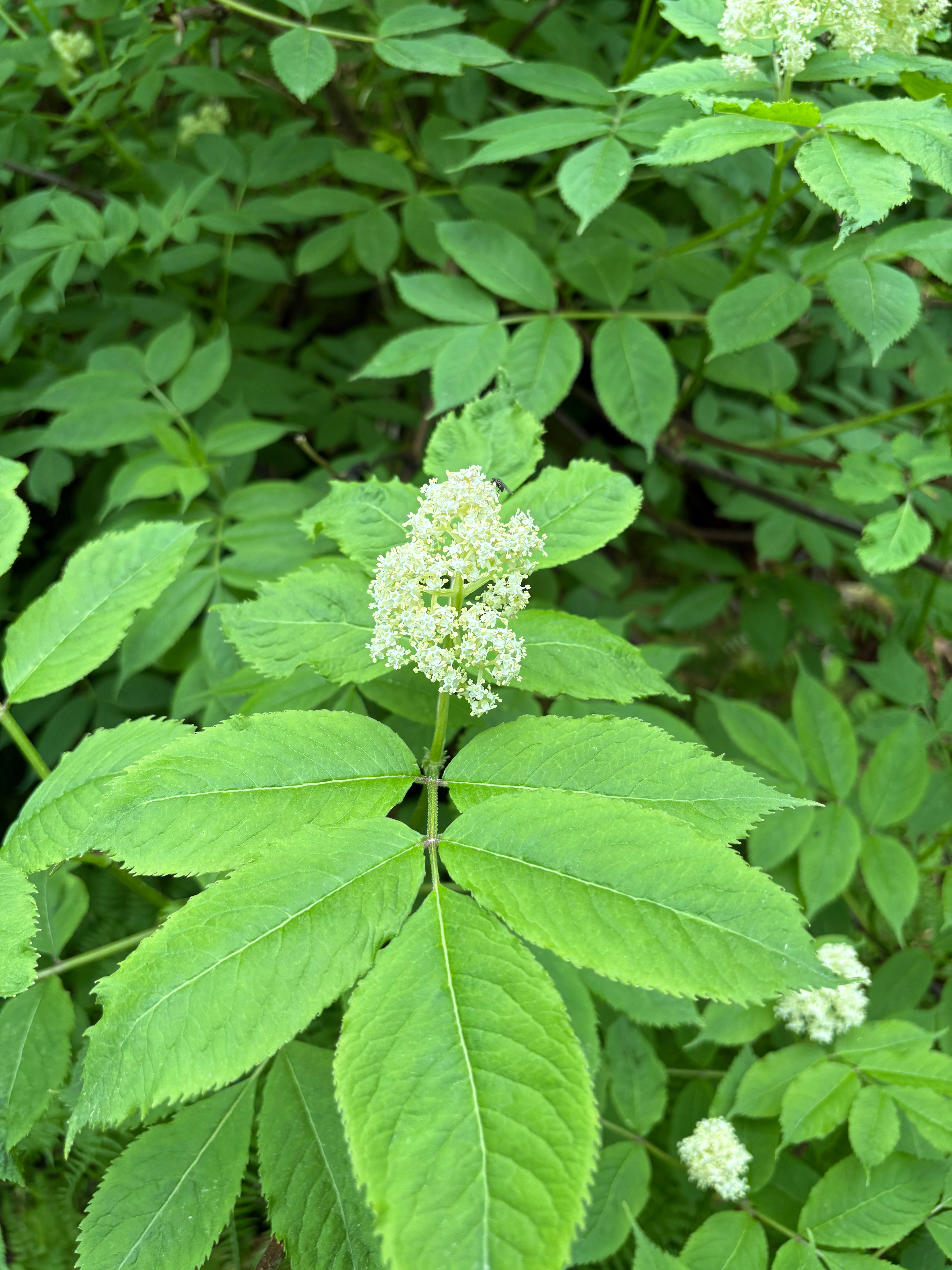
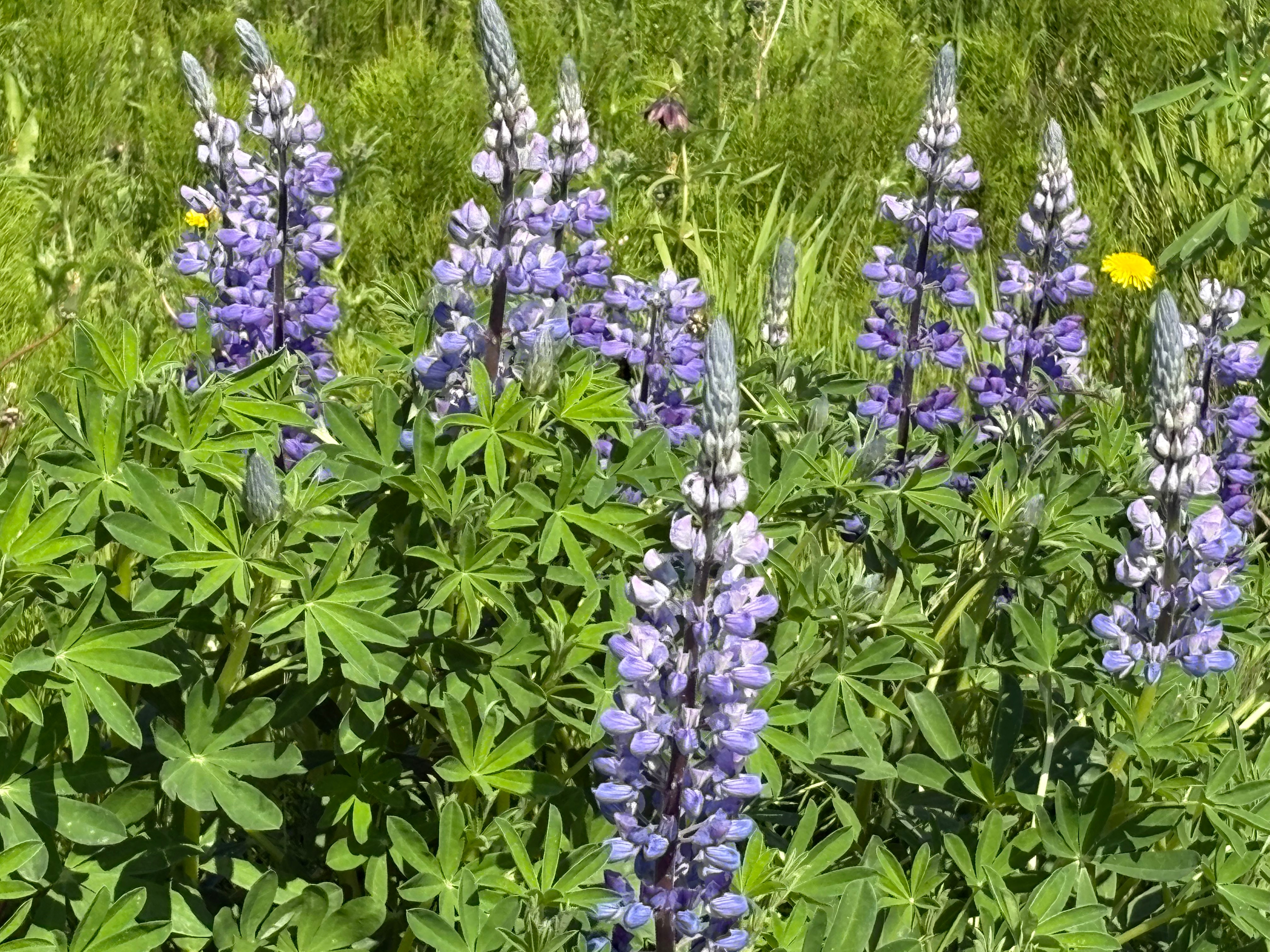
An evening hike through the forest with guide Adrian revealed all sorts of wonders – squirrels nests and food storage, wildflowers galore, botanical curiosities, a rushing river and a few birds – but no bears or moose.
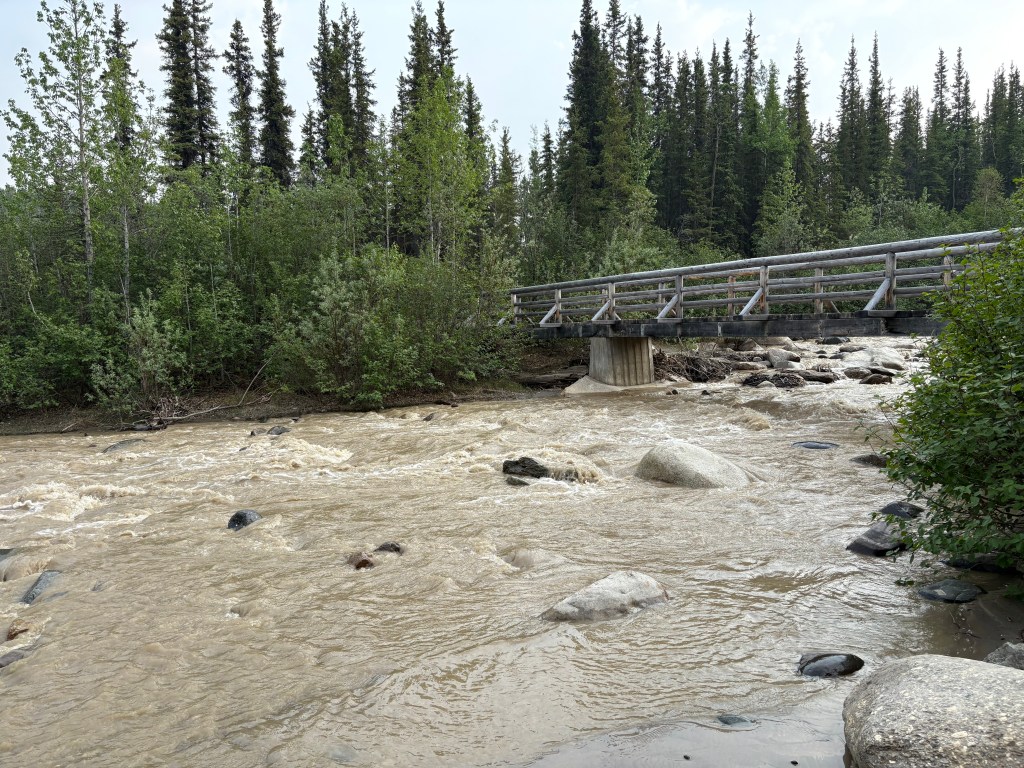
I left Denali felt that I had not really been able to do it justice. I had expected too much from it and too little from myself. I should have seen it when I was younger and could venture further and experience it all more fully.
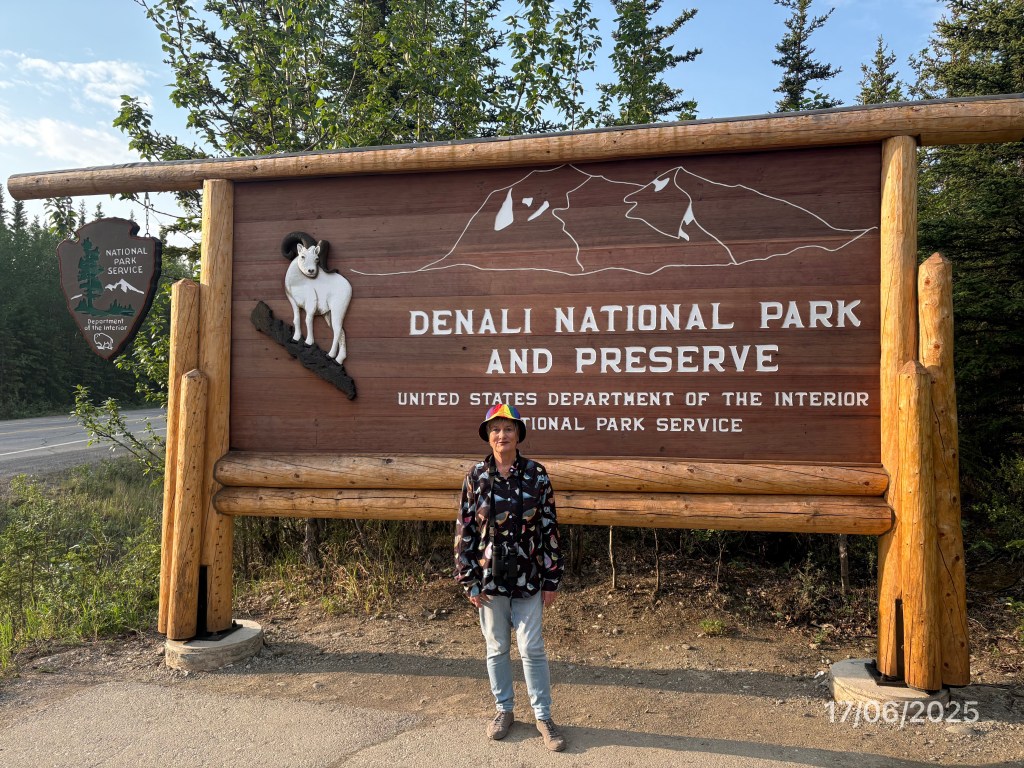
But I’m glad to have seen even a small part of it – one of the few really wild places still left in the world.




 Lyrebird Mountain