
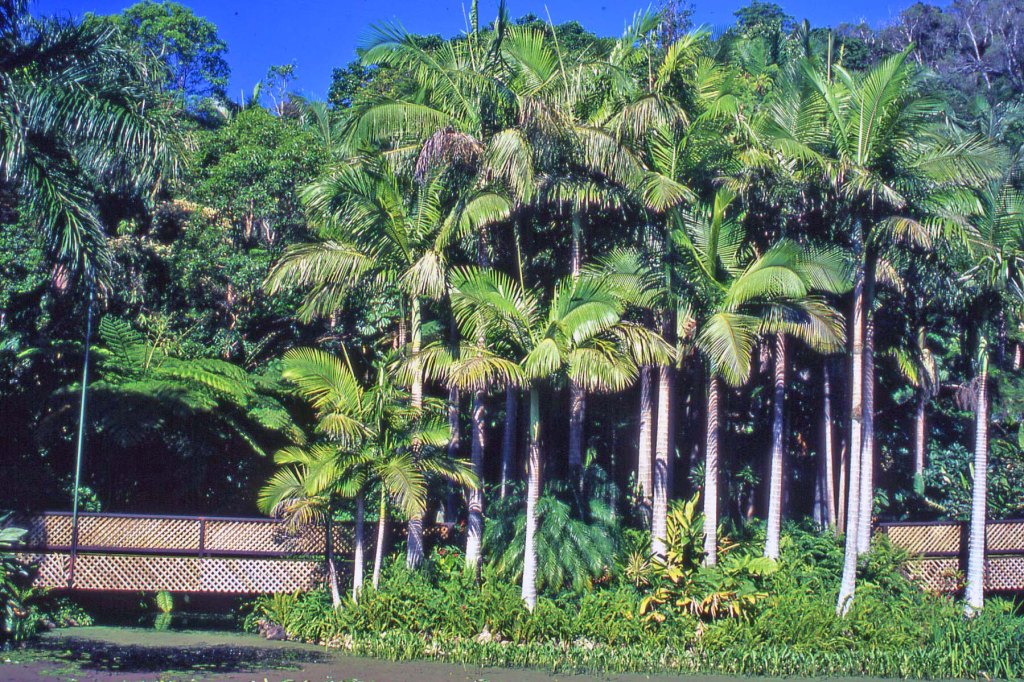
Palms are the graceful dancers of the rainforest, slender stemmed, green fronds swaying to the slightest breeze.
They are found in all types of rainforest except the temperate and the niche they occupy in the biosphere is important. Those great fronds act as fans to cool the temperature around them, the berries nurture birds and small creatures, the balls of hard-packed roots take up little space in the ground, the long stems are efficient conductors of water and nutrients.
This is done through vascular bundles because palms have no bark and no inner rings to mark age in the trunk. These bundles strengthen the stem against strong wind, while the round shape deflects it.
In fact palms are not trees at all but monocots, like lilies, lacking the features of dicots such as trees. When wounded, the outer “bark” does not regrow; when beheaded, new fronds do not form.
In the subtropical rainforests that surround my home, the dominant palm is Archntophoenix cunninghamiana, a very customer than can tolerate quite cold conditions providing there is no hard frost or heavy snow. Heat, it tolerates very well; particularly when coupled with high humidity.
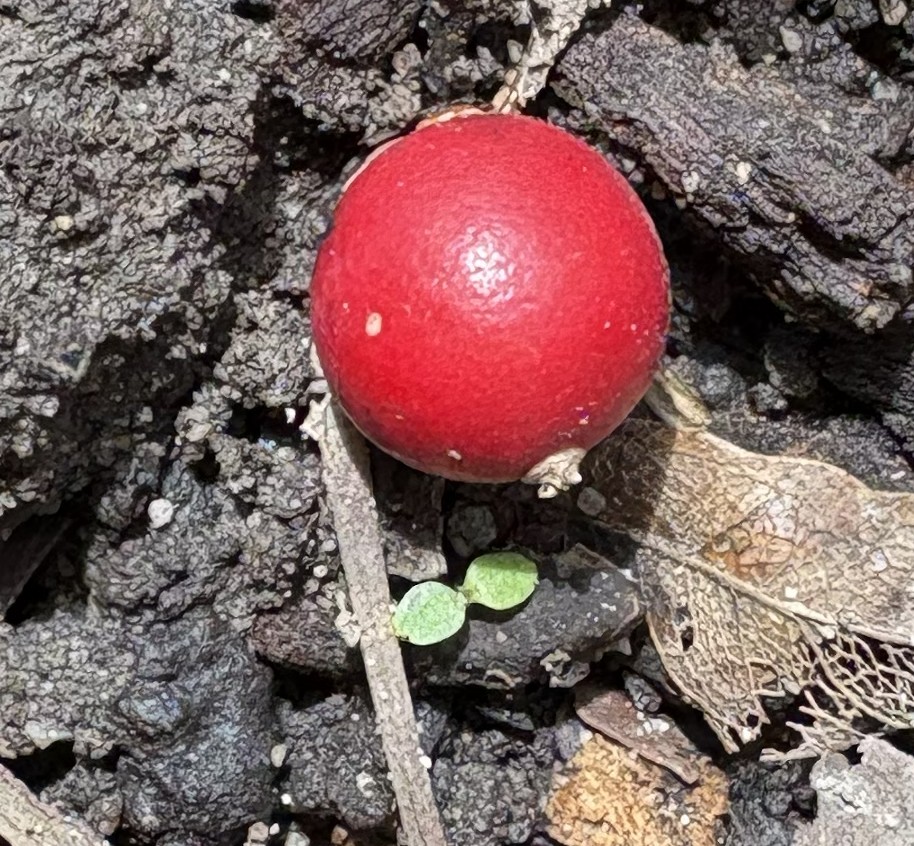
Top: The fruit of the Piccabeen Palm.
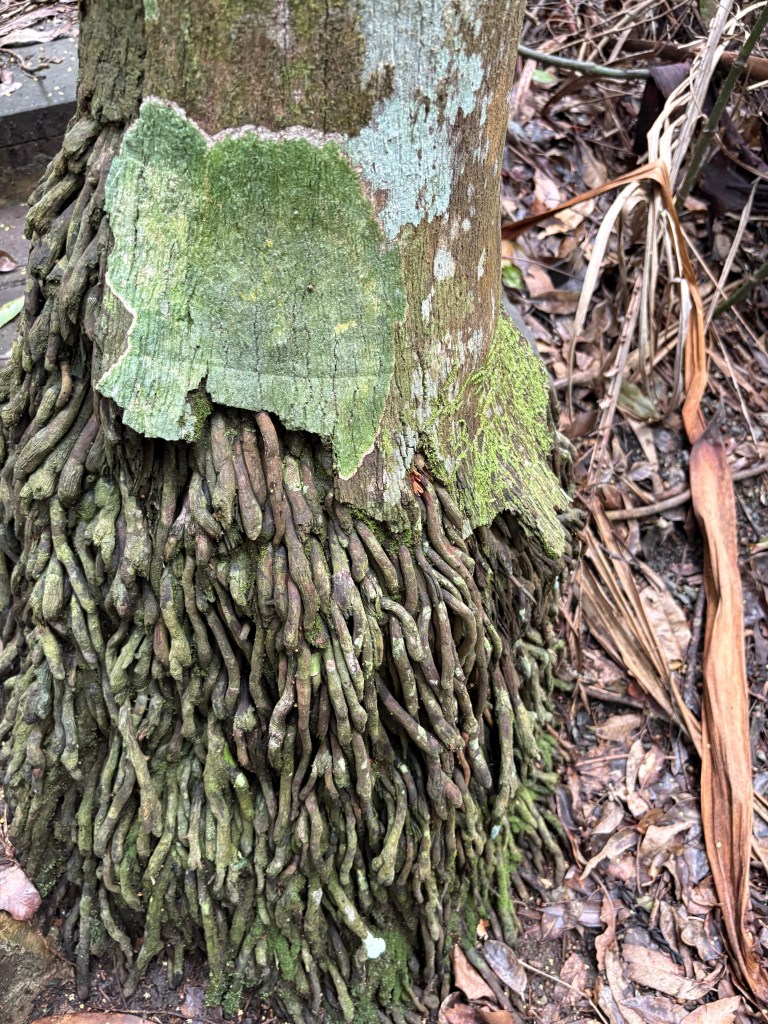
Top right: Aerial roots above ground on the stem of the palm improve absorption of water and sunlight while also providing extra stability.
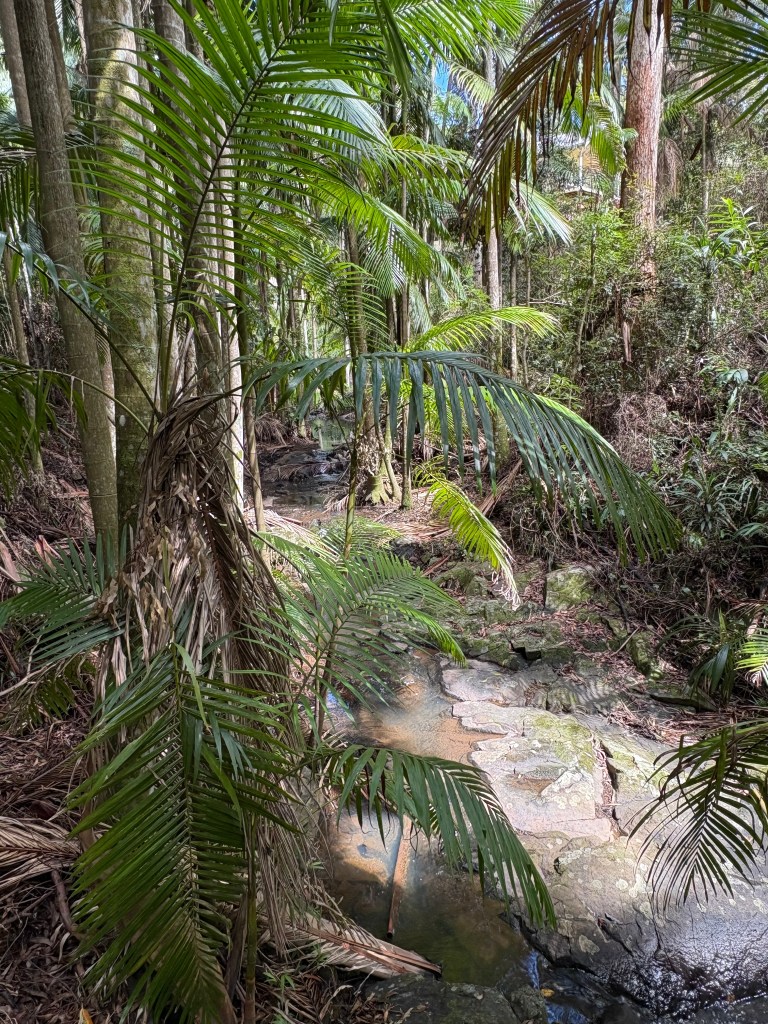
These palms, which we call Piccabeen, the name by which they were known to the indigenous people, grow in all parts of the forest and will do well as solitary specimens in the open, but are seen at their best in deep gullies along water courses and clustered in groves on the flattish bottoms of groves where the water table is high. Here they flourish to the exclusion of most other species, growing high and slender as they reach for the sky.
Lyrebirds and some other species roost in those lofty perches where the fronds cluster at the apex and some birds nest there. Rain washes the bird poo, rich in nutrients, down to the forest floor. Insects are attracted to the summer spikes of tiny, nectar-rich flowers and they, in turn, insects and flowers both, fall to the ground.
Thus enriched, the leaf litter is a rich nursery for the palm seeds that drop there, bright red in the case of the Archontophoenix palms and very ready to germinate. This is how the palm groves form and also why these plants are so readily available in nurseries. The flesh around the single seed is tempting to certain birds and animals but not palatable to humans, and thus the palm is part of the wild banquet that is an essential feature of this particular ecosystem. Other parts of the palm, including the heart for consumption and the fronds for basket-making, were a resource for the indigenous peoples who foraged and hunted among the thickets.
To me, palms make an elegant contrast to the great buttressed rainforest trees and I love to sit on a hillside and look down upon them wherePalms
Palms are the graceful dancers of the rainforest, slender stemmed, green fronds swaying to the slightest breeze.
They are found in all types of rainforest except the temperate and the niche they occupy in the biosphere is important. Those great fronds act as fans to cool the temperature around them, the berries nurture birds and small creatures, the balls of hard-packed roots take up little space in the ground, the long stems are efficient conductors of water and nutrients.
This is done through vascular bundles because palms have no bark and no inner rings to mark age in the trunk. These bundles strengthen the stem against strong wind, while the round shape deflects it.
In fact palms are not trees at all but monocots, like lilies, lacking the features of dicots such as trees. When wounded, the outer “bark” does not regrow; when beheaded, new fronds do not form.
In the subtropical rainforests that surround my home, the dominant palm is Archntophoenix cunninghamiana, a very customer than can tolerate quite cold conditions providing there is no hard frost or heavy snow. Heat, it tolerates very well; particularly when coupled with high humidity.
These palms, which we call Piccabeen, the name by which they were known to the indigenous people, grow in all parts of the forest and will do well as solitary specimens in the open, but are seen at their best in deep gullies along water courses and clustered in groves on the flattish bottoms of groves where the water table is high. Here they flourish to the exclusion of most other species, growing high and slender as they reach for the sky.
Lyrebirds and some other species roost in those lofty perches where the fronds cluster at the apex and some birds nest there. Rain washes the bird poo, rich in nutrients, down to the forest floor. Insects are attracted to the summer spikes of tiny, nectar-rich flowers and they, in turn, insects and flowers both, fall to the ground.
Thus enriched, the leaf litter is a rich nursery for the palm seeds that drop there, bright red in the case of the Archontophoenix palms and very ready to germinate. This is how the palm groves form and also why these plants are so readily available in nurseries. The flesh around the single seed is tempting to certain birds and animals but not palatable to humans, and thus the palm is part of the wild banquet that is an essential feature of this particular ecosystem. Other parts of the palm, including the heart for consumption and the fronds for basket-making, were a resource for the indigenous peoples who foraged and hunted among the thickets.
To me, palms make an elegant contrast to the great buttressed rainforest trees and I love to sit on a hillside and look down upon them where they emerge from the canopy, raising their fronds to the sun, rustling mysteriously, lush with tropical allure. they emerge from the canopy, raising their fronds to the sun, rustling mysteriously, lush with tropical allure.
 Lyrebird Mountain