
Very few shrubs that grow in the rainforest are suitable for the home garden. I am including a couple of them here because of their exceptional qualities. You will only find them in specialist nurseries but they are worth the search. Once planted, they are tough and require little attention except regular light pruning for shape when young. Despite their rainforest origin they will:
Grow in most gardens except the very cold and very dry
Grow in full sun though in hot, dry climates will need light afternoon shade
Grow in any soil, with just a light feed twice a year with blood and bone and/or chook poo.
Do best in high rainfall areas but will grow in drier areas if regularly watered.
The images below denote whether the plant is attractive to birds and/or butterflies


Cat’s Whiskers (Orthosiphon aristatus)
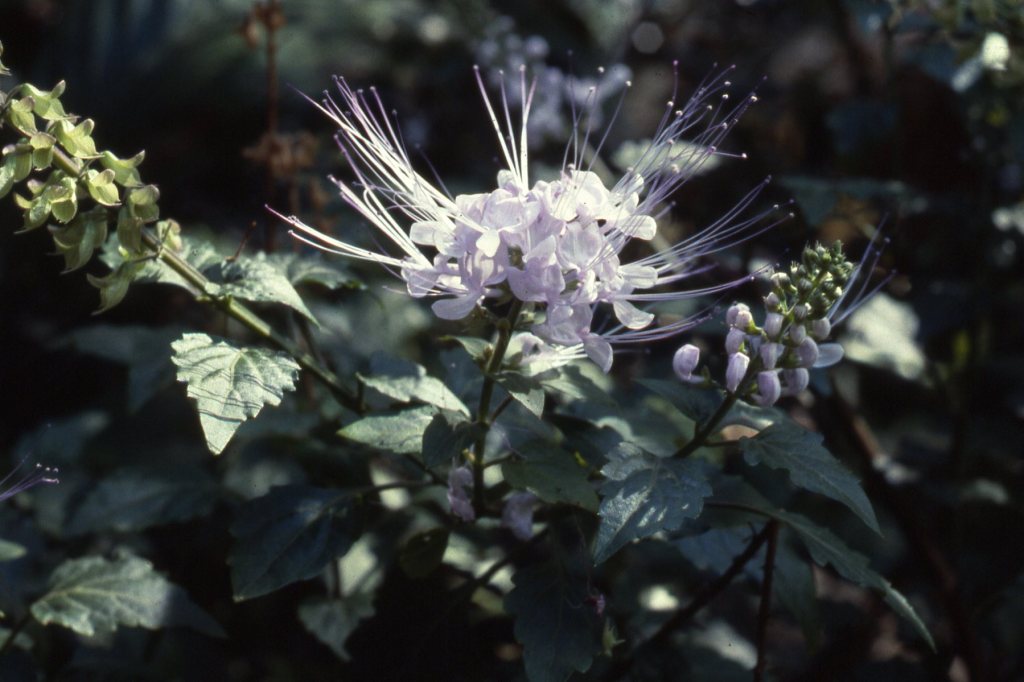

Cat’s Whiskers does well in the home garden if regularly pruned to stop it straggling. Orthosiphon is found from southern China through South East Asia and India to Australia. It is said to have medicinal properties, especially in treating urinary tract problems from the kidneys and bladder to the urethra, reducing uric acid and improving urine flow. However, though a standard in traditional Asian medicine, efficacy is not yet proven in western medical research. Whatever its medicinal virtues, Cat’s Whiskers is a pretty plant for the garden and a great attraction to birds, bees and butterflies.
Vital statistics: Long, shiny, dark, green, serrated arrow-shaped leaves and very pretty white flowers with long spiky stamens that have a whiskery look, hence the common name.
In the garden: Regular pruning, mulching and watering will keep this plant in good shape for years. Ands
Rice flower, White Dogwood(Ozothamnus diosmifolius)
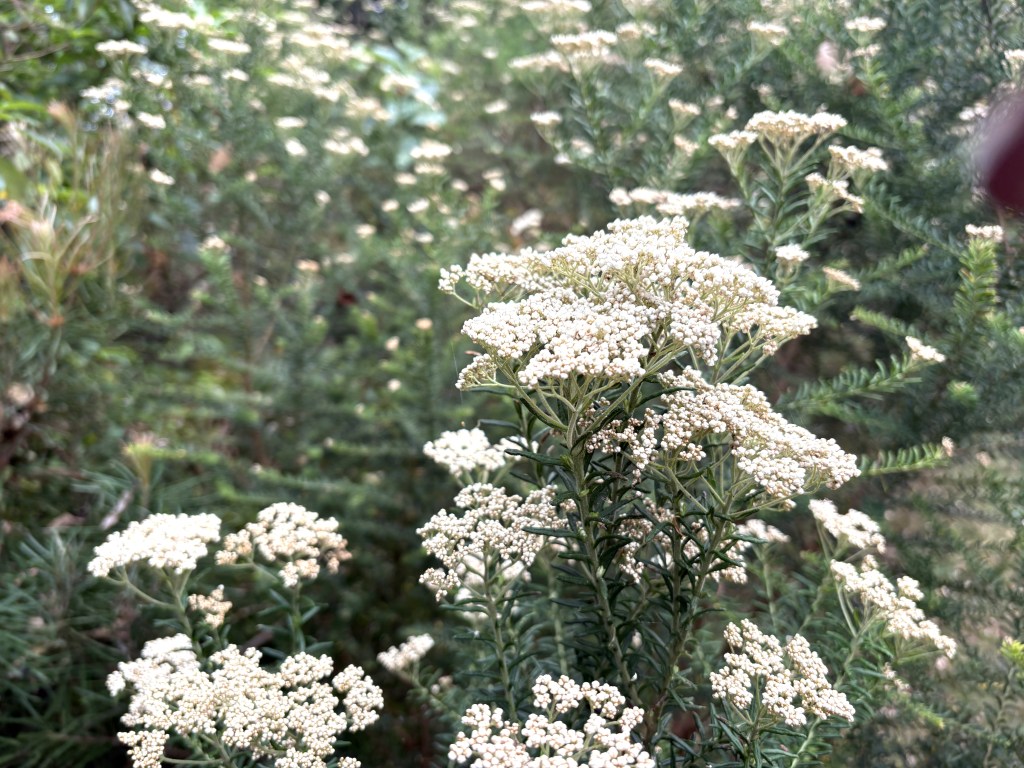
This is a shrub of the rainforest margin and is found in other types of forests also, from the south coast of New South Wales to the top end of the Sunshine Coast in Queensland. It can look very pretty in the home garden and a good plant for the back of herbaceous borders against which all the coloured flowers show off to advantage.
Vital statistics: Leaves are narrow, tough, linear, up to 2 cm long with revolute margins, undersurface pale buff and hairy. The spring flowers are born in umbrels at the top of the branchlet and the plant is mostly upright and stiff in appearance.
In the garden: Grows in most soils but does need reasonable drainage. Regular light pruning and cutting back by a third after flowering will stop the plant becoming straggly and promote an attractive, rounded form. Requires no watering once established except during a very long, dry period. No need to fertilise but mulch with organic matter.
 Lyrebird Mountain