
Many types of vines and climbers weave the rainforest treescape into a tapestry of texture and colour and while some are small and barely visible others bear spectacular flowers. This makes them desirable in the home garden but be aware – in their natural habitat they have evolved to clamber up to the canopy in quest of sunlight and to do so have developed lianas thick and strong as hawsers. The pandorea vines are typical of this and can easily smother a small garden if left unpruned. Today’s nursery varieties are bred to be less rampant but such plants are not far from their origins and given the right circumstances might well overwhelm a backyard arbour or frame.
On the plus side, they grow fast and easily and can tolerate heavy rain and long, dry periods.
Here is a small selection suited to gardens.
(NOTE: The plants on this page are well suited to growing in the warmer parts of the United States and other parts of the world where there is no ice, snow or heavy frost. If you need further advice, just email me or use the comments section below).
Wonga Vine (Pandorea pandorana)

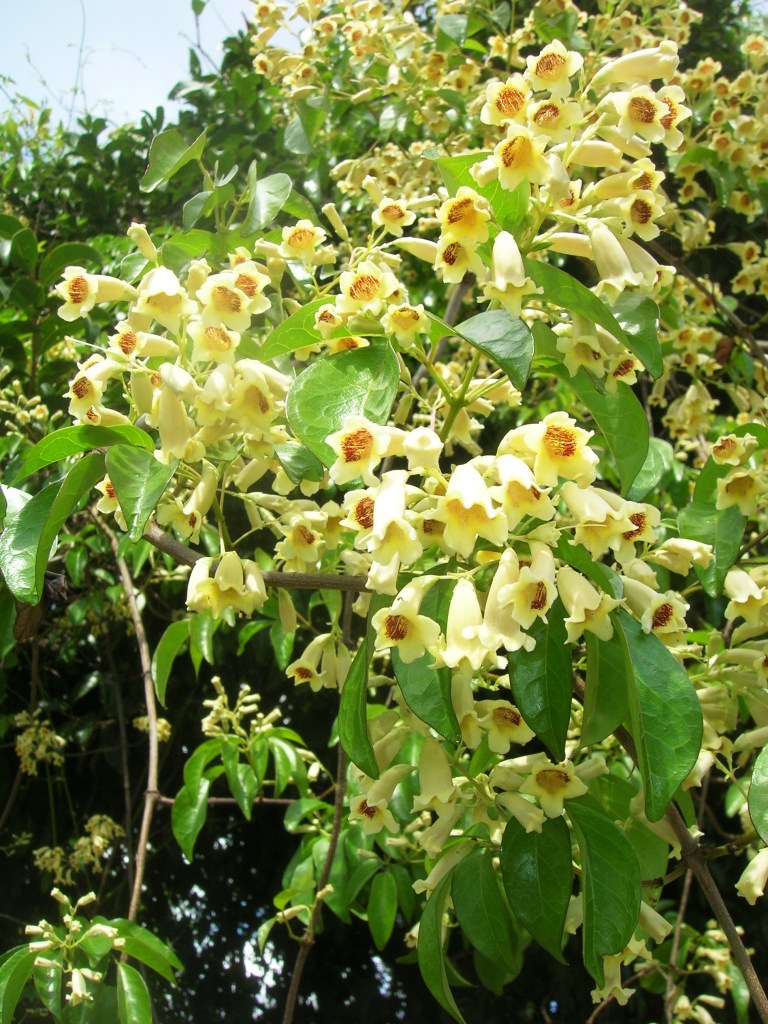
This is a gorgeous vine with small, tubular, creamy-white flowers born in profusion in spring and summer. The flowers have dark blotches in the throat and there is also a red-flowered variety available from nurseries.
Vital statistics
Stems are woody and grow thick with age, though not as thick as those of P. jasminoides (below). Leaves are compound, pinnate and opposite with anything from 8-11 on adult vines, with short point and rounded bases. Juvenile leaflets are long and narrow. Both types have terminal leaflets.
The vine bears long, ovoid capsules filled with tiny flat, round, winged seeds.
In the garden
This vine needs no attention except regular watering in its first weeks until established. It will cover a strong fence or a sturdy arbour frame. It grows well in a pot but the container needs to be very large and sturdy and you will need to have good drainage. Top up the soil once a year, first piercing the hardened mix in the pot to ensure drainage and aeration for the roots.
Pink Bower Vine, Beauty Vine (Pandorea jasminoides)
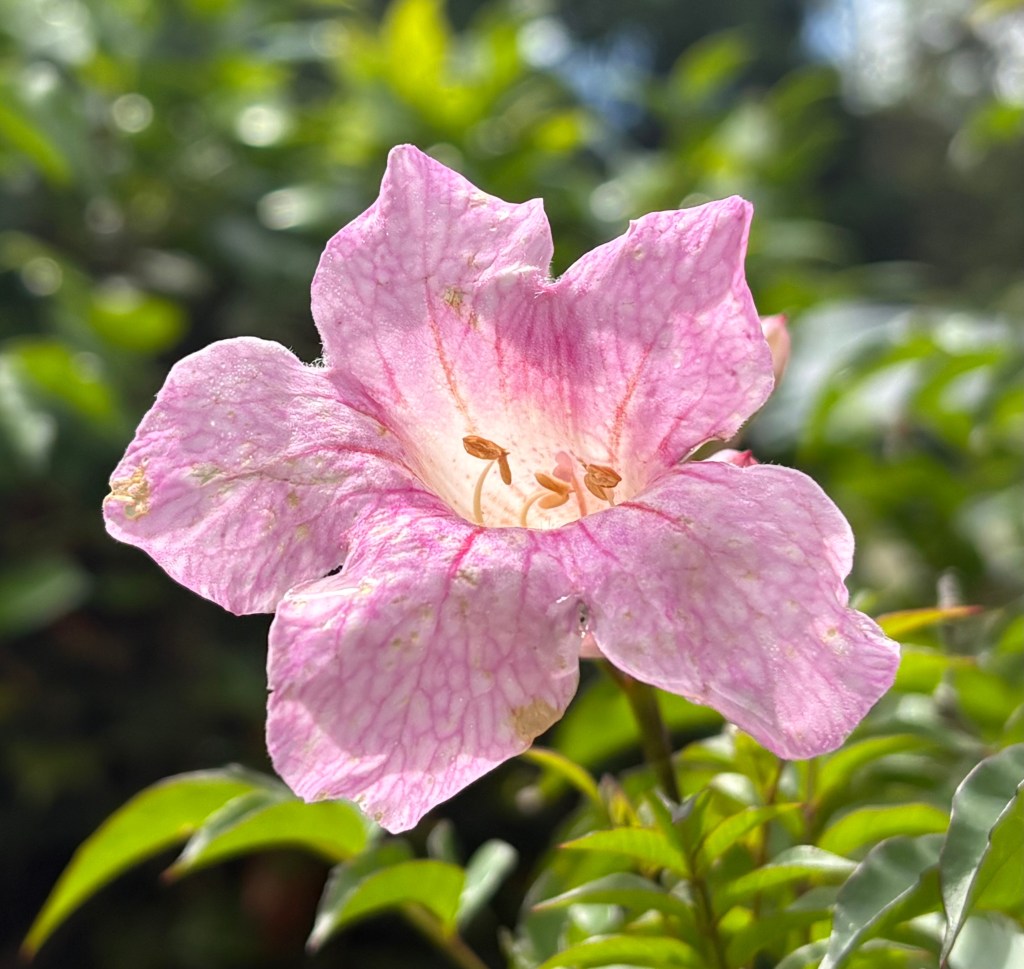
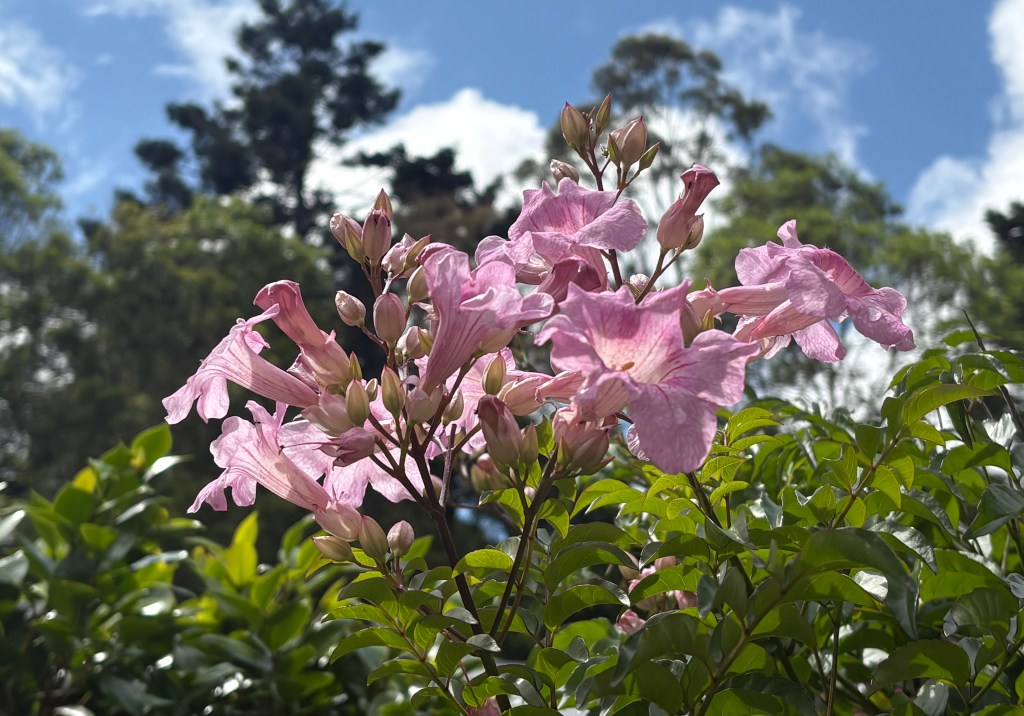
This beautiful vine bears masses of pale pink or mauvish-pink bell-shaped flowers with six petals and dark pink throats. It’s tough, easy to grow and too vigorous for most gardens because it will take over the whole garden and much of the neighbourhood if left unchecked!
I love it – and grow it in my small garden – but it DOES take a lot of trimming. For me it’s worthwhile because Bower Vine flowers prolifically from late spring to late autumn.
Vital statistics
Leaves are compound and opposite with usually five sometimes nine leaflets, with long internodes between each leaflet pair and a terminal leaflet at the top of the stem. Young leaves are light, bright green, darkening with age to an attractive glossy green.
Stems are woody and can become very thick with age – as thick as a human arm. In the rainforest you can see these hanging in long loops or winding around a tree trunk. In the garden they behave more like canes, extending a long way to cover fences and force their way into nooks and crannies. The many long, oval seeds are encased in a long, woody capsule. These are easy to propagate.
Flowers are pink to pinkish mauve in the forest but white and deep pink forms are now available in nurseries.
In the garden
This is a great vine for covering fences or unsightly objects such as old sheds. In a small garden it requires strong support such as a solid wire, galvanised steel or timber fence – or a very strong trellis. After the first year or so it will need regular trimming during the warm, growing months. You CAN grow it in a pot but the pot will need to be strong, made of plastic or fibreglass rather than clay and as large as possible. Decorative clay pots can be used for aesthetic reasons but use a plastic pot inside and plant the climber in that.
Though its natural range is from eastern New South Wales to mid-coastal Queensland, with some occurrences in rainforests a little further north and south of that range, Bower Vine will grow in almost any soil and any place where rainfall is good and temperatures rarely fall below 10 degrees C. Once established it needs no fertilising and watering is necessary only when conditions are dry – a good soaking twice a week is enough.
Fraser Island Creeper (Tecomanthe hillii)

This is a well-mannered vine that bears lots of dusky-pink pendant bells in spring. It’s a good plant for a patio screen or light trellis or any place in the garden where there is morning sun and afternoon shade – in fact it grows naturally in shade but flowers better with about six hours morning sun or part-shade.
The variety “Roaring Meg” is most commonly sold in garden centres and has been selected to bear larger flowers than the wild version.
Vital statistics
Leaves are compound, opposite with five to seven leaflets, including a terminal leaflet. Margins entire, surface a glossy darkish green. The thin stems twine and twist vigorously during the spri8ng-summer growing season; new stems and leaves are a pretty light green. Seeds are born in a woody capsule; winged and numerous but hard to propagate.
In the garden
Easy to grow in sandy and red basalt soils; hard clay and rocky soils will need some composting and a planting hole of at least 20 cm a side (or across, with round holes) filled with good soil or potting mix so the roots can get a good start. Tecomanthe will do well in a large pot, with good drainage. Water generously when young and, once established, only in long, dry periods. No feeding required but if you MUST fertilise, use a liquid solution to promote flowering.
Native Wistaria (Callerya megasperma)

This is a very pretty vine just as beautiful as the exotic wistaria and with a longer flowering season but for some reason it’s not often available in garden centres.
It’s vigorous but not as rampant as Pink Bower Vine, especially when grown in full sun, where it doesn’t have to battle for light.
The delicate pea-like flowers in shades of mauve and purple are born on long racemes in winter and spring, spraying out from the mid-green foliage. The similar Callerya australis is less vigorous and less spectacular when in flower, and rarely available except from specialist native nurseries. Both are found naturally in the forests of north-eastern New South Wales and south-east Queensland.
Vital statistics
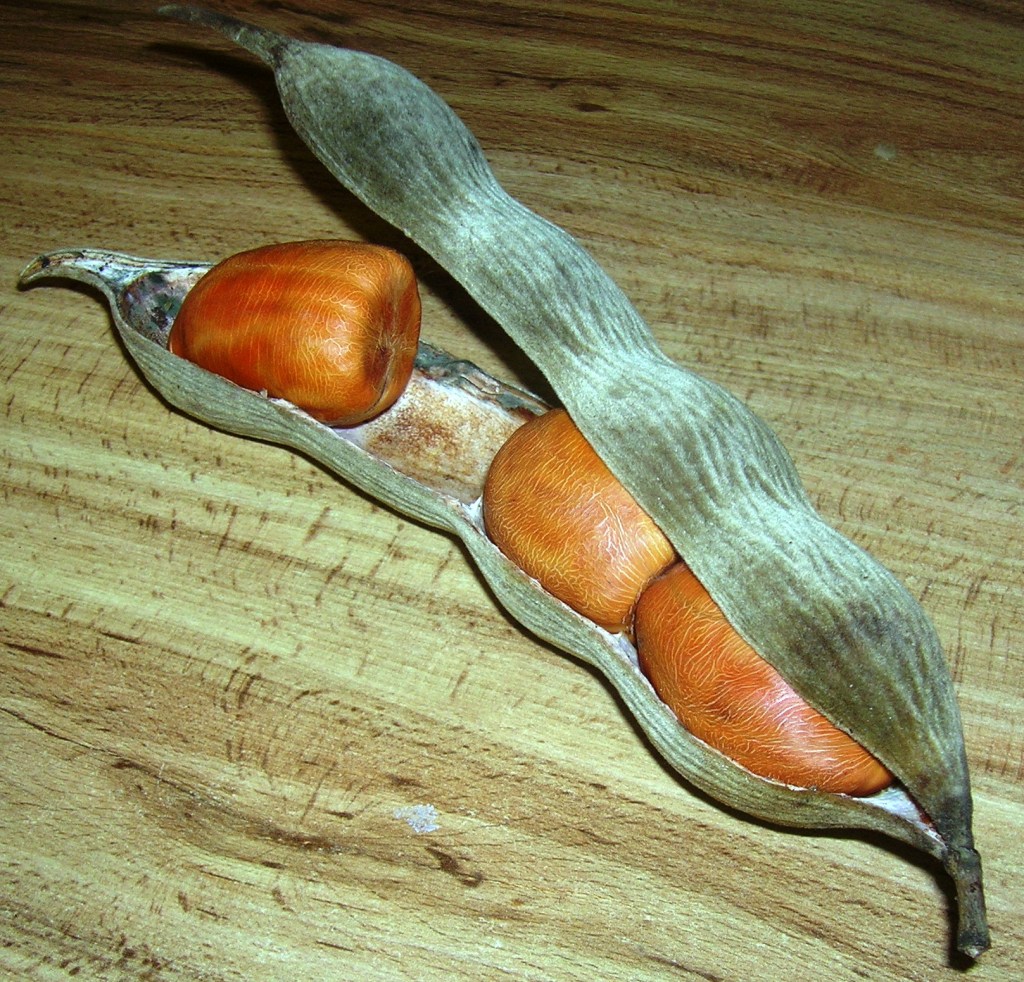
Leaves are compound, alternative and pinnate, with anything from seven to 17 or sometimes 19 opposite leaflets up to 10 cm long on mature plants and arranged flush to the leaflet stem. In early summer the vine bears large, woody, velvety light brownish-grey pods, rather like peanut shells, with up to four brown, papery seeds.
In the garden

Callerya is tough and hardy once established but can be slow to take off, if purchased as a seedling or grown from seed. It does best on sandy soils, with plenty of water. No need to fertilise though an occasional feed of liquid fertiliser in autumn will promote flowering.
Regular pruning will keep this plant compact, robust and more floriferous. It can even be coaxed into growing as a small tree in a pot, or a bonsai. As a carefully-clipped climber it is perfect for Japanese gardens.
Twining Guinea Flower (Hibbertia scandens)

If you want a bright, sunshiny touch to your garden then this cheerful climber is ideal. It flowers right through from about October to the end of summer (depending on where you live – flowering period is shorter in colder areas). And it’s a great plant for filling difficult areas, such as shady corners and places with poor, rocky or sandy soil.
Vital statistics: Long, twining stems and leaves that are small (to 8 cm) simple and alternate, ovate and narrowing to the base where they form clusters, standing clear of the main stem. Flowers are bright yellow with five petals and prominent stamens.
Found in all types of rainforest and adjacent wet sclerophyll from south coastal New South Wales north through Queensland.
In the garden: This plant is quite easy to propagate from stem cuttings and even easier to grow, provided it is protected from frost and temperatures below zero. It thrives in some Melbourne gardens and, equally, in the tropics. It does need a well-drained soil so will trail happily over sand dunes or rocks but won’t do well in clay. Shade is fine for Guinea Flower but it flowers better in sun. Pruning is essential to keep it under control as it can cover large areas quickly.

Like many climbing plants, Hibbertia scandens can be trained into a bush; you just need to keep on pruning it to shape. This hard pruning, particularly if done in the Australian autumn and winter, will also promote better flowering in spring and summer, when you can just trim back the long twiners to maintain the shape.
Headache Vine – (Clematis glycinoides)
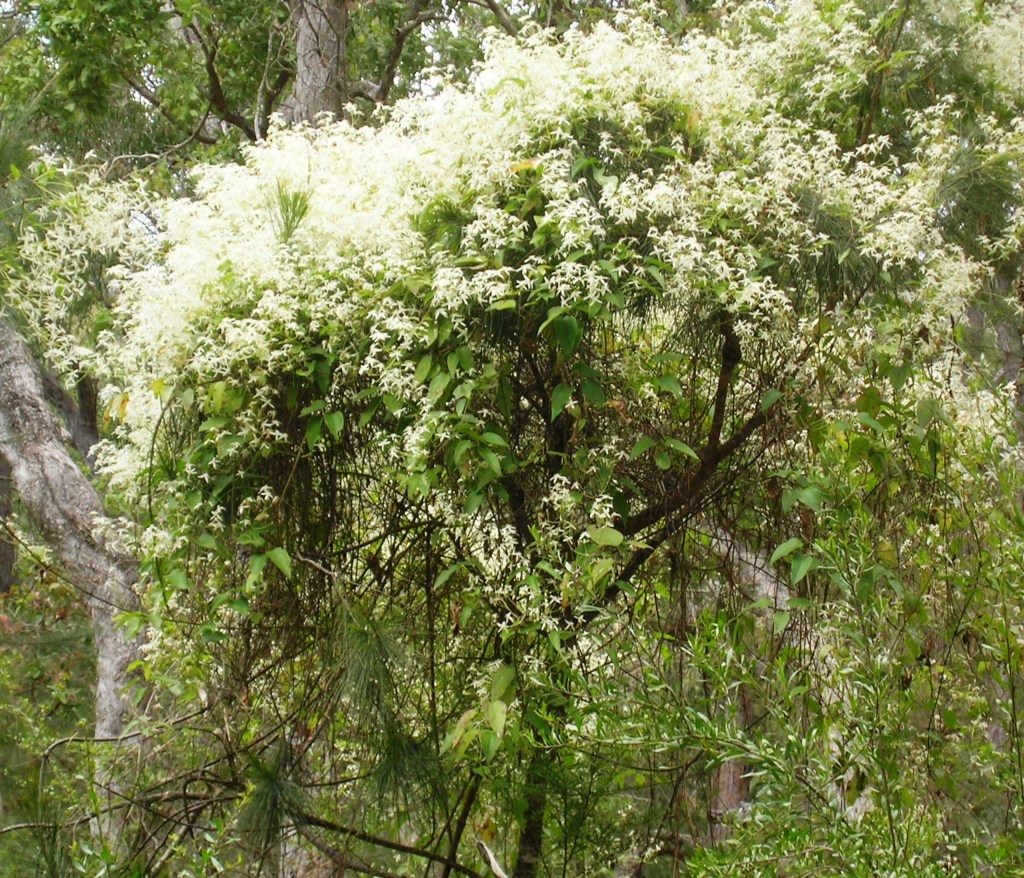
I’d like to come up with a new name for this pretty flowering vine! Its claim to medicinal value is dubious – the leaves do have an ammonia-like scent when crushed and its been claimed that the strong fumes emitted will cure headache.
I’ve tried it – and it didn’t work for me! It probably does, however, have some value as a nasal decongestant if you are a long way from a jar of Vicks!
So I would like to call it something like “White star vine” or “Australian Clematis” because though not nearly as spectacular as the clematis grown in gardens around the world, all varieties of which have been subjected to years of breeding, it is very pretty when in flower and does well on a trellis or other vertical support.
Vital statistics: This is a twining plant and dainty in its habits, so not too rampant when grown in your garden. It’s compound (occasionally simple) with three five-veined, ovate, bluntly-pointed leaflets borne on twisted stems.
Flowers appear in winter and spring, each one with five long, slender bright white petal-like sepals (the actual flowers are tiny); both male and female flowers on the same plant (dioecious). Stamens are prominent, giving the petals a slightly “fluffy” appearance.
The fruits are rather attractive and interesting too, small achenes with long feathery tail-like styles.
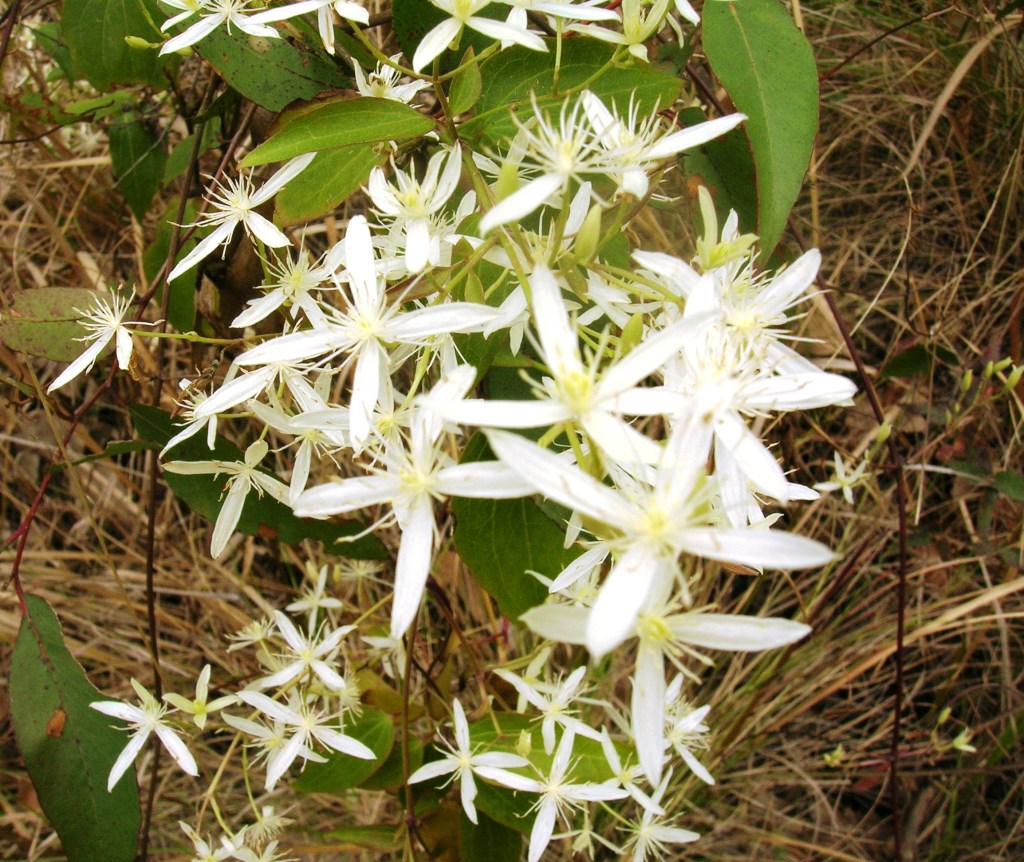
Headache Vine grows quite widely in rainforest and other types of habitat, wherever there is plenty of moisture.
In the garden: Quite easy to grow if you can find a potted seedling. Or you can propagate quite easily from seed found in the wild. It needs little care one planted, just plenty of watering and pruning to contain it whatever support you are using. It’s excellent for attracting native birds to the garden, when the seeds appear in summer.
 Lyrebird Mountain