
A place where I can vent…and my readers can vent with me.
Though I’d rather think of it as a place where reasoned discussion can take place!
All points of view welcomed in the comments – but keep it clean, respectful and non-aggressive.
Dingoes and tourists
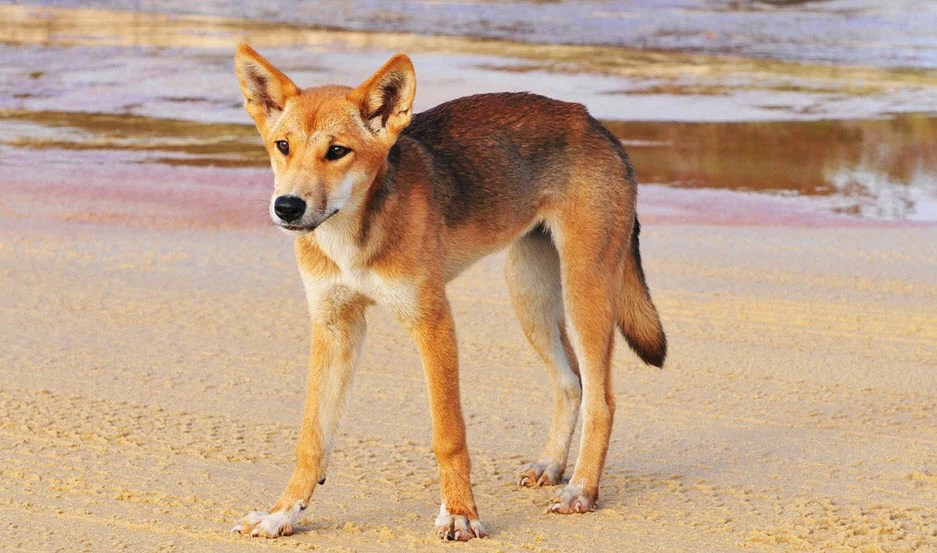
Dingoes and tourists are not a good mix – but if we are to avoid tragedies such as the death of a young Canadian girl on K’gari Island recently then maybe we need to change tourist behaviour. Because it’s a lot easier to “train” humans than it is animals.
Wildlife has become a major factor in tourism; the ONLY factor with some countries. We flock to the safari lodges of Africa and India for the chance to see – sometimes just glimpse – something big and fierce and dangerous. When I was a child growing up in Kenya and “safaris” were limited to the wealthy few from overseas, we locals lived comfortably but cautiously with the wildlife which was always present and often seen back then.
We didn’t make a big deal of it – and we didn’t get too close if we could avoid it.
Today, lion and buffalo and elephant have to carry on their lives under the constant stare of humankind, either eagerly taking phone photos from an open vehicle or on foot. And always too close. For many – too many – it’s all about the thrill and the guides know it. So attacks do occur and when they do it’s the humans that come off worst. Such attacks are rare because obviously precautions are taken but it’s inevitable, in a situation where proximity leads to dangerous familiarity, that here and there a tourist will get chomped by an angry hippo or mauled by a bear.
It’s the risk you take when you venture into any wilderness.
Australia is one of the world’s safest countries when it comes to wilderness tourism. True, sharks lurk in our oceans and crocodiles make the rivers of the far north unsafe for swimming. But the rest of the country boasts no large predators of the kind to threaten humans.
Dingoes are medium-sized dogs. The suburbs boast far more formidable canines today – the pit bull, the great shaggy shepherd dogs from various mountain countries, the Pakistani fighting dogs, the dread Carne Corso. Even the Doberman and the Staffordshire Bull Terrier. I’d face a whole pack dingoes any day than one of those on the loose!
Truly wild dingoes are afraid of humans and avoid them, though they are easily attracted to campsites where there are opportunities to scavenge. Like all dogs, though, they easily lose that fear in a shared environment and are certainly capable of killing or badly mauling a small child. There have been several such well-documented and witnessed incidents and then, of course, the Chamberlain case where it was finally (though not conclusively) ruled that a dingo had taken and presumably eaten a human baby.
But fatally savage a fully-grown woman?
It’s not impossible. But neither is it very likely.
I have spent a lot of the past five decades camping all around Australia, with my husband, and often at night we heard dingoes calling. Sometimes we saw them, mostly singles but sometimes a small group, trotting across the open plain or slinking quickly into the underbrush at sight of us.
On occasions I have found myself being followed by a dingo and this has always occurred in lightly inhabited areas close to the beach. It’s creepy because they are so silent and persistent – but when I’ve turned round and yelled or even run at them they have run away. I have put such behaviour down to the curiosity common to all wild dogs and their association of humans with readily-scavenged food.
Certainly I do not pretend or presume to be an expert on dingoes but I HAVE, years ago, camped a lot on Fraser Island and would like to share two experiences which might shed some light on what happened to the poor young woman whose body bore bite marks made either before or after she died.
Many years ago we had sailed our small, keeled yacht, moored at Tin Can Bay, over to the inland side of K’Gari. Here in a sheltered bay, with a good beach a few metres away, we anchored for the night. In the early hours the wind got up suddenly, our anchor dragged, we floated into the shallows on an outgoing tide and ended up on our side. Knowing we would have to wait until the next high tide to refloat her, I huddled into the dinghy with a book, a torch and our small dog while my husband Bob, with nowhere else to go, started to walk up and down the beach.
It was a bright moonlit night and after a while I heard Bob call to me; looking up, I saw he was being followed, at a respectful distance, by a single dingo.
“Oh how sweet,” I called back, then returned to my book. But soon the dingo had been joined by another, then another, appearing stealthily from the forest and forming a pack of twelve. All of them following Bob as he paced the length of the beach.
Now Bob was a big man who had hunted dangerous animals in Africa (always out of necessity, not as trophies I hasten to add) and not easily scared. But these silent followers were spooking him, no question. And I was a bit worried too, not for myself but for my little poodle Mitzi because a couple of years before that we had been camping on Fraser Island (as we called K’gari then) with friends whose Pekinese, sleeping under their camper van, was taken by dingoes and ripped to pieces. The tiny dinghy was not much of a refuge, there in the shallows, and I could see some of this pack were throwing occasional curious glances our way.
“Oh for goodness sake, they’re just bloody dogs!” I cried to Bob, thinking he was making too much of a fuss. “Just turn round and run at them and wave your arms and they’ll go away!”
He did so, all 193 cms (6’ 4”) of him and the dogs did indeed scatter, heading back to the bush – but then he tripped, and sprawled flat and in seconds they were rushing back towards him, much closer now, surrounding him, one or two larger males in the lead. He scrambled up quickly and I, just as quickly, tied Mitzi’s lead to the thwart and leapt ashore with an oar, yelling my head off – and believe me, I am a good screamer!
So between us we scared the dingo pack into the scrub along the edge of the beach but we had the uneasy sense that they were there, lurking, watching us, until dawn came and we lit a breakfast fire and then managed to shove the boat into deeper water.
About a year we were back on K’gari and this time we were on the ocean side with a four-wheel drive vehicle. Early – just at sunrise – I took my rod and went to fish the gutters along the beach. In those days you could camp anywhere and there was nobody else around. I got a feeling that I was being watched and, sure enough, when I turned around, there were a couple of dingoes coming down the dune towards me. They stopped, when I turned, but then came on. I actually enjoyed the sight and called out to them in that silly way we humans often talk to animals. They stopped and stared. And then I noticed a couple more heading my way – and I started to get a little worried!
My rational brain told me that they were hoping for food, probably fish scraps, because fisher folk sometimes filleted their catch on the spot and tossed away the scraps. But there was, I thought, something malevolent in the way they came on so purposefully, so silent and intent. I began to panic – and my instinct was to run into the sea! Out to the surf break where I didn’t think they would follow. I’ve always been a good swimmer but I could see a rip running close by and I had my rod and my fishing gear to think of and so I controlled my fear – with great difficulty – and waded a little further out, but not so far I couldn’t stand. And I pretended to ignore them and carry on fishing, while all the time sneaking peaks at them. They wandered up and down the beach for a while and then a vehicle came along the sand and I saw Bob walking down from our campsite and the dingoes trotted back into the scrub. We didn’t see them again but you can bet we tucked up tight in our tent that night and kept alert, especially when we heard them calling not far away.
And the questions I have often asked myself since are these – if Bob had been alone on that night time beach and had injured himself when he fell, would the dingoes have attacked? And if I had panicked during my early morning encounter, which I so nearly did, and tried to run from them would they have been bold enough to bring me down? And if I had run into the sea to get away from them, might I have drowned? My body washed into the shore where the dingoes were waiting?
This is all speculation, of course. A body washed on to a beach where dingoes are roaming will undoubtedly look like a meal to them. But an alive, active, fit young girl ought to be able to scare them off, especially given that even in the early morning one is rarely out of sight of other people on popular K’gari today, during the peak holiday season.
Perhaps we shall know the full truth, when all the forensics are in, because the implications of her death are important to humans and dingoes alike.
Already, in the sacred name of tourism, the dingo “pack”, so-called, has been destroyed by the authorities in a knee-jerk reaction typical of an age in which we have come to think of safety as a right. It isn’t! And while a prudent, caring society endeavours to protect us from preventable accident and human carelessness or criminal intent, it cannot remove all risk – and nor should we want it to. People must exercise their well-evolved self-protection instincts and understand that when we venture into the natural world, where wild things roam, we do so knowing the possible dangers. Something of which I reminded myself last year in Canada when, out walking in the forest alone and without gun or bear spray, I encountered a very large grizzly bear. Had it attacked me I would obviously not be writing this article! Nor would I be looking for someone to blame because that particular national park is full of bears and that’s one of the main reasons why I, and others, go there.
If a pack of dingoes wandered on to the beach at Surfers Paradise and attacked people I’d expect the government to do something about it. But on K’gari – absolutely not! Instead I’d be looking at altering the management and behaviour of tourists, not the wildlife!
 Lyrebird Mountain