
(This post is an ongoing project with new Australian rainforest plants – and new information about those plants – being included as I find the time to do so. I am always happy to answer questions.)
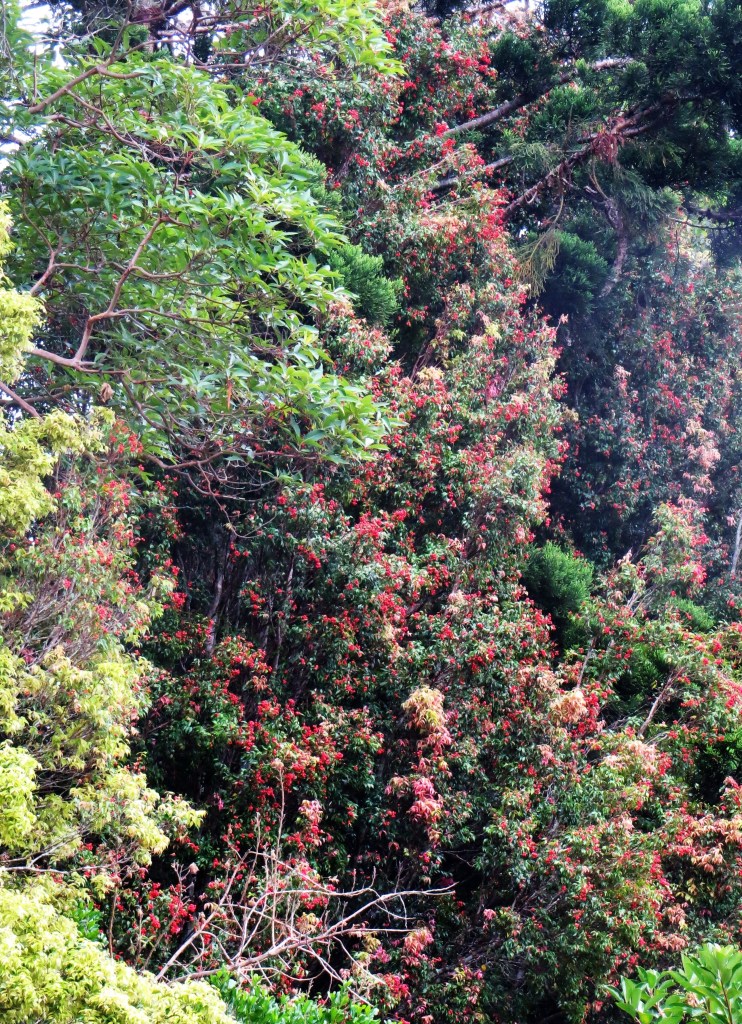

Syzygium leuhmanni or Riberry, with and without coppery red new growth.
Lillypilly is the name given to several trees and shrubs in the genus Syzygium, though several of them also go by the common name of satinash because the inner bark has a satiny texture.
Lillypillies occur in most rainforest and closely associated habitats in Australia; one species, Syzygium wilsonnii, is found along the Gippsland coast and Wilson’s Promontory in Victoria, extending north to just over the Queensland – New South Wales border. S. paniculatum is found in coastal scrubs around Woollongong and Sydney but no further north while the lovely S. oleosum can also be found that far south but extends north to the border. The area from the mid north coast of New South Wales through to south east Queensland boasts many lillypilly species but by far the greatest number is found in north Queensland where the rainfall and humidity are high and a rich feast of soil nutrients readily available year round.
Yet despite their obvious preference for moist environments most Syzygium species can tolerate long, dry periods and some do well in the low rainfall dry scrubs, such as Queenland’s Bunya Mountains, provided they get plenty of rain in summer. This is because their roots, like those of so many Australian rainforest plants, are well adapted to seeking out water. They have no tap root (except for very young seedlings)but rely, instead, on a wide spread of fibrous roots that grow thicker as the tree/shrub grows higher and the canopy develops. A growing tree is a thirsty tree! This spreading root system, extending in mature trees beyond the canopy, also adds stability.
Leaves and fruit

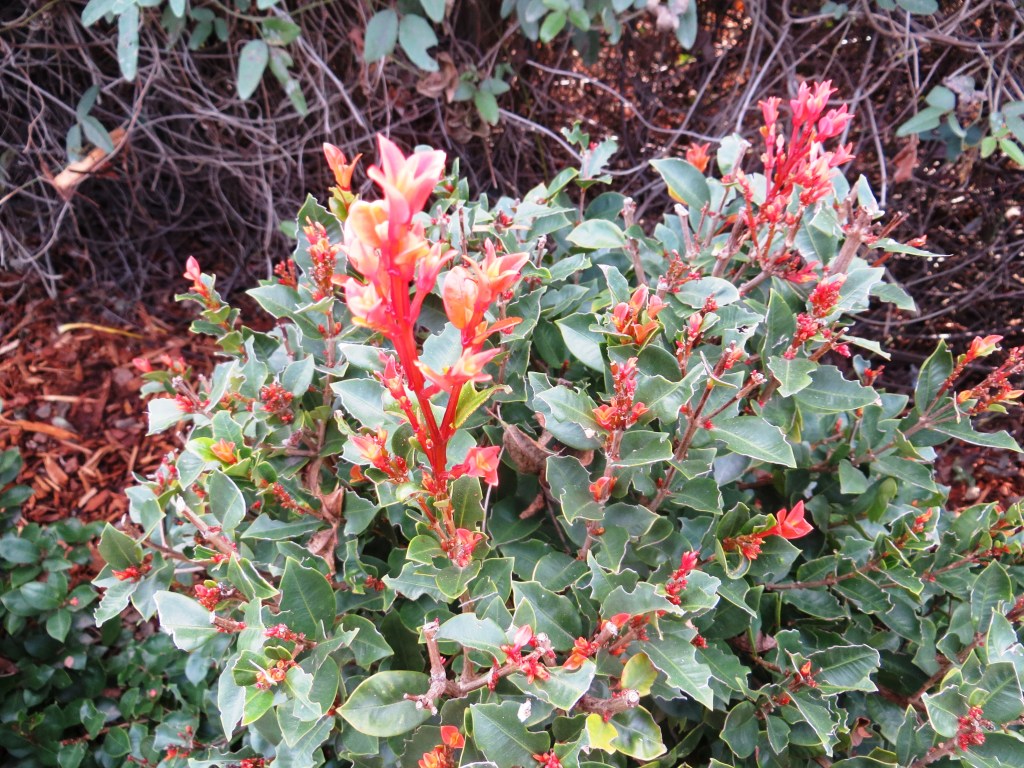
The genus is readily identified in the field by certain features. Leaves are small to medium in length (with some exceptions), opposite, simple, margins entire, distinguished by many close, parallel lateral veins, central vein clearly visible, lots of oil dots which may or may not be visible without a lens, tips either blunt or drawn out to a long “drip tip” point.
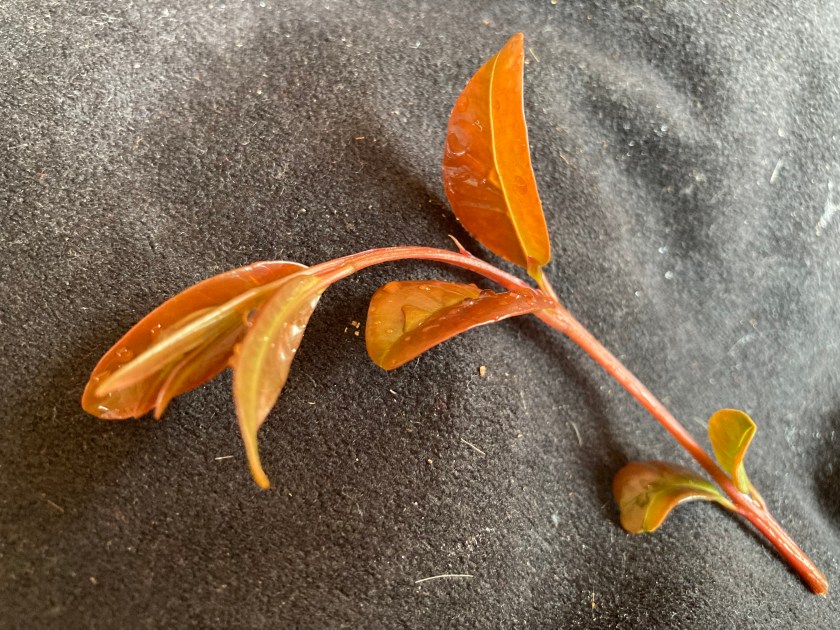
One of the most attractive features about all species in this genus is the new foliage which, depending on species, can be deep red, copper, bronze or gold.
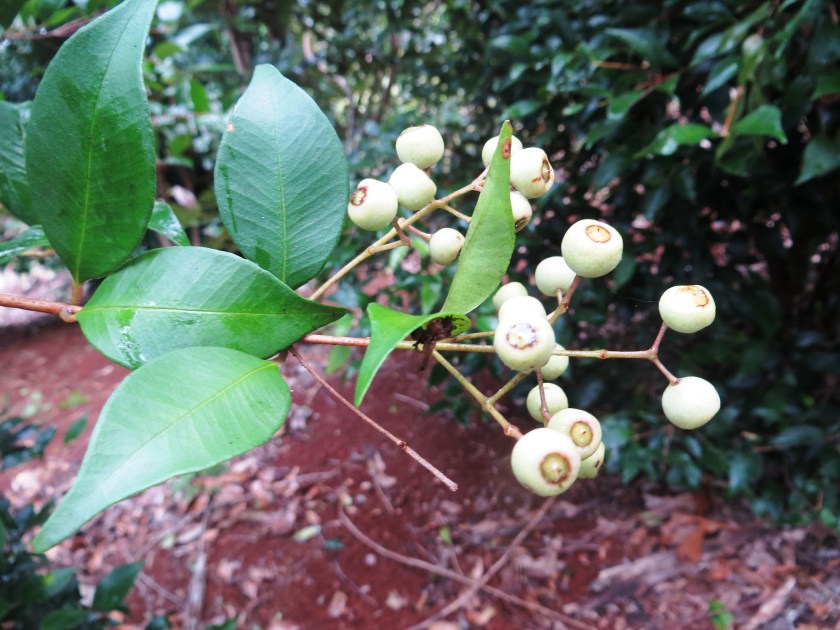
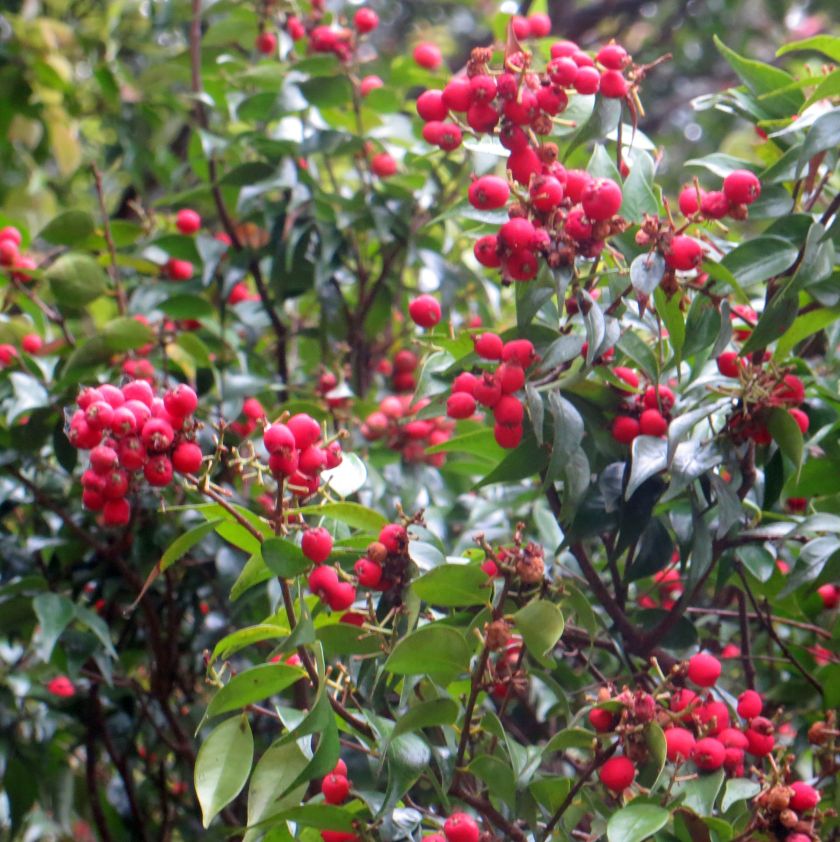
The fruit, too, is attractive. Most have bright pink or magenta berries though some species have white, purple or blue. All these fruits are attractive to birds and other wildlife; some are palatable to humans especially the popular Riberry (S. leuhmanni) whose fruit makes excellent jam.
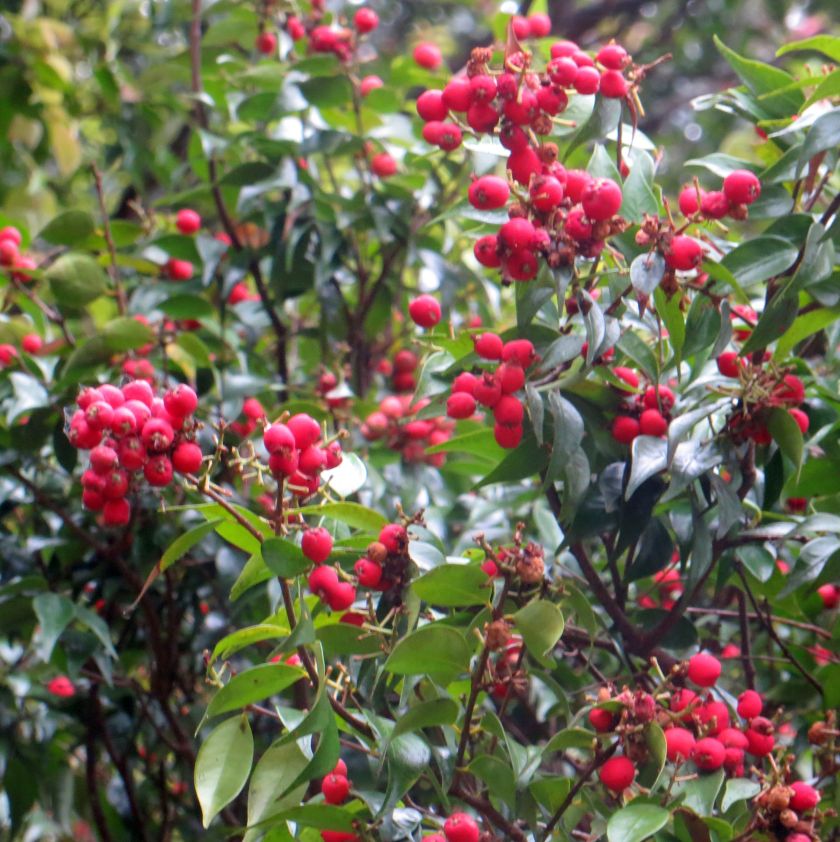
Lillypillies are close to the top of the list when it comes to attractive plants in the rainforest – they are good-looking from top to toe, with interesting bark, lush and spreading canopies full of leaves, colourful with flowers and berries and new growth throughout much of the year.
This means of course that they make excellent garden plants, particularly if lightly but regularly pruned when young to make a good, compact shape. They can be temperamental when it comes to flowering (and thus fruiting). Some years they are prolific and a sight to behold. Other years the flowers and fruit are sparse or non-existent. The cause is not really known – wet spring, dry spring, other seasonal factors – theories abound but no consistent theory has yet evolved. My own observations over many years indicate that dry springs DO bring on more flowers but then again I have known periods of almost no rain for three months in the subtropics when certain lillypilly species haven’t produce a single blossom! And unusually wet late winter/springs when they have. When it comes to climate, trees know things that we humans don’t!
Pests and diseases
The only pests that worry lillypillies are psyllids, tiny little critters that show up as pinkish-brown pimples on the leaves, making the plant look unsightly. It’s been claimed that unhealthy plants are more prone to psyllid attack and maybe that’s true but in my experience perfectly healthy specimens suffer attack. One that’s already suffering stress may give up and die but this is rare; the main problem is that a tree/shrub with gnarled and pimpled leaves looks unsightly. White oil or Confidor can be sprayed on affected leaves; my own method is to trim off unsightly growth in young plants when I see it (this requires a daily patrol!) and otherwise leave it to run its course. Until the next infestation! Birds and beneficial inects do a good job in my garden at keeping psyllid infestation to a minimum.
And now let’s take a look at the most familiar members of this fascinating genus…those that we see in the forests around us and those that we grow in our gardens.
Syzygium australe (Brush Cherry, Creek Satinash)
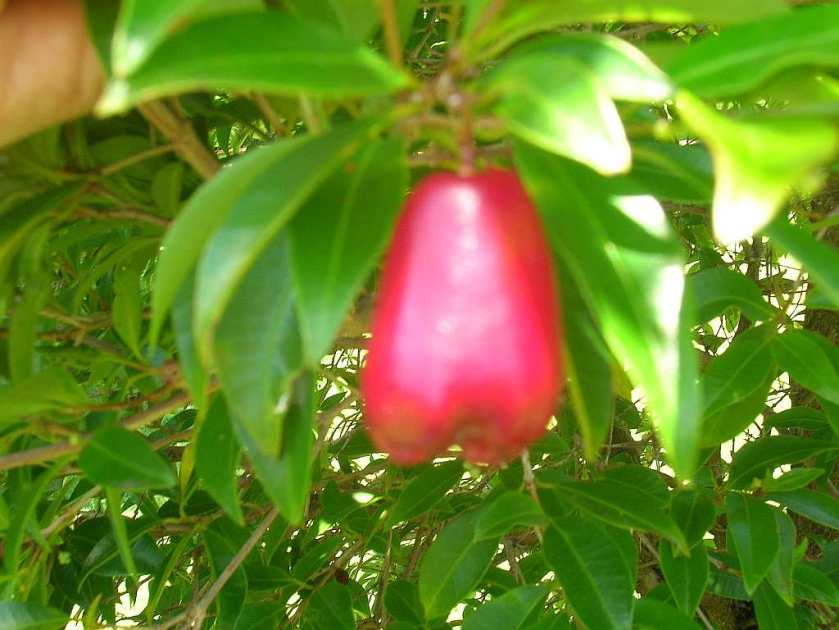
This is the most common lillypilly found in our gardens and it comes in many forms, shapes and sizes because it has proved a versatile breeder from seed and clone. And it’s very, very easy to grow, in the production nursery and in the home garden.
Vital statistics.
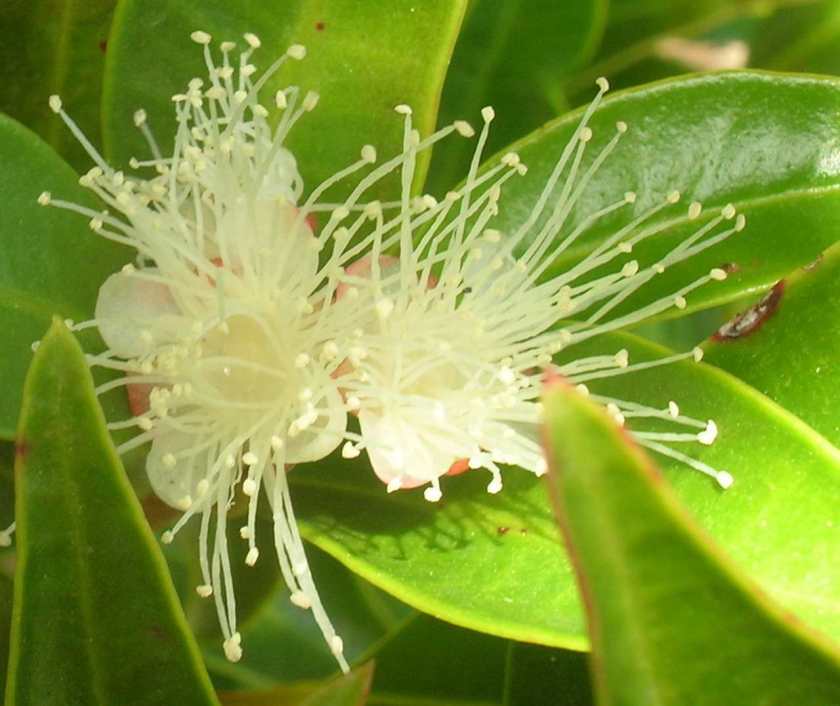
Leaves vary variable, elliptic to obovate with a blunt tip or small point. Up to 8 cm long. Lots of lateral veins. Surface dark green and glossy, undersurface paler, new growth varies from pale green to pale coppery reddish-pink. Oil dots scattered and visible with a hand lens. Flowers white and fluffy, born at the end of branch. Fruit roughly pear-shaped, small, pink, fleshy with a single seed.
It’s found mostly in coastal and nearby mountain forests from mid south coastal New South Wales to just over the Queensland border, which means it thrives in several different soil types and temperatures.
In the garden
This makes it very handy for the home garden so your first decision is how big do you want it to grow? The average garden centre will have several from which to choose and each variety will have a different height estimation, so read the label. I use the word “estimation” because while a lot of work goes into breeding these shrubs/trees through selection, it’s impossible for anyone to forecast just how high an individual plant will grow – much depends on soil and climate.
Syzygium australe is a battler, able to thrive in any kind of soil, once established, and tolerant of dry periods. It’s fast-growing in the early stages and will grow faster and thrive better in good soil with plentiful watering – like any plant. Fertilising is not really necessary in reasonably good sandy loam soil which is regularly mulched but a bit of liquid feeding in the first year after planting, during spring-summer, will speed up growth and improve leaf quality.
It takes sun or shade but will form a more compact shape and better leaf colour with plenty of morning sun. All llillypillies grown in full sun develop bushier shapes and don’t grow as tall as they do in the rainforest where they have to compete with other trees for sunlight. So it makes an attractive single feature tree.
Syzygium australe has one big weakness – it’s prone to attack by psyllid insects which distort the foliage. They don’t kill the tree/ shrub but do make it look unsightly and a severe attack on new growth can set growth back for an entire season. For years I tried various remedies, none (except pruning off the galls) of which were truly effective. Now there is at least one remedy, a pill containing Confidor which I used to use on azaleas to control lace bugs. It’s said to work really well.
Also, there are no varieties on sale which are said to be psyllid-resistant. I remain sceptical about such claims but they may be worth trying.
This is a good plant for hedging or as a single feature shrub/tree and prunes well. Trim regularly, and lightly when young to promote good form.
Syzygium leuhmanni (Riberry)
This is one of the loveliest trees to be foun anywhere and though if left unchecked it can grow too large for the home garden- to 30 metres where water is readily available it can easily be kept in check by regular pruning when young.
It makes a good hedge, as well as a handsome feature tree and is not as prone to psyllid attack as S. australe (above). The white flowers are pretty but when the bright pink new growth covers the tree in spring it’s truly magnificent. And the fruits (below) are the most edible of all the lillypilly fruits being crisp, juicy, sweet and full of pectin so that it makes good jam. Fruit should be picked young, before the bugs find it.
Vital statistics
Leaves (see photo below) are usually obovate, gracefully rounded into an almost globular shape, or they may also be narrower and lancelolate, drawn out to a long, narrow point. They are a glossy green, darkening with age, smooth and hairless, paler underneath, lateral veins close and parallel and slightly angled towards the tip. Oil dots are numerous and easy to see with a hand lens.
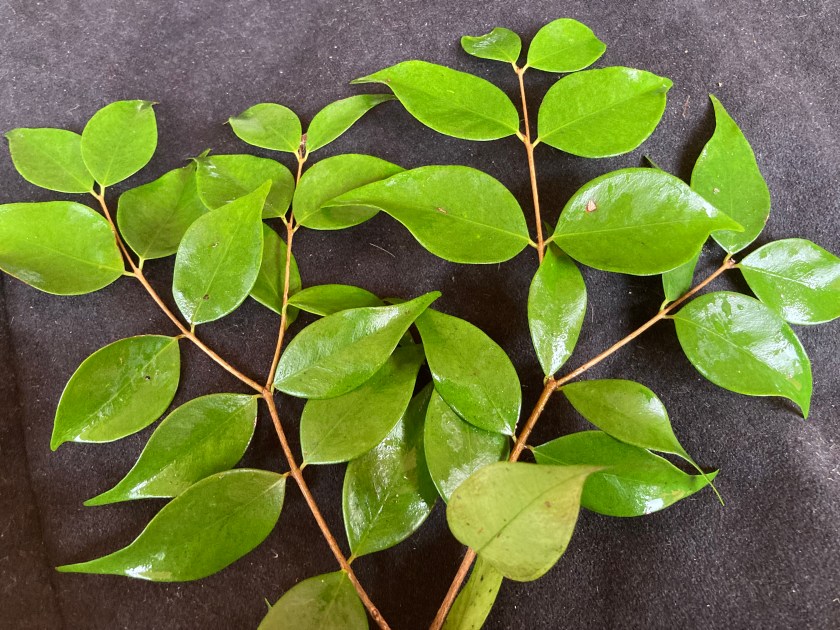

Fruit is a bright pink, round, very juicy and crisp when young. It makes excellent jam.
In the garden
Unless you have a garden of half a hectare or more this tree needs to be kept low and trimmed. It can be used for hedging if trimmed regularly. It needs little care beyond light fertilising in its first year; mulching will also help it establish strong roots. But these roots can be a problem because this lillypilly needs a lot of water (though it will survive up to three months without) and the roots will go searching for it. So don’t plant it near the house!
Syzygium wilsonii – Powder Puff Lillypilly
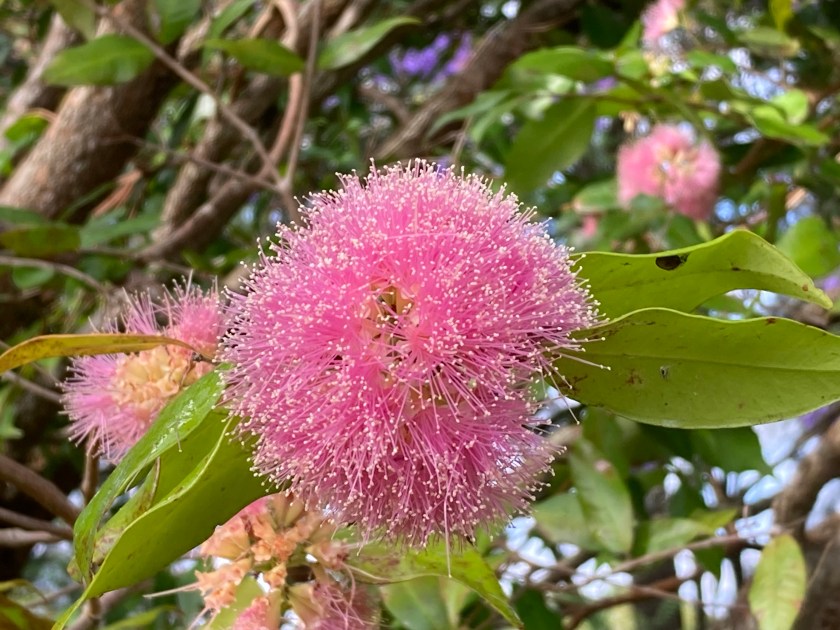
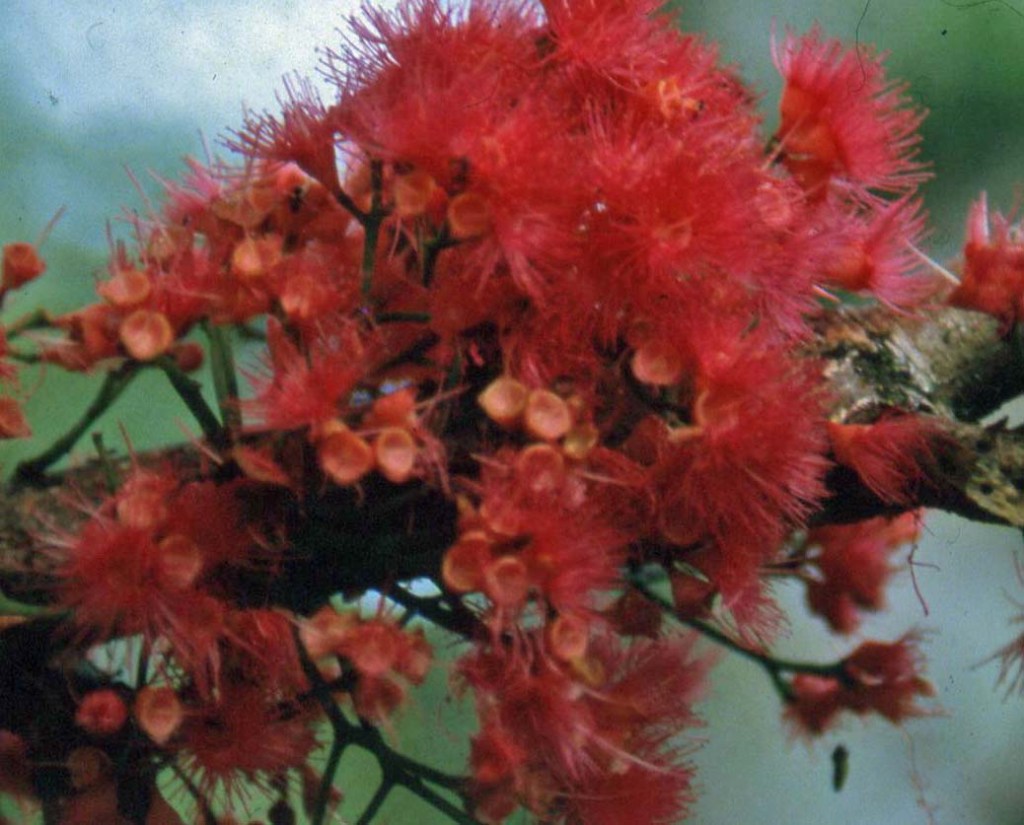
The large red fluffy flowers of this species makes it one of the prettiest small lillypillies for the home garden.
Syzygium wilsonii comes from far north Queensland but does pretty well, once established, anywhere there is plenty of available water and no severe frost.
This plant usually grows no higher than three metres but should be kept trimmed to develop an attractive shape.
Vital statistics
Leaves are typically lanceolate, mid to dark green and quite tough. Lateral veins are numerous, with large oil dots visible under a lens. The branches usually develop an attractive drooping habit and the lovely pink new growth also hangs down which makes this plant spectacular in spring.
The flowers are spectacular too; big and pinkish red pompoms that, like the new growth, hang down from the branches.
In the garden
Choose a spot in sun or light shade that’s protected from cold winds. Mulch and fertilise lightly in the first year until you are sure the s shrub is growing well. When it reaches about two metres high, begin regular tip pruning to promote density. Do this in autumn. You’ll be rewarded with a mass of red flowers in summer.
Fruit are unusual in that they may be drupes (one seed) or berries (several seeds). They are white, slightly pear-shaped and palatable – but only just! You can make jam with them but it will need a lot of sweetening.
A hybrid of S. leuhmanni and S. wilsonii, sold as “Cascade” is a lovely smallish shrub for the home garden – it has the best qualities of both its parents with attractively drooping foliage, bright pink new growth and big, fluffy pompom flowers.
Syzygium oleosum (Blue Lillypilly)
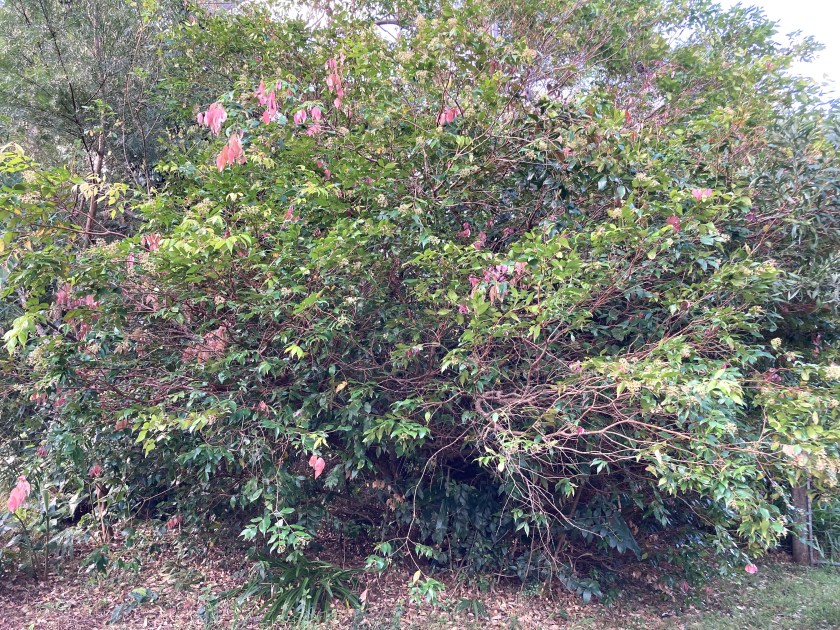
After Syzygium luehmanni, the Riberry, the Blue Lillypilly is my favourite in this outstanding tree/shrub species and proves my point that there is a Lillypilly for just about any garden except snowy climates and deserts. Blue Lillypilly is a neat little tree with dense, glossy foliage that has a delightful fragrance.
Vital statistics
Leaves are small(to 10 cms), narrow to rounded in the middle with a long point and los of faintly visible lateral veings. If you hold them up to the light you can see lots of little, bright dots. These oil dots are common to all lillypillies but are most easily visible in Blue Lillypilly and are responsible for its strong perfume. The berry ispurplish blue when ripe, not really edible unless you are starving! There is a little crown of sepals on top. Flowers are white and fluffy. New growth is a bronzy red.

In the garden
This tree takes most soils and conditions but grows fastest and best in well-drained basalt soils where underground water is available most of the year. Mulch when young and water regularly until established, after which it will look after its own water needs. Trim saplings so that in time they form a tight, shapely tree. This lillypilly makes a good hedge if trimmed regularly to increase density.
Syzygium smithii (Lillypilly, Satinash)
This was long considered the definitive “lillypilly” and still carries that common name without any addition. The same goes for the common name “satinash” – several lillypillies carry this name but always with some other descripor e.g. “Creek Satinash”. Goodness knows why because the inner bark of lillypillies does not appear all that “satiny” to me and the genus owes nothing to the European Ash except early whitefella nostalgia. Nor do the simple leaves bear any resemblance to those of the European Ash which are compound and serrated.
If I was to be given the task of renaming this plant for common use I’d probably call it Smith’s Lillypilly or Garden Lillypilly or name it for one of the great Australian nursery propagators who have done so much to bring this plant into our gardens and parks.
It’s just SO useful for many purposes and grows west of the Great Dividing Range as well as from southern coastal Victoria to the tropics. In fact it amazes me that when I wrote Gardening With Australian Rainforest Plants, back in 2001, with Ralph Bailey, that we didn’t give this plant more of a mention. In any case, in the past couple of decades I have learned to love it a lot more!
Vital statistics:
S. smithii has three common forms, “normal” with the usual lanceolate to obovate Syzigium leaves up to 16cm long, narrow-leaved (about half that length and linear to a fine point) and small-leaved (small, sometimes almost rounded leaves with blunter points). Oil dots and lateral veins are visible. Flowers are small and white, fruits are purplish pink and edible but not as palatable as, say, Riberry fruits.
In the garden:
One advantage of this plant – which rarely grows to more than four metres high – is that it makes a good substitute in warmer climates for traditional northern hemisphere garden hedges. The small-leaved form is particularly good for outlining parterres in formal gardens.
Trim regularly to make dense hedge. A good plant for pots. In the ground, mulch when young, sprinkling an all purpose fertiliser such as Dynamic Lifter on the soil before you lay the mulching material. Water well during the first few months. No care is needed after that.
Syzigium moorei (Rose Apple)
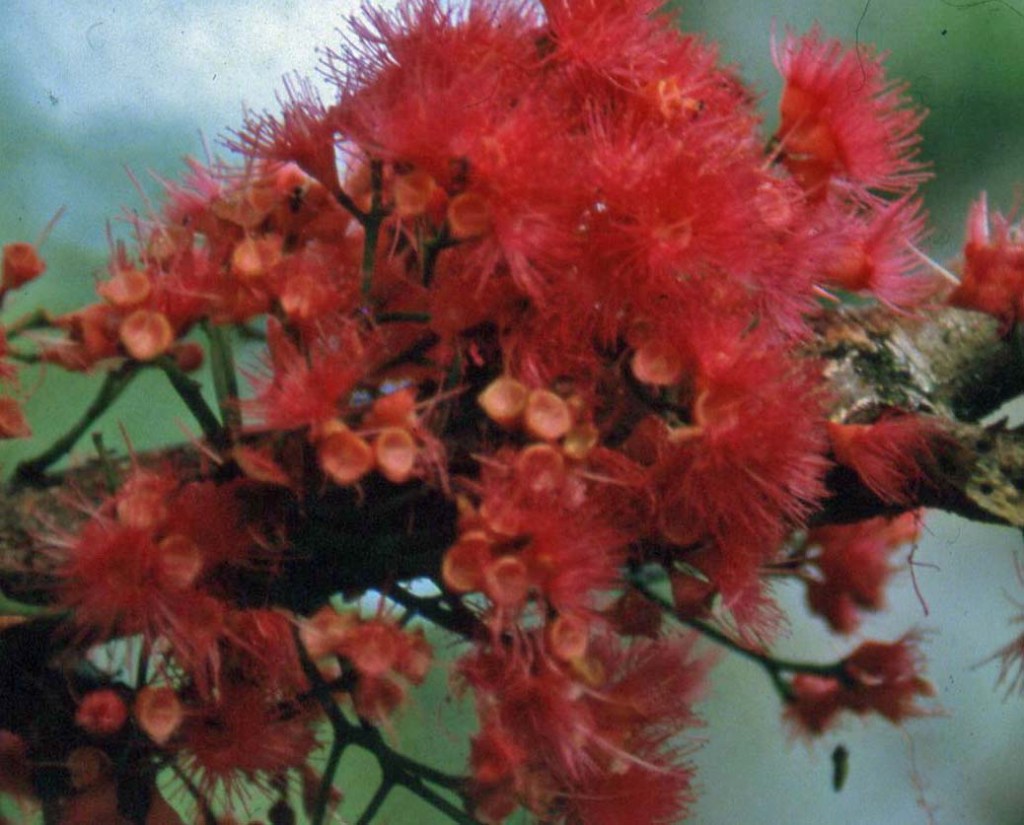
Although this tree is rather too large for the home garden I have included it because it is becoming increasingly rare, due to habitat destruction, and thus encouraging people to grow it on their own land will help preserve the species. If you have acreage, make sure you plant it because it is an attractive tree.
I don’t know why it is commonly known as “Rose Apple” because the fruits are white with a pale green tinge and look nothing like apples, though they are large for a Lillypilly.
Vital statistics
The trunk of this large tree can be brown to grey and features distinctive soft tissue-like scales if you look closely. Leaves are typically “Lillypilly”; simple, opposite, obovate to oblong-elliptical with a small, blunt point; lots of oil dots (seen through a lens) and parallel veins. Plus a fairly obvious intramarginal vein. Fluffy flowers are a gorgeous watermelon red, cauliferous (born along the branches) in clusters. Fruit is edible but boring.
In the garden
Give Rose Apple plenty of space and don’t plant too close to buildings. It can be part of a boundary or cluster planting but also makes a fine single specimen out in the open where it won’t grow as tall. Prune the tips lightly and regularly to keep it low (6 – 8 metres) and bushy. Water well and fertilise lightly with blood and bone or chook poo when young.

 Lyrebird Mountain